UNESCO World Heritage Gold Temple, Japan's Folklore Heartland, and 300km of Dramatic Sanriku Coast
Living in Iwate
Japan's second-largest prefecture covers a landscape that runs from the UNESCO-listed golden temple of Hiraizumi through Morioka's sandstone architecture and three-noodle-dish food culture to the Sanriku rias coastline — one of the most dramatic coastal drives in the country.
Why People Choose Iwate
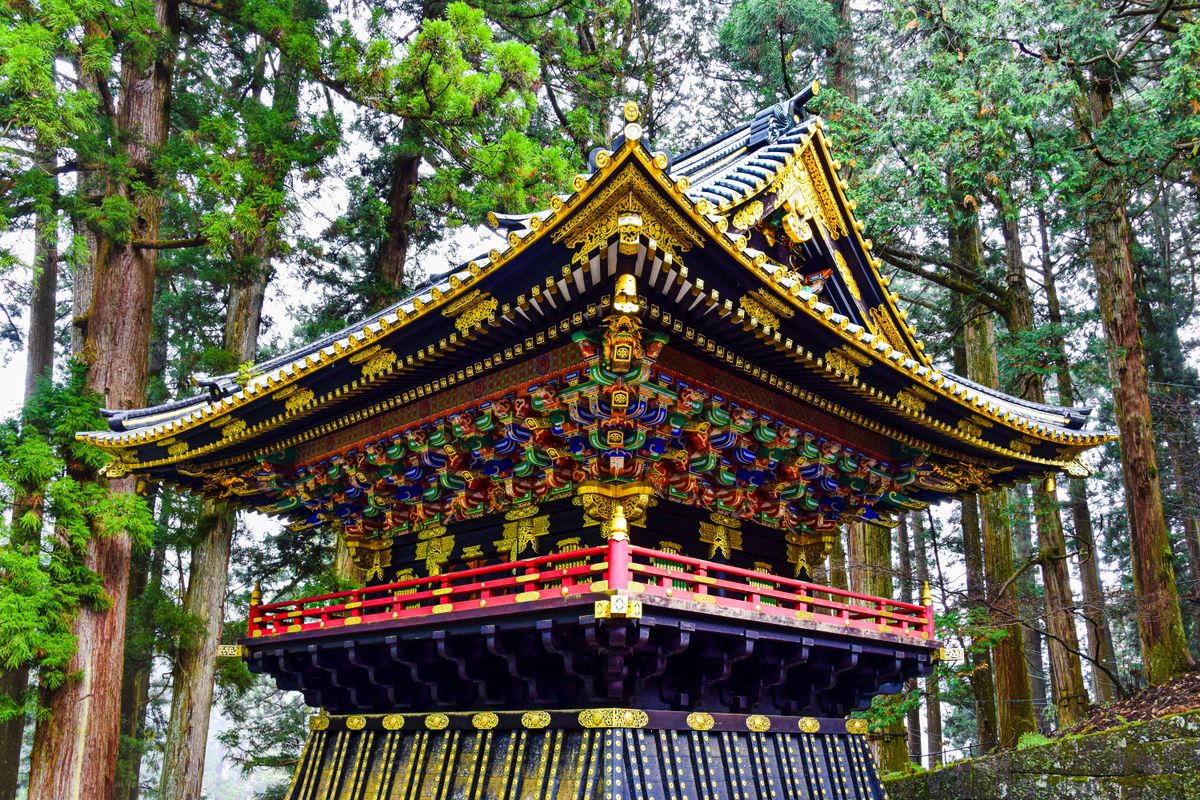
Iwate's honesty is part of its appeal: it makes no claim to being a convenient choice. Japan's second-largest prefecture, it has low population density, sparse public transport outside Morioka, and some of the coldest winters in Honshu outside Hokkaido. What it offers instead is specific: a UNESCO World Heritage site of genuine significance, a prefectural capital with an unusual food culture and architectural character, a folklore landscape that is not reconstructed for tourism, and 300km of rias coastline that most domestic Japanese tourists have never seen.
Hiraizumi was listed as a UNESCO World Heritage Site in 2011 based on the surviving temples and gardens of the Northern Fujiwara clan, who built a rival cultural capital here between 1100 and 1189. At its height, Hiraizumi was the second-largest city in Japan after Kyoto, with an estimated population of 100,000 — driven by gold mining in the Iwate mountains, a gold-funded Buddhist building programme, and the Fujiwara policy of sheltering refugees from civil wars. The Konjiki-do (Golden Hall) at Chuson-ji, built in 1124, is the surviving pinnacle: a complete gold-lacquered Buddhist hall with the mummified remains of the four Fujiwara lords still in position.
Morioka's food culture — three distinct noodle dishes invented within the city limits (wanko-soba, reimen cold noodles, jajamen) — is a quirk that is genuinely unexplained. Wanko-soba has Iwate origins and its contest format is specific to Morioka and Hanamaki. Reimen (cold noodles in a clear tangy broth, served with kimchi, cucumber, and watermelon) was introduced by Zainichi Korean residents in the postwar period and has become a Morioka standard. Jajamen (white miso wheat noodles with minced pork and cucumber, finished with a raw egg in the hot broth at the end) is unique to the city. No other city its size in Japan has this concentration of self-originated noodle culture.
Morioka is a mid-sized regional city with the character that comes from being geographically isolated from larger urban centres — self-contained, with a developed independent culture and a resident's relationship with the city that is different from commuter-corridor towns. The Nakatsu River and Kitakami River confluence runs through the city; riverside parks are genuinely used year-round. The sandstone architecture of the Nakatsu River district (Meiji-era warehouses and townhouses) gives central Morioka a visual distinction unusual in a city its size. Hiraizumi and Ichinoseki to the south are smaller, with rhythms set by tourism and agriculture rather than city commerce.
Tohoku Shinkansen: Morioka to Tokyo in 2h10; to Sendai in 35 minutes; to Shin-Aomori in 40 minutes. Iwate Galaxy Railway (third-sector line) connects Morioka to coastal towns. Car strongly recommended for Hiraizumi, Tono, Geibikei, and the Sanriku coast — public transport to these areas is infrequent. The Sanriku Railway operates the rias coastline from Kuji to Sakari (163km) — the scenic route but slow.
Morioka City properties ¥3M–¥15M; houses ¥5M–¥20M. Ichinoseki/Hiraizumi area ¥500K–¥8M (significant renovation required for cheaper properties). Coastal Sanriku towns ¥300K–¥5M; many akiya listings available after 2011 tsunami-related depopulation. Prices are among the lowest of any prefectural capital in Honshu.
The urban centre: three-noodle-dish culture, sandstone river district, Morioka Castle ruins, Koiwai Farm (Meiji-era agricultural estate still operating), and Shinkansen access. The most liveable Tohoku city for buyers who want a city character.
The UNESCO heritage zone: Chuson-ji gold hall, Motsu-ji temple garden, the Geibi Gorge nearby, and a small-town pace. For buyers specifically drawn to heritage and quiet living near a significant cultural site.
The folklore capital: the setting of Yanagita Kunio's 1910 Tono Monogatari (the founding text of Japanese folklore studies). Traditional L-shaped farmhouses (magariya), kappa legends, watermills, and a preserved rural landscape distinct from other Tohoku regions.
The coastal towns: dramatic rias coastline, fishing culture, 2011 tsunami memorial sites and active community reconstruction. For buyers who want working coastal town life — not tourism, but the real thing. Some of the lowest property prices in Honshu.
Where To Start
Four ways to start in Iwate
The Konjiki-do (Golden Hall) at <a href="https://www.chusonji.or.jp/en/" target="_blank" rel="noopener" class="text-blue-600 dark:text-blue-400 hover:underline">Chuson-ji temple</a> was built in 1124 by Fujiwara no Kiyohira, the first lord of the Northern Fujiwara, as a Pure Land Buddhist paradise rendered in gold. The interior is gold-lacquered with nacre inlay, the altar contains mother-of-pearl animals and arabesque patterns — and the mummified remains of the four Fujiwara lords rest in the base of the main pillars. It is enclosed in a modern protective structure, but the hall itself is entirely original 12th-century work. The cedar-lined approach (Tsuki-mi-zaka) to the complex is also original; the trees are 700–900 years old.
Wanko-soba (わんこそば) is an Iwate tradition in which attendants continuously drop small portions of soba into a lacquer bowl — the diner keeps eating until they place the lid on the bowl to stop. The contest version counts bowls; 100 bowls (approximately 1.5kg of soba) is considered the threshold between average and good. No prior training is required and the experience — the shouting, the pace, the attendants' encouragement — is unlike any other restaurant format in Japan. <a href="https://www.wankosoba-azumaya.co.jp/" target="_blank" rel="noopener" class="text-blue-600 dark:text-blue-400 hover:underline">Azumaya restaurant</a> in Morioka is the most established venue; Hanamaki also has dedicated wanko-soba restaurants.
The Satetsu River at Geibikei cuts through 50-metre limestone walls for 2km navigable by flat-bottomed boat (sappa-bune), poled by boatmen in the same method used since the feudal period. The gorge walls are coloured in layers of ochre, grey, and rust-red sediment; the boats pass into the canyon section where the walls close overhead. A traditional practice of throwing tanuki-yaki rice cakes (sold at the pier) at a cave shelf in the gorge walls for luck is part of the experience. The <a href="https://www.geibikei.co.jp/" target="_blank" rel="noopener" class="text-blue-600 dark:text-blue-400 hover:underline">Geibikei Gorge</a> operates year-round; the gorge freezes in sections during January.
Tono (遠野) is the setting of Yanagita Kunio's 1910 Tono Monogatari — 119 folklore accounts of tanuki, kappa (water creatures), zashiki-warashi (child spirits), and fox spirits collected from local residents. The valley's traditional L-shaped magariya farmhouses (designed so that horses could be sheltered in the building's shorter arm during winter) are still standing across the valley; several are preserved as heritage sites. Kappa-buchi (Kappa Pool) on the Wase River is where the folklore locates the river creatures; cucumber offerings are still left at the small shrine. <a href="https://www.tonojikan.jp/english/index.php" target="_blank" rel="noopener" class="text-blue-600 dark:text-blue-400 hover:underline">Tono Tourism</a> has English walking maps covering the folklore sites.
Daily Life in Iwate
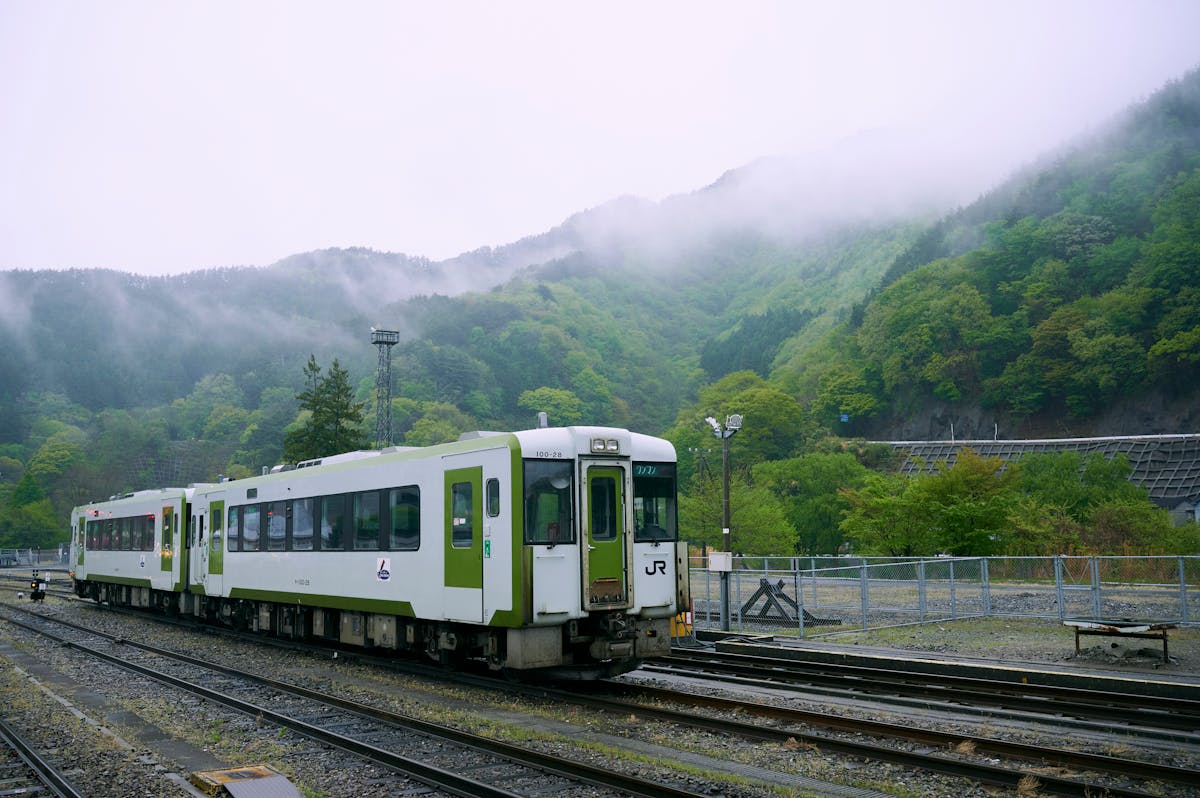
Morioka City (population 290,000) functions as a regional centre for a large hinterland with no competing city nearby. The scale means that hospitals, universities (Iwate University, Iwate Medical University, Morioka University), and commercial infrastructure are concentrated here in a way that makes the city more self-reliant than equivalent-population cities in the Kanto corridor. The Kitakami and Nakatsu rivers run through the city and are genuinely used for daily life — cycling paths, morning walks, summer festivals — rather than being bordered by commercial development.
The Iwate Bank Red Brick Building (1911), now open to the public as a cultural facility, anchors the Nakatsu River sandstone district that gives Morioka its architectural character. The district runs for 400 metres along the river, with Meiji-era warehouse buildings converted to coffee shops, galleries, and restaurants while retaining the original facades. It is a small-scale heritage district by Kyoto or Kanazawa standards, but its density and quality make it distinctive for a Tohoku prefectural capital.
Outside Morioka, Iwate's daily life is predominantly agricultural and coastal. Tono Valley operates as a dairy farming and craft tourism economy; the Sanriku coastal towns are fishing communities that are rebuilding identity after the 2011 tsunami. The permanent population decline in coastal Iwate is significant — some towns have lost 30–40% of residents since 2011 — which creates both affordable property and practical challenges in terms of services and community. Buyers in coastal Iwate are typically making a deliberate lifestyle choice with open eyes about the trade-offs.
Food and Drink
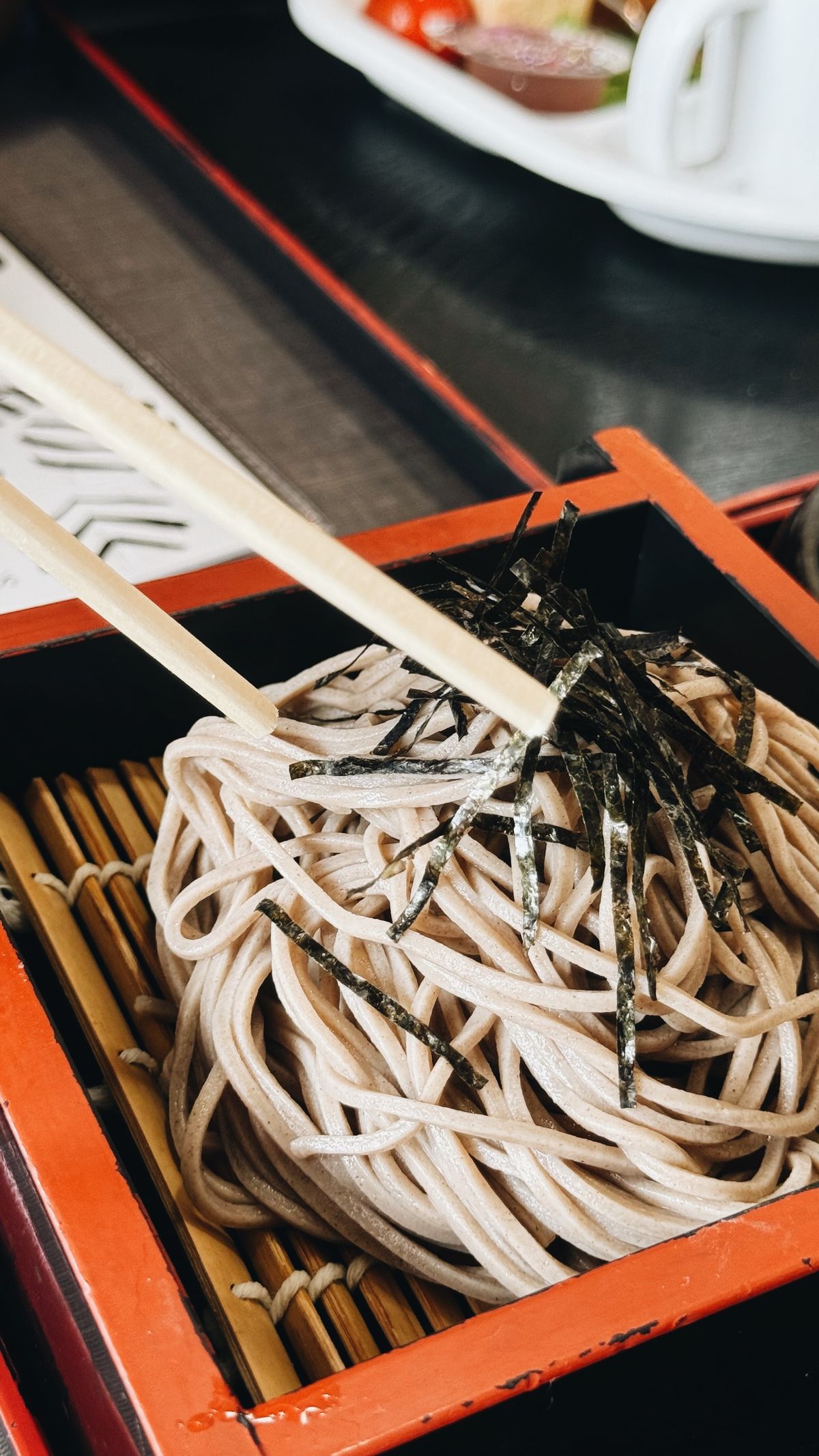
Wanko-soba (わんこそば) is Iwate's most theatrical food tradition: attendants continuously drop 10-15 strands of soba into a small lacquer bowl, which the diner eats continuously until placing the lid to signal stopping. The world record exceeds 500 bowls in one sitting; 100 bowls (roughly 1.5kg of noodles) is the average for a determined adult. The format is specific to Morioka and Hanamaki and is thought to have originated from a lord's attempt to be hospitable at a feast — keep refilling until the guest is truly full. Azumaya restaurant (founded 1907 in Morioka) remains the most established venue.
Reimen (冷麺) cold noodles in Morioka are a distinctly different dish from the Korean naengmyeon they derive from — the Morioka version uses chewy translucent noodles in a clear, lightly tangy beef broth, served cold with kimchi, sliced cucumber, a hard-boiled egg, and seasonally, a slice of watermelon. The dish was introduced by the Zainichi Korean community in the 1950s and became a Morioka standard. Jajamen (じゃじゃ麺) is the third noodle: thick, flat wheat noodles topped with white miso and meat sauce (similar to Chinese zhajiangmian), eaten with cucumber and ginger, with the final bowl (chiameshi) made by adding raw egg and hot soup to the residual sauce at the bottom — an entirely different second-phase dish from the same bowl.
Iwate's seafood comes from the Sanriku coast, considered one of Japan's richest fishing grounds due to the nutrient-rich cold Oyashio current. Kamaishi and Ofunato are major trawling ports for Pacific saury, mackerel, salmon, and sea urchin. The Sanriku oyster — cultivated in the rias inlets on hanging rope lines — is among Japan's finest and is harvested October through April. Sanriku seafood is available fresh in Morioka's morning market and at the port towns' fish processing facilities.
Culture and Heritage
Hiraizumi was designated as a UNESCO World Heritage Site in 2011, the same year as the Tohoku earthquake — a conjunction that brought unusual attention to the site. The heritage zone covers Chuson-ji temple (Konjiki-do, 1124 AD), Motsu-ji temple (Heian-period Pure Land garden, one of the best-preserved in Japan), Kanizanshi temple site, Kanjizaio-in garden ruins, and Muryoko-in ruins. The Northern Fujiwara clan built all of these within 90 years (1100–1189) before being destroyed by Minamoto no Yoritomo. The speed of construction — a complete Buddhist cultural capital in three generations — and the quality of the Konjiki-do make Hiraizumi the most significant Heian-period site outside Kyoto.
Tono Monogatari (Tales of Tono), published in 1910 by Kunio Yanagita after a journey to the Tono valley, is the founding text of Japanese ethnography — 119 folk tales collected from local farmer Kizen Sasaki, documenting kappa, tanuki, zashiki-warashi, and fox spirit legends that had been transmitted orally for centuries. The book established Tono as Japan's folklore capital and the valley's landscape — traditional magariya L-shaped farmhouses, river pools, mountain passes, and isolated hamlets — is still substantially intact. The Tono Tourism Association publishes walking maps keyed to specific tale locations.
The Chagu-Chagu Umakko (horse festival, second Saturday of June) is Iwate's most distinctive cultural event: 100 decorated workhorses in traditional trappings of coloured silk and brass bells walk the 14km route from Oni-Koshi Koma-inari Shrine in Takizawa to Morioka's Hachiman-gu Shrine. The bells produce the characteristic "chagu-chagu" sound that gives the festival its name. The working horses of the Nanbu horse breed — raised on the Hachimantai plateau for military and agricultural use since the Kamakura period — have been honoured in this way for over 200 years.
Weekends and Escape
Geibikei Gorge (11km from Ichinoseki, 40 minutes from Morioka by Shinkansen) is Iwate's most visually concentrated natural site. The Satetsu River has cut through limestone cliffs for 2km of navigable canyon; the boat trip passes through the narrowest section where the walls rise to 50 metres on both sides, the water turns emerald-green from the limestone, and the echo of the boatman's pole on the rock is the dominant sound. The adjacent Genbikei Gorge (different reading, different character) is a shallower river gorge accessible by the famous "flying dango" pulley system — snacks are sent across the gorge on a wire basket suspended from a rope.
The Sanriku Coast from Kamaishi north to Kuji is Iwate's most dramatic and least-visited natural landscape — 150km of rias coastline where the Kitakami mountains meet the Pacific in a series of deep inlets and rocky headlands. The Sanriku Railway operates the scenic route (slow, 3 hours end to end) from Sakari to Kuji; driving the coast road is the preferred option. The route passes Jodogahama Beach (white rhyolite rock formations, crystal-clear water), Goishi Coast (basalt columns), and Kitayamazaki cliffs (200-metre headlands, viewable by seasonal sightseeing boat). The Sanriku Tohoku Recovery Tourism site covers the full coast with English descriptions.
Hachimantai Plateau (90 minutes from Morioka) straddles the Iwate-Akita border at 1,600 metres — a volcanic plateau with a loop road, multiple crater lakes, and 30+ individual hot spring facilities accessible year-round. The Aspite Drive scenic route opens in late April after snow clearance and closes again in November; the route passes through the steam vent area, the Goshogake hot spring (ground temperature 90°C, visible from the boardwalk), and the Tashiro-numa wetlands. Winter: the plateau is a backcountry ski and snowshoe area with consistent snow from December to April.