
Volcanic Caldera, One of Japan's Three Great Castles, and the Horse Sashimi Capital of Kyushu
Living in Kumamoto
A Kyushu prefecture defined by the world's largest active volcanic caldera, a castle that has dominated the city skyline for four centuries — and is now mid-way through a 20-year earthquake restoration — and a food culture built on local specialties that exist nowhere else in Japan.
Why People Choose Kumamoto
The practical case starts with price. Kumamoto City property costs 40–60% less than equivalent Fukuoka locations and the Shinkansen puts Fukuoka (Hakata) 35 minutes away. For buyers who want Kyushu urban infrastructure without Fukuoka prices, Kumamoto makes the arithmetic work. But the reasons people specifically choose Kumamoto rather than just arriving there for cost reasons are usually either the castle, Aso, or the island life of Amakusa — and often all three.
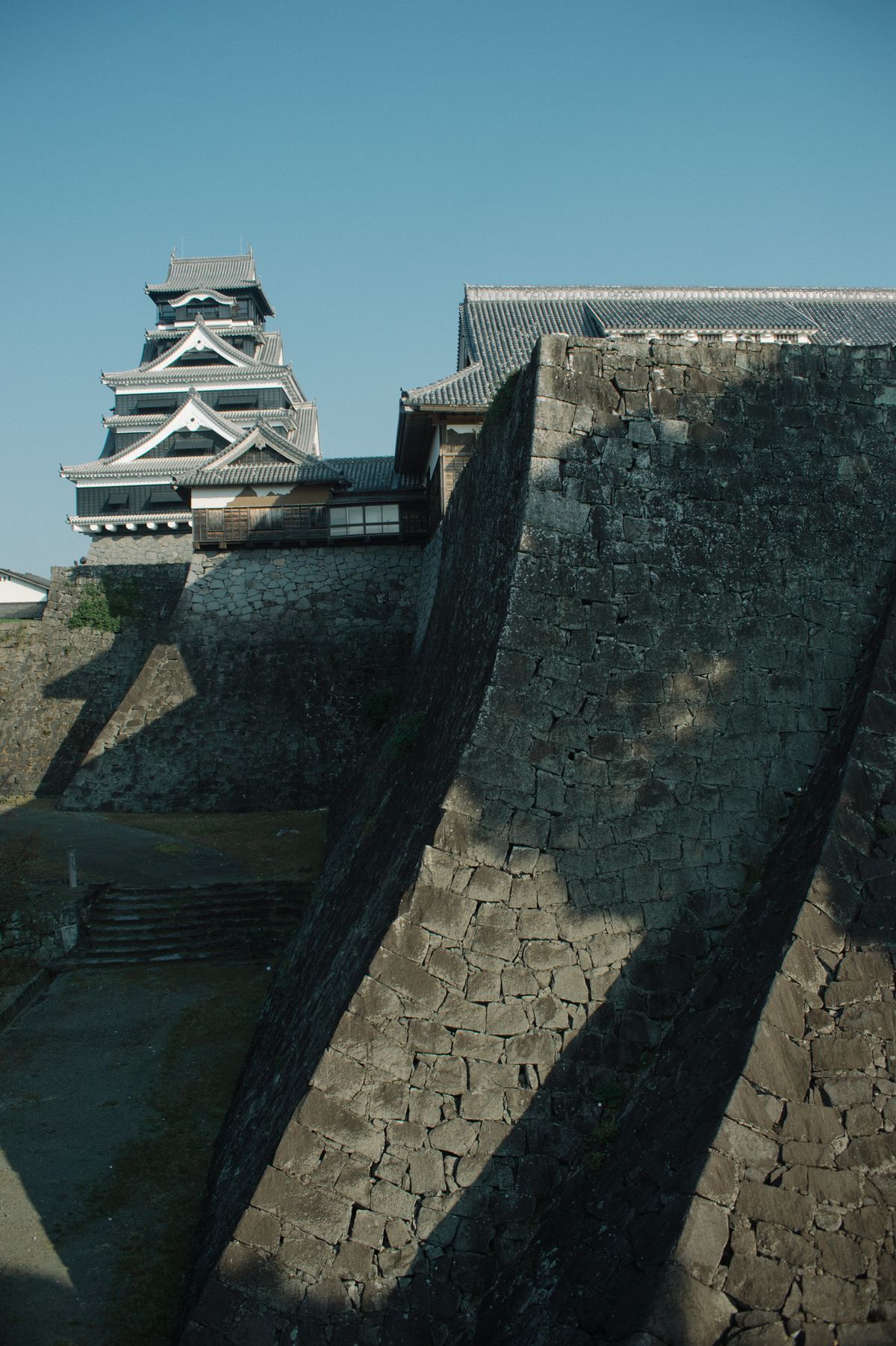
Kumamoto Castle is one of Japan's three officially designated great castles (alongside Himeji and Matsumoto), built by Kato Kiyomasa between 1601 and 1607 on volcanic rock foundations. The 2016 Kumamoto earthquake damaged all 49 of its structures — collapsing stone walls, cracking tower bases, and sending roof tiles across the grounds. The publicly-funded 20-year restoration project is the largest heritage reconstruction in Japanese history; the main tower reopened in 2021, and the full grounds restoration continues to 2037. Living in Kumamoto during this period means watching one of Japan's greatest buildings being painstakingly reassembled.
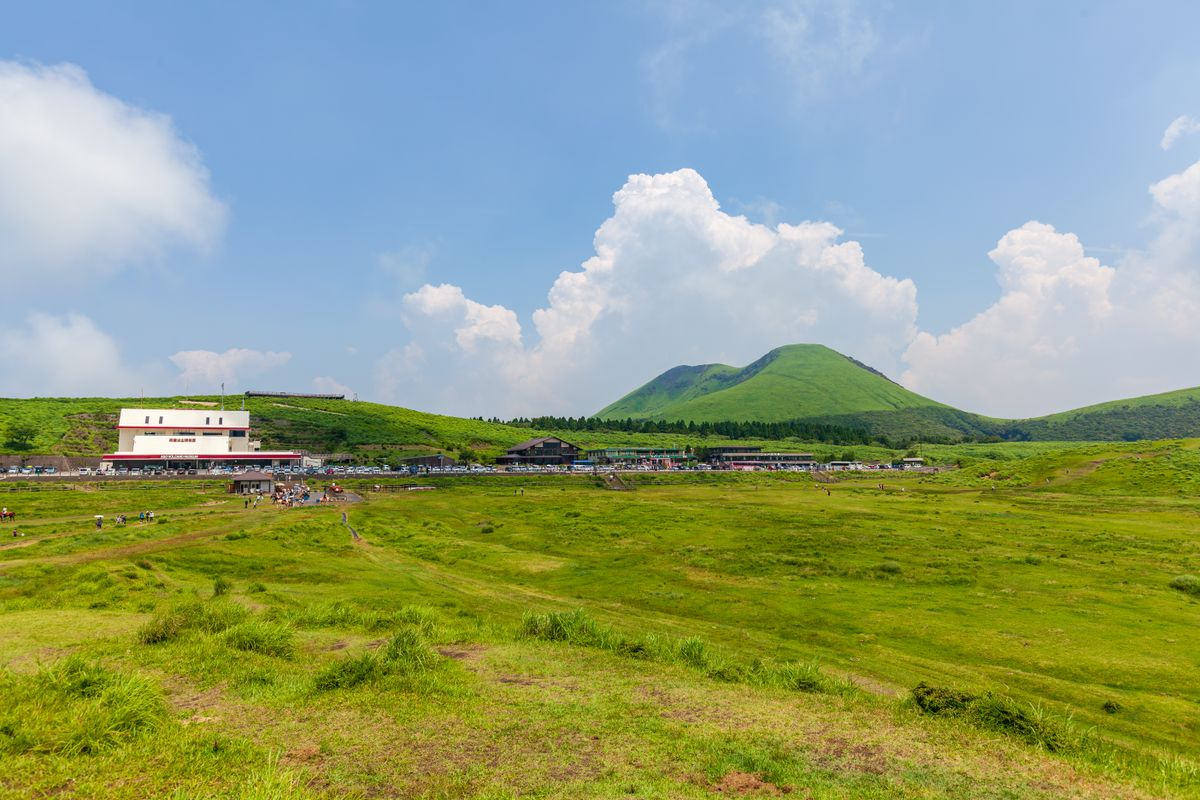
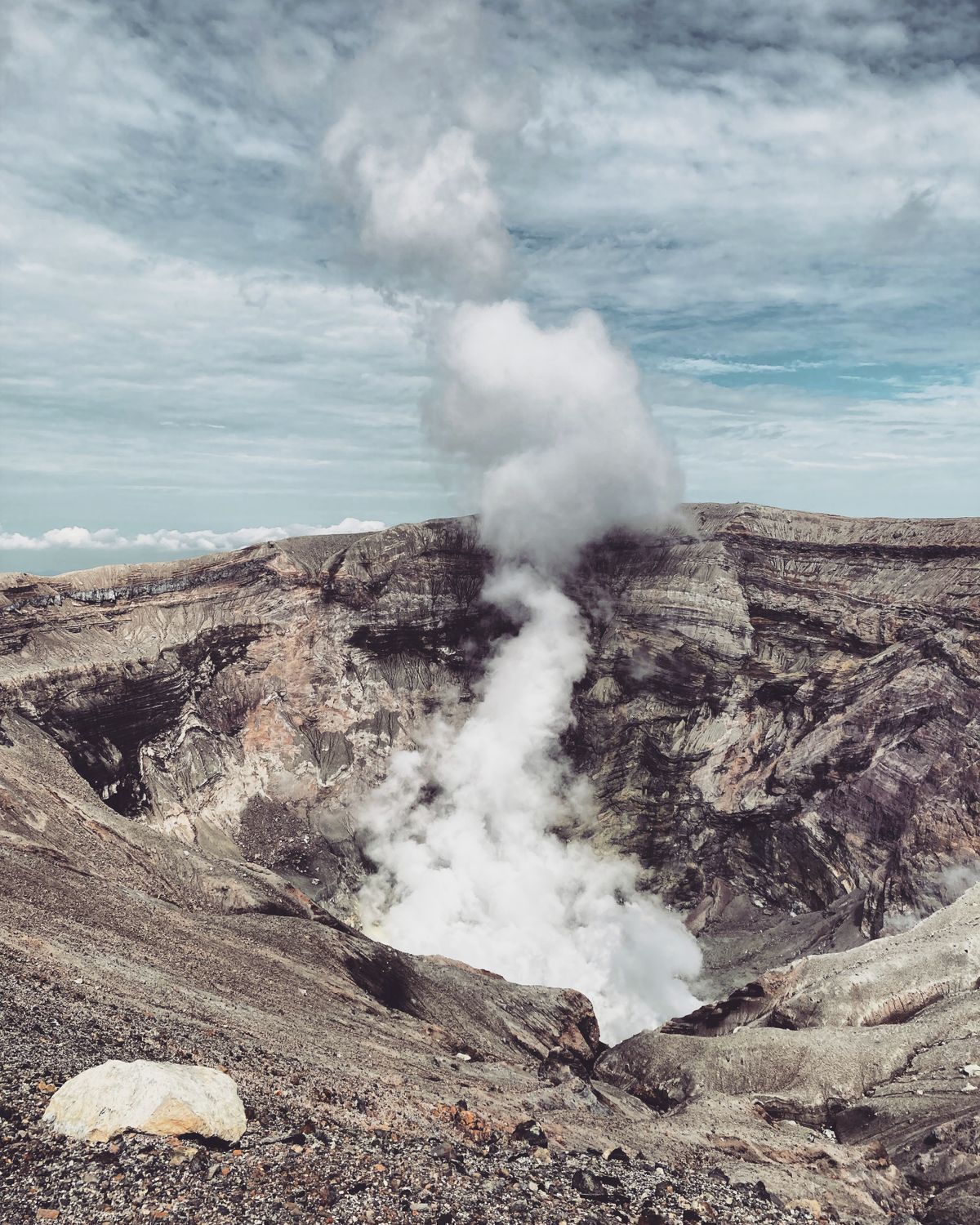
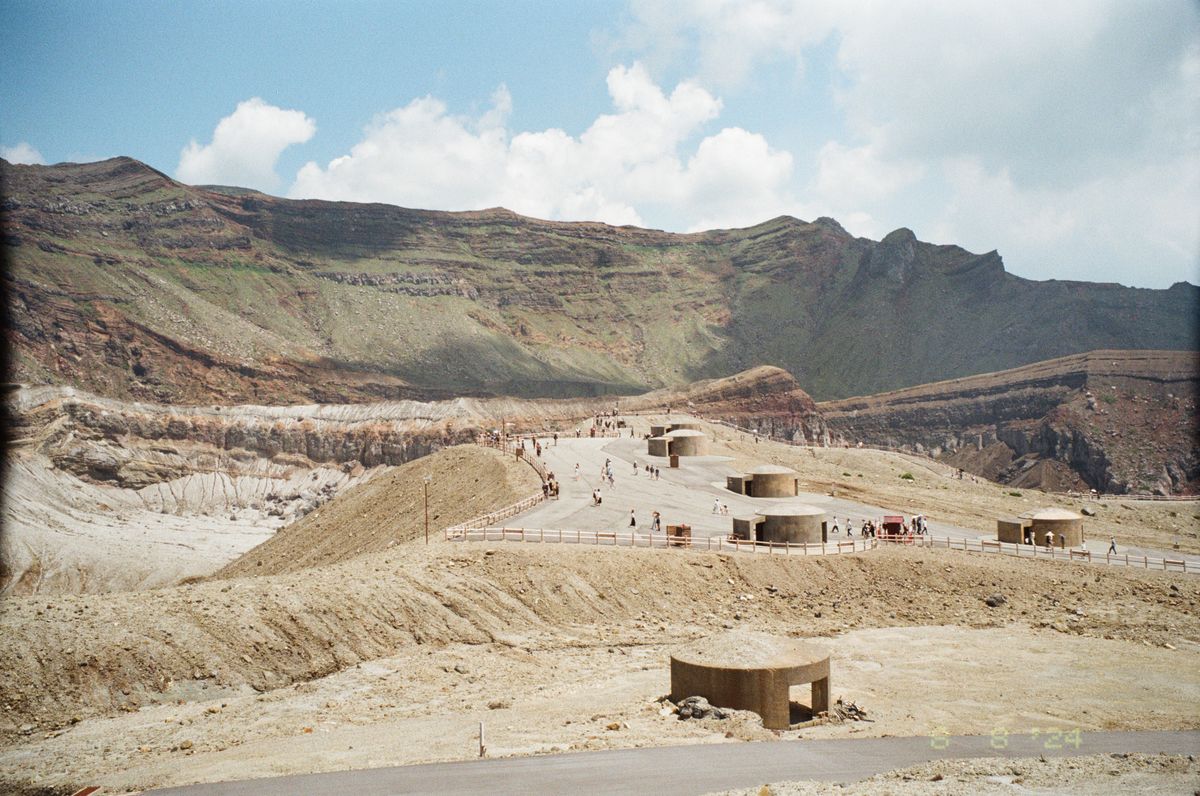
Mount Aso sits 45km east of the city and defines what is different about Kumamoto Prefecture. The outer caldera is 25km across — wide enough to contain the city of Aso (population 26,000), agricultural fields, and resort hotels. The inner Nakadake crater is the world's largest active volcanic crater still accessible to regular visitors; it vents sulphurous gas daily and periodically forces evacuation. The highland grasslands of Kusasenri and Daikanbo viewpoint's 360-degree caldera panorama are among Japan's most singular landscapes.
Kumamoto City functions as a genuine regional capital — wide boulevards, a tram network, national-level hospitals, universities, and the full infrastructure expected of a 740,000-person city. The pace is noticeably slower than Osaka or Fukuoka, and property prices reflect the gap. Outside the city, Aso town (inside the caldera) is a quieter agricultural settlement with a strong outdoors culture. Amakusa is more remote — ferry-dependent for parts, subtropical climate, with a tight island community culture that draws people who specifically want that kind of life.
Shinkansen: Kumamoto to Fukuoka (Hakata) in 35 minutes; to Osaka in 2h45. Within Kumamoto City, a tram network runs two lines through the centre. A car is essential for Aso (bus service exists but is infrequent) and Amakusa (connected by bridge from Uto Peninsula). The Kyushu Shinkansen's southern extension connects Kumamoto to Kagoshima in under an hour.
Kumamoto City flats ¥5M–¥15M; houses ¥8M–¥25M. Aso area properties start from ¥1M–¥5M for farmhouses needing renovation; occasional akiya listings at ¥500K with significant work required. Amakusa island properties ¥500K–¥5M depending on condition and sea view. Prices run 40–60% below equivalent Fukuoka properties, and 70%+ below Tokyo.
The urban anchor: Kumamoto Castle, the tram network, Shimotori and Sunroad shopping arcades, a food scene built on basashi, karashi renkon, and Kumamoto ramen. Full city infrastructure with Shinkansen access to Fukuoka.
Life inside the caldera: volcanic landscape, cattle farming, onsen, hiking trails on the outer rim, and a proximity to active Nakadake crater that requires emergency plan awareness. The most dramatic natural setting of any Japanese prefecture capital area.
The Kuma River valley town: onsen ryokan along the river, traditional townscape, the Kumagawa Rifting whitewater experience, and Hitoyoshi Castle ruins. The most accessible river-valley lifestyle town in the prefecture.
Island life on the Shiranui Sea: subtropical coast, hidden Christian heritage (churches listed for UNESCO recognition), dolphin watching, and a ferry-connected island culture. For buyers who specifically want coastal island living in Kyushu.
Where To Start
Four ways to start in Kumamoto
The Aso Rope Way from Aso station takes visitors to within 100 metres of the Nakadake inner crater rim — a 3km-wide active volcanic crater that is the largest in the world still open to regular tourist access. The crater closes when sulphur dioxide levels spike; check the <a href="https://www.aso.ne.jp/en/" target="_blank" rel="noopener" class="text-blue-600 dark:text-blue-400 hover:underline">Aso Tourist Information site</a> before the day. The adjacent Kusasenri meadow, 1,000 metres above sea level, is a volcanic plateau with a small lake ringed by horses — one of Japan's most photogenic highland landscapes.
Raw horse sashimi (basashi) is Kumamoto's most distinctive food and is not widely available outside the prefecture. The meat is sliced thin, served cold with grated ginger, minced garlic, and sweet soy sauce — the flavour is mild and lean, unlike red meat sashimi served elsewhere in Japan. Most specialist izakaya in the Shimotori and Shintengai areas serve it; <a href="https://www.jalan.net/en/japaninfo/article/kumamoto-basashi/" target="_blank" rel="noopener" class="text-blue-600 dark:text-blue-400 hover:underline">Jalan's Kumamoto food guide</a> lists several dedicated basashi restaurants in the city centre.
The 2016 Kumamoto earthquake damaged 49 of the castle's 49 structures to varying degrees. The publicly-funded 20-year restoration project has rebuilt the main Tenshukaku tower (reopened 2021) and is currently restoring the Uto Yagura and Higashi Juhachiken Yagura towers. The castle grounds remain open; viewing points are marked to watch current reconstruction work. The restoration budget is publicly available and the project is considered a model for earthquake heritage recovery in Japan.
Five bridges (the Amakusa Gokyo) connect the Uto Peninsula to Amakusa Hondo across a chain of islands — a 17km road journey over open sea that is one of Kyushu's most spectacular drives. At Hondo, <a href="https://www.city.amakusa.kumamoto.jp/kankoh/english/" target="_blank" rel="noopener" class="text-blue-600 dark:text-blue-400 hover:underline">Amakusa City</a> has a Christian heritage museum documenting the 16th-century missionary period and the 1637 Shimabara Rebellion. From Hondo, dolphin-watching boat tours operate year-round; the bay has one of Japan's largest resident bottlenose dolphin populations.
Daily Life in Kumamoto
Kumamoto City operates a tram network — two lines linking the Shinkansen station to the castle and through the commercial centre to the Suizenji district — which gives the city a character different from most Japanese regional capitals, where bus networks have replaced streetcars. The trams run frequently, are flat-fare (¥170), and the core commercial districts are walkable from the main tram stops. Shimotori covered arcade runs 600 metres north from Karashimachi intersection; Sunroad arcade connects perpendicular. Both are operational year-round and house the full range of daily shopping.
The city has four national universities (Kumamoto University, Kumamoto Prefectural University, Kumamoto Gakuen University, and Prefectural University of Kumamoto), multiple national-level hospitals including the Kumamoto University Hospital trauma centre, and a regional government headquarters that employs a significant share of the white-collar workforce. The overall economy is diversified across manufacturing (Sharp and Honda have facilities here), agriculture, and the government-healthcare sector.
Outside the city, Aso town is a smaller, quieter settlement oriented around agriculture, tourism, and outdoor sports. The caldera interior has its own climate — cooler summers, heavier snowfall in winter — and living there means adapting to volcanic activity monitoring (phone alerts when eruption risk increases) as part of normal life. Residents describe it as a genuine advantage: the landscape is unlike anywhere else they could afford to live.
Food and Drink
Basashi (馬刺し) — raw horse sashimi — is Kumamoto's signature dish and the one that most surprises visitors. The meat is lean, mild, and served in very thin slices with grated fresh ginger, minced garlic, and a sweet soy-based dipping sauce. Breeding and butchering horse for food has been practiced in Kumamoto since at least the Edo period; the prefecture accounts for the majority of Japan's horsemeat consumption. It is standard menu fare at local izakaya and available at major supermarkets, but dedicated basashi restaurants in the Shimotori district serve the full range — loin, shoulder, fatty cuts, liver — that the prefecture is known for.
Karashi renkon (辛子蓮根) is a Kumamoto invention: lotus root packed with a mustard-miso paste, battered in turmeric-yellow tempura coating, and sliced into cross-sections that show the lotus root's characteristic holes. It has been made in Kumamoto since the 17th century and is among Japan's more photogenic regional foods — the yellow cross-section is used as a food souvenir, sold in vacuum packs at Kumamoto station. Kumamoto ramen is a distinct regional style: pork bone broth, thinner than Fukuoka tonkotsu, with garlic chips and black mayu (burnt garlic oil) as standard condiments.
The Amakusa Islands contribute a seafood culture based on the Shiranui Sea's unusual combination of Pacific and inland sea currents. Sea bream, blowfish (fugu), and kuruma prawn are local specialties. The Kumamoto prefecture food guide covers the full range from basashi through to the Aso-raised wagyu beef (Akaushi cattle, raised on the caldera grasslands, with a distinctive red-tinged lean meat).
Culture and Events
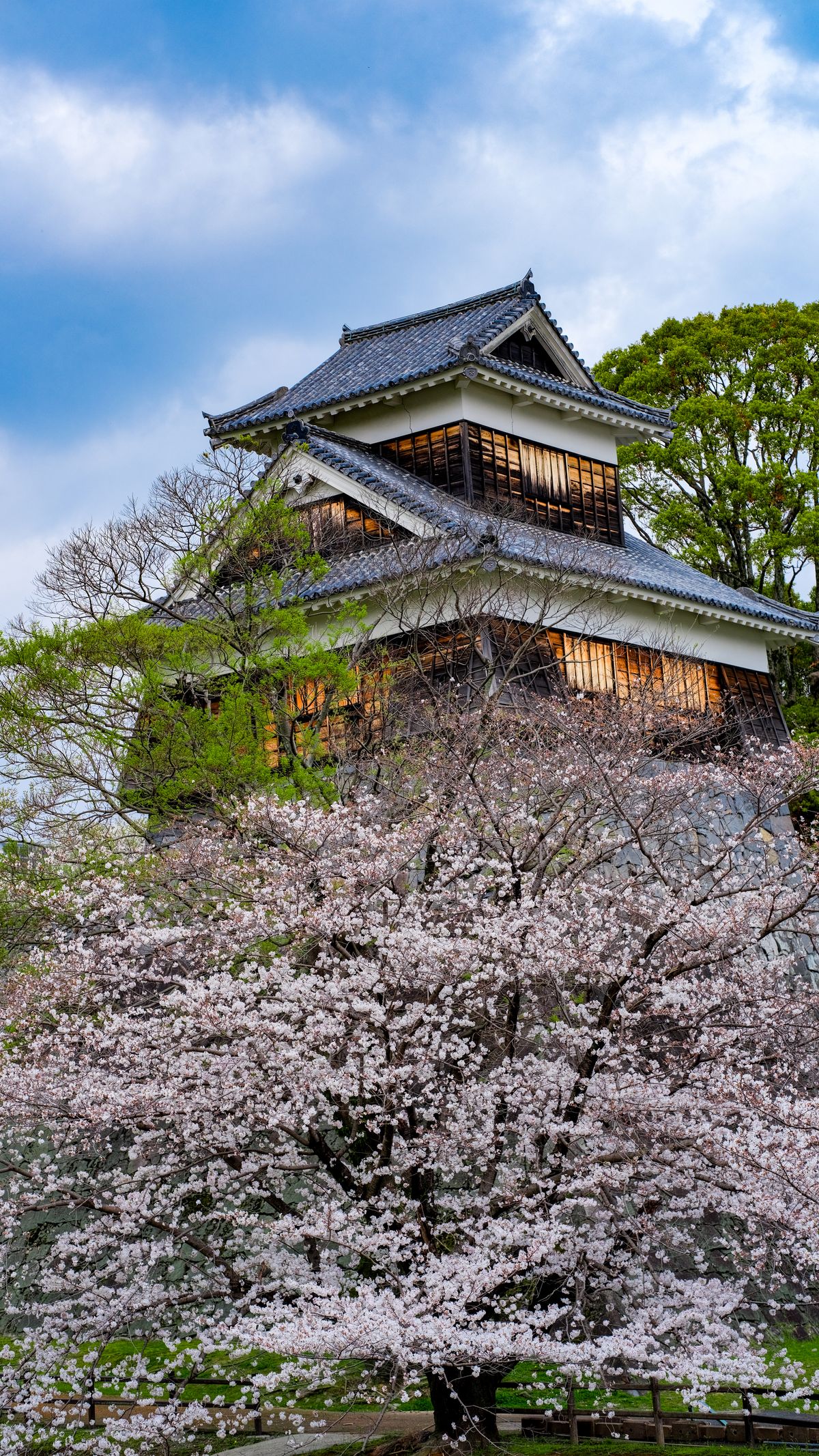
The Kumamoto Castle Spring Festival (April) is the prefecture's largest cultural event — cherry blossoms framing the black tower and curved stone ramparts, night illumination of the castle walls, traditional performing arts in the grounds. The castle is visible from much of the city and the illuminated spring images are among Kumamoto's most photographed. The earthquake restoration has added a new dimension: the visible scaffolding of ongoing work on the ramparts and secondary towers is now part of the view, and the ongoing story of the reconstruction has become part of the castle's identity.
The Hi no Kuni Kumamoto Festival (August) is the city's major summer celebration, centred on a parade of samurai costumes representing the domain lords who built Kumamoto over the centuries — the Kato clan, the Hosokawa clan, and others. The Hosokawa clan (who governed from 1632 to 1871) introduced tea ceremony culture at a level that made Kumamoto a significant tea city; Kumamoto City's English tourism portal lists tea ceremony experiences at Suizenji Jojuen garden year-round.
The Amakusa Islands carry a different cultural layer: 26 churches built by descendants of the kakure kirishitan (hidden Christians) who survived two centuries of anti-Christian persecution after the 1637 Shimabara Rebellion. The Amakusa Rosario Festival (October) commemorates this history with a procession through Hondo. The architecture of the churches — European Gothic style constructed by Japanese carpenters with local volcanic stone — has been nominated for UNESCO World Heritage listing.
Weekends and Escape
Hitoyoshi and the Kuma River sit 80km south of Kumamoto City — a 90-minute drive into a deep river valley framed by the Kuma mountains. The Kuma River is one of Japan's three officially designated "great rivers" (Nihon sankei) for its rapids and canyon scenery. Kumagawa Rifting (whitewater boat rides through the canyon) operates March through November from Hitoyoshi Port; the town has a cluster of onsen ryokan along the riverbank and the ruins of Hitoyoshi Castle on the hillside above. The valley sustained serious flooding in the 2020 Kuma River disaster, but the onsen district and rafting operations have fully rebuilt.
The Takachiho Gorge straddles the Kumamoto-Miyazaki border 90km east of the city — a basalt canyon where the Gokase River has cut through volcanic columns to create 80-metre sheer walls and the 17-metre Manai Falls. Rowing boats are rented from the gorge basin year-round; the gorge is lit at night from July through November. The adjacent Takachiho Shrine hosts kagura (sacred dance) performances nightly — the Takachiho kagura is listed as a nationally important intangible cultural folk property.
The Amakusa Islands for coastal weekends: from Kumamoto City the bridge route takes 60–90 minutes to Hondo, Amakusa's main town. Dolphin watching from Hondo Port operates year-round (the bay has Japan's largest resident bottlenose dolphin population); snorkelling and sea kayaking around the southern islands operate from May to October. The clear waters of the Shiranui Sea have a visibility of up to 20 metres in summer — unusual for Japan's Pacific coast.