Japan's Mythological Heartland, Year-Round Surfing, and the Wagyu That Won the Olympics
Living in Miyazaki
The prefecture where Japanese mythology says the gods descended to earth — Takachiho Gorge with its boat rentals under a 17-metre waterfall — plus the warmest major climate on Kyushu, a Pacific surf coast, and Miyazaki wagyu that took the top prize at the Wagyu Olympics in 2007, 2012, and 2022.
Why People Choose Miyazaki
Miyazaki's practical case for living is the climate. The prefecture has Japan's warmest average annual temperature among major prefectures, and that translates into real lifestyle differences: year-round surfing, gardens that function differently from those elsewhere in Japan, an outdoor-facing daily life that Tohoku or even the Kanto plain cannot offer. The Pacific coast is not a metaphor — the ocean is genuinely accessible from most towns in the prefecture.
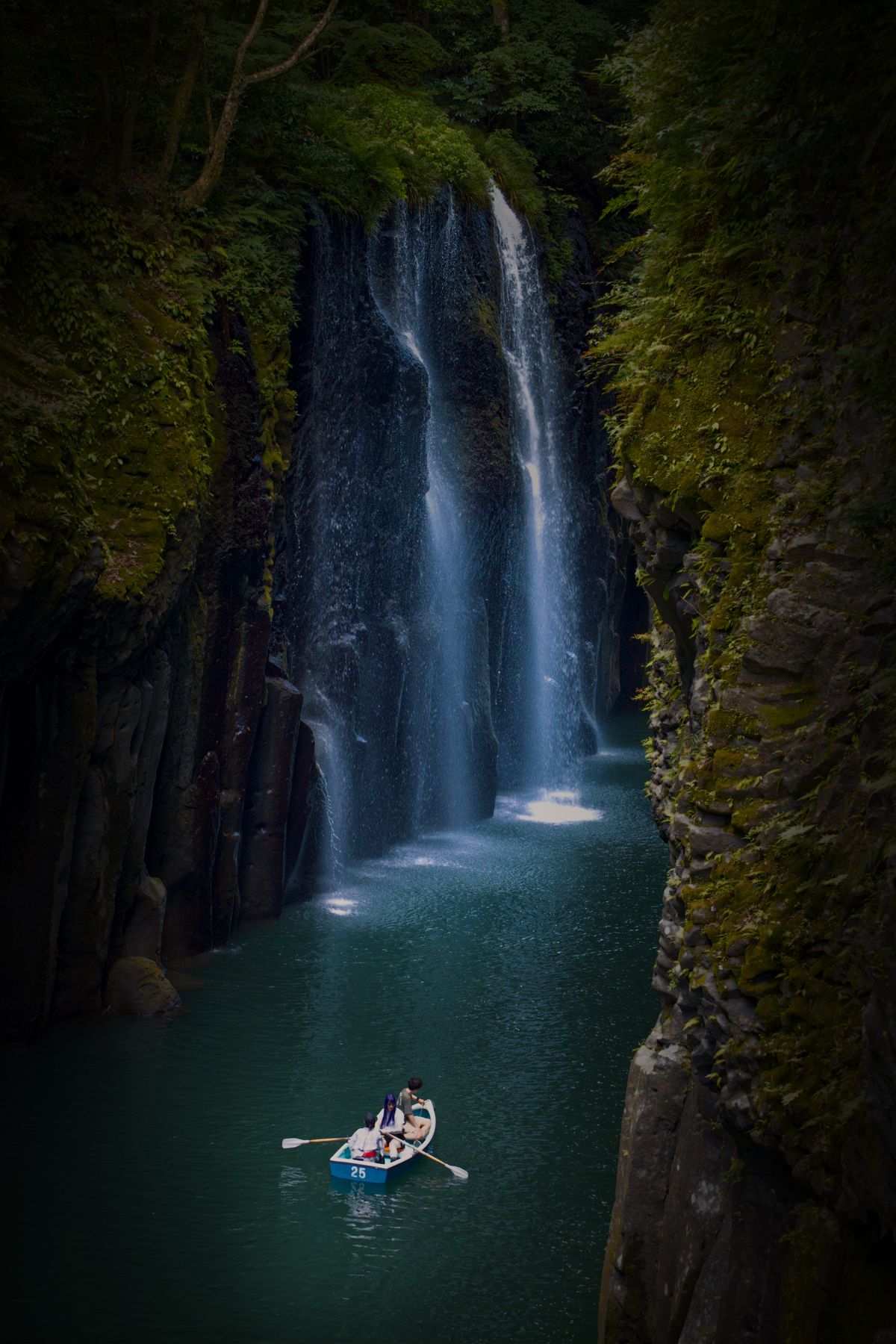
The mythological dimension is real geography: Takachiho is where the Kojiki (Japan's oldest chronicle, 712 AD) places the creation of the Japanese islands and the descent of the sun goddess's grandson. The gorge itself — 100m of basalt columns carved by the Gokase River, accessible by rental rowboat — is one of Japan's most photographed locations for reasons that are visually obvious. The Amano Yasukawara cave 2km along the river bank is where the gods gathered; it is covered in thousands of small stone cairns and has a quality of stillness that is not explained by its physical dimensions.
Miyazaki wagyu has won the Grand Champion title at Japan's Wagyu Olympics (held every five years) in 2007, 2012, and 2022 — three consecutive championships that no other prefecture has achieved. This is not marketing: it is the outcome of a strict breeding and assessment regime for Kuroge Wagyu cattle raised in the prefecture's highland and coastal pastures.
Miyazaki City (population 400,000) is the prefectural capital with an unhurried Pacific-town character — the Tachibana-dori avenue lined with Phoenix palms (originally planted for a 1940 imperial visit) gives the centre an unusual tropical formality. The city has good hospital infrastructure, an active local food and drink scene, and a beach culture that most inland prefectures lack. Life here is genuinely warm-weather oriented.
Miyazaki has an airport with direct flights to Tokyo Haneda (1h25), Osaka Itami (1h), and domestic connections. There is no Shinkansen — the Nichiran limited express to Hakata takes 4h30. A car is effectively mandatory for anything beyond Miyazaki City: Takachiho is 2h30, Aoshima is 20 min south, and the Hyuga coast requires driving. This isolation is both the drawback and the defining quality of the prefecture.
Miyazaki City houses ¥4M–¥15M; coastal towns (Nichinan, Hyuga) ¥1M–¥8M. Rural northern mountain towns (around Takachiho) from ¥500K with renovation required. Miyazaki prices are among the lowest in Kyushu — the lack of Shinkansen connection keeps values down despite the genuine lifestyle quality.
The palm-lined capital: Phoenix-tree avenues, Pacific beach access, Miyazaki Shrine, good food scene, and the city's mild year-round character.
Aoshima Island, Udo Shrine (carved into a sea cliff), Obi Castle town (designated Important Preservation District), and the devil's washboard wave-eroded rock platforms.
The mythological mountain town: the gorge, the cave shrine, Takachiho Shrine, and the traditional Yokagura dance performances held at local shrines through winter.
Northern Miyazaki: the Hyuga coast surf culture, Nobeoka's industrial port town practicality, and lower prices still than the southern coast.
Where To Start
Four ways to start in Miyazaki
The <a href="https://takachiho-kanko.jp/en/" target="_blank" rel="noopener" class="text-blue-600 dark:text-blue-400 hover:underline">boat rental at Takachiho Gorge</a> operates 8:30am–5pm daily and costs ¥2,000 for 30 minutes for two people. You row (or drift) through 100m of basalt column walls to the base of Manai Falls, a 17-metre cascade. The falls are only visible from the water. Go early to avoid queues — peak season (October foliage) can mean two-hour waits for boats.
The cave shrine 2km from Takachiho Gorge along the Iwato River is where, according to the Kojiki (712 AD), the eight million gods assembled to lure Amaterasu out of the cave where she had hidden after her brother's rampage. The cave mouth is covered in hundreds of thousands of small stone cairns built by visitors. The 5am walk from Takachiho town before the tourist coaches arrive is a different experience from midday.
Miyazaki City has specialist wagyu yakiniku restaurants that serve the actual competition-grade cattle at prices well below what the beef commands in Tokyo. <a href="https://www.miyazaki-beef.jp/" target="_blank" rel="noopener" class="text-blue-600 dark:text-blue-400 hover:underline">Miyazaki Beef</a> (certified Kuroge Wagyu from within the prefecture) is the formal classification; Miyazaki wagyu as a brand refers specifically to cattle that win competition assessment. Ask for the certified Miyazaki Beef mark on the menu rather than generic wagyu.
The coastal Route 220 from Miyazaki City to Nichinan passes Aoshima — a small island accessible via a 300m causeway, surrounded by the "devil's washboard" wave-eroded rock platforms (oni-no-sentakuita). Continue to <a href="https://www.udojingu.com/" target="_blank" rel="noopener" class="text-blue-600 dark:text-blue-400 hover:underline">Udo Jingu</a> — a shrine complex carved into a coastal sea cave, accessible by descending a cliffside path, with the main hall inside the cave itself.
Daily Life in Miyazaki
Miyazaki City's defining visual is Tachibana-dori — the main avenue lined with 900 Phoenix canariensis palms planted for the 1940 imperial visit. The palms are mature and large; walking the avenue feels subtropical in a way that most Japanese cities do not. The covered Tachibana arcade and Ichibankan shopping street form the commercial core around Miyazaki Station.
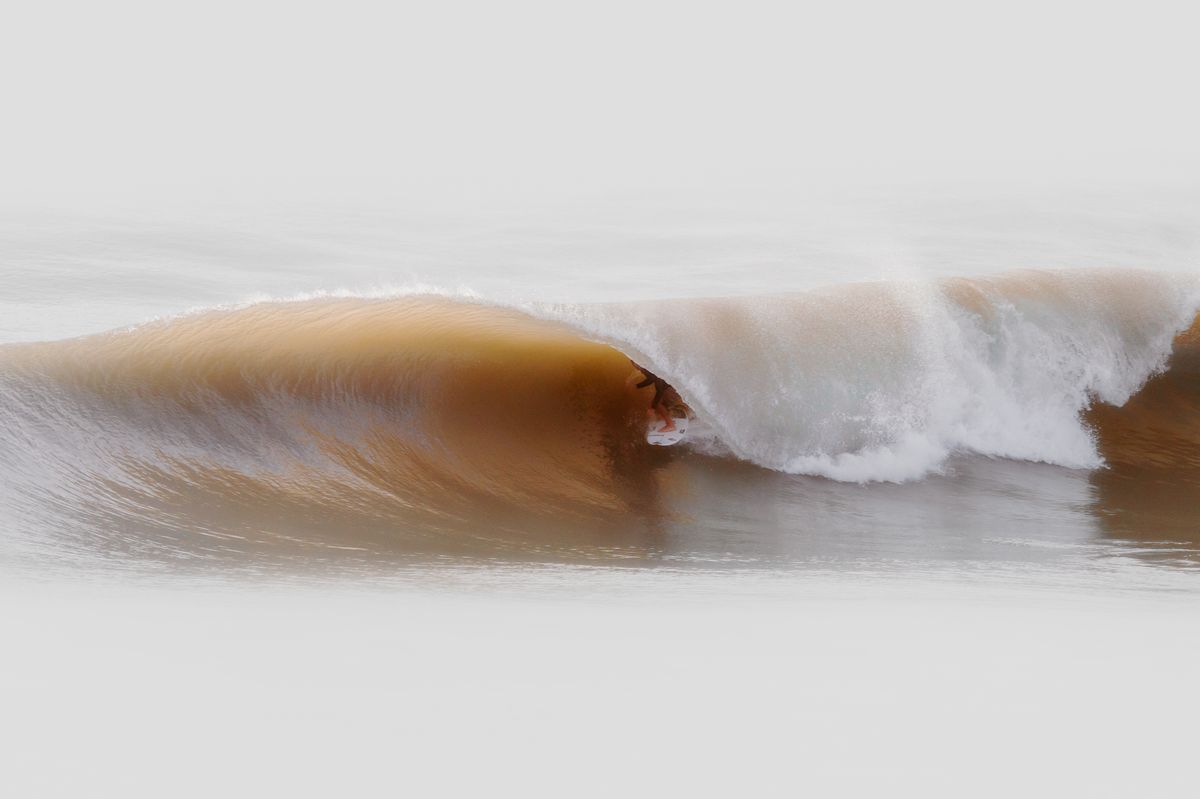
The surf culture is not a fringe activity here. Ito Beach, 15 minutes south of the city, has a surf school and year-round rentals; Kisakihama and the Hyuga coast further north attract more experienced surfers chasing the Pacific swells. The warmest water temperatures in mainland Japan mean that wetsuits are needed only in winter rather than year-round, and the lifestyle framework — small cafes, surf shops, beach bars — exists at a scale that reflects genuine demand rather than tourism positioning.
The food and drink scene is underrated relative to Fukuoka's reputation. Chikin nanban — deep-fried chicken in sweet vinegar sauce with tartar — was invented here in the 1950s and remains a near-daily staple. Miyazaki City's izakaya district around Nishitachibana-dori is dense and lively on weekday evenings.
Food and Drink
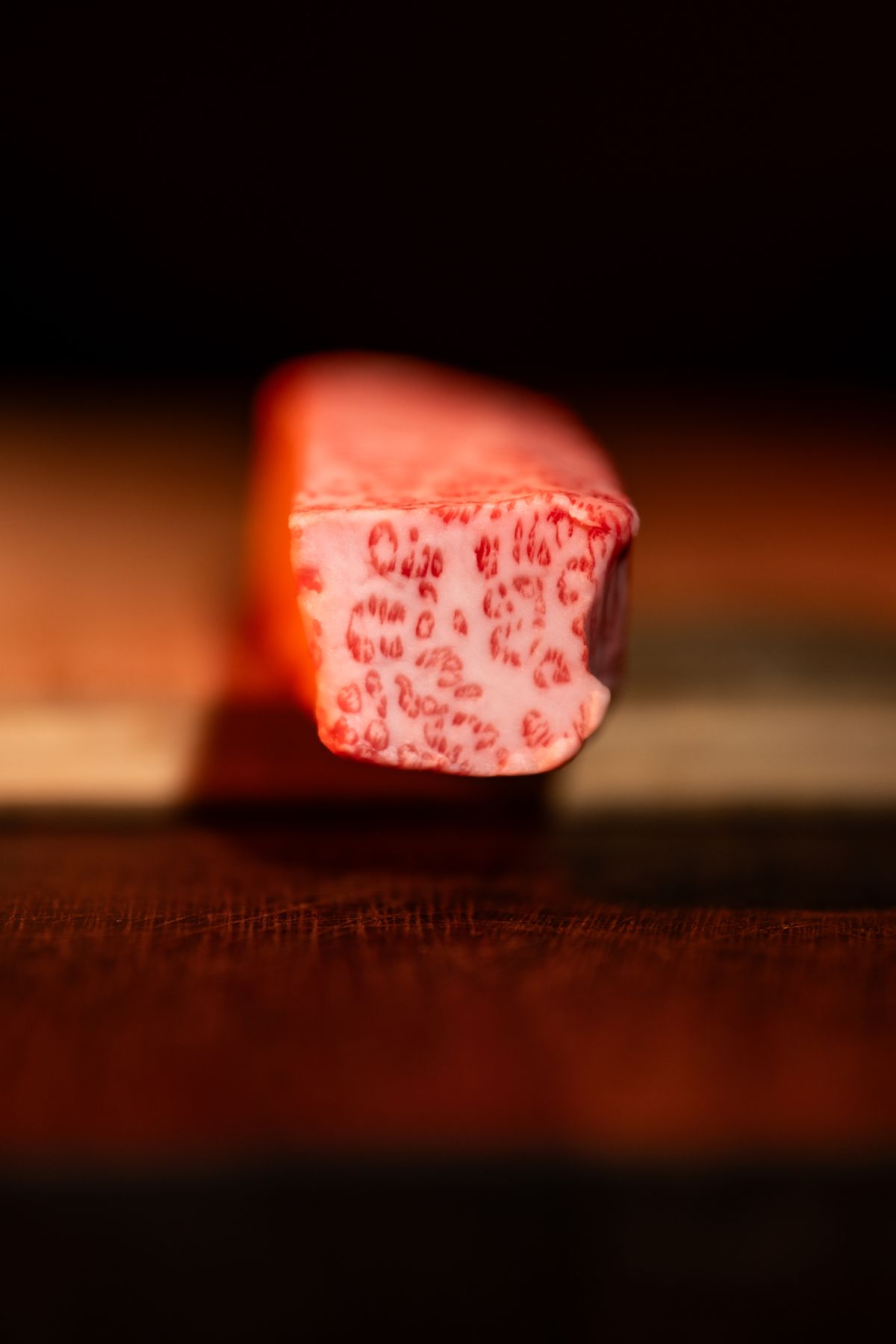
Miyazaki Beef is Japan's most decorated wagyu, winning the Wagyu Olympics Grand Champion title in 2007, 2012, and 2022. The Miyazaki Beef certification applies specifically to Kuroge Wagyu raised and slaughtered within the prefecture that meets A4 or A5 grade standards. In Miyazaki City's yakiniku restaurants, certified Miyazaki Beef is available at prices significantly below what the same quality commands in Tokyo or Osaka.
Chikin nanban (chicken nanban) is Miyazaki's own invention — a post-war creation from a restaurant in Nobeoka, now standard across Japan but in a distinctly inferior form outside its origin prefecture. The original is fried chicken dipped in sweet-sour nanban vinegar sauce, topped with house-made tartar, and eaten hot. The Ogura chain, which claims to be the original recipe, has outlets in Miyazaki City.
Uma no hana — horse sashimi — is less celebrated here than in Kumamoto but is widely available, served with grated ginger and soy, and cheaper than the Kumamoto version. Miyazaki also grows hyuga-natsu citrus — a large, mild yellow citrus unique to the prefecture, eaten by peeling back the pith and eating the inner flesh raw, with less acidity than most citrus varieties.
Culture and Mythology
The Kojiki (712 AD) and Nihon Shoki (720 AD) both place Japan's creation mythology in what is now Miyazaki Prefecture. Takachiho is where Ninigi-no-Mikoto, grandson of Amaterasu, descended from the heavens to govern Japan. The Takachiho Shrine has stood on this site since the 1st century AD; its camphor trees are estimated at 800 years old. The nightly Yokagura dance performance (8pm, ¥1,000) condenses a ritual that runs eight hours at local farmhouses through winter — the full Takachiho Yokagura is 33 dances performed through the night from November to February at the request of individual households.
Udo Jingu on the Nichinan coast is among Japan's most dramatically situated shrines — built into a sea cave in the cliff face, accessed by descending carved stone steps. The main hall is inside the cave, and the interior is lit by the cave opening reflecting off the Pacific. The shrine enshrines a deity associated with safe childbirth and maritime safety.
The Aoshima Shrine on Aoshima Island sits inside a subtropical jungle on an island entirely surrounded by the devil's washboard rock formations — wave-eroded Miocene sediment layers that extend 60m out from the shoreline in symmetrical ridges. The island is 1.5km in circumference and takes 20 minutes to walk round.
Weekends and the Outdoors
The Nichinan Coast drive (Route 220) is one of the most scenic coastal roads in Kyushu: Phoenix palm plantations, ocean views, Aoshima's rock formations, and the sea-cliff Udo shrine make a full day. The preserved castle town of Obi is a legitimate Edo-period streetscape rather than a reconstruction — the Yoshokan samurai residence is original, and the Obi-jo castle keep is a faithful rebuild on original foundations.
For hikers: Takachiho's Kunimigaoka viewpoint is a 20-minute walk from the town centre that overlooks a sea of clouds (unkai) in the valley below at dawn in autumn and winter. This is a genuinely spectacular natural phenomenon — the Gokase valley fills with cloud while the peaks remain clear — and requires only an early alarm, not technical equipment.
The Kirishima mountain range straddles the border between Miyazaki and Kagoshima Prefectures; the Takachihonomine peak (1,574m) on the Miyazaki side is the mountain of mythological descent. The crater rim hike takes 3 hours return from the parking area and rewards with views over both prefectures on clear days.
Three Days In Miyazaki
A simple first-trip route
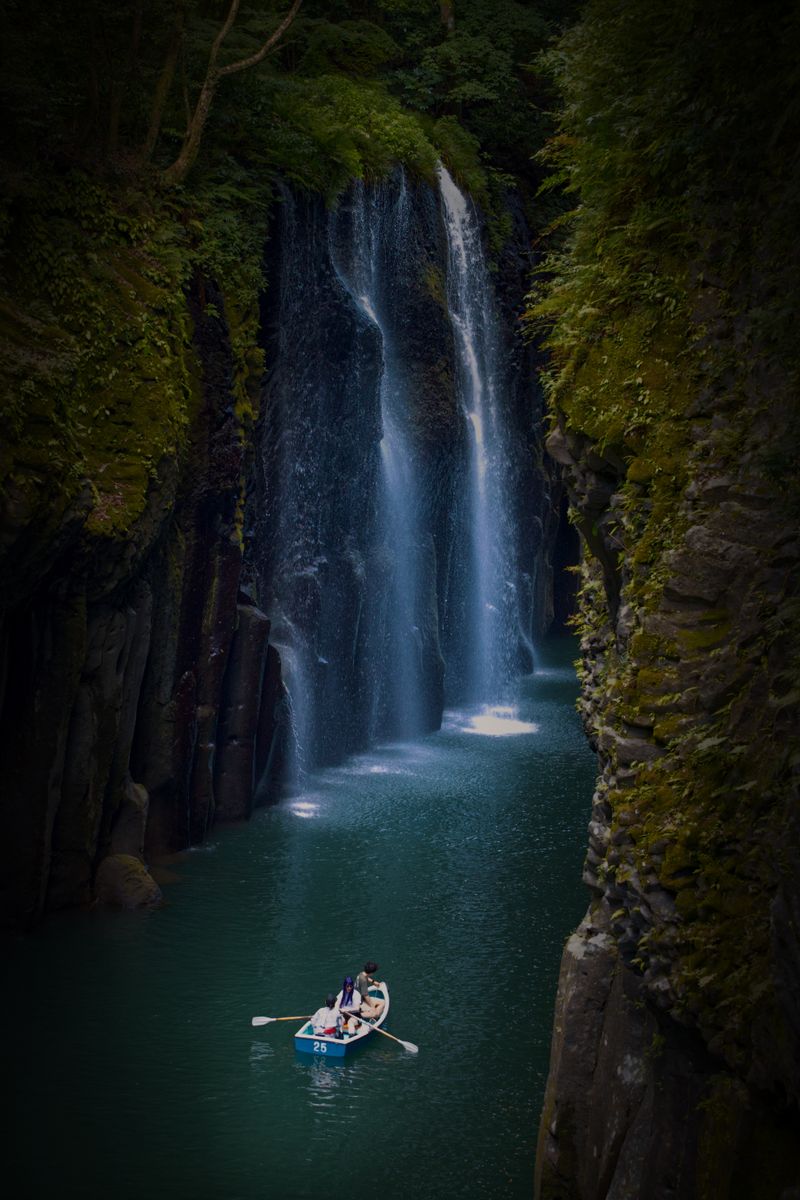
Drive to Takachiho (2h30 from Miyazaki City or 2h from Kumamoto). Arrive by 8am for boat rental before the queue builds. The gorge walk on foot is 1km and takes 30 minutes; the boat experience is 30 additional minutes. Walk 2km along the Iwato River to Amano Yasukawara cave before lunch. Afternoon: Takachiho Shrine and the Takachiho Yokagura dance performance (held nightly at the shrine, 8pm–9pm, ¥1,000 — a condensed version of the all-night agricultural ritual that runs full-length at local farmhouses from November to February).
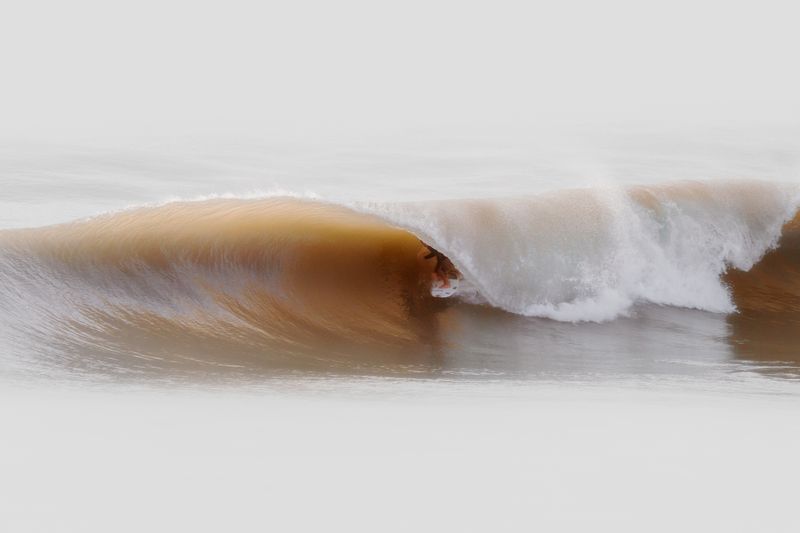
Drive Route 220 south from Miyazaki City. Stop at Aoshima (20 min) for the devil's washboard formation and the small subtropical island shrine. Continue to Udo Jingu — allow an hour for the descent to the cave and the cliff-face shrine. End the afternoon at Obi (Nichinan City) — a preserved castle town on the Sakatanigawa river with a 400m Edo-period streetscape, the Yoshokan samurai residence, and the local chicken dish chikin nanban for dinner (Miyazaki's other great food invention).
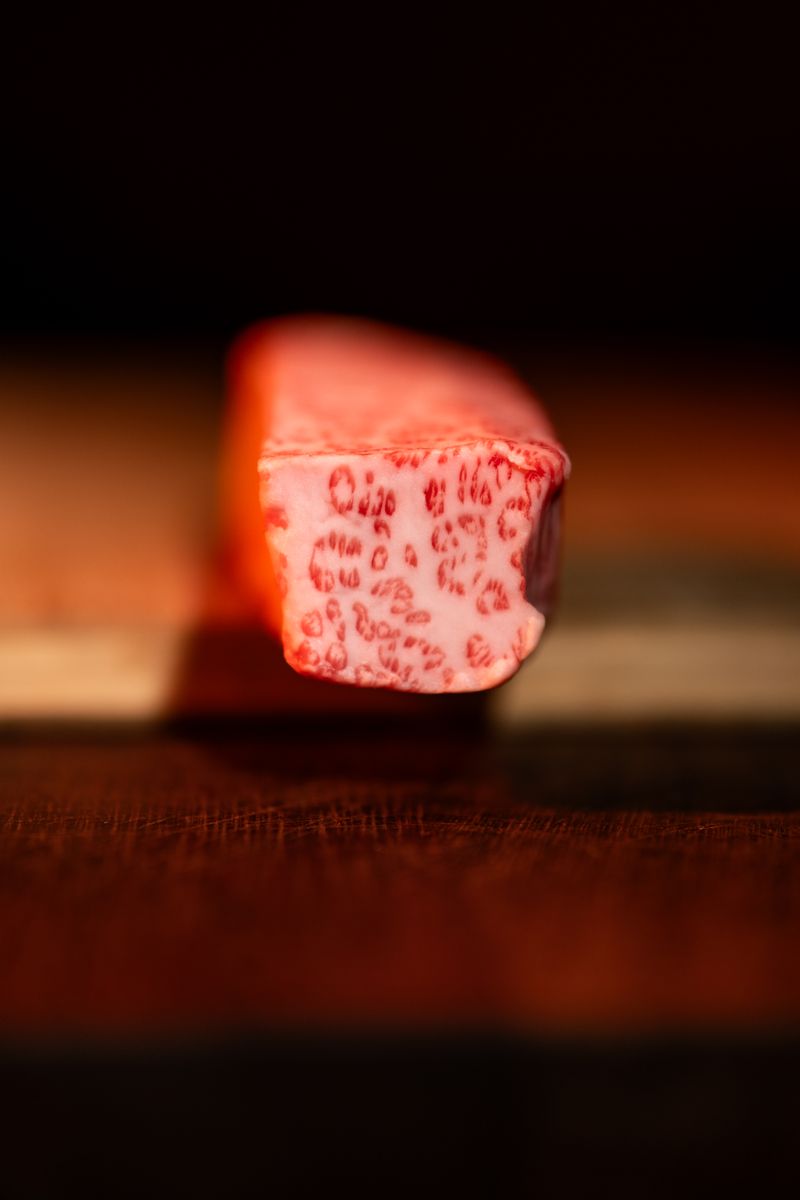
Miyazaki City's Miyazaki Shrine honours the mythological first emperor Jimmu — the grounds have ancient camphor trees and a tranquil atmosphere despite being within the city. The Phoenix Seagaia Ocean Dome area (now a resort hotel and golf course) gives access to the Pacific beaches at Kisakihama and Ito for an afternoon walk or surf lesson. Dinner at a Miyazaki wagyu specialist in the city centre.