Japan's Kitchen — and Its Most Direct City
Living in Osaka
The capital of Kansai and Japan's unofficial food capital — a city with its own personality, its own dialect, and a reputation for eating and spending that residents defend as cultural identity.
Takoyaki, okonomiyaki, kushikatsu, and the highest per-capita food spend in Japan. Kuromon Ichiba, Dotonbori, and a Michelin density that justifies the reputation.
Significantly cheaper than Tokyo for comparable property — central ward apartments at a fraction of Minato or Shibuya equivalents.
Kyoto in 15 minutes, Nara in 30, Kobe in 25. The Kansai region's cultural wealth is the real weekend proposition.
Osaka-ben, kuidaore, the comedy tradition — a distinct local personality that residents consider a quality-of-life advantage over the more reserved major alternatives.
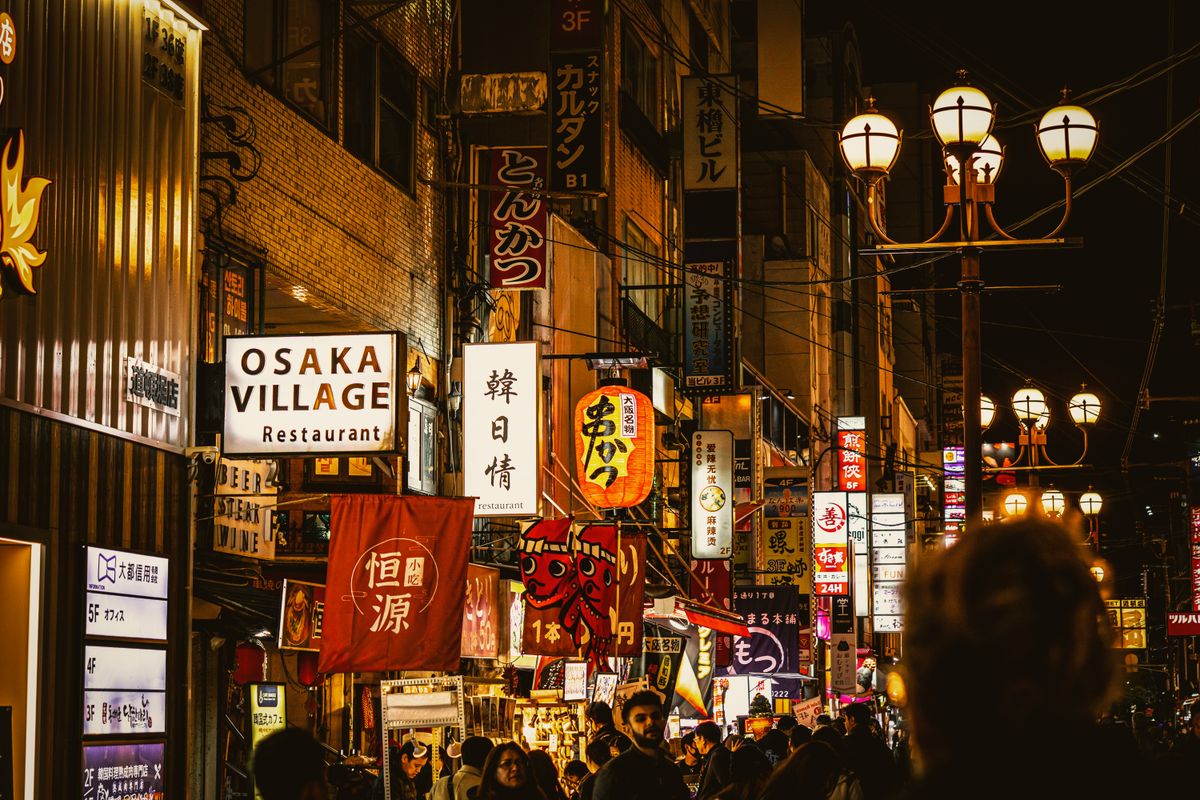
Dotonbori at Night
Dotonbori's canal and neon sign district — the visual centre of Osaka's food and entertainment culture.
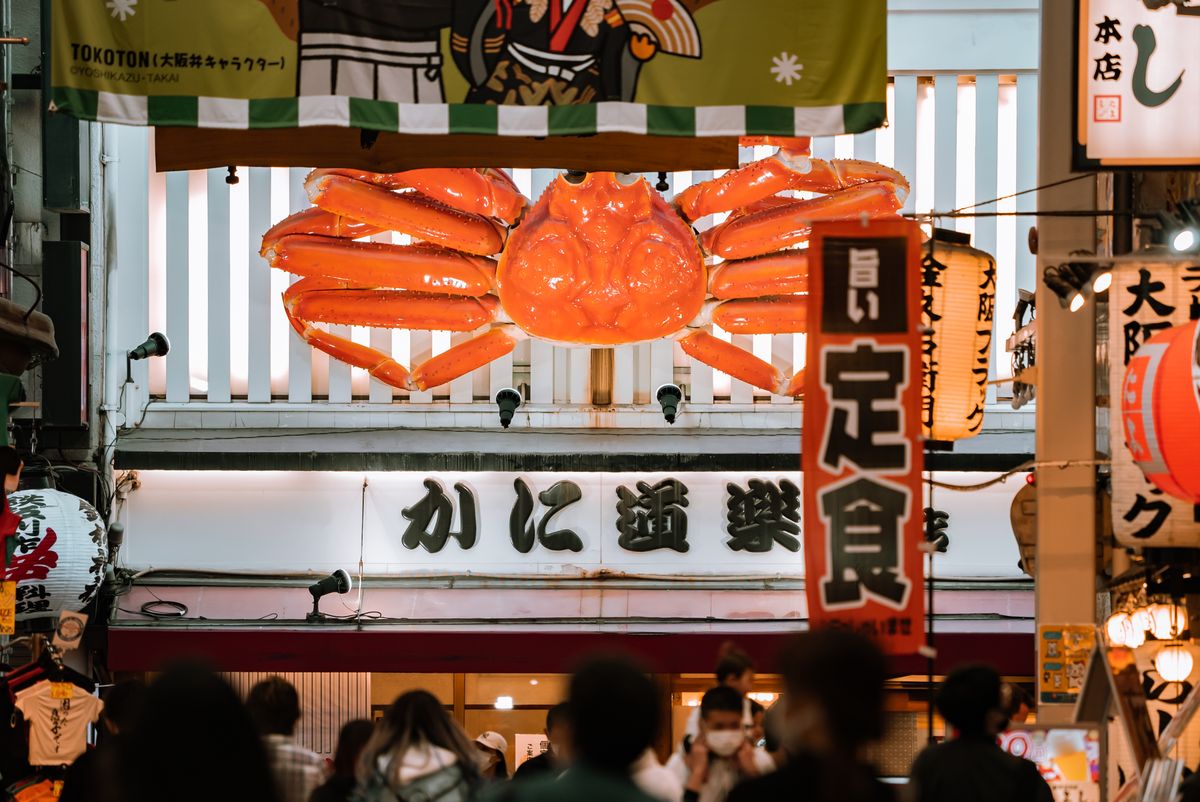
Kani Doraku — Dotonbori
The moving crab sign at Kani Doraku on Dotonbori has been Osaka's most recognisable landmark since 1960 — a seafood restaurant that has become an icon.
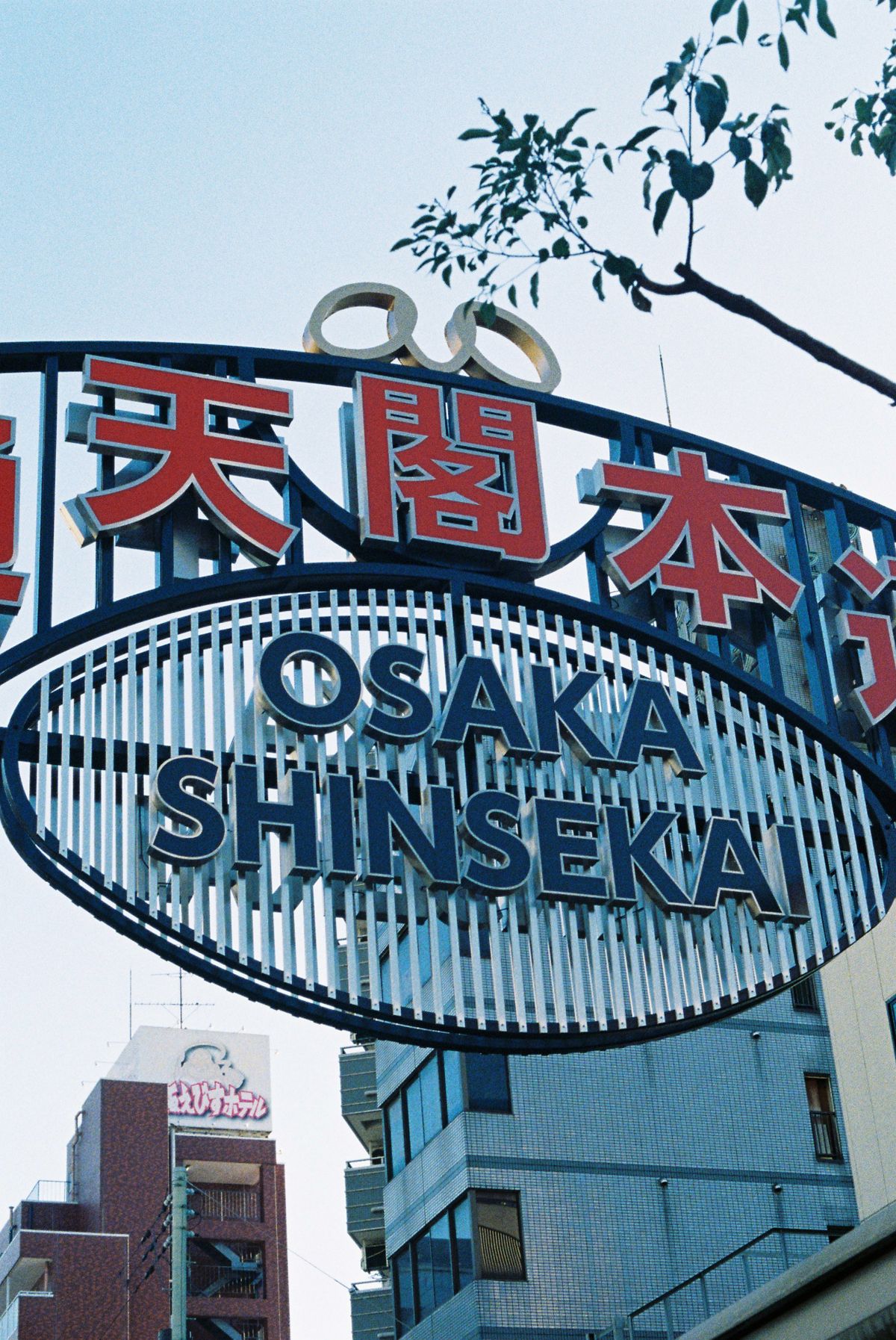
Shinsekai District
Shinsekai — built for a world's fair, never quite modernised, and still the most distinctly Osakan neighbourhood in the city.
Why People Choose Osaka
Osaka has been the commercial capital of Japan since at least the Edo period, when the city functioned as the country's rice distribution hub and its merchants developed a culture of pragmatism, food obsession, and direct dealing that persists in the local character. The phrase kuidaore — "eat yourself bankrupt" — is not ironic here; it describes a genuine set of priorities that shapes everything from how much an average household spends on food (highest in Japan) to the density of restaurants in the Namba district (where you cannot walk 20 metres without passing a queue).
For buyers, the practical case is strong. Osaka is cheaper than Tokyo by a meaningful margin — not marginally, but significantly — while offering comparable infrastructure, transport, and employment access. The Kansai region's secondary cities (Kyoto, Kobe, Nara) are all under 30 minutes. The international airport at Kansai International (KIX) operates 24 hours, unlike Haneda and Narita.
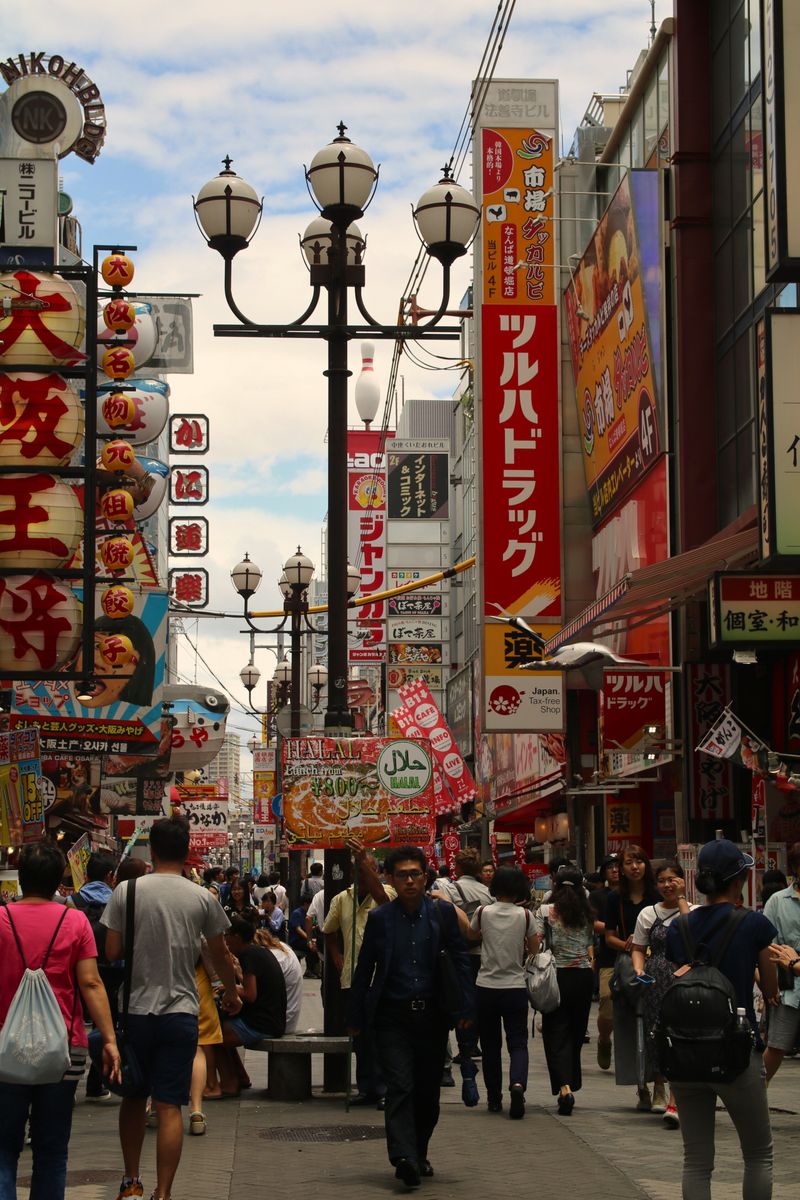
Osaka moves fast and eats constantly. The covered shopping arcades (Shinsaibashi, Tenjinbashi) run for kilometres; Namba and Dotonbori are genuinely busy at all hours. It is a denser, noisier city than Kyoto, and residents consider this a feature.
The Shinkansen from Shin-Osaka to Tokyo is 2h30. Within Osaka: the subway and JR loop line are comprehensive. Kyoto is 15 minutes by Shinkansen from Shin-Osaka or 30 minutes by Hankyu express. Car ownership in central Osaka is low and parking expensive.
Central ward apartments (Namba, Chuo, Tennoji) ¥8M–¥25M. Suburban houses in Higashiosaka, Sakai, and Neyagawa ¥3M–¥10M. Rural Osaka Prefecture akiya from ¥500K. Significantly cheaper than Tokyo for comparable properties.
The tourist and entertainment core — Dotonbori, Kuromon Market, Shinsaibashi. Dense, noisy, and convenient. Rental yields are strong; living here is for people who want everything within walking distance.
The older southern centre — Shitennoji temple, Tennoji Zoo, the Harukas skyscraper, and a more residential character than Namba. Better family access than the entertainment district.
The northern business district — department stores, Osaka Station, and the Kitashinchi bar and restaurant zone. More corporate, more expensive, with the best Shinkansen access.
The working suburbs: industrial heritage, lower prices, manufacturing craft identity (cutlery in Sakai, confectionery in Higashiosaka), and commuter access to central Osaka.
Where To Start
Four ways to start in Osaka
The canal district at night — the Glico Man sign, the Kani Doraku crab, the density of restaurant signs — is the clearest first impression of what Osaka's food culture actually looks like in built form.
Osaka's professional kitchen market has moved toward tourists but still has working fishmongers and produce stalls. The cooked-to-order grilled fish and oysters tell you more about the food culture than any restaurant does.
The retro district around Tsutenkaku Tower is working-class Osaka pre-gentrification — kushikatsu at 10am, pachinko, and an atmosphere that the more polished districts have lost.
The Kansai access from Osaka is its real proposition for buyers: Kyoto in 15 minutes, Nara in 30. Test whether you actually want to live in Osaka or whether Osaka is simply the transport hub you need.
Daily Life
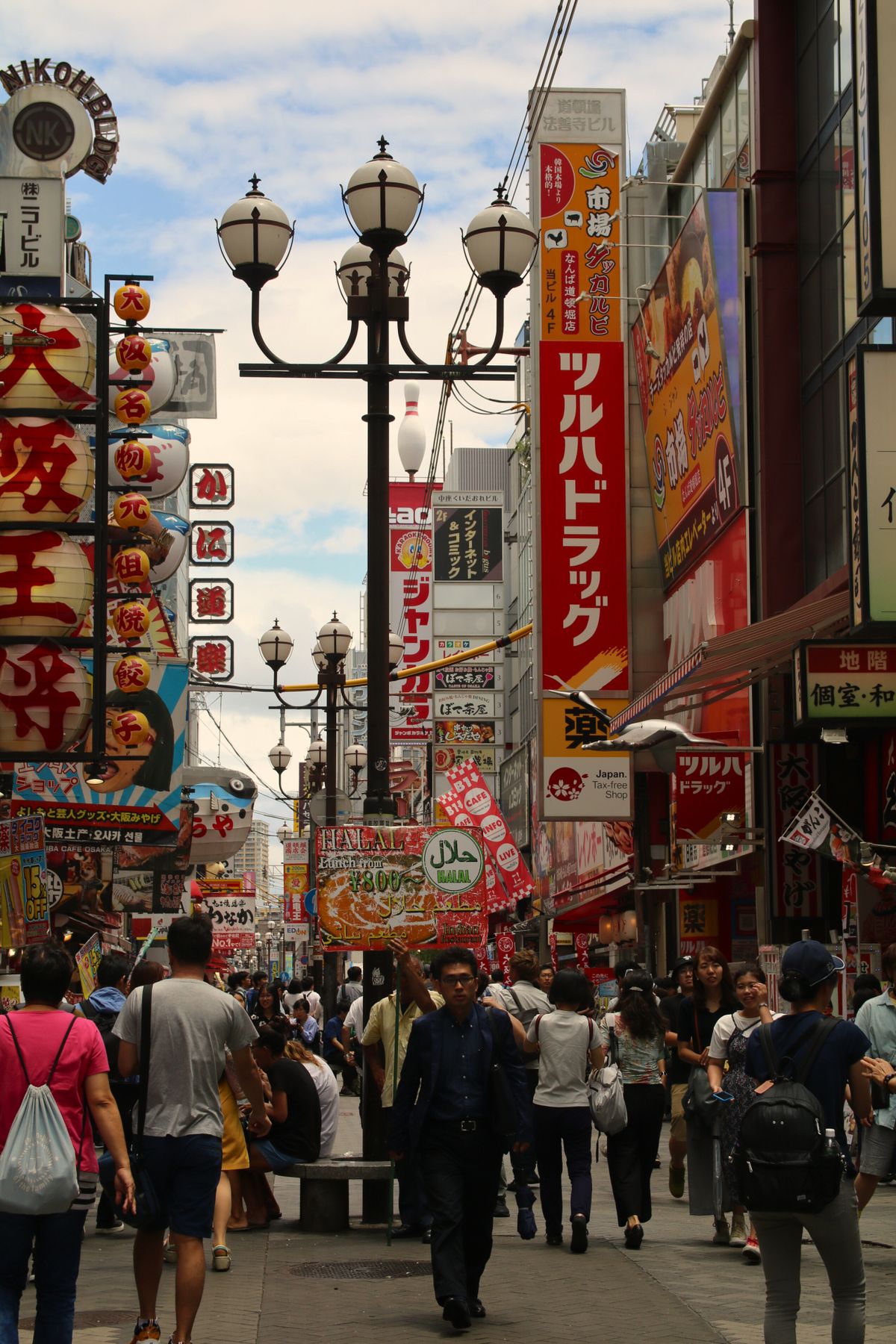
Osaka's everyday geography is shaped by its covered shotengai arcades and its subway network. The Midosuji line running north–south, connecting Umeda, Shinsaibashi, Namba, and Tennoji, is the spine of central Osaka. The JR Loop line handles the inner wards. Getting around the city without a car is straightforward; getting to the surrounding Kansai cities by train is fast and cheap. Namba and the tourist circuit are dense and crowded in ways that test patience; the residential wards of Sumiyoshi, Joto, and Naniwa are quieter and cheaper.
The Osaka-ben dialect is genuinely distinct from standard Japanese — a faster, more melodic register with different vocabulary and a comedic tradition that produced much of Japan's mainstream comedy industry. Whether this matters to a foreign buyer depends on how much Japanese they plan to use; for those who do speak Japanese, Osakans will tell you it takes about six months to follow local conversation at speed.
Food and Drink
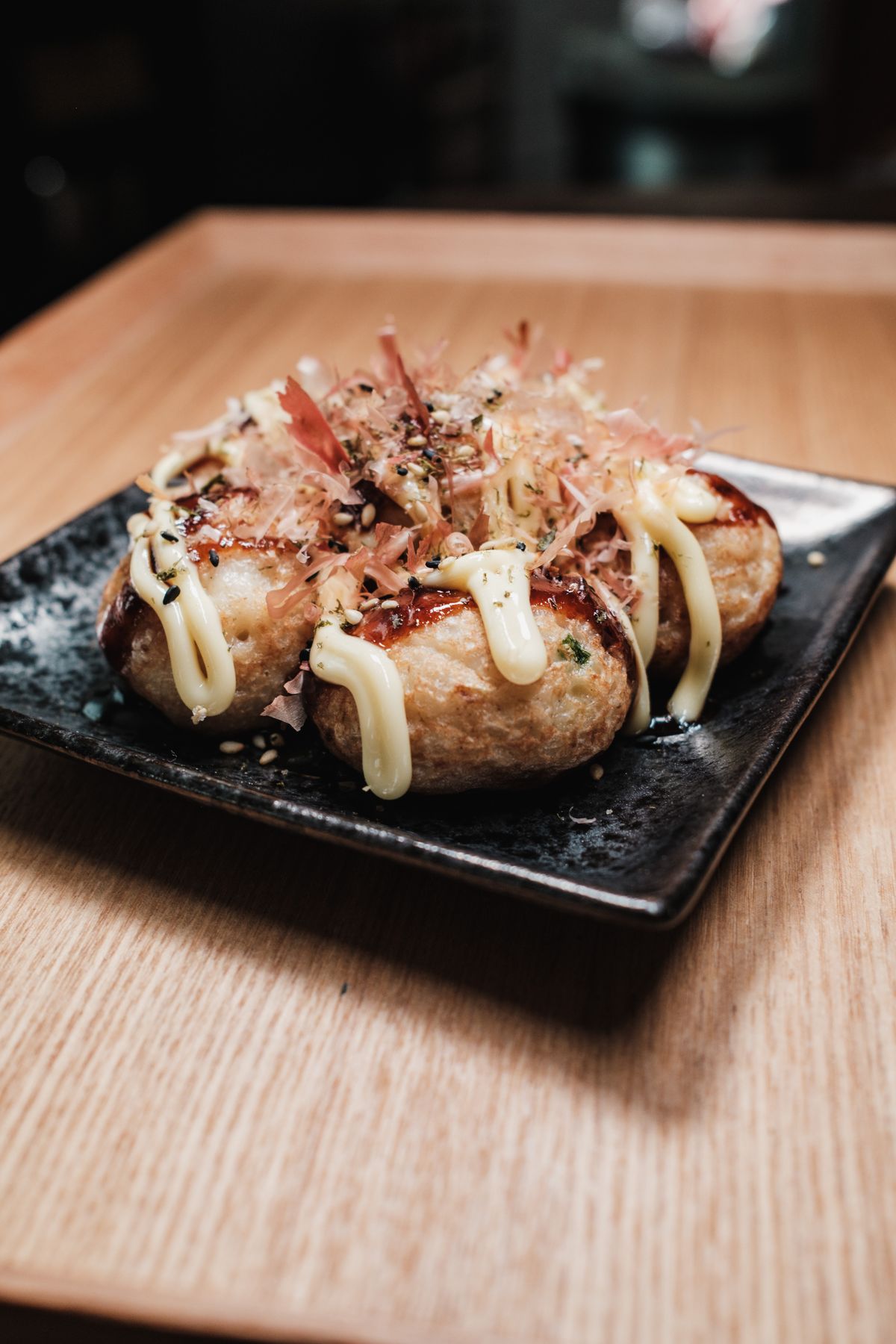
Takoyaki (octopus balls in batter, finished with a glossy sauce, bonito flakes that wave in the heat, and Japanese mayo) is the most iconic Osaka food — sold from the street, eaten from a tray, and produced faster than you would think possible. Okonomiyaki (the Osaka version — ingredients mixed into batter and cooked on a griddle, finished the same way) differs meaningfully from the Hiroshima style and its own restaurants take the question of correct technique very seriously. Kushikatsu — skewered and breaded-then-fried meat, vegetable, and seafood portions, eaten with a sauce into which you are absolutely not permitted to double-dip — originated in Shinsekai and has spread across the country without losing its stronghold there.
Kuromon Ichiba (the "Osaka kitchen") is a covered market that has been operating since 1902 and has become increasingly tourist-oriented while retaining some of the professional supply function it was built for. The cooked-to-order food at the market stalls — grilled tuna, oysters, wagyu — represents Osaka food culture at its most direct: expensive produce, minimal ceremony, eaten standing. The depachika (department store basement food halls) at Takashimaya, Isetan, and Hankyu Umeda represent the same culture at its most formal.
Culture and Events
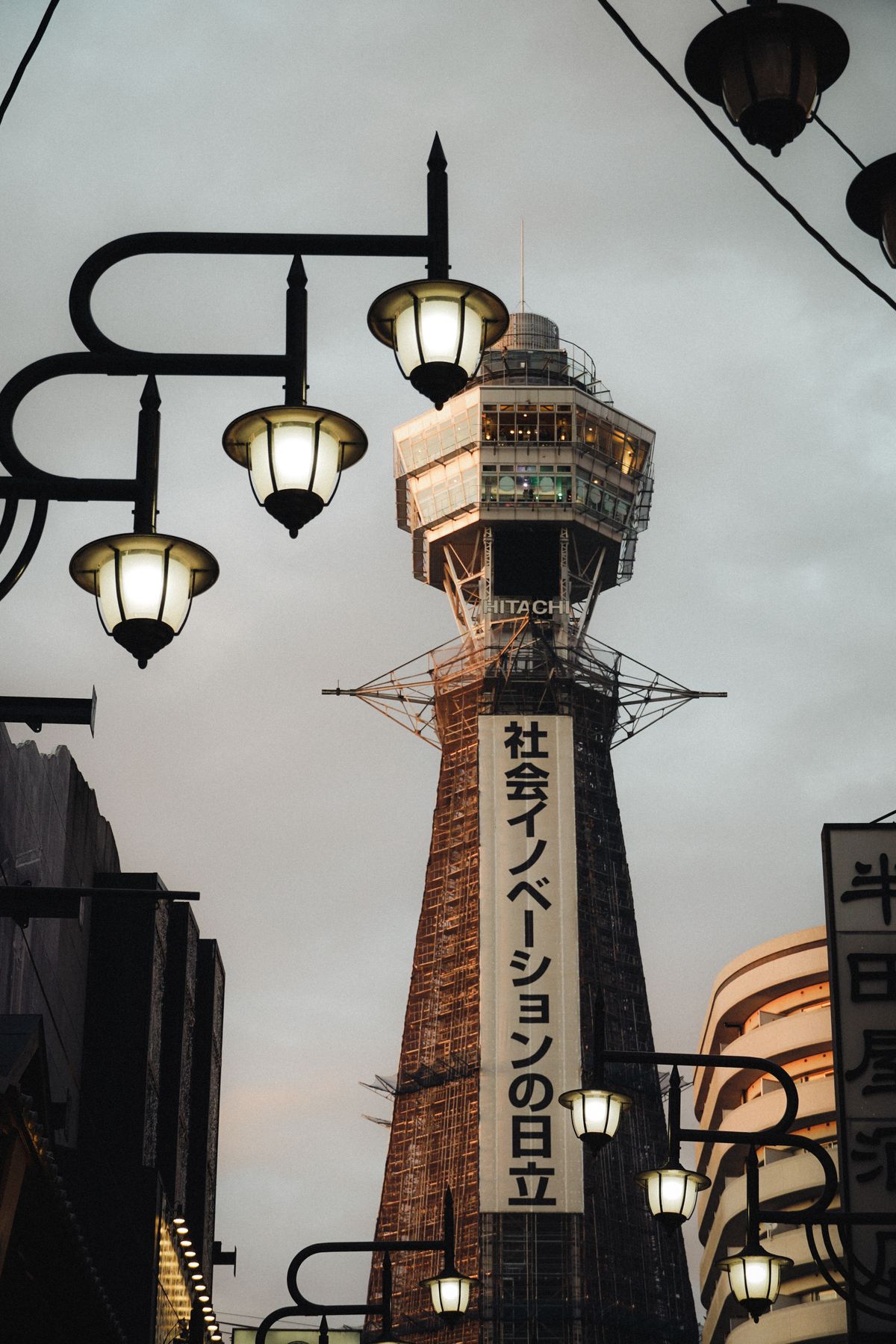
Shinsekai, built as a world's fair district in 1903, is Osaka's most idiosyncratic neighbourhood — a dense, retro grid centred on Tsutenkaku Tower, with kushikatsu restaurants, pachinko parlours, and a working-class atmosphere that has proven resistant to the gentrification reshaping surrounding areas. Tennoji Park and the adjacent art museum, Shitennoji Temple (Japan's oldest, founded 593), and the Abeno Harukas (Japan's tallest building, 300 metres) are all in the same southern corridor.
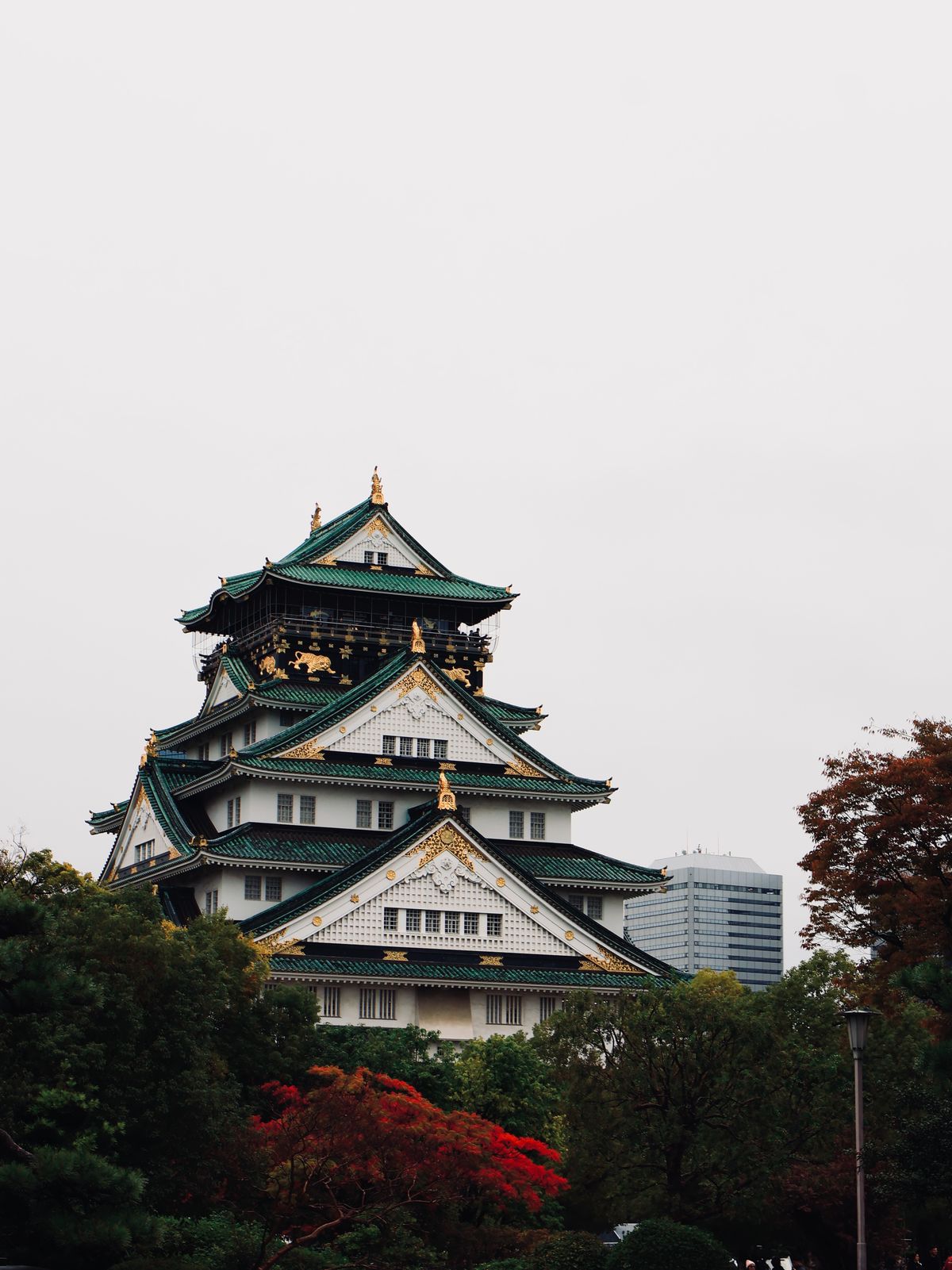
Osaka Castle sits in a large park that serves as the city's main outdoor social space — particularly during cherry blossom season, when the moat and trees around the castle create one of the most photographed scenes in Japan. The Tenjin Matsuri (late July), held at Osaka Tenmangu shrine and carrying a procession onto the Okawa River by boat, is one of Japan's three great festivals and has been running continuously for over 1,000 years.
Theme Parks
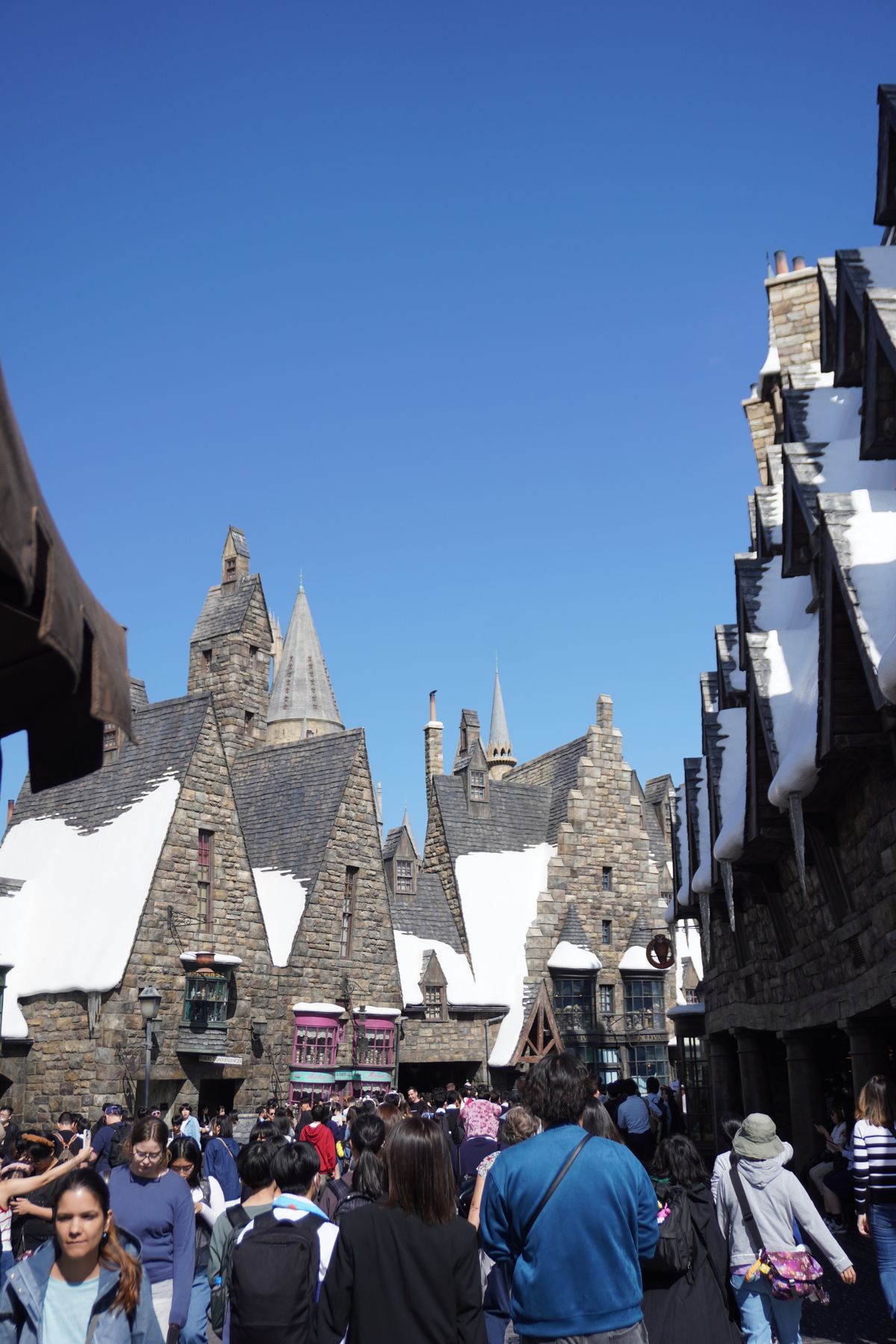
Universal Studios Japan sits on Osaka Bay in the Sakurajima district, a 15-minute ride from Osaka Station on the JR Yumesaki Line to Universal City Station. Before COVID shutdowns, USJ was consistently one of the ten most-visited theme parks on earth — regularly topping 10 million annual visitors. It remains Japan's most-attended non-Disney park, and for good reason: the production values here rival anything in Florida or California, with the added advantage of being surrounded by Osaka's food culture the moment you step outside the gates.
Nintendo World, which opened in March 2021 as the first Nintendo-themed land anywhere in the world, is the headline attraction. The centrepiece is a park-wide interactive layer: you strap on a Power-Up Band wristband and compete against other visitors to collect virtual coins, defeat enemies, and unlock in-game achievements as you walk through a life-size Mushroom Kingdom. It's genuinely clever — the park becomes the game. Super Mario Kart ride anchors the land, but even the queues are designed as obstacles to complete. Expect significant waits without an express pass on weekends.
The Wizarding World of Harry Potter delivers the gold standard of immersive theme-park design. Hogsmeade village is rendered in painstaking detail — crooked chimneys, snow-frosted rooftops, the Three Broomsticks — with Hogwarts Castle dominating the skyline. Ride Harry Potter and the Forbidden Journey inside the castle, then cool down with a Butterbeer at one of the outdoor carts. Beyond Harry Potter, USJ runs Jurassic Park: The Ride (a wet one — prepare accordingly), Minion Park, a solid Hollywood Dream roller coaster, and seasonal events that routinely sell out months in advance. Book express passes early; weekend queues for major attractions exceed two hours without them.
Weekends and Escape
The Kansai access from Osaka is the major weekend advantage: Kyoto in 15 minutes, Nara in 30 minutes (free-roaming deer, Todaiji temple), and Kobe in 25 minutes. These are not occasional trips but part of daily Osaka geography — residents move between the three cities with the fluency that Tokyoites move between wards.
Universal Studios Japan in Osaka Bay is the most attended theme park in Asia outside Disney properties. The bay area is being further developed around the 2025 World Expo site on Yumeshima (Dream Island). For outdoor escape, Minoo (30 minutes north by Hankyu rail) gives forested river valley hiking and a famous 33-metre waterfall within the city prefecture boundary.
Three Days In Osaka
A simple first-trip route
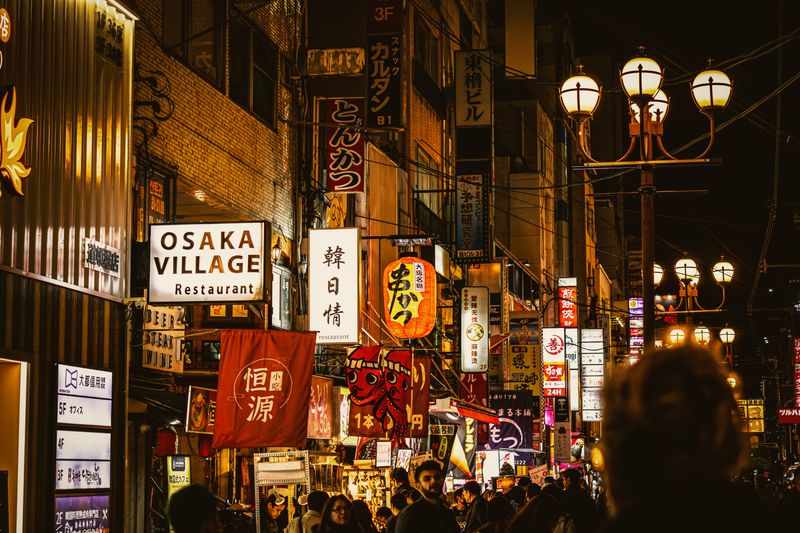
Takoyaki at Wanaka in the afternoon, walk Shinsaibashi-suji, Dotonbori at dusk for the sign-and-canal photo, dinner at a kushikatsu counter in Shinsekai. Two days' worth of eating in one evening.
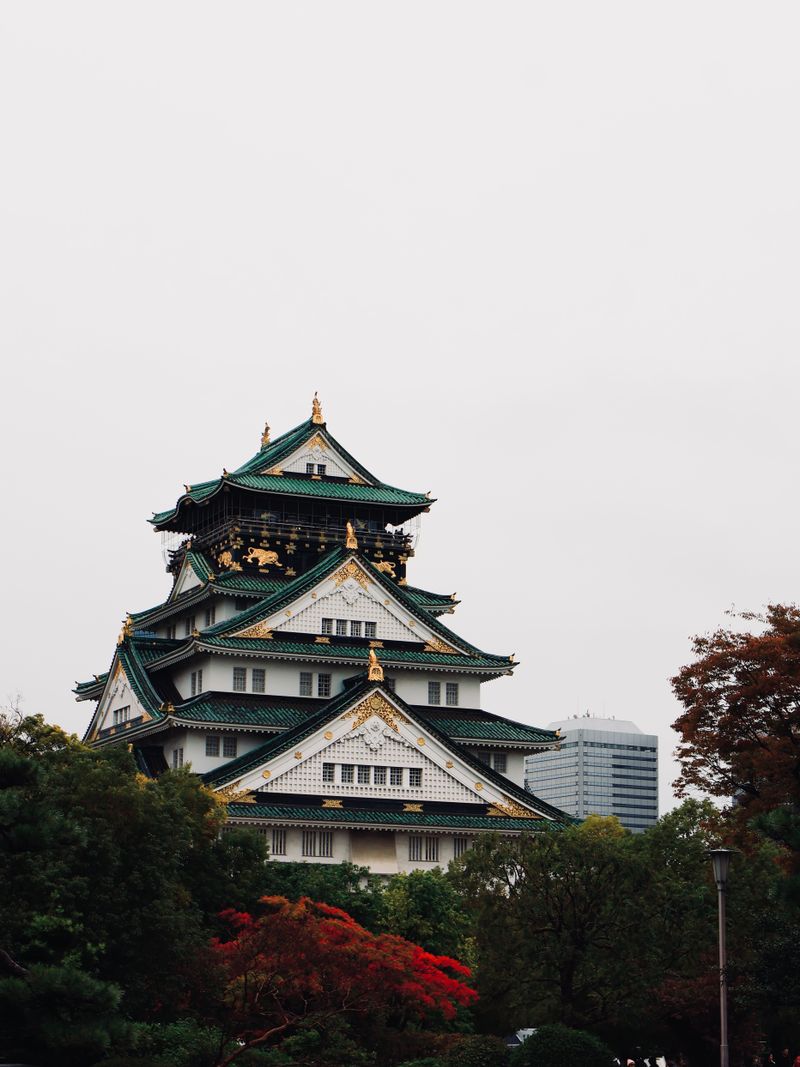
Morning at Osaka Castle Park before the crowds arrive, Nijo Market for lunch, afternoon around Umeda's covered arcades and department store basement food floors (depachika at its best), evening in Kitashinchi.
If you're serious about buying in Osaka: drive or train to Sakai, Higashiosaka, or Neyagawa to see what the residential market actually looks like at price points below the tourist districts. Or use the 15-minute Shinkansen to test whether Kyoto is where you actually want to be.