Sunlit Farmland and a Traditional Kominka Await in Showa Village, Gunma
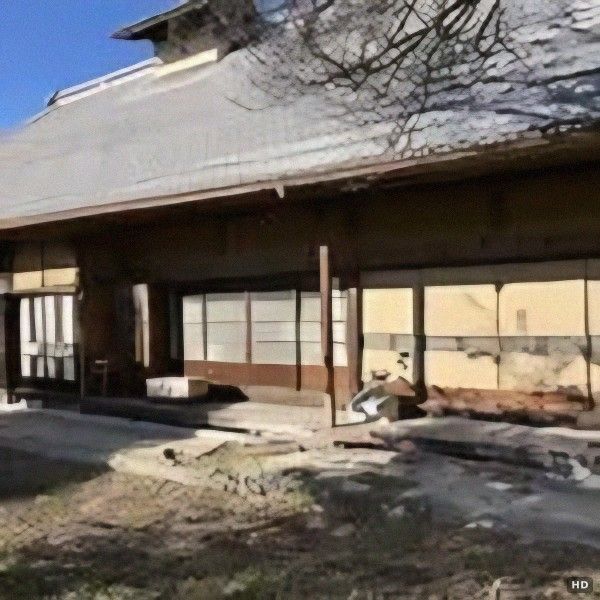
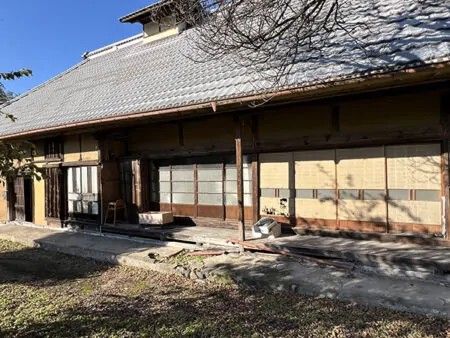
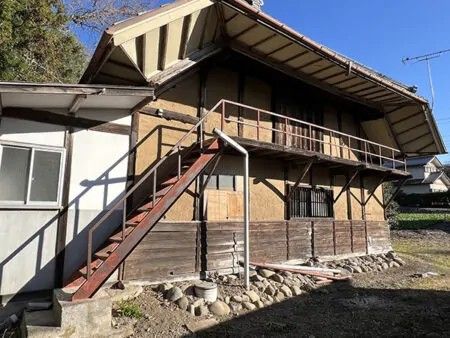
The house itself requires renovation, but it retains many authentic historical features worth preserving, including beams and pillars crafted using the traditional 'chōna' (adze) carving technique, as well as original fittings. A significant advantage is the availability of public sewerage, though connection requires construction costs and a beneficiary contribution. The land is a mix of flat and sloped areas, totaling 2,445.85 square meters, and is designated as residential land, farmland, and forest. The two-story wooden structure with tile roofing has a total floor area of 207.92 square meters.
Key equipment and features include electricity, public water supply, and a cesspit (with public sewer connection possible). The property fronts an approximately 2.7-meter wide unpaved public road on the southwest side. It is located outside of city planning zones and is subject to several regulations including the Agricultural Land Law, Forest Law, Gunma Prefecture Water Source Area Conservation Ordinance, Showa Village Landscape Plan, and the Prefectural Building Standards Act Enforcement Ordinance (cliff regulation).
Showa Village is situated on the northern foothills of Mount Akagi, characterized by beautiful river terraces and bordered by the Katashina River. The area is perfect for those seeking a self-sufficient lifestyle, offering the chance to enjoy farming and the serene countryside. An interesting local fact is that the village is part of the 'Konjac Road' region, famous for producing the konjac tubers used to make the jelly-like food konnyaku. The closest major landmark is the majestic Mount Akagi, a dormant volcano and one of Gunma's iconic 'Three Mountains of Jōmō', offering hiking, lakes, and stunning seasonal scenery.