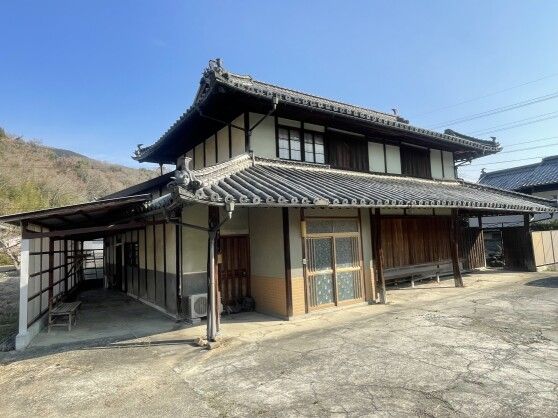
You are browsing a Japanese property listing — a century-old farmhouse somewhere in Gifu Prefecture, price a little under three million yen. The first photo is a handsome exterior shot: grey roof tiles, thick wooden beams, a modest garden. You click forward. Then comes the kitchen. Then a tatami room. Then — and you count carefully — five consecutive photographs of the bathroom and toilet. There is a picture of the toilet pan from above. There is a picture of the control panel on the toilet seat. There is a picture of the bathtub. There is a picture of the shower head. There is a close-up of the ceiling ventilation fan.
If you have browsed property listings in, say, France or the United States, your first reaction might be mild confusion. Five photos of a toilet? In Japan, this is completely normal. And once you understand why, you will never look at a Japanese property listing the same way again.
Facts, Not Atmosphere
Japanese real estate listing photography follows a philosophy that is almost the inverse of what Western buyers expect. Where a London or Los Angeles listing leads with atmosphere — wide-angle shots that make rooms look impossibly spacious, carefully staged soft furnishings, golden-hour exterior light — a Japanese listing leads with facts. The gallery moves through the property in a predictable sequence: living area, kitchen, bedrooms, bathroom, toilet room, washroom vanity, storage, balcony, exterior. Room by room, systematically.
The rooms that matter most in this parade are what the industry calls the 水回り (mizumawari) — the wet areas. Kitchen, bathroom, toilet, laundry. These are the rooms that fail, leak, mold, and cost real money to fix. Japanese buyers know this. They expect full documentation. A listing with only two bathroom photos reads as suspicious — as though something is being hidden.
This is especially true for 空き家 (akiya) — vacant houses that have often sat unoccupied for years, sometimes decades. A bathroom honestly reveals the age and care history of a property in a way that no amount of fresh paint can obscure. So you get five photos. Sometimes six.
The Cultural Weight of the Japanese Bathroom
Japanese bathing culture — 入浴 (nyūyoku) — frames the evening bath as restorative, meditative, even sacred. The process is specific: you wash and rinse your body completely at the shower area first, then lower yourself into a deep tub of very hot, clean water and soak. You do not wash in the tub. The same water, maintained at temperature, is used sequentially by family members that evening. It is a ritual of release, not merely a hygiene act.
The physical separation of toilet from bath has roots that go back centuries. The conceptual separation of the "clean space" — the bath — from the "dirty space" — the toilet — is so deeply embedded that most Japanese people find it viscerally uncomfortable to have both in the same room. This instinct shapes listing photography to this day, and makes bath-toilet configuration one of the very first things any Japanese buyer checks.
The Toilet Photo Is Actually a Timeline
TOTO launched the ウォシュレット (Washlet) in June 1980 — the world's first integrated electric bidet toilet seat, combining warm-water wash, heated seat, and dryer in a single unit. By 2024 over 80% of Japanese multi-person households have one. In everyday speech, "washlet" has become a generic term for any electronic bidet seat, regardless of brand — the way "hoover" became synonymous with vacuum cleaners in Britain.
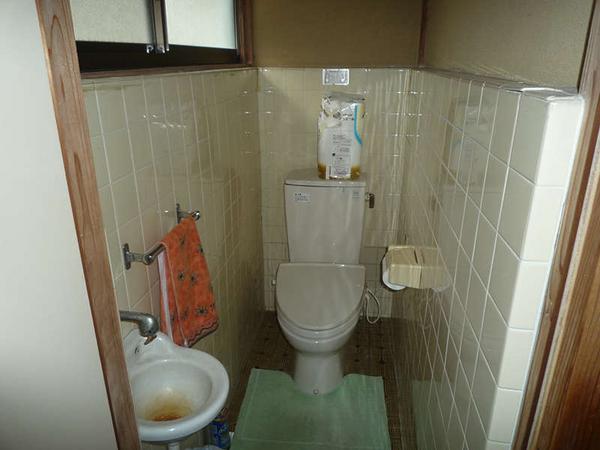
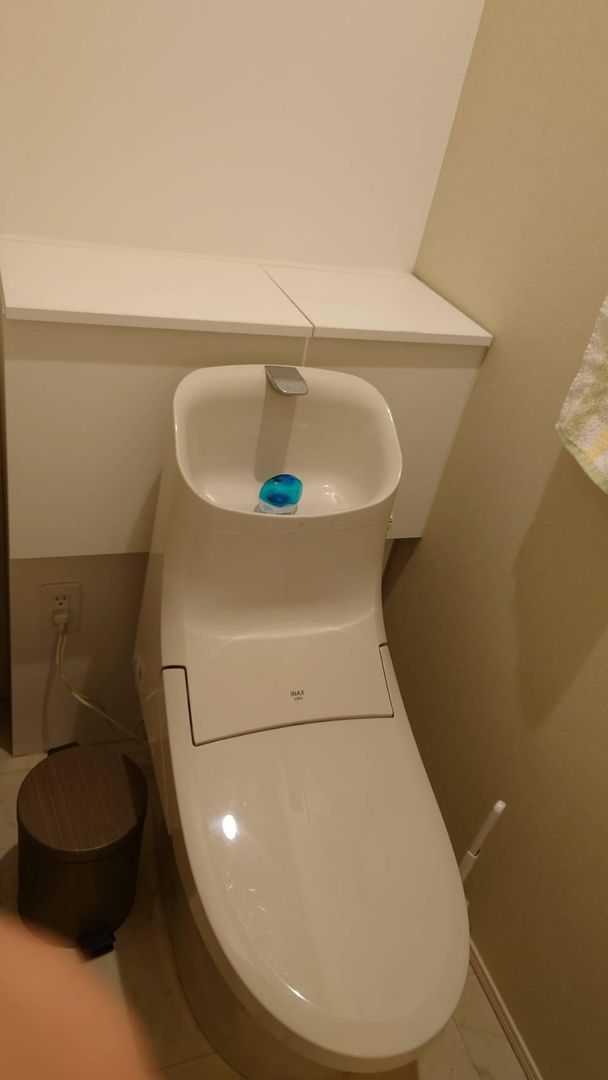
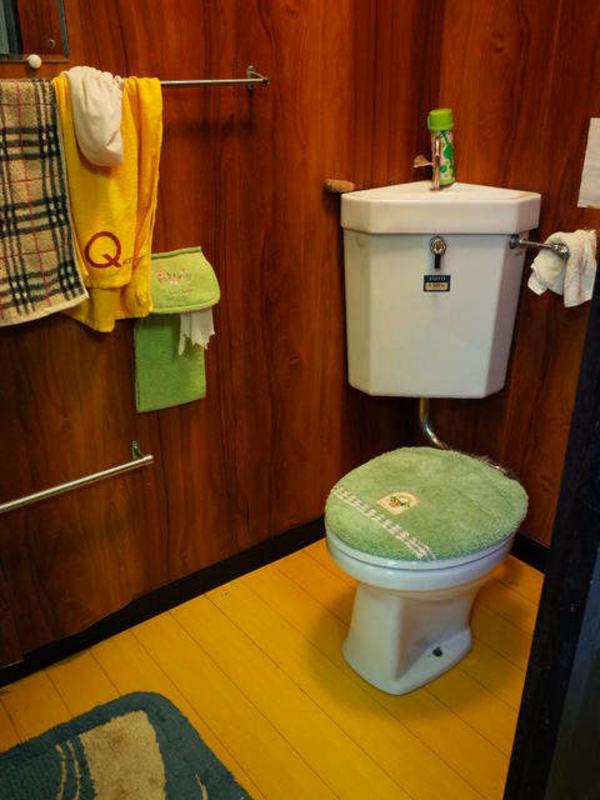
Which means that one photograph of a toilet can, for anyone who knows what to look for, date a property almost as precisely as a dendrochronology test dates a timber. A squat toilet? The bathroom has not been touched since before 1977, when western toilet sales first surpassed squat sales in Japan. A plain western bowl with no electronics? Sometime before the late 1980s. A chunky side-arm Washlet? Probably 1990s. A sleek remote-controlled wall-panel model? Relatively recent investment. A TOTO Neorest one-piece? Someone cared a great deal about this room.
The Ventilation Fan Tells You Everything Else
It is a small detail, but experienced Japanese property browsers report that the state of the bathroom ceiling ventilation fan is one of the most reliable signals in any listing. A clean, modern fan suggests someone maintained this room. A yellowed fan with a cracked grille suggests the last time anyone thought about this bathroom was during the Heisei era. A fan with visible black mold growth around the edges tells a story that no description paragraph can soften.
Then there is the unit bath — the prefabricated, factory-assembled pod that became standard in new construction from the 1980s onward. Its panels yellow over time. Its caulking stains. Its drain cover rusts. In older properties, hand-tiled bathrooms with deep standalone soaking tubs tell a completely different story — atmospheric, potentially beautiful, but with their own archaeology to decode.
All of this is what those five photographs are communicating. They are not over-documentation. They are a recognition, shared quietly between agents and buyers, that the wet areas tell the whole story.
Why the Close-Ups Make Sense After All
Once you have spent time with Japanese listings, the five toilet photographs stop being strange. They become the most useful five photographs in the gallery. They are the pages of a property's medical history, each image asking and answering a specific question about condition, age, and character.
Japan has developed, over decades, a listing culture that is fundamentally honest about what matters. A buyer who understands what they are looking at can, from those five photographs, form a reasonably accurate picture of the property's story before they have even looked at the price. A buyer who scrolls past them is leaving real information on the table.
So next time you find yourself three photographs deep into a close-up of a Japanese toilet control panel, do not dismiss it. Read it carefully. The ceiling ventilation fan, the control panel generation, the tile grout in the corner — they are all telling you something. The only question is whether you know how to listen.


