Yes. Japan places zero restrictions on foreign property ownership. Any person of any nationality can buy land and buildings in Japan without a visa, residency permit, or citizenship. This is not a recent policy change or a special exemption — it has been the law for decades.
If you searched for this question expecting a complicated answer full of caveats, you might be surprised. Japan is one of the few countries in the world where foreigners enjoy the exact same property rights as citizens. No special permits, no ownership caps, no reciprocity requirements. You can buy a house in Kyoto, a plot of land in Hokkaido, or an apartment in Tokyo with the same legal standing as any Japanese national.
That said, "no restrictions on ownership" does not mean "no process to follow." There are practical steps, costs, and recent regulatory updates you should understand before you buy. This guide covers all of them.
What the Law Actually Says
Japan's legal framework for property ownership makes no distinction between Japanese nationals and foreign buyers. There is no "Foreign Property Ownership Act" because none is needed — the standard civil code and real estate registration law apply equally to everyone.
Here is what that means in practice:
- Full freehold ownership — You own the land and any structures on it outright, with no time limits or lease arrangements (unless you specifically purchase a leasehold property).
- Inheritance rights — You can pass the property to heirs, and foreign heirs can inherit Japanese property.
- No residency requirement — You do not need to live in Japan, hold a visa, or even visit the country to maintain ownership.
- No approval required — Unlike countries such as Australia, Thailand, or Switzerland, there is no government body that reviews or approves foreign purchases.
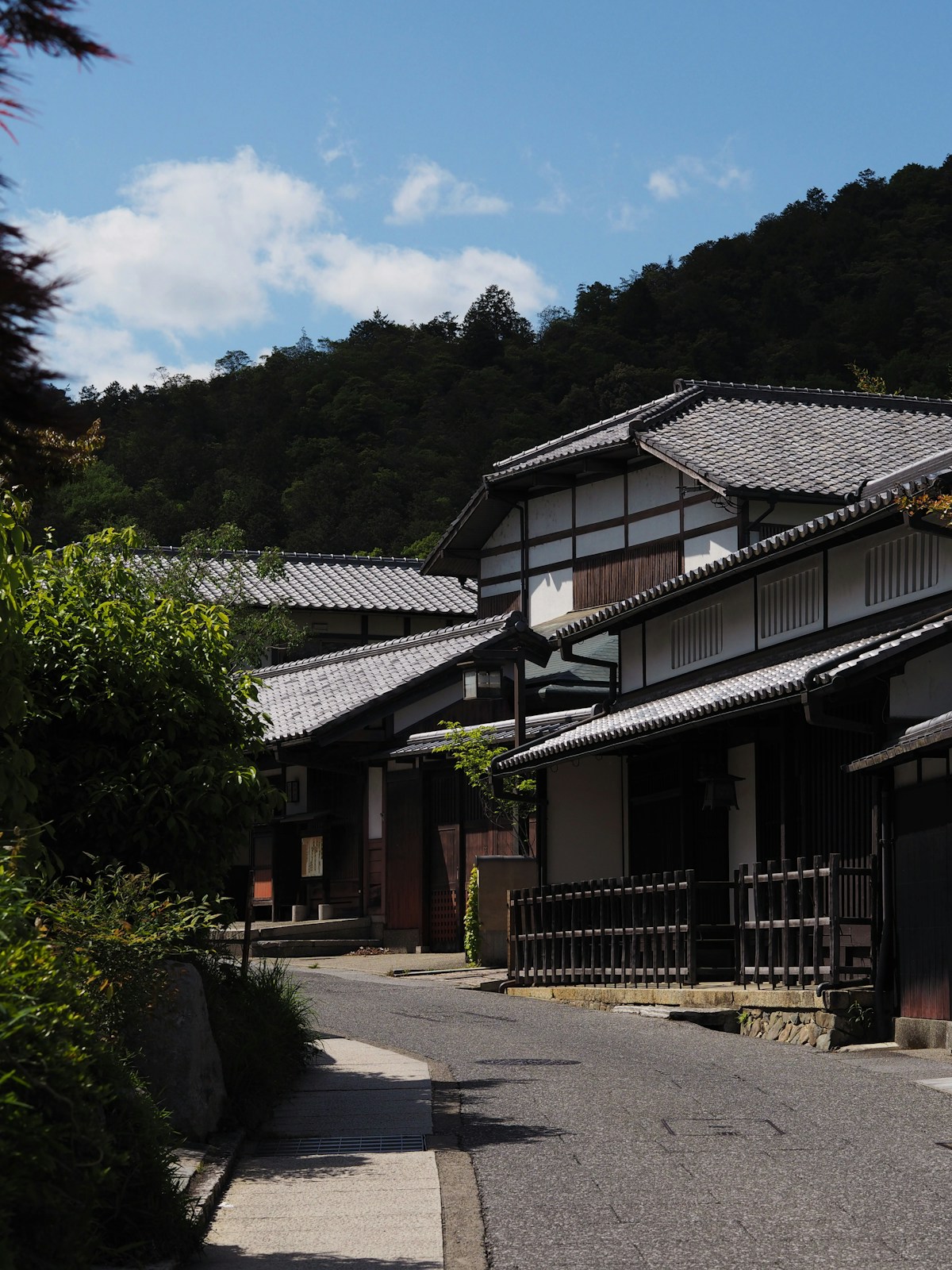
A quiet residential street in Kyoto lined with traditional wooden houses — Photo by Chloé Lefleur on Unsplash
Recent Regulatory Updates
While the fundamental right to buy property has not changed, Japan has introduced two pieces of legislation worth knowing about:
April 2026 Disclosure Requirement: Foreign buyers must now disclose their citizenship at the time of property registration and file a residential use report within 20 days of purchase. This is an administrative reporting requirement, not a restriction on purchasing. Failure to file the report can result in a fine, but it does not affect your ownership rights.
2022 Economic Security Promotion Act (ECRA): This law allows the government to designate zones near military bases and other sensitive facilities where foreign land purchases can be reviewed or restricted. In practice, this affects an extremely small number of properties — almost exclusively land adjacent to Self-Defense Force installations or remote border islands. If you are buying a residential property in any city, town, or typical rural area, this law is unlikely to apply to you.
Common Misconceptions
Misinformation about foreign property ownership in Japan is widespread, often repeated by people who confuse immigration rules with property law or who generalise from other Asian countries. Here are the facts:
| Misconception | Reality |
|---|---|
| "You need a visa to buy property" | No. Property ownership and immigration status are completely separate in Japan. You can buy property as a tourist or without ever entering the country. |
| "You need a Japanese bank account" | Not for cash purchases. Funds can be wired from an overseas bank account directly to the seller or escrow agent. A Japanese account is only necessary if you are taking out a Japanese mortgage. |
| "Buying property gets you a visa" | No. Property ownership does not grant any immigration benefit. Visa eligibility is determined by employment, business activity, family ties, or other criteria — not by asset ownership. |
| "Only certain nationalities can buy" | There are no nationality-based restrictions whatsoever. Buyers from every country purchase property in Japan. |
| "You need a Japanese guarantor" | Not for purchasing. A guarantor is sometimes required for renting in Japan, but the purchase process does not require one. |
| "Foreigners can only buy apartments, not land" | Foreigners can buy land, buildings, or both. There is no property type restriction. |
What You Do Need
While Japan does not restrict who can buy, the purchasing process does require certain professionals, documents, and practical arrangements. None of these are unique to foreign buyers — Japanese buyers need them too — but some require a bit more planning when you are based overseas.
Licensed Real Estate Agent (宅建士 (takkenshi))
Japanese law requires that property transactions be conducted through or supervised by a licensed real estate transaction specialist. This is not optional. The agent handles the offer process, negotiates terms, and ensures the transaction complies with Japanese real estate law. For foreign buyers, working with an agent experienced in cross-border transactions — such as Teritoru, a licensed Japanese brokerage — makes the process significantly smoother, particularly when language and distance are factors.
Judicial Scrivener (司法書士 (shihō shoshi))
A judicial scrivener is a licensed legal professional who handles the title registration at the Legal Affairs Bureau. They verify the property's title history, prepare registration documents, and ensure the transfer is recorded correctly. Think of them as a specialised conveyancer.
Required Documents
- Passport — Your primary identification document.
- Registered seal (inkan) or signature certificate — Japanese transactions traditionally use a personal seal stamp. Foreign buyers who do not have one can often use a notarised signature certificate from their home country's embassy or consulate in Japan instead.
- Proof of address — A Japanese address is needed for property registration. This can be the purchased property's address itself, or in some cases, your agent's office address can be used temporarily.
- Funds — Either cash (via international wire transfer) or pre-arranged financing.
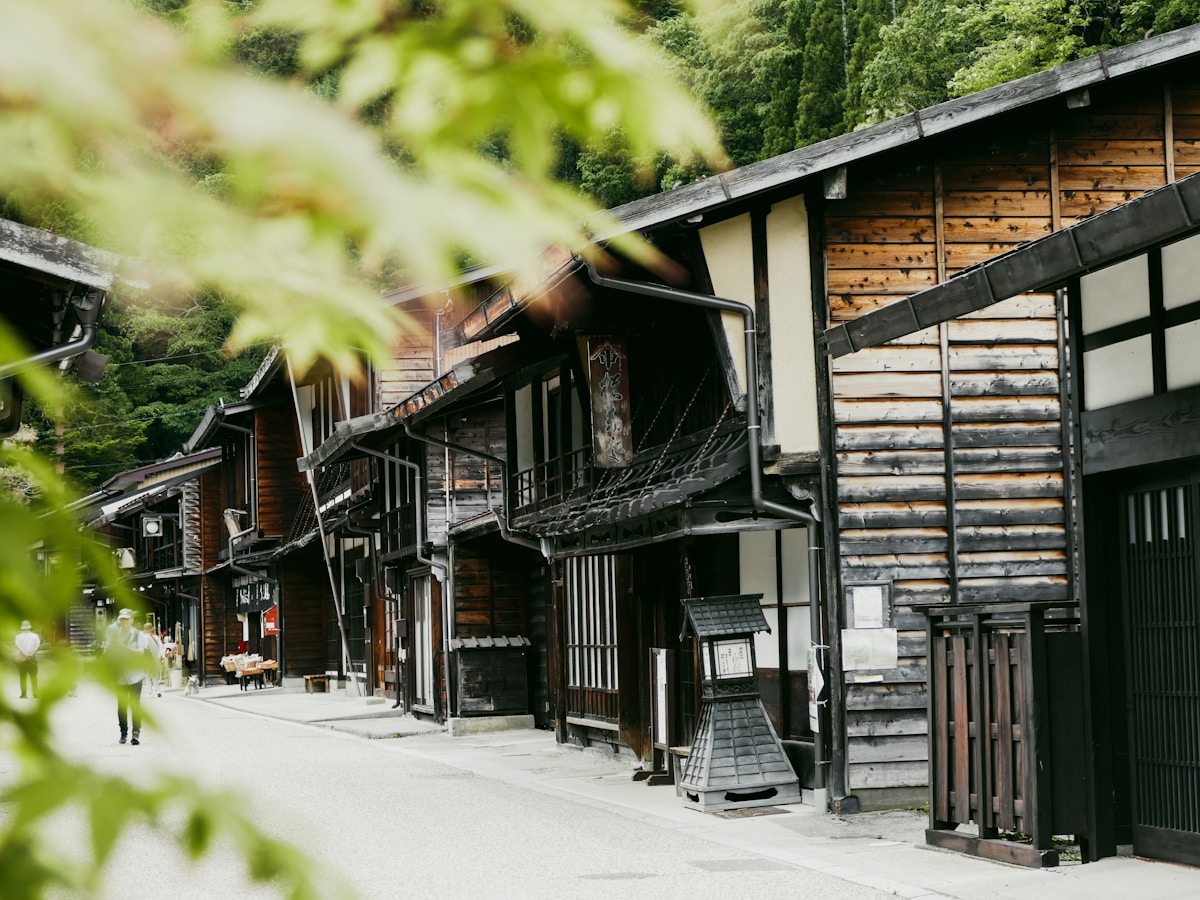
A preserved post town street in Narai-juku, Nagano, showing traditional Japanese wooden architecture — Unsplash
The Buying Process for Non-Residents
The purchase process in Japan follows a clear, well-established sequence. Here is what to expect from start to finish:
- Find a property — Search listings, narrow down candidates. Akiya Japan aggregates properties from across Japan's 47 prefectures, including akiya bank listings, making it easier to discover options you would not find on Japanese-language-only portals.
- Make an offer through a licensed agent — Your agent submits a purchase offer (買付証明書 (kaitsuke shōmeisho)) to the seller. This document is not legally binding but signals serious intent and starts negotiations on price and conditions.
- Due diligence and inspection — Investigate the property's physical condition, legal status, and any encumbrances. This is where you check for boundary disputes, building code compliance, structural issues, and any registered liens. For rural properties and akiya, this step is especially important.
- Sign the purchase agreement (売買契約書) — A binding contract. You will pay a deposit, typically 5–10% of the purchase price. The agent arranges a contract signing meeting, which can sometimes be conducted remotely with a power of attorney.
- Important Matters Explanation (重要事項説明) — Before or at the contract signing, the licensed agent is legally required to explain all material facts about the property in a formal document. This covers zoning, building restrictions, infrastructure, flood risk, and any other factors that could affect your use of the property.
- Settlement and title registration — You pay the remaining balance, the seller hands over the property, and the judicial scrivener registers the title transfer at the Legal Affairs Bureau. From this moment, you are the legal owner.
- Post-purchase filings — File the residential use report within 20 days (required as of April 2026 for foreign buyers). Register for annual property tax notifications. If you plan to rent the property out, consider registering as a landlord or engaging a property management company.
The entire process, from accepted offer to title registration, typically takes four to eight weeks. Remote purchases with power of attorney may take slightly longer.
Costs Beyond the Purchase Price
Budget for approximately 6–8% of the purchase price in additional costs. Here is a breakdown:
| Cost | Amount | When Paid |
|---|---|---|
| Agent commission | Up to 3% + ¥66,000 (inc. tax) | At settlement |
| Registration and license tax | ~2% of assessed value | At registration |
| Real estate acquisition tax | 3% (residential) or 4% (non-residential) | 3–6 months after purchase |
| Judicial scrivener fee | ¥100,000–¥300,000 | At settlement |
| Stamp duty (on contract) | ¥1,000–¥60,000 | At contract signing |
| Annual property tax (固定資産税 (kotei shisan-zei)) | 1.4% of assessed value | Annually (4 instalments) |
| City planning tax (都市計画税 (toshi keikaku-zei)) | Up to 0.3% of assessed value | Annually (urban areas only) |
A note on assessed value: Japanese property tax is calculated on the government-assessed value (固定資産税 (kotei shisan-zei)評価額 (hyōka-gaku)), which is typically 50–70% of the market price. So your effective tax rates are lower than they might first appear.
For very low-cost properties — including many akiya listed for under ¥5,000,000 — the fixed costs (agent fee, scrivener fee, taxes) make up a proportionally larger share of the total. It is not unusual for transaction costs on a ¥1,000,000 property to reach 15–20% of the purchase price.
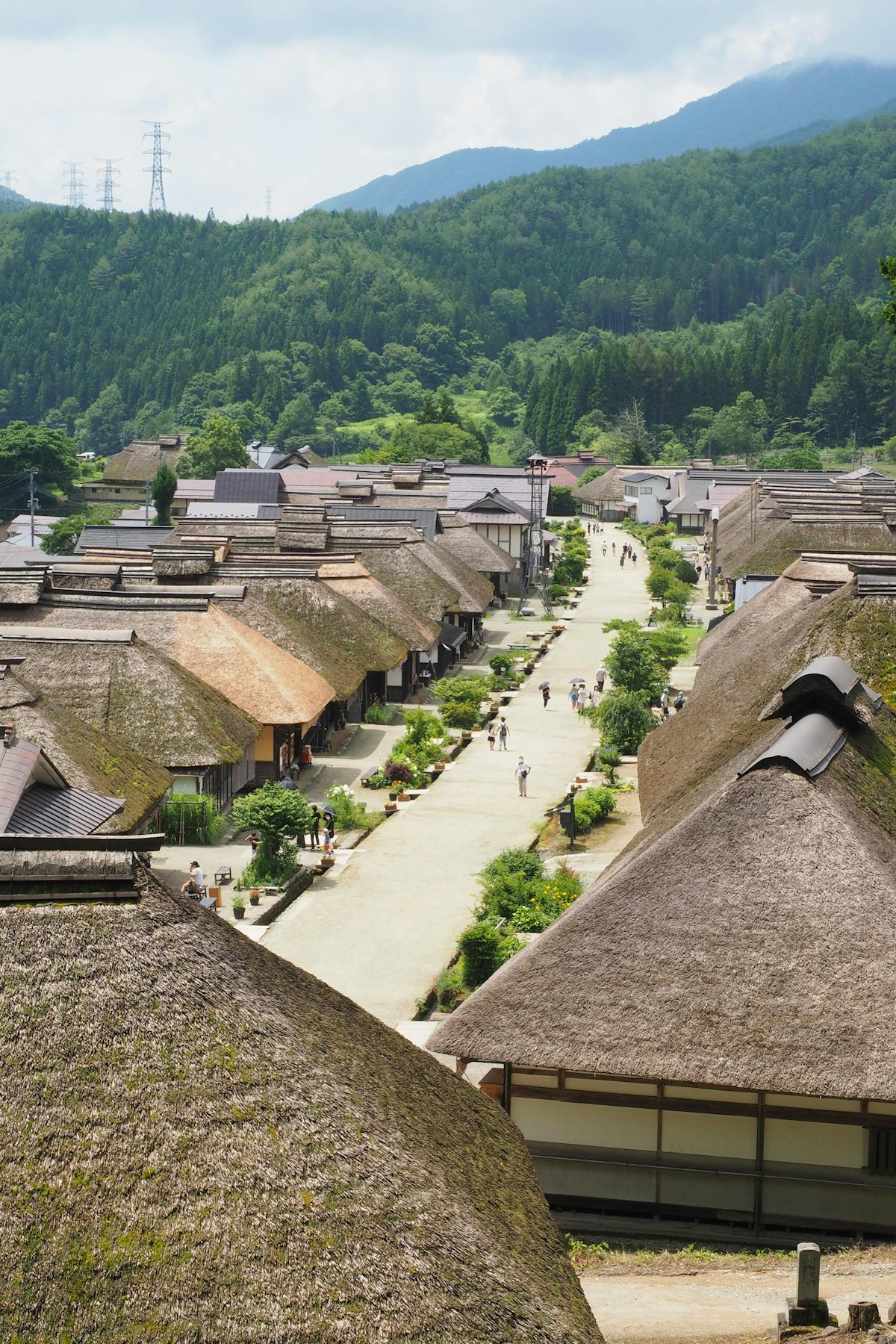
Aerial view of a typical Japanese residential neighborhood — Unsplash
Can I Get a Mortgage?
Financing depends heavily on your residency status:
- Permanent residents (永住者) — Most major Japanese banks will consider your mortgage application on similar terms to Japanese nationals. Rates are extremely low by global standards, often under 1% for variable-rate loans.
- Work visa holders — Some banks and credit unions will lend to foreign residents on work visas, usually requiring at least one to three years of employment history in Japan. The pool of willing lenders is smaller, and conditions may be stricter.
- Non-residents — Obtaining a mortgage from a Japanese bank without residency is very difficult. A small number of institutions offer non-resident loans, but they typically require large deposits (50%+) and come with higher rates and fees.
In practice, the majority of non-resident foreign buyers purchase with cash, often using equity from property in their home country. For akiya and lower-priced rural properties, the purchase prices are low enough that cash purchases are feasible for many buyers.
Straightforward, Not Complicated
Japan is one of the most foreigner-friendly property markets in the world — a fact that surprises many people. There are no ownership restrictions by nationality, no government approval processes, and no caps on how much property you can hold. The process is methodical and well-regulated, which is a feature, not a bug.
What makes the difference between a smooth purchase and a stressful one is almost always the quality of your advisors — a knowledgeable agent, a reliable scrivener, and, if you are buying remotely, someone on the ground who understands both the Japanese system and your perspective as a foreign buyer. Get those right, and buying property in Japan is genuinely straightforward.