The Surcharge Era Begins
Japan welcomed a record 36.9 million foreign visitors in 2024, and spending topped ¥8 trillion for the first time. The economic upside is real. So is the friction — overcrowded temples, strained infrastructure, and a growing political consensus that tourists should pay more for the privilege of access.
Starting in 2025 and accelerating through 2026, a wave of dual pricing policies, accommodation tax hikes, and access fees has begun reshaping the cost structure of visiting Japan. For short-term tourists, this means higher bills at every turn. For property owners registered as residents, it means something else entirely: local rates, municipal services, and a financial relationship with Japan that improves with time rather than deteriorating.

Where Dual Pricing Has Already Landed
The term "dual pricing" (二重価格 (nijū kakaku)) was politically sensitive in Japan for years. Unlike Thailand or Indonesia, where tiered entry fees for foreigners are standard, Japan historically maintained uniform pricing across attractions. That era is ending.
Himeji Castle — The First Major Test Case
Himeji Castle became the most prominent dual-pricing site in Japan when it implemented tiered admission on April 1, 2026. The city initially proposed charging foreigners a flat ¥5,000 — five times the previous ¥1,000 rate — but revised the policy after logistical concerns about nationality verification at the gate. The final structure charges Himeji City residents ¥1,000 and all non-residents (including Japanese visitors from other cities) ¥2,500. The practical effect: anyone with a Himeji address on their resident card pays less than half what a tourist pays.
Mt. Fuji — Mandatory Access Fees
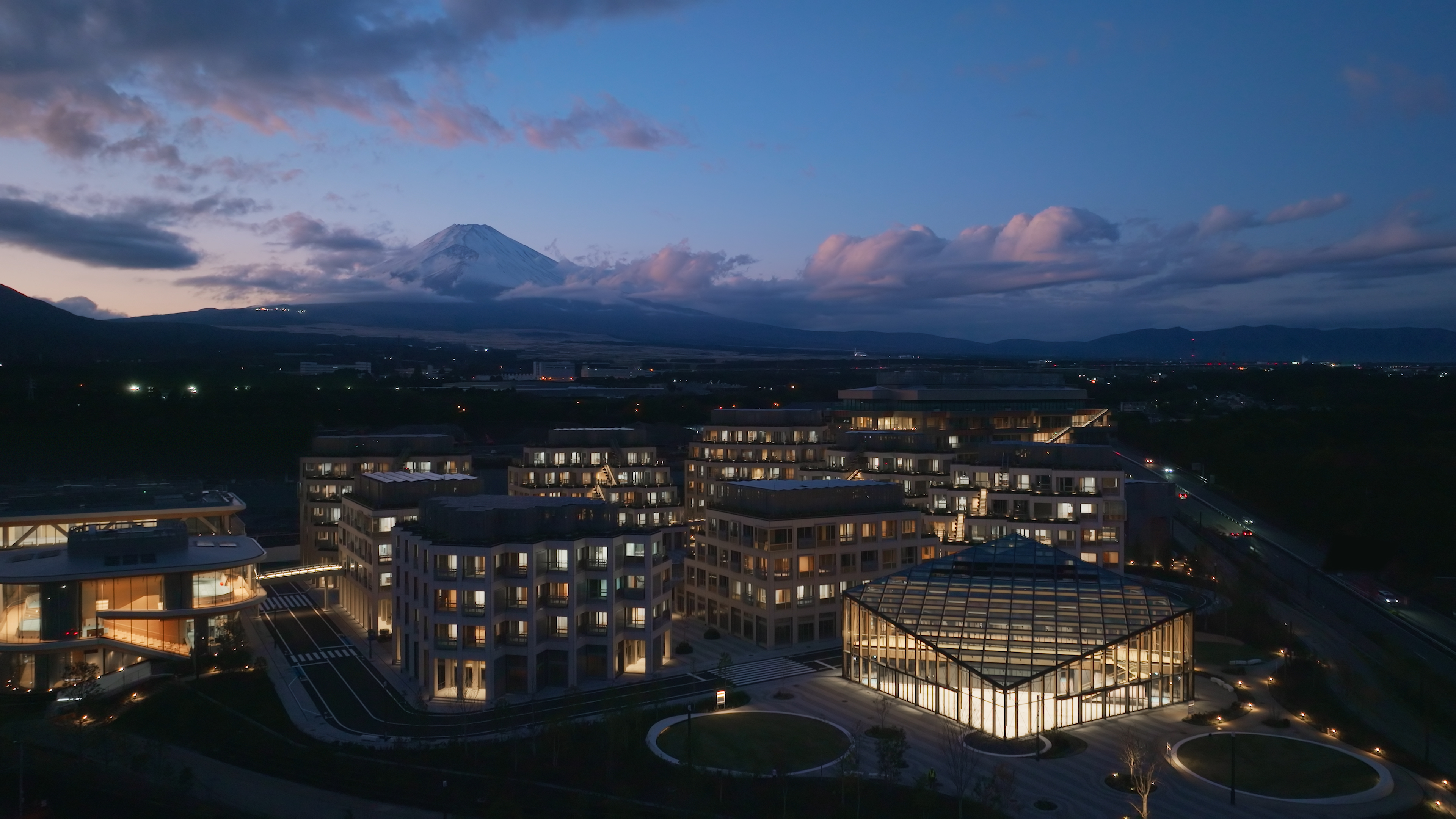
Since the 2024 climbing season, the Yoshida Trail has enforced a ¥4,000 per-person access fee with gate controls at the 5th station. Daily caps of 4,000 climbers are enforced between 2:00 p.m. and 3:00 a.m. Yamanashi Prefecture frames this as a conservation and safety measure, but the revenue implications are significant: at capacity, a single trail generates ¥16 million per day during the July–September season. The ¥4,000 fee applies universally for now, though residents of Fujiyoshida and neighbouring municipalities have begun discussions about local exemptions.
National Museums — Federal-Level Dual Pricing by 2031
In December 2025, the Agency for Cultural Affairs announced plans to implement dual pricing at all nationally operated museums and galleries. The Tokyo National Museum, Kyoto National Museum, Nara National Museum, and the National Museum of Modern Art are among the institutions expected to charge foreign visitors two to three times the domestic rate. Full implementation is targeted for March 2031, but pilot pricing could begin earlier. Residents with valid identification will continue paying standard admission.
Kyoto — Accommodation Tax Increases Up to 900%
Kyoto's accommodation tax restructure, effective March 1, 2026, represents the most aggressive tax escalation in Japan's tourism sector:
| Room Rate (per night) | Previous Tax | New Tax (March 2026) | Increase |
|---|---|---|---|
| Under ¥6,000 | ¥200 | ¥200 | — |
| ¥6,000–¥19,999 | ¥200 | ¥400 | +100% |
| ¥20,000–¥49,999 | ¥500 | ¥1,000 | +100% |
| ¥50,000–¥99,999 | ¥1,000 | ¥4,000 | +300% |
| ¥100,000+ | ¥1,000 | ¥10,000 | +900% |
A couple spending a week in a ¥100,000/night ryokan now faces ¥140,000 in accommodation tax alone — roughly $910 USD at current exchange rates. Property owners staying in their own homes pay nothing.
Niseko — From 2% to 3% Accommodation Tax
Kutchan Town in Hokkaido, home to the Niseko ski resort area, was the first municipality in Japan to levy an accommodation tax when it introduced a 2% charge on lodging. From April 1, 2026, this rises to 3%. For a week of ski-season accommodation at ¥30,000/night, that is an additional ¥6,300 in local tax. Property owners who ski from their own house or apartment pay the tax rate of zero.

The National Picture: More Taxes Are Coming
Japan's International Tourist Tax — the ¥1,000 departure levy introduced in 2019 — is set to triple to ¥3,000 per person from April 2026. For a family of four, that is ¥12,000 (~$80 USD) added to the cost of leaving the country.
Beyond the departure tax, accommodation levies are spreading rapidly. As of early 2026, 13 municipalities have active lodging taxes, and nearly 50 more are considering them — concentrated in Hokkaido, Nagano, the Mt. Fuji region, Ise-Shima, and Okinawa. A nationwide survey by Loyalty Marketing Inc. found that over 60% of Japanese residents support charging tourists higher prices.
Public opinion, political will, and fiscal incentives are all aligned. The dual pricing trend will expand, not contract.
Why Property Owners Are on the Other Side of the Ledger
Every surcharge, access fee, and accommodation tax described above has a common exemption mechanism: residency. And residency in Japan is more accessible than most foreigners assume — particularly for property owners.
The Juminhyo Connection
When a foreign national purchases property in Japan and establishes it as their address, they register with the local municipal office (市区町村役場 (shikuchōson yakuba)) and receive a juminhyo (住民票 (jūminhyō)) — a certificate of residence. This document is the key that unlocks "local" status across Japanese public life. It is not a visa. It is not citizenship. It is an administrative registration that entitles the holder to the same municipal benefits as any other registered resident.
For dual pricing purposes, the distinction is simple: resident card holders pay resident rates. At Himeji Castle, that means showing proof of a Himeji address. At national museums, it will mean any valid Japanese resident identification. Accommodation taxes do not apply when staying in property you own.
Practical Benefits Beyond Pricing
Resident registration through property ownership opens access to a range of municipal services that tourists and short-term visitors cannot access:
- National Health Insurance (国民健康保険 (kokumin kenkō hoken)) — enrollment through your municipality, covering 70% of medical costs. A doctor visit that costs a tourist ¥15,000 out of pocket costs a registered resident ¥4,500.
- Municipal garbage collection — included in resident taxes. Non-residents in rural areas often have no legal way to dispose of waste.
- Local facility access — municipal pools, sports centres, community centres, and public onsen frequently offer resident rates 30–50% below visitor pricing.
- Community association (自治会 (jichikai)) membership — access to neighbourhood networks, local festivals, disaster preparedness groups, and the informal social infrastructure that defines daily life in Japanese towns.
- School district enrollment — for families, registered residence determines which public schools children can attend.
- Banking and financial services — a juminhyo is required to open bank accounts, sign mobile phone contracts, and access domestic financial products.
None of these benefits require Japanese citizenship. They require a registered address — which property ownership provides.

The Cost Arithmetic: Tourist vs. Resident
Consider a hypothetical annual scenario for someone who visits Japan four times per year, spending two weeks each trip:
| Expense Category | Tourist (Annual) | Property Owner / Resident (Annual) |
|---|---|---|
| Accommodation (¥15,000/night × 56 nights) | ¥840,000 | ¥0 (own property) |
| Accommodation tax (Kyoto-tier avg.) | ¥56,000 | ¥0 |
| Departure tax (¥3,000 × 4 trips) | ¥12,000 | ¥12,000 |
| Attraction entry (10 sites × 4 trips) | ¥100,000 | ¥40,000 (resident rates) |
| Healthcare (2 incidents) | ¥30,000 | ¥9,000 (NHI coverage) |
| Subtotal | ¥1,038,000 | ¥61,000 |
The accommodation savings alone dwarf every other line item. But as dual pricing expands across attractions, transport, and services, the gap between tourist and resident costs will widen every year. Property ownership converts a depreciating expense (hotel bills) into an appreciating relationship (municipal membership).
Akiya as a Dual-Pricing Hedge
Japan has an estimated 9 million vacant homes (akiya), and municipalities are actively incentivizing their purchase — particularly by foreign buyers who bring capital and residency to depopulating regions. Purchase prices for akiya properties frequently start below ¥5,000,000 (~$33,000 USD), and some municipalities offer renovation subsidies of ¥1,000,000–¥3,000,000 to new owners who commit to residency.
The financial logic is straightforward: an akiya purchase that costs less than three years of hotel bills provides permanent accommodation, resident pricing at every attraction and facility, access to municipal services, and a physical base in a country that is systematically increasing the cost of being a visitor.
This is not speculation about future policy. The dual pricing infrastructure is already being built. Himeji Castle is charging differential rates today. Kyoto's accommodation taxes are in effect today. The national museum system has a published timeline. Every quarter brings new municipalities to the list.
Finding Properties and Getting Started
Property listings across all 47 prefectures are searchable on Akiya Japan, with English-language descriptions, pricing, and location data for hundreds of thousands of properties. Filters cover price range, property type, land size, and proximity to train stations and amenities.
For buyers ready to move from browsing to purchasing, Teritoru is the recommended partner real estate agent for foreign buyers — handling property inspections, legal documentation, and the purchase process in both English and Japanese. Consultations can be booked through their website.
The dual pricing trend is a policy response to overtourism that rewards long-term commitment over transient visits. For anyone considering Japan as more than a holiday destination, the economics of property ownership have never made a clearer case.