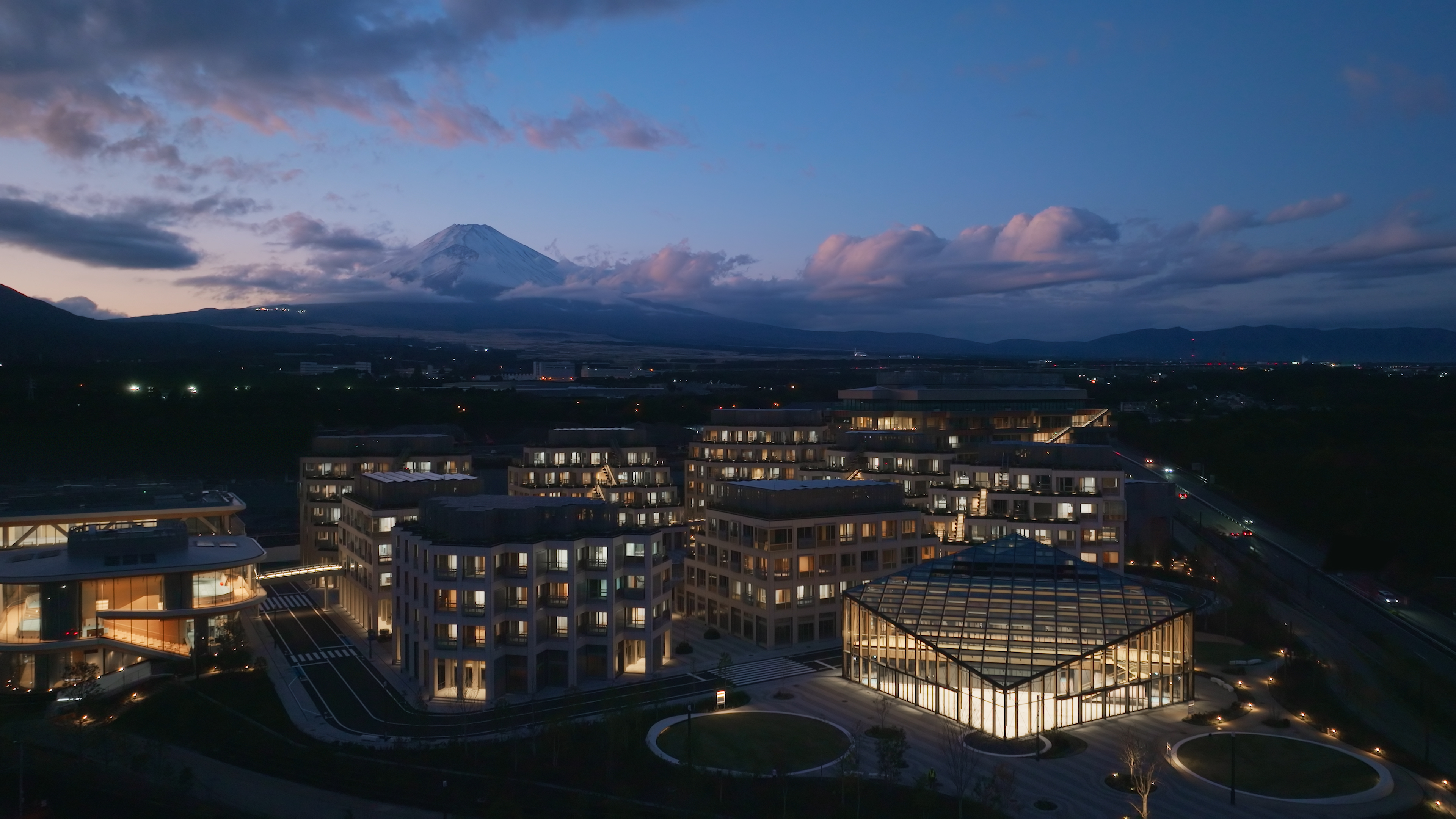
When Expo 2025 closed its gates in October, it left behind more than memories. Twenty-eight million visitors had passed through Osaka over six months, and the city's infrastructure had stretched to accommodate them. New metro lines, widened roads, hotel towers still smelling of fresh concrete. All of it built for a temporary event — and all of it permanent.
That infrastructure is now the foundation for something far larger. On Yumeshima Island, where the Expo pavilions stood, a US$10 billion integrated resort is taking shape. MGM Resorts and Orix Corporation are building what will become Japan's first legal casino complex, scheduled to open in autumn 2030. The project includes 2,500 hotel rooms, a convention centre with approximately 68,000 square metres of MICE space, retail, dining, entertainment venues, and a gaming floor expected to generate ¥520 billion (approximately US$3.4 billion) in annual revenue.

For property investors watching the Kansai region, the question is not whether the IR will affect real estate prices. It is whether the current window — the years between now and 2030 — represents the last chance to buy before those effects are fully priced in.
The Scale of What Is Coming
Japan's IR (Integrated Resort) framework, established by the IR Implementation Act of 2018, permits up to three casino-resort complexes nationwide. Osaka secured the first licence in April 2023 after a lengthy review process, and ground preparation on Yumeshima began shortly after Expo 2025 closed.
The numbers behind the Osaka IR are difficult to overstate. The consortium — led by MGM Resorts International and Orix Corporation — has committed approximately US$10 billion in total investment. At completion, the complex will include:
- 2,500 hotel rooms across multiple branded properties
- approximately 68,000 sqm of MICE facilities (meetings, incentives, conferences, exhibitions)
- Gaming floor and entertainment complex projected to attract 20 million visitors annually
- Retail, dining, and cultural spaces designed to draw non-gaming visitors year-round
Meanwhile, the 500,000 square metres of Expo land adjacent to the MGM site is being redeveloped into a mixed-use district. The Osaka metropolitan government has outlined plans for commercial, residential, and green space — essentially a new neighbourhood rising from reclaimed land.
A second IR application window opens from May to November 2027. Yokohama, Nagasaki, and several other municipalities are expected to submit bids, potentially adding further casino-resort developments to Japan's landscape. But Osaka has a four-year head start, and the infrastructure to show for it.
What the Price Data Shows
Central Osaka land prices climbed approximately 7% in 2025, according to the Ministry of Land, Infrastructure, Transport and Tourism's annual land price survey. That figure outpaced Tokyo's core wards and marked the continuation of a trend that began accelerating after the IR licence was confirmed in 2023.
Analysts at several major Japanese brokerages forecast continued growth through 2028-2030, driven by three overlapping forces: the IR construction spending cycle, post-Expo infrastructure reuse, and broader inbound tourism recovery across the Kansai region.
| Factor | Timeline | Expected Impact on Property Prices |
|---|---|---|
| Expo 2025 legacy infrastructure | 2025-2027 | Immediate — improved access to Yumeshima and Bay Area already priced in for nearby districts |
| IR construction employment (peak) | 2026-2029 | Increased demand for rental housing in central and southern wards |
| IR opening and operational hiring | 2030+ | 15,000+ direct jobs, projected to push residential demand in commutable suburbs |
| Second IR licence window | 2027-2028 | Indirect — confirms Japan's commitment to casino tourism, raising investor confidence in first-mover Osaka |
| Naniwasuji Line completion | 2031 (est.) | New north-south metro corridor connecting Shin-Osaka to Namba, lifting land values along the route |
The investment thesis is straightforward: buy Osaka and Kansai-region property now, before IR-driven price increases fully materialise between 2028 and 2030. The construction phase alone will bring tens of thousands of workers into the metro area, creating rental demand well before the first visitors walk through the casino doors.
Infrastructure That Outlasts the Headlines
Casino projects tend to dominate the headlines, but the infrastructure improvements underway in Osaka will reshape the city regardless of how the gaming floor performs. Several major projects are either under construction or in advanced planning:
Naniwasuji Line — A new subway line running north-south through central Osaka, connecting JR Shin-Osaka station to the Namba district and eventually to the Bay Area. Construction is underway, with completion estimated around 2031. The line will significantly reduce travel times between northern business districts and the entertainment zones to the south.
Yumeshima access road and rail — The Osaka Metro Chuo Line extension to Yumeshima (completed for Expo 2025) provides direct train access from Honmachi in central Osaka. Additional road infrastructure connecting the island to the mainland was expanded during Expo preparations.
Shin-Osaka station expansion — Plans are progressing for a major expansion of Shin-Osaka station to accommodate the Linear Chuo Shinkansen, which will eventually connect Osaka to Tokyo in approximately 67 minutes. While the Tokyo-Nagoya segment faces delays, the Nagoya-Osaka extension remains a cornerstone of national transport planning.
Kansai International Airport — Already one of Japan's busiest international gateways, KIX is undergoing terminal upgrades in anticipation of IR-driven tourism growth. The airport sits just 50 minutes from central Osaka by express train, and Kyoto is a further 15 minutes north by shinkansen or limited express.

Each of these projects lifts property values along its corridor — not just at completion, but during the construction phase as market expectations adjust. Investors who purchased apartments near planned Tokyo metro stations in the early 2000s saw similar dynamics play out over a decade.
What Property Actually Costs in Osaka
Osaka remains significantly cheaper than Tokyo for property investment, and the range of options available spans from compact city apartments to detached houses in outer wards and neighbouring prefectures.
| Property Type | Location | Typical Price Range | Notes |
|---|---|---|---|
| Compact apartment (1K-1LDK) | Central Osaka (Namba, Umeda, Shinsaibashi) | ¥5,000,000 - ¥15,000,000 | Strong rental demand, 4-6% gross yield |
| Family apartment (2LDK-3LDK) | Central Osaka | ¥12,000,000 - ¥25,000,000 | Owner-occupier or long-term rental |
| Detached house | Outer wards (Hirano, Sumiyoshi, Higashisumiyoshi) | ¥3,000,000 - ¥10,000,000 | Larger floor plans, renovation often needed |
| Detached house | Hyogo Prefecture (Kobe suburbs, Akashi) | ¥2,000,000 - ¥8,000,000 | 30-60 min to central Osaka by train |
| Detached house | Nara or Wakayama Prefecture | ¥1,000,000 - ¥5,000,000 | Rural options available under ¥2,000,000 |
Gross rental yields on Osaka apartments typically range from 4% to 6%, competitive with or exceeding Tokyo equivalents. The city also has a strong short-term rental market — Osaka was Japan's most popular Airbnb destination by booking volume before the pandemic, and inbound tourism numbers have since surpassed 2019 levels.
For investors specifically targeting IR-adjacent growth, the Bay Area wards (Konohana-ku, Minato-ku) and the Naniwasuji Line corridor offer the most direct exposure. But even properties in outer wards and neighbouring prefectures stand to benefit from the broader employment and tourism uplift.
The Kansai Advantage
Osaka does not exist in isolation. The Kansai region — encompassing Osaka, Kyoto, Kobe, Nara, and Wakayama — functions as a single economic zone connected by dense rail networks. Kyoto is 15 minutes away by shinkansen. Kobe is 20 minutes. Nara is 35 minutes.

This connectivity means that IR-driven demand will not stay confined to Osaka city limits. Construction workers, hospitality staff, and service employees will seek housing across the region, particularly in more affordable areas like eastern Hyogo, northern Nara, and the southern Osaka suburbs. Properties in these areas — currently available at a fraction of central Osaka prices — could see proportionally larger gains as the employment base expands.
The Risks Worth Understanding
No investment thesis is complete without stress-testing the downside scenarios. The Osaka IR carries several identifiable risks that any serious investor should weigh.
Construction delays. The project has already been pushed back from its original 2029 target to autumn 2030. Japan's construction sector faces chronic labour shortages, and large-scale projects on reclaimed land (Yumeshima has a history of soil subsidence issues) carry additional engineering complexity. Further delays of 12-18 months would not be surprising.
Casino tourism may underperform. Japan is not Macau or Las Vegas. The government has imposed a ¥6,000 entry fee for Japanese residents and strict advertising regulations. If the IR's revenue projections prove optimistic — particularly on the gaming side — the broader economic multiplier effects would be smaller than forecast.
Apartment oversupply. Osaka has seen significant condominium development in recent years, particularly in the Umeda and Namba areas. If construction outpaces demand growth, rental yields could compress rather than expand. This risk is concentrated in the central wards where new supply is densest.
Regulatory uncertainty. The second IR licence window (May-November 2027) could redistribute investor attention if a competing resort is approved in, say, Yokohama. Alternatively, political opposition to casino gambling — still present in Japanese public opinion — could slow or restrict the framework.
Interest rate normalisation. The Bank of Japan has begun moving away from its ultra-loose monetary policy. Higher borrowing costs affect both property prices and rental yield calculations. Investors relying on cheap financing should model scenarios with rates 100-200 basis points above current levels.
None of these risks invalidates the investment case, but each one affects the optimal strategy — particularly around timing, property type, and leverage.
Positioning for 2030
The strongest version of the Osaka property thesis rests on a simple observation: the city is receiving US$10 billion in concentrated investment, plus billions more in supporting infrastructure, and current property prices do not yet reflect the full impact of that spending. The gap between present prices and post-IR valuations represents the opportunity — and that gap closes as 2030 approaches.
For investors considering Osaka or the broader Kansai region, several approaches make sense depending on budget and risk tolerance:
- Compact apartments in central Osaka (¥5-15M) — the most liquid option, with strong rental demand today and IR-driven upside tomorrow. Target areas near Naniwasuji Line stations for maximum infrastructure leverage.
- Houses in outer Osaka wards (¥3-10M) — lower entry price, higher renovation risk, but positioned to benefit from employment-driven population growth in affordable commuter areas.
- Hyogo, Nara, or Wakayama properties (¥1-8M) — the contrarian play. These neighbouring prefectures offer the lowest entry prices in the Kansai region, with upside tied to regional spillover effects rather than direct IR proximity.
Working with a qualified real estate agent who understands both the Japanese market and foreign buyer requirements is essential. Teritoru, Akiya Japan's recommended partner agent, can guide buyers through the purchase process, from property identification through to registration and post-purchase management.
Osaka has spent decades in Tokyo's shadow. The IR, the Expo legacy, and the infrastructure buildout now underway may not change that hierarchy entirely — but they are creating a window of opportunity that the property market has not yet fully absorbed. The investors moving now are betting that by 2030, this window will have closed.
Browse available properties: Osaka apartments for sale · Osaka houses for sale · Hyogo houses for sale