There is a romantic narrative about akiya that has taken hold in the international media: a crumbling farmhouse in a misty mountain village, purchased for the price of a used car, surrounded by rice paddies and silence. It makes for a compelling story. But when you look at what people actually search for, save, and inquire about on Akiya Japan, the data tells a very different story.
Roughly 80% of our most-engaged users — those who save properties, set up search alerts, and make inquiry submissions — are filtering for properties in suburban areas with reliable infrastructure. They want a train station within walking or short driving distance. They want a convenience store nearby. They want a hospital they can reach in under 30 minutes. The akiya dream, for most serious buyers, is not about isolation. It is about affordable space with modern convenience.
This article breaks down why that pattern exists, what it means for your property search, and how to find the sweet spot between price and livability that most successful akiya buyers actually target.
The Myth vs. The Reality of Akiya Demand
Japan has approximately 9 million vacant homes as of the 2023 Housing and Land Survey — a 13.8% vacancy rate that has roughly doubled since 1993. Media coverage tends to focus on the most extreme cases: ¥0 properties in depopulating mountain villages, homes given away by desperate municipalities, entire hamlets with more empty houses than occupied ones.
These stories are real. Prefectures like Wakayama and Tokushima have vacancy rates exceeding 21%. Towns in the San'in region (Shimane and Tottori), Shikoku, and parts of Tohoku are genuinely emptying out. But the properties generating the most interest from international buyers are not in these areas.
The prefectures that consistently dominate our saved-property lists and search alert configurations are Chiba, Saitama, Kanagawa, Nagano, Shizuoka, and the suburban fringes of Osaka and Fukuoka. These are areas where vacancy exists — sometimes substantial vacancy — but where the fundamental infrastructure of daily life remains intact.
What "Suburban" Actually Means in Japan
The Japanese concept of suburbia is different from the American or Australian model. Japanese suburbs — often called "bed towns" (ベッドタウン (beddo taun)) — developed along railway lines extending outward from major cities. Unlike car-dependent Western suburbs, Japanese suburban areas are structured around train stations, with commercial activity, schools, clinics, and municipal services clustered within walking distance of each stop.
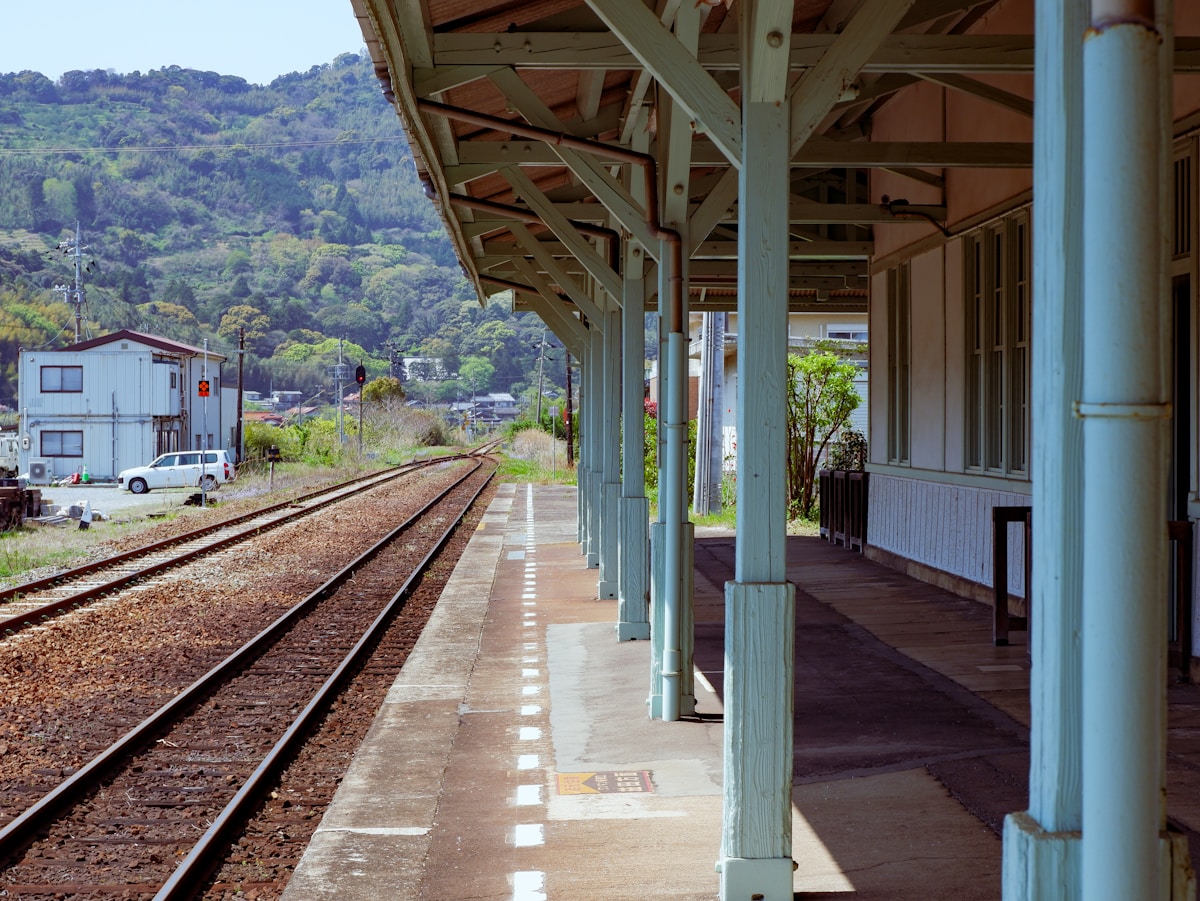
A suburban train station in Japan — access to reliable rail infrastructure is the top priority for most foreign akiya buyers — Photo by Susann Schuster on Unsplash
This means that a "suburban" akiya in Japan might be 40-60 kilometers from a major city center, but only 30-45 minutes away by express train. The property might sit on a quiet residential street with a convenience store 200 meters away, a supermarket within a 5-minute drive, and a regional hospital within 15 minutes. This is a fundamentally different proposition from a rural property where the nearest combini is a 20-minute drive down a mountain road.
Why Buyers Gravitate Toward Suburban Properties
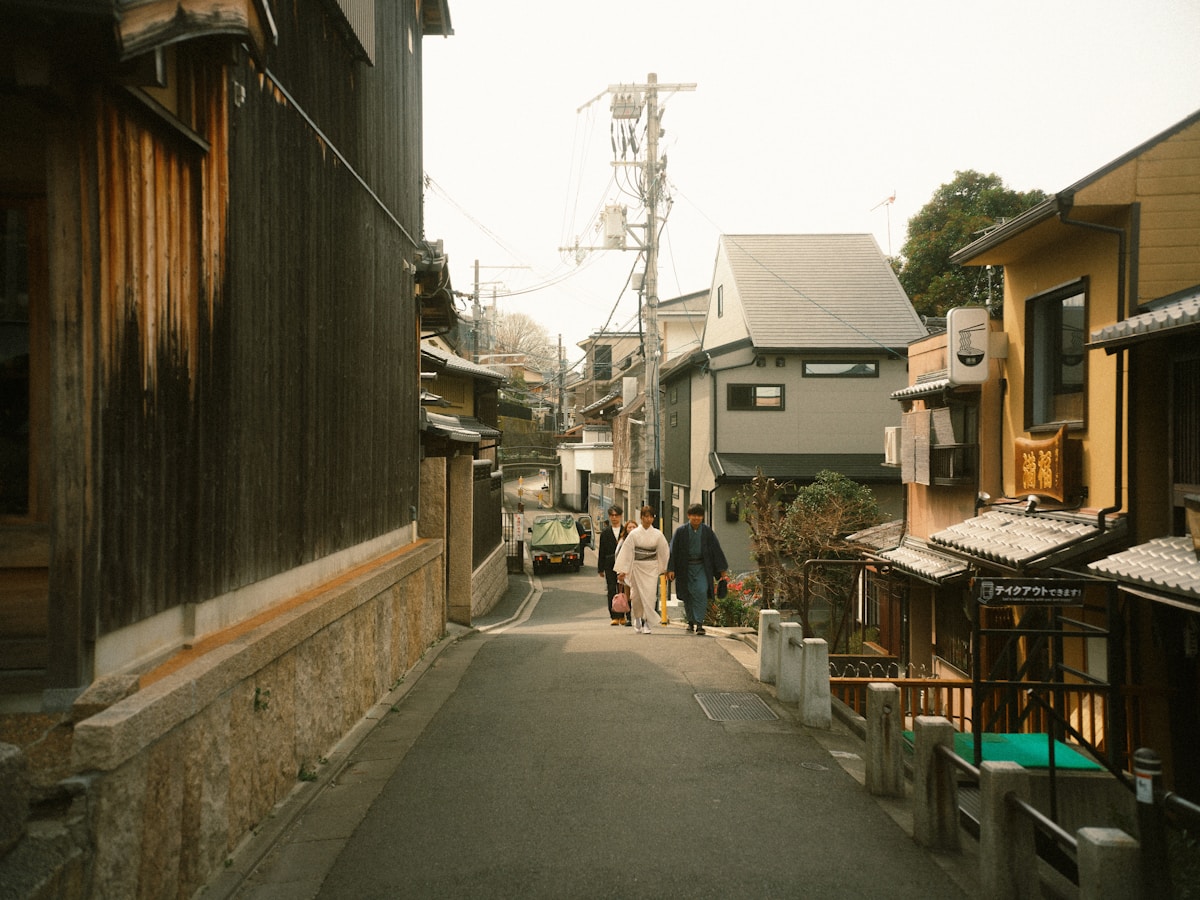
A quiet residential street in suburban Japan — compact neighborhoods clustered around train stations define the Japanese suburban experience — Photo by Jakob Owens on Unsplash
1. Infrastructure That Works Year-Round
The most underestimated factor in akiya purchasing is infrastructure reliability. Rural Japan is experiencing genuine infrastructure decline as populations shrink. Since 2008, Japan's total population has been decreasing by approximately 400,000-500,000 people per year, and the impact falls disproportionately on remote areas.
Concrete consequences for rural property owners include:
- Hospital closures: Regional hospitals are consolidating or closing wards. Sado Island, with a population of around 46,000, lost its only cancer ward. Many rural municipalities now have only a single small clinic.
- School closures: Japan closes hundreds of schools each year as student populations shrink. If you are buying an akiya with the intention of raising a family, the nearest school may be a 30+ minute bus ride — or may close within a few years of your move.
- Public transport cuts: Rural bus routes are being reduced or eliminated. Some areas have shifted to on-demand taxi services that run only during limited hours.
- Utility challenges: Aging water and sewage infrastructure in depopulating areas is increasingly expensive to maintain per capita. Some remote properties rely on well water and septic systems that require ongoing maintenance.
- Road maintenance: Municipal budgets shrink with population, and road maintenance in remote areas gets deprioritized. Winter snow removal on secondary roads can become unreliable.
Suburban areas, by contrast, maintain solid infrastructure because they still have the population density and tax base to support it. A property in suburban Chiba or Saitama has the same municipal services, road quality, and utility reliability as the rest of the Greater Tokyo Area.
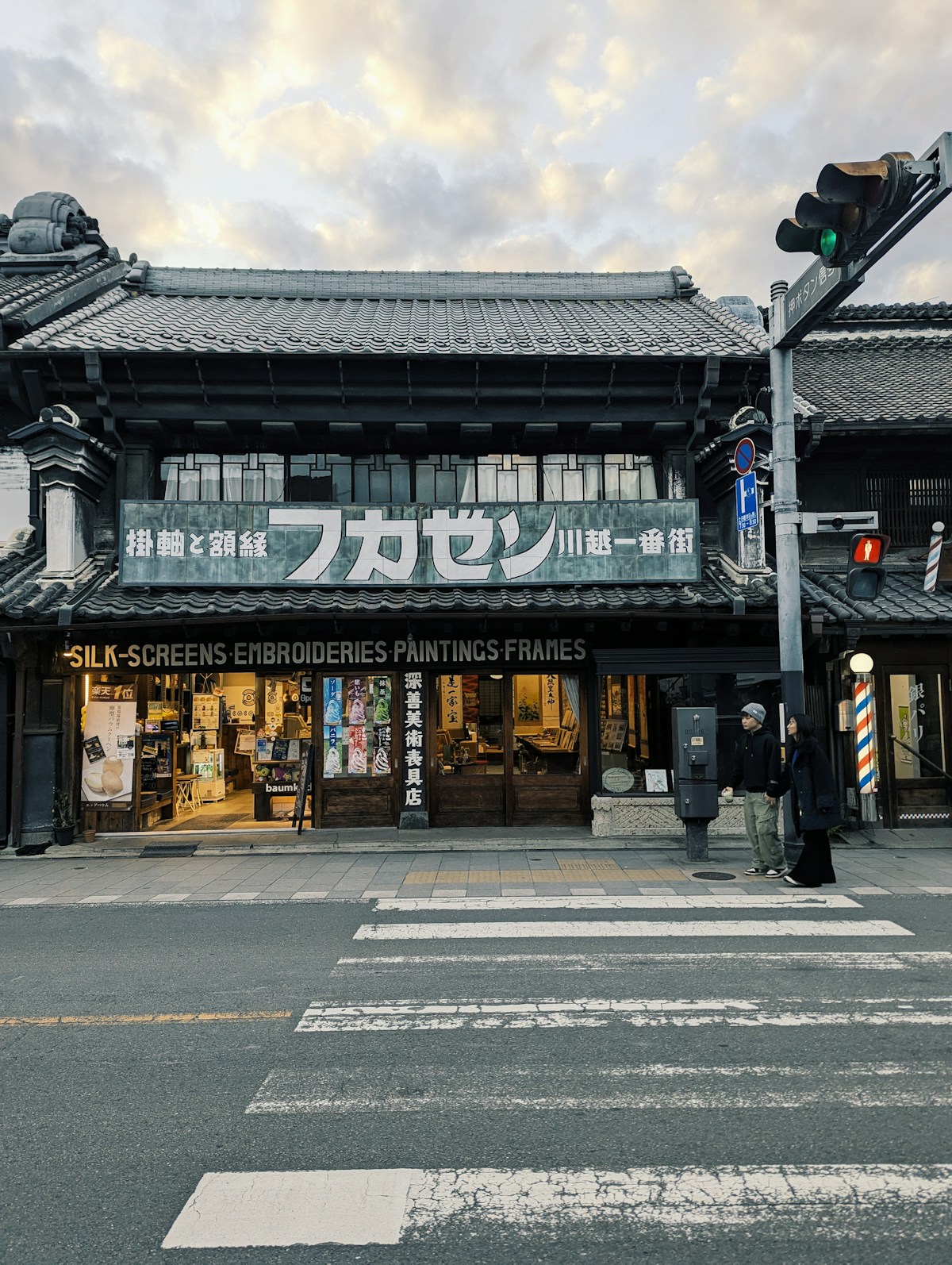
A traditional storefront in Kawagoe, Saitama — suburban cities blend historical charm with modern convenience — Photo by note thanun on Unsplash
2. The Train Station Factor
In Japan, proximity to a train station is the single strongest predictor of property value and livability. The entire nation was built around rail infrastructure, and it shows. A property within 10 minutes' walk of a station on a line that connects to a major city exists in a fundamentally different ecosystem than one that requires a car for every errand.
Japan's Shinkansen (bullet train) network has had a measurable impact on housing affordability. Research has shown that Shinkansen lines helped Japanese cities decentralize, enabling people to access affordable housing in outlying areas while maintaining productive employment in urban centers. Towns along Shinkansen routes — Karuizawa, Ueda, and Sakudaira in Nagano; Takasaki in Gunma; Nasushiobara in Tochigi — offer property at a fraction of Tokyo prices while keeping the capital within 60-90 minutes' reach.
Even on conventional JR and private railway lines, the pattern holds. Express services on lines like the Tsukuba Express can get you from Nagareyama-Otakanomori in Chiba to Akihabara in central Tokyo in about 30-40 minutes, despite being roughly 30 kilometers out. Properties along these corridors offer the space and price of suburban living with genuine urban access.
3. Remote Work Has Changed the Calculus
As of 2023, approximately 30.7% of Japanese employees work remotely at least part-time, and a 2025 survey showed that 82.2% of workers wish to continue teleworking. While Tokyo still has the highest adoption rate (over one-third of workers), the trend is spreading.
For international buyers, remote work capability makes suburban akiya especially attractive. You don't need to commute daily — maybe once or twice a week, or just for occasional meetings. This means a property that is 60-90 minutes from a major city by train becomes perfectly viable as a primary residence, not just a weekend retreat.
Ministry of Internal Affairs and Communications data confirms the pattern: the most popular relocation destinations are Kanagawa, Saitama, Chiba, Ibaraki, and Nagano — all places adjacent to Tokyo that offer nature access and lower rents while remaining within easy reach of the capital.
4. Resale Value and Exit Strategy
This is the factor that separates dreamers from pragmatic buyers. A ¥500,000 farmhouse in a village with 200 residents and no train service may seem like an incredible deal, but what happens when you want or need to sell?
Urban and suburban properties in Japan have been appreciating. In January 2025, the residential property price index in the Tokyo Metropolitan Area rose 8.14% year-on-year. Even suburban areas within the greater metropolitan regions are seeing stable or modest price increases, driven by demand from families seeking more space and remote workers seeking affordable alternatives to city centers.
Rural properties, by contrast, face declining values in most areas. Without population inflows, rental demand, or economic activity to support prices, a rural akiya purchased for ¥2 million today may be worth less in 10 years. The exceptions — tourist destinations like Hakuba (where land prices surged 30% year-on-year in September 2024) or areas with strong immigration programs — prove the rule by their scarcity.
Suburban akiya offer a middle path: prices low enough to represent genuine value, but demand sufficient to support eventual resale. A property purchased for ¥3-8 million in suburban Chiba or Saitama sits in a market with actual buyers, actual renters, and actual economic activity.
The Suburban Sweet Spot: What It Looks Like in Practice
To make this concrete, here is what a typical "suburban akiya" looks like versus its rural counterpart, based on the properties users most commonly save and inquire about.
The Suburban Akiya Profile
- Location: 30-80 km from a major city (Tokyo, Osaka, Nagoya, Fukuoka)
- Train access: Within 15 minutes' drive or walk to a station on a line connecting to a major city
- Price range: ¥3,000,000 - ¥12,000,000 (approximately $20,000 - $80,000 USD)
- Land size: 150-500 m²
- Building: 80-120 m² wooden house, typically 30-50 years old
- Nearby amenities: Convenience store within 1 km, supermarket within 2 km, hospital within 15-minute drive
- Renovation needs: Moderate — kitchen/bathroom updates, possible roof or structural work. Typical budget: ¥3-8 million
- Internet: Fiber optic available or NTT coverage area
The Deep Rural Akiya Profile
- Location: 100+ km from a major city, often in mountainous or coastal areas
- Train access: Nearest station 20-40 minutes by car; service may be infrequent (1-2 trains per hour or less)
- Price range: ¥0 - ¥3,000,000 (free to approximately $20,000 USD)
- Land size: 300-2,000+ m²
- Building: 100-200+ m² wooden house, often 40-70+ years old
- Nearby amenities: Nearest convenience store 10-30 minutes by car, limited medical facilities
- Renovation needs: Often extensive — structural reinforcement, full systems replacement. Budget: ¥5-15+ million
- Internet: May be limited to mobile data or slow ADSL in some areas
When you compare total cost of ownership (purchase price + renovation + ongoing transport and maintenance), suburban akiya often come out similar to or even cheaper than rural ones, while offering dramatically better daily livability.
Prefecture-by-Prefecture: Where Suburban Akiya Buyers Are Looking
Chiba Prefecture →
Chiba is consistently one of the most-saved prefectures on our platform. The appeal is straightforward: direct rail links to Tokyo via multiple lines (JR Sobu, JR Keiyo, Keisei, Tsukuba Express), large inventory of older suburban homes from the 1970s-1990s housing boom, and coastal areas that combine beach access with commuter functionality.
Areas like Kisarazu, Tateyama, and the Boso Peninsula offer properties at ¥3-8 million with land plots that would cost ten times as much closer to Tokyo. The Aqua-Line expressway puts Kisarazu within 30 minutes of Kawasaki by car, and train access continues to improve.
Saitama Prefecture →
Saitama sits just north of Tokyo and serves as one of Japan's largest commuter regions. The prefectural capital (Saitama City, encompassing the former cities of Omiya and Urawa) is a major Shinkansen hub, and property prices are notably lower than in Tokyo or Kanagawa. Saitama's western areas — Chichibu, Hanno, and Hidaka — offer more rural character while remaining on JR and Seibu railway lines with direct service to Ikebukuro and Shinjuku.
Kanagawa Prefecture →
While Yokohama and Kawasaki are effectively extensions of Tokyo, western Kanagawa (Odawara, Hakone approaches, Hadano, Isehara) offers genuine suburban akiya with Shinkansen access. Odawara to Tokyo Station is 35 minutes by Shinkansen — an increasingly viable daily commute.
Nagano Prefecture →
Nagano occupies an interesting middle ground. It is technically rural, but the Hokuriku Shinkansen puts Karuizawa just 60 minutes from Tokyo Station and Nagano City about 80 minutes away. Towns along the Shinkansen corridor — Komoro, Ueda, Tomi — have become popular with remote workers and retirees who want mountain scenery without sacrificing urban access. Akiya prices here range from ¥1-10 million depending on proximity to stations and condition.
Shizuoka Prefecture →
The Tokaido Shinkansen runs the length of Shizuoka, putting Atami, Mishima, and Shizuoka City within 45-60 minutes of Tokyo. Izu Peninsula properties combine hot spring culture with Shinkansen connectivity. The Numazu-Mishima corridor has seen particular interest from buyers wanting ocean views with bullet train commuting capability.
Greater Osaka Suburbs →
For buyers oriented toward western Japan, the suburban ring around Osaka — extending into Hyogo (Sanda, Miki, Kasai), Nara (Ikoma approaches, Tenri, Sakurai), and Wakayama (northern areas near Hashimoto) — offers similar dynamics. Kansai's extensive private railway network (Kintetsu, Hankyu, Hanshin) provides excellent suburban connectivity, and akiya prices in outer suburbs start from ¥2-5 million.
Fukuoka Suburbs →
Fukuoka is Japan's fastest-growing major city, and its suburban ring is expanding accordingly. Itoshima (west of Fukuoka) has become famous for its lifestyle appeal, but prices have risen accordingly. Better value lies in areas like Munakata, Nogata, Iizuka, and into Saga Prefecture — all within 30-60 minutes of Hakata Station by train.
What About the Rural Dream?
None of this means rural akiya are a bad choice. For the right buyer with the right expectations, a deep rural property can be transformative. But it is important to go in with clear eyes about what rural living in Japan actually entails.
Rural Akiya Makes Sense When:
- You work fully remotely and have stable internet (verify coverage before buying)
- You are comfortable driving — a car is not optional in most rural areas, and Japanese driving licenses or International Driving Permits are necessary
- You speak functional Japanese or are committed to learning — English-language services are essentially nonexistent in rural areas
- You have realistic renovation expectations — a ¥1 million purchase price may require ¥8-15 million in renovation to create a livable modern home
- You genuinely want community integration — rural Japan's social structures are tight-knit and require active participation (neighborhood associations, festival committees, communal farm work)
- You are not counting on resale value — treat the purchase as a consumption expense, not an investment
Rural Akiya Is Risky When:
- You plan to visit seasonally without year-round presence — unoccupied houses in rural Japan deteriorate rapidly, especially in snow country or humid coastal areas
- You have health considerations — if access to specialist medical care matters, a 90-minute drive to the nearest regional hospital is a serious constraint
- You expect rental income — outside of designated tourist areas, rural rental demand is negligible
- You are buying sight-unseen — rural properties have the highest variance in condition, and what looks charming in photos may have serious structural issues
Municipal Subsidies: Suburban Areas Have Them Too
There is a common misconception that renovation subsidies and relocation incentives are only available in remote rural areas. While deep rural municipalities tend to offer the most generous packages (some offering ¥3 million or more), suburban municipalities also provide significant support.
Typical municipal renovation subsidies range from ¥500,000 to ¥2,000,000, covering 30-50% of eligible renovation costs. Common categories include:
- Earthquake retrofitting (耐震改修 (taishin kaishū)): Available almost everywhere — Japan's national program subsidizes seismic upgrades for pre-1981 buildings, typically covering up to ¥1 million of the cost
- Energy efficiency upgrades: Insulation, double-glazing, and heat pump installation subsidies are available in many prefectures
- Akiya bank utilization incentives: Municipalities that list properties on their akiya banks often provide additional grants to buyers who purchase through the system
- Young family incentives: Many suburban municipalities offer additional subsidies (¥500,000-¥1,000,000) for families with children under 18
Important: Renovation subsidies must almost always be applied for before construction begins. Retroactive claims are rarely approved. Budget your timeline accordingly — the application process typically takes 2-4 weeks for approval.
The Japanese government also expanded relocation incentive programs in 2023, increasing funding for families willing to move from Tokyo to regional areas. Suburban cities within commuting range of Tokyo actively compete for these relocating families, making the suburban zone a sweet spot for subsidy stacking.
The Practical Checklist: Evaluating a Suburban Akiya
When evaluating a suburban akiya, these are the infrastructure and location factors that separate a smart purchase from a frustrating one:
Must-Haves (Non-Negotiable)
- Train station within 20 minutes: By walking, cycling, or short drive. Verify the actual line and frequency — a station with 2 trains per hour is functionally different from one with 10.
- Medical facilities within 30 minutes: Not just a clinic, but a hospital with emergency services. Check if the facility is at risk of closure or downsizing.
- Supermarket within 10 minutes' drive: Convenience stores are useful but not sufficient for daily living. A proper supermarket (Aeon, Life, Yaoko, local co-op) should be accessible.
- Reliable internet: Check NTT's fiber coverage map for the specific address. Urban and suburban areas are almost universally covered; outer suburban areas may have gaps.
- Municipal water and sewer: Properties on well water and septic tanks require ongoing maintenance and may have water quality issues. Municipal services are more reliable and less expensive long-term.
Strong Preferences
- Convenience store within walking distance: In Japan, the combini is not just a shop — it is an ATM, bill payment center, postal service point, and emergency supply source.
- Elementary school within 2 km: Even if you don't have children, the presence of an active school indicates a community with enough young families to sustain itself.
- City hall or branch office nearby: Administrative tasks in Japan (resident registration, health insurance, tax matters) require in-person visits more often than you might expect.
- Hazard map review: Check the municipal hazard map (ハザードマップ (hazādo mappu)) for flood zones, landslide risk areas, and tsunami inundation zones. Suburban properties in valley floors or near rivers may have flood risk.
Red Flags
- Declining bus service: If bus routes in the area have been cut recently, it signals population decline that may eventually affect other services.
- No nearby combini: If a convenience store chain has not found the area commercially viable, daily errands will be more difficult than you expect.
- School closure notices: Municipal announcements about upcoming school consolidations indicate demographic decline that will affect property values and community vitality.
- Vacant lots outnumbering occupied homes: Use Google Street View to virtually walk the neighborhood. A high ratio of empty lots and boarded-up houses suggests the area may be past the tipping point.
How to Search Effectively for Suburban Akiya
If this data on buyer preferences has convinced you that suburban is the right approach, here is how to search efficiently:
On Akiya Japan
Use our map view to visually identify the suburban rings around major cities. Filter by prefecture (Chiba, Saitama, Kanagawa, Shizuoka, Nagano are good starting points for Tokyo-area suburban searches) and set a price range that reflects suburban market reality — typically ¥2,000,000 to ¥15,000,000.
Set up search alerts for your target prefectures and price range. New properties are added daily, and suburban listings move faster than rural ones — popular suburban akiya at good prices can receive inquiries within days of listing.
Using Google Maps as a Research Tool
When you find an interesting property, open Google Maps and check:
- Walking distance to the nearest station (use the pedestrian routing)
- Train line schedule (Google Maps shows real-time timetables for Japanese trains)
- Nearby facilities (search "コンビニ" for convenience stores, "スーパー" for supermarkets, "病院 (byōin)" for hospitals)
- Street View of the neighborhood — check the condition of surrounding properties and streets
Municipal Akiya Banks
Many suburban municipalities maintain their own akiya banks (空き家 (akiya)バンク (akiya bank)) with properties not listed on private real estate platforms. Registration requirements vary — some require proof of residence in Japan, though others accept passport copies from overseas applicants. The process can be slow and bureaucratic, but prices through akiya banks are often below market rate, and subsidy eligibility is typically tied to purchasing through the official system.
The Numbers Behind the Trend
Japan's property market is experiencing a clear divergence. Prime urban areas — central Tokyo, Osaka's core — continue to appreciate, with Tokyo residential prices rising approximately 5-6% annually. Rural areas face continued price decline as population exodus accelerates.
Suburban areas sit at the inflection point. Properties within the commuter belts of major cities have stabilized and, in many cases, begun appreciating modestly as demand shifts. The drivers are structural:
- Remote work permanence: With over 80% of Japanese teleworkers wanting to continue, demand for spacious suburban housing will persist.
- Affordability pressure: Central Tokyo and Osaka pricing has pushed middle-class families outward, and suburban areas absorb this demand.
- Infrastructure investment: Suburban areas continue to receive infrastructure upgrades (road improvements, station renovations, new commercial facilities) because they maintain viable population levels.
- Foreign buyer interest: The weak yen has made Japanese property exceptionally affordable for international buyers, and suburban areas offer the best combination of price, livability, and accessibility.
National projections forecast that some smaller cities may decline by more than 70% between 2020 and 2050. These projections apply overwhelmingly to isolated rural communities, not to suburban areas connected to functioning metropolitan economies. When choosing where to buy, you are effectively choosing which side of this demographic divide you want to be on.
Making the Right Choice for You
The 80/20 split in our user behavior is not a judgment on rural living — it is a reflection of practical priorities. Most people buying property in Japan, whether as a primary residence, a vacation home, or an investment, need a baseline level of infrastructure to make ownership workable.
That baseline — train access, medical care, daily shopping, reliable internet — is what suburban akiya provide. They offer the core appeal of akiya ownership (affordable space in Japan, a foothold in a country many people love, the satisfaction of restoring a home) without the logistical challenges that can turn a dream purchase into a burden.
For international buyers working through this decision, professionals who understand both the property market and the surrounding infrastructure are worth engaging. Teritoru, our licensed partner agent, specializes in helping foreign buyers evaluate properties not just on price and condition, but on the surrounding infrastructure and long-term viability of the location — the factors that ultimately determine whether your akiya purchase becomes the experience you are hoping for. You can book a consultation with Teritoru to discuss specific properties or regions you are considering.
The akiya opportunity in Japan is real. Nine million vacant homes and counting. But the smartest buyers are not chasing the cheapest price tag — they are finding the intersection of value and livability. For most users, that intersection is suburban.