Japan's Onsen Capital, Silk History, and Mountain Escapes from Tokyo
Living in Gunma
The prefecture that produces more hot spring water per minute than anywhere in Japan — Kusatsu alone flows at 32,300 litres per minute — alongside the silk heritage of a UNESCO World Heritage factory, mountain ski resorts, and an inland culture shaped by volcanic terrain and thermal water.
Why People Choose Gunma
Gunma is chosen for different reasons depending on the buyer. For Tokyo commuters on the Shinkansen corridor, Takasaki (50 minutes to Ueno) offers mid-size city infrastructure at property prices that are among the lowest in the Kanto region with competitive Tokyo access. For second-home and retirement buyers, the onsen towns — Kusatsu, Ikaho, Minakami — offer year-round resort amenities, mountain scenery, and a pace of life that cities cannot replicate. For outdoor sports buyers, Minakami (white-water rafting, skiing, hiking, bungee) is Japan's most concentrated adventure-sports destination within the Kanto region.
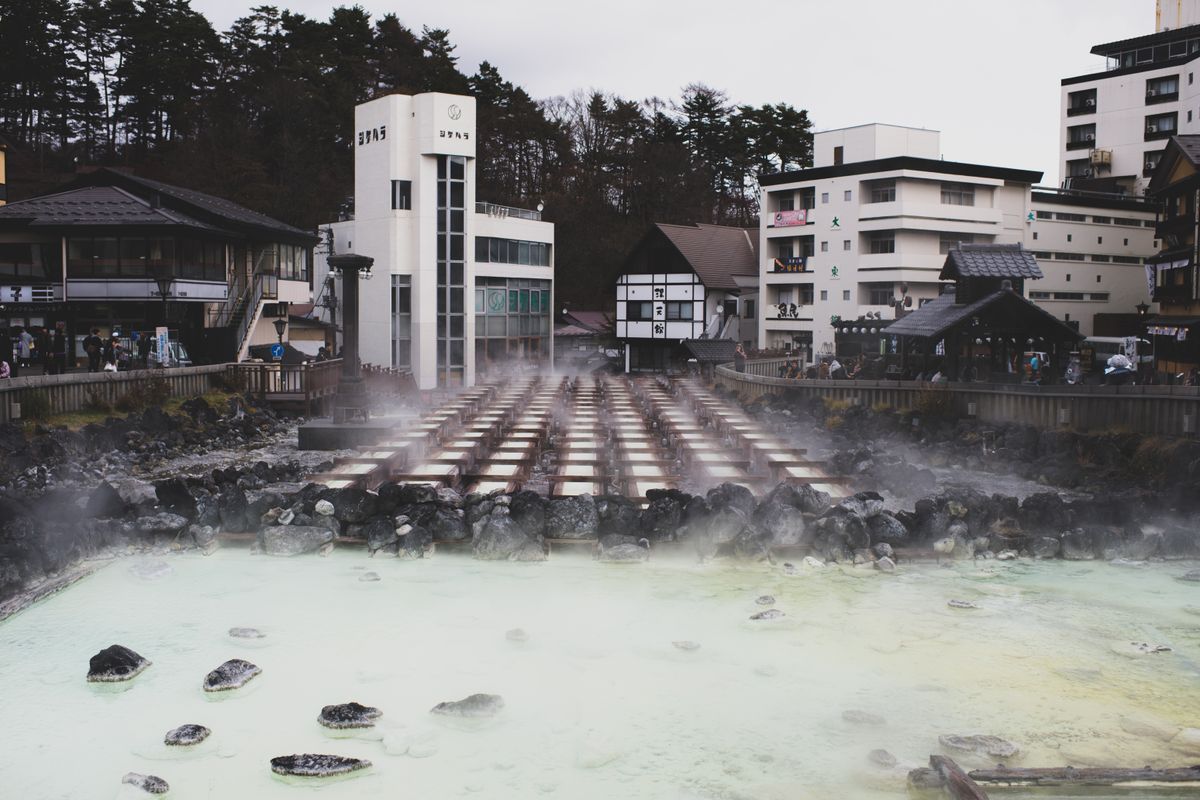
Kusatsu Onsen is Japan's most-visited domestic hot spring resort by overnight guest volume — not for scenic beauty (the town is functional rather than picturesque) but for the quality and quantity of its water. The spring produces 32,300 litres per minute at the main source; the water's pH of 2.0 is among the most acidic natural hot spring water on earth, with documented bactericidal properties that have made it a traditional medical treatment since the Edo period. The yumomi paddle-stirring ritual performed at Netsunoyu six times daily is the town's most distinctive cultural sight.
The Tomioka Silk Mill (UNESCO, 1872) documents the moment Japan decided to industrialise: the Meiji government's first modern factory, built with French engineers and technology, which launched Japan into the global silk trade within a decade. Gunma had been Japan's primary silk-producing region since at least the Edo period; the mill concentrated and modernised what had been cottage industry, and the prefecture's mulberry fields and sericulture culture shaped its entire agricultural landscape for a century.
Maebashi (population 330,000, prefectural capital) and Takasaki (population 370,000, the larger commercial hub) are both on the Joetsu Shinkansen — Takasaki to Tokyo Ueno in 50 minutes. The two cities are 12 minutes apart and function as a single urban area. The resort towns (Kusatsu, Ikaho, Minakami) are an hour or more by bus from the Shinkansen and function primarily as tourism and retirement communities. The mountain areas in the north and west are sparsely populated with strong outdoor culture.
Joetsu/Hokuriku Shinkansen: Takasaki to Tokyo Ueno in 50 minutes; Honjo-Waseda to Tokyo in 60 minutes. JR Agatsuma Line: Takasaki to Naganohara-Kusatsuguchi (bus to Kusatsu, total 2 hours from Tokyo). Bus from Takasaki: Ikaho Onsen in 50 minutes. A car is strongly recommended for the mountain resort areas and greatly expands access to the northern highland zones.
Takasaki / Maebashi flats and houses ¥4M–¥15M; resort towns (Kusatsu, Ikaho, Minakami) ¥2M–¥10M for renovable properties; Tomioka City ¥2M–¥8M; rural northern Gunma from ¥300K with significant renovation required. Gunma prices are among the lowest in the Kanto region, reflecting the landlocked position and limited direct Tokyo commute appeal outside the Shinkansen corridor.
The urban core: Shinkansen access, full city infrastructure, commercial and retail hub for the prefecture. 50 minutes to Tokyo Ueno. Practical rather than scenic, with a growing independent arts scene in Maebashi.
Hot spring resort town: Kusatsu Onsen's yubatake, acidic mineral baths, ski resort at Kusatsu Kokusai. A resort community with year-round visitors and a significant retirement population.
Mountain resort: outdoor rotenburo at Takaragawa, skiing at Tanigawadake, white-water rafting on the Tone River, and Joetsu Shinkansen access at Jomo-Kogen station. Japan's adventure sports capital for the Kanto region.
Silk heritage zone: UNESCO Tomioka Silk Mill, traditional weaving workshops, and the quietest property market in commuter-accessible Gunma. Fujioka is 30 minutes from Takasaki by local train.
Where To Start
Four ways to start in Gunma
The <a href="https://www.kusatsu-onsen.ne.jp/netsunoyu/" target="_blank" rel="noopener" class="text-blue-600 dark:text-blue-400 hover:underline">Netsunoyu bathhouse</a> in Kusatsu performs the yumomi ritual six times daily: workers in traditional dress use 180cm wooden paddles to stir the 60°C spring water continuously, cooling it by evaporation rather than dilution — diluting the bath with cold water is considered to degrade the medicinal minerals. The bath at 48°C after stirring is usable; the smell of sulfur and the sound of the paddles in the steam is specific to Kusatsu and nowhere else. The evening light-up of the yubatake (hot water field) at the town centre runs year-round.
The <a href="https://www.tomioka-silk.jp/en/" target="_blank" rel="noopener" class="text-blue-600 dark:text-blue-400 hover:underline">Tomioka Silk Mill</a> (UNESCO World Heritage, 1872) opens at 9am and the first hour is quiet. The French-designed brick reeling factory is the most complete early Meiji industrial building in Japan — the East and West cocoon warehouses, each 104m long, still have their original timber frames and brick walls. The guided tour explains how the joint French-Japanese enterprise that established the mill became the template for Japan's entire industrial modernisation. The silk production process can be watched at the attached demonstration workshop.
Takaragawa Onsen in Minakami is Japan's most famous outdoor rotenburo — four large communal outdoor baths fed by a 42°C mountain spring on the Takaragawa River, surrounded by forest. <a href="https://www.takaragawa.com/en/" target="_blank" rel="noopener" class="text-blue-600 dark:text-blue-400 hover:underline">Osenkaku ryokan</a> operates the baths; day visitors are admitted as well as overnight guests. In February the riverbanks are snow-covered, the steam from the water rises into the cedars, and the experience is what the photographs suggest it will be.
Gunma's ski resorts are among the best in the Kanto-accessible highlands. Kusatsu Kokusai ski resort sits directly above the onsen town, with the unusual combination of skiing above and sulfur baths below — ski in the morning, soak in the afternoon. Shiga Kogen (the western edge extends into Gunma) is Japan's largest ski area at 1,900 hectares across 19 linked resorts. Minakami's resorts (Tanigawadake, Hodaigi) have consistent snow from December through March.
Daily Life in Gunma
Takasaki and Maebashi operate as a single functional conurbation despite being in different districts — 12 minutes apart by local train, jointly containing the full infrastructure of a prefectural capital. Takasaki is the commercial hub (major railway junction, large depachika, Shinkansen access); Maebashi is the administrative capital with a growing arts identity — the Maebashi arts scene has developed around a cluster of young galleries and independent spaces in the central shopping arcade that was depopulated as retail shifted to suburban malls.
Kusatsu (population 7,000) is genuinely small — one of Japan's most visited resort destinations runs on a permanent population that would fit in a single Tokyo apartment building. The town's economy is entirely built on onsen tourism; the year-round visitor flow (the classical music festival in summer, the ski season in winter, the cherry blossom season in spring) means the town has unusual depth of restaurant and retail provision for its size. Living in Kusatsu means proximity to one of Japan's finest natural thermal resources but requires either car ownership or acceptance of the bus-dependent connection to the Shinkansen.
Minakami (population 18,000) has a different outdoor-focused identity — it was the site of Japan's first commercial bungee jumping operation in 1988 and has developed into the most concentrated adventure-sports destination in the Kanto region: white-water rafting on the Tone River, canyon descent, snow sports at multiple linked resorts, and Takaragawa's rotenburo. The Joetsu Shinkansen stop at Jomo-Kogen puts it 75 minutes from Tokyo.
Food and Drink
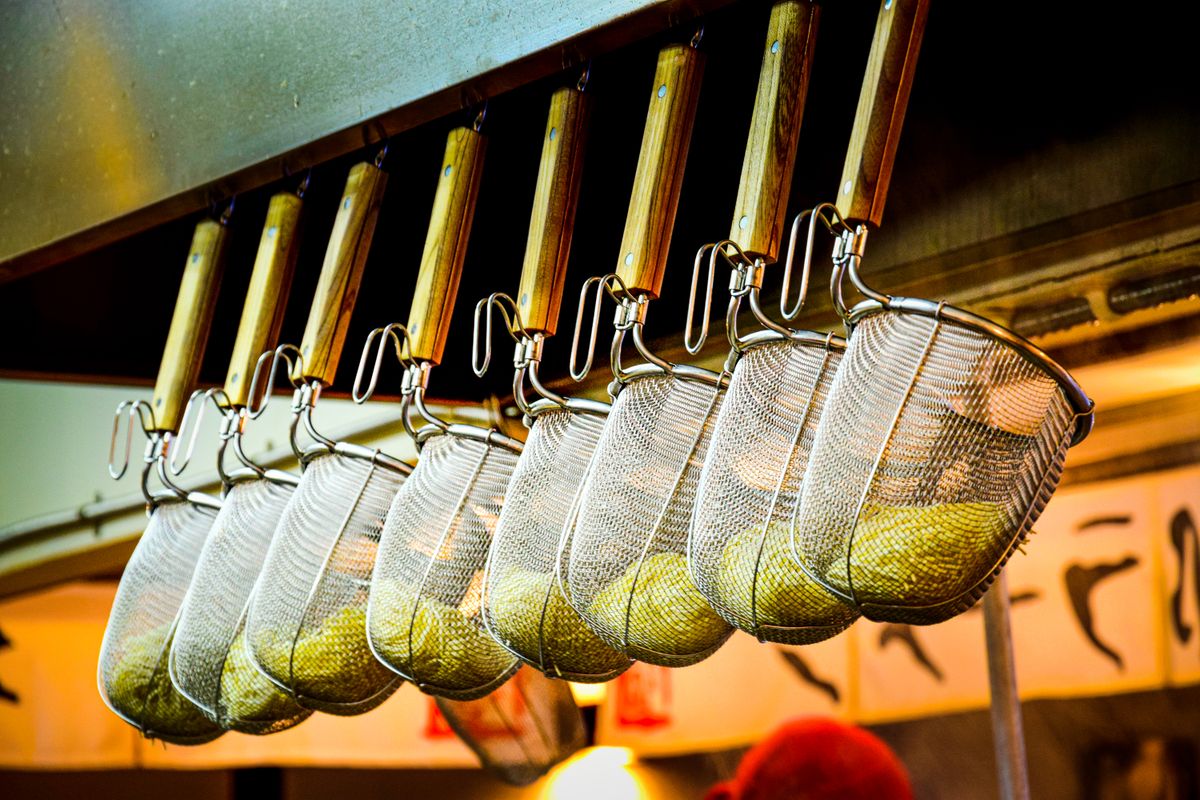
Himo-kawa udon (ribbon udon) is Gunma's most distinctive noodle: extraordinarily flat and wide wheat noodles — some varieties up to 10cm wide — in a clear dashi broth, a tradition from the Kiryu area of eastern Gunma. The width is the point: the flat surface creates a different texture from standard round udon, silkier and more responsive to the broth. Kiryu City has the highest concentration of himo-kawa specialists; it is one of the most unusual noodle styles in Japan and almost unknown outside the prefecture.
Konnyaku (devil's tongue jelly, a zero-calorie gelatinous food made from konjac yam) is produced in Gunma more than anywhere else in Japan — the prefecture accounts for over 90% of Japan's konnyaku production. It appears in oden (winter hotpot), dengaku (grilled with miso), and as sashimi konnyaku (sliced thin with wasabi soy). The Shimonita area of western Gunma also produces negi (green onions) that are considered Japan's finest, with a sweetness from the cold mountain soil.
Kusatsu's onsen town food culture is anchored by the ryokan kaiseki tradition — multi-course dinners built around local mountain vegetables, river fish (iwana char, yamame trout), and premium Joshu beef from the Gunma plains. The Gunma beef (Joshu-gyu) is the local wagyu brand — raised on the mountain-fed pastures of the Agatsuma district, less internationally marketed than Matsuzaka or Kobe but of comparable quality at lower prices.
Culture and Heritage
The Tomioka Silk Mill and Related Sites (UNESCO World Heritage, 2014) is the most significant industrial heritage site in Japan outside Nagasaki. The main mill (1872) introduced the French Basque reeling technology to Japan; the four components of the UNESCO site — the mill, the Tajima Yahei Sericulture Farm, the Takayama-sha Sericulture School, and the Takeyama Kaito silk farm — collectively document the entire silk production chain from mulberry cultivation to finished silk thread. The brick and timber construction of the main mill, with its 104m warehouses, is the most visually striking Meiji-era industrial building in Japan.
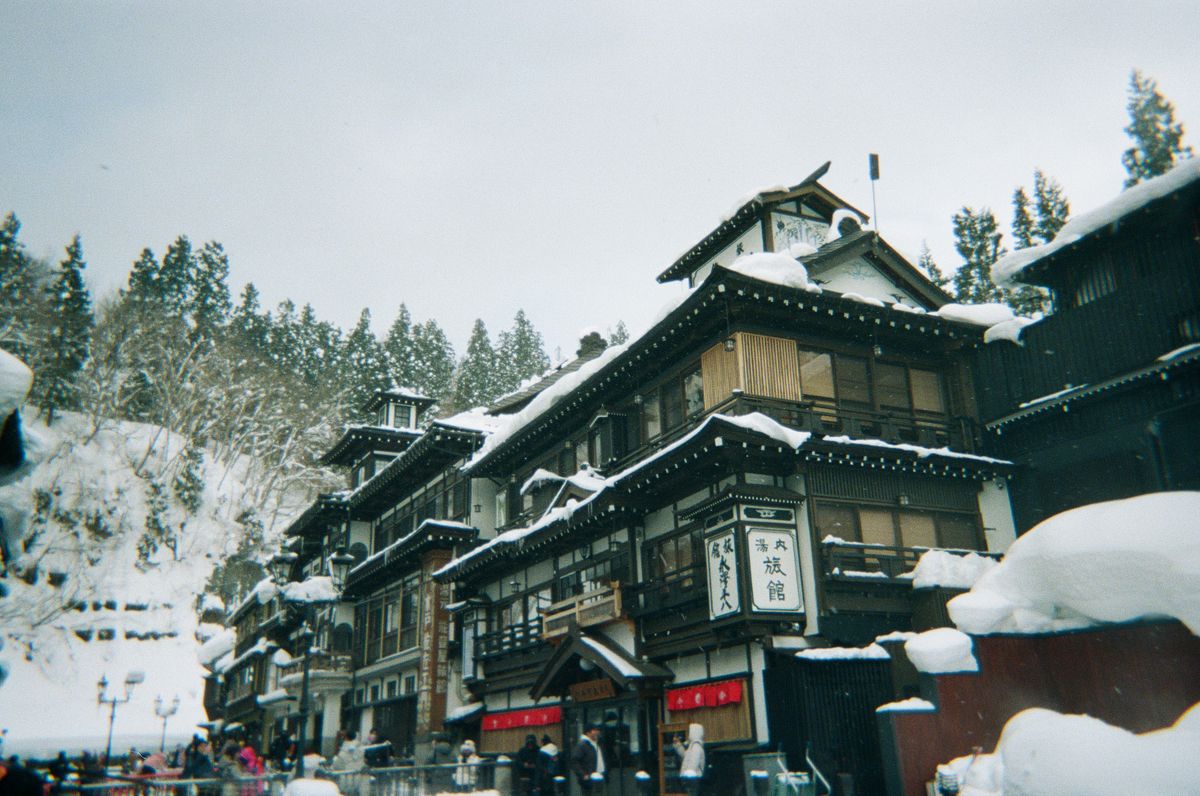
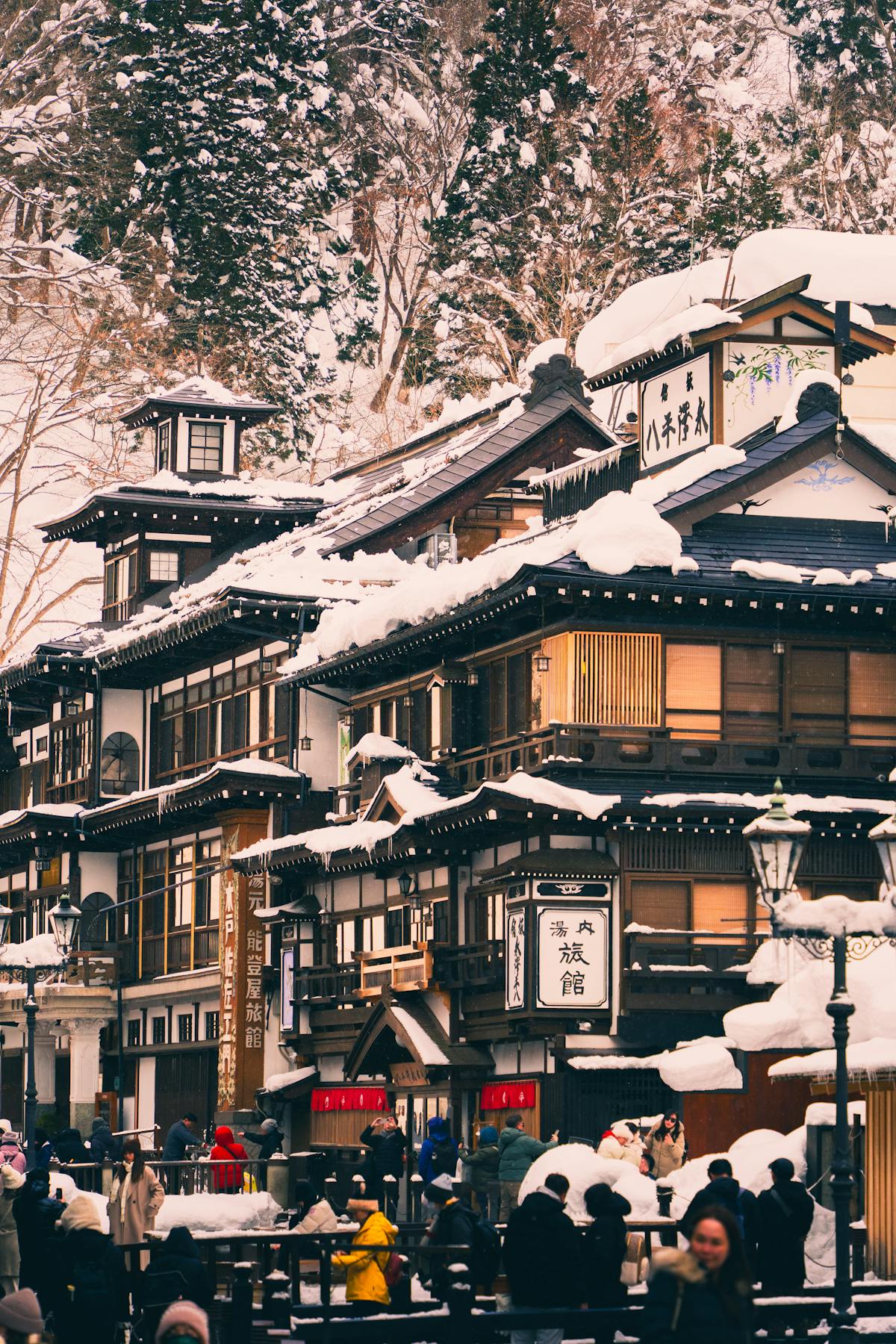
Ikaho Onsen's stone-step street (ishibudon) has 365 stone steps lined with ryokan, food stalls, and craft shops climbing the hillside from the bus terminal to the source baths at the top. The baths at Ikaho are fed by two distinct springs: "golden water" (iron-rich, turns amber on contact with air) and "white water" (separate source, clear). The town's wooden ryokan architecture — many buildings from the Taisho and early Showa eras — creates a stepped streetscape that is among the most photographed in the Kanto region. Ikaho Onsen Tourism Association details the seasonal events and stone-step festival calendar.
The Usui Pass — the mountain pass connecting Gunma and Nagano at 956m — was the site of Kyu-Karuizawa station on the Shinetsu Main Line, the section of railway that ran through the steepest non-rack section in Japan until closure in 1997. The trackbed has been converted into a cycling path; the former station buildings are preserved, and the Usui Pass Railway Cultural Village displays the Abt-system rack locomotives that managed the grades. Mount Asama, Japan's most active volcano, is visible from the pass.
Weekends and the Outdoors
Minakami outdoor sports is the most comprehensive adventure-sports concentration in the Kanto region: white-water rafting on the Tone River (Class III–IV, April–October), canyon descent, bungee jumping (Minakami Bungee is 42m over the Tone River, the original commercial bungee in Japan), kayaking, rock climbing, and mountain biking. In winter, Tanigawadake (one of Japan's 100 Famous Mountains) has consistent snow from December through March, with ski resorts and backcountry routes. Minakami town tourism has English-language operator listings.
Kusatsu ski resort (Kusatsu Kokusai) sits at 2,000m on the slopes above the onsen town, with 21 runs and a vertical drop of 604m. The combination — morning skiing, afternoon soaking in the sulfur baths of the town below — is specific to Kusatsu and one of the most unusual resort experiences in Japan. Snowfall is reliable from December through March. The resort and the town are connected by shuttle bus; no car is required.
The Haruna and Akagi mountains near Maebashi offer accessible hiking — both are former volcanoes with caldera lakes at the summit (Lake Haruna and Lake Onuma) and well-maintained hiking circuits. Haruna is 45 minutes by bus from Takasaki; Akagi is 40 minutes from Maebashi. Both mountains have summit onsen and are used for year-round recreation by the Maebashi and Takasaki population. The Gunma Prefecture Tourism site lists trail conditions and seasonal access.