Peace Memorial, Floating Torii, Oysters, and the Setouchi Cycling Route
Living in Hiroshima
A city that rebuilt itself from zero in 1945 and is now one of the most liveable in western Japan — paired with Miyajima's floating torii gate, the world's most photographed Shinto shrine, a cycling route through the Seto Inland Sea that is one of Asia's finest, and an oyster industry that supplies more than 60% of Japan's total output.
Why People Choose Hiroshima
Hiroshima makes a straightforward case. It is the largest city in western Japan outside the Osaka-Kobe-Kyoto metro area, with lower property prices than either, direct Shinkansen access to Osaka in 44 minutes and Tokyo in under 4 hours, and a quality of daily life that the city's 1.2 million permanent residents find entirely self-contained.
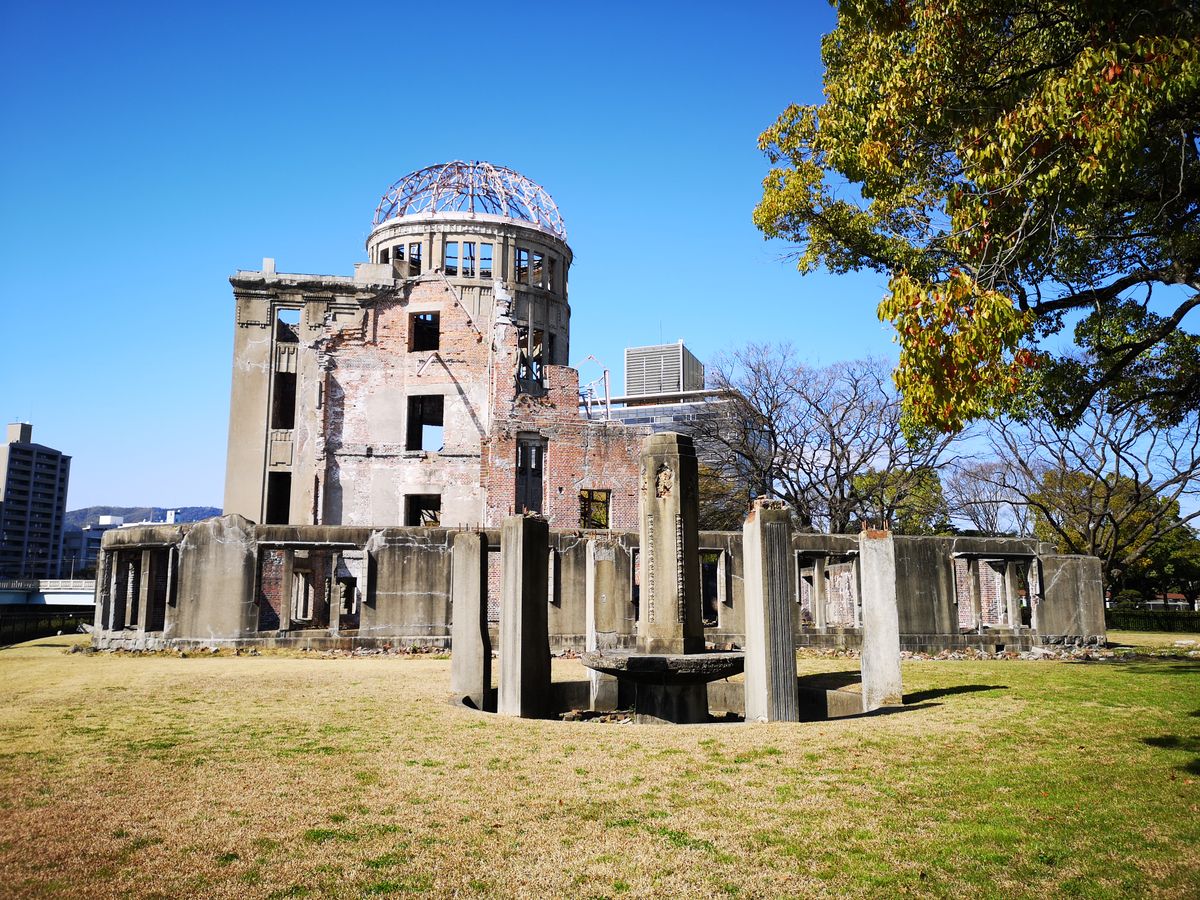
The international significance — the Peace Memorial Museum, the A-Bomb Dome (UNESCO World Heritage), and the annual August 6 Peace Memorial Ceremony broadcast globally — gives the city an unusual international visibility for a provincial Japanese city. This translates into a larger-than-average expatriate and international student population, English-language infrastructure, and a city that is practised at receiving foreign visitors in a way that many Japanese cities are not.
Miyajima (Itsukushima Shrine, UNESCO World Heritage) is 30 minutes away. The Shimanami Kaido cycling route starts 70 minutes east in Onomichi. Saijo's sake district is 45 minutes by train. The Setouchi Inland Sea coastline, with its specific light quality and island-dotted views, is accessible from the city as a day or overnight trip. The combination of urban infrastructure and natural/cultural access within a 90-minute radius is one of the strongest in western Japan.
Hiroshima City (population 1.2 million) is the largest city in western Japan outside the Osaka-Kobe-Kyoto metro area. It has good hospitals, multiple universities, a professional baseball team (the Carp, whose fan culture is one of the most intense in Japanese baseball), major department stores, and a streetcar (tram) network that covers the central city without needing a car. The city feels self-contained and confident — it does not see itself as a satellite of Osaka. Miyajima ferry access, Saijo sake district day trips, and the Setouchi islands are all within 30–90 minutes.
Sanyo Shinkansen: Hiroshima to Shin-Osaka in 44 minutes; to Tokyo in 3h50. Hiroshima Airport is 45 minutes from the city centre by bus. Hiroshima City's tram network covers the city centre well. Miyajima: JR ferry from Miyajima-guchi (30 min from Hiroshima Station) to the island. Onomichi (Shimanami Kaido start) is 70 minutes by JR. A car is helpful for the Setouchi coast and Saijo wine/sake area.
Hiroshima City condos ¥15M–¥30M; detached houses ¥20M–¥45M in desirable areas (Naka-ku, Minami-ku, Saeki-ku hillside). Onomichi and Fukuyama (eastern Hiroshima) ¥5M–¥15M for houses. Rural Hiroshima (Chugoku Mountains interior) from a few hundred thousand yen with substantial renovation needed. Hiroshima City prices are meaningfully lower than Osaka and significantly lower than Tokyo for equivalent urban quality.
The urban base: Peace Memorial Park and Museum, the Carp ballpark (Mazda Zoom-Zoom Stadium), okonomiyaki village (Okonomi-mura, six floors of dedicated okonomiyaki restaurants), Hondori shopping arcade, and the tram network connecting it all.
The island that has defined Hiroshima for the world — Itsukushima Shrine, the floating torii, wild deer, and a single high street of oyster restaurants and momiji manju (maple-leaf-shaped confectionery). Hatsukaichi on the mainland opposite is a practical residential base with ferry access.
The hill town at the Shimanami Kaido's start: a sloped city of temples, narrow lanes, and a literary history (several Japanese novelists were based here). The U2 cycling hotel (a converted warehouse) and the neighbouring Onomichi Jeans Street have made it a design destination.
Eight sake breweries in a single neighbourhood, 45 minutes from Hiroshima City by JR. The Saijo Sake Festival (October) draws 200,000 visitors over two days and is one of Japan's largest sake events. Higashihiroshima City has Hiroshima University campus and a growing academic residential community.
Where To Start
Four ways to start in Hiroshima
<a href="https://hpmmuseum.jp/?lang=eng" target="_blank" rel="noopener" class="text-blue-600 dark:text-blue-400 hover:underline">Hiroshima Peace Memorial Museum</a> is most powerful before the tour groups arrive — be at the Cenotaph by 8am and walk the park axis from the arch through the Flame of Peace to the A-Bomb Dome. The museum (opened in new form 2019 after renovation) takes two hours minimum to do properly. The genbaku (hypocenter) marker is 2 minutes north of the Dome at Shima Hospital — the actual point directly below the detonation, now marked with a small plaque.
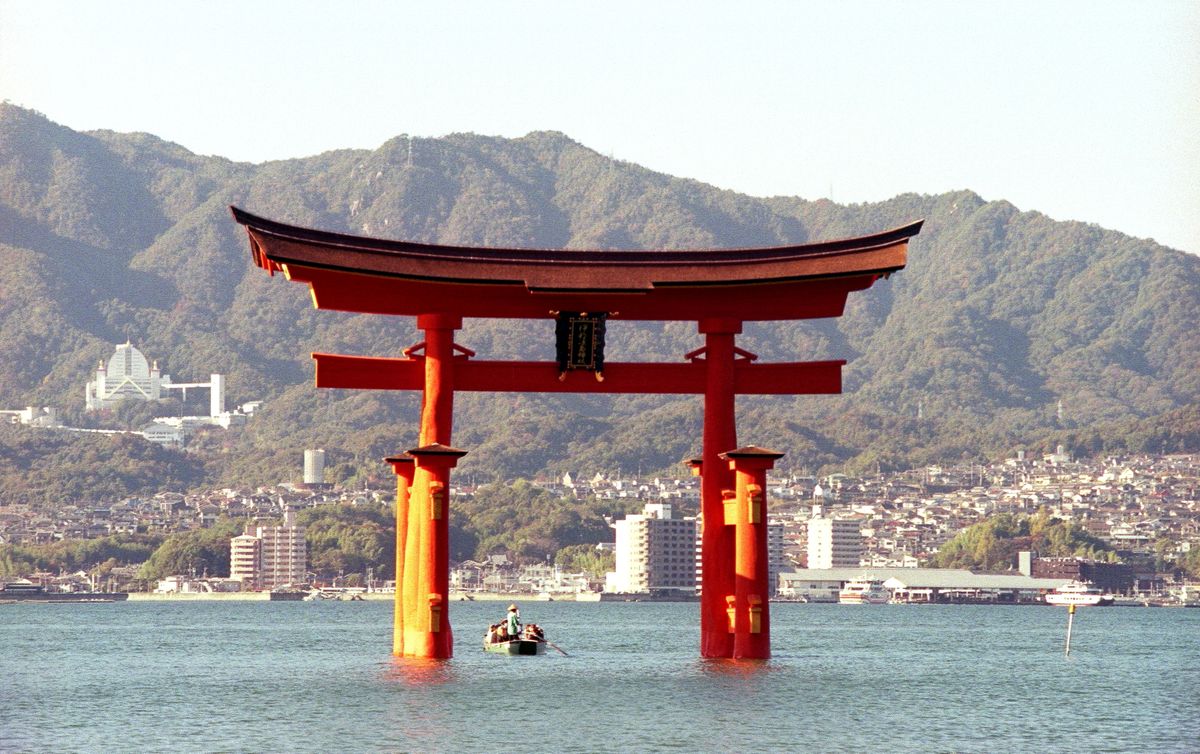
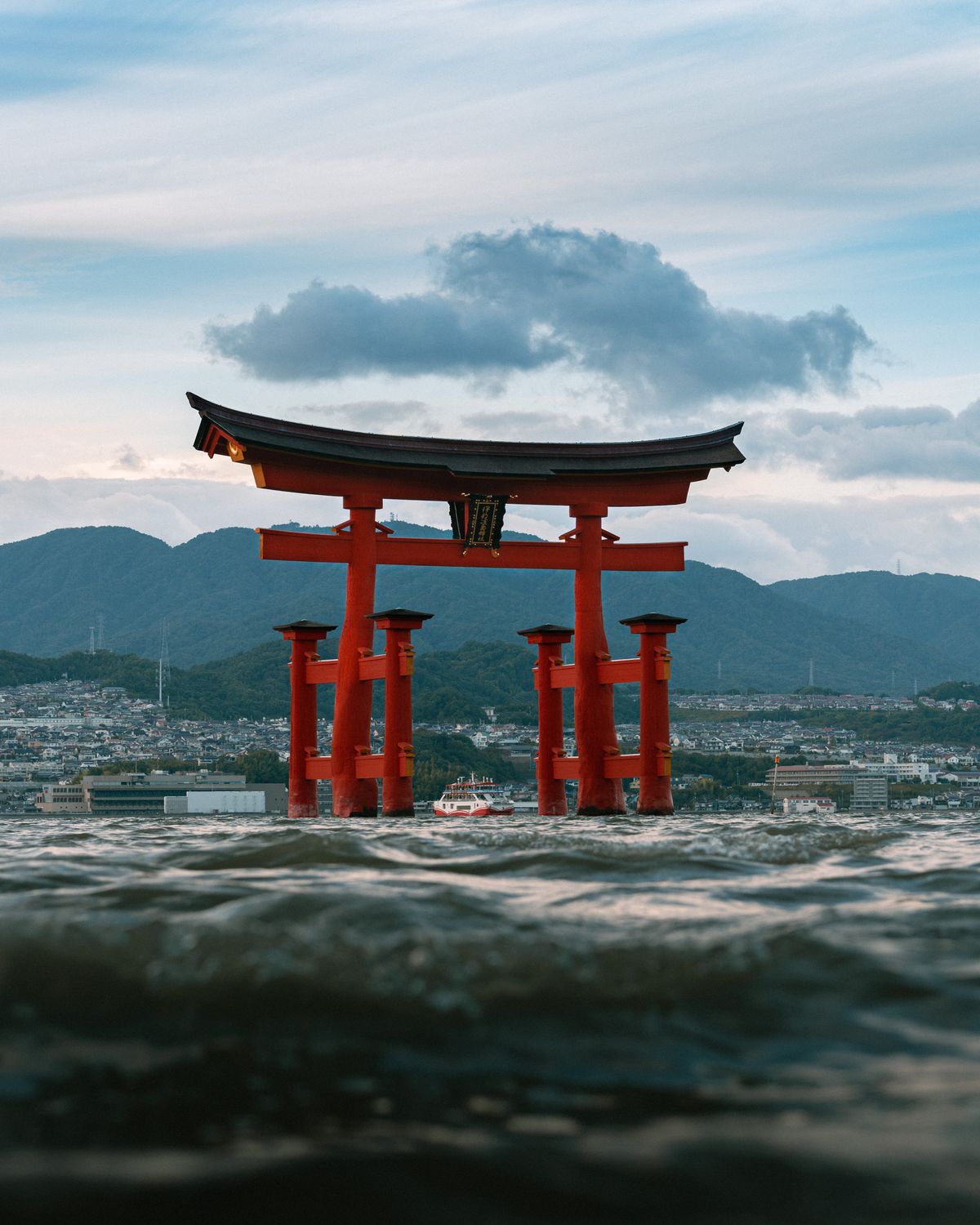
Miyajima's Itsukushima Shrine presents two completely different images depending on the tide. At high tide the great torii and the shrine's elevated walkways appear to float above open water. At low tide the tidal flats are exposed and visitors can walk out to the torii base. <a href="https://www.visit-miyajima-japan.com/en/" target="_blank" rel="noopener" class="text-blue-600 dark:text-blue-400 hover:underline">The island's tide calendar</a> is published by the tourism office — plan at least one visit for each state. The shrine was first built in 593 CE; the current main hall dates to 1168 CE.
Hiroshima-style okonomiyaki is emphatically not the Osaka version. The Hiroshima preparation layers ingredients in sequence — batter, cabbage, bean sprouts, pork, then a full serving of yakisoba or udon noodles — without mixing, and the result is a higher, more structured dish with a noodle core. <a href="https://www.okonomimura.jp/" target="_blank" rel="noopener" class="text-blue-600 dark:text-blue-400 hover:underline">Okonomi-mura</a> (literally "okonomiyaki village") in central Hiroshima has occupied six floors of a dedicated building since 1945 — 25 independent restaurants, each with a counter and iron hotplate, all serving the Hiroshima style.
The <a href="https://www.shimanami-kaido.com/en/" target="_blank" rel="noopener" class="text-blue-600 dark:text-blue-400 hover:underline">Shimanami Kaido</a> is 70km from Onomichi (Hiroshima side) to Imabari (Ehime side), crossing six islands and six suspension bridges over the Seto Inland Sea. Cycling the full route takes one day; it can be done in sections with bike rental available on each island. The Ikuchi Island lemon groves, the Innoshima suigun (sea fortress) ruins, and the Ōshima island port towns are the highlights. The return by bus or ferry is straightforward.
Daily Life in Hiroshima
Hiroshima City has a functioning tram (streetcar) network — one of Japan's few remaining urban tram systems — that covers the city centre from Hiroshima Station to Miyajima-guchi without a transfer. For daily residents this means much of the city is accessible without a car or subway ticket. The Hondori arcade, Parco, Fukuya, and Sogo department stores are all within the tram network. The Carp baseball team at Mazda Zoom-Zoom Stadium provides a city-wide social calendar from March through October — the fan culture is particularly intense and the stadium is within walking distance of the Peace Park.
The Naka-ku and Minami-ku central districts have the full range of urban services. Hiroshima University Hospital (in Minami-ku) and the Hiroshima Prefectural Hospital are well-regarded nationally. International schools exist but are smaller than those in Osaka or Tokyo. The city has a significant number of Vietnamese, Chinese, and Korean residents relative to its size, with corresponding food options.
Outside the city the Setouchi coast operates at a distinctly different pace. The port towns of Kure (15 minutes south by JR, historical naval base and home to the Yamato Museum), Etajima (ferry from Kure), and the oyster-farming bays of Hiroshima's southern coastline have a working maritime character without tourist polish. Living in these areas means living within commuting distance of Hiroshima City while having direct water access and the specific quality of light over the Inland Sea that the Setouchi arts festival has been built around.
Food and Drink
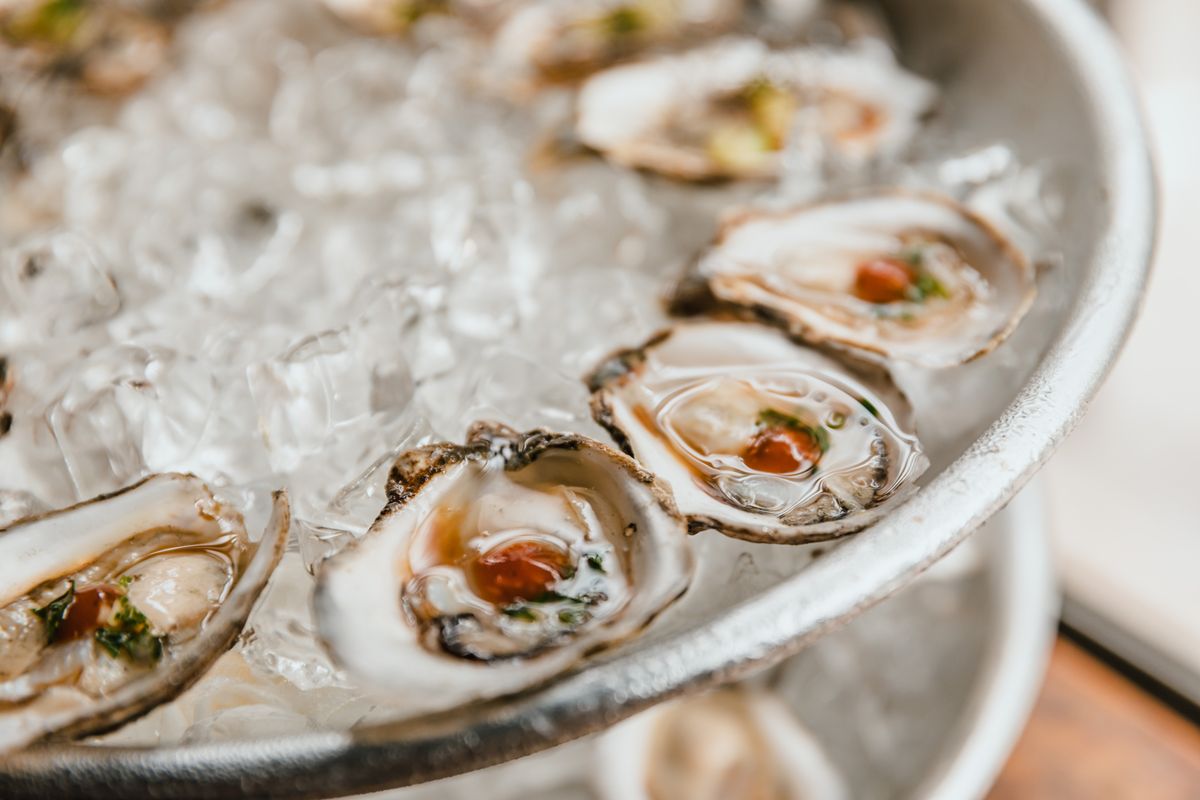
Oysters (kaki) are the defining food. Hiroshima Prefecture produces more than 60% of Japan's national harvest, grown on suspended raft systems in the sheltered bays of the Seto Inland Sea where mineral-rich tidal flows produce oysters that are large, mildly briny, and unusually sweet. The season runs October through March. Standard preparations: kaki furai (panko-crumbed, deep-fried), kaki nabe (oyster hot pot with tofu and winter vegetables), kaki-meshi (oyster rice), and raw with ponzu. Most Hiroshima izakaya have dedicated oyster menus in season; the Miyajima high street has grilled oyster stalls operating through the tourist day.
Hiroshima-style okonomiyaki is the city's other identity food — and is categorically different from the Osaka version. The Hiroshima method layers ingredients without mixing: batter, cabbage, bean sprouts, pork, a full serving of yakisoba or udon noodles, then egg cracked and spread beneath the whole stack. The result is thicker, more structured, and has the noodles as a distinct internal layer rather than an ingredient. Locals are clear that this is not a regional variation — it is a different dish. Okonomi-mura in central Hiroshima has had 25 individual restaurants on six floors since 1945.
Saijo sake is produced by eight breweries within walking distance of each other in Higashihiroshima City — the Saijo district's water chemistry, sourced from the Chugoku Mountains, has produced sake of national reputation since the Meiji era. The Saijo Sake Festival (October) fills the streets with outdoor tasting from all eight producers for two days. The Kamotsuru, Hakubotan, and Bijofu labels are internationally distributed.
Culture and Events
The Peace Memorial Ceremony on August 6 is Hiroshima's most significant annual event — attended by the Japanese Prime Minister, the UN Secretary-General, ambassadors from over 90 countries, and around 50,000 people in the park. The moment of silence at 8:15am (the exact time of detonation) and the release of doves and the lantern floating ceremony (Toro Nagashi) on the Ota River at dusk make August 6 one of the most formally commemorated days in the world's calendar.
Itsukushima Shrine's Kangensai Festival (lunar calendar, usually July or August) is one of Japan's three great court music festivals — orchestras perform on the shrine's water stage and the music carries across the tidal flats. The shrine's Tamatori Festival (July) involves a tide-racing boat competition to retrieve a sacred ball from the water before the tide comes in. Both festivals are exclusive to Miyajima island and accessible to visitors by the regular JR ferry.
The Setouchi Triennale — held on 12 islands across the Seto Inland Sea every three years — has its partial base in Hiroshima Prefecture's Tobishima island chain. The arts festival (most recently 2022, next 2025) commissions site-specific installations on islands with declining rural populations, with the stated aim of making the islands themselves the artwork. Hiroshima-based visitors access the festival via ferry from Onomichi, Onomichi, or Hiroshima Port.
Weekends and Escape
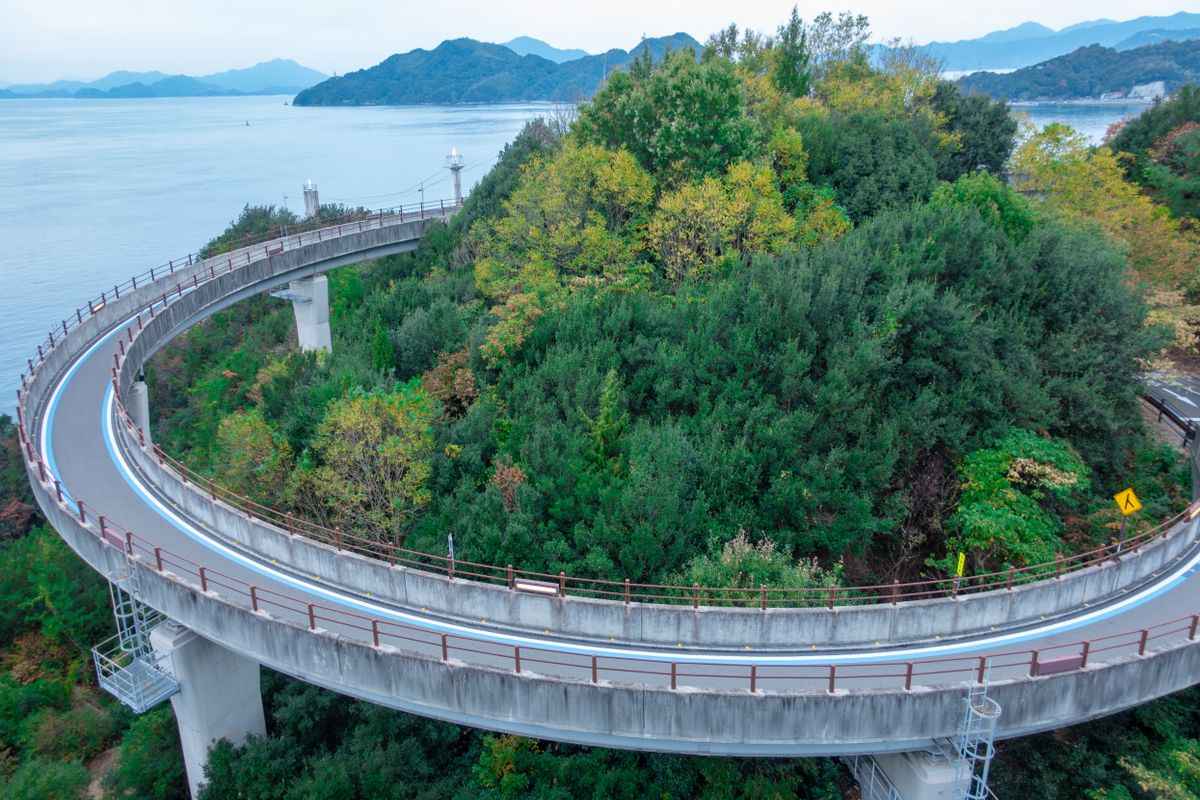
The Shimanami Kaido consistently appears on international cycling lists as one of Asia's best. The 70km route from Onomichi (Hiroshima side) to Imabari (Ehime side) crosses six suspension bridges over the Seto Inland Sea — each island has its own character: Innoshima has the sea fortress ruins of the Murakami Suigun pirates who once controlled these waters; Ikuchi has the extraordinary Kosanji Temple complex and its lemon groves; Ōshima has small fishing ports and a citrus landscape. Bicycle rental, cafes, and accommodation are available on each island. The route can be cycled in a full day or broken over two days with a night on one of the islands.
Miyajima deserves more than a day trip. The island empties of day visitors after 5pm and the shrine, the paths to Mount Misen, and the single village street take on an entirely different quality in the evening. The island's ryokan and temple lodgings (shukubo) offer overnight access to the Kongōrin-ji temple complex and the dawn walk to the summit of Mount Misen (535m) — the view of the Inland Sea islands at first light from the summit is one of Hiroshima's best experiences.
Kure Naval History Museum (Yamato Museum), 30 minutes south by JR, houses a 1:10 scale model of the Yamato battleship — the largest battleship ever built, displacing 72,000 tonnes, and sunk in April 1945 with 2,740 lives — alongside permanent exhibitions on Japan's 20th-century naval history. The adjacent JMSDF Kure Museum (Iruka no Yakata) is built around a decommissioned submarine you can walk inside. Together they make Kure a half-day trip of unusual depth.
Three Days In Hiroshima
A simple first-trip route
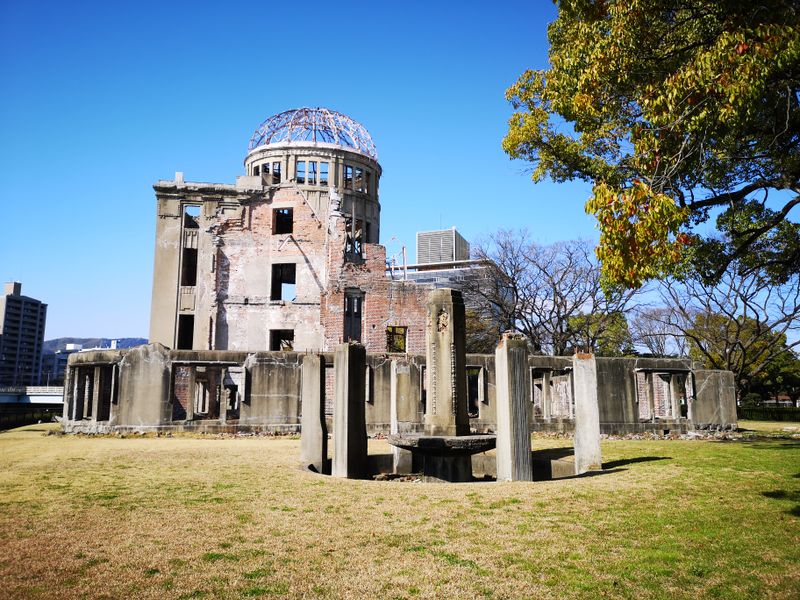
Arrive from Shin-Osaka (44 min Shinkansen) or Tokyo (3h50). Walk from Hiroshima Station to the Peace Memorial Park via the tram (5 min). Spend the morning in the Park — Cenotaph, Flame of Peace, Children's Peace Monument, A-Bomb Dome — and dedicate 2 hours to the Peace Memorial Museum. Afternoon: walk the Hondori covered shopping arcade and the Nagarekawa entertainment district. Evening dinner at Okonomi-mura: choose any counter on floors 2–6 and eat Hiroshima-style okonomiyaki cooked on an iron hotplate in front of you.
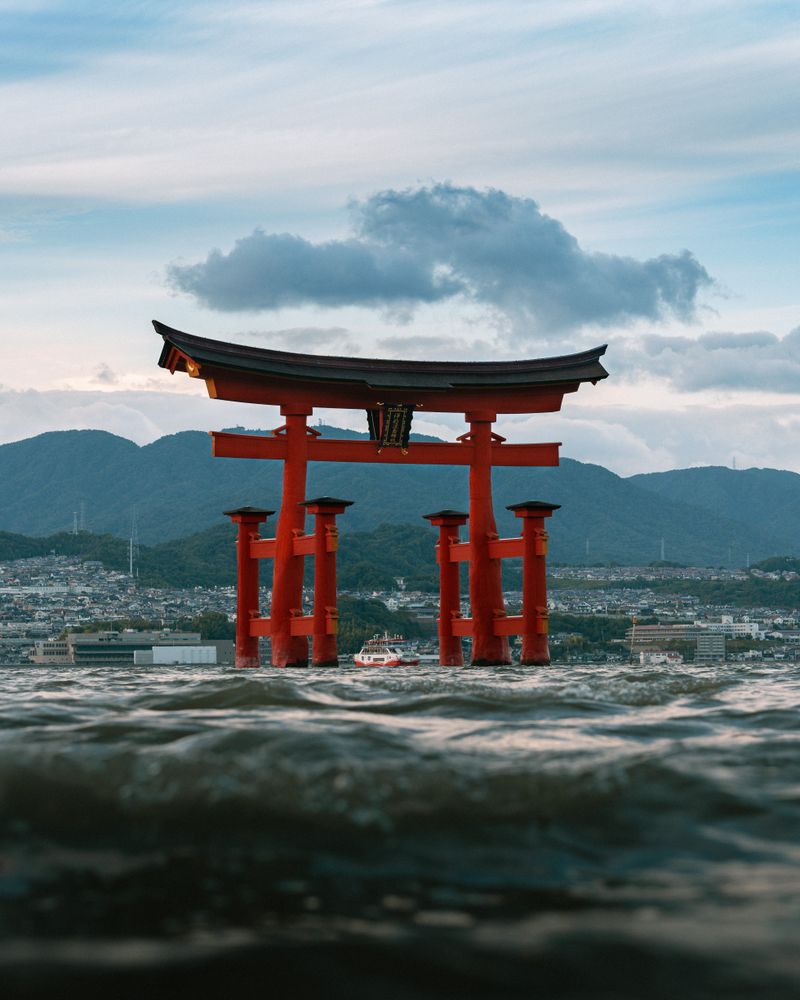
JR to Miyajima-guchi (25 min) then ferry to Miyajima island (10 min). Check the tide table before arriving — schedule your shrine visit to catch both states if possible. Walk from the ferry terminal through the deer-populated approach to Itsukushima Shrine (admission ¥300). The five-storey pagoda of Toyokuni Shrine overlooks the waterfront. Lunch at one of the island's oyster restaurants — kaki furai (deep-fried oyster) with rice and miso soup is the standard order; oyster nabe available October–March. Afternoon hike or ropeway to Mount Misen (535m) for panoramic Seto Inland Sea views.
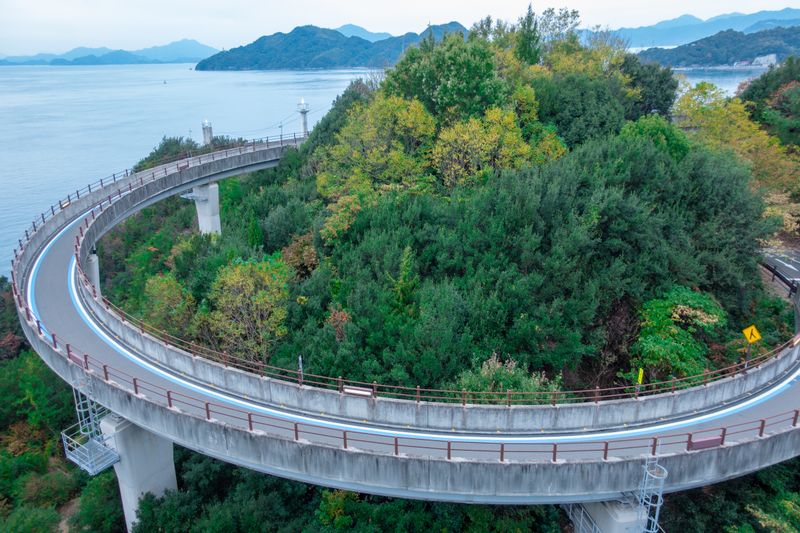
JR from Hiroshima to Onomichi (70 min). Rent a bicycle from Giant Onomichi or the ferry terminal rental shop and begin the Shimanami Kaido. The first bridge to Mukaishima Island is the shortest; by the second island (Innoshima) the Inland Sea panoramas open fully. Cycle as far as Setoda on Ikuchi Island (15km, about 2 hours) and visit Kosanji Temple — built by a businessman in the 1950s as a replica of major Japanese temple structures — before returning by ferry from Setoda to Onomichi.