Nemophila Hillsides, Ancient Plum Gardens, and the Birthplace of Natto
Living in Ibaraki
The prefecture most likely to appear in a globally viral flower photograph — 4.5 million baby-blue-eyes flowers at Hitachi Seaside Park in April, scarlet kochia grass in autumn — alongside one of Japan's three great gardens, Japan's second-largest lake, and the city that invented natto.
Why People Choose Ibaraki
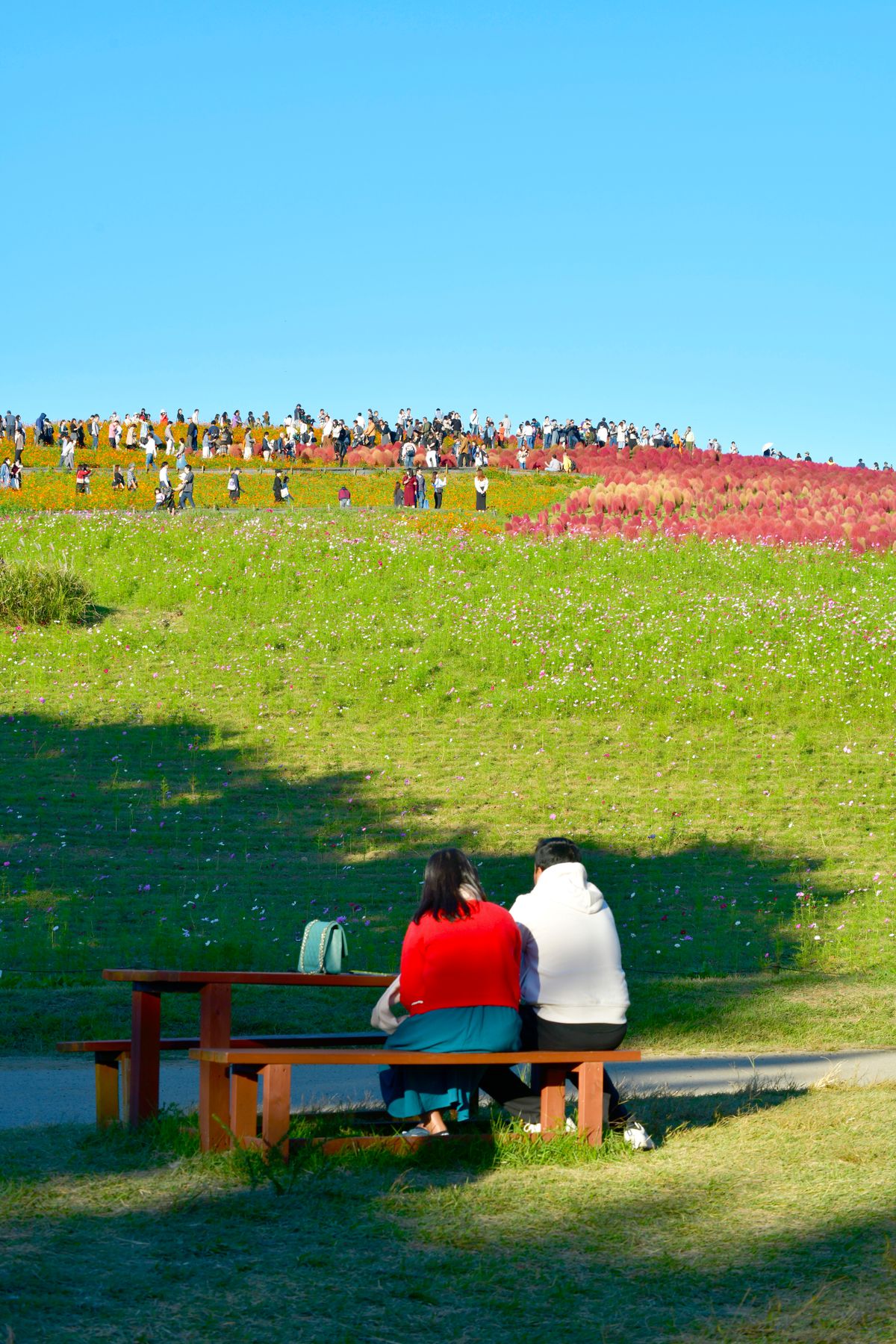
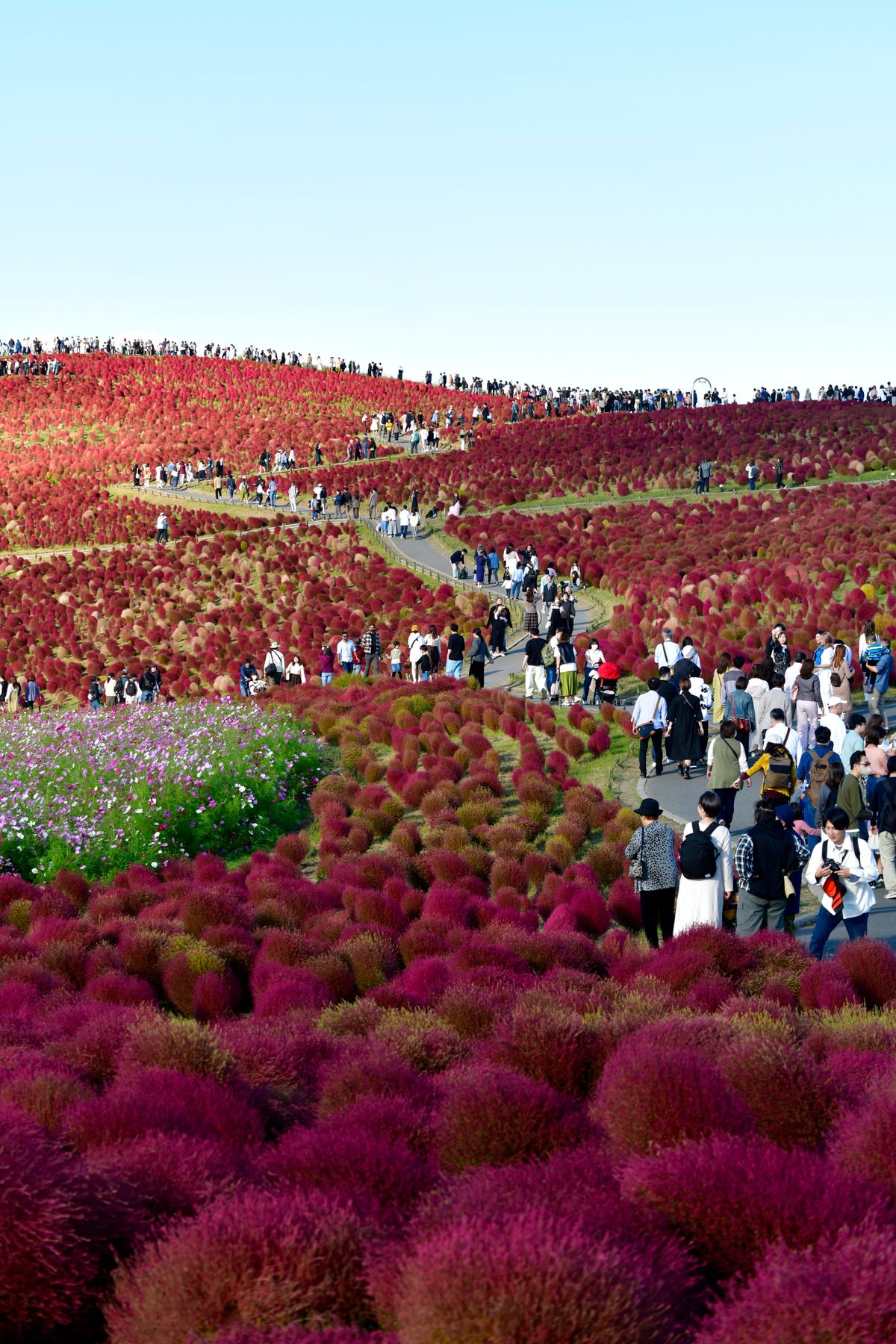
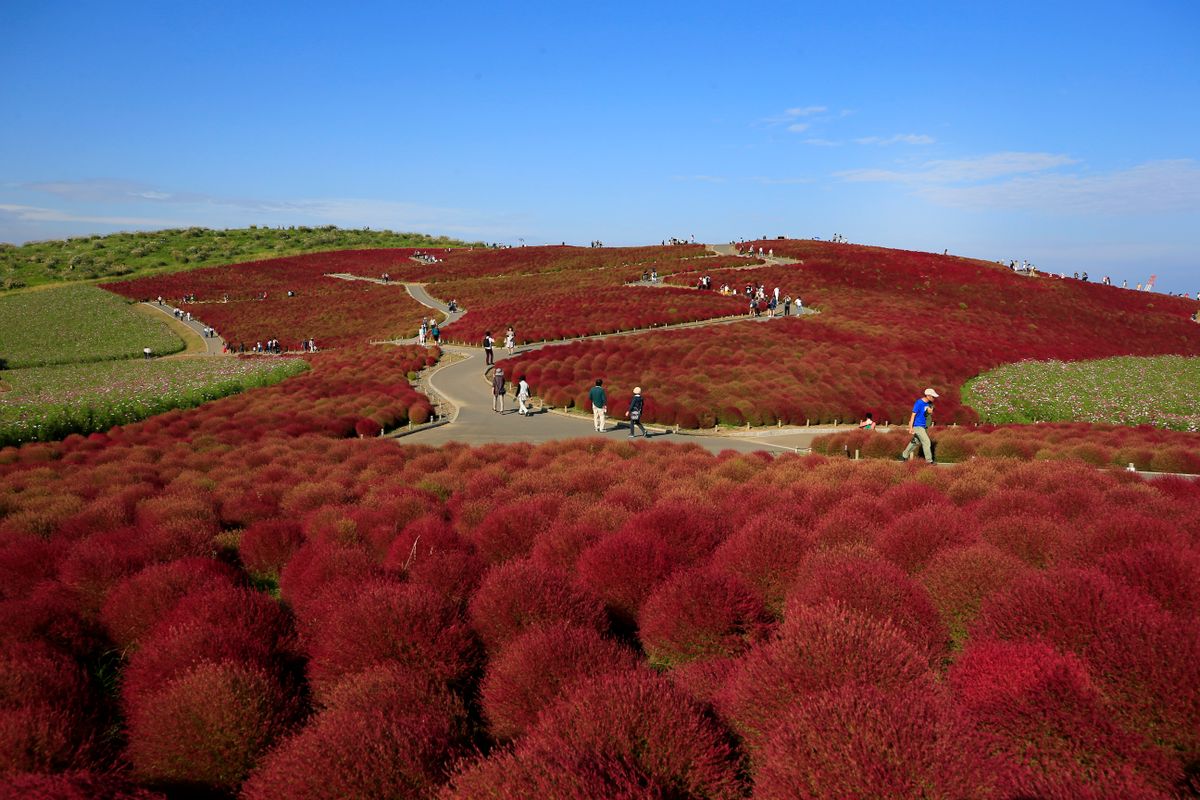
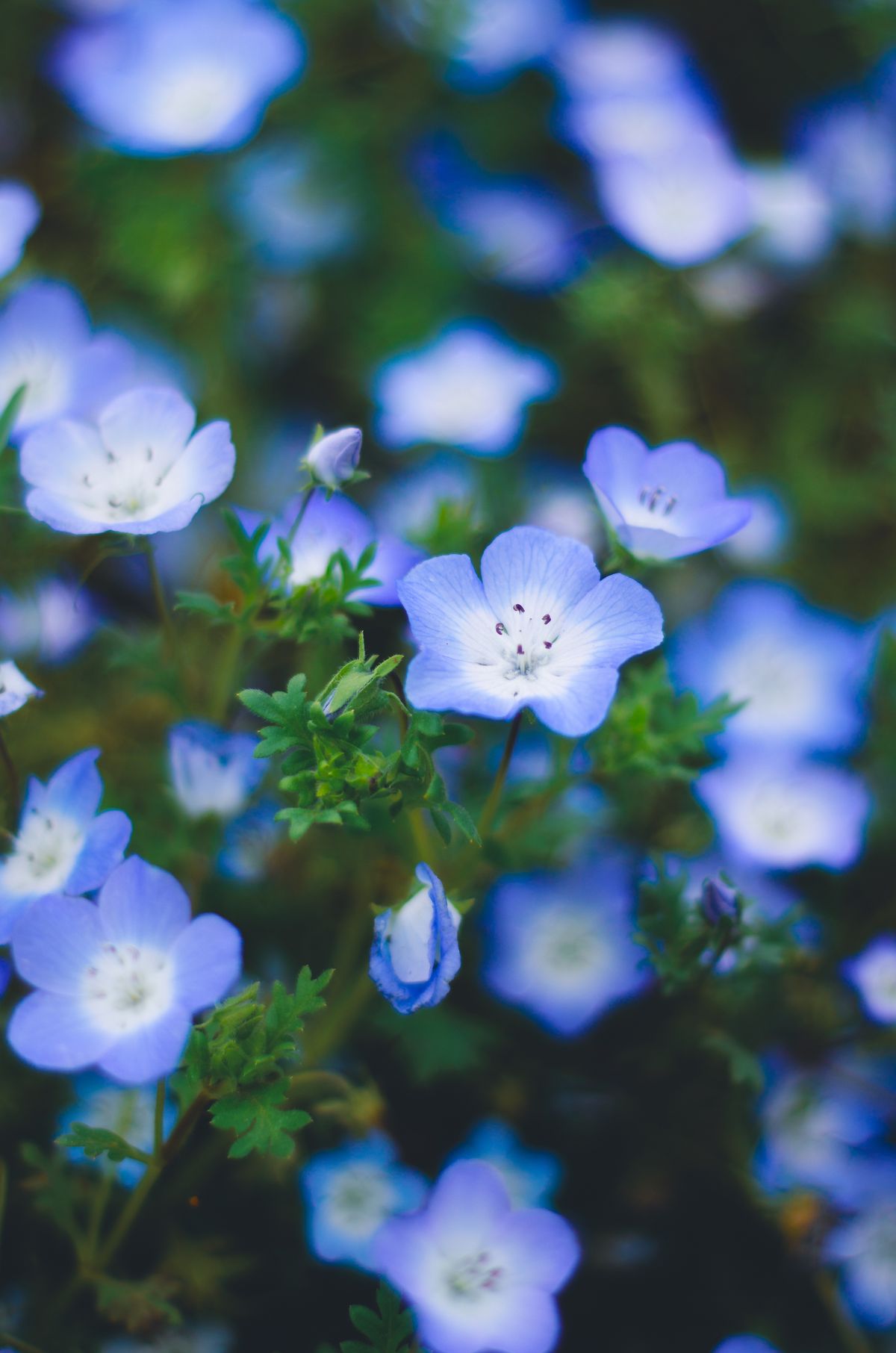
Ibaraki is the prefecture most undervalued by its neighbour prefectures and most overshot by international visitors who pass through on the way to Nikko or Tohoku without stopping. The case for stopping is strong: Hitachi Seaside Park's Miharashi Hill is legitimately extraordinary — 4.5 million nemophila flowers that turn an entire hillside uniformly sky-blue in April, and 32,000 kochia bushes that turn the same hill uniformly scarlet in October. The photographs that circulate globally are accurate; the reality is as good as advertised.
Kairakuen in Mito — one of Japan's three great gardens — is less internationally known than Kenroku-en in Kanazawa but equally worthwhile: 3,000 plum trees across 300 varieties on a hillside above Lake Senba, blooming from late February to March. The garden is free to enter for most of the year. Mito's natto culture adds a specific food identity: Ibaraki produces more natto than any other prefecture, and the Mito original — large beans, wara rice-straw wrapping, intense flavour — is to commercial natto what fresh-ground coffee is to instant.
For buyers: Ibaraki offers Kanto access at prices that have not caught up with the commute times. Tsukuba's 45-minute Tsukuba Express connection to Akihabara serves a significant international research community that drives property demand in the science city. Mito's 70-minute Joban Line access to Tokyo Ueno is slower but covers real urban infrastructure at prices 30–40% below equivalent Chiba or Kanagawa suburbs.
Mito (population 265,000) is the prefectural capital — a full-service city with Kairakuen as its identity anchor, a strong food culture around natto and Pacific seafood, and straightforward Joban Line access to Tokyo in 70 minutes. Tsukuba is a purpose-built science city (population 240,000) with a distinct culture of researchers, international residents, and Tsukuba Express access to Akihabara in 45 minutes. The Pacific coastal towns (Oarai, Hitachinaka) have a surf-and-oyster culture with lower property prices and a sea-air rhythm quite different from the inland prefecture.
Joban Line (JR): Mito to Tokyo Ueno in 70 minutes. Tsukuba Express: Tsukuba to Akihabara in 45 minutes. Joban Line: Hitachinaka to Ueno in 80 minutes. A car is useful for the Hitachi Seaside Park area and the lakeside communities around Kasumigaura. The coastal areas are best accessed by car.
Mito City flats and houses ¥4M–¥15M; Tsukuba ¥8M–¥20M (elevated by the science city premium); coastal towns (Hitachinaka, Oarai) ¥3M–¥12M; inland agricultural areas from ¥500K. Ibaraki consistently prices below the Tokyo commuter belt despite having direct access times comparable to many Chiba and Saitama suburbs.
The prefectural capital with Kairakuen and the Pacific coast nearby. Full urban infrastructure, strong food culture, and direct Joban Line access to Tokyo in 70 minutes.
Purpose-built science city with international community, Tsukuba Express to Akihabara in 45 minutes, and a research-campus atmosphere unlike anywhere else in Ibaraki.
Coastal corridor: Hitachi Seaside Park, Pacific beaches, oyster shacks at Oarai, and a working port culture. Lower prices, stronger local character than the inland cities.
Lakeside communities around Japan's second-largest lake: windsurfing, cycling, and a slow agricultural rhythm with some of the most affordable lake-view properties in the Kanto region.
Where To Start
Four ways to start in Ibaraki
The <a href="https://hitachikaihin.jp/en/" target="_blank" rel="noopener" class="text-blue-600 dark:text-blue-400 hover:underline">Hitachi Seaside Park</a> Miharashi Hill peaks twice — nemophila in mid-April to early May (4.5 million plants, uniform sky-blue) and kochia in mid-October (32,000 bushes, uniform scarlet). The peak periods are exactly predictable and the park posts daily bloom updates on its website. Weekday mornings avoid the weekend crowds that make the hilltop difficult to photograph. The park covers 350 hectares with cycling paths, seasonal flower beds, and coastal views in addition to the famous hill.
<a href="https://www.kairakuen.jp/" target="_blank" rel="noopener" class="text-blue-600 dark:text-blue-400 hover:underline">Kairakuen</a> (admission free for most of the year) is one of Japan's three great gardens, designed in 1842 by Tokugawa Nariaki as a place both for his domain's residents and himself to relax. The 3,000 plum trees (ume) bloom from late February through March; the Mito Plum Blossom Festival runs for the entire bloom period. The Kobuntei pavilion at the garden's north end — three floors of tatami rooms overlooking the plum groves and Lake Senba below — is the best vantage point.
Mito's natto culture is distinct from the nationally standardised commercial product: larger beans, stronger flavour, still wrapped in traditional rice straw (wara) rather than polystyrene. The Mito station area has dedicated natto restaurants serving the full range — natto-gohan (with rice), natto curry, natto soba — and the morning market near the station sells fresh-fermented product direct from producers. The sticky threads and sharp smell are considerably more intense in the original than in the supermarket version.
Lake Kasumigaura (Japan's second-largest lake, 167 km²) has a 180km cycling circuit with a dedicated lakeside path for about 60km of its length. Rental bikes are available at Tsuchiura station; the loop takes two days at a comfortable pace with overnight options at lakeside minshuku. Wind on the lake makes it one of Japan's most popular windsurfing venues in summer — rental equipment is available at the Tsuchiura and Ushiku shores.
Daily Life in Ibaraki
Mito (population 265,000) functions as a proper regional capital — full hospital, university, retail, and arts infrastructure — with a distinct local identity built around Kairakuen, the Mito Tokugawa family legacy, natto, and the Pacific coast 20 minutes east. It is not a commuter city by primary identity; it has its own economic base, which keeps the local culture more rooted than in pure commuter suburbs.
Tsukuba is unlike anywhere else in Japan: a purpose-built science city developed in the 1960s and 70s to relocate government research institutes from Tokyo, now with 58 national research institutions, 150+ private research facilities, and a population that includes the highest proportion of PhD-holders per capita in Japan. The city has international schools, English-language infrastructure, and a multi-national community. The Tsukuba Express (2005) transformed it from an isolated research enclave into a 45-minute commute from Akihabara.
The Pacific coast towns (Oarai, Nakaminato) have a working port culture — fishing, oyster farming, surf breaks, and the kind of coastal food culture (grilled seafood over open coals at market stalls) that is harder to find as Tokyo's coastal hinterland has been developed. Oarai Aquarium is a major family attraction; the beach and lighthouse area is genuinely scenic on clear days.
Food and Drink
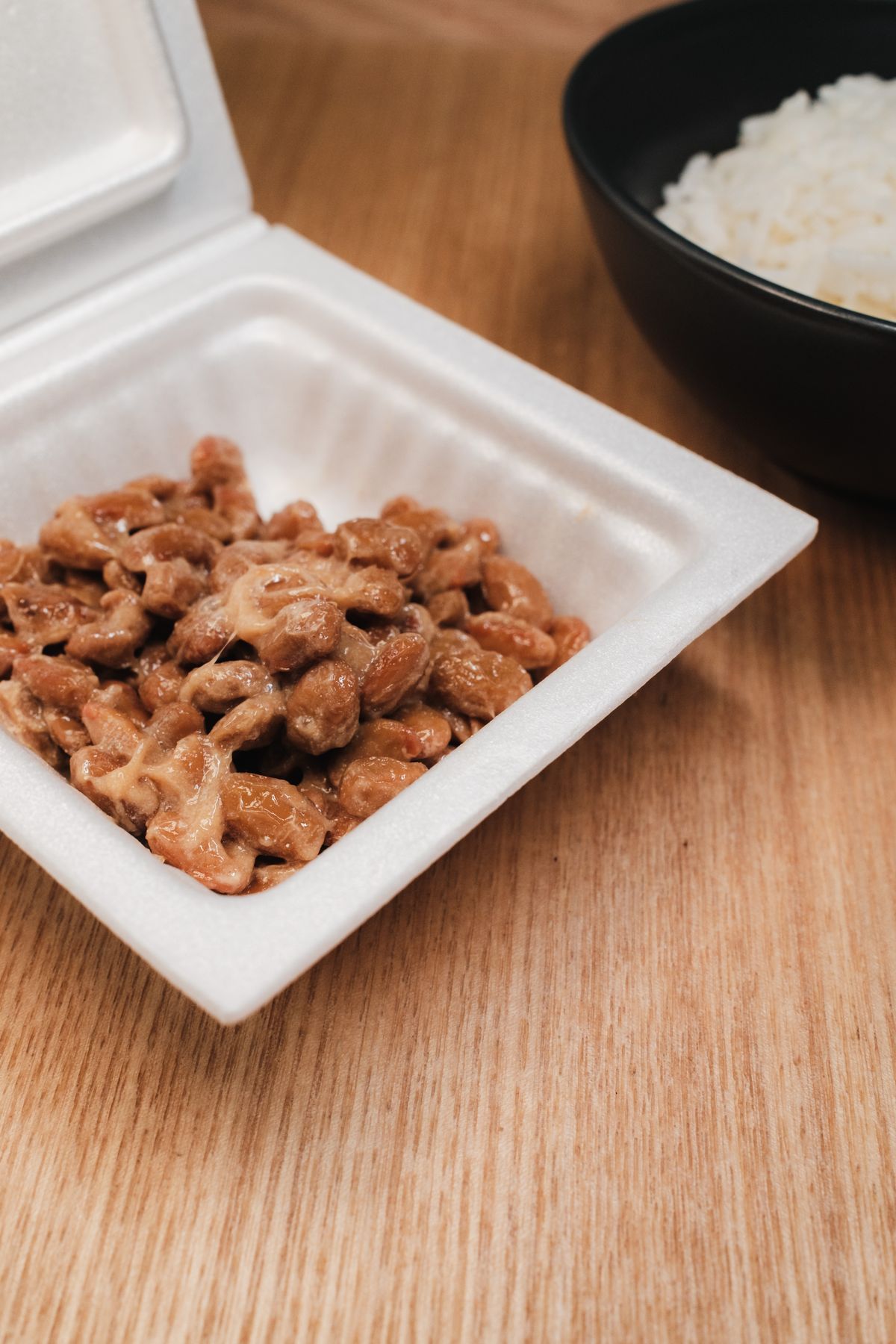
Mito natto is fermented soybeans — specifically, the Mito variety uses larger beans than the nationally standardised commercial product, wrapped in traditional rice straw (wara) that carries the Bacillus subtilis bacteria responsible for fermentation. The result is stronger in both flavour and the characteristic sticky strings than the supermarket version most people know. Mito claims the invention of natto, attributed to the Mito Domain in the 11th century, and the city maintains a living culture of fresh-fermented product sold at morning markets. Several restaurants in the station area serve the full natto repertoire including natto curry, natto tempura, and natto ice cream.
Ibaraki Pacific seafood — the coastline between Oarai and Nakaminato runs a working fishing fleet with direct market access. Anko-nabe (monkfish hotpot) is the prefectural winter specialty — monkfish are caught in the deep waters of the Pacific off Ibaraki and sold at the Nakaminato fish market; the liver is considered a Japanese delicacy equivalent to foie gras. The Nakaminato fish market (Himono Street) has vendors selling grilled fish over open coals on Sunday mornings.
Ibaraki sake benefits from the same clean water system as Tochigi — the mountain runoff through the Nasu volcanic chain — and the prefecture has a substantial brewing industry concentrated in the Kasama and Mashiko areas on the Tochigi border. Several breweries around Kasama offer tasting rooms and participate in the annual Sake Fes Ibaraki in autumn.
Culture and Heritage
The Mito Tokugawa family (one of the Three Great Tokugawa Houses) governed the Mito Domain from 1609 and left a cultural infrastructure that goes beyond Kairakuen. The Mito Domain's intellectual tradition produced Mitogaku — a school of political philosophy that combined neo-Confucianism with Japanese nationalism and directly influenced the Meiji Restoration. The Korakuen library (1841) at Kairakuen was one of the first public libraries in Japan, built by the domain specifically so all domain residents could access its books. The Kodokan (domain school, est. 1841) still stands and is open as a heritage site.
Kasama City (40 minutes from Mito) is Ibaraki's arts and crafts centre — Kasama-yaki pottery has been produced here since 1763 and the city has the highest concentration of independent pottery studios in the Kanto region. The Ibaraki Ceramics Art Museum and the Kasama Art Museum anchor a town that has been a potters' destination since the Edo period. The autumn Kasama Pottery Festival (October) draws pottery buyers from across the country.
Tsukuba Space Centre (JAXA) is Japan's primary space research and development facility — the Kibo module for the International Space Station was developed here, and the centre offers free public tours of rocket displays and mission control facilities. The adjacent National Museum of Nature and Science annex in Tsukuba has geological and natural history collections distinct from its main Tokyo site.
Weekends and the Outdoors
Lake Kasumigaura (Japan's second-largest lake at 167 km²) supports a 180km lakeside cycling circuit, windsurfing schools, and weekend sailing from the Tsuchiura marina. The Kasumigaura cycling terminal at Tsuchiura has rental bikes and suggested routes. Water sports instruction operates spring through autumn; the lake's steady winds make it one of the best windsurfing venues in the Kanto region.
Mount Tsukuba (877m) is accessible from Tsukuba city by cable car or a 90-minute hiking trail, with summit views from Kanto to the Pacific on clear days. The mountain is classified as one of Japan's 100 Famous Mountains and has been a Shinto and Buddhist pilgrimage site since the 8th century. The summit cable car and hiking trails are busy on weekends but the mid-week traffic is light. Descent by the alternate trail through the Tsukuba botanical garden adds 30 minutes and passes through old-growth cedar.
The Ibaraki coastline from Oarai to Kitaibaraki has surf breaks, oyster shacks, and the unusual spectacle of Oarai's seaside torii gate (Oarai Isosaki Shrine) rising from the ocean — a frequently photographed Shinto gate in the waves that is accessible at low tide. The Oarai Aquarium is one of the best on the Pacific coast with tank displays of deep-sea Pacific species specific to Ibaraki waters.