Japan's Most European City — Lanterns, Atomic History, and Hidden Christian Islands
Living in Nagasaki
A port city shaped by centuries of trade with Portugal, China, and the Dutch — the only place in Edo-period Japan where foreign contact was permitted — whose layered cultural history is visible in its architecture, its food, and the islands offshore.
Why People Choose Nagasaki
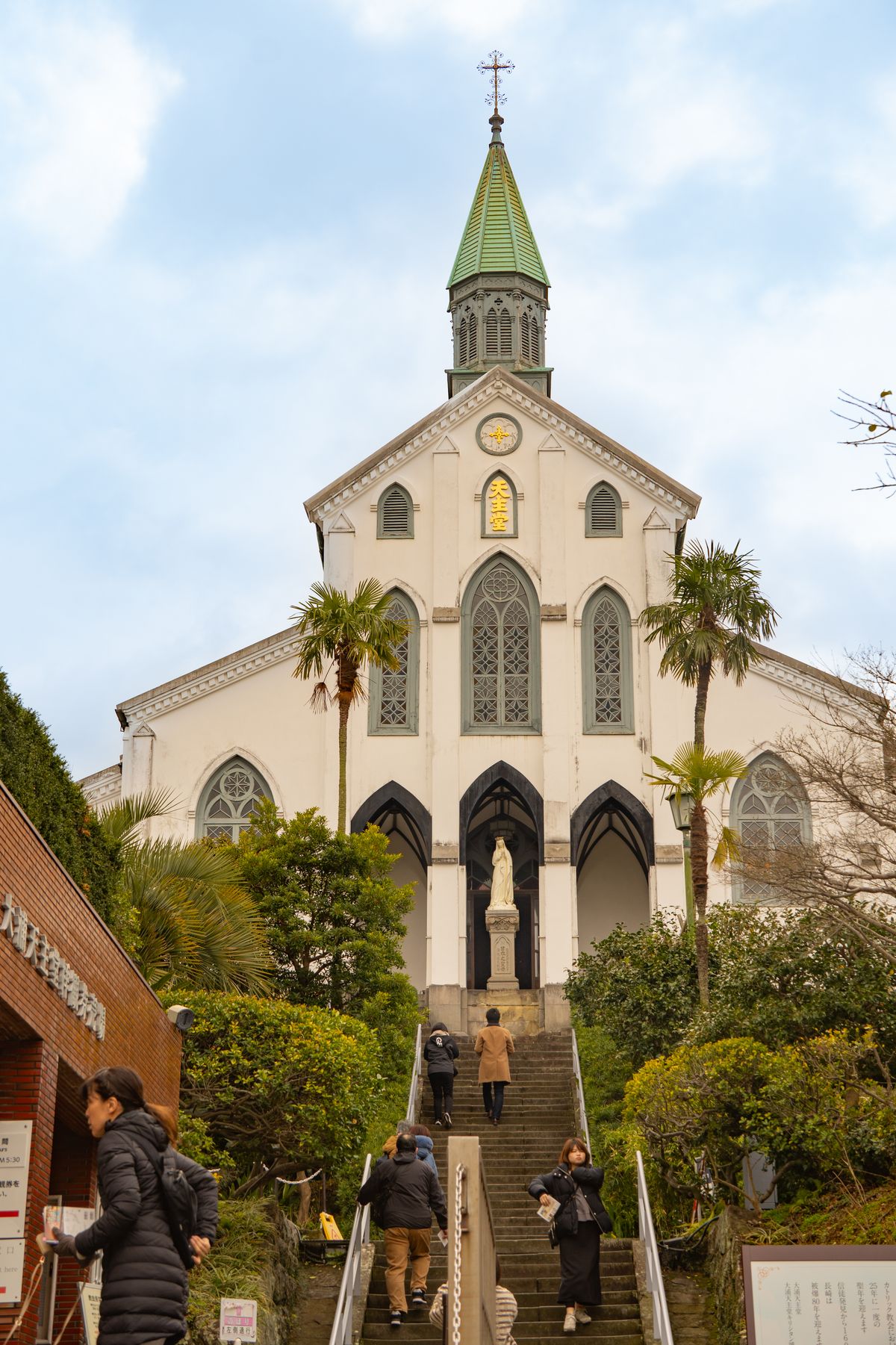
Nagasaki's appeal is inseparable from its history of being different. During the Edo period (1603–1868), it was Japan's only permitted point of foreign contact — the Dutch trading post on Dejima island, the Chinese merchant settlement in Chinatown, and the encrypted networks of Hidden Christians in the surrounding villages all co-existed here when they were illegal or impossible everywhere else. That layering of Chinese, Dutch, Portuguese, and Japanese influences over three centuries created a city with a cultural texture that has no equivalent in Japan.
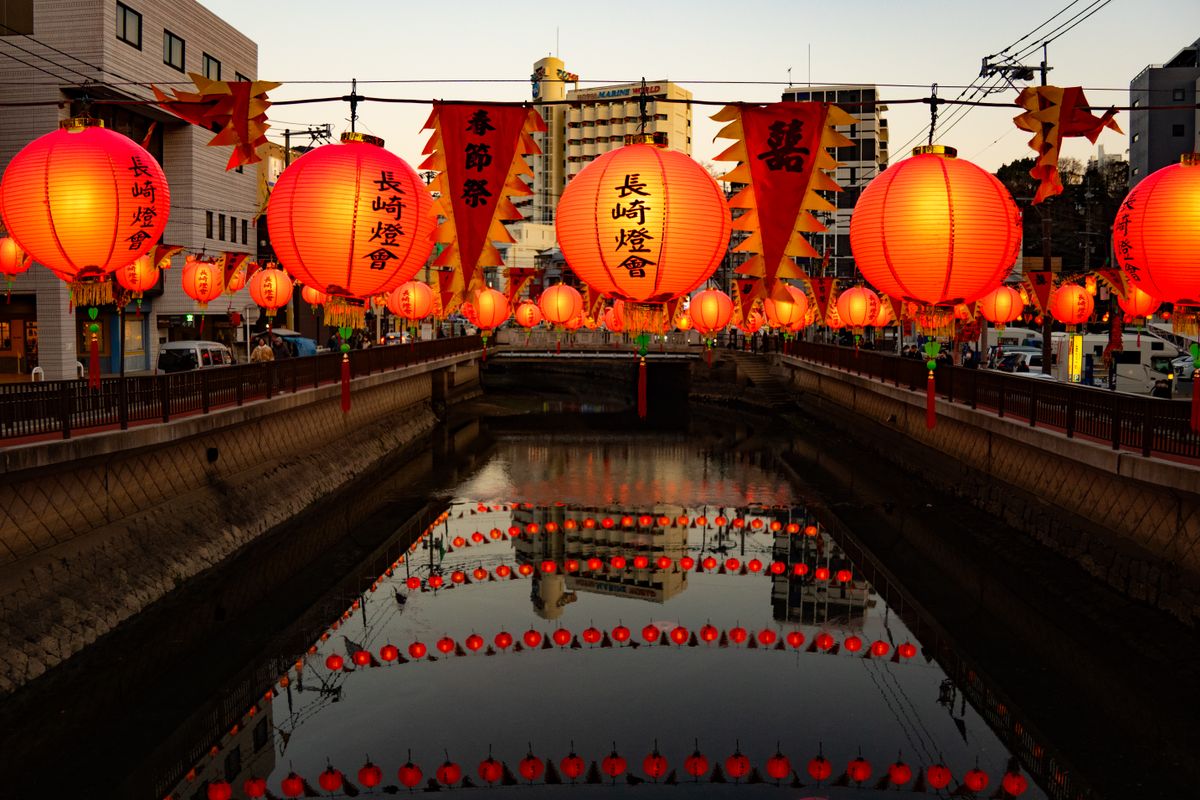
The atomic bomb of 1945 added another layer. The city's western half was destroyed; the rebuilt Nagasaki is a place that carries this consciously, with the Peace Memorial Museum, the Hypocenter Park, and the rebuilt Urakami Cathedral all within the urban fabric. The Nagasaki Lantern Festival in February — 15,000 lanterns across the city for Chinese New Year, the largest in Japan — is the other register entirely: noisy, colourful, and a direct expression of the Chinese community that has been here for 400 years.
For buyers, Nagasaki offers something rare: a city with genuine historical weight, dramatic harbour and hillside geography, ferry access to the Goto Islands, and property prices that reflect its distance from the Tokyo/Osaka economic core rather than its quality of life.
Nagasaki city is exceptionally hilly — flat land is at a premium and tram routes define the accessible urban core. The result is a city of neighbourhoods rather than a grid: Chinatown, Dejima, Glover Garden, the Dutch Slope, the peace park, each occupying its own hillside terrain. Getting between them is the experience.
Nagasaki to Hakata (Fukuoka) by limited express 2h; the Nishi Kyushu Shinkansen (opened 2022) reaches Takeo-Onsen in 23 min, connecting to Fukuoka in about 1h20. Airport: 1h to Osaka Itami, 1h30 to Tokyo Haneda. Sasebo (Huis Ten Bosch) is 1h40 by train from Nagasaki.
Nagasaki city apartments ¥2M–¥8M; hillside houses ¥3M–¥12M. Sasebo and surrounds ¥2M–¥8M. Shimabara Peninsula ¥500K–¥3M. Goto Islands coastal properties from ¥500K — some of the most dramatic coastal settings in Japan at prices that reflect their remoteness from the mainland economy.
The compact capital: trams, the Chinatown, Dejima, Glover Garden, Urakami Cathedral, and the atomic bomb sites — all within a few kilometres. The most historically layered city centre in Japan.
Japan's second-largest naval base city north of Nagasaki, adjacent to Huis Ten Bosch (the Dutch-themed resort). A working city with a US base presence that gives it a particular atmosphere and some English-language infrastructure.
The volcanic peninsula east of Nagasaki city: Unzen and its geothermal landscape, the Shimabara Christian martyrs' castle, and coastal views across the Ariake Sea.
Two hours by ferry from Nagasaki: Fukue, Naka, and Kamigoto islands have the Hidden Christian churches, clear water, and a pace of life that is genuinely undiscovered by most buyers.
Where To Start
Four ways to start in Nagasaki
The stone-paved Oranda-zaka (Dutch Slope) is steepest and quietest after 5pm. Walk up to Glover Garden — Thomas Blake Glover's mansion above the harbour — when the light is turning. The view across Nagasaki Harbour with the mountains behind it is the city's best scene.
The Urakami Cathedral (rebuilt 1925, destroyed 1945, rebuilt again 1959) and the Hypocenter Park are not far from the Peace Park. The combination of active Catholic community and atomic bomb memorial creates a specific emotional register that is best taken without large crowds.
Chanpon is Nagasaki's invented dish — thick wheat noodles, seafood, pork, vegetables, and a milky broth developed by a Chinese restaurant owner in Meiji-era Nagasaki as food for Chinese students. Shikairou in Chinatown is where it was invented; smaller restaurants throughout Nagasaki do their own versions.
The JetFoil reaches Fukuejima in 1h35. One night gives you a Hidden Christian church visit (Dozaki or Gorin), sunset over the East China Sea, and a different sense of what Japan's outer islands actually feel like to live in.
Daily Life in Nagasaki
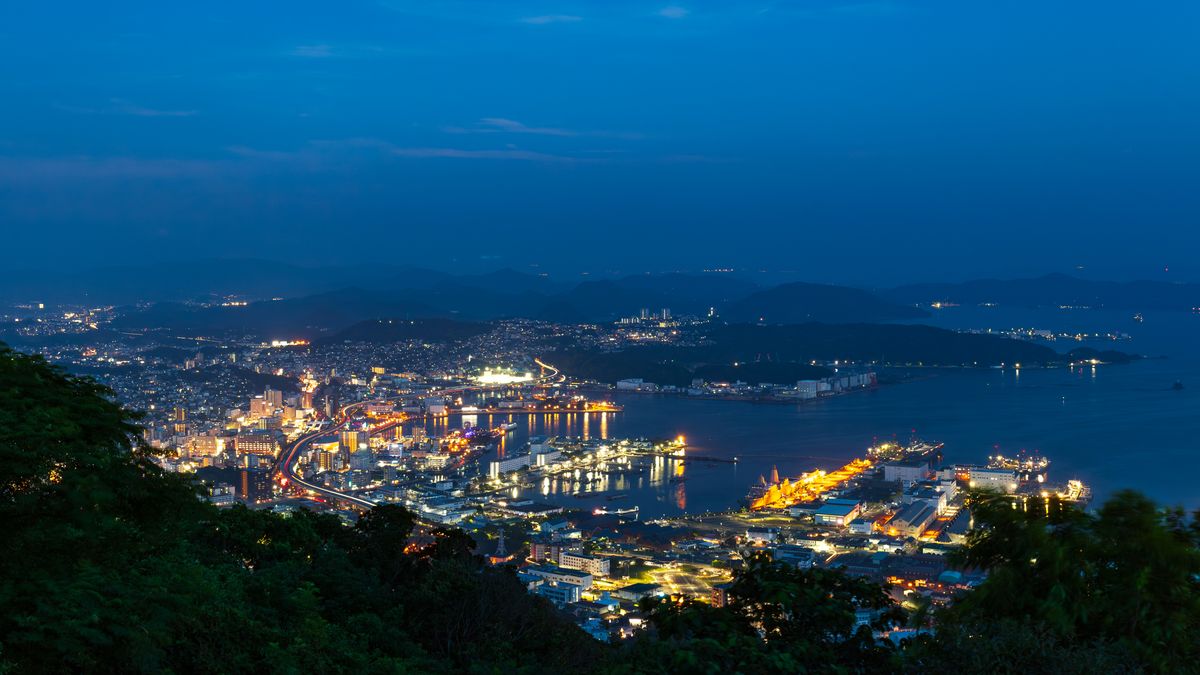
Nagasaki city is built on hills — almost all of it. Flat land occupies the reclaimed port zone and the narrow river valleys, but the residential neighbourhoods sit on slopes that range from manageable to steep. The tram network (five lines, running since 1915) is the city's spine, connecting the main attractions along the port-side flatlands. From the tram stops, everything of historical significance is uphill by some amount. This geography gives Nagasaki its character — neighbourhoods separated by slope, views from unexpected angles, houses built into hillsides with roof terraces that look out over the harbour.
The Chinatown (Shinchi Market) is one of Japan's three great Chinatowns and is a working shopping district rather than a preserved attraction — restaurants serving chanpon and sara udon, groceries selling Chinese ingredients, and the scale and layout of the Qing dynasty-era settlement still visible in the street grid. The Dejima trading post has been reconstructed over the past 30 years; the Dutch buildings, warehouses, and bridge across to the mainland give a physical sense of what 250 years of controlled contact looked like from inside.
The city's scale — 400,000 people, compact, walkable within neighbourhoods — makes it easy to learn quickly. The tram covers most daily needs; a car is useful for the peninsula escapes and the rural Nagasaki that lies beyond the tram lines. Sasebo (1h40 by train) has US base infrastructure and a different demographic composition that attracts some buyers who want English-language services and a less homogeneous social environment.
Food and Drink
Chanpon is Nagasaki's invented dish and the clearest example of how the city's trading history shaped its food. Thick wheat noodles, seafood (shrimp, squid, clams), pork belly, and an assortment of vegetables are cooked together in a milky pork-and-chicken broth — invented by a Chinese restaurant owner named Chen Pingshun at Shikairou restaurant in the 1890s as affordable food for Chinese students. The same restaurant still serves chanpon from its original Meiji-era building in Chinatown. Sara udon — the dry, crispy-noodle version of the same dish — is the lunchtime alternative.
Kakuni manju (braised pork belly bun, adapted from the Chinese version through the Nagasaki trading community) is sold at street stalls and specialty shops across the city. Nagasaki castella — a sponge cake introduced by Portuguese missionaries in the 16th century and refined over four centuries in local bakeries (Fukusaya and Bunmeido are the two most discussed) — is possibly the oldest surviving example of European culinary influence in Japan. The version available in Nagasaki bears no resemblance to the packaged castella sold in the rest of the country.
Culture and Events
Nagasaki holds five UNESCO World Heritage Sites across two clusters. The first cluster — the Gunkanjima (Hashima Island, abandoned coal mining facility), Takashima Island mine, and the Meiji industrial heritage at Mitsubishi — covers the 19th-century industrialisation story. The second cluster — the Hidden Christian Sites of the Nagasaki Region — includes Oura Cathedral, the island churches of the Goto Archipelago, and the Sotome coast villages where Christians survived 250 years of official prohibition. These two sets of UNESCO sites tell different stories about the same period of Japanese history.
The Nagasaki Lantern Festival (Nagasaki Lantern Matsuri) runs for 15 days around Chinese New Year — 15,000 lanterns from red to gold are suspended across the city, centred on Chinatown, the Suwa Shrine steps, and the Hamano-machi arcade. It is the largest lantern festival in Japan and draws 1 million visitors annually. The Nagasaki Kunchi in October (one of Japan's three greatest festivals) features Chinese-influenced dragon dances and elaborate floats — a direct expression of the Chinatown community's 400-year presence in the city.
Weekends and Escapes
Gunkanjima (Hashima Island, "Battleship Island") is 19km from Nagasaki Port — a former submarine coal mining facility that housed 5,000 people at its peak density (the highest in the world at the time), abandoned in 1974 and now accessible by tour boat. The concrete apartment blocks and processing plants, overgrown and crumbling, are genuinely unlike anything else in Japan and have become a UNESCO-listed site precisely for how completely they capture a specific moment of industrial history.
The Goto Islands (JetFoil 1h35 to Fukuejima) are the best weekend option for understanding a different version of Nagasaki Prefecture. The Hidden Christian churches — particularly Dozaki and Gorin — are small, actively used, and set against coastal views across the East China Sea. The water clarity around the Goto Islands ranks among the best in Japan. Shimabara Peninsula is closer — 90 minutes by ferry or around the bay — with Unzen's geothermal landscape (active craters, natural hot springs, and the 1792 volcano memorial) and the Shimabara-jo castle that witnessed the 1637 Christian uprising.