
Ginzan Onsen, Yamadera's Stone Steps, and Japan's Most Awarded Wagyu
Living in Yamagata
A Tohoku prefecture where Basho wrote his frog haiku on a cliff-face temple overlooking a river valley, where the most photogenic onsen town in Japan fills with snow lanterns each February, and where 65 percent of Japan's cherry crop and one of its three great wagyu breeds are produced within the same mountain basin.
Why People Choose Yamagata
Yamagata offers something that is increasingly rare in Japan: a distinctive regional identity that is still visible in the physical landscape. Three UNESCO-connected cultural assets — the Dewa Sanzan pilgrimage mountains, the Mogami River gorge (immortalised by Basho in "Oku no Hosomichi"), and the Ginzan Onsen townscape — are within a 90-minute radius of each other and within two hours of Yamagata City by public transport. They are not reconstructions or theme parks. They have been in continuous use for centuries.
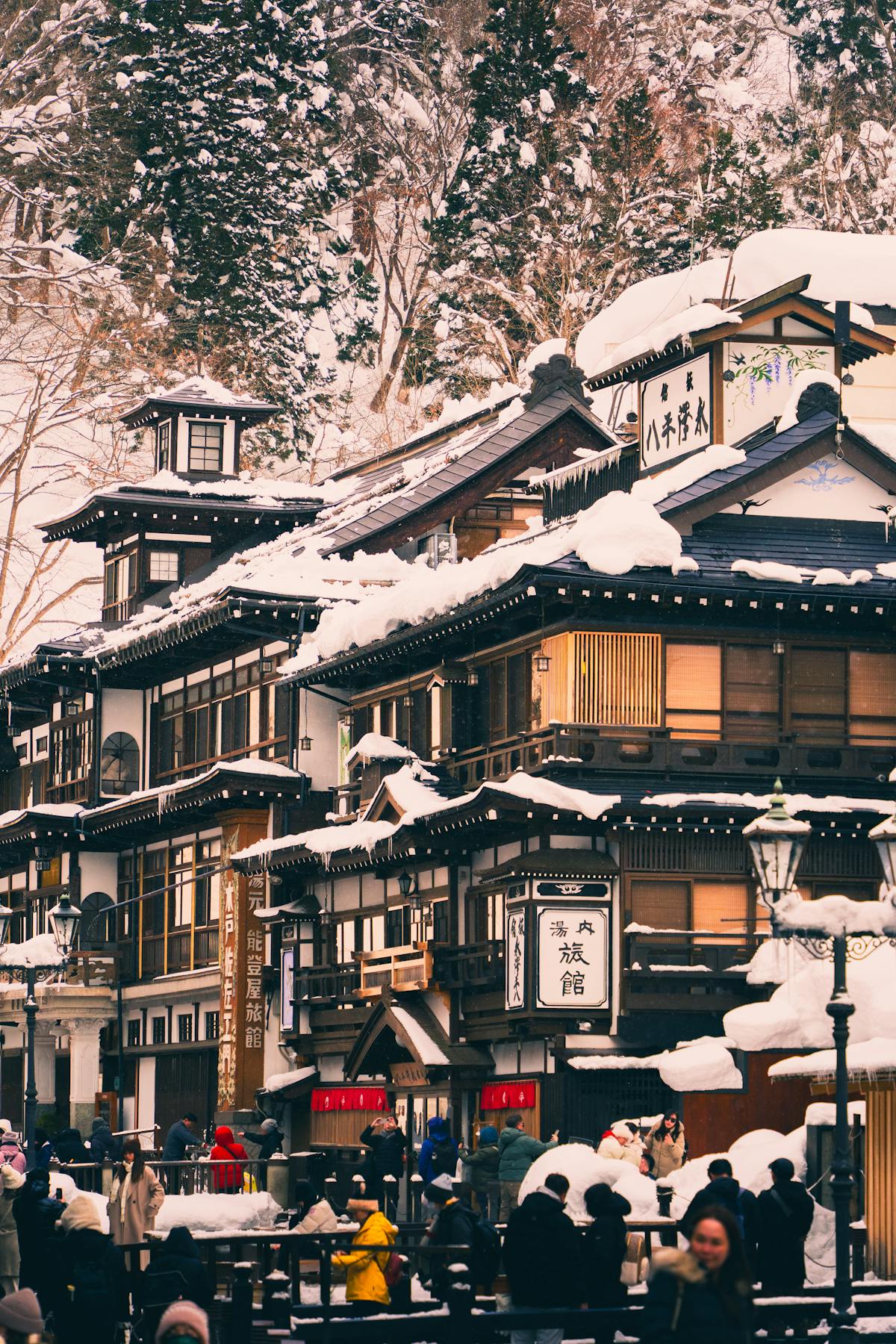
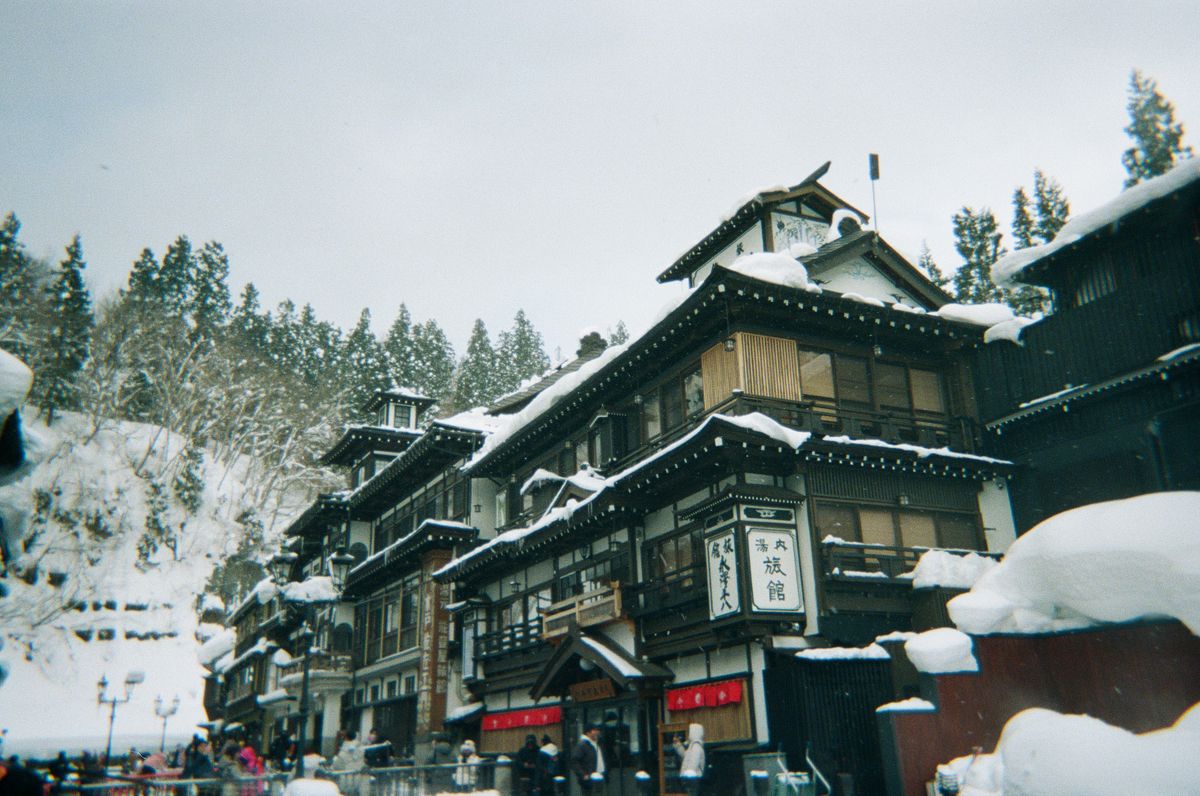
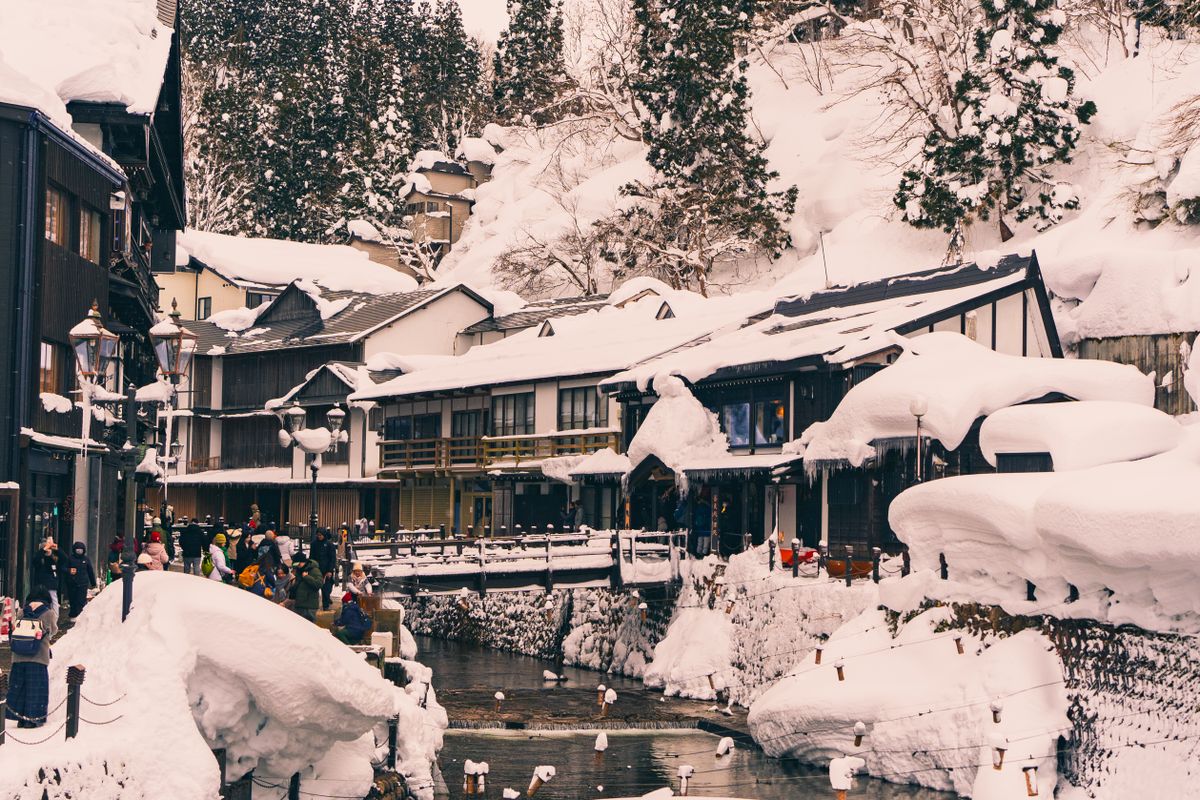
Ginzan Onsen is the prefecture's most-photographed subject and earns its reputation. The Taisho-era buildings — four and five-storey wooden ryokan with latticed facades and deep eaves, built between 1912 and the 1930s for middle-class Tokyo visitors arriving by newly built railways — stand in a narrow valley with a river rushing below them. In winter, snow depths on the valley floor reach two metres. In February the inns host a snow lantern festival that has become Yamagata's international calling card.
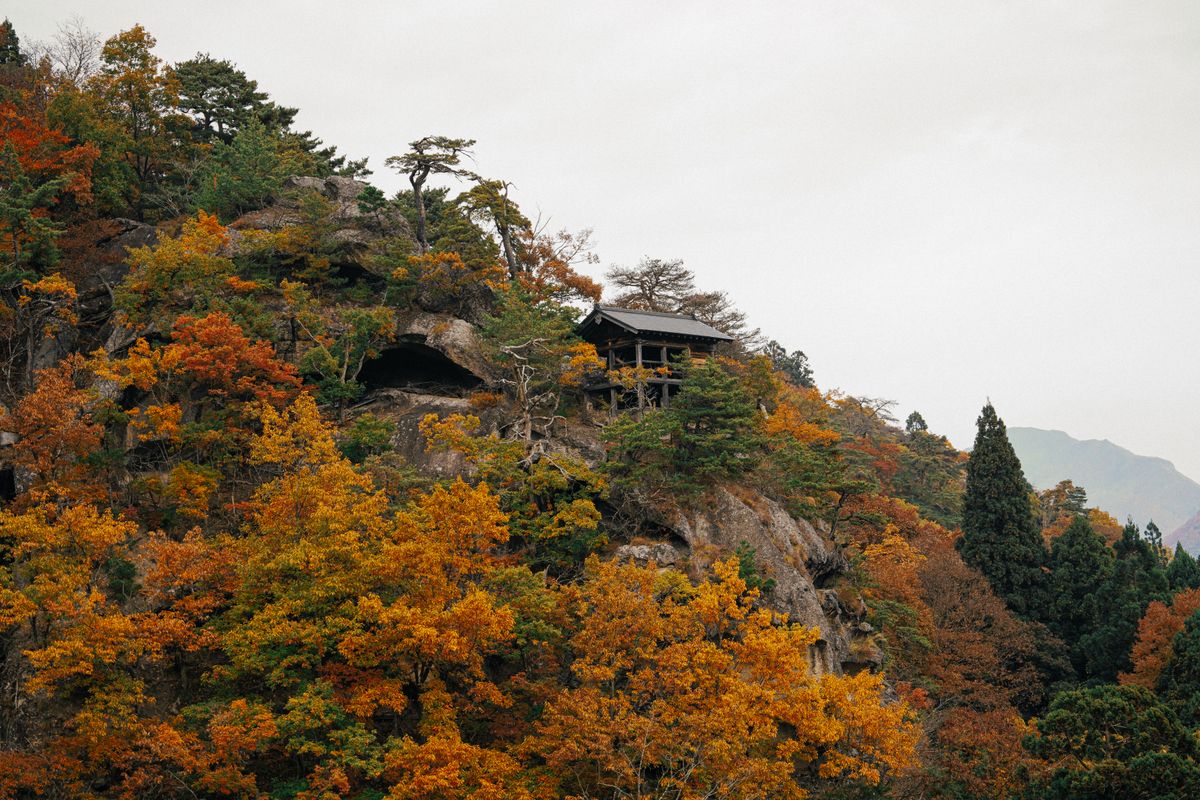
Yamadera (Risshakuji) is a different kind of experience: a working Tendai Buddhist temple founded in 860 AD on a sheer cliff face, reached by 1,015 stone steps through cedar forest. Matsuo Basho climbed them in 1689 and wrote the haiku that is still carved on a stone near the base. The prefecture's food identity — Yonezawa wagyu, sakuranbo cherries (65% of Japan's production), Shonai rice, Dewa Sanzan tofu — is as developed as any region in Tohoku.
Yamagata City (population ~250,000) is the prefectural capital: a mid-sized regional city with good shopping, hospitals, direct Shinkansen access, and a manageable urban scale. Yonezawa in the south is a smaller castle town known for beef, textiles, and Uesugi clan history. The rural basin communities — the cherry-growing villages of Higashine and Tendai, the ski towns near Zao — have a genuine agricultural rhythm that is quieter but not isolated.
Yamagata Shinkansen: Yamagata City to Tokyo in about 2h45 (Tsubasa limited express, direct, single track beyond Fukushima so speed is limited). Yonezawa is on the same line, about 30 minutes from Yamagata. Ginzan Onsen requires a bus from Oishida Station (Yamagata Line, not Shinkansen) — about 1 hour from Yamagata City. Yamadera is 20 minutes from Yamagata City on the Senzan Line. A car opens up the Dewa Sanzan, Zao plateau, and the western Mogami basin considerably.
Yamagata City properties range ¥3M–¥15M for houses; apartment stock from ¥1M–¥8M. Yonezawa and basin town properties typically ¥2M–¥10M. Rural akiya — particularly in the cherry-farming villages and mountain communities — are available from under ¥1M; the prefecture operates one of Tohoku's more active akiya bank programmes. Properties near Ginzan Onsen carry a premium for renovation potential, but the surrounding Oishida area is otherwise modestly priced.
The prefectural capital: Shinkansen access, Kajo Park cherry blossoms, Bunshokan cultural hall, and the starting point for Yamadera, Ginzan, and Zao day trips.
The most photographed onsen town in Japan, accessible from Oishida. The surrounding basin has affordable rural properties and cherry farming villages within the same commuter range.
Castle town of the Uesugi clan: Keisei-en garden, Uesugi Shrine, and the source of Yonezawa beef. The Yonezawa Matsuri (April) is one of Tohoku's major spring festivals.
The Shonai plain on the Japan Sea coast: Dewa Sanzan pilgrimage mountains, Chido Museum, and the foodie culture of Shonai — one of Japan's most farm-to-table-oriented restaurant regions.
Where To Start
Four ways to start in Yamagata
<a href="https://www.ginzanonsen.jp/" target="_blank" rel="noopener" class="text-blue-600 dark:text-blue-400 hover:underline">Ginzan Onsen's</a> winter lantern event (early February) places candle-lit snow lanterns along the gorge street and turns off the electric lighting to let the gas lamps and snow glow fill the valley. Arrive by mid-afternoon, check into a ryokan, and walk the street at dusk and again after 9pm when the day visitors have left. The famous photograph — tall Taisho-era wooden inns reflected in the river under snow — is taken from the footbridge at the upstream end of the main street.
The 1,015 stone steps to Risshakuji temple's main hall take about 30–40 minutes at a steady pace. The entire approach — through moss-covered rock formations, cedar forest, and past subsidiary shrines — is most atmospheric before the tour buses arrive after 9am. The view from the Godaido observation pavilion across the Tachiya River valley to the opposite ridge is what Basho came for in 1689. The <a href="https://www.rissyakuji.jp/" target="_blank" rel="noopener" class="text-blue-600 dark:text-blue-400 hover:underline">temple</a> is 20 minutes from Yamagata City on the Senzan Line.
Yonezawa beef is not served outside the Yonezawa basin in its full expression — the cattle are raised in the Okitama basin and the characteristic fine marbling and buttery flavour come partly from the cold-climate management. In Yonezawa City, specialist restaurants serve it as sukiyaki (hot pot), shabu-shabu (swished in boiling water), and steak. The beef is graded to A5 consistently and is considered by many Japanese chefs to equal or exceed Kobe in fat distribution quality.
The three sacred mountains — <a href="https://www.dewasanzan.jp/publics/index/57/" target="_blank" rel="noopener" class="text-blue-600 dark:text-blue-400 hover:underline">Haguro-san, Gas-san, and Yudono-san</a> — form a circuit that mountain ascetics (yamabushi) have walked in white shugendo robes since the 7th century. Haguro-san is accessible year-round (2,446 cedar-lined stone steps to the summit pagoda, a national treasure); Gas-san and Yudono-san are open July to October. The Ideha Cultural Museum at the foot of Haguro-san explains the yamabushi tradition and rents robes for the ascent.
Daily Life in Yamagata
Yamagata City (population ~250,000) functions as a self-sufficient regional capital. The city has direct Shinkansen access to Tokyo (2h45 on the Tsubasa), a full hospital network centred on Yamagata University Hospital, national and private universities, and a commercial core around Yamagata Station that includes department stores, covered shotengai, and independent restaurants. The city is liveable in a way that does not require frequent Tokyo trips.
The mountain basin geography creates genuinely distinct communities. Yonezawa in the southern Okitama basin — historically the domain of the Uesugi clan — has a castle park, shrine, and textile tradition (Yonezawa tsumugi silk weaving) that give it a cultural identity separate from the capital. The Shonai plain on the Japan Sea coast (Tsuruoka, Sakata) is flatter, warmer in summer, and has developed a food culture — Shonai is one of Japan's most recognised slow-food regions — that attracts chefs from Tokyo and Osaka.
Cherry season (June–July) transforms the Tendai and Higashine basin communities: u-pick farms open to visitors, farm stands appear on every roadside, and the Satonishiki cherry — expensive in Tokyo gift shops — is available fresh from trees for a fraction of the retail price. Residents describe the cherry season as the social peak of the year: long evenings, farm parties, and the particular pleasure of eating what your prefecture produces best.
Food and Drink
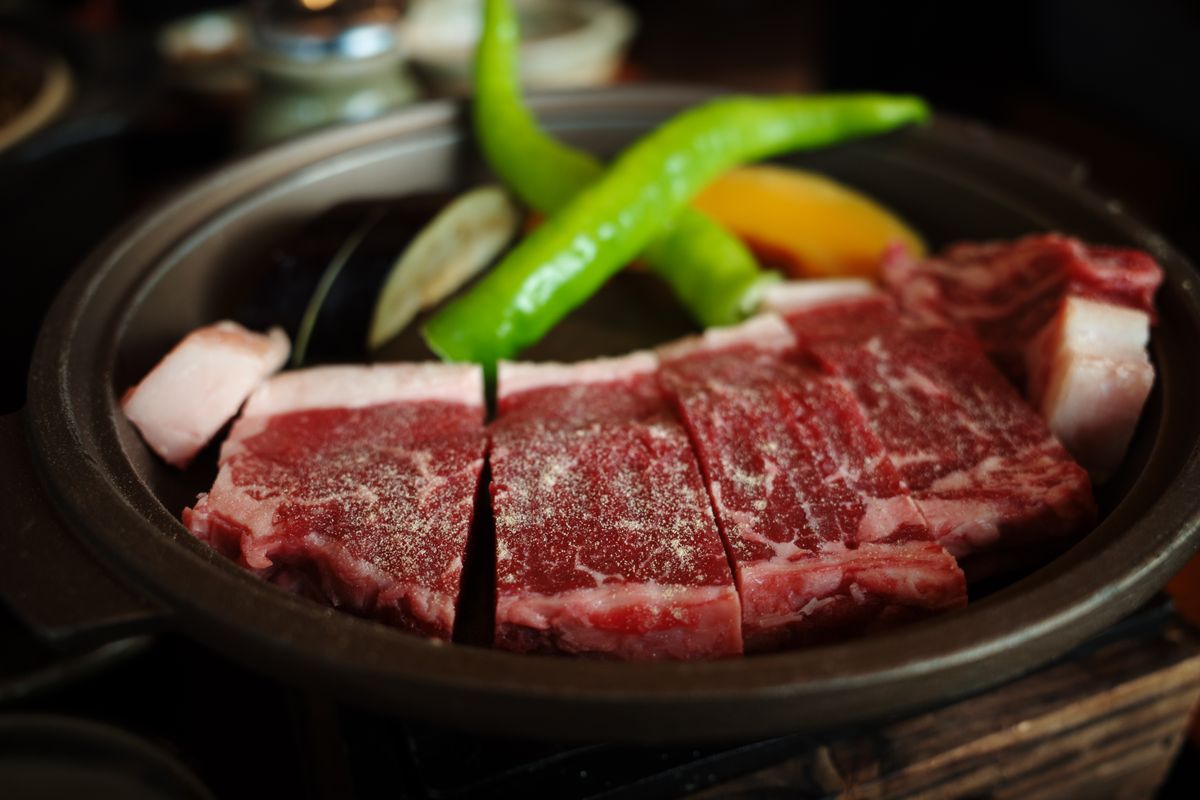
Yonezawa beef is Yamagata's most nationally celebrated food product and one of Japan's three formally recognised great wagyu varieties alongside Kobe and Matsusaka. The cattle are raised in the cold Okitama basin — Uesugi Kenshin is said to have introduced them as working animals in the 16th century — and the combination of cold climate management, local feed, and selective breeding produces consistently fine marbling. Specialist restaurants in Yonezawa City serve it as sukiyaki, shabu-shabu, and steak; the sukiyaki preparation (thin-sliced beef cooked in a sweet-savory broth with tofu and vegetables) is the most traditional.
Sakuranbo (sweet cherries, 桜ん坊) — Yamagata produces 65% of Japan's total crop. The Satonishiki variety (large, bicoloured red-and-yellow) is the premium eating cherry in the Japanese market; gift boxes sell for ¥3,000–¥10,000 in Tokyo department stores. In Yamagata, the same cherries are available in season at u-pick farms for ¥700–¥1,500 per 30 minutes of picking. The season is short — roughly mid-June to mid-July — and Yamagata Airport operates cherry-season direct flights from major cities.
Yamagata dashi is a cold summer condiment — finely chopped cucumber, myoga ginger, shiso, natto konbu seaweed, and okra in a light soy dressing — served over rice, tofu, or noodles. Originating in the Yamagata basin and now a nationally recognised prefectural specialty, it is the local answer to the question of what to eat in 35-degree summer heat. Shonai sake (produced in the coastal plain with Shonai rice and Mogami River water) rounds out a food culture that is one of the most internally coherent in Tohoku.
Culture and Events
The Dewa Sanzan — three sacred mountains (Haguro-san, Gas-san, Yudono-san) — form the spiritual core of Yamagata's cultural identity. The mountains have been a centre of shugendo mountain asceticism since the 7th century; yamabushi practitioners in white robes and conch-shell horns still lead pilgrimages on routes unchanged for 1,300 years. Haguro-san is accessible year-round via 2,446 cedar-lined stone steps and has a five-storey pagoda (national treasure, 14th century) about halfway up the ascent.
The Yamagata Hanagasa Festival (August 5–7 in Yamagata City) sends over 10,000 dancers through the city streets in three evening parades, all performing the hanagasa odori — a turning, swaying dance with straw hats decorated with safflower blooms. The festival runs concurrently with the Sendai Tanabata and Akita Kanto, making early August the peak of Tohoku's festival calendar. The safflower (benibana) is Yamagata's prefectural flower and historically its most important dye crop for kimono pigments.
The Zao Snow Monster Festival (December–February) illuminates the juhyo field on Mt. Zao in coloured lights on weekend evenings, transforming the already-surreal frost-covered trees into something more explicitly theatrical. The Zao Ropeway runs until 9pm during the festival period. Non-skiers can access the monster field via ropeway; skiers encounter them as natural features on the upper runs.
Weekends and the Outdoors
Zao Onsen is the prefecture's primary outdoor resort. As a ski area it has 40 courses across 500 hectares — one of the largest ski resorts in Tohoku — with a summit elevation of 1,661 metres. The onsen itself at the base dates to 1,900 years ago and is among the most acidic in Japan (pH 1.2), with a milky green tinge and strong sulphurous character. The combination of serious skiing and genuine hot spring bathing in the same location is a relatively rare pairing even in Japan.
The Mogami River gorge cruise (Mogamikyo) operates from Furukawa (30 minutes from Yamagata City by limited express) year-round: flat-bottomed boats travel through 12km of river gorge hemmed by 100-metre cliffs, with boatmen singing traditional Mogami River songs as they navigate. In winter, the boat runs through snow-covered forest; in summer, through overhanging green. Basho took this journey in 1689 and described it in Oku no Hosomichi as "gathering five days of hardship into one."
Yamadera (20 minutes from Yamagata City on the Senzan Line) is the most accessible major excursion: the 1,015-step ascent takes under an hour and passes through genuinely dramatic terrain — mossy boulders, cedar forest, subsidiary shrines tucked into cliff overhangs — before arriving at the Godaido pavilion overlook. In autumn the cliff face turns red and gold from the surrounding maple trees. In winter, ice formations appear on the rock faces alongside the steps.