Higashi-Tada Kominka: A Registered Cultural Property in Kawanishi City
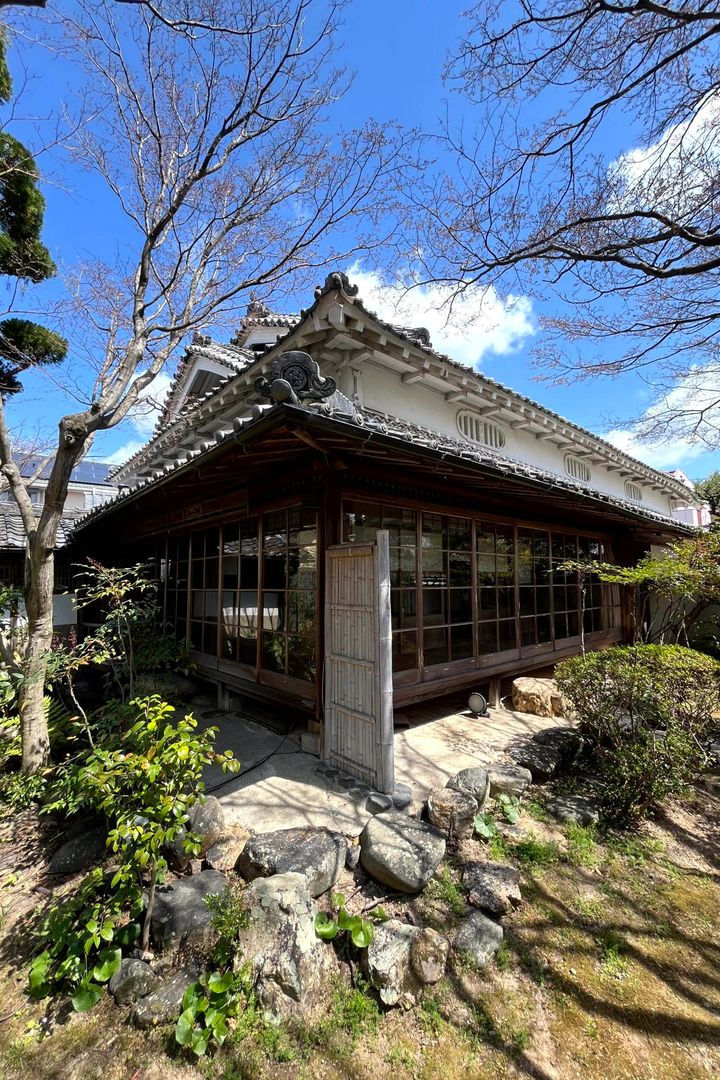
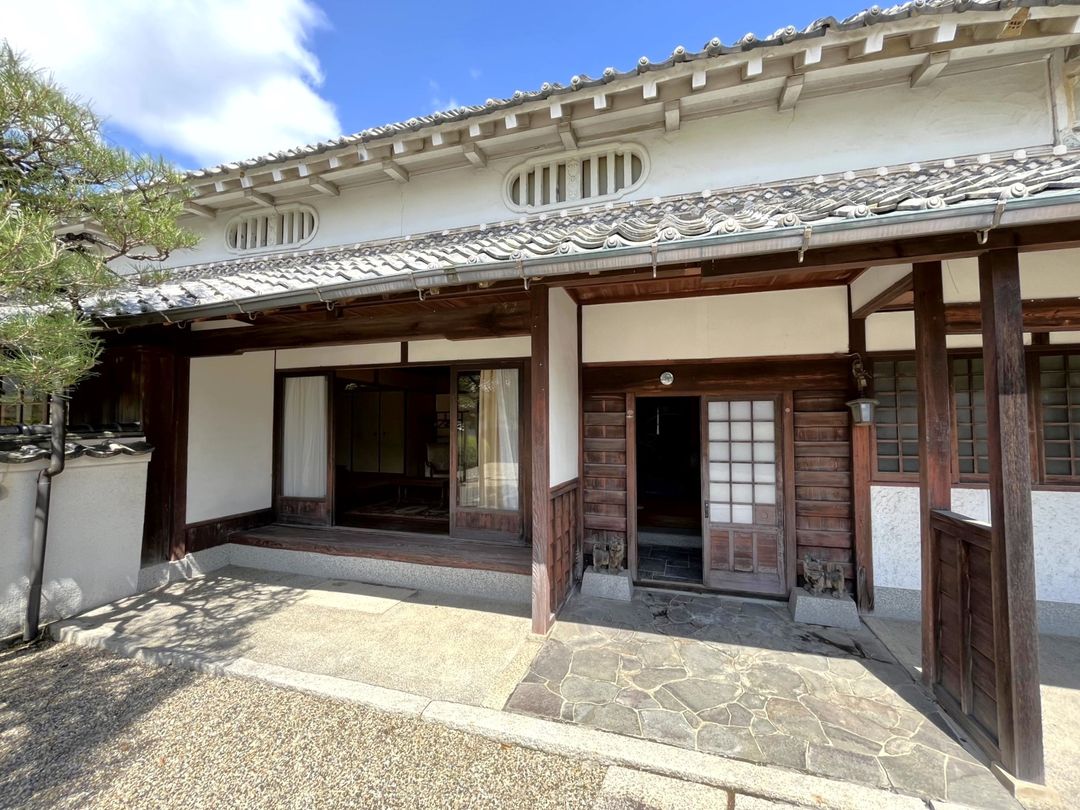
This traditional Kominka stands out with its elegant mushiko-mado (lattice windows) and white plaster walls. Once the residence of a wealthy farming family, the house is now designated as a registered cultural property. The spacious main Kominka includes a large zashiki (tatami room), and there are additional detached buildings such as a nagaya-mon gate and a tea house. From the tatami rooms, you can enjoy views of the garden—featuring lush greenery in spring and colorful foliage in autumn—through glass sliding doors from the Meiji period.
Originally the ancestral residence of the Nishimura family, who served as village headmen in Higashi-Tada Village, the estate is believed to have been developed into a formal yashiki (manor-style residence) by the mid-19th century. In the early Showa period, it was acquired by an Osaka businessman, and later, in 1966, it became a private villa for his relatives. The current owner purchased the property in 2002 and has maintained it as a corporate retreat. In 2019, the property was designated a Registered Tangible Cultural Property by the Japanese government, and in 2020 it was recognized as a Landscape Designated Important Structure by Hyogo Prefecture.
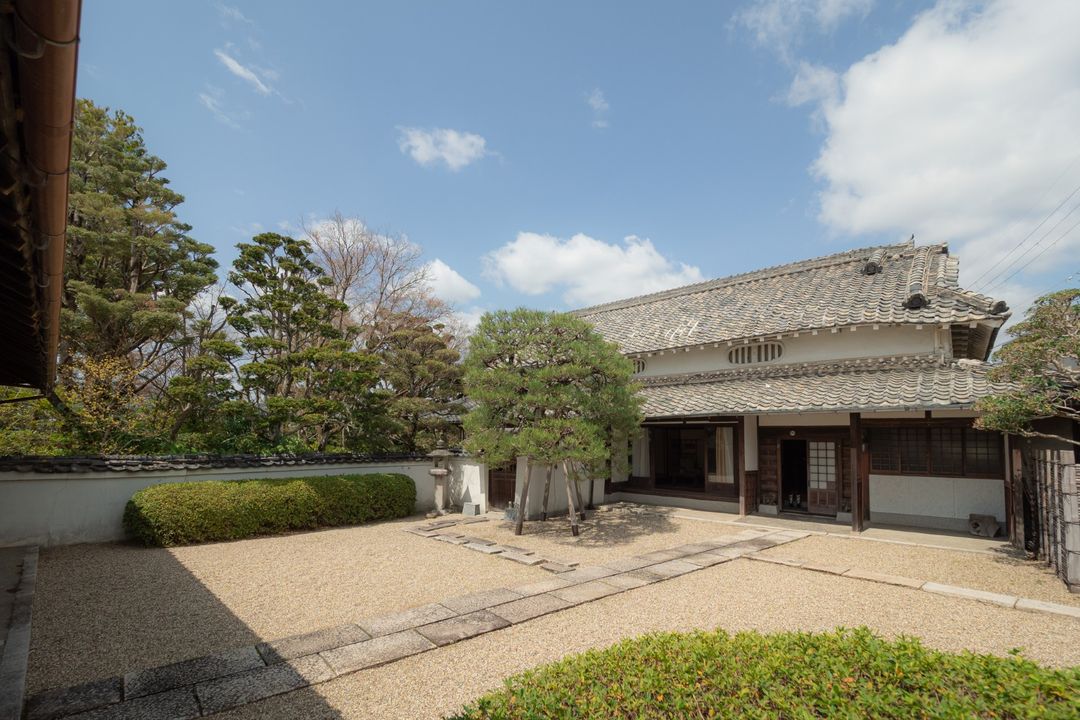
The grounds measure approximately 38 meters east to west and 33 meters north to south, enclosed on all sides by traditional earthen walls (tsuijibei). The main Kominka is a traditional Tsushi-Nikai structure (one storey with attic space) with a gabled roof (irimoya-zukuri) clad in ceramic tiles. According to cultural heritage surveys, the building was originally constructed before the late Edo period as a thatched-roof farmhouse. The thatched roof was changed to a tile roof during the late Edo period. It underwent renovations during the Meiji and Showa eras, gradually transforming from a local wealthy farmer’s residence into a stylish rural retreat.
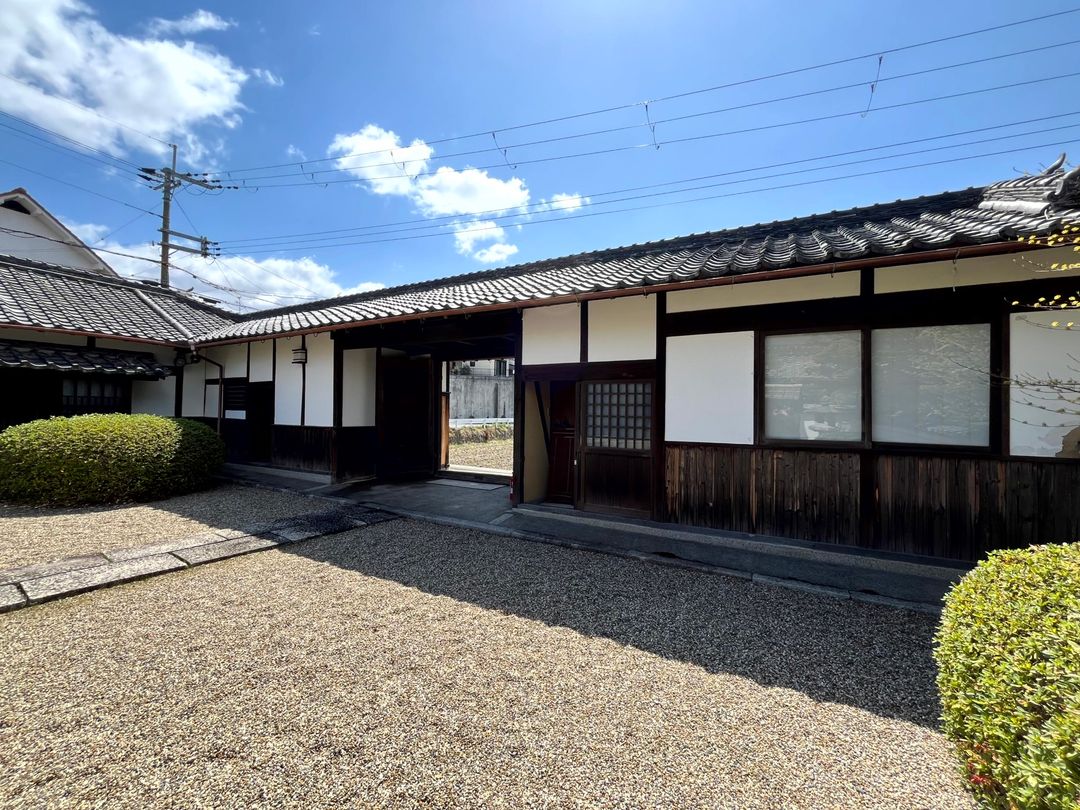
Additional buildings include a unique tea ceremony room built around 1980, featuring an entrance design inspired by a funairi (boat landing) and equipped with amenities such as a hinoki-wood bath. The Nagayamon Gate, serving as the property’s main gate, features a rare L-shaped configuration. A two-story wooden storehouse, believed to have been constructed in the early Meiji period, stands on a granite stone foundation. The surrounding fences and rear gate, said to have been built in the first half of the 19th century, all have tiled roofs built on natural stone foundations.
As a nationally registered tangible cultural property, some subsidies for renovation may be available. A full replacement of the main house roof tiles is expected to cost over 30 million yen. Commercial usage may be limited as it sits in an Exclusive Low-rise Residential district.
Located in Kawanishi City, Hyogo Prefecture—an area once rural but now a popular suburban community thanks to its proximity to both Kobe and Osaka. It is about a 30-minute drive to Shin-Osaka Station (Shinkansen) and just over a 20-minute drive to Osaka Itami Airport. The area is rich in history and nature, with the iconic Mount Rokko offering stunning panoramic views, hiking trails, and seasonal beauty just a short drive away.