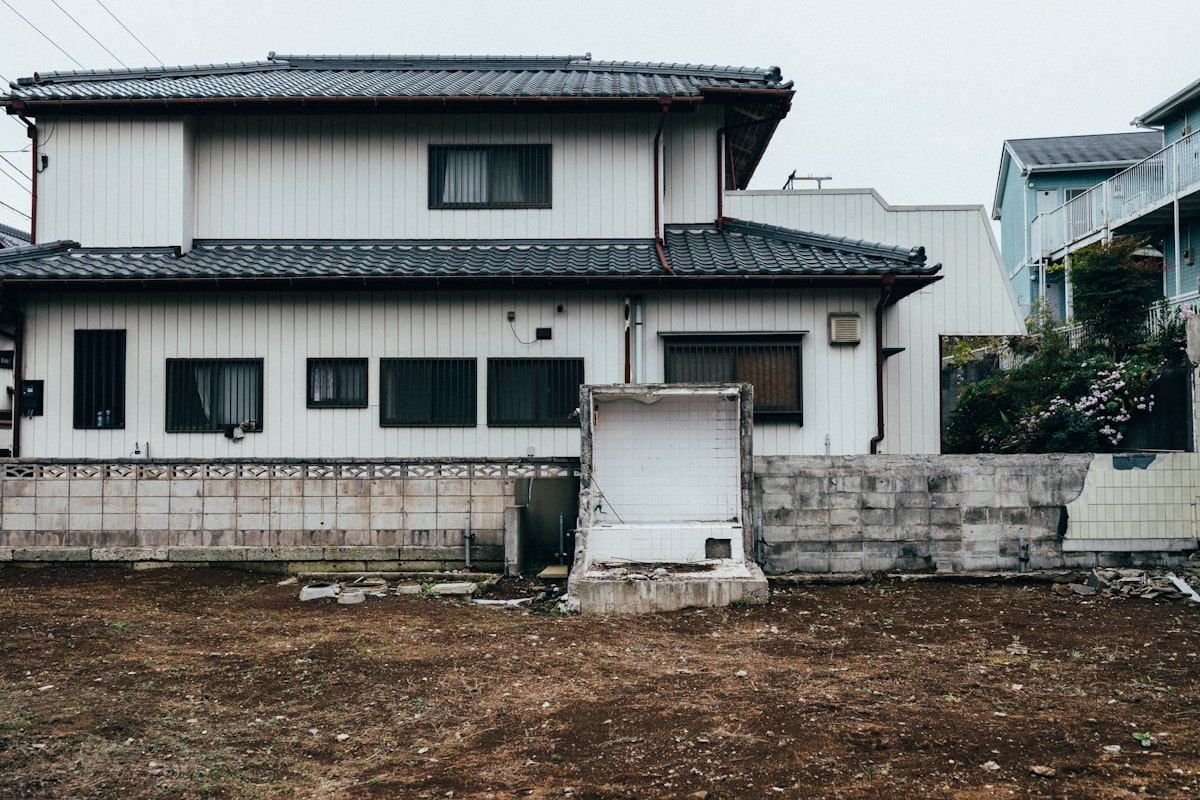
Japan's LINE app is the country's digital nervous system. With over 96 million monthly active users — covering nearly 78% of Japan's entire population — LINE is not just a messaging app in Japan. It is how people communicate with their doctors, receive government notices, pay bills, and, increasingly, how they buy and sell property. For anyone hunting an akiya, LINE is not optional. It is essential.
Yet most English-language guides to buying property in Japan barely mention LINE at all. They focus on listing websites, real estate agencies, and paperwork — the infrastructure of property buying. LINE is the communication layer that sits on top of all of it. If you are searching for an akiya without using LINE, you are operating at a disadvantage before you have even started.
This guide explains exactly how LINE fits into the akiya discovery and renovation process, from finding your first lead to managing a contractor two time zones away.

LINE dominates Japanese mobile communication — Photo by Tore F on Unsplash
Why LINE Dominates Japanese Communication
LINE launched in Japan in 2011 as a response to the communication breakdowns experienced during the Tōhoku earthquake. That origin story matters because it shaped how LINE is used: as infrastructure, not entertainment. In Japan, LINE is where serious conversations happen.
By 2026, LINE's penetration rate among Japanese internet users stands at around 95%, according to Statista. This is not passive installation — these are active monthly users. LINE is used across every age group, every profession, and every prefecture. When a municipality official in Akita or a carpenter in Hyōgo wants to reach someone quickly, they use LINE.
For akiya hunters, this creates a direct line (no pun intended) into the Japanese property ecosystem that no listing website can replicate. Agents respond faster on LINE than email. Municipalities maintain official LINE accounts where they publish vacancy information. Renovation contractors share progress photos, quotes, and questions through LINE groups every single day.
Setting Up LINE Before You Start Your Search

Photo by Robby McCullough on Unsplash
Before you contact a single agent or visit a single akiya bank, get your LINE account in order.
Account Setup
Download LINE from the App Store or Google Play and register with your phone number. International numbers work without issue — you do not need a Japanese SIM to use LINE. Once registered, set a clear profile photo and a recognizable display name. Japanese agents and officials are accustomed to LINE but not necessarily accustomed to foreign buyers. A professional profile reduces friction.
Set your profile to Japanese language if you can. Even partial Japanese in your profile bio — something like 「日本の空き家に興味があります」 ("I am interested in Japanese akiya") — signals cultural awareness and seriousness.
Translation Within LINE
LINE has a built-in translation bot called LINE Translator. Add it as a friend (search @linetranslate), then invite it into any conversation. You can type [EN] before a message to translate it to English, or [JA] to translate to Japanese. This is not perfectly fluent but handles property terminology and practical questions well enough for initial conversations.
For critical messages — offer letters, inspection findings, contract questions — do not rely on LINE Translator alone. Use a professional translation service or, better yet, work with a bilingual agent who handles this communication natively.
Understanding LINE Etiquette
Japanese LINE etiquette in professional contexts differs from Western instant messaging norms. A few rules matter enormously:
- Keep messages short and polite. Long paragraphs feel aggressive. Break information into multiple short messages.
- Respond promptly but do not expect immediate responses. Japanese professionals read messages, consider carefully, and reply deliberately. Sending follow-ups within an hour is considered pushy.
- Use stamps (stickers) sparingly. They are friendly but can undercut the seriousness of a property inquiry.
- Say goodbye explicitly. Ending a conversation with a polite closing message (「よろしくお願いします」— "I look forward to working with you") is expected.
Finding Akiya Through LINE Official Accounts
Japanese real estate agencies and municipalities increasingly operate LINE Official Accounts — verified business accounts that function like a newsletter and customer service channel combined. Finding and following the right accounts is one of the most underutilized strategies in the foreign akiya buyer's toolkit.
Municipal Official Accounts
Over 1,700 municipalities in Japan maintain akiya bank databases. Many of these municipalities also have LINE Official Accounts through which they publish new vacancy listings, renovation subsidy announcements, and relocation incentive programs. Search for your target municipality's name in LINE's search bar — most accounts are named 「[市区町村名]市公式LINE」 (e.g., "栃木市公式LINE" for Tochigi City official LINE).
Following municipal accounts is particularly valuable because they publish subsidy and incentive news that rarely appears on English-language property websites. Japan's empty-house utilization programs (空き家活用推進事業) often include renovation subsidies of ¥500,000 to ¥3,000,000 for buyers willing to renovate and inhabit properties. These announcements go to LINE followers first.
Real Estate Agency Accounts
Smaller regional agencies increasingly prefer LINE as their primary channel for new listings. A case study from LINE WORKS (LINE's business platform) documented how Hinokiya Holdings — a major Japanese housing company — tripled customer dialogues when it shifted from email and phone to LINE-based communication. The pattern is replicated across hundreds of smaller agencies nationwide.
When you find an agency that covers your target region, look for a LINE QR code on their website or contact them by email to ask if they have a LINE Official Account. Most do, and following it means you receive new listings in real time rather than polling a website.

Japanese professionals manage property inquiries on LINE during commutes — Photo by Redd F on Unsplash
LINE Open Chat Communities for Akiya Hunters
LINE Open Chat is LINE's semi-public group feature — rooms that anyone can join via a link or QR code, without exchanging personal contact details. These communities are Japan's equivalent of niche Facebook groups, and several have emerged around akiya and rural property topics.
How to Find Relevant Open Chats
Tap the "Home" icon in LINE, then select "Open Chat." Search in Japanese for terms like:
- 空き家 (akiya / vacant house)
- 田舎暮らし (country living)
- 古民家 (kominka / traditional farmhouse)
- 地方移住 (regional relocation)
- DIYリノベ (DIY renovation)
You will find communities of Japanese buyers, renovators, and rural lifestyle advocates. These are not tourist communities — they are practical, local, and full of people who have already navigated the process you are beginning. Questions about specific regions, specific contractors, or specific renovation challenges often get answered by someone with direct experience.
What You Will Learn
Open Chat communities are especially useful for three things. First, contractor recommendations — the best rural renovation contractors rarely advertise online, but their names circulate constantly in regional communities. Second, real renovation cost data — members share actual invoices and contractor quotes, which gives you calibration that no official source provides. Third, relocation subsidy updates — community members are usually faster than official channels at flagging when a new municipal program opens up.
Participation builds trust. Introduce yourself (a brief, polite Japanese introduction goes a long way), explain what region you are considering, and ask specific questions. Most communities are welcoming to foreign buyers who demonstrate genuine interest in the community, not just the property.
Working With Agents via LINE
Once you identify properties through akiya banks, listing sites, or agent accounts, the actual working relationship with your agent will almost certainly happen on LINE.
Making Initial Contact
When contacting a Japanese agent for the first time, use a brief, formal email or inquiry form. At the end of the message, add: 「LINEでもご連絡可能です。LINEのIDは[your ID]です。」 ("I am also available on LINE. My LINE ID is [your ID].") Most agents will switch to LINE for ongoing communication immediately.
Property Visit Coordination
Coordinating a property visit from overseas via LINE is straightforward. Agents share location pins directly in LINE chat (Japan addresses can be cryptic for foreigners — the pin eliminates ambiguity). They also share photos and video walkthroughs in advance. A 5-minute voice note from an agent describing what you will see is genuinely useful; ask for one if you are making a long journey.
During an in-person visit, LINE is your note-taking tool. Photograph everything, send it to yourself, and ask the agent follow-up questions on the spot. Japanese agents are accustomed to buyers photographing properties extensively — it is not considered rude.
Negotiation via LINE
Price negotiation in Japan is culturally different from most Western contexts. It is indirect, polite, and rarely confrontational. LINE facilitates this well because the asynchronous nature of messaging allows both parties to frame questions and responses carefully. A direct offer ("I want to pay ¥1.2 million instead of ¥1.8 million") would be considered blunt in a phone call but is entirely acceptable as a LINE message — particularly if framed politely: 「ご相談なのですが、価格について少し交渉できますでしょうか」 ("I have a request — would it be possible to discuss the price a little?").

Traditional Japanese houses like this are typically negotiated and managed through LINE — Photo by Tuan P on Unsplash
Managing Renovation Through LINE
This is where LINE becomes genuinely transformative for foreign akiya buyers. The gap between finding a property and successfully renovating it remotely is large — and LINE shrinks it considerably.
Building Your Contractor Group
Once you have assembled your renovation team — carpenter, plumber, electrician, and any specialist tradespeople — create a LINE group. Add all of them at once. Name it clearly: the property address works well, or something like 「山梨県〇〇町リノベグループ」.
Japanese contractors are accustomed to this. Many rural renovation projects — particularly those involving multiple tradespeople on older wooden structures — are coordinated entirely through LINE groups. A carpenter needs to know when the electrician has finished rewiring before installing wall panels. That coordination happens in the group, with timestamped messages and photos as documentation.
Photo Documentation
LINE's photo sharing is arguably its most practical feature for remote renovation management. Ask your main contractor to post daily progress photos to the group. This is a completely normal request in Japan — contractors who work on akiya renovations for absentee owners (increasingly common as Japan's remote-work population grows) routinely document progress via LINE.
More importantly, photos shared in LINE are automatically timestamped and tied to a specific conversation — they function as informal but legally defensible documentation of work completed. If a payment dispute arises, the LINE chat history is often the first thing reviewed.
Getting Renovation Quotes via LINE
Japanese renovation contractors are generally willing to provide rough estimates via LINE, especially if you share clear photos of the space and a description of the work. This is not a formal quote — that comes later — but it tells you whether a project is in the ¥500,000 range or the ¥5,000,000 range before you commit to a site visit.
To find contractors, start with your akiya bank contact or municipal office. They typically maintain lists of local tradespeople who have experience with vacant house renovation and who are accustomed to working with non-local owners. Alternatively, ask in LINE Open Chat communities for region-specific recommendations.
Typical renovation costs to benchmark against, based on 2025-2026 Japanese contractor data:
- Roof repair or replacement: ¥800,000–¥3,500,000 depending on material and size
- External wall repair: ¥500,000–¥3,500,000
- Full interior renovation (flooring, wallpaper, fixtures): ¥1,000,000–¥4,000,000 for a 3LDK
- Earthquake retrofitting (耐震補強): ¥500,000–¥2,000,000 for standard wooden construction
- Septic and plumbing update: ¥300,000–¥1,500,000
Remote Decision-Making
One of the practical realities of renovating an akiya from overseas is that decisions arise faster than expected. A contractor opens a wall and finds unexpected rot. A tile supplier is out of stock on your original choice. The inspection reveals that the electrical panel needs full replacement.
LINE handles this well because it supports voice messages, photos, and short video clips all in the same thread. Your contractor sends a voice note explaining the problem, photos showing the extent of it, and a cost estimate. You respond with a decision. The conversation is documented. Work continues. This loop happens dozens of times during a typical renovation, and LINE makes it faster and less stressful than phone or email.
LINE WORKS for More Serious Project Management
For buyers managing large-scale renovations or multiple properties, the free version of LINE (LINE for consumers) may become limiting. LINE WORKS is LINE's enterprise platform — it adds task management, calendar scheduling, folder organization, and advanced notification controls on top of LINE's core messaging.
Real estate companies across Japan have adopted LINE WORKS specifically because it integrates seamlessly with regular LINE accounts. Your contractor does not need a LINE WORKS account to receive your messages — they receive them on regular LINE. But you, managing the project, gain a much more organized interface with searchable message history, document storage, and team calendars.
The free tier of LINE WORKS supports up to 30 users and provides most features a single renovation project requires. Paid plans start at around ¥450 per user per month for larger teams.
LINE and Municipal Subsidy Applications
One of the less-discussed ways LINE creates value for akiya buyers is through its role in Japan's relocation and renovation subsidy ecosystem. The national government's Regional Relocation Support Program (地方移住支援事業) and the Ministry of Land, Infrastructure, Transport and Tourism's Akiya Utilization Promotion Program both funnel support through municipal channels — and those channels increasingly include LINE.
Municipalities with active depopulation concerns have been particularly aggressive about using LINE to communicate with prospective movers. Some offer one-on-one LINE consultations with regional migration coordinators (移住コーディネーター) — essentially free advisory sessions where you can ask specific questions about local programs, suitable properties, and available subsidies.
To access these: follow your target municipality's official LINE account, then look for messages tagged 「移住相談」 (relocation consultation) or 「空き家補助金」 (akiya subsidy). Many municipalities now list a LINE QR code specifically for akiya inquiries on their official websites under the 「定住促進」(settlement promotion) section.
What LINE Cannot Do
LINE is powerful but it is a communication tool, not a transaction platform. A few important limitations for foreign buyers to understand:
Formal contracts are not signed on LINE. Japanese real estate transactions require paper documentation, official stamps (inkan), and in many cases a licensed judicial scrivener (shiho shoshi) to handle title registration. These cannot happen on LINE.
LINE is not a substitute for legal advice. Questions about ownership structures, inheritance issues, or permit requirements should go to qualified professionals, not LINE Open Chat communities.
LINE messages may not be accepted as legal evidence in all contexts. While they function as informal documentation, Japan's civil code sets a high bar for what constitutes a legally binding agreement. Written contracts on paper remain the standard.
For the legal and procedural side of buying an akiya — title searches, registration, purchase agreements, visa compliance — working with a licensed real estate brokerage is essential. Teritoru, our licensed partner agent, specializes in precisely this: helping foreign buyers navigate Japanese property law in English, from initial inquiry through contract signing. Their team can also advise on which municipalities offer the strongest renovation subsidy packages for your specific situation. You can book a consultation with Teritoru to discuss your akiya plans before you start the search.
A Practical LINE Checklist for Akiya Buyers
Before you begin your akiya search, work through this setup:
- Install LINE and set a professional profile — include your name, a clear photo, and a brief Japanese bio if possible
- Add LINE Translator — search @linetranslate and add as a friend
- Find and follow 3–5 municipal official accounts for your target prefectures
- Find and join 2–3 relevant Open Chat communities (akiya, kominka, country living)
- Search for regional real estate agencies in your target areas and ask for their LINE IDs
- Prepare a brief Japanese self-introduction message for first contact with agents
- When a renovation project begins, create a contractor group and establish a daily photo update routine

Rural akiya properties are often only accessible through local LINE communities and agent networks
The Real Advantage LINE Gives You
In Japan's property market, speed and relationship matter more than searching harder. A Japanese buyer who contacts an agent via LINE on a Monday morning and exchanges three messages by Wednesday afternoon has a relationship. A foreign buyer who sends an English email and waits three days for a response is still a stranger.
LINE collapses that distance. It puts you in the same communication channel as every other buyer, agent, and contractor in Japan. It is not magic — language still matters, cultural fluency still matters, persistence still matters. But operating without LINE is like shopping in Japan without a transit card: technically possible, considerably harder, and a signal that you do not quite understand how things work here.
The akiya hunters who have the most success — who find properties before they hit listing sites, who build renovation teams from overseas, who maintain long-term relationships with regional agents — are, without exception, active LINE users. Not sophisticated users. Not power users. Just present, responsive, and engaged in the same digital space where Japanese property professionals already live.
Download the app, set up the account, and start following. The properties come to you.