Japan's working-age population has been declining for over two decades. By 2024, approximately 29 percent of Japanese residents were aged 65 or older, a share that continues to rise. The country has recorded net population decline for fifteen consecutive years. These are not projections: they are confirmed census data, and they have material consequences for every sector of the Japanese economy that depends on human labour.
The result, across multiple industries, is that Japan cannot fill positions with domestic workers. Not because wages are too low, or because the work is undesirable by Japanese standards, but because the population cohort that would fill those positions is simply not large enough. The government has responded with a structured expansion of foreign worker pathways, led by the Specified Skilled Worker (SSW) visa introduced in 2019.
This article is the companion to Does Japan Actually Want You to Stay?, which covers the visa landscape honestly, including its restrictions. This article answers the more specific question: which industries have genuine shortfalls, what qualifications make you competitive, and what the entry thresholds actually look like in practice.
The Specified Skilled Worker Visa: Japan's Main Tool for Filling Gaps
The Specified Skilled Worker (SSW) visa was introduced in April 2019, specifically to allow foreign workers into a defined list of industries the Japanese government had formally designated as experiencing critical labour shortages. It was not a general immigration expansion. It was a targeted tool.
The visa operates in two tiers. SSW Type 1 allows a foreign worker to stay in Japan for up to five years, working in a designated shortage sector. Family members cannot be brought. The visa can be renewed but is not indefinitely renewable under the same status. SSW Type 2 is available in fewer sectors (construction and shipbuilding were the original two; the list has since expanded), is renewable indefinitely, allows family members to accompany the worker, and creates a genuine pathway to permanent residency.
To qualify for SSW Type 1, applicants must pass a sector-specific skills test and a Japanese language test at JLPT N4 level or above. There is one significant exception: workers who have completed a Technical Intern Training Program (TITP) in the same sector and passed the required examinations are exempt from the skills test when transitioning to SSW. This makes TITP completion a recognised gateway into the SSW system for workers already in Japan.
The sectors currently covered by the SSW framework are: nursing care, building cleaning management, industrial machinery manufacturing, electronics and electrical equipment manufacturing, construction, shipbuilding and marine industry, automobile repair and maintenance, aviation, accommodation, agriculture, fisheries and aquaculture, food and beverage manufacturing, and food service. The government reviews the list periodically, and the quotas for each sector are adjusted based on actual shortage data from the Ministry of Health, Labour and Welfare.
Where the Shortages Are Largest
Not all SSW sectors are equally short-staffed, and not all offer the same medium-term prospects. The table below summarises the major shortage sectors, the scale of the shortfall, what Japan is specifically seeking, and whether SSW Type 2 status is available.
| Sector | Scale of Shortage | What Japan Needs | SSW Type 2 |
|---|---|---|---|
| Elder care (nursing) | 690,000+ additional workers needed by 2040 | Care staff, certified care workers (kaigo fukushishi) | Yes |
| Construction | Chronic since the 1990s; quota raised repeatedly | Civil engineering, carpentry, concrete, roofing, finishing | Yes |
| Food and beverage manufacturing | One of the largest SSW categories by quota | Processing, packing, quality control, food safety | No |
| Agriculture | Average farmer age 68; farming population below 2 million | Crop farming, livestock, dairy, seed production | Yes |
| IT and digital | 790,000 unfilled tech roles estimated by 2030 | Software engineers, data specialists, system architects | Not via SSW (see IT section) |
| Accommodation and hospitality | Record inbound tourism (3.5M visitors in Dec 2024) | Front desk, housekeeping, food service, room maintenance | No |
Nursing Care: The Sector That Will Define the Next Decade
Japan has the oldest population in the world by median age. Approximately 29 percent of residents are already over 65, and that cohort will continue to grow for at least another fifteen years before the demographic curve begins to flatten. The kaigo (elder care) sector is, as a direct result, among the most acutely understaffed in any developed economy.
The government estimates Japan will need approximately 690,000 additional care workers by 2040. Domestic supply cannot come close to meeting this figure. SSW Type 1 is available in nursing care, and SSW Type 2 was added in 2024, creating a path from short-term care work to indefinite residence and PR eligibility.
The certification structure is worth understanding clearly. SSW Type 1 nursing care requires JLPT N4 and passage of the sector skills test. That is the entry point. A separate and more demanding qualification, the Registered Care Worker certification (kaigo fukushishi), requires JLPT N2 and completion of a formal training course or the EPA nursing pathway. The EPA routes, available to workers from Indonesia, the Philippines, and Vietnam under Economic Partnership Agreements, offer specific nursing tracks with training support, but they are competitive and require passing the national care worker examination in Japanese.
The language barrier is the real constraint in this sector. Care work involves sustained verbal communication with patients, family members, and medical staff. JLPT N4 is the floor Japan has set for SSW qualification, but most employers actively prefer N3 or N2 for any role involving direct patient contact. Workers who pass at N4 and then continue improving their Japanese have meaningfully better employment outcomes than those who plateau at the entry threshold.
Construction and Infrastructure
Japan's construction sector has operated with a structural worker shortage since the 1990s, when the population of young men entering physical labour trades began declining. The shortfall has worsened with each major infrastructure commitment: post-Fukushima decommissioning and reconstruction, the Tokyo 2020 Olympics preparation cycle, the Osaka 2025 Expo, and the ongoing Noto Peninsula earthquake reconstruction following the January 2024 disaster.
SSW construction covers a broad range of specialisations: civil engineering and earthworks, structural building construction, carpentry, concrete forming and finishing, roofing, external painting and waterproofing, interior finishing, and equipment installation. Workers do not need to master all of these; the skills test is sector-specific and candidates apply in the sub-field matching their training.
Construction was one of the original SSW Type 2 sectors, which means foreign construction workers have one of the clearer routes from temporary status to long-term residence. For foreign professionals with engineering degrees, the Engineer/Specialist in Humanities/International Services visa is a separate pathway that bypasses SSW entirely, provided salary and educational credentials are sufficient.

IT, Engineering, and Digital Roles: The High-Value Track
Japan's technology sector shortage is significant and well-documented. METI (Ministry of Economy, Trade and Industry) estimates approximately 790,000 unfilled IT roles by 2030, driven by digital transformation demand across both private enterprise and government. The gap is particularly acute in software engineering, data science, and cloud infrastructure.
IT workers do not enter Japan via SSW. The relevant visa categories are the Engineer/Specialist in Humanities/International Services visa and the Highly Skilled Professional (HSP) points-based visa. Both require a job offer from a Japanese employer (or a registered sponsor), but neither has a language requirement at the gate. Japanese language ability earns bonus points under the HSP system but is not a threshold requirement.
METI and the Tokyo Metropolitan Government have both run active international recruitment campaigns targeting tech talent. JETRO (Japan External Trade Organization) provides free support services for foreign professionals seeking employment in Japan, including matching with employers and visa consultation.
Tokyo has also launched an Asset Management Hub initiative, coordinated through the Financial Services Agency (FSA) and the Tokyo Metropolitan Government, specifically targeting global asset managers and fund managers. The initiative created an English-language point of contact at the FSA, simplified certain regulatory processes for overseas financial firms entering the Japanese market, and provides dedicated onboarding support for internationally recruited finance professionals. It represents one of the clearer signals that the Japanese government has identified specific professional categories it is actively competing to attract.
On the employer side, a growing number of Japanese technology firms now operate partially or fully in English internally. Mercari, LINE (now LY Corporation), and Recruit Holdings are frequently cited examples. For software engineers and data specialists, language is not universally a barrier to employment at these firms, though it remains relevant in terms of integration and career progression.
Hospitality and Food Service: High Volume, Lower Bar
Food service and accommodation are among the largest employers of foreign workers under the SSW framework, and they represent the sector with the lowest effective barrier to entry for workers who meet the language threshold.
SSW food service covers the full range of restaurant and food preparation work: cooking, food preparation, service, dishwashing, and kitchen support. SSW accommodation covers front desk operations, guest room maintenance and housekeeping, laundry, and facility upkeep. Both sectors qualify under SSW Type 1. Neither currently qualifies for Type 2.
The JLPT N4 minimum applies, but tourist-area employers in cities like Osaka, Kyoto, and Tokyo have increasingly come to view multilingual foreign staff as a commercial asset, not just a requirement to be minimally met. Inbound tourism hit a monthly record of 3.5 million visitors in December 2024, and the workforce serving that volume was already stretched before the record. The combination of high demand, continued expansion of tourism infrastructure, and a domestic workforce that is both aging and shrinking has made this one of the more active hiring sectors for foreign workers.

Agriculture and Fisheries: Overlooked but Accessible
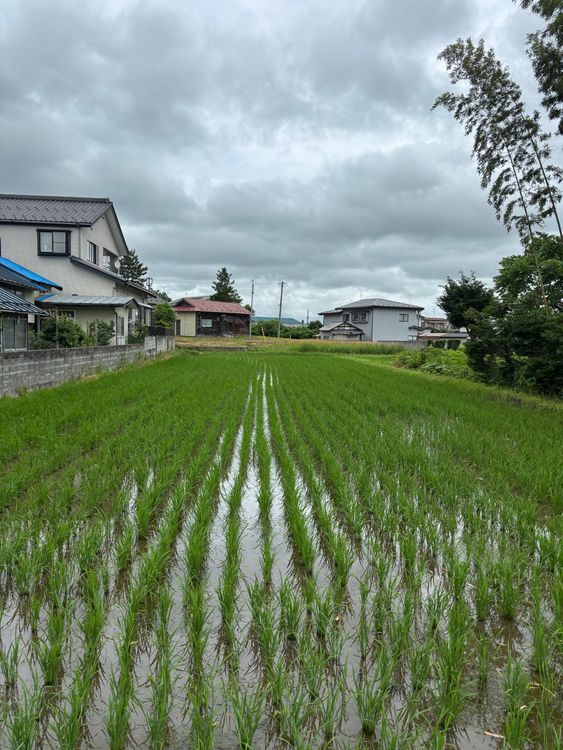
Japan's farming population fell below two million for the first time in 2023, with an average age of 68. JA (Japan Agricultural Cooperatives) has flagged in multiple consecutive reports that the sector faces existential continuity risk without an influx of new workers, domestic or foreign. The prefectures with the highest agricultural labour demand include Hokkaido (dairy, potato, and grain), Ibaraki (vegetables), Gunma (vegetables and fruit), and Kumamoto (tomatoes, strawberries). These are not marginal agricultural zones: they are among Japan's most productive growing regions.
SSW agriculture covers crop farming, livestock raising, dairy production, poultry management, and seed and seedling production. SSW fisheries covers fishing and aquaculture, with a concentration in Aomori, Nagasaki, and Miyagi prefectures. Both sectors qualify for SSW Type 2 under the 2024 expansion of eligible sectors, creating the path from short-term seasonal or annual work to indefinitely renewable status with PR eligibility.
Agricultural SSW does not require prior experience in Japanese farming methods specifically. The skills test assesses basic agrarian competencies that transfer across national contexts. For workers without professional credentials in other sectors, agriculture is one of the most accessible entry points into the SSW system, and one of the few where the Type 2 route to long-term residence is now available.
Language Requirements: The Real Threshold
Japanese language level is the gating factor that most foreign workers misunderstand, either because they underestimate the required level or because they assume the requirement is uniformly applied when in practice it varies by sector and employer.
The framework is as follows:
- JLPT N4 (SSW minimum, all sectors): N4 certifies the ability to understand basic Japanese in familiar situations, read hiragana, katakana, and approximately 300 kanji, and follow simple spoken instructions. This is the floor for SSW eligibility. It is achievable with six to twelve months of focused study for most learners, but it requires consistent structured effort, not passive exposure.
- JLPT N3 (preferred by most SSW employers for customer-facing roles): N3 represents intermediate level. Everyday conversation is manageable; reading standard notices and basic forms is possible. Most employers in food service, accommodation, and construction will specify N3 as preferred even when N4 is the formal minimum. In practice, candidates at N3 are significantly more employable than those at N4.
- JLPT N2 (required for EPA nursing track and kaigo fukushishi certification): N2 represents near-business-level proficiency. It is the threshold for formal care worker certification and for working in clinical settings that require patient communication. N2 preparation takes most learners two or more years beyond N4 level.
- JLPT N1 (required for certain specialist and management roles): Full business fluency. Required for specific professional roles and for some management-track positions. Not typically required for SSW roles.
- Highly Skilled Professional, IT, Finance, and Engineering tracks: Japanese language is not required at the gate. The HSP points system awards bonus points for JLPT level, but language is not a threshold requirement. Foreign professionals on Engineer/Specialist or HSP visas can qualify with zero Japanese. In practice, employers in domestic-facing roles typically expect at least N3 for day-to-day function, but internationally oriented firms and tech employers frequently do not require Japanese at all for technical hires.
The operative rule: if you are targeting SSW sectors, N4 is the entry threshold and N3 is the competitive level. If you are targeting professional, HSP, or engineering tracks, you can qualify at the visa level with no Japanese, but you will find few employers willing to sponsor unless you have strong technical credentials and are joining a firm that operates in English.
Building the Case: What Actually Moves Applications Forward
Japan's employment-based visa system requires a job offer before you can apply in most categories. There is no apply-then-find-work pathway for SSW or Engineer/Specialist visas. The practical implication is that the job search and the visa preparation must happen in parallel, and your employability in a shortage sector is the mechanism that generates the job offer that enables the visa.
The credentials and certifications that most directly improve outcomes are: JLPT level documentation (higher is better but N4 is the floor), relevant sector trade qualifications from your home country, professional certifications recognised internationally (AWS/GCP for cloud infrastructure, CFA or CAIA for finance, RICS for construction and surveying, IEC/ISO-aligned qualifications for electrical engineering), and documented prior experience in the shortage sector. For SSW applicants coming from a TITP background, the TITP completion certificate and pass documentation for the sector test are essential.
Employer support is the other critical factor. Japanese immigration requires SSW workers to be sponsored by a registered employer or a registered support organisation. Independent applications without an employer are not possible under SSW. JETRO offers free matching services for foreign professionals seeking employment in Japan, and has dedicated programmes for IT and manufacturing sectors. The Japan National Tourism Organization (JNTO) and Japanese embassies in most countries run "Work in Japan" orientation programmes that include introductions to registered employers and support organisations.
There is one route that does not require a prior job offer: the Startup Visa, discussed at length in the companion article. For foreign workers who intend to create the position rather than fill an existing one, the Startup Visa provides a two-year preparation window without requiring Business Manager Visa capital upfront.
The practical advice that emerges from the pattern of who succeeds in getting sponsored: specialising in a shortage sector before applying is meaningfully more effective than general job-hunting from abroad. Japanese employers in nursing care, construction, agriculture, and food manufacturing have active need they cannot fill domestically. A candidate who arrives with documented sector skills and adequate Japanese is a problem-solver. A candidate who arrives hoping the sector will emerge from a general job search is not.
Honest Assessment
Japan's openness to foreign workers is narrow, but it is real. In the sectors described above, the demand is not aspirational government language: it is documented shortfalls across industries that form the operational backbone of the Japanese economy. Elder care, construction, food service, agriculture, and technology are not peripheral. They are sectors where Japan's own projections confirm it cannot meet demand from domestic supply alone.
The pathway most accessible to the widest range of people without advanced professional credentials is SSW Type 1, provided the language threshold can be reached and a sector-specific skills test passed. JLPT N4 is achievable with six to twelve months of consistent, structured study. The skills tests are not designed to be gatekeepers in the same way as professional licensing exams: they test functional competency in a defined trade context. That is a meaningful distinction. The bar is real, but it is not positioned to exclude workers who have made a genuine commitment to preparation.
For professionals in IT, engineering, finance, and management, the HSP and Engineer/Specialist routes offer a cleaner path with fewer operational restrictions and no language requirement at the gate. The condition is that credentials and salary expectations must be documentably strong. Japan is competing internationally for this profile, which means the opportunity is genuine but so is the competition.
The companion article answers whether Japan wants foreign residents in the abstract. This is the operational answer: if you can demonstrate useful skills in a sector with a documented shortage, Japan has a visa structure designed specifically for you. The door is open. It is narrow, and it requires the right preparation to get through it, but it is there.