
Japan's vacant house problem has an unlikely financial fix. Across the country, buyers of abandoned properties — akiya (空き家) — are discovering that the right legal framework can transform a derelict farmhouse into a revenue-generating short-term rental. The mechanism is Japan's minpaku (民泊) law: the Residential Lodging Business Act (住宅宿泊事業法, Jūtaku Shukuhaku Jigyō Hō), enacted in June 2018.
That law, now in its eighth year, has fundamentally reshaped demand in the akiya market. Properties in tourist-accessible locations command price premiums they never held before. Entire categories of buyer — the short-term rental investor — now populate a market that previously attracted only preservation enthusiasts and lifestyle changers. And in 2025 and 2026, a wave of regulatory changes has shifted the economics dramatically enough that buyers who understood the rules two years ago need to reassess.
This article breaks down what the minpaku law actually permits, where it has changed property demand and values, what the 2025–2026 regulatory wave means for new investors, and how foreign buyers can calculate whether a specific akiya can realistically become a viable short-term rental in today's environment.
What the Minpaku Law Actually Says
Before 2018, anyone operating an unlicensed short-term rental in Japan was technically operating a hotel without a license — a criminal offence. The explosion of Airbnb listings through 2015–2017 exposed a legal vacuum. The Residential Lodging Business Act was the government's response: a framework that legalises private lodging while keeping it distinct from the hotel industry.
The core provisions are:
- 180-day annual cap. Standard minpaku can operate for a maximum of 180 nights per calendar year, counted from April 1. Local governments can impose stricter limits — and many do.
- Prefectural registration. Operators must notify the prefectural governor and receive a registration number. This is done via Japan Tourism Agency's online Minpaku System. Operating without registration carries fines up to ¥1 million.
- Bi-monthly reporting. Operators must submit reports by the 15th of every even month (February, April, June, August, October, December) covering guest counts, overnight stays, and guest nationality breakdowns.
- Management company requirement for absent owners. If the owner does not reside at the property during guest stays, they must hire a licensed residential lodging management company (住宅宿泊管理業者, jūtaku shukuhaku kanri gyōsha). This is critical for foreign buyers who won't be on-site.
- Fire safety compliance. Requirements vary based on property type and size. Owner-absent operations must meet standards equivalent to hotels and ryokan (旅館, traditional inns), which means sprinklers, emergency lighting, and certified evacuation routes in many cases.
The 180-day cap is the most commercially significant constraint. At typical Japanese nightly rates and occupancy levels, 180 operating days represents roughly half the revenue potential of an equivalent property operating year-round. This is why location — specifically, the regulatory zone — matters enormously when evaluating any akiya for minpaku conversion.
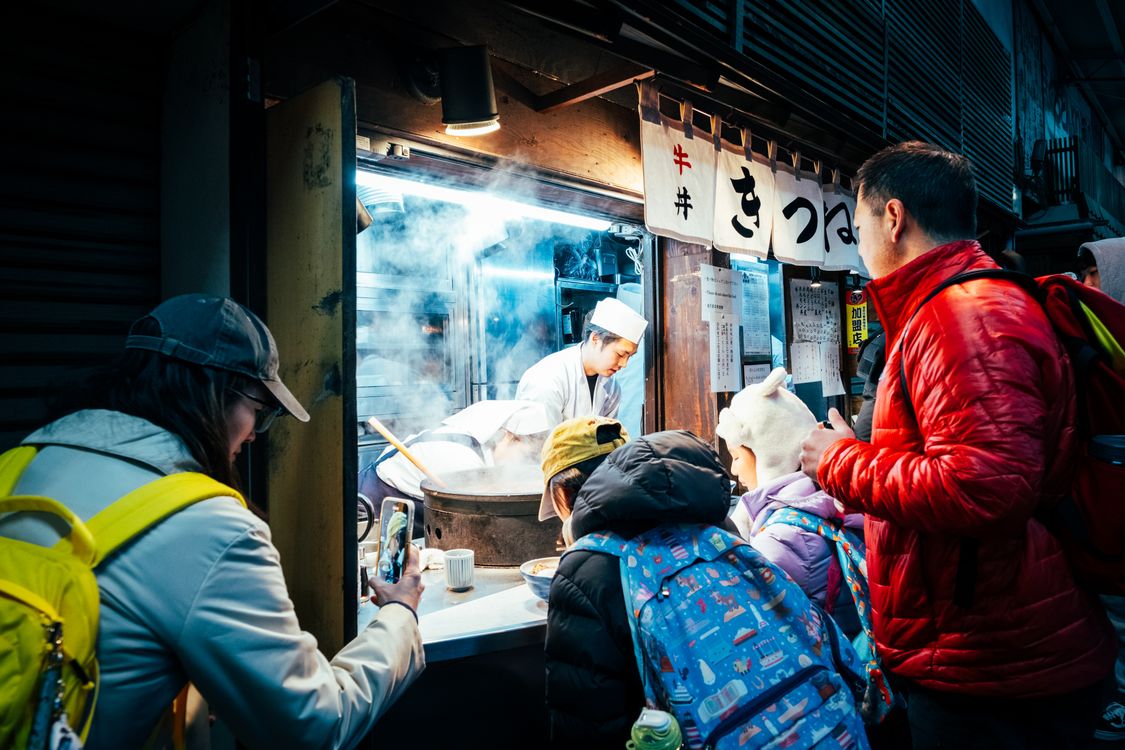
Japan's tourism economy — 36 million foreign visitors in 2024, a record — is the engine behind minpaku demand. Neighbourhoods like this attract the guests that make minpaku investment viable. Photo: Pexels
The Two-Track System: Standard Minpaku vs. Special Zone Minpaku
Japan operates two parallel short-term rental frameworks. Understanding which applies to a given property is the first question any akiya investor must answer.
Standard Minpaku (住宅宿泊事業, Jūtaku Shukuhaku Jigyō)
This is the national framework described above: 180-day cap, prefectural registration, management company required for non-residents. It applies everywhere in Japan by default.
Special Zone Minpaku (特区民泊, Tokku Minpaku)
Under Japan's National Strategic Special Zone Act (国家戦略特別区域法, Kokka Senryaku Tokubetsu Kuiki Hō), designated municipalities can operate under relaxed rules that include year-round operation with no 180-day cap. The minimum stay requirement is 2 nights (originally 6 nights when the system launched). Approved zones have included Tokyo (Ota Ward), Osaka, Kitakyushu, Sendai, and parts of Niigata.
In practice, Osaka dominated this system almost entirely. As of July 2025, Osaka City accounted for approximately 90% of all tokku minpaku registrations nationwide — roughly 6,696 active special zone properties, driven by strong tourism demand and Expo 2025 Osaka accommodation needs.
Then, effective May 29, 2026, Osaka City suspended all new tokku minpaku applications. Twenty-nine of Osaka's 34 municipalities followed suit shortly after. The suspension followed years of resident complaints about noise, waste management, and safety, and coincides with the conclusion of Expo 2025. Existing licensed operations may continue, but Osaka's special zone is now effectively closed to new investors.
This is the most significant structural change to Japan's short-term rental market since the 2018 law itself. Osaka was the flagship investment destination for tokku minpaku. Its closure marks the end of the easy-entry phase for year-round minpaku investment in Japan.
If you are evaluating an Osaka property for minpaku investment in 2026, verify independently whether any tokku licence is attached to the specific property. A tokku licence that predates May 2026 carries real market value. An unlicensed Osaka property cannot be converted to special zone minpaku today.
How the Minpaku Law Reshaped Akiya Demand
Before 2018, the akiya buyer pool was relatively narrow: Japanese families handling inherited properties, preservation organisations, lifestyle migrants seeking affordable rural properties, and a small number of foreigners who had learned about akiya banks. Investment demand was minimal — there was no legal framework for short-term rental income, and Japan's long-term rental yields are modest (typically 4–6% gross in regional areas).
The minpaku law introduced a new buyer profile: the renovation investor, primarily targeting properties in tourist-adjacent locations and banking on short-term rental income to justify renovation costs and generate returns. By 2023, the effects were visible in price data. Akiya properties in high-demand tourist areas — specific prefectures in Kyushu, coastal Kanagawa, the Noto Peninsula before the 2024 earthquake, historic Kyoto districts — started to command premiums that were directly attributable to their minpaku viability.
The price impact is location-specific and can be significant. A property that might otherwise list for ¥1–2 million in a tourist-accessible town has in some cases traded at ¥3–5 million once assessed as a viable minpaku conversion. The spread is driven by the underlying income potential: a well-located akiya at 65% occupancy over 180 days at ¥15,000 per night generates approximately ¥1.75 million gross annually. After management fees (25–30%) and operating costs, the property can still produce ¥800,000–¥1 million net per year — a meaningful return on a ¥3–4 million all-in investment.
The flip side: properties in heavily restricted zones show no minpaku premium. Kyoto, for example, restricts most residential areas to approximately 60 operating days per year (between January 15 noon and March 16 noon in most residential zones). At 60 days, the income case collapses. The same property that earns ¥1.75 million gross over 180 days earns roughly ¥580,000 over 60 — barely covering operating costs, let alone generating a return on renovation investment.
The market has priced this difference in. Buyers who do not verify municipal rules before making offers are the ones left holding properties with the wrong zone designation.

Traditional tatami rooms and shoji screens are exactly what international guests seek out in Japan minpaku properties — the very qualities that once made akiya hard to sell are now premium features. Photo: Pexels
The 2025–2026 Regulatory Wave
Several changes landed between April 2025 and May 2026 that collectively tightened the economics of minpaku investment. Understanding each one is essential for buyers evaluating properties today.
New Building Standard Law Rules (April 2025)
Effective April 2025, Japan's Building Standard Law was amended to require building permits for all two-storey wooden structures regardless of floor area. Previously, many akiya fell below the threshold requiring formal permits, allowing renovation work to proceed without the full permitting process. The new rules mean that minpaku renovations — which typically involve structural work, fire safety installations, and layout changes — now trigger the full building permit process in most cases.
In practical terms, this adds time (typically 2–4 months for permit approval) and cost (permit fees plus mandatory structural review) to any renovation project. Buyers who budgeted only for physical renovation work should revise estimates upward. The change also puts a compliance spotlight on any existing renovation work done without permits, which is common in older akiya.
Tourist Tax Expansion (April 2026)
From April 1, 2026, new accommodation taxes came into effect across multiple prefectures and municipalities. Tokyo, which had already implemented an accommodation tax, revised its rates upward — with a projected ¥19 billion in annual accommodation tax revenue at 3%. Other cities and prefectures rolled out their own levies in the same period.
These taxes are typically collected from guests, not the operator, which means they affect pricing power rather than direct operator margins. But in competitive markets, operators who raise displayed prices to account for taxes may see reduced occupancy. At sustained high occupancy, the tax impact is manageable. At marginal occupancy — already a risk with the 180-day cap — it is another compression on returns.
Osaka Special Zone Suspension (May 2026)
Covered above, but worth restating in the context of the broader regulatory direction: Osaka's suspension is not an isolated policy decision. It reflects a national pattern of municipalities asserting tighter control over the short-term rental sector as tourism infrastructure strain becomes a political issue. Japan saw a record 36 million foreign visitors in 2024. That volume generates accommodation pressure but also generates resident complaints at a scale that drives local political action.
Strengthened JTA Enforcement
Japan Tourism Agency (観光庁, Kankōchō) made approximately 250 takedown requests to Airbnb and other booking platforms in fiscal 2024 targeting unlicensed minpaku listings. In January 2026, JTA announced plans to revise guidelines to give local governments stronger tools to act against non-compliant operators. For licensed operators, this is broadly positive — it reduces competition from unlicensed rooms. For anyone considering operating without registration, the risk profile in 2026 is materially higher than it was in 2020.
Where Minpaku Makes Economic Sense in 2026
Despite the tightening regulatory environment, minpaku remains viable in a meaningful number of locations. The key is matching property location to a regulatory environment that supports the economics.
High-potential areas for 2026
- Tokyo (specific wards). Tokyo's 23 wards account for over 40% of all registered minpaku nationwide — around 14,000 properties. Certain wards (Taitō, Sumida, Shinjuku) are strong performers given their proximity to major attractions. The 180-day cap applies, but at ¥12,000–¥20,000 nightly rates and 65–75% occupancy, the maths work even within the cap.
- Kyushu tourist corridors. Fukuoka, Nagasaki, Oita (Beppu), and Kagoshima benefit from strong domestic tourism and growing inbound flows from South Korea and Southeast Asia. Municipal rules are generally more permissive than Kyoto or Osaka, and property acquisition costs are lower.
- Hakone and Izu Peninsula (Kanagawa/Shizuoka). High occupancy rates from Tokyo day-trip and overnight visitors, consistent year-round demand from both domestic and international tourists, and akiya supply concentrated in areas that previously depended on ryokan trade that has declined.
- Rural akiya in high-traffic prefectures. Properties within 30–45 minutes of major tourist destinations can capture overflow demand from popular areas. Prefectures like Nara, Hyogo (outside Kobe), and parts of Wakayama see strong weekend demand from Osaka/Kyoto visitors who prefer the quieter atmosphere.
The income reality check
Gross revenue figures circulate widely in minpaku investment discussions. Net figures are less prominently advertised. Here is a realistic breakdown for a well-located akiya in a permissive zone:
- Gross revenue (180 days × 65% occupancy × ¥12,000/night): ¥1,404,000
- Management company fee (28%): −¥393,120
- Cleaning fees and consumables: −¥180,000
- Utilities (electricity, water, internet): −¥120,000
- Platform commission (Airbnb: ~3%): −¥42,120
- Insurance and local tax: −¥60,000
- Net annual income: approximately ¥608,760
Against a renovation-ready akiya that cost ¥3 million to purchase and ¥2 million to renovate to minpaku compliance, that represents a 12.2% annual yield — competitive with any investment property in Japan, and substantially better than the 4–5% typical of long-term residential rental in regional areas.
The same property with a 60-day cap (Kyoto residential zone) generates roughly ¥200,000 net — a 4% yield that barely justifies the renovation investment. This is the critical calculation that separates viable properties from costly mistakes.
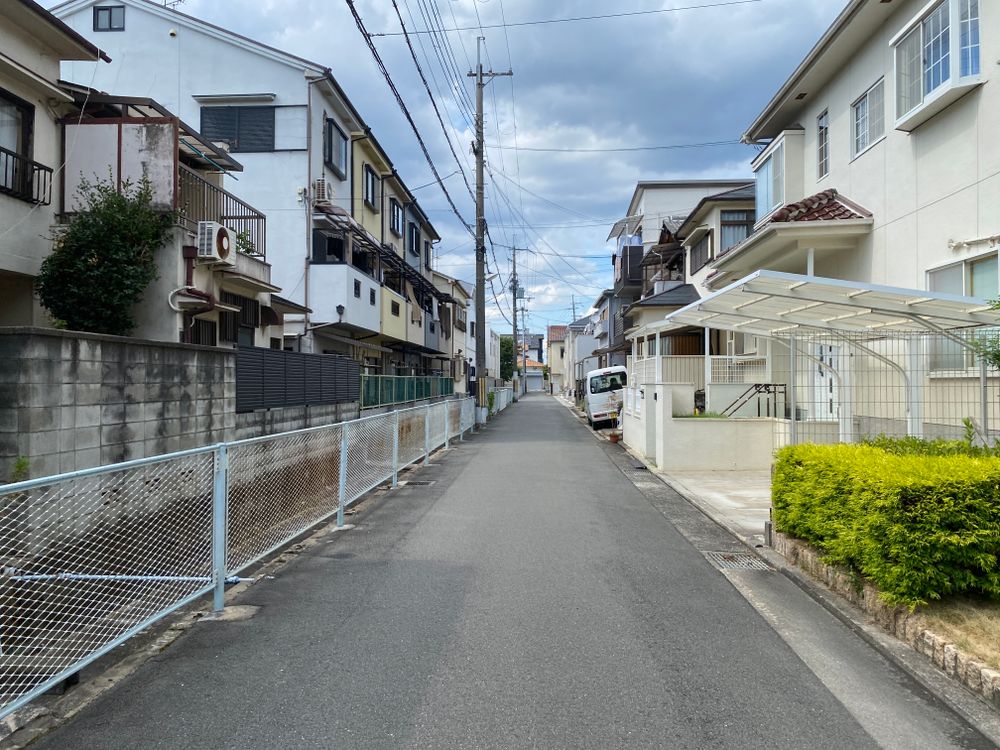
The character of the neighbourhood matters as much as the property itself — guests booking minpaku accommodation are seeking something architecturally and culturally specific that hotels cannot replicate. Photo: Pexels
The Registration Process for Foreign Buyers
Foreign ownership of minpaku property is fully legal in Japan. Non-residents face no ownership ban and no category of restricted property type specific to minpaku. The practical requirements are manageable with the right professional support.
Step 1: Location first, property second
Before viewing properties, identify the municipality and check its specific minpaku rules. This means consulting the local government website, the Japan Tourism Agency's minpaku zone database, or a licensed agent who specialises in short-term rental investment. The rules differ not just between prefectures but between adjacent wards in the same city.
Step 2: Fire safety assessment
Submit the property blueprints to the local fire department for a minpaku fire safety assessment. This determines exactly what fire equipment, emergency lighting, and evacuation provision the property requires. For owner-absent operations, standards match those of licensed hotels. The assessment takes 2–4 weeks. Do this before committing to a purchase price — the compliance cost can vary by hundreds of thousands of yen depending on the property's current condition and classification.
Step 3: Building permit review
As of April 2025, any structural renovation work requires a formal building permit. Have the property assessed by a certified scrivener (司法書士, shihō shoshi) or architect before finalising the purchase to understand what permits will be required and what existing work may have been done without permits.
Step 4: Minpaku System registration
Register as a residential lodging operator via the national Minpaku System portal. This requires: operator identification, property blueprints, fire safety compliance certificate, management company details (mandatory for non-residents), and evidence of legal right to use the property (ownership documentation).
Step 5: Hire a licensed management company
Non-resident owners must hire a registered residential lodging management company (住宅宿泊管理業者). These firms handle guest check-in/check-out, cleaning between stays, complaint management, and the bi-monthly reporting obligations. Management fees typically run 25–35% of gross revenue. Budget for this from day one — it is not optional for a foreign owner operating remotely.
Step 6: Bi-monthly reporting
File reports by the 15th of February, April, June, August, October, and December. Your management company can handle this, but you remain legally responsible. Missing reports or filing inaccurate data is an enforcement target under the strengthened 2026 JTA guidelines.
Tax Reality for Non-Resident Owners
Tax planning for a Japanese minpaku property is an area where professional advice is essential. The headline figure for foreign owners is a 20.42% withholding tax on Japan-source income (20% national income tax plus 2.1% restoration surtax), applied to gross rental revenue with no deduction for operating expenses.
The effective rate is higher than it first appears because it applies to gross income, not net income. At ¥1.4 million gross revenue, the withholding tax is approximately ¥285,000 — regardless of what the management company, utilities, and platform fees cost. The pre-tax net in the example above (¥608,760) becomes approximately ¥323,000 after withholding tax. That yields approximately 6.5% net-after-tax on a ¥5 million total investment — still competitive, but the gross-to-net gap is larger than many buyers expect.
Several important offsets apply:
- Tax treaties. Japan has tax treaties with over 50 countries including the US, UK, Australia, Canada, and most of Europe. Treaty provisions may reduce withholding rates and prevent double taxation. Verify your specific country's treaty terms with a qualified tax advisor before purchase.
- Classification options. If minpaku income is classified as business income rather than passive rental income — which can apply when operating multiple properties or when the management involvement is substantial — different tax treatment may apply. This requires professional structuring and is not guaranteed.
- New reporting obligation (April 2026). Under amendments to Japan's Foreign Exchange and Foreign Trade Act (外国為替及び外国貿易法, Gaikoku Kawase oyobi Gaikoku Bōeki Hō), non-residents acquiring Japanese real estate must report the acquisition. This is a notification requirement, not a restriction, but non-compliance carries penalties. Engage a Japanese lawyer or notary to handle this step at the time of purchase.
Work with a Japanese tax accountant (税理士, zeirishi) who has experience with non-resident property owners. The combination of withholding tax, property tax (固定資産税, kotei shisan zei), and potentially inheritance tax considerations (Japan's inheritance tax applies to assets located in Japan regardless of heir nationality) makes professional tax planning a meaningful line item, not an optional extra.
Renovation Compliance: What It Costs in 2026
The compliance component of any akiya-to-minpaku renovation budget typically runs ¥500,000–¥2,000,000 above the physical renovation cost, depending on the property's current condition and the local fire authority's requirements.
Fire safety compliance for owner-absent operations (the relevant standard for most foreign buyers) requires at minimum: smoke detectors in all rooms and corridors, a fire extinguisher on each floor, emergency lighting, emergency exit signage, and a documented evacuation plan. Properties over 50 square metres of accommodation space face more stringent requirements. Kyoto adds mandatory sprinklers for properties in most tourist-accessible zones.
The April 2025 Building Standard Law change means renovation work that previously skipped the formal permit process now requires it. Permitting adds 2–4 months and typically ¥150,000–¥300,000 in fees and architect/scrivener costs. More significantly, it triggers a structural review that may expose additional compliance requirements. For older akiya built before Japan's 1981 major earthquake resistance standards revision, this can mean mandatory seismic retrofitting — a substantial cost that materially changes the renovation budget.
Budget total renovation-to-registration costs at ¥2.5–¥5 million for a typical akiya in fair condition. Properties requiring seismic work should be assessed independently before committing to a purchase price. Working with a licensed agent who has handled minpaku conversions — rather than a generalist real estate broker — will surface these issues before contracts are signed rather than after.
Making the Decision in 2026
The minpaku market in 2026 is more regulated, more taxed, and more competitively mature than it was when the 2018 law was new. The easy-entry phase — particularly in Osaka's special zone — is over. But the underlying opportunity is real for buyers who approach it with accurate data.
The checklist that separates viable investments from expensive mistakes:
- Verify the municipal operating day limit before viewing the property. Not after. A property in Kyoto's residential zone with a 60-day cap is a different investment from an identical property in a Kyushu coastal town with the national 180-day limit.
- Model the post-management, post-tax net yield, not the gross. The 40–60% operating cost ratio and the 20.42% withholding tax together consume most of the apparent income margin. Net yield should exceed 8% to justify the renovation investment and management overhead.
- Get a fire safety assessment before finalising the purchase price. Compliance costs are property-specific and can vary by ¥1 million or more depending on size and condition.
- Check the 2025 building permit implications for any renovation work planned. If structural changes are needed, budget for the full permit process.
- Factor in the April 2026 property reporting requirement. This is administrative, but missing it has real penalties.
For buyers who want to navigate the legal and compliance requirements without building this expertise from scratch, working with a licensed brokerage that specialises in foreign buyer transactions is a meaningful time and cost investment. Teritoru, our licensed partner agent, has specific expertise in minpaku compliance and short-term rental setup for foreign buyers — including fire safety coordination, management company selection, and the registration process. Book an initial consultation before committing to a property to verify that the specific property and zone combination you are considering is viable.
The minpaku law gave Japan's akiya market a new investment thesis. The 2025–2026 regulatory wave has pruned the easiest entry points. What remains is a market where careful, location-specific analysis produces genuine returns — and where buyers who skip that analysis are exposed to the full cost of a compliance problem in a foreign jurisdiction.
Sources
- Solid Real Estate Japan — Minpaku in 2025: A Guide for Investors
- Japan Times — Osaka proposes to halt applications for minpaku private lodgings (2025)
- Japan Times — Japan to work on addressing problematic minpaku lodgings (2026)
- Tokyo Advisory — Starting a Short-Term Rental (Minpaku) Business in Japan: A Tax Guide for Foreigners
- Heritage Homes Japan — How the 2025 Building Code Changes Affect Renovations
- AIAIG — Special Zone Minpaku: New Applications Suspended Q&A (2026)
- Lodge Compliance — Japan Short-Term Rental Regulations 2025
- E-Housing Japan — The Truth About Making Money on Airbnb in Japan

