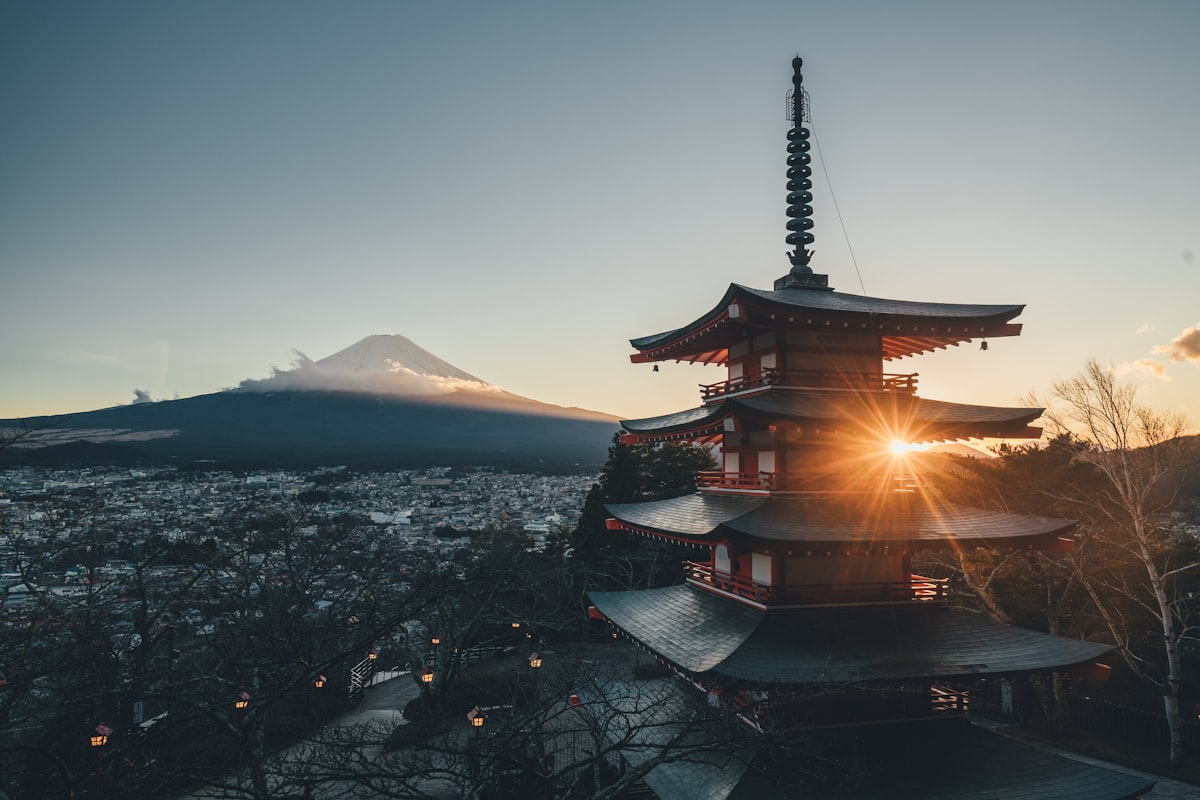
Every few years, a new Asian country gets hyped as the next great property market for foreign buyers. Bali villas. Bangkok condos. Kuala Lumpur high-rises. The sales pitches are slick, the Instagram posts aspirational. But behind the brochures, foreign ownership laws across Asia are a patchwork of restrictions, workarounds, and legal grey areas. Japan is the exception. It offers something almost no other country in the region does: full, unrestricted freehold ownership for foreigners, with the same property rights as a Japanese citizen. No nominee structures, no 50-year caps, no minimum purchase thresholds. Here is how every major market actually compares.
The Ownership Test: Who Actually Lets You Own Land?
The single most important question when buying property abroad is deceptively simple: can you actually own it? Not lease it, not hold it through a local nominee, not structure it via a company — but hold freehold title in your own name. In Asia, the answer is usually no.
Japan stands alone among Asian property markets in offering completely unrestricted foreign ownership. No visa required. No residency requirement. No minimum investment. A tourist can fly into Narita, sign the paperwork, and leave as a freehold landowner. The title — called shoyūken (所有権 (shoyūken)) — is identical to what a Japanese citizen holds. It never expires, can be freely sold or inherited, and comes with the same legal protections under Japanese property law.
Across the rest of Asia, the picture is dramatically different:
| Country | Can foreigners own land? | Maximum ownership term | Minimum price |
|---|---|---|---|
| Japan | Yes — full freehold | Perpetual | None |
| Thailand | No — condos only (49% foreign quota) | Freehold condo / 30-year land lease | None (but land requires Thai company) |
| Vietnam | No — apartments/houses only | 50 years (renewable once) | None |
| Indonesia (Bali) | No — lease or right-of-use only | 25–80 years (lease dependent) | None (but visa required for right-of-use) |
| Malaysia | Yes — with restrictions | Freehold possible | ~$145,000–$250,000 USD (state dependent) |
| Cambodia | No — condos only (above ground floor) | Freehold condo / land via nominee | None |
| China | No — 70-year residential lease | 70 years | Residency + work required |
| Philippines | No — condos only (40% foreign cap) | Freehold condo / 50-year land lease | None |
| South Korea | Yes — with government approval | Perpetual (after approval) | None |
Of nine major Asian markets, only Japan lets any foreigner — regardless of nationality, visa status, or residency — buy land and buildings with a perpetual freehold title and zero minimum price. Malaysia comes close but imposes price floors that start at roughly $145,000 USD, which eliminates the budget end of the market entirely. South Korea requires government notification and sometimes approval, adding bureaucratic friction.
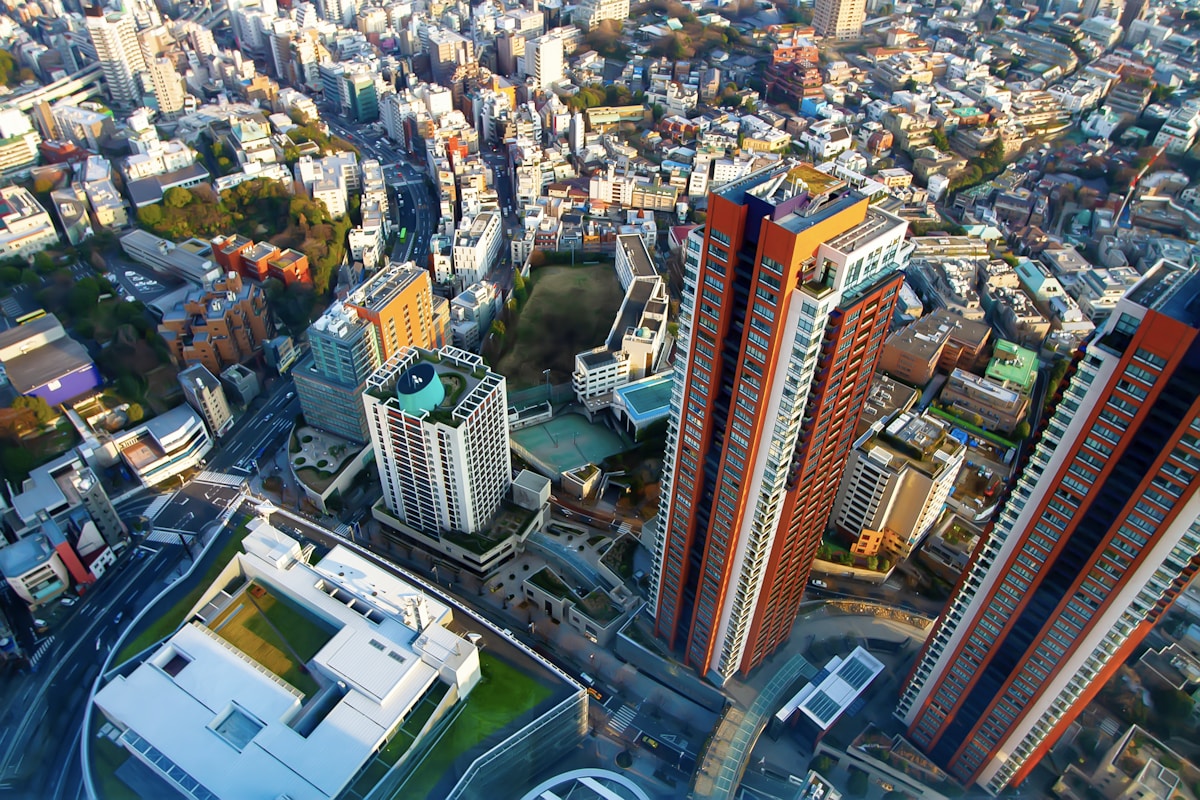
Tokyo's modern skyline — one of the world's most developed property markets, fully open to foreign buyers. Photo: Matteo Borri / Unsplash
The Grey-Area Problem: Nominees, Leases, and Legal Risk
In countries where foreigners cannot own land, workarounds have emerged — and every one of them carries risk that does not exist in Japan.
Thailand's company structure is the most common. To buy a villa or house, foreigners typically set up a Thai limited company with local shareholders holding 51% of voting shares. This is technically legal, but the Thai government periodically cracks down on nominee arrangements, and the foreign buyer has no direct title to the land. If the relationship with local shareholders deteriorates, or if regulations tighten, the investment is exposed.
Indonesia's nominee system in Bali is even more precarious. Roughly 90% of foreign property buyers in Bali use a Khmer-style nominee structure where an Indonesian citizen holds the freehold title. The foreigner's interest is protected only by private contracts — mortgages, loans, power of attorney — layered on top. It works until it does not. Indonesian courts have inconsistently enforced these arrangements, and the buyer has no direct ownership claim under Indonesian law.
Vietnam's 50-year cap means every property purchase has a built-in expiration date. The ownership term can be renewed once, but renewal is not guaranteed and depends on government policy at the time. For anyone thinking long-term — retirement, family legacy, generational wealth — this is a structural limitation.
In Japan, none of these structures are necessary. The title is in your name, registered with the Legal Affairs Bureau, and protected by the same property laws that govern every Japanese citizen's holdings. The transaction process is handled by a judicial scrivener (shiho shoshi), a licensed legal professional who verifies the title, handles registration, and ensures the transfer is clean.
Price: Where Japan Defies Expectations
The assumption that Japan is expensive is outdated. Outside of central Tokyo, Osaka, and a handful of resort areas, Japanese property is strikingly affordable — often cheaper than equivalent markets in Thailand or Bali.
Japan has approximately 9 million vacant homes (akiya), a number projected to reach 10 million by 2033. Municipal governments actively want these properties occupied and in many cases offer subsidies, renovation grants, and reduced fees to attract buyers. Some akiya are listed for under ¥1 million ($7,000 USD). Properties in the ¥3–10 million range ($20,000–$67,000 USD) — the most popular bracket among foreign buyers — typically include a house on its own plot of land, something impossible at that price point in Bangkok, Kuala Lumpur, or any Indonesian market.
Compare that to Southeast Asia:
- Bangkok condo (foreigner-eligible): a decent unit in a central location starts at ¥7–15 million ($47,000–$100,000 USD) — and you own an apartment, not land
- Bali leasehold villa: ¥10–30 million ($67,000–$200,000 USD) for a 25-year lease that depreciates to zero
- Kuala Lumpur condo (above minimum threshold): ¥22+ million ($145,000+ USD) — the legal floor for foreign buyers, regardless of the property's actual value
In Japan, ¥5 million ($33,000 USD) can buy a 4-bedroom house with a garden in a prefecture like Chiba, Niigata, or Nagano — freehold, permanent, inheritable.
Modern residential architecture in Osaka — foreign buyers can own freehold with no restrictions. Photo: Will Xiang / Unsplash
Infrastructure and Quality of Life: The G7 Advantage
Japan is the only G7 nation on this list. That distinction matters in ways that compound over time.
Healthcare: Japan's universal health insurance system is ranked among the world's best. Residents (including long-term visa holders) pay 20–30% of medical costs, with the government covering the rest. Many rural areas where akiya are concentrated still have local clinics, and regional hospitals are typically within 30–60 minutes by car. Thailand and Malaysia have decent private healthcare, but public coverage for foreigners is limited or nonexistent.
Safety: Japan's crime rate is among the lowest globally. The country consistently ranks in the top 10 on the Global Peace Index. Property crime is rare enough that many rural residents still do not lock their doors. This is a material consideration for anyone buying a second home or investment property that will sit unoccupied for parts of the year.
Transport: The Shinkansen network connects major cities at 300 km/h. Regional rail, buses, and domestic flights are affordable and punctual. Even rural akiya areas tend to have functional public transport — a stark contrast to comparable-price properties in Indonesia or Vietnam, where car ownership is effectively mandatory.
Rule of law: Japan's legal system is transparent, contracts are enforceable, and property disputes are resolved through courts, not connections. Title fraud is exceptionally rare. The property registration system, maintained by the Ministry of Justice, provides a public record of ownership history. This level of legal certainty simply does not exist in Cambodia, Vietnam, or Indonesia.
The Yen Factor: A Currency Tailwind
The Japanese yen has weakened significantly against the US dollar, euro, and most major currencies since 2022. For foreign buyers earning in stronger currencies, this represents a substantial discount. A property that cost $100,000 USD in 2020 would cost roughly $65,000–$70,000 at recent exchange rates, assuming the yen price stayed flat.
This currency dynamic works in two directions. If the yen recovers — and many economists expect some reversion to pre-2022 levels — property purchased now in yen would appreciate in foreign-currency terms purely from the exchange rate shift, independent of any change in the property's yen value. It is a tailwind that does not exist in USD-pegged or USD-correlated markets like Cambodia (which uses the dollar extensively) or Malaysia (which has tracked dollar movements more closely).
Where Japan Is Not the Best Fit
Honesty matters more than salesmanship. Japan is not the right market for everyone.
Rental yield chasers: If the goal is purely maximising rental returns, Bangkok, Kuala Lumpur, and Ho Chi Minh City can offer higher gross yields (5–8% versus Japan's typical 3–5% outside Tokyo). The trade-off is ownership risk, as outlined above.
Warm-weather retirees: Japan has four distinct seasons, and much of the country experiences cold, snowy winters. Buyers looking for year-round tropical warmth will find it in Thailand, Bali, or the Philippines — but not in Niigata or Hokkaido.
Language-dependent buyers: While English proficiency in Japan has improved, property transactions are conducted in Japanese. Buyers need either language skills, a bilingual agent, or a platform that provides English-language access to Japanese listings. (That is, incidentally, exactly what Akiya Japan was built to solve.)
Short-term flippers: Japan's transaction costs (roughly 6–8% between taxes, registration, and agent fees) and the generally flat-to-slow appreciation outside major cities make it a poor market for quick flips. It rewards patient buyers who plan to hold.
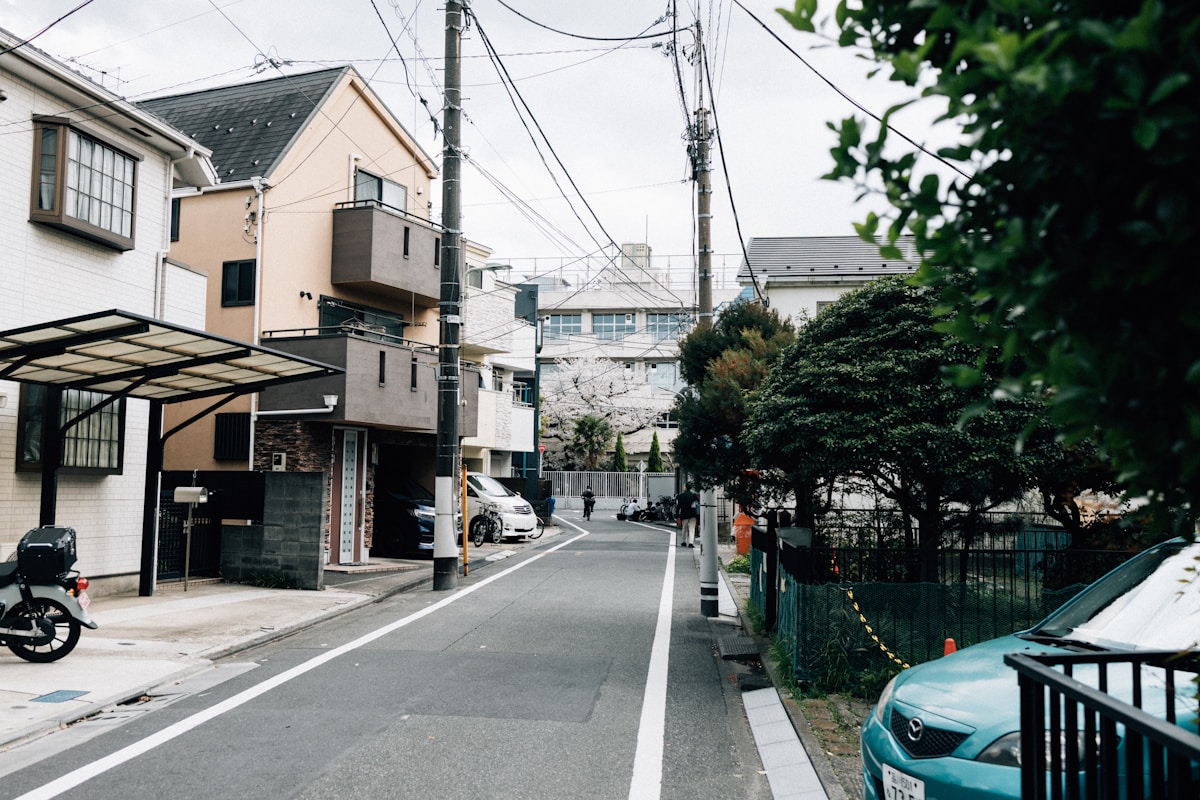
A quiet residential street in Japan — neighborhoods where foreigners can buy property with the same rights as citizens. Photo: Tsuyoshi Kozu / Unsplash
The Bottom Line
Across Asia, Japan offers the strongest combination of legal security, ownership rights, affordability, and quality of life for foreign property buyers. It is the only major market where a foreigner can own freehold land and buildings with zero restrictions, zero minimum price, and the full protection of a G7 legal system.
The akiya phenomenon — millions of vacant homes at prices that would not buy a parking space in most capital cities — adds an affordability dimension that even Malaysia, with its minimum price thresholds, cannot match. Factor in the weak yen, world-class infrastructure, and one of the safest societies on earth, and the case is difficult to argue against.
Other Asian markets offer sun, yield, or lifestyle appeal. Japan offers something harder to find: certainty.