
Kanazawa's World-Class Art Museum, Kenroku-en Garden, and the Noto Peninsula's Satoyama Coast
Living in Ishikawa
A prefecture anchored by Kanazawa — home to Japan's most visited contemporary art museum, one of Japan's three great gardens, and a functioning geisha district that has operated continuously since the Edo period — plus the rugged Noto Peninsula, Wajima lacquerware, Kaga Onsen, and the finest snow crab in Japan.
Why People Choose Ishikawa
Kanazawa spent the Edo period under the Maeda clan — the largest domain outside the Tokugawa shogunate itself, with a budget that funded arts, crafts, and cultural production at near-Kyoto scale. The result is a city with an unusually intact cultural infrastructure: three functioning geisha districts, Japan's largest concentration of traditional crafts outside Kyoto, a castle park at the city's centre, and Kenroku-en garden developed continuously over two centuries.
This history survived the 20th century because Kanazawa was not a military or industrial target and was not bombed in World War II — a fact that preserved the machiya townhouse fabric, the temple districts, and the merchant and samurai quarters in a way that most Japanese cities of comparable size cannot claim. The 21st Century Museum of Contemporary Art, opened in 2004 in the former city hall site next to Kenroku-en, added a contemporary cultural identity to this historical base — and the circular SANAA building, with its collection of permanent international installations, became immediately the most-visited contemporary art museum in Japan.
For property buyers, Kanazawa offers the cultural density and food quality of a major historical city at Hokuriku prices. The Shinkansen connection (since 2015 to Tokyo, extended toward Osaka from 2024) has brought the city closer to both ends of the Tokaido corridor without the price inflation that proximity to Tokyo typically causes. The city remains, for now, distinctively itself.
Kanazawa (population 465,000) is a large, well-serviced city with a strong cultural identity and a genuine local economy independent of Tokyo. The city has Japan's second-highest concentration of traditional crafts after Kyoto, with Kanazawa gold leaf covering 99% of Japan's production. The pace is noticeably slower than Osaka or Tokyo; the local culture values craft, food, and the arts in ways that have built a distinctive urban character. The Noto Peninsula operates at a much quieter tempo — the 2024 earthquake caused significant damage in northern Noto and reconstruction is ongoing, particularly around Wajima and the Suzu area.
Kanazawa is served by the Hokuriku Shinkansen — Tokyo to Kanazawa in 2h30, Kanazawa to Osaka in 2h30 (via Tsuruga from March 2024, with the Osaka extension completing around 2034). Noto Airport has limited domestic services. Within Kanazawa, the Kanazawa Loop Bus and Kanazawa Citibus cover the major tourist and residential areas. A car is essential for living outside Kanazawa and for Noto Peninsula access.
Kanazawa townhouses ¥8M–¥22M. Kaga city area ¥5M–¥15M. Noto Peninsula properties — particularly those in areas affected by the 2024 earthquake — start very low (under ¥2M) with significant renovation requirements. The prefectural government has active relocation incentive programmes for Noto Peninsula rebuild. Wajima properties have special support schemes for craft industry relocation.
The cultural anchor of Hokuriku: 21st Century Museum, Kenroku-en, Higashi Chayagai, Kanazawa Castle, the Nagamachi samurai quarter, gold leaf craft, and a food scene considered among the best in Japan outside Tokyo and Kyoto. All of this within a walkable or loop-bus-accessible area.
Four hot-spring resort towns (Yamanaka, Yamashiro, Katayamazu, Awazu) in the mountains south of Kanazawa, each with distinct onsen styles. The Kutani porcelain production centre is also in this area — workshops producing the vivid five-colour polychrome glazes that have defined Kaga's ceramic identity since 1655.
The home of Wajima-nuri lacquerware — 1,000 years of tradition, the most labour-intensive and expensive lacquerware in Japan. The Wajima morning market has operated for 1,000 years. Severely affected by the January 2024 earthquake; recovery and reconstruction ongoing.
The southern Noto coast — Nanao, Anamizu, Ogi — is more accessible and less earthquake-affected, with traditional satoyama rice terrace landscapes, fishing villages, and the Noto International Art Festival venue sites. The quieter alternative to Kanazawa for buyers seeking coastal rural life.
Where To Start
Four ways to start in Ishikawa
The <a href="https://www.kanazawa21.jp/en/" target="_blank" rel="noopener" class="text-blue-600 dark:text-blue-400 hover:underline">21st Century Museum of Contemporary Art</a> (Kanazawa) is the most visited contemporary art museum in Japan — a circular building with 360-degree access and permanent installations including Leandro Erlich's Swimming Pool (the most photographed contemporary artwork in Japan) and James Turrell's Blue Planet Sky (a square ceiling opening to sky). The permanent collection is free; paid exhibitions rotate. Arrive at opening (10am) to avoid queues at Swimming Pool.
Higashi Chayagai's main street of Edo-period teahouses is best experienced at dusk, when the paper lanterns outside the chaya (teahouses) are lit and the lacquered wooden facades glow. The district's geisha (called geiko in the Kanazawa dialect) are still active — performances at private teahouses require advance booking through operators like <a href="https://www.kanazawa-tourism.com/en/" target="_blank" rel="noopener" class="text-blue-600 dark:text-blue-400 hover:underline">Kanazawa Tourism</a>. The Shima geisha house, a National Cultural Property, is open daily as a museum.
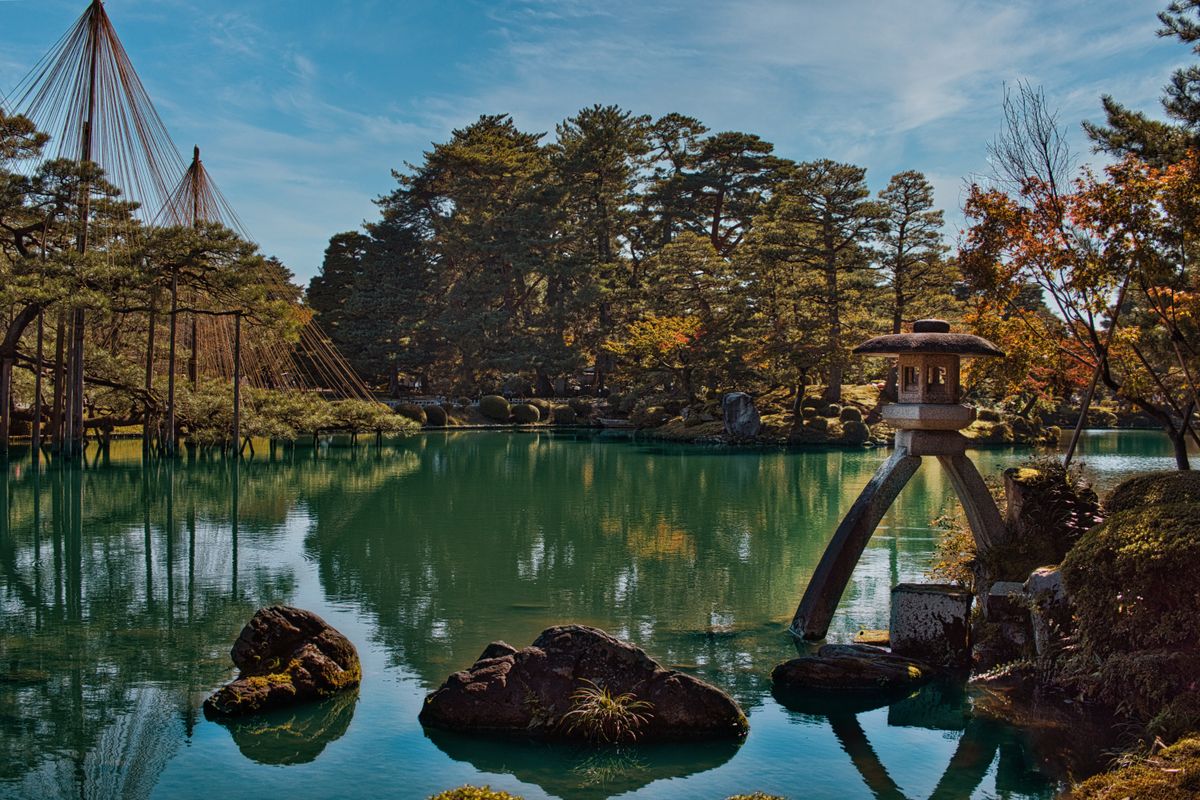
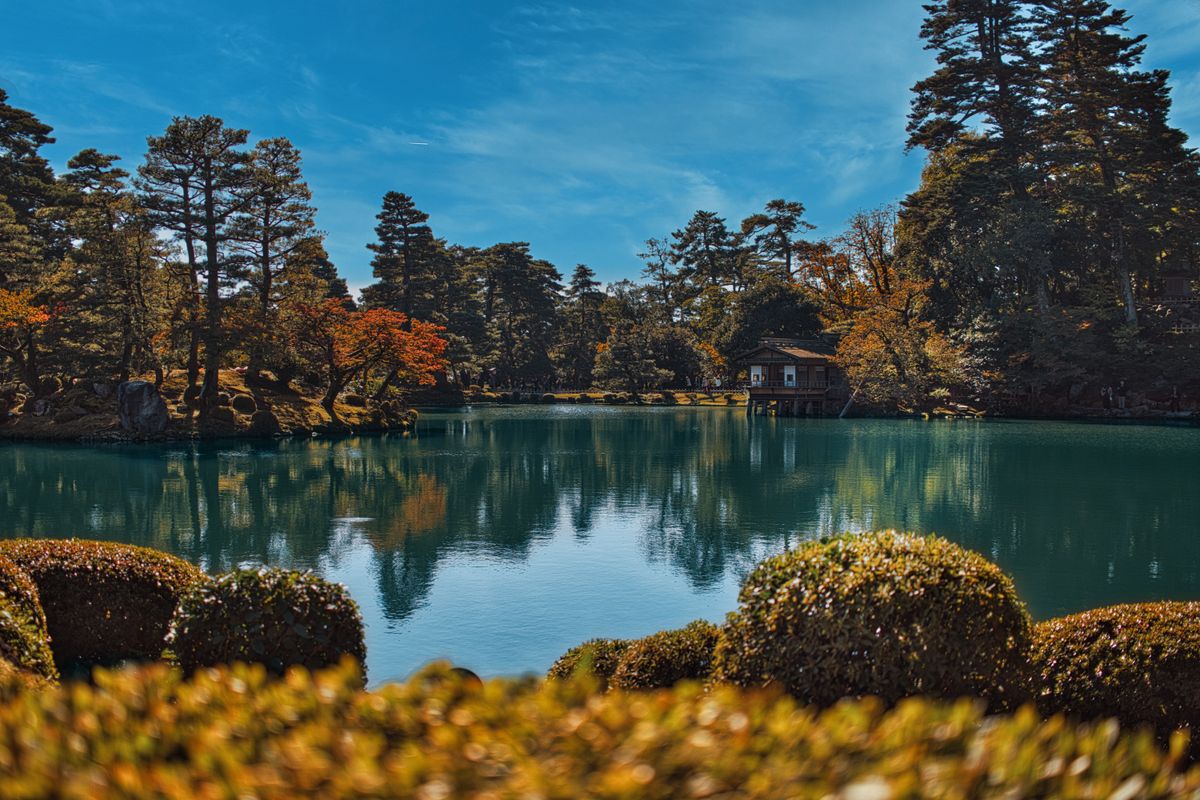
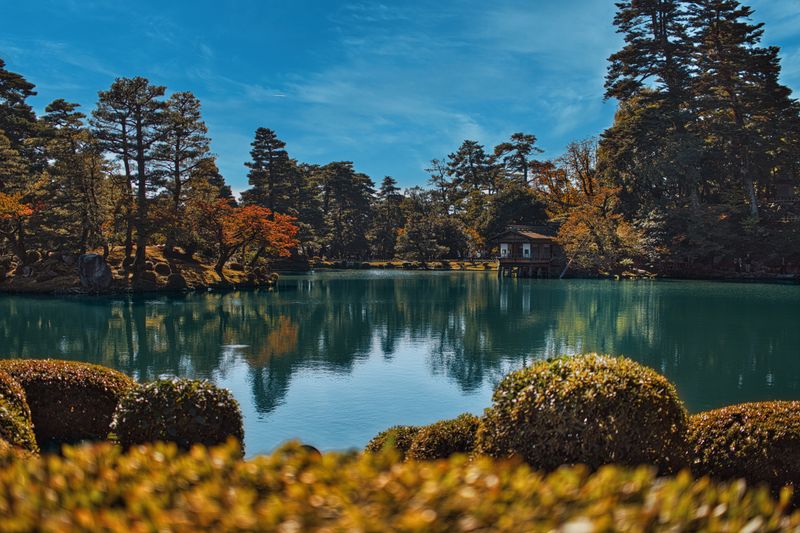
Kenroku-en is one of Japan's three officially great gardens alongside Koraku-en (Okayama) and Kairaku-en (Mito). Its winter display of yukitsuri — conical rope and pole frameworks bound around pine branches to prevent snow damage — has become an internationally recognised image of Japanese garden aesthetics. The frameworks go up in November and come down in March; the garden is dramatically different and equally worth visiting in each season. Free admission on certain designated days; ¥320 otherwise.
The <a href="https://www.hot-ishikawa.jp/noto/" target="_blank" rel="noopener" class="text-blue-600 dark:text-blue-400 hover:underline">Noto Satoyama Satoumi road</a> follows the peninsula's rugged west coast past the Senmaida terrace rice paddies (1,000 small paddies descending to the sea), scattered fishing villages, the Kiriko festival lantern museum in Nanao, and the traditional Noto farmhouses (gasso-zukuri style) that the UNESCO Global Geopark designation protects. The full circuit takes one to two days by car; individual sections are accessible as day drives from Kanazawa.
Daily Life in Kanazawa
Kanazawa is a livable city in ways that tourist coverage of its attractions doesn't fully convey. Population 465,000 with two universities, good hospitals including Kanazawa University Hospital, an active music scene (the Ishikawa Prefectural Music Hall is one of Japan's better concert halls), and a food market — Omicho Ichiba, trading since 1721 — that is a functioning grocery and seafood market rather than a curated tourist attraction.
The city produces 99% of Japan's gold leaf (Kanazawa hakuichi) — the industry employs hundreds of artisans and the craft is visible throughout the city in lacquerware, confectionery, and the gold-leaf-applied walls of shrines, temples, and restaurants. Kanazawa also produces Kenroku stone lanterns, Kaga Yuzen silk dyeing (hand-painted natural-dye silk with outlined designs distinct from Kyoto Yuzen), and Kutani porcelain — the density of active craft production is unusual for a city this size.
The weather is the candid reality: Kanazawa receives Japan's heaviest average annual rainfall among major cities and is known locally as "rain town" (ame no machi). The Noto side receives heavy Sea of Japan winter snowfall. This is not Kyoto's weather. It is also the reason Kenroku-en's winter yukitsuri exists, the sea coast is dramatically photogenic in storms, and the indoors food-and-craft culture of Kanazawa is so deeply developed.
Food and Drink
Kaga kani — Ishikawa's collective designation for snow crab (zuwaigani) caught in the Sea of Japan — is among the most prized winter seafood in Japan. The season opens November 6 and closes in March; the catch is tagged, weighed, and certificated at the port. Snow crab from Kanazawa's Kanaiwa port is sold under the "Kaga kani" label; premium male crabs above a certain weight carry a yellow tag designating them as the highest grade. Zuwaigani is typically served boiled, grilled, as kani shabu (hot pot slices), or as kani miso (crab innards) — a full crab kaiseki course is the canonical Kanazawa winter meal.
Buri (yellowtail) — particularly "Kanazawa buri" caught in the Japan Sea during December — is Ishikawa's primary autumn-to-winter fish. The local custom of serving buri as a new year gift to family has been practised in Kanazawa since the Edo period; the fish gained its ceremonial status from the Maeda clan's practice of sending yellowtail to the Tokugawa shogunate as tribute. Buri daikon (yellowtail simmered with daikon radish) is the canonical preparation.
Kanazawa's food scene is consistently ranked among Japan's best outside Tokyo and Kyoto — a recognition of both the quality of local produce and the concentration of skilled chefs that the cultural city has attracted. Omicho Market, operating since 1721 with 170 stalls, is the source point. The Kazuemachi geisha district has some of the finest traditional kaiseki restaurants; Higashi Chayagai's side streets have a wider range of accessible local restaurants and sake bars.
Culture and Events
21st Century Museum of Contemporary Art Kanazawa is the most visited contemporary art museum in Japan, with over 1.5 million visitors annually. The permanent collection — anchored by Erlich's Swimming Pool, Turrell's Blue Planet Sky, and Florentijn Hofman's large-format works — is supplemented by rotating international exhibitions. The building itself, designed by SANAA (Kazuyo Sejima and Ryue Nishizawa), won the Golden Lion at the 2004 Venice Architecture Biennale; the decision to design it with no privileged entrance, just 360 degrees of glass and four equal doors, was a statement about the relationship between art and city.
Higashi Chayagai's geisha culture has survived in functional form where most Japanese cities' geisha districts have become museums or tourist simulations. Kanazawa's geiko (the local term) still perform at private teahouse dinners for corporate clients and individual visitors who book through operators. The Shima geisha house, a National Cultural Property, is open as a living museum — the original ochaya (teahouse) furnishings, second-floor performance rooms, and Edo-period artifacts intact.
The Wajima Kiriko Festival (August), held on the Noto Peninsula, is one of the most dramatic lantern festivals in Japan — 5m-tall illuminated kiriko lanterns are carried on long poles through the night streets, accompanied by taiko drumming. The kiriko tradition is shared among 30+ festivals across the Noto Peninsula throughout the summer; each festival's lantern designs are specific to the fishing village. The Kiriko Art Museum in Nanao displays the finest examples year-round.
Weekends and the Outdoors
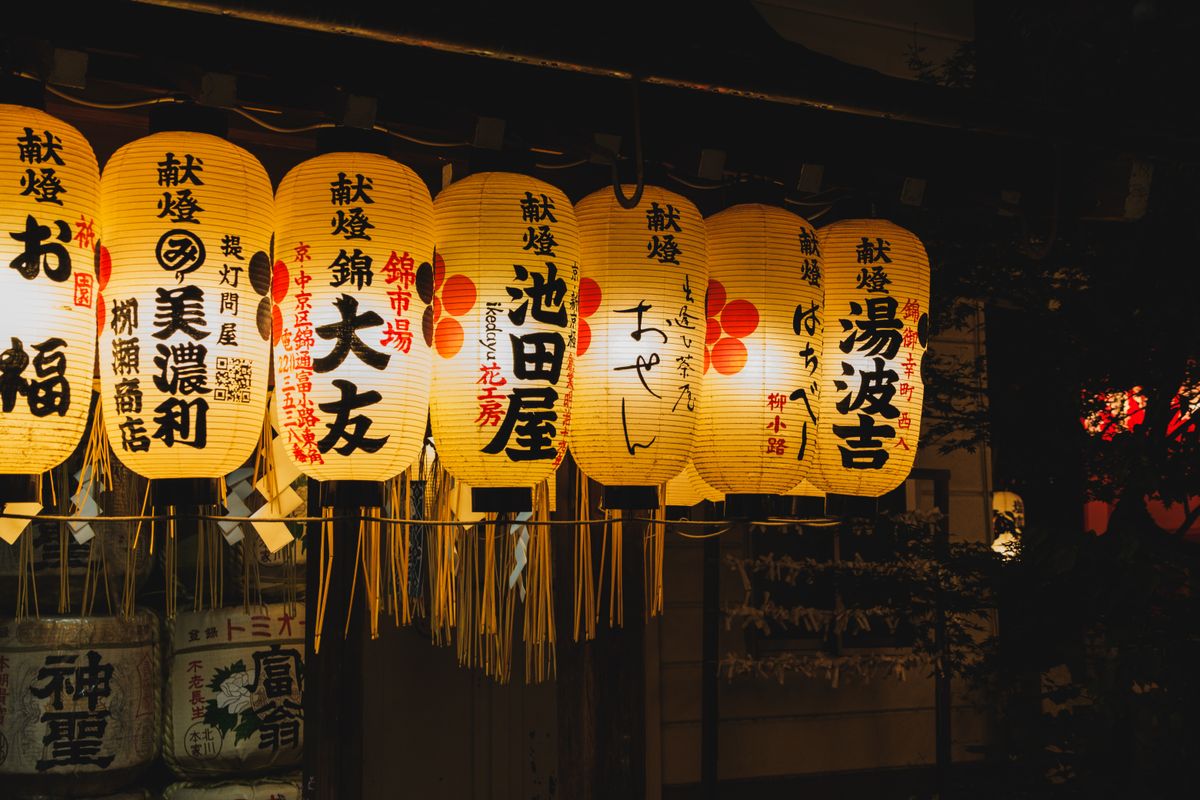
The Noto Peninsula stretches 100km north into the Sea of Japan from Kanazawa — a UNESCO Global Geopark with satoyama and satoumi landscapes representing some of Japan's most intact traditional rural and coastal communities. The Senmaida rice terraces near Shiroyone are among Japan's most photographed landscape images: 1,004 small paddies descending to the sea in steps, solar-illuminated in the evenings from September through mid-November.
The Kaga Onsen resort area — four hot-spring towns (Yamanaka, Yamashiro, Katayamazu, Awazu) in the mountains 40 minutes from Kanazawa — is one of Japan's classic onsen resort districts. Yamanaka Onsen's Kakusenkei Gorge offers a 1.3km riverside walk below cedar and maple forest; the spring waters are sulphur-free and slightly alkaline. Awazu Onsen's Houshi Ryokan has been run continuously by the same family for 46 generations — reputedly the world's oldest hotel in continuous operation.
For skiing, the Hakusan ski area (1.5 hours from Kanazawa) is the closest quality ski terrain to the Hokuriku coast — part of the Hakusan Shirayama Hime Shrine mountain complex with multiple runs above 2,000m. The Hakusan Trekking route in summer accesses the crater rim of Hakusan volcano (2,702m), one of Japan's three sacred mountains alongside Fuji and Tateyama.
Three Days In Ishikawa
A simple first-trip route
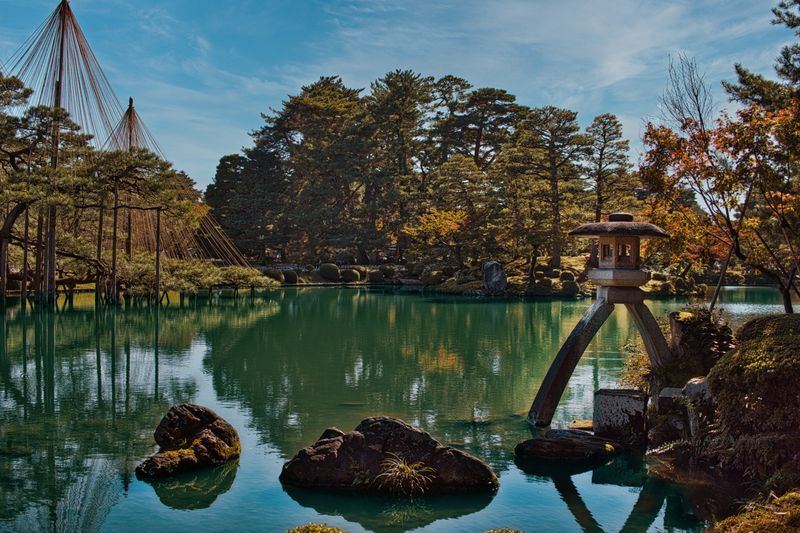
From Kanazawa station, the loop bus reaches the museum in 10 minutes. Morning at the 21st Century Museum — allow 90 minutes minimum for the permanent collection and Swimming Pool queue. Walk to Kenroku-en (5 min) for the garden. Lunch at the Omicho Market (ichiba) — a covered food market operating since 1721 with fresh crab, seafood, and produce stalls. Afternoon: the Nagamachi samurai quarter. Evening: Higashi Chayagai at dusk.
Drive north from Kanazawa on the Noto Satoyama Satoumi road. Stop at Senmaida — the 1,004 small rice paddies descending to the sea, illuminated at dusk by solar lights (September through mid-November and winter months). Continue north along the Okunoto coast past traditional fishing villages and Wajima — the lacquerware capital, where the morning market has operated for 1,000 years. Return via the Noto tollway.
Drive south to Yamanaka Onsen (40 min from Kanazawa) — the most celebrated of the four Kaga hot spring resorts, set in a steep cedar gorge above the Kakusenkei ravine. Morning onsen soak and walk the 1.3km Kakusenkei Gorge promenade. Drive to the Kutani Kosen kiln and pottery centre near Komatsu — the 400-year-old five-colour polychrome glazes of Kutani porcelain are available for direct purchase from working kilns. Return to Kanazawa via Komatsu Airport or direct highway.