Japan has roughly 9 million vacant houses — akiya — scattered across the country. Most are unremarkable postwar constructions: mass-produced, deteriorating, and destined for demolition. But hidden among them is something far more significant: the kominka, a traditional Japanese house built with centuries-old techniques, massive hand-hewn timbers, and the kind of craftsmanship that modern construction simply cannot replicate. When you find one, you are not looking at an abandoned building. You are looking at a cultural treasure.
Understanding the difference between a generic akiya and a genuine kominka can mean the difference between buying a teardown and acquiring a piece of Japan's architectural heritage — often at a fraction of what the materials alone would cost today.
What Exactly Is a Kominka?
The word kominka (古民家 (kominka)) literally translates to "old folk house," but the term carries far more weight than that suggests. According to the Japan Kominka Association, a kominka is specifically a house built before 1950 using dento-koho (伝統工法 (dentō kōhō)) — traditional Japanese building techniques that predate Western-influenced construction methods.
This is the crucial distinction. A house from the 1960s built with concrete block and steel reinforcement is just an old house (furui ie). A kominka is defined by how it was built, not merely when. The defining characteristics include:
- Post-and-beam construction (mokuzou jikugumi kouhou) using massive wooden timbers, often 200+ years old at the time of construction
- Traditional joinery (shiguchi and tsugite) — interlocking wooden joints assembled without nails, fitted together like a three-dimensional puzzle
- Natural materials throughout — wood, earth plaster, paper, thatch or ceramic tile
- Pillars resting on foundation stones (tama-ishi), not bolted to concrete foundations
The Japan Kominka Association has trained over 14,000 certified appraisers who can evaluate whether a building qualifies as an authentic kominka. This matters because the designation affects everything from eligibility for preservation grants to potential resale value.
The Five Types of Kominka You Will Encounter
The broader category of minka (民家 (minka), "people's houses") encompasses several distinct building types, each adapted to its regional environment and the livelihood of its inhabitants.
Nouka (農家) — Farmhouses
The most commonly found kominka type, nouka are the large rural farmhouses that most people picture when they hear the word. They feature heavy thatched or tiled roofs, thick earthen-plastered walls, and spacious interiors that once housed entire extended families and their work activities under one roof. The most famous examples are the gassho-zukuri ("praying hands") farmhouses of Shirakawa-go and Gokayama, with their dramatically steep thatched roofs designed to shed heavy snow.
Machiya (町屋) — Townhouses
Urban wooden townhouses that flourished during the Edo period (1603–1868), machiya are nicknamed unagi no nedoko — "eel's nest" — for their distinctive narrow-and-deep floor plans. A machiya might be just 5 meters wide but extend 30 meters back from the street. The best surviving examples line the historic districts of Kyoto, Kanazawa, and Nara. Kyoto machiya command premium prices today due to their tourism potential and cultural cachet.

A traditional machiya-lined street in Kyoto's historic Kiyomizu district — Photo by Nathan Guan on Unsplash
Nagaya (長屋) — Row Houses
Long, narrow row houses once shared by multiple working-class families, nagaya were the apartment buildings of premodern urban Japan. Few authentic examples survive, making them particularly valuable when found intact.
Gyoka (漁家) — Fishermen's Dwellings
Coastal kominka adapted to life near the sea, with construction details that account for salt air, strong winds, and the practical needs of fishing families. Found along Japan's extensive coastline, particularly in fishing villages of the Inland Sea and Noto Peninsula.
Sanka (山家) — Mountain Dwellings
Built on steep terrain in Japan's mountainous interior, these houses feature adaptations for heavy snowfall, limited flat land, and the timber-rich environment of their settings.

Traditional kominka interior showing exposed post-and-beam construction and wooden lattice windows — Photo by 5010 on Unsplash
Anatomy of a Kominka: The Elements That Define These Houses
Walk into an authentic kominka and you will encounter architectural elements that have no equivalent in Western construction. Understanding these features helps you evaluate what you are looking at — and what it would take to preserve it.
Doma (土間) — The Earthen Floor
The doma is a hard-packed dirt or earthen floor area at the entrance of the house, sitting at ground level rather than raised like the living quarters. It served as a transition zone between outside and inside — a place to remove shoes, store tools, do kitchen work, and shelter from rain. In farmhouses, the doma could be enormous, occupying a third or more of the ground floor. Many renovations convert the doma into a modern kitchen or living space while preserving its distinctive character.
Irori (囲炉裏) — The Sunken Hearth
The symbolic and literal heart of the kominka. The irori is a square pit cut into the raised wooden floor, filled with ash, where a wood or charcoal fire burned continuously. It served as heat source, cooking station, and family gathering place. Critically, kominka had no chimney — smoke drifted upward through gaps in the floorboards and into the roof space, where it preserved the structural timbers by coating them in soot and deterred insects and birds from nesting in the thatch. This is one reason century-old kominka timbers remain remarkably sound.

An authentic irori hearth with cast iron cooking pot and jizaikagi hook — the heart of every kominka — Photo by Kouji Tsuru on Unsplash
Engawa (縁側) — The Veranda
An open, timber-floored corridor running along the outside of the house, the engawa dissolves the boundary between interior and garden. It provides access to multiple rooms and serves as a space for contemplation, socializing, or simply watching the weather change. The engawa is one of the most beloved features of traditional Japanese architecture.
The Roof
Kominka roofs are engineering marvels. Thatched roofs (kayabuki-yane) — the most iconic type — are thick layers of dried miscanthus grass or rice straw laid over massive A-frame timber structures. They provide extraordinary insulation and shed heavy snow, but require rebuilding every 20 to 30 years at a cost that can exceed ¥10 million ($65,000). Tiled roofs (kawara-yane) are more common in urban machiya and southern regions, requiring less maintenance but offering less insulation.
Other Key Features
- Tatami (畳): Woven rush mat flooring in living rooms, still used as a unit of measurement in Japanese real estate
- Fusuma (襖): Opaque sliding doors between rooms that allow the entire floor plan to be reconfigured in minutes
- Shoji (障子): Translucent paper screens that filter daylight into a soft, even glow
- Tokonoma (床の間): A decorative alcove for displaying seasonal flowers, scrolls, or art — the spiritual focal point of the room
- Ranma (欄間): Ornamental transoms above doors, often featuring intricate carvings of nature scenes
When a Kominka Becomes a Cultural Property
Japan operates a two-tier system for protecting historically significant buildings, established under the Cultural Properties Protection Act (文化財保護法), originally enacted in 1950 and significantly amended in 1996.
Tier 1: Designated Important Cultural Properties
The strictest level of protection. Designated properties cannot be altered without government permission, cannot be exported, and the owner must notify the Commissioner for Cultural Affairs at least 30 days before commencing any repairs. In exchange, the government provides substantial financial support for preservation.
Tier 2: Registered Tangible Cultural Properties
Added in 1996 specifically to protect the wave of traditional buildings being lost to modernization. This is the tier most relevant to kominka buyers. As of September 2024, Japan has 14,141 registered structures, and visitors can stay at approximately 100 of them.
To qualify for registration, a building must:
- Be at least 50 years old
- Enhance Japan's historical landscape
- Represent a standard for architectural formation
- Be difficult to reproduce using modern methods
The registration process is initiated by the owner through a notification to the Agency for Cultural Affairs (Bunka-cho), which then conducts an examination. The benefits are significant:
- Tax reductions of up to 50%
- Low-interest loans for maintenance and repairs
- Subsidies for architect consultation
- Official recognition that can increase property value and tourism appeal
The obligations are deliberately lighter than for designated properties. Owners must notify the authorities of changes affecting more than 25% of the visible exterior surface, and must report ownership transfers, loss, or damage. But the system is built on voluntary participation and gentle guidance rather than strict control — designed to encourage preservation without making it burdensome.
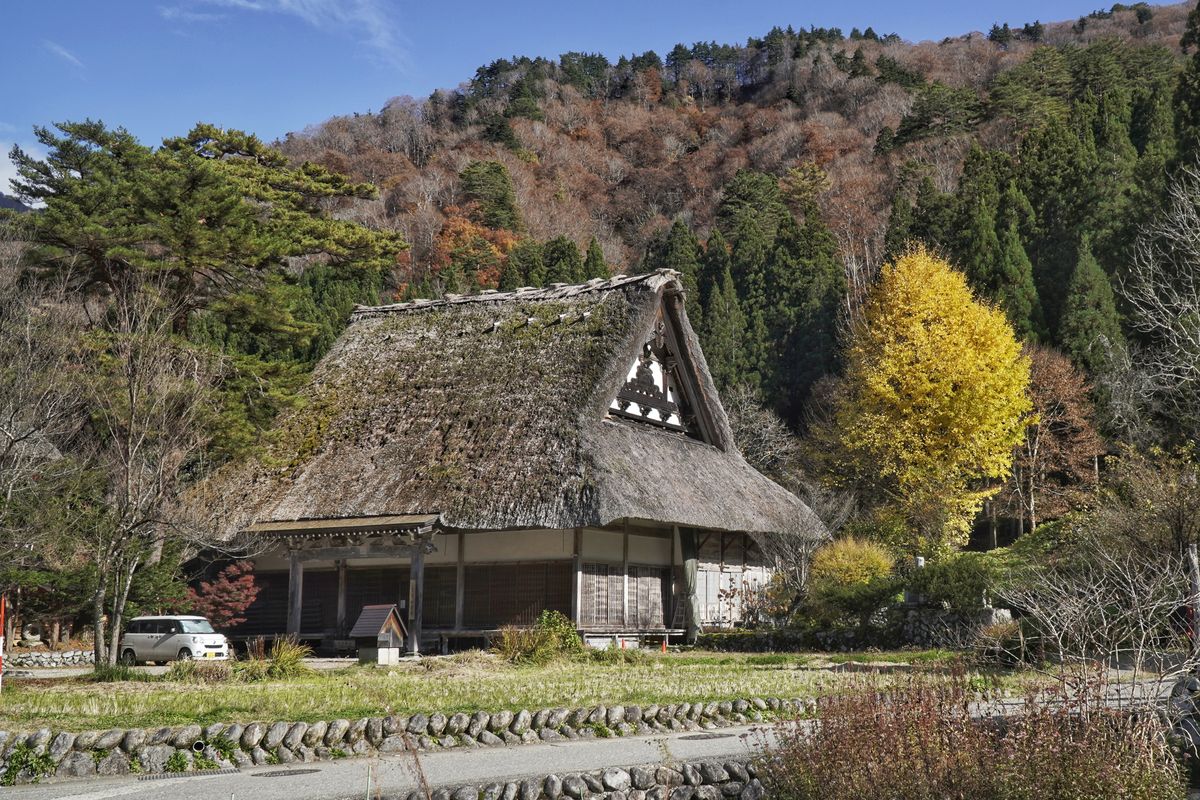
A gassho-style farmhouse surrounded by autumn colors — the kind of kominka that preservation programs aim to protect — Photo by Arn Pau on Pexels
The Economics of Buying a Kominka
Here is where things get practical. A kominka is not a regular akiya purchase, and the financial calculus is fundamentally different.
Purchase Price
Kominka typically sell for ¥4–8 million ($26,000–$52,000), which is higher than the average rural akiya (often ¥500,000–5,000,000 or sometimes free through akiya bank programs). The premium reflects the quality of materials — those massive hand-hewn beams and traditional joinery represent craftsmanship that would cost a fortune to replicate. Some municipalities give away regular akiya for free; kominka almost never qualify for free programs because even in poor condition, the timber alone holds significant value.
Renovation: Where the Real Money Goes
This is the critical number. Kominka renovation costs typically break down as follows:
- Minimum viable renovation: ¥10 million (~$65,000) — roof repair, wall restoration, basic flooring, modern bathroom and kitchen, electrical and plumbing
- Mid-range restoration: ¥10–20 million ($65,000–$130,000) — fully livable condition with updated systems while preserving character
- Comprehensive restoration: ¥30+ million ($195,000+) — museum-quality work using traditional techniques throughout
Per-square-meter, expect roughly ¥275,000 for complete renovation including structural work. A 200 sqm farmhouse at that rate runs ¥55 million — though actual costs vary enormously based on condition and scope.
The Craftspeople Problem
Perhaps the biggest hidden cost is labor. The number of carpenters in Japan has shrunk to less than one-third of the level 40 years ago. Vocational schools that once trained traditional carpenters are disappearing. Younger Japanese avoid the trade due to low wages and physically demanding conditions. Some kominka buyers report 6+ month delays before renovation can begin simply because no qualified carpenters are available. Within 20 years, Japan may not have enough skilled traditional builders to maintain its wooden heritage at all — which makes acting sooner rather than later genuinely urgent.
Transaction Costs
Budget ¥300,000–700,000 for agent commission, legal fees, and registration tax regardless of purchase price. Working with a licensed agent experienced in traditional properties is strongly advisable — the due diligence requirements for kominka are more complex than for standard properties. Teritoru, our licensed partner agent, specializes in helping foreign buyers navigate these transactions and can arrange specialist inspections that evaluate traditional construction integrity rather than just checking boxes on a standard home inspection form.
Total All-In Budget
A kominka purchased at ¥5 million with a mid-range renovation can total ¥15–25 million ($100,000–$165,000). For context, that is still significantly less than a new-build house in most Japanese cities, and you end up with something no amount of money could build from scratch today.
The Real Challenges of Owning a Kominka
Romanticizing kominka without addressing the difficulties would do you a disservice. These are old buildings, and old buildings come with old problems.
Earthquake Resistance
Kominka were built long before Japan's 1981 New Earthquake Resistance Standard. However, the picture is more nuanced than "old equals unsafe." In the devastating 1995 Great Hanshin Earthquake, traditional post-and-beam houses actually proved more earthquake-resistant than many houses built using conventional modern methods. The flexible joinery allows structures to sway and absorb seismic energy rather than resist rigidly until they snap.
The caveat: this inherent resilience depends on the structural timbers being sound. Termite damage and wood decay were the primary causes of wooden house collapses in the 1995 earthquake — not the construction method itself. A well-maintained kominka with sound timbers can be remarkably earthquake-resistant. A neglected one with compromised structural members is dangerous. Professional seismic assessment is not optional.
Insulation (or the Lack Thereof)
Most kominka have zero insulation. They were designed to prioritize airflow during Japan's humid summers — the philosophy being that you can always add more clothing in winter, but you cannot escape summer humidity without ventilation. For modern comfort, insulation is essential, but the challenge is adding it without destroying the building's character.
German architect Karl Bengs, who has renovated roughly 50 kominka across Japan, uses an effective approach: German-manufactured insulating windows combined with underfloor heating, completely invisible from the exterior. Sustainable insulation materials — recycled cotton, cellulose fiber — can be added to walls, floors, and ceilings without altering visible surfaces.
Thatched Roof Maintenance
If your kominka has a thatched roof, budget for the fact that it will need complete re-thatching every 20–30 years at a cost of ¥10 million or more. Thatching is a specialized skill with very few practitioners remaining. Some owners convert to tile during renovation, which is practical but removes one of the building's most distinctive features.
Finding Skilled Help
Beyond the carpenter shortage, you may need specialists in earthen plaster, traditional roofing, lacquerwork, and other heritage trades. These professionals exist but are spread thin across the country. Building relationships with local preservation networks and craftspeople well before you need them is wise strategy.

The elegant simplicity of traditional Japanese joinery and polished wooden corridors — craftsmanship that modern construction cannot replicate — Photo by Kouji Tsuru on Unsplash
Government Support: Subsidies and Grants
Japan's national and municipal governments offer meaningful financial support for kominka preservation, though navigating the programs requires patience.
What Is Available
- Regional revitalization subsidies: Grants covering 10% to 80% of eligible expenses, depending on municipality and program
- Typical grant range: ¥500,000 to ¥3,000,000 per project
- Energy efficiency grants: Specifically for insulation upgrades and sustainable retrofitting
- Cultural preservation funding: For kominka with demonstrated historical or cultural value — requires adherence to restoration guidelines
- Earthquake retrofitting support: Seismic reinforcement subsidies available in most prefectures
- Registered Tangible Cultural Property benefits: Tax reductions up to 50%, low-interest loans, architect subsidies
Specific examples include onsen towns offering up to ¥1,000,000 in home improvement grants, mountain villages with ¥500,000+ renovation subsidies, and prefectures like Shimane with programs specifically targeting traditional wooden homes. Following the 2024 Noto Peninsula earthquake, Ishikawa Prefecture launched special renovation programs for damaged kominka.
The Catch
Programs vary by municipality, can be difficult to find information about (especially in English), and may change from year to year. A licensed agent familiar with the specific region can be invaluable for identifying which subsidies you qualify for. For foreign buyers, booking a consultation with Teritoru can help identify applicable programs — they track municipal incentives across Japan and can guide applications in Japanese.
The Kominka Revival Movement
Something remarkable is happening in Japan's relationship with its traditional houses. What were once dismissed as inconvenient relics are now the focus of a growing preservation movement with international reach.
Key Organizations
- Japan Kominka Association — The national authority with 14,000 certified appraisers across the country
- Kominka Japan NPO — Grew from a 9-person Facebook group in 2016 to approximately 4,000 members. Organizes the annual Minka Summit, first held in 2022
- Chiiori Trust — Founded by author Alex Kerr, focused on preservation in the Iya Valley of Tokushima
- Heritage Homes Japan — Commercial renovation firm that completed 12 Kyoto projects and restored a 300-year-old sake brewery in 2024
Pioneers Who Showed What Is Possible
Karl Bengs, a German architect who arrived in Japan in 1966, purchased his first thatched-roof minka in Tokamachi, Niigata, in 1993. He has since renovated approximately 50 kominka across Niigata, Tokyo, Nagano, Saitama, Tochigi, and Yamanashi. His approach — preserving original timbers while adding modern amenities like underfloor heating and insulating windows — earned him the Grand Prize of the Prime Minister's Awards for Hometown Development in 2017 for revitalizing a depopulated village.
Alex Kerr, the American-born author and Japanologist, purchased a circa-1720 thatched farmhouse in the remote Iya Valley in 1973. After a major restoration in 2012 — new thatch, earthquake protection, modern plumbing while preserving the irori and original pine floors — the property operates as a guesthouse. Kerr's Chiiori Trust has since restored eight additional thatched houses in the nearby hamlet of Ochiai.
The Scattered Hotel Concept
Perhaps the most innovative use of kominka is the albergo diffuso ("scattered hotel") model, where clusters of restored traditional houses across a town function as a single decentralized hotel with shared reception, dining, and concierge services.
The Nipponia brand leads this movement. Their Sasayama Castle Town Hotel in Hyogo Prefecture, opened in 2015, spans 10 buildings across an entire castle town — and was so pioneering that it had to be approved as a special zone operator because Japanese law did not yet recognize decentralized hotels. Nipponia Sawara in Chiba converts centuries-old kominka into luxury lodgings at rates exceeding $500 per night. The model demonstrates that kominka preservation can be economically self-sustaining, not just a labor of love.
An International Community
The Minka Summit, held annually since 2022, has become the gathering point for this movement. The 2024 summit in Hanase, Kyoto, brought together traditional carpenters, plasterers, thatch roofers, kominka owners, and akiya bank representatives — along with hundreds of foreign residents and visitors. It reflects a wider trend: international interest in kominka surged after 2021, when Japan's akiya problem became global news. Foreign buyers and residents are now a significant driving force in the preservation movement.
How to Evaluate a Kominka Before You Buy
Not every old wooden house is a cultural treasure. Here is a practical framework for evaluating whether a property is a genuine kominka worth preserving — and worth your investment.
Construction Method
Look for post-and-beam joinery without metal fasteners. Examine the connection points between pillars and beams — authentic kominka use interlocking wooden joints (hozo-tsugi), where a convex projection on the pillar fits precisely into a carved recess in the beam. If you see bolts, nails, or metal brackets at structural connections, the building likely uses postwar construction methods.
Timber Quality
Run your hands along the main beams. In authentic kominka, these are often hand-hewn from single massive trunks — sometimes oak or cypress trees that were already 200+ years old when felled. The grain should be tight and even. Tap the wood: sound timber produces a clear ring; compromised timber sounds dull or hollow.
Foundation
Authentic kominka pillars rest on individual foundation stones (tama-ishi), not poured concrete. This is one of the features that gives kominka their earthquake flexibility — the building can shift on its stones rather than cracking a rigid foundation.
Structural Condition
The dealbreakers are termite damage, wood rot in load-bearing members, and foundation subsidence. Surface wear, cosmetic damage, and even a failing roof are all fixable. Compromised structural timbers may be replaceable but at significant cost. Get a professional assessment from someone who understands traditional construction — a standard Japanese home inspection (jūtaku shindan) is designed for modern buildings and may miss what matters in a kominka.
Cultural Significance
Consider whether the property could qualify as a Registered Tangible Cultural Property. Is it over 50 years old? Does it contribute to the historical landscape of its area? Are its construction methods difficult to reproduce? Registration unlocks tax benefits and preservation funding that can meaningfully offset renovation costs.
Why This Matters Now
Japan loses kominka at an alarming rate. Between 2008 and 2013, the number of remaining kominka decreased by 13%. The Japan Kominka Association estimates approximately 1.25 million still exist, but that number shrinks every year as buildings deteriorate beyond repair, are demolished for land, or simply collapse from neglect.
The disappearance is accelerating because the people who know how to maintain these buildings are aging out. With carpenter numbers at one-third of their peak and vocational training programs shutting down, the window for preservation is narrowing. Every kominka that falls takes with it irreplaceable timber — old-growth beams that took centuries to produce — and irreplaceable knowledge about how those beams were joined.
For buyers willing to invest the time and resources, this represents a genuine opportunity. You can acquire a building of extraordinary material and cultural value at a price that, even with renovation, remains modest by international standards. The ¥15–25 million all-in cost for a fully restored kominka is less than many apartments in Tokyo, Sydney, London, or San Francisco — and you end up with something that exists nowhere else in the world.
Whether you intend to live in it, convert it to a guesthouse, or simply preserve it for future generations, buying a kominka is one of the most meaningful things a property buyer can do in Japan. It is not just a real estate transaction. It is an act of cultural stewardship.