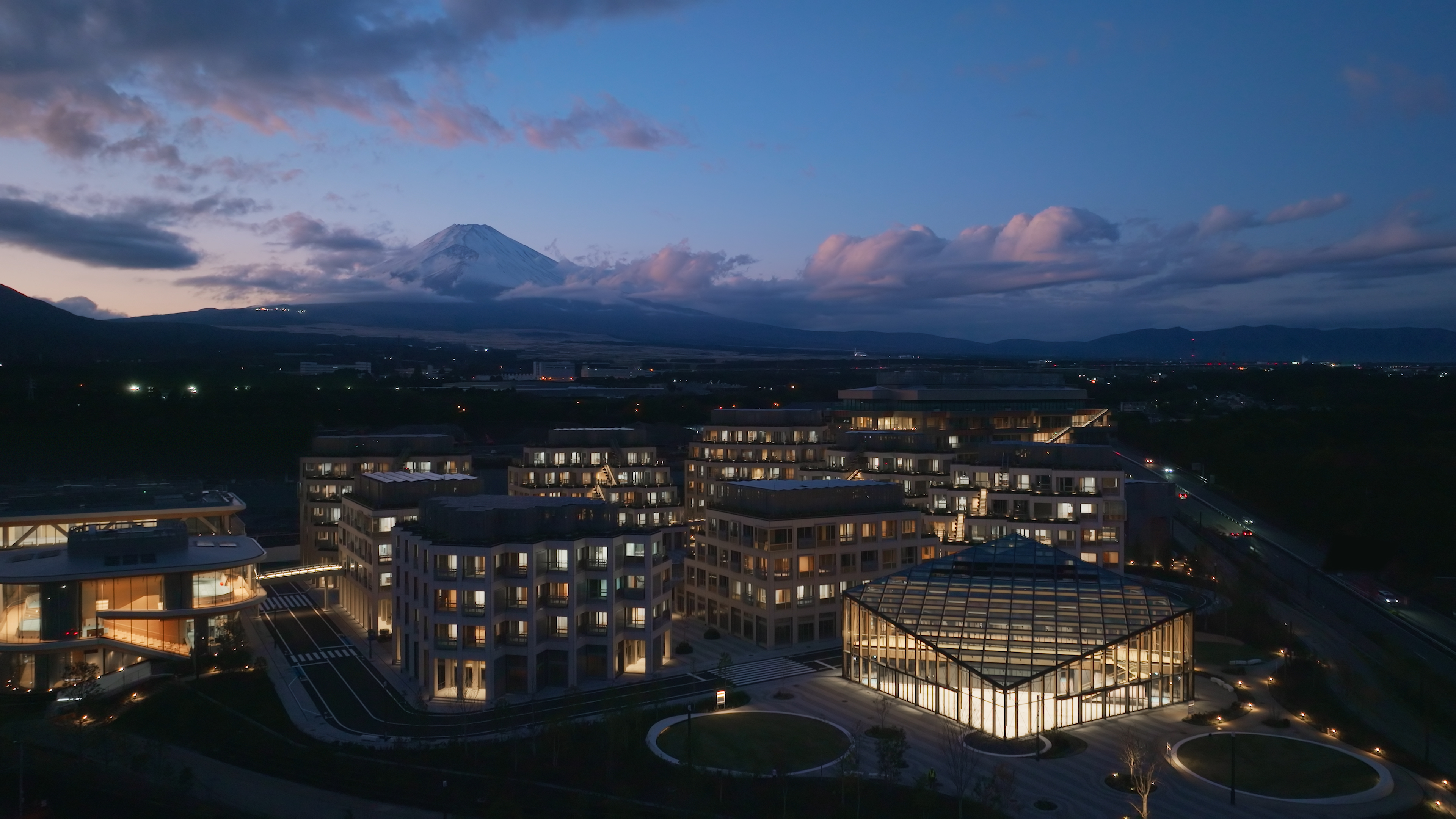
You found the perfect akiya listing. The price is right, the mountains are gorgeous, and the nearest convenience store is only a 15-minute drive. You close the deal, move in, and within two weeks discover that your real estate purchase was actually just the entrance exam. The harder challenge is becoming part of a Japanese rural community.
In countryside Japan, your neighbors aren't just people who live nearby. They are the ones who will tell you when the water gets shut off for pipe maintenance, who will clear the snow from the road in front of your house (and expect you to clear yours), who will decide whether you can use the local garbage collection point, and who will ultimately determine whether your rural Japanese life feels like paradise or purgatory.
This guide covers everything you need to know about integrating into a rural Japanese community — from the critical first greeting to the seasonal duties that will fill your calendar, and the unwritten rules that nobody puts in the welcome packet.
The Jichikai: Understanding Japan's Neighborhood Associations
The jichikai (自治会 (jichikai)) or chonaikai (町内会 (chōnaikai)) is a voluntary neighborhood association that serves as the organizational backbone of residential life across Japan. While the terms are sometimes used interchangeably, jichikai generally refers to a self-governing association, while chonaikai emphasizes the geographic neighborhood. In rural areas, you may also hear ku (区) or buraku (部落, meaning simply "hamlet" with no negative connotation in this context).
These associations are not government bodies, but they function as a critical bridge between residents and the municipal government. They disseminate official notices, coordinate garbage collection, maintain streetlights, organize festivals, run disaster drills, and serve as the collective voice of the neighborhood. In rural Japan, where municipal offices may be 30 minutes away and services are stretched thin, the jichikai is often the difference between a functioning community and an isolated collection of households.
Is Membership Mandatory?
Legally, no. Japan's courts have consistently upheld that jichikai membership is voluntary. A landmark 2005 Supreme Court ruling confirmed that residents cannot be compelled to join. However, in rural Japan, this legal distinction is practically meaningless. Not joining the jichikai in a village of 200 people is like moving to a small town and refusing to acknowledge anyone exists. You can do it, but the social consequences will make your daily life significantly harder.
The most immediate practical consequence: garbage collection. In many rural areas, the jichikai manages the local garbage collection point (gomi suteba, ゴミ捨て場). Non-members may be prohibited from using it, which means you would need to drive your garbage to the municipal collection center yourself — potentially 20-30 minutes each way. Some associations allow non-members to use the collection point if they participate in the cleaning rotation, but this is negotiated on a case-by-case basis.
Membership Fees
Annual jichikai dues typically range from 3,600 to 24,000 yen (300 to 2,000 yen per month), depending on the area and the association's activities. Rural associations with active festival calendars and community facilities tend to charge more. Some associations also levy a one-time joining fee or require contributions to specific funds (disaster preparedness, shrine maintenance, community hall upkeep).
The fees cover streetlight electricity, garbage station maintenance, community newsletter printing, event supplies, and small subsidies from the municipal government. You will typically receive a receipt and, in many cases, a detailed annual accounting at the end-of-year general meeting. Japanese community finances tend to be remarkably transparent.
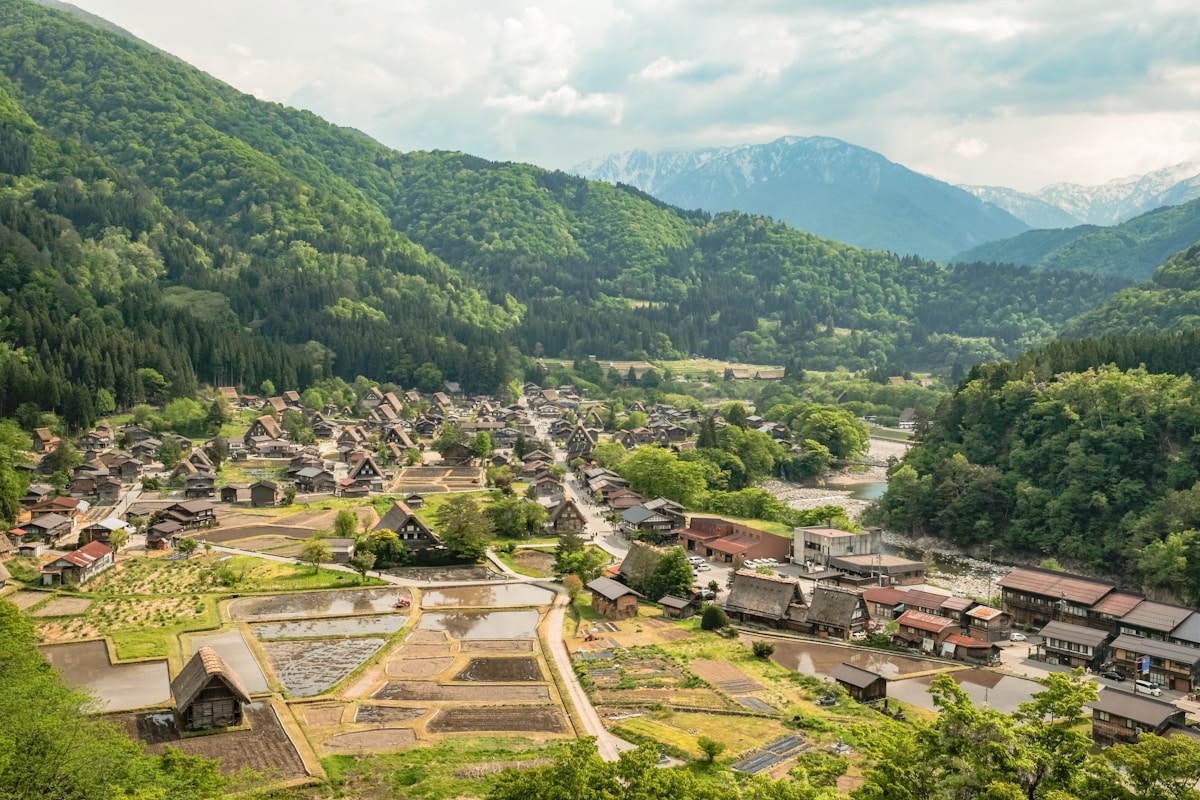
Houses nestled among rice paddies in Shirakawa-go — rural Japanese communities where neighborhood participation is essential. Photo: Rap Dela Rea / Unsplash
The First 30 Days: Making Your Introduction
The single most important thing you will do as a new rural resident has nothing to do with paperwork, renovation, or unpacking. It is the aisatsu mawari (挨拶回り) — the round of introductory greetings to your neighbors.
The Hikkoshi no Aisatsu (Moving Greeting)
Within one to three days of moving in — ideally the very first day — you should visit your immediate neighbors to introduce yourself. In a rural area, "immediate neighbors" means:
- Mukai sangen (向かい三軒) — the three houses directly across from you
- Ryodonari (両隣) — the houses on either side of you
- The jichikai-cho (自治会 (jichikai)長) or kucho (区長) — the neighborhood association leader
- Any house whose property directly borders yours
In a small hamlet, this may mean visiting every household — sometimes as few as 10-15 houses, sometimes 30 or more. When in doubt, visit more rather than fewer.
What to Bring
Bring a small gift (temiyage, 手土産) worth 500 to 1,000 yen per household. Safe choices include:
- Individually wrapped senbei (rice crackers) or cookies
- A box of quality tea bags
- Towels with a simple design (a traditional standby)
- Laundry detergent or dish soap (practical and always welcome)
Attach a small slip of paper or noshi (熨斗, a decorative paper) with your name written in katakana or romaji. This serves double duty: it is polite, and it helps your elderly neighbors remember how to address you. Avoid giving anything with blades (knives, scissors), as they symbolize severing relationships. Also avoid items in sets of four, as the number four (shi, 四) sounds like the word for death.
What to Say
Even basic Japanese will make an enormous difference. Prepare and practice these phrases:
Tonari ni hikkoshite kimashita [your name] desu. Yoroshiku onegaishimasu.
(I've just moved in next door. I'm [name]. Please treat me kindly.)
If you can add a line about where you are from and that you are looking forward to living in the community, even better. If your Japanese is limited, bring a written self-introduction card in Japanese. Many rural residents — especially elderly ones — will have no English ability, so even a printed card with your name, nationality, and a simple greeting will help bridge the gap.
The timing matters. Visit between 10:00 AM and 5:00 PM. Avoid mealtimes (roughly 12:00-1:00 PM). If nobody is home, leave your gift with a handwritten note and try again. Do not ring the doorbell after dark — this is considered rude and, in rural areas where unexpected nighttime visitors are unusual, potentially alarming.
Meeting the Jichikai Leader
Your most important introduction is to the jichikai-cho or kucho. This person is the elected or appointed leader of your neighborhood association, typically serving a one- or two-year rotating term. In some areas, the position rotates among households in a fixed order, meaning everyone eventually serves. In others, it is a quasi-permanent role held by a respected elder.
When you meet the leader, express your desire to join the jichikai and ask about the process. They will explain the fees, the meeting schedule, the garbage collection rules, and any upcoming events. This single conversation will give you more practical information about living in your community than any guidebook.
The Ban System: Rotating Neighborhood Duties
Most jichikai are subdivided into smaller groups called ban (班) or kumi (組), typically consisting of 5-15 households. The ban is your immediate operational unit. Within it, responsibilities rotate among member households on a monthly, seasonal, or annual basis.
Common Rotating Duties
- Kairanban (回覧板) — A clipboard or folder of community notices that circulates from house to house within your ban. When it arrives, read the notices, stamp or sign it, and pass it to the next household within 24 hours. Do not hold onto it for days. This circulation board is how you learn about upcoming events, garbage schedule changes, road closures, and community meetings.
- Gomi toban (ゴミ当番) — Garbage station duty. On your assigned week or month, you are responsible for unlocking the garbage station in the morning, ensuring people are sorting correctly, and cleaning the station after collection. In some areas, this includes hosing down the concrete pad and putting away the nets that keep crows out.
- Ban-cho (班長) — The ban leader role rotates annually. The ban-cho collects dues from ban members, attends monthly jichikai meetings, relays information back to the ban, and coordinates participation in community events. If the rotation falls to you, accept it. Refusing creates significant ill will. The duties are manageable — perhaps 2-3 hours per month plus one meeting.
Handling the Language Barrier
If your Japanese is limited, the ban-cho rotation can feel daunting. A few strategies that work:
- Ask a Japanese-speaking friend or your partner to attend the first meeting with you
- Use a translation app on your phone during meetings (Google Translate's conversation mode works reasonably well)
- Request the meeting agenda in advance so you can prepare
- Be honest about your language limitations — most communities will accommodate you with patience and good humor
The worst thing you can do is skip your rotation without explanation. If you genuinely cannot serve (due to extended travel, for example), speak to the jichikai-cho well in advance and arrange a swap with another household.
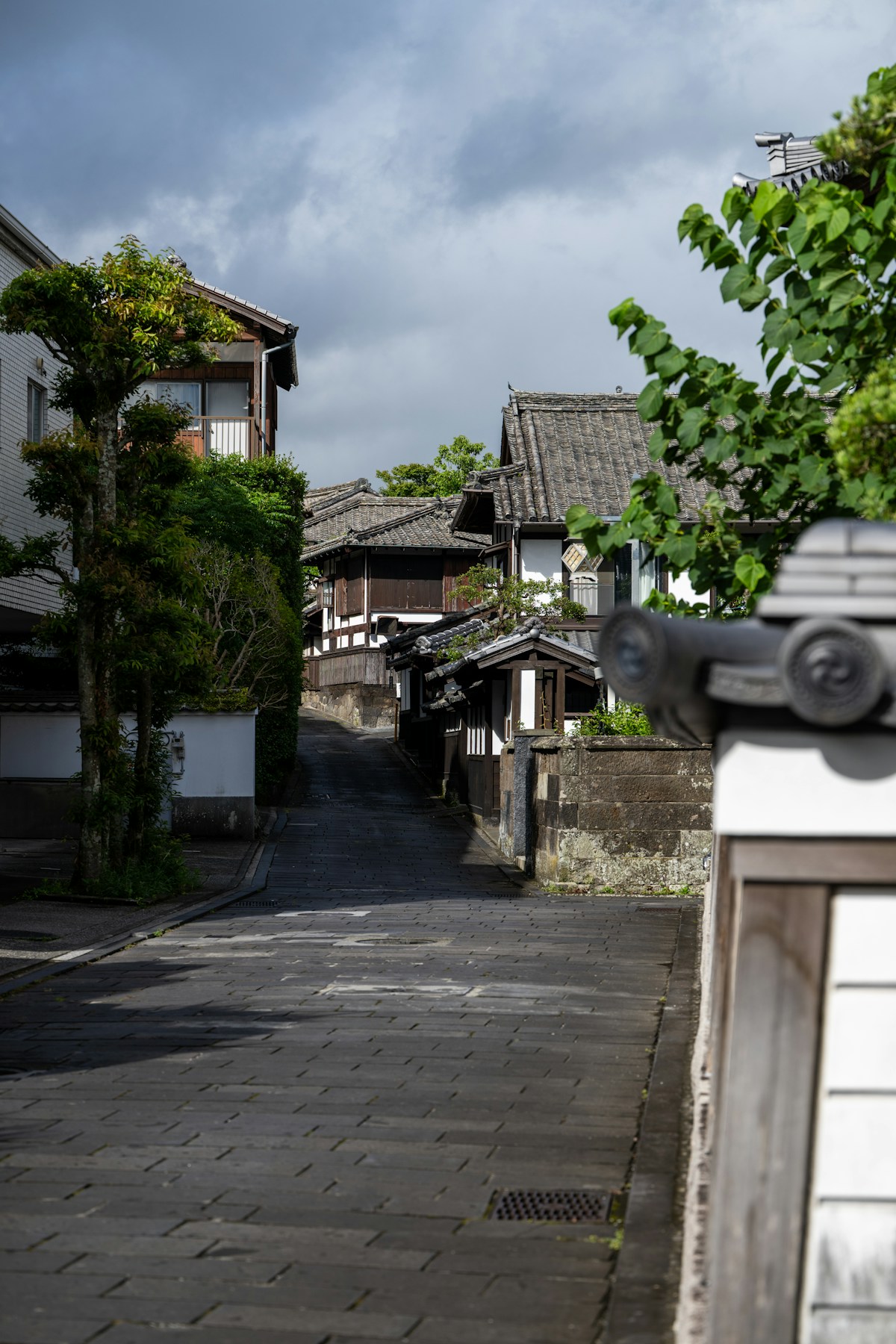
A quiet residential street in Japan — getting to know your neighbors starts with these everyday spaces. Photo: Kouji Tsuru / Unsplash
Seasonal Duties: The Community Calendar
Rural Japanese communities run on a seasonal rhythm that has remained remarkably consistent for generations. As a jichikai member, you will be expected to participate in these activities. Attendance is not technically mandatory, but consistent absence will be noticed and discussed.
Spring (March-May)
- Soukai (総会) — The annual general meeting, usually held in March or April. This is where the previous year's accounts are reviewed, the new year's budget is approved, officer positions are assigned, and the activity calendar is set. Attendance is strongly expected. If you cannot attend, submit a proxy form (inin-jo, 委任状).
- Hana-mi preparation — In areas with cherry blossom viewing spots, the community may organize a group hanami or prepare the local park.
- Mizo-sarae (溝さらえ) — Ditch and irrigation channel cleaning. This is a major communal labor event in farming communities. Residents gather early in the morning (often 7:00 or 8:00 AM on a Sunday) to clear debris, leaves, and sediment from the irrigation channels and drainage ditches that crisscross rural areas. Bring work gloves, rubber boots, and a willingness to get muddy. This event is taken very seriously — water management is essential for rice cultivation, and failure to maintain channels affects every downstream farmer.
Summer (June-August)
- Kusa-kari (草刈り) — Communal grass cutting and weed clearing along roadsides, paths, and common areas. In humid rural Japan, vegetation grows explosively in summer. Communities organize 2-4 grass-cutting sessions between June and September. Bring a kama (sickle) or weed trimmer if you have one — otherwise, the community usually has spare tools. Start early (6:00 or 7:00 AM) to beat the heat.
- Natsu matsuri (夏祭り) — The summer festival is often the biggest community event of the year. Preparation begins weeks in advance: setting up yagura (festival towers), stringing lanterns, preparing food stalls, and rehearsing bon odori dances. Even if you are not assigned a specific role, showing up to help set up and tear down earns enormous goodwill. Volunteering to carry the mikoshi (portable shrine) or help cook yakisoba is a fast track to acceptance.
- Obon preparations — During the Obon period (mid-August in most regions, mid-July in some), communities may organize collective grave cleaning, bon odori dance practice, and memorial events. Even if you are not Buddhist, participation is welcome and appreciated.
Autumn (September-November)
- Aki matsuri (秋祭り) — The autumn harvest festival, often centered around the local shrine. Roles include carrying the mikoshi, preparing offerings, and organizing the community feast.
- Bosai kunren (防災訓練) — Disaster prevention drills, typically organized in September around Disaster Prevention Day (September 1). The jichikai coordinates with the local fire department for earthquake, fire, and evacuation exercises. These drills are genuinely important — Japan experiences frequent earthquakes, typhoons, and flooding. Participating ensures you know evacuation routes, emergency assembly points, and how to use fire extinguishers. Your neighbors will also know to check on you during an actual emergency.
- Undokai (運動会) — The community sports day. Teams compete in relay races, tug-of-war, ball-toss games, and other events. It is less about athletic ability and more about showing up and having fun. Refusing to participate when your ban needs another body for the relay is a minor social faux pas.
Winter (December-February)
- Osoji (大掃除) — The year-end deep cleaning of community spaces (the community hall, shrine grounds, roadsides). Usually held in mid-to-late December.
- Bonenkai (忘年会) — Year-end party. This is a social gathering, usually at the community hall or a local restaurant. Alcohol flows freely. This is your chance to relax and connect with neighbors in an informal setting. Budget 3,000-5,000 yen for your share.
- Shinnenkai (新年会) — New Year's gathering in January, similar to bonenkai but looking forward to the new year.
- Yukikaki / Yuki-oroshi (雪かき / 雪下ろし (yukioroshi)) — In snow country (Niigata, Akita, Aomori, Yamagata, Hokkaido, parts of Nagano and Toyama), snow removal is a communal obligation. Households are expected to clear the road in front of their property and help elderly neighbors who cannot manage their roofs. Failure to clear your section creates a bottleneck that affects everyone. Snow removal can consume 1-2 hours daily during heavy snowfall periods.
The Unwritten Rules: What Nobody Tells You
Japanese rural communities operate on a dense web of unspoken social expectations. Violating these rules will not get you fined or expelled, but they will erode the trust and goodwill you need to live comfortably.
Noise and Timing
- No power tools or loud machinery before 8:00 AM or after 6:00 PM — even on weekdays. If you are renovating your akiya, this includes drills, saws, and hammering. Some communities have even stricter windows.
- No bonfires without asking — Even if your property has a burn pile, check with neighbors and the local fire department. Many municipalities require burn permits, and smoke drifting into a neighbor's laundry will generate complaints.
- Car engines — Do not idle your car engine for extended periods, especially early in the morning. The sound carries in rural areas.
Property Maintenance
- Keep your property tidy — Overgrown weeds, visible garbage, or a deteriorating exterior reflects on the entire neighborhood. In a community where many residents left specifically to escape the blight of abandoned akiya, a new owner who lets their property slide is deeply frustrating.
- Boundary awareness — Know exactly where your property ends. Overhanging branches, encroaching plants, and drainage water running onto a neighbor's land are common sources of rural disputes. When in doubt, cut back to your side.
- Animal management — If you have pets, keep dogs from barking excessively and cats from entering neighbors' gardens. Rural Japan takes pest management seriously — communities coordinate on wildlife deterrents for boar, deer, and monkeys. Feeding stray animals is strongly discouraged as it attracts pests.
Garbage Etiquette
Garbage sorting in Japan is famously detailed, but rural areas can be even stricter than cities because the community manages its own collection point. Key rules:
- Sort meticulously — Categories typically include burnable waste, non-burnable waste, PET bottles (caps removed, labels peeled, rinsed), cans (rinsed), glass bottles (sorted by color), cardboard, newspapers, and sometimes 10+ additional categories. Your municipality will provide a sorting guide — study it.
- Use the correct bags — Many municipalities require designated garbage bags (shitei gomi bukuro, 指定ゴミ袋) sold at convenience stores and supermarkets, typically costing 300-500 yen for a pack of 10.
- Put garbage out on the correct day, at the correct time — Usually by 8:00 AM on the designated day. Putting garbage out the night before attracts crows and animals. Putting it out on the wrong day is a serious breach of etiquette.
- Write your name on the bag — Some communities require this. Even if yours does not, improperly sorted garbage with your name on it will be returned to your door.
The Gift Economy
Rural Japan runs on a sophisticated system of reciprocal gift-giving that reinforces social bonds:
- Osusowake (お裾分け) — When a neighbor drops off homegrown vegetables, fruit, or rice, accept it graciously with both hands and express sincere thanks. Within a few days, reciprocate with something — it does not need to be equivalent in value. Store-bought sweets, a specialty from your home country, or something you have baked works perfectly.
- Ochugen and Oseibo (お中元 and お歳暮) — Midyear (July) and year-end (December) gifts to people you are indebted to. In rural areas, these are often exchanged between close neighbors, not just business relations. Budget 3,000-5,000 yen per gift. Department store gift sets (beer, ham, cooking oil, fruit) are standard choices.
- Travel omiyage (お土産) — Whenever you travel, bring back local sweets or snacks for your immediate neighbors and the jichikai-cho. This seemingly small gesture is deeply embedded in Japanese culture and signals that you thought of the community even while away.
Communication Style
- Greet everyone — Say "ohayo gozaimasu" (good morning), "konnichiwa" (hello), or "konbanwa" (good evening) to every neighbor you pass. Every single time. This basic aisatsu is the foundation of rural social life. Not greeting someone — even once — can be interpreted as hostility or arrogance.
- Speak to people directly, not through intermediaries — If you have a concern with a neighbor, approach them gently and privately. Complaining to the jichikai-cho about a neighbor before speaking to them directly is considered poor form.
- Never say no directly — If asked to take on a duty you cannot manage, say "chotto muzukashii desu ga..." (it's a bit difficult, but...) and propose an alternative. A flat "no" is culturally abrasive.
Disaster Preparedness and Community Safety
One of the most important — and most overlooked — benefits of jichikai membership is inclusion in the community's disaster preparedness network. Japan's jishu-bosai-soshiki (自主防災組織, voluntary disaster prevention organizations) are typically organized through or alongside the jichikai. Over 84% of Japanese neighborhoods have these organizations.
What This Means for You
- Emergency contact lists — The jichikai maintains a roster of all member households, including elderly or disabled residents who may need evacuation assistance. Being on this list means someone will check on you during a typhoon, earthquake, or flood.
- Evacuation routes and shelters — Your community has designated evacuation points (hinanjo, 避難所) and routes. The disaster drills teach you exactly where to go and what to bring. In rural areas where GPS may be unreliable and roads can be blocked by landslides, knowing the local evacuation route is potentially lifesaving.
- Emergency supplies — Many jichikai stockpile emergency water, food, blankets, and medical supplies at the community hall. Members contribute to this fund through their dues.
- Mutual aid during disasters — After the 2024 Noto Peninsula earthquake, community networks were critical in identifying trapped residents, distributing supplies, and coordinating with emergency services. Households that were known to the jichikai received help faster than isolated ones.
If you are purchasing property in a flood-prone, earthquake-prone, or heavy snowfall area (which describes much of rural Japan), jichikai membership is not just a social nicety — it is a practical safety measure.
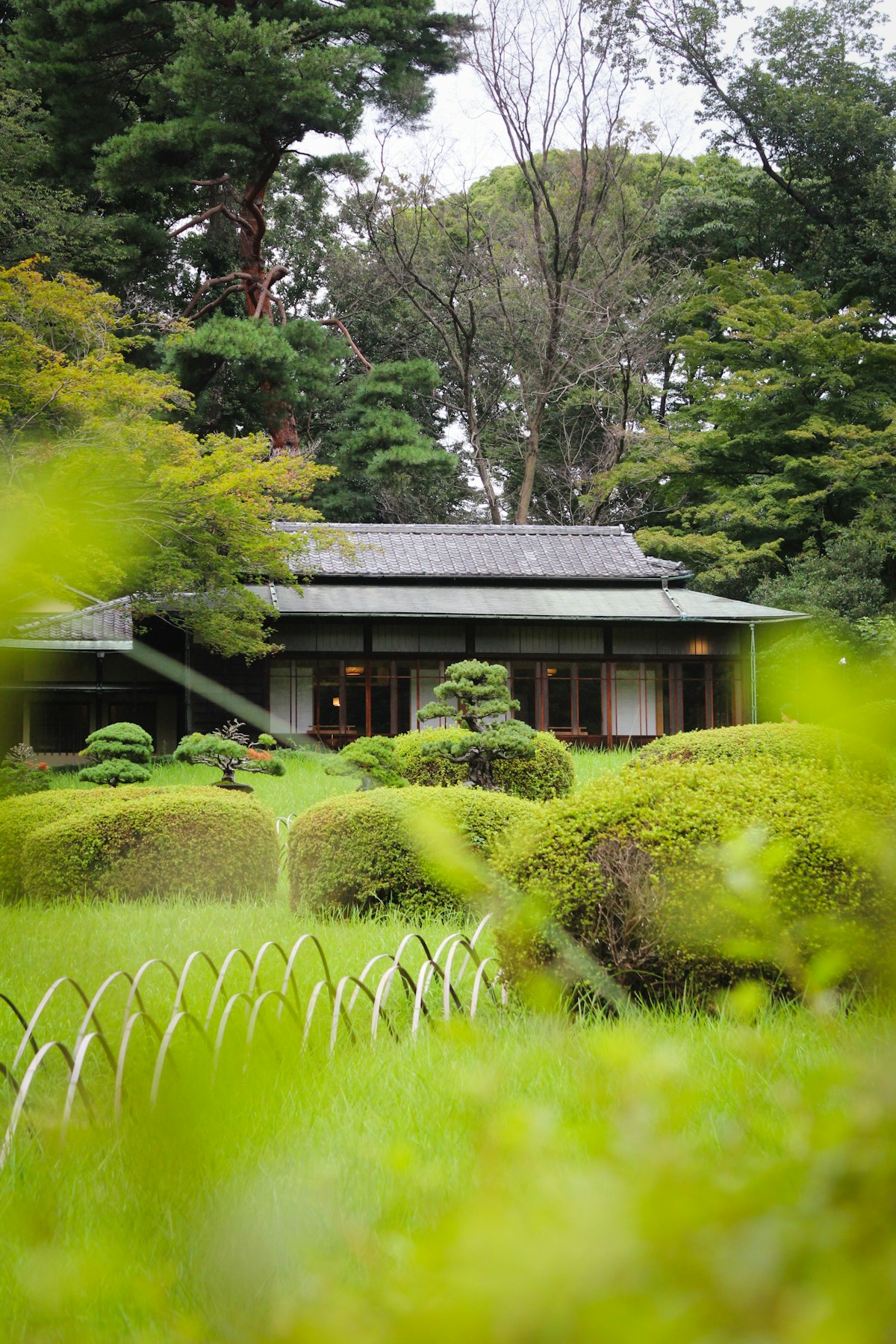
A well-maintained traditional home with a lush garden — keeping your property tidy is one of the most important unwritten rules in rural Japan. Photo: Nicola Fittipaldi / Unsplash
Common Mistakes Foreign Residents Make
Learning from others' missteps can save you months of relationship repair:
1. Treating the Akiya as a Vacation Home
If you plan to visit your property only a few weeks per year, your community will notice your prolonged absences. Weeds grow, mail accumulates, and your share of communal duties goes unfilled. This is the fastest way to become resented. If you cannot be present year-round, communicate openly with the jichikai-cho about your situation. Some communities will accept reduced dues or adjusted duties for part-time residents. Others will expect you to arrange a local representative. Working with a property management service can help maintain your home and community standing during absences — Teritoru, our licensed partner agent, offers ongoing property management specifically for overseas owners.
2. Renovating Without Consulting Neighbors
Before starting any exterior renovation — even painting — let your immediate neighbors know. Major construction should be announced to the jichikai-cho, who may want to inform the broader community. Providing a rough timeline and apologizing in advance for any noise or disruption is standard practice. Some foreign owners skip this step, leading to complaints and strained relations that take months to repair.
3. Ignoring the Kairanban
The circulation board is not junk mail. It contains time-sensitive information about upcoming events, road closures, water shutoffs, pesticide spraying schedules, and bear or wild boar sightings. Holding onto it for a week because you cannot read the Japanese will frustrate your neighbors. If you cannot read it, take a photo, pass it along promptly, and translate it later using your phone's camera translation feature.
4. Importing Urban Anonymity
In Tokyo or Osaka, you can live next to someone for years without exchanging a word. In rural Japan, this behavior reads as deliberate hostility. Your neighbors will know your car, your daily routine, and approximately what time you go to bed. This is not surveillance — it is the natural texture of small-community life. Embrace it. The same awareness that feels intrusive is what ensures someone notices if you have not been seen in three days.
5. Declining Every Invitation
You will be invited to events that seem obscure, inconvenient, or baffling. A prayer ceremony at 6:00 AM. A four-hour meeting about drainage ditch maintenance. A farewell party for someone you have never met. Say yes to as many as you can, especially in your first year. Each attendance deposits social capital that you will draw on later when you need a favor, have a problem, or make an inevitable cultural misstep that needs forgiving.
When Things Go Wrong: Conflict Resolution
Disputes happen in every community. In rural Japan, the resolution process follows a specific pattern:
- Direct, private conversation — Speak to the person first, one-on-one. Use gentle language. Begin by acknowledging your own possible fault.
- Involve the ban-cho — If direct conversation does not resolve it, bring the issue to your ban leader, who can mediate informally.
- Escalate to the jichikai-cho — For persistent issues, the association leader may convene a small meeting or speak to the other party on your behalf.
- Municipal mediation — As a last resort, the municipal office has community liaison staff who can help with neighbor disputes. This step is rarely needed and using it too quickly is seen as an escalation.
Never post about neighbor disputes on social media, even anonymously. Rural communities are small enough that people will figure out who you are writing about, and the breach of privacy will compound the original problem.
Special Considerations for Foreign Akiya Owners
Language Investment
You do not need to be fluent in Japanese to integrate into a rural community, but you do need to make a visible, sustained effort to learn. Even reaching a basic conversational level (JLPT N4 or so) transforms your daily interactions. Many rural municipalities offer free or subsidized Japanese classes — ask at the city hall (shiyakusho) or community center (kominkan, 公民館 (kōminkan)). Online resources and apps are useful supplements, but nothing replaces practicing with your actual neighbors.
Cultural Sensitivity Around Religion
Many jichikai activities involve Shinto shrines or Buddhist temples. You may be asked to contribute to shrine maintenance fees (ujiko-kai, 氏子会) or attend ceremonies. This is cultural participation, not religious conversion. Most Japanese people approach shrine and temple activities as community tradition rather than devotional practice. Participating respectfully — even without personal belief — is expected and appreciated.
The Advantage of Being Foreign
Counterintuitively, being a foreigner in rural Japan can be an advantage. Communities struggling with depopulation are often genuinely excited to welcome new residents — especially younger ones who might contribute to the local economy and community life. Your foreignness makes you memorable, which cuts both ways: mistakes are noticed, but so is effort. Many rural Japanese people have had little contact with foreigners and are curious and warm once the initial surprise fades.
Older residents in particular may go out of their way to help you. Do not be surprised if a neighbor shows up with a bag of homegrown daikon and stays for an hour teaching you how to cook it. Accept these moments. They are the substance of rural community life, and they are increasingly rare even for Japanese people moving from cities to the countryside.
The Purchase Process
Community integration actually begins before you move in. If you are purchasing through an akiya bank, the municipal office may arrange for you to meet the neighbors or the previous owner before the sale is finalized. In some communities, the jichikai-cho has informal veto power over newcomers — this is legally unenforceable but practically influential. Making a good impression during these preliminary meetings can smooth your entire integration. For foreign buyers unfamiliar with these dynamics, having a licensed agent who understands rural community expectations is invaluable — book a consultation with Teritoru to discuss your specific situation before committing to a property.
A Realistic Timeline for Integration
Community integration is not a single event but a gradual process. Here is what to realistically expect:
- Month 1 — Introductions, joining the jichikai, learning the garbage schedule. You are "the foreigner who moved in." Neighbors are curious but cautious.
- Months 2-6 — You participate in your first community events, handle your first ban duties, make your first mistakes (and apologize for them). You begin to recognize faces and learn names. Neighbors start waving instead of staring.
- Months 6-12 — You are recognized as a participating member. Neighbors begin sharing vegetables, gossip, and advice. You are invited to informal gatherings. The jichikai-cho stops explaining things twice.
- Year 2 — You might serve as ban-cho. You know the seasonal rhythm instinctively. Neighbors introduce you to visitors as "our foreigner" with obvious pride. You start receiving insider information about community dynamics.
- Year 3+ — You are simply a neighbor. Your foreignness is an interesting fact rather than a defining characteristic. New residents are told to "go ask [your name]" about settling in.
This timeline assumes consistent presence and genuine effort. Part-time residents or those who resist participation may never progress past the first stage, no matter how many years they own the property.
What It Really Takes
Rural Japanese community life asks more of you than urban living anywhere in the world. It demands your time (weekend cleanups, evening meetings, festival preparation), your money (dues, gifts, event contributions totaling perhaps 50,000-100,000 yen annually), and your emotional energy (working through a foreign social system in a foreign language).
In return, it offers something increasingly rare: a real sense of belonging. A network of people who will clear snow from your driveway when you are sick, who will bring you soup when they hear you have a cold, who will show you where the best wild mushrooms grow, and who will stand beside you if your house is threatened by a typhoon. For many foreign akiya owners, these relationships often end up meaning more than the property itself.
The formula is deceptively simple: show up, pitch in, be humble, say good morning to everyone, and never hold onto the kairanban for more than a day. Do these things consistently, and you will find that rural Japan opens up in ways that no amount of money or language ability alone can achieve.