
Japan's Hot Spring Capital, the Most Unusual Geothermal Landscape in Asia, and a Quiet Onsen Town with Morning Mist
Living in Oita
Home to the most hot spring bathing facilities of any prefecture in Japan — including the Eight Hells of Beppu, where pools boil blood-red and cobalt-blue from volcanic vents — alongside Yufuin, one of Japan's most refined onsen resort towns, and kabosu citrus that exists almost nowhere else.
Why People Choose Oita
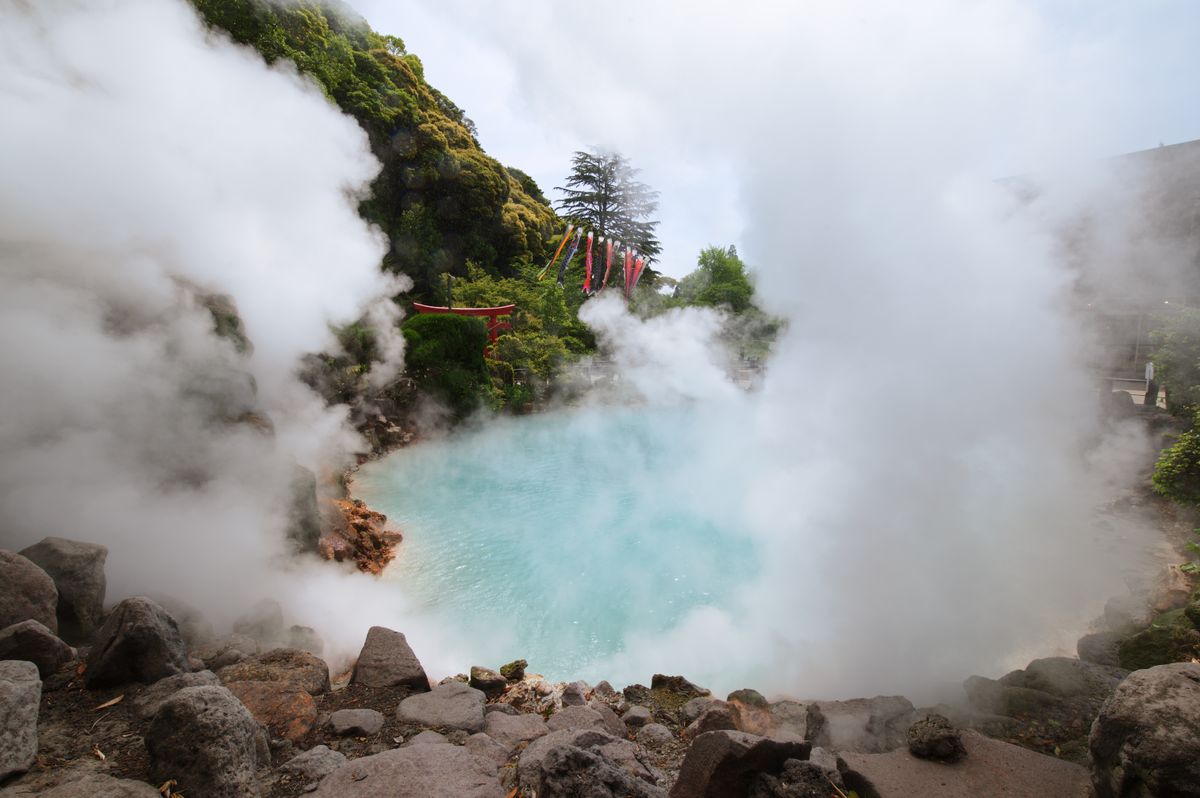
Oita's case is onsen access unlike anywhere else in Japan. The prefecture has 4,456 hot spring sources — the most of any prefecture in Japan — and Beppu discharges 130,000 tonnes of hot spring water daily, the highest volume of any spa resort in Asia. The practical consequence is that onsen bathing in Oita costs ¥100–¥620 at a public facility, not the ¥1,500–¥3,000 charged at designed spa hotels in other regions. Most Beppu residents live within walking distance of multiple public baths.
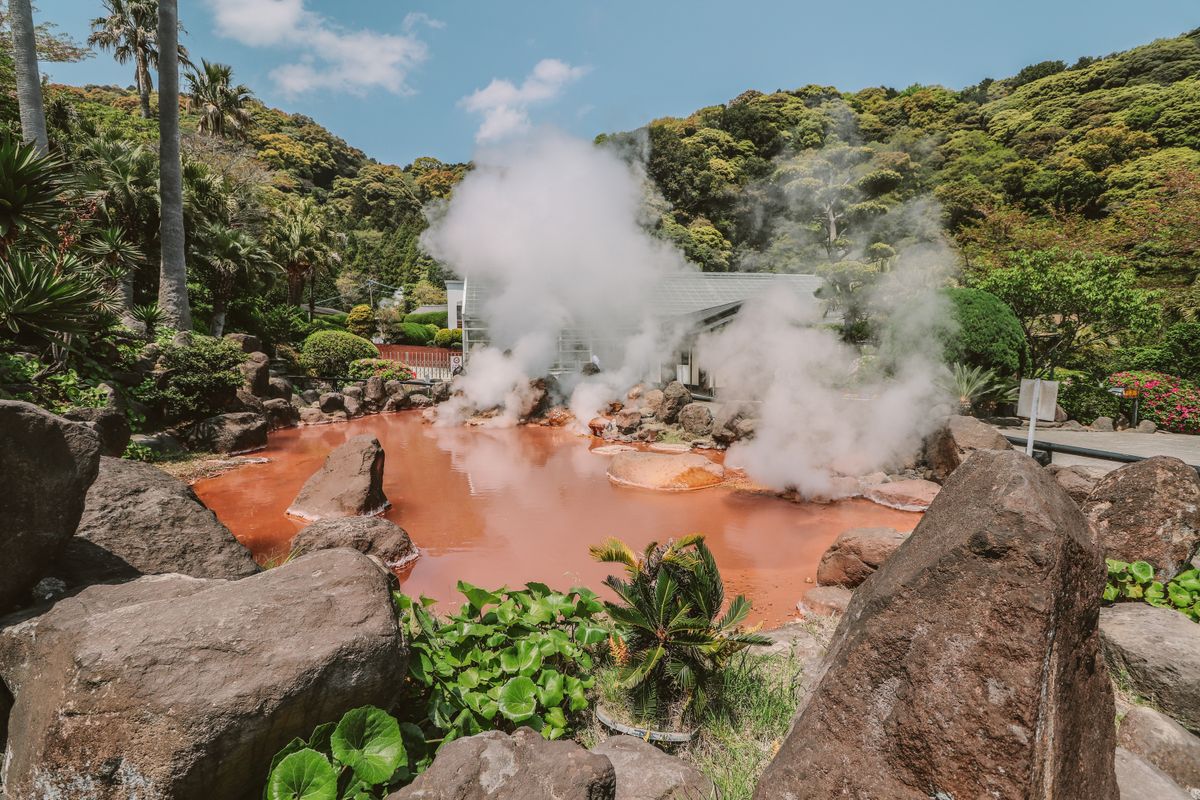
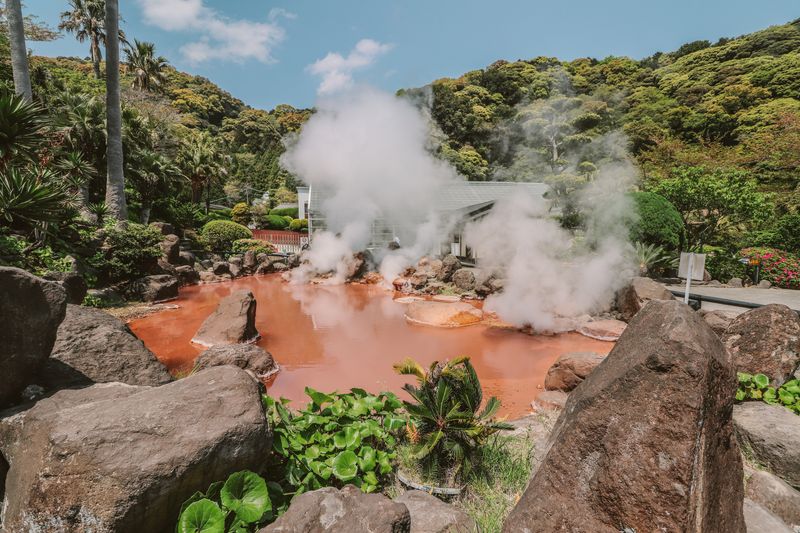
The Eight Hells of Beppu are the most unusual geothermal landscape in Japan — boiling mineral pools coloured by their chemistry rather than any human intervention: cobalt blue from sodium cobalt sulphate at Umi Jigoku, blood red from iron oxide at Chinoike Jigoku (which has operated for over 1,000 years as documented in records from 1000 AD), grey mud boiling in slow bubbles at Oniishibozu, and milky white at Shiraike. These are not bathing pools but viewing attractions, and the combined circuit takes about 90 minutes.
Yufuin is the prefecture's second major draw — a plateau town that has managed its development carefully enough to remain genuinely pleasant at scale. The Yufuin Onsen Tourism Association has consistently rejected large hotel proposals that would change the town's character; the result is that the boutique ryokan and craft street remain viable and not overwhelmed.
Oita City (population 475,000) is a mid-sized port and industrial city that functions more practically than it is celebrated — good hospitals, Oita University, functional shopping, and close access to both Beppu (15 min by limited express) and the mountainous interior. Beppu itself (population 115,000) is a tourism-oriented city that smells faintly of sulphur near the springs but has a lively izakaya scene and cheap daily onsen within walking distance of any address. Yufuin is a small town (population 34,000 in Yufu City overall) with a clear visitor identity.
Oita Airport has direct flights to Tokyo Haneda (1h10), Tokyo Narita, and Osaka Itami. The Sonic limited express connects Oita City to Hakata (Fukuoka) in 2h. Beppu is 15 minutes from Oita by limited express. Yufuin is 1h by limited express from Hakata or 35 minutes from Oita on the Kyudai Line. The Oita expressway connects the prefecture north-south; a car opens the interior mountain routes.
Oita City apartments ¥3M–¥12M; houses ¥5M–¥18M. Beppu flats ¥2M–¥10M with proximity to the onsen zone mattering more than in other cities. Yufuin residential (away from the tourist street) ¥4M–¥15M. Rural mountain municipalities in western Oita (Hita, Kokonoe) from ¥500K. Oita property values reflect the prefecture's stable but not growing population.
Japan's most famous onsen city: the Eight Hells for viewing, hundreds of bathing facilities for use, cheap daily onsen within every neighbourhood, and a sulphuric steam-vent character that is entirely its own.
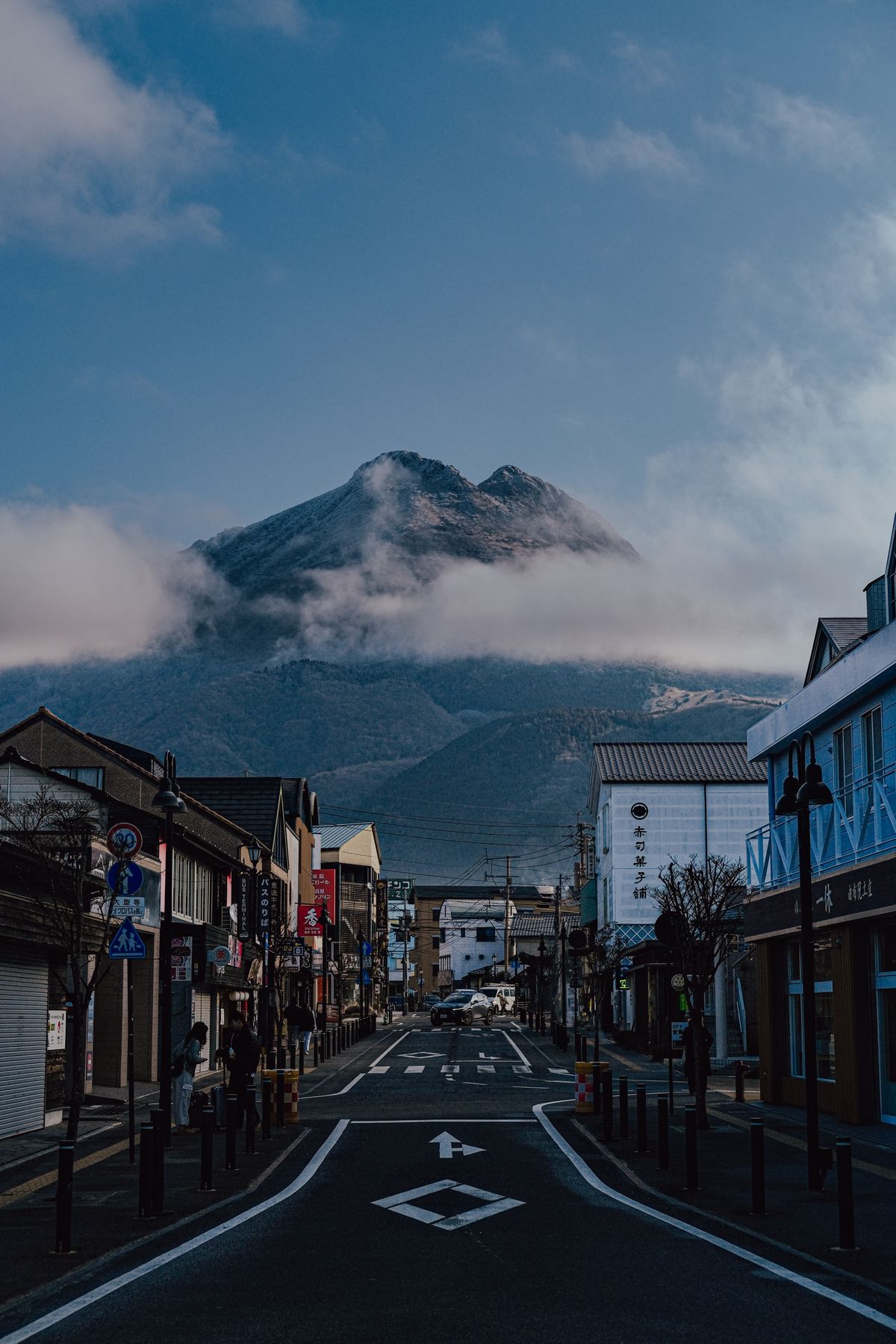
The refined alternative: Lake Kinrin's morning mist, Mount Yufu's backdrop, boutique craft shops on Yufuin Floral Village and Yufuin-no-Mori route, and some of the best ryokan in Kyushu.
The practical base: port city with full urban infrastructure, Oita University, direct flight to Tokyo, and 15 minutes from Beppu's springs.
Riverside city Hita has preserved Edo-period merchant streets and firefly viewing in summer; Kokonoe's "Yume" suspension bridge (390m, Japan's longest pedestrian suspension bridge) crosses a volcanic gorge.
Where To Start
Four ways to start in Oita
The <a href="https://www.beppu-jigoku.com/en/" target="_blank" rel="noopener" class="text-blue-600 dark:text-blue-400 hover:underline">Eight Hells of Beppu</a> are divided between the Kannawa district (six hells including Umi and Chinoike) and Kamegawa (two hells). The combination ticket (¥2,200) covers all eight; Kannawa's six can be walked in 90 minutes. Come early — by 10am the steam obscures the photogenic colour of the pools. The Kannawa district itself is older Beppu: steaming vents in the pavement, old tile-roofed ryokan, and food stalls selling jigoku-mushi (hell-steamed) eggs and sweet potato cooked in the spring water.
The <a href="https://www.jrkyushu.co.jp/english/train/yufuin_no_mori.html" target="_blank" rel="noopener" class="text-blue-600 dark:text-blue-400 hover:underline">Yufuin no Mori</a> is one of JR Kyushu's designed tourist limited express trains — a dark green forest-themed carriage with interior wood fittings and a buffet car. It departs Hakata at 9:24am and arrives Yufuin at 11:30am. The combination of the train experience and arriving before the afternoon day-tripper buses improves the Yufuin visit significantly. Lake Kinrin's morning mist dissipates by 10am — if staying overnight, the lakeside walk is the first thing to do at dawn.
Kabosu is a small, tart citrus with a thinner rind than yuzu, squeezed over sashimi, oysters, and nabemono (hot pot) across Oita. Outside the prefecture it is replaced by ponzu sauce or lemon; inside Oita, kabosu juice is provided as the default condiment. The flavour is distinct — more aromatic than lemon, less fragrant than yuzu, and specific enough that chefs in Tokyo import it when they want to recreate Oita cuisine authentically. Buy fresh kabosu at any Oita supermarket in season (August–November).
The <a href="https://usuki.city.oita.jp/sekibutsu/" target="_blank" rel="noopener" class="text-blue-600 dark:text-blue-400 hover:underline">Usuki Stone Buddhas</a> — 61 figures carved into a volcanic tuff cliff around 900–1100 AD — were designated Japan's first National Treasure in the sculpture category in 1995. Usuki City is 40 minutes from Oita by Nippo Main Line; the stone buddha site is 15 minutes from the station by bus. The carvings include intact faces of extraordinary refinement for work done without modern tools; the eroded ones are equally affecting.
Daily Life in Oita
Living in Beppu means living with the onsen infrastructure as genuine daily amenity: neighbourhood public baths (machi-no-yu) are ¥100–¥200 entry, open from early morning, and function as the social hub of each district in a way that has no equivalent in most Japanese cities. The sulphur smell is noticeable near the Kannawa vents but fades to background level elsewhere. The city's tourism economy keeps the food and entertainment offering active year-round.
Yufuin is small enough that residents know each other, and the town's deliberate decision to cap hotel size and maintain agricultural land around the town creates a quality of life — green views, the sounds of the plateau, proximity to hiking terrain — that justifies the residential property prices. The tradeoff is that the daily shopping requires a drive to Oita City or Beppu for anything beyond the basics.
Oita City provides the practical infrastructure: Oita University Medical Centre is one of the largest hospitals in Kyushu, the city has a functioning entertainment district around Miyako-machi, and the Sonic express to Hakata puts Fukuoka within two hours. For people who want onsen access, mountain proximity, and a functional mid-sized city without Tokyo commute culture, Oita City is underrated.
Food and Drink
Kabosu citrus is Oita's most distinctive culinary ingredient — a small, flat, tart green citrus squeezed over sashimi, oysters, fugu (pufferfish), and nabe (hot pot). The flavour is more aromatic than lemon and less floral than yuzu. Over 95% of Japan's kabosu is grown in Oita Prefecture; outside the prefecture it is rare fresh and mostly available only as processed juice. When Oita restaurants present sashimi, a wedge of fresh kabosu is the standard condiment rather than the generic lemon used elsewhere.
Nakatsu karaage is a genuine culinary pilgrimage. The city of Nakatsu in northern Oita claims to be the origin of Japanese karaage (deep-fried marinated chicken) and has over 70 specialist karaage restaurants within the city. The Nakatsu style uses bone-in pieces marinated in soy and garlic before frying; the result is juicier and more flavourful than the boneless version that became standard nationwide. The Nakatsu Karaage Association maps the specialist restaurants.
Jigoku-mushi — hell steaming — uses Beppu's 98°C geothermal steam to cook food. The Jigoku-mushi Kobo Kannawa is a public facility where visitors bring or buy raw ingredients and cook them over the vents; the steam produces unusually clean-tasting results because there is no added water. Sweet potato, eggs, and pork shoulder are the traditional choices.
Culture and Heritage
The Usuki Stone Buddhas were carved into volcanic tuff cliff faces around 900–1100 AD — 61 figures in four groups, designated Japan's first National Treasure in the sculpture category in 1995. The preservation quality is exceptional: the face on Dainikichinen (Great Sun Buddha) retains the original paint traces and carving detail after a millennium. Usuki City also has a preserved castle town quarter along the Nomi River, the remains of Usuki Castle above the town, and a significant fugu (pufferfish) processing industry.
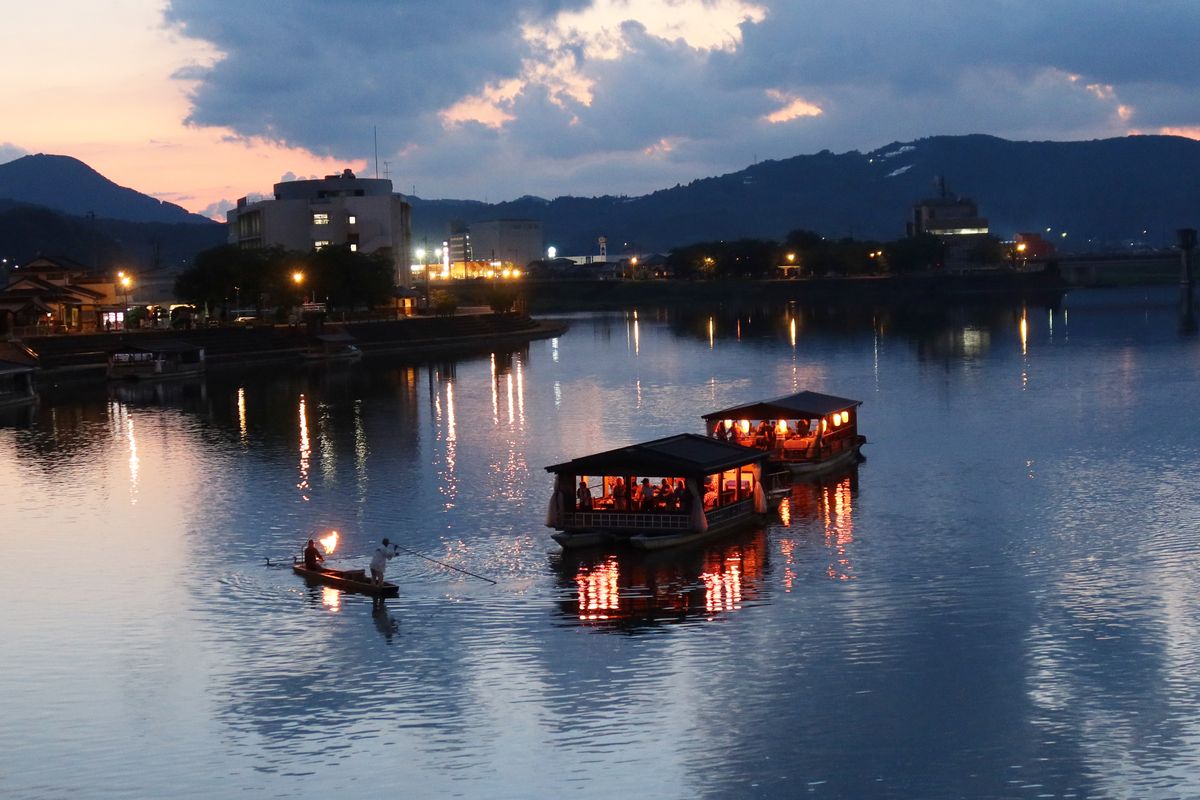
Hita City's Mameda-machi district is one of Kyushu's best-preserved Edo merchant streetscapes — a 400m riverside quarter of tile-roofed kura warehouses and merchant houses that operated as a key distribution node on the Chikugo River trade route. The Hita Gion Festival (July) is one of Kyushu's major summer festivals. June's Hita Tenryu Firefly Festival attracts visitors to watch hotaru above the Mikuma River, with paper lanterns floated on the water after dark.
The Beppu International Festival and Beppu Art Month in October–November have developed into a genuine contemporary art event, with installations using the onsen city's infrastructure — steam vents, abandoned bathhouses, thermal pools — as exhibition spaces.
Weekends and the Outdoors
Mount Yufu (1,584m) above Yufuin is a 3-hour return hike from the trailhead near Yufuin station. The ascent is straightforward on a clear trail; the summit has direct views across the Oita plateau to the Beppu bay coast and, on clear days, across to Shikoku. The descent via the east face returns to Yufuin town. The trail is passable without specialist equipment from April to November.
The Kokonoe Yume suspension bridge (390m long, 173m above the Shinmigawa gorge) is Japan's longest pedestrian suspension bridge and crosses a volcanic gorge in the Kuju Highland area. The surrounding Kuju Flower Park has seasonal bulb displays; the Kokonoe onsen area (Makinoto, Chojabaru) has low-key ryokan at prices well below Yufuin.
The Kuju highland plateau running west from Yufuin is one of the most accessible alpine meadow landscapes in Kyushu — the Handa highlands (1,200m) have summertime wildflower fields and the remnant volcanic craters of the Kuju range. The Aso-Kuju National Park designation covers both sides of the Oita-Kumamoto border.
Three Days In Oita
A simple first-trip route
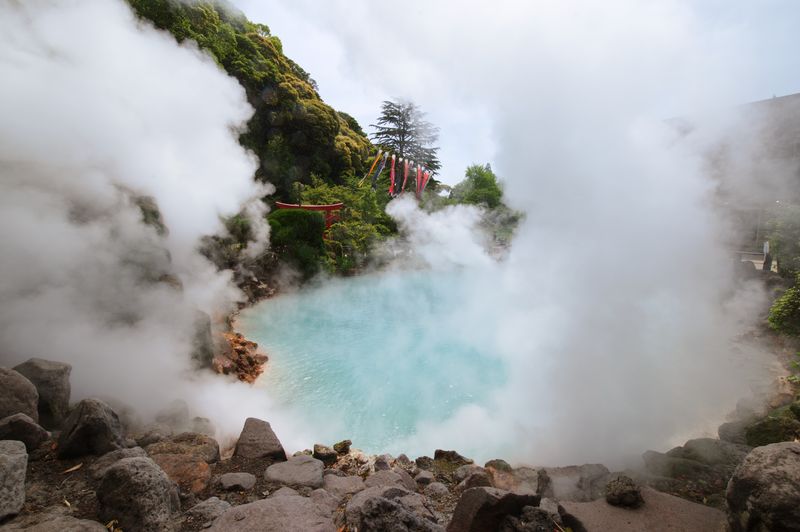
Take the Sonic express from Hakata to Beppu (1h55) or from Oita (15 min). Walk the Kannawa Jigoku circuit from 8:30am, starting with Umi Jigoku (cobalt blue, 98°C) and ending at Chinoike Jigoku (blood red, named for the iron and magnesium oxide content of the clay). Lunch: jigoku-mushi steamed dishes in Kannawa — the same geothermal heat used to cook eggs, pork, vegetables, and seafood. Afternoon: a soaking bath at Suginoi Hotel or one of the cheaper public onsen (hyotan-onsen at ¥620 entry) in the Kannawa area.
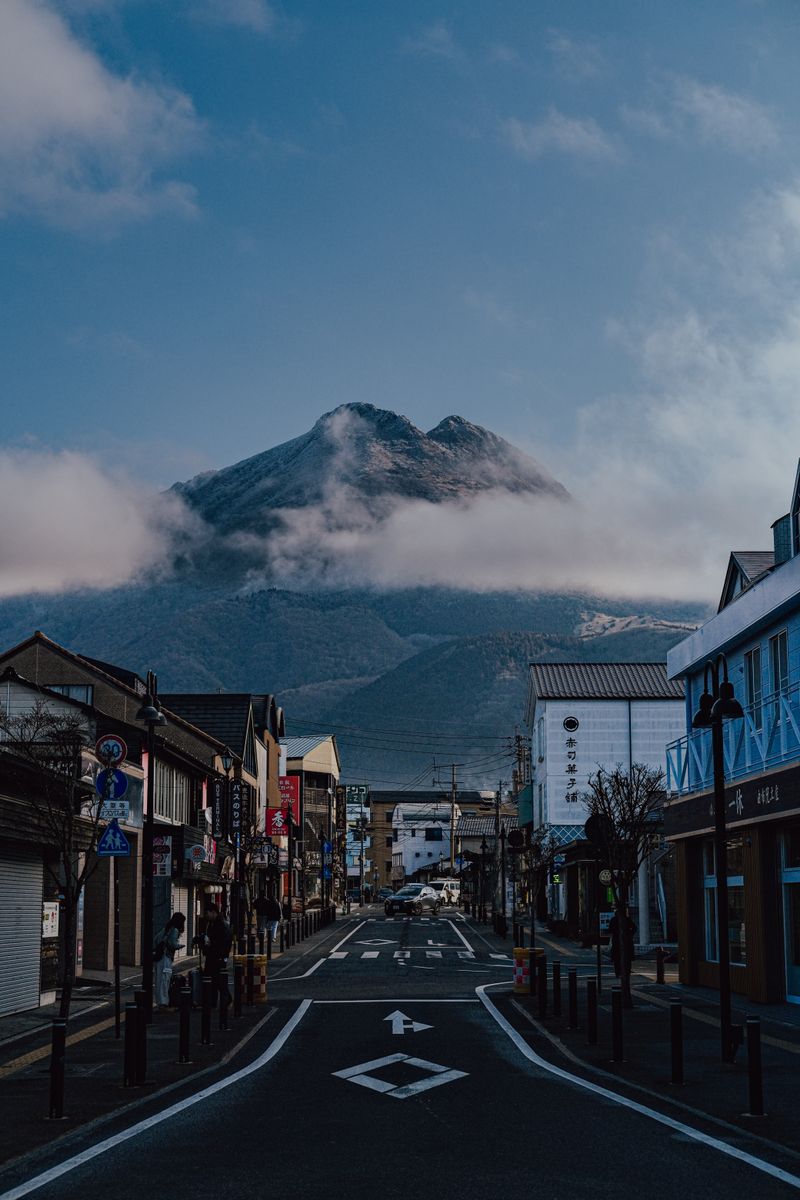
Take the Kyudai Line limited express to Yufuin (35 min from Oita). Walk to Lake Kinrin first — the morning mist over the lake, fed by warm spring water, lasts until mid-morning. The 400m Yufuin Floral Village and Bunko street has quality craft and food shops without being a souvenir trap; the cheese and smoked goods from the local farms are genuinely good. Afternoon: rent a bicycle and ride the plateau road toward the base of Mount Yufu (1,584m) for the best view of the town in its mountain bowl.
Take the Nippo Main Line to Usuki (40 min from Oita City). The stone buddha site requires 90 minutes; the figures are more refined in person than photographs suggest. Usuki City itself has a well-preserved castle town quarter along the Nomi River, with the remains of Usuki Castle on a promontory above. Return via Oita for lunch and evening. Alternatively, substitute Nakatsu in northern Oita — the karaage (deep-fried chicken) capital with over 70 specialist restaurants in a single small city.