Islands, Reefs, and Ryukyu Culture
Living in Okinawa
A subtropical island chain with its own language, food culture, and history — the most distinct place to buy property in Japan, and the one with the most vacant homes.
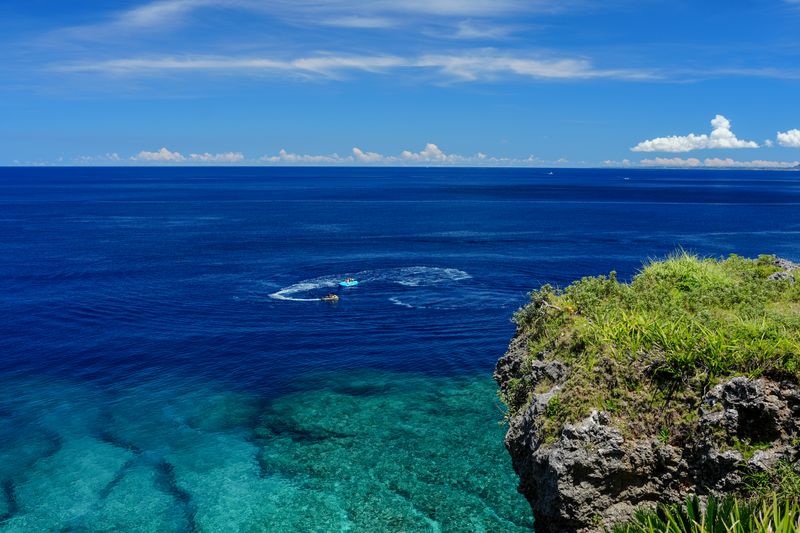
Coral reefs with visibility measured in tens of metres, whale sharks at Churaumi, and turquoise water that photographs true.
Five centuries of Ryukyu Kingdom history: Shuri Castle, sanshin music, Eisa drum dance, and a food tradition separate from the mainland.
One of the world's Blue Zones — the food, the pace, and the social culture have produced documented clusters of centenarians.
Japan's largest vacant-property inventory by prefecture. Prices from essentially free on outer islands to serious money near Naha.
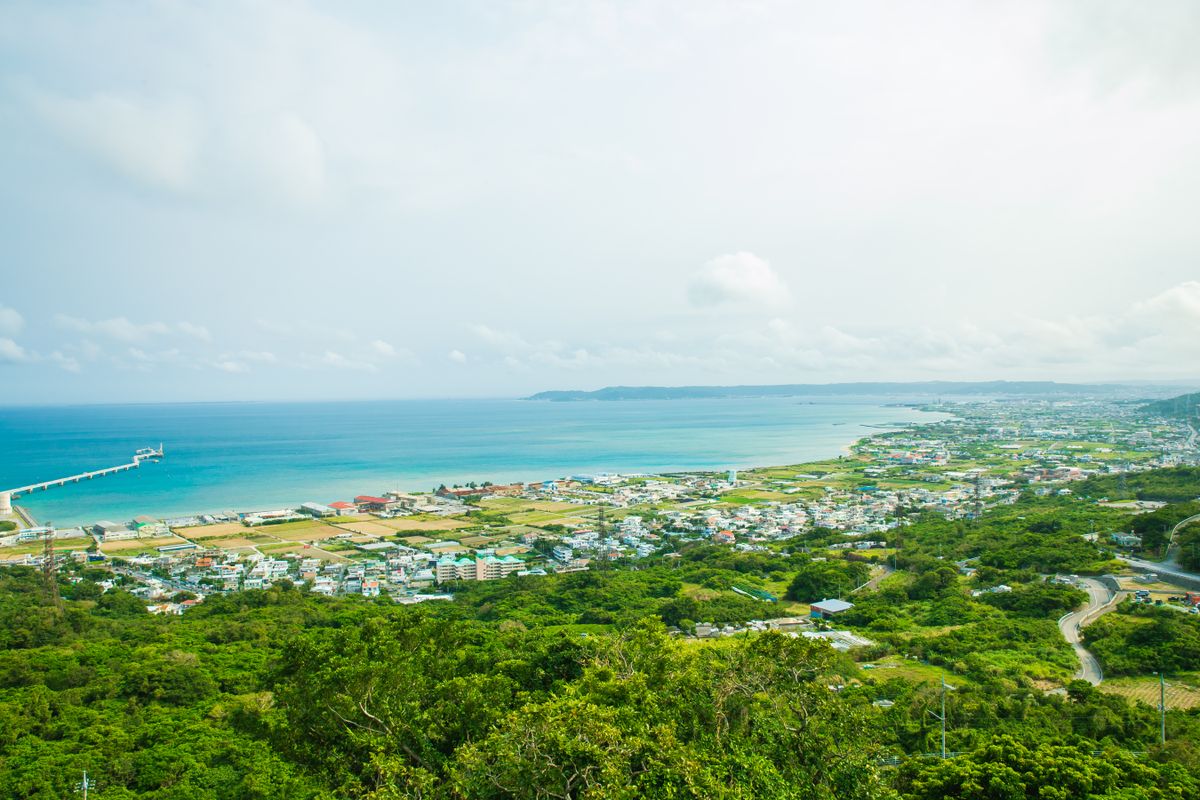
Okinawa from the Air
The main island's turquoise reef coast — the water colour is structural, produced by shallow coral shelves a few metres deep just offshore.
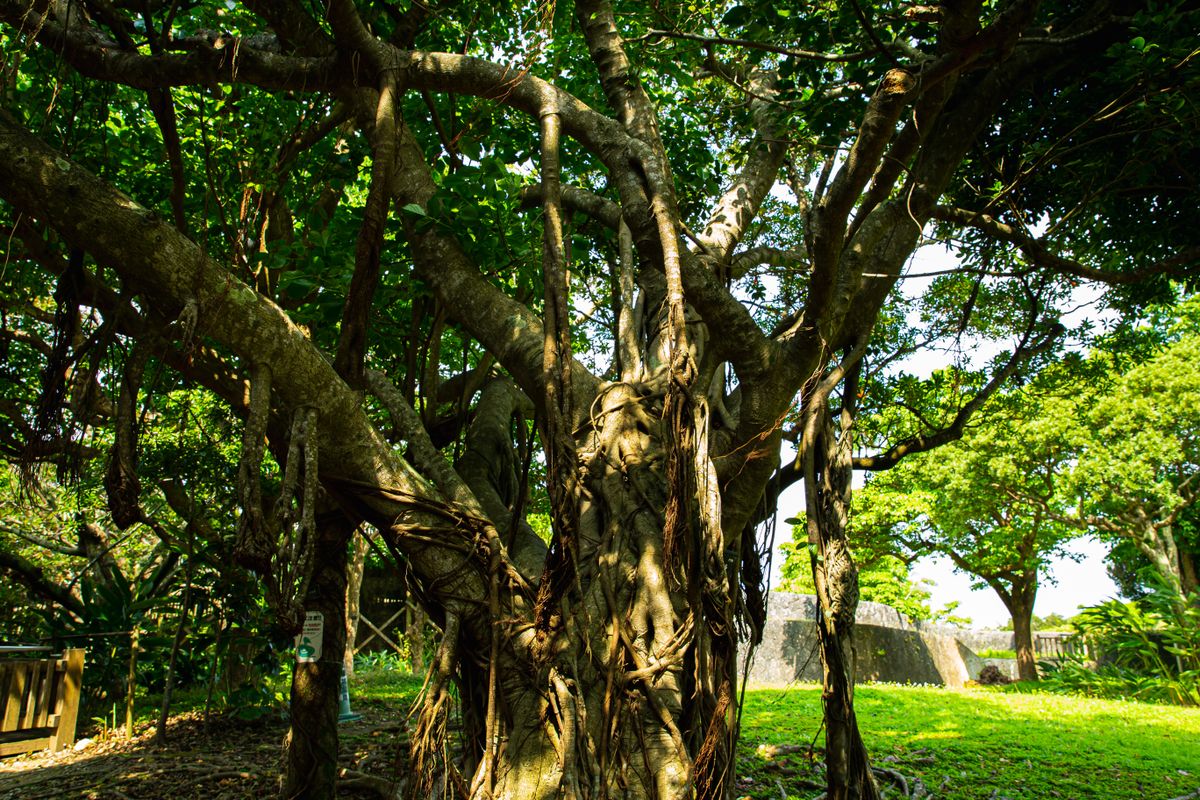
Gajumaru Tree
The gajumaru fig — Okinawa's prefectural tree — marks every park and old lane on the island. Its spreading aerial roots are one of the visual signatures of subtropical Okinawa.
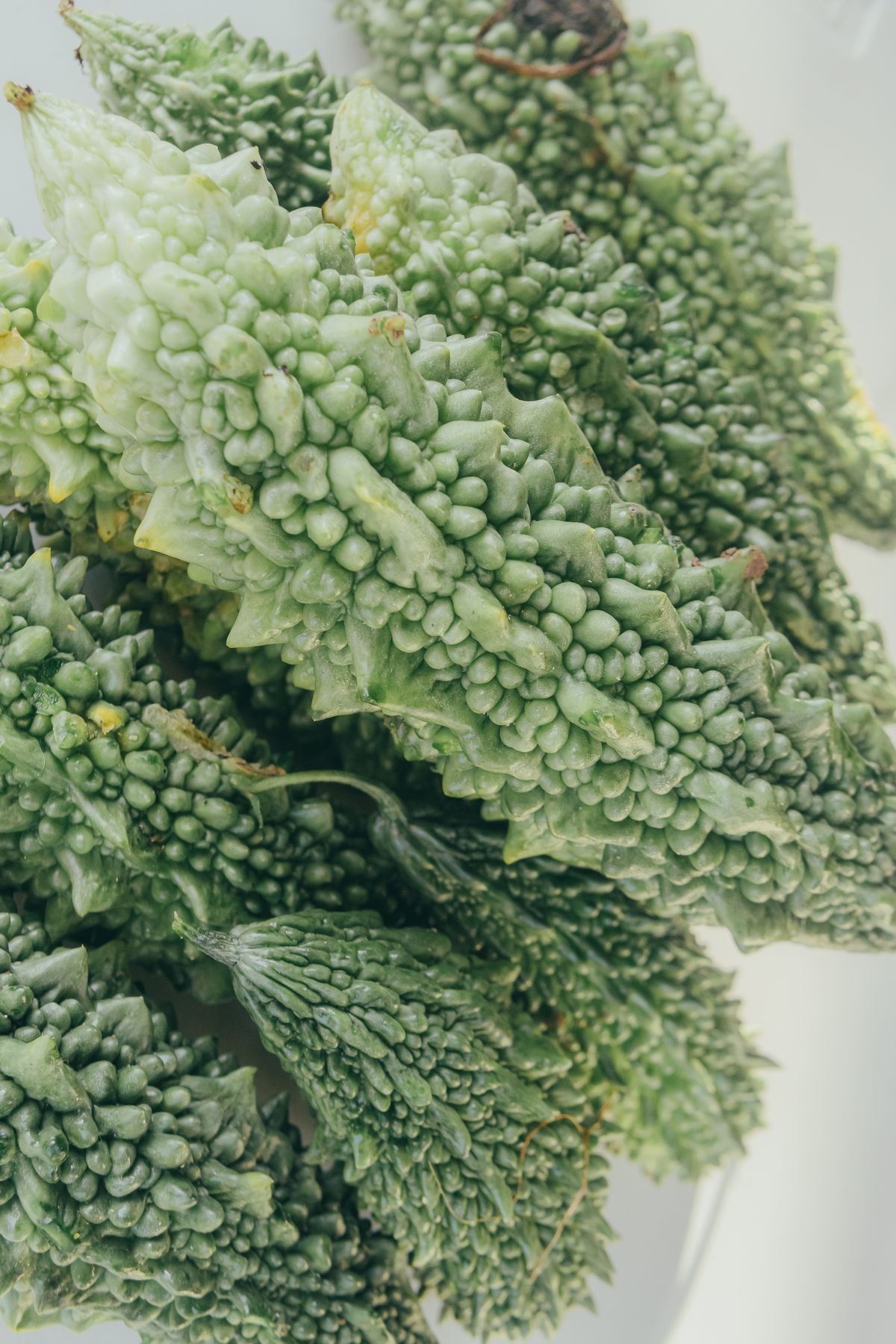
Goya — Okinawa's Signature Vegetable
Bitter melon (goya) is the centrepiece of goya champuru, the most iconic dish in Okinawan home cooking. It also appears in everything from tea to chips.
Why People Choose Okinawa
Okinawa is the outlier in Japanese real estate. It sits 1,600 kilometres south of Tokyo, in a climate that is subtropical year-round, on islands that spent five centuries as an independent kingdom before annexation in 1879. The culture, the food, the language (Uchinaaguchi), and the architectural sensibility are all expressions of a tradition that mainland Japan influenced but never entirely absorbed. For buyers who want somewhere genuinely different from the mainland template, that distinction is the proposition.
The practical case is real too. Okinawa's property inventory is the largest in Japan by prefecture — a function of decades of outmigration and an ageing rural population on the outer islands. Prices on the main island range from serious money near Naha and the beach resort belt to very little in the agricultural north. On the outer islands, prices fall further. The coral reefs, the food, the climate, and the access via Naha Airport sit at one end of the scale; the isolation, the car dependency, and the distance from mainland institutions sit at the other.
Naha is a real city — Yui Rail monorail, convenience stores, restaurants, a working airport. Outside the capital the pace shifts fast. Many buyers underestimate how car-dependent the main island is beyond the monorail line.
Naha Airport to Tokyo Haneda is about 2h30. The Yui Rail runs 17km across Naha. Elsewhere: rent a car. Inter-island ferries take hours; small planes are faster for the outer islands.
Naha apartments ¥3M–¥12M. Central and north main island houses ¥500K–¥5M. Near beach resorts (Onna, Chatan) ¥5M+. Outlying island akiya from ¥200K — some essentially free with conditions.
The capital: Kokusai-dori shopping street, Shuri Castle, Makishi Market, and the only rail transit in the prefecture. Urban, accessible, practical.
The American Village area — US base influence, international food, younger crowd, beach access. The most cosmopolitan stretch outside Naha.
The resort belt: Churaumi Aquarium, ocean views, beach hotels, and quieter residential streets behind the resort strip.
The outer islands: flight from Naha, turquoise water, coral, slower pace, and a completely different proposition from the main island.
Where To Start
Four ways to start in Okinawa
Use Naha as a base for your first few days: Kokusai-dori, Shuri Castle and its stone gate district, and the Makishi market to understand what Okinawan food actually looks like before you go hunting for it.
The main west coast road takes you through Chatan's American Village, past beach hotels and resort towns, and eventually to Churaumi Aquarium and the coral gardens of Sesoko Island.
Route 329 on the east side of the main island is quieter, less touristed, and gives a more honest read of what residential Okinawa looks like — the towns are smaller, the prices are lower, and the pace is more local.
Miyako or Ishigaki tells you whether you're really in the outer-island camp. The turquoise water is not exaggerated. Neither is the isolation.
Daily Life
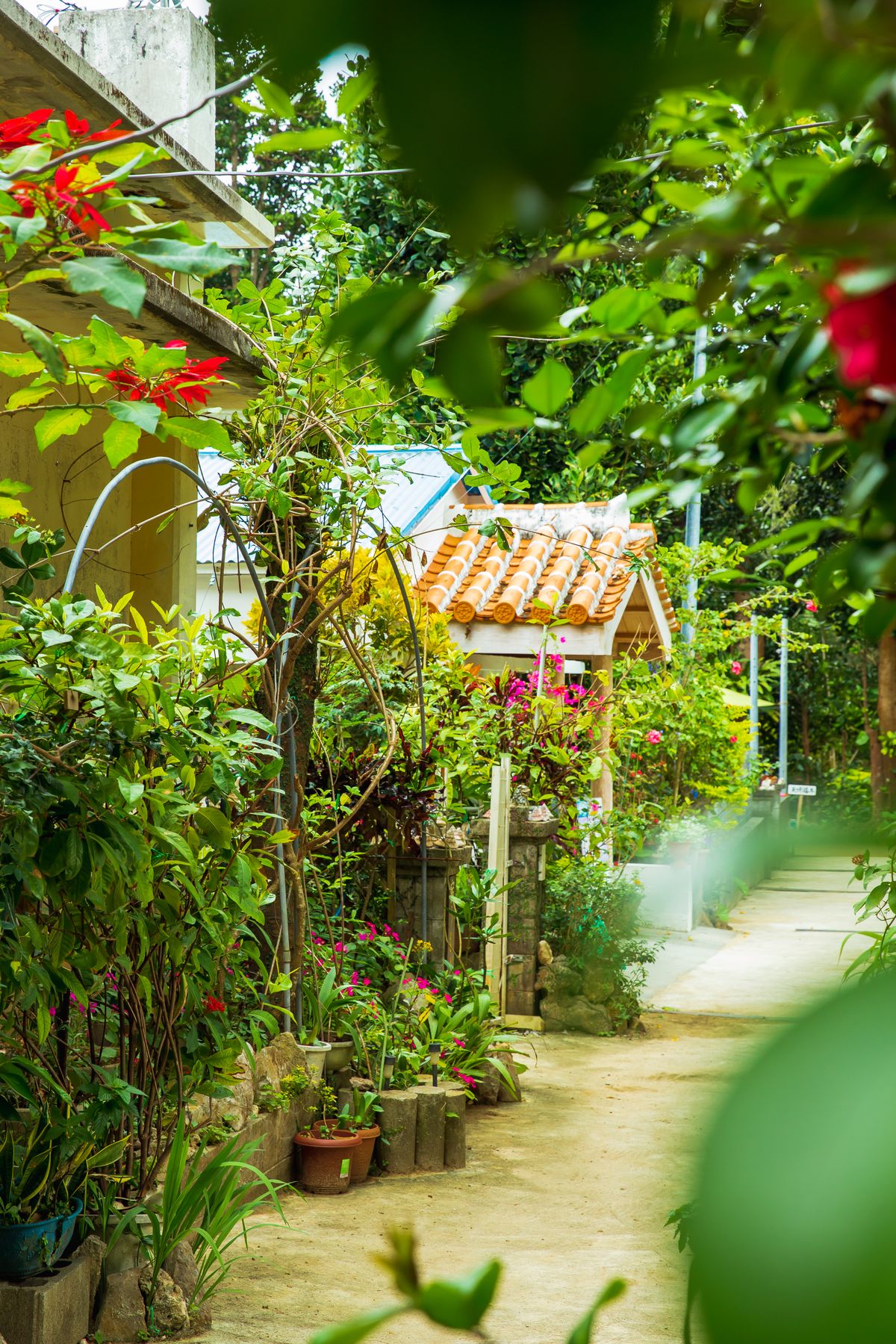
Naha functions as a real city. The Yui Rail monorail connects the airport to Shuri in under 30 minutes; Kokusai-dori has restaurants, bars, pharmacies, and an indoor market. The Makishi Public Market is a working market, not a tourist reconstruction, and the streets around it give a clear read on what ordinary shopping and eating looks like here. Shuri, the former royal capital on the hill above Naha, is quieter and residential, with the stone-paved lanes of Kinjo-cho running down from the castle grounds.
Outside Naha, a car is essential. The main island is roughly 100km long and 10km wide; the west coast resort strip between Chatan and Onna has the beaches and the international supermarkets; the east coast is quieter and less developed. The US military presence — roughly 70 percent of Japan's US bases are in Okinawa — shapes the economy and culture of the central island zone, particularly around Okinawa City and Chatan, in ways that make it feel more international than the typical rural prefecture.
Food and Drink
Okinawan food is its own tradition. Goya champuru — bitter melon stir-fried with tofu, egg, and pork or Spam — is the signature dish, bitter and savoury in a combination that takes adjustment but becomes addictive. Okinawa soba (thick wheat noodles in a clear pork and bonito broth, topped with braised pork ribs) is not Japanese soba at all and is served in dedicated soba shops throughout the islands. Rafute (melt-soft pork belly braised in awamori and soy) and sea grapes (umi-budou — clusters of tiny spheres with a pop of seawater and seaweed flavour) round out the canon.
Awamori is the island's distilled spirit — made from Thai long-grain rice rather than Japanese short-grain, aged in clay pots, and ranging from young and fierce to old and complex. Orion Beer is the local lager. The food culture is partly why Okinawa has historically been one of the world's longevity hotspots: a diet heavy in sea vegetables, tofu, pork, and bitter greens, eaten in moderate portions across a social structure that keeps people active well into old age.
Culture and Events
Shuri Castle is the centrepiece of Ryukyu cultural heritage — a UNESCO World Heritage site rebuilt after wartime destruction and most recently after the 2019 fire, whose reconstruction is ongoing. The castle's main hall glows in vermilion lacquerwork and Ryukyu-style curved rooflines that show Chinese and Southeast Asian influence alongside Japanese. Below the castle, the Kinjo-cho stone-paved lane and the surrounding neighbourhood give the most honest sense of what the royal city looked like at street level.
The Eisa drum dance festival runs through August, filling streets across the main island with groups of young performers in white robes beating large barrel drums. The Naha Tug-of-War (October) is one of the world's largest, listed in the Guinness Book of Records, pulling a rope several hundred metres long through the streets of Naha. The sanshin — a three-stringed instrument related to the Chinese sanxian — is the sound of Okinawa: played at festivals, in bars, and in living rooms with an informality that speaks to how embedded music culture still is here.
Weekends and Escape
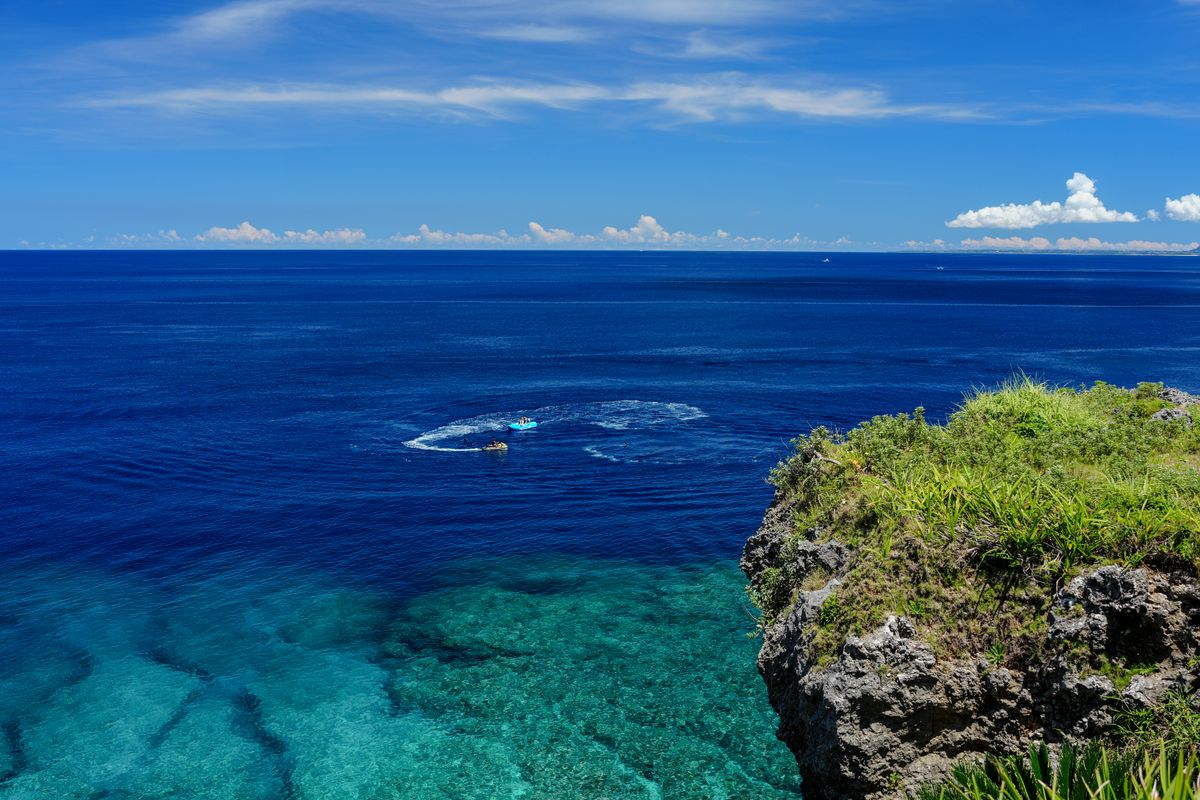
Churaumi Aquarium at Ocean Expo Park in Motobu is the destination that most first-time visitors to the north organise themselves around — a tank large enough to hold multiple whale sharks and manta rays that gives a sense of what the surrounding reef ecosystem actually contains. The nearby Kouri Bridge (1.9km over clear blue water connecting the main island to Kouri Island) has become Okinawa's most photographed viewpoint.
The outer islands are the bigger draw for buyers who stay. Miyako-jima is a 45-minute flight from Naha and has some of the clearest water in Japan — the Yabiji reef system, 10km offshore, is a shallow coral plateau that becomes a temporary island at low tide. Ishigaki is the administrative hub of the Yaeyama island group, with its own airport, more restaurants, and a gateway to Iriomote (mangroves, waterfalls, wild jungle on a scale unusual for Japan). The Kerama Islands, 35 minutes by ferry from Naha, have the best snorkelling and diving accessible from the capital.
Three Days In Okinawa
A simple first-trip route
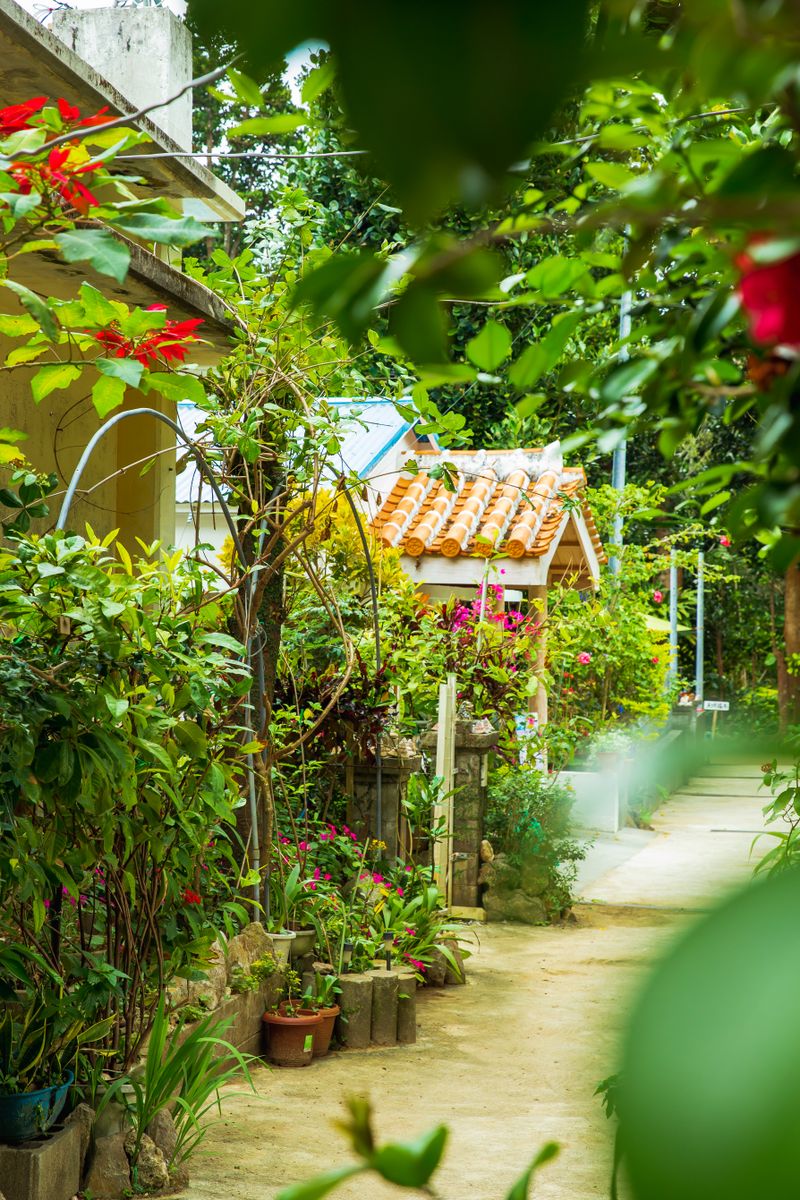
Morning at Shuri Castle and the Kinjo-cho stone-paved lanes below it, afternoon through Makishi Public Market, evening at a Kokusai-dori awamori bar with goya champuru and Okinawa soba.
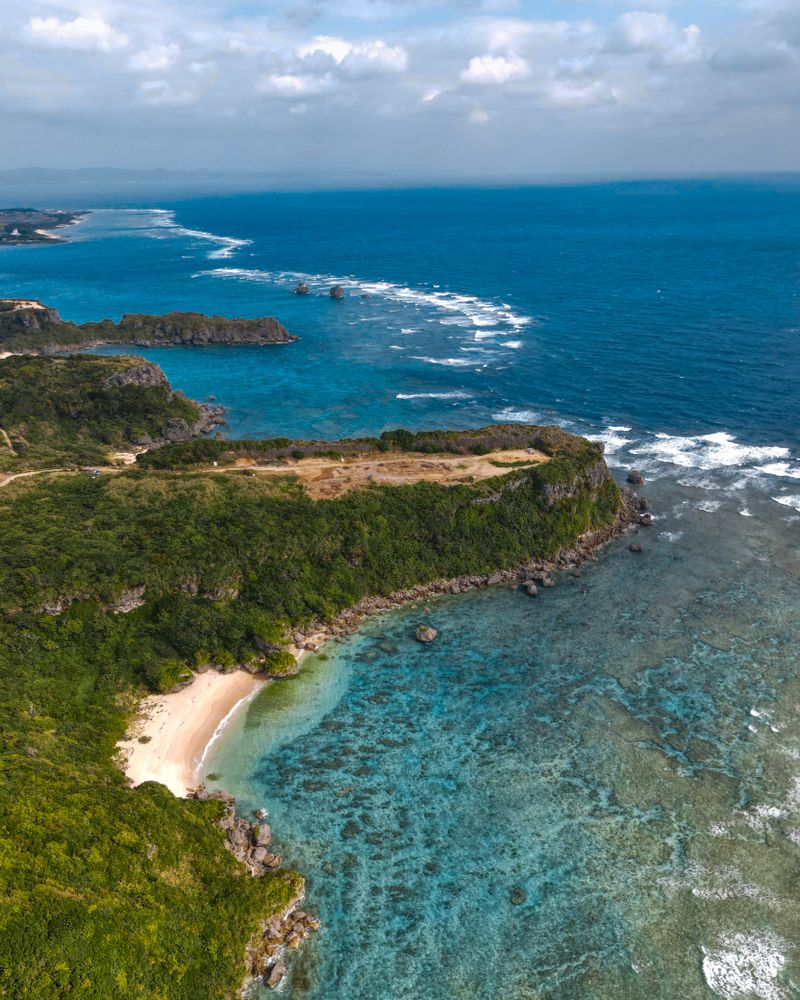
Take the Naha Expressway north, stop at Kouri Bridge for the view, then Churaumi Aquarium's whale sharks. Return via the resort strip at Onna or Manza Beach — the ocean colour is the thing you came for.
Drive Route 329 south on the quieter east side — smaller towns, local cafes, working fishing harbours, and a population that is not performing for tourists. This is what buying here actually looks like day-to-day.