

Japan's Hot Spring Capital, the Most Unusual Geothermal Landscape in Asia, and a Quiet Onsen Town with Morning Mist
Living in Oita
Home to the most hot spring bathing facilities of any prefecture in Japan -- including the Eight Hells of Beppu, where pools boil blood-red and cobalt-blue from volcanic vents -- alongside Yufuin, one of Japan's most refined onsen resort towns, and kabosu citrus that exists almost nowhere else.
Why People Choose Oita
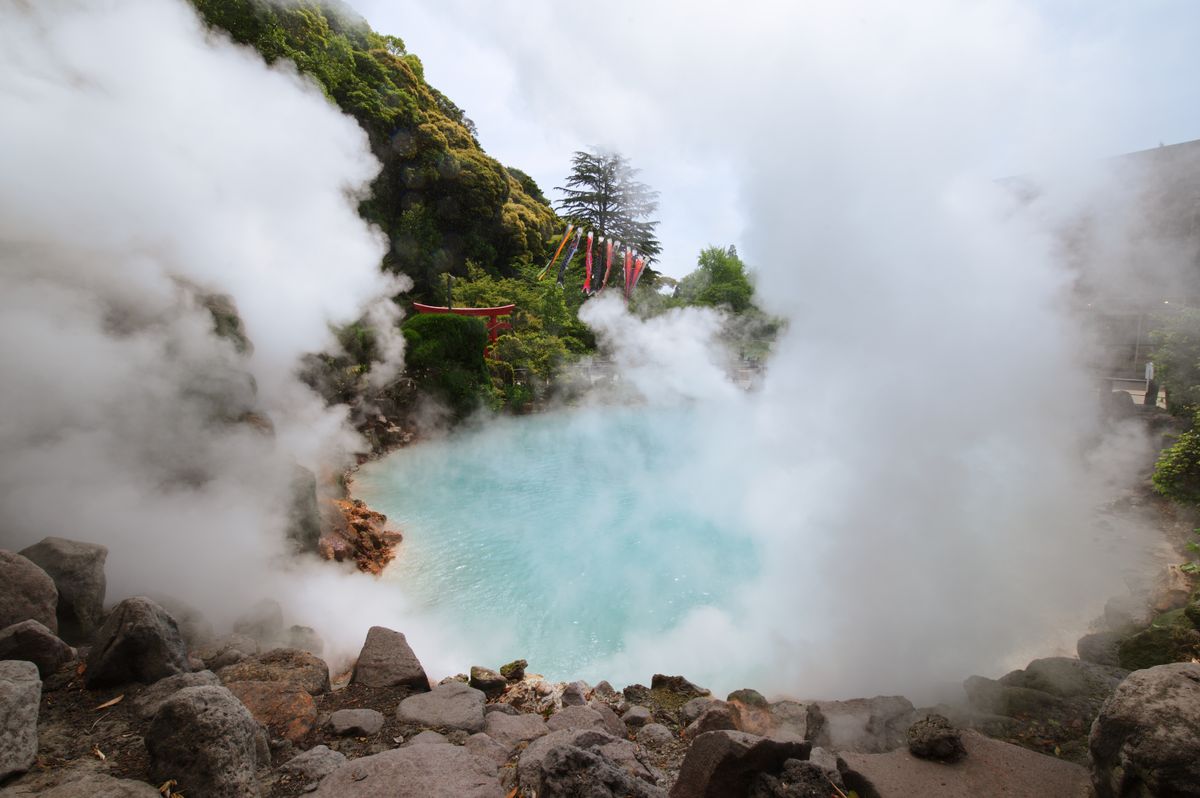
Oita's case is onsen access unlike anywhere else in Japan. The prefecture has 4,456 hot spring sources -- the most of any prefecture in Japan -- and Beppu discharges 130,000 tonnes of hot spring water daily, the highest volume of any spa resort in Asia. The practical consequence is that onsen bathing in Oita costs ¥100--¥620 at a public facility, not the ¥1,500--¥3,000 charged at designed spa hotels in other regions. Most Beppu residents live within walking distance of multiple public baths.
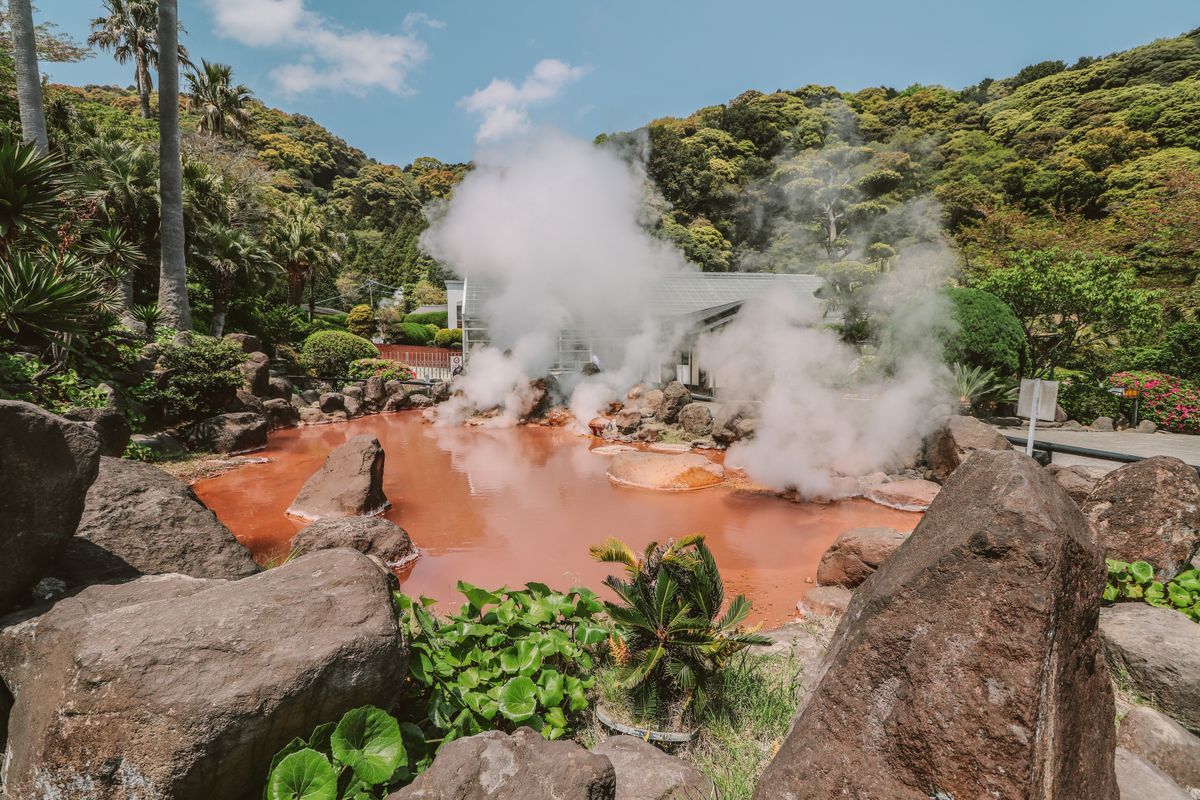
The Eight Hells of Beppu are the most unusual geothermal landscape in Japan -- boiling mineral pools coloured by their chemistry rather than any human intervention: cobalt blue from sodium cobalt sulphate at Umi Jigoku, blood red from iron oxide at Chinoike Jigoku (which has operated for over 1,000 years as documented in records from 1000 AD), grey mud boiling in slow bubbles at Oniishibozu, and milky white at Shiraike. These are not bathing pools but viewing attractions, and the combined circuit takes about 90 minutes.
Yufuin is the prefecture's second major draw -- a plateau town that has managed its development carefully enough to remain pleasant at scale. The Yufuin Onsen Tourism Association has consistently rejected large hotel proposals that would change the town's character; the result is that the boutique ryokan and craft street remain viable and not overwhelmed.
Daily Life in Oita
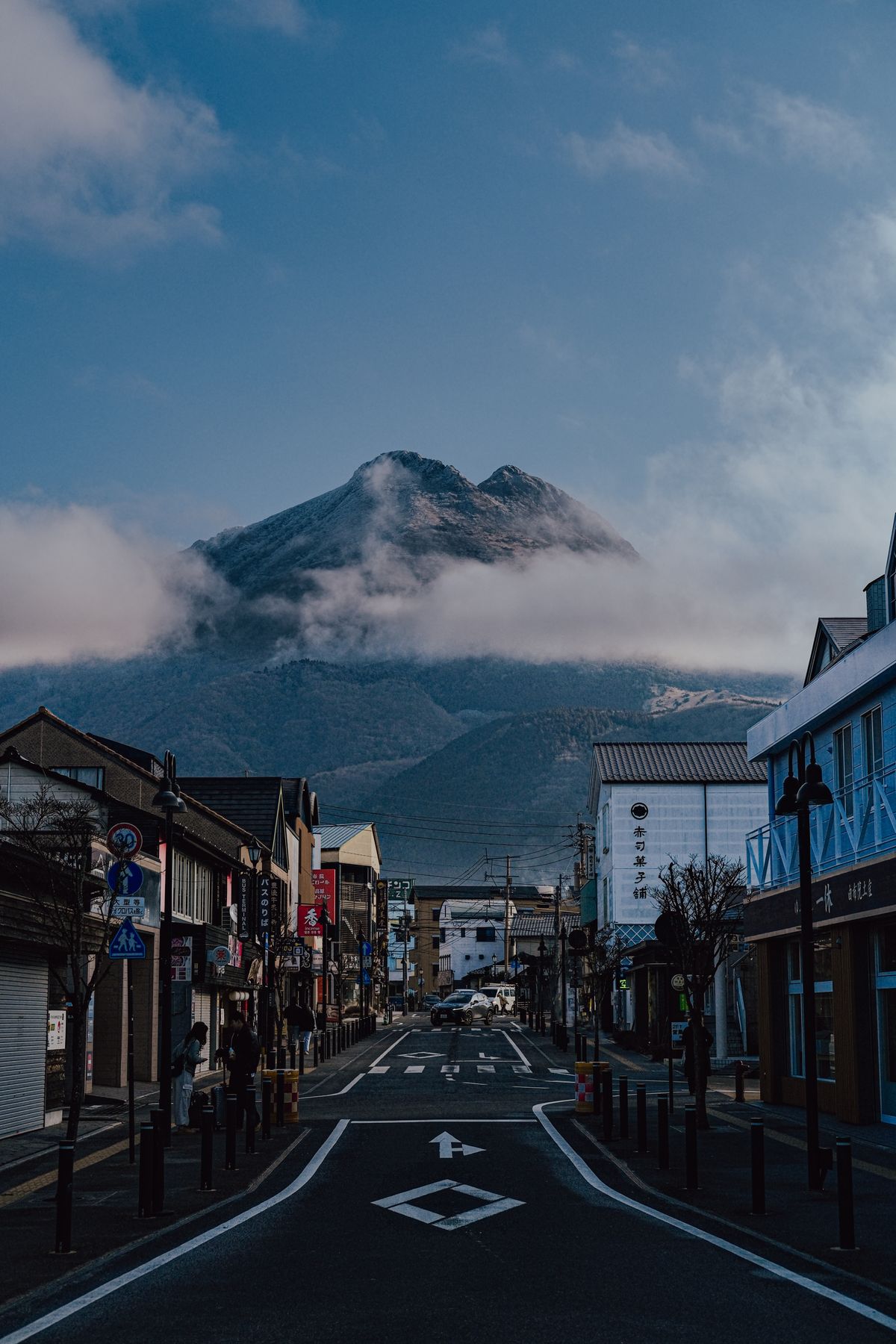
Living in Beppu means living with the onsen infrastructure as genuine daily amenity: neighbourhood public baths (machi-no-yu) are ¥100--¥200 entry, open from early morning, and function as the social hub of each district in a way that has no equivalent in most Japanese cities. The sulphur smell is noticeable near the Kannawa vents but fades to background level elsewhere. The city's tourism economy keeps the food and entertainment offering active year-round.
Yufuin is small enough that residents know each other, and the town's deliberate decision to cap hotel size and maintain agricultural land around the town creates a quality of life -- green views, the sounds of the plateau, proximity to hiking terrain -- that justifies the residential property prices. The tradeoff is that the daily shopping requires a drive to Oita City or Beppu for anything beyond the basics.
Oita City provides the practical infrastructure: Oita University Medical Centre is one of the largest hospitals in Kyushu, the city has a functioning entertainment district around Miyako-machi, and the Sonic express to Hakata puts Fukuoka within two hours. For people who want onsen access, mountain proximity, and a functional mid-sized city without Tokyo commute culture, Oita City is underrated.
Food and Drink
Kabosu citrus is Oita's most distinctive culinary ingredient -- a small, flat, tart green citrus squeezed over sashimi, oysters, fugu (pufferfish), and nabe (hot pot). The flavour is more aromatic than lemon and less floral than yuzu. Over 95% of Japan's kabosu is grown in Oita Prefecture; outside the prefecture it is rare fresh and mostly available only as processed juice. When Oita restaurants present sashimi, a wedge of fresh kabosu is the standard condiment rather than the generic lemon used elsewhere.
Nakatsu karaage is a genuine culinary pilgrimage. The city of Nakatsu in northern Oita claims to be the origin of Japanese karaage (deep-fried marinated chicken) and has over 70 specialist karaage restaurants within the city. The Nakatsu style uses bone-in pieces marinated in soy and garlic before frying; the result is juicier and more flavourful than the boneless version that became standard nationwide. The Nakatsu Karaage Association maps the specialist restaurants.
Jigoku-mushi -- hell steaming -- uses Beppu's 98°C geothermal steam to cook food. The Jigoku-mushi Kobo Kannawa is a public facility where visitors bring or buy raw ingredients and cook them over the vents; the steam produces unusually clean-tasting results because there is no added water. Sweet potato, eggs, and pork shoulder are the traditional choices.
Culture and Heritage
The Usuki Stone Buddhas were carved into volcanic tuff cliff faces around 900--1100 AD -- 61 figures in four groups, designated Japan's first National Treasure in the sculpture category in 1995. The preservation quality is exceptional: the face on Dainikichinen (Great Sun Buddha) retains the original paint traces and carving detail after a millennium. Usuki City also has a preserved castle town quarter along the Nomi River, the remains of Usuki Castle above the town, and a significant fugu (pufferfish) processing industry.
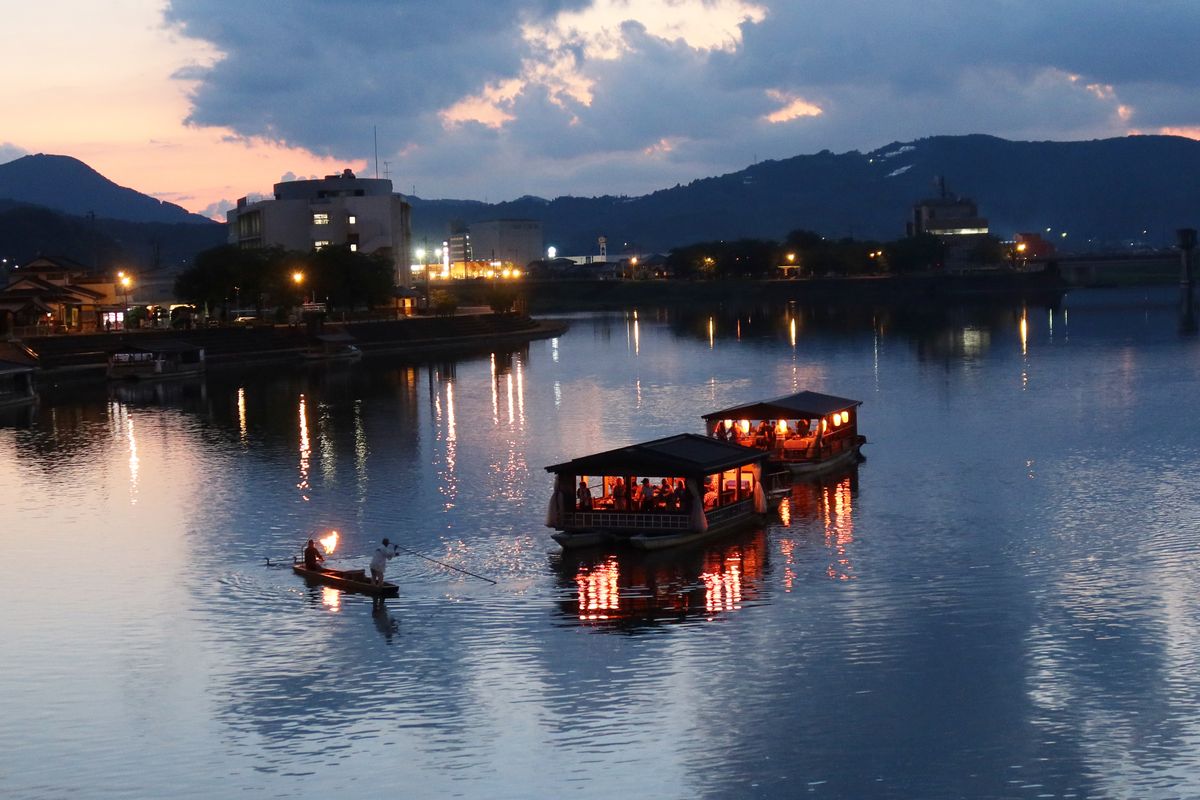
Hita City's Mameda-machi district is one of Kyushu's best-preserved Edo merchant streetscapes -- a 400m riverside quarter of tile-roofed kura warehouses and merchant houses that operated as a key distribution node on the Chikugo River trade route. The Hita Gion Festival (July) is one of Kyushu's major summer festivals. June's Hita Tenryu Firefly Festival attracts visitors to watch hotaru above the Mikuma River, with paper lanterns floated on the water after dark.
The Beppu International Festival and Beppu Art Month in October--November have developed into a genuine contemporary art event, with installations using the onsen city's infrastructure -- steam vents, abandoned bathhouses, thermal pools -- as exhibition spaces.
Weekends and the Outdoors
Mount Yufu (1,584m) above Yufuin is a 3-hour return hike from the trailhead near Yufuin station. The ascent is straightforward on a clear trail; the summit has direct views across the Oita plateau to the Beppu bay coast and, on clear days, across to Shikoku. The descent via the east face returns to Yufuin town. The trail is passable without specialist equipment from April to November.
The Kokonoe Yume suspension bridge (390m long, 173m above the Shinmigawa gorge) is Japan's longest pedestrian suspension bridge and crosses a volcanic gorge in the Kuju Highland area. The surrounding Kuju Flower Park has seasonal bulb displays; the Kokonoe onsen area (Makinoto, Chojabaru) has low-key ryokan at prices well below Yufuin.
The Kuju highland plateau running west from Yufuin is one of the most accessible alpine meadow landscapes in Kyushu -- the Handa highlands (1,200m) have summertime wildflower fields and the remnant volcanic craters of the Kuju range. The Aso-Kuju National Park designation covers both sides of the Oita-Kumamoto border.