Akiya Japan is a search engine. Buyers around the world use it to find property in Japan, and we point them straight to your original listing at the source. That's free exposure to people who are actively looking to buy, and it costs you nothing. We're not a broker and take no commission on any sale.
Akiya Japan is a search service, not a party to, agent for, or broker of this transaction. This listing is indexed from a third-party source; any purchase is arranged directly with the source's licensed agent.
A foreign buyer gets the same freehold ownership as a Japanese national. You can own the land and the building outright, and there's no restriction on selling it later.
What an akiya is.
An akiya (空き家) is a vacant house. Many come from municipal "akiya bank" registers set up to find owners for empty homes. These are real properties for sale, priced low because rural Japan has more houses than buyers, not because something is wrong with them.
What happens when you tap "Get Purchase Support".
The source listing is in Japanese and most agents don't work in English. Our partner takes it from there: they contact the agent, handle the price negotiation and the legal due diligence, and walk you through the purchase in English. You never have to deal with the Japanese site yourself.
What the tags on this listing mean for a buyer. Tap one for the short version, or read the full guide.
Highlights come from the listing's tags and the figures on this page, not from a model. See all terms in the glossary.
Buy4LDKHouse
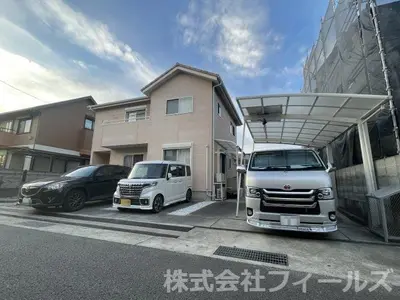
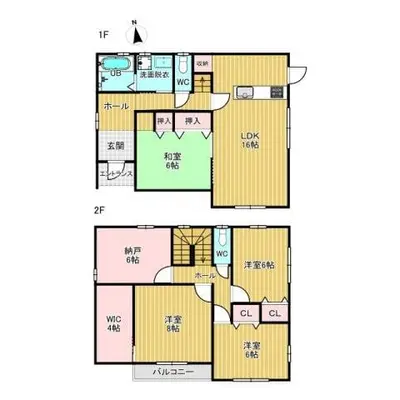
4LDK+S Detached House in Kitajima, Tokushima - 22 million yen
Built 16 years ago. Popular Kitajima Town with a land area of 60 tsubo! Parking for 4 cars possible.
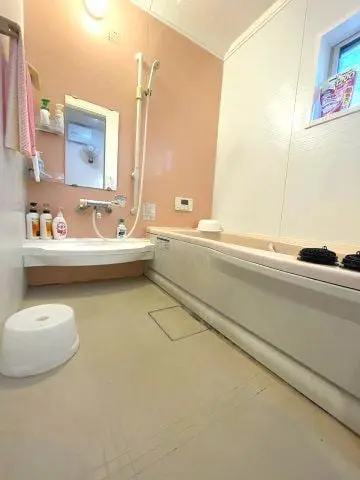
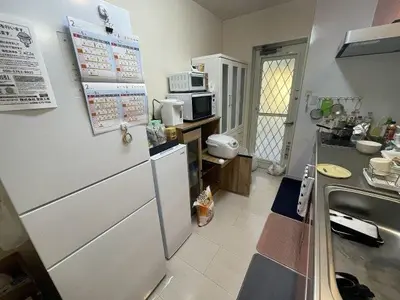
The spacious storage room is also attractive, and the property is in good condition. Wallpaper replacement and equipment repairs can be discussed at the seller's expense. Inspections are possible, so please feel free to inquire.
This description was AI-generated from the original Japanese listing and may contain inaccuracies. Please verify details with the source listing.
A fuller description is being written. It is usually quick, but it can take longer when we are busy.
We are writing the full English description for this listing now. Create a free account and we will email it to you the moment it is done.
Approximate location (district level). This source publishes only a district-level address, not the exact lot -- the shaded area on the map is the district, not the house. The precise address is released by the municipality on formal inquiry.
Check the original listing.
Map loading...
Street View loading...
Map layers are a subscriber feature
Every overlay below can go on this property's map. Subscribe to switch them on.
Hazard
Land & Planning
Amenities
This is a subscriber feature
Plot flood, landslide, tsunami and storm surge zones, zoning and active faults, minpaku eligibility, fiber coverage and nearby hospitals on this property's map.
The figures below split into known costs (set by law and contract -- your agent will charge at least these) and tax estimates (depend on the official "fixed asset valuation" the municipality assigns, which isn't confirmed until the transaction progresses). Always confirm exact amounts with your agent before proceeding.
Book a consult →
Known costs (one-time)
Set by law or contract. Your agent will charge AT LEAST these amounts -- actual fees may be higher depending on the agent and property.
Brokerage fee
For properties ≤¥8M: legal cap of ¥330,000 (most agents charge this). Above ¥8M: 3% × price + ¥60k + 10% consumption tax.
Judicial scrivener (from)
Required for ownership transfer registration. Varies with property complexity.
Subtotal (known)
Tax estimates (one-time)
Final amounts depend on the official fixed-asset valuation set by the municipality, which is only confirmed after closing. Ranges assume valuation 60--75% of sale price (the typical rule of thumb; final figure varies by municipality and property age).
Acquisition tax (est.)
Registration & stamp (est.)
Estimated total purchase
Range reflects municipal-valuation uncertainty on taxes. Known portion of is the floor.
How this listing compares with the rest of the market: its price against similar homes nearby and the land under it, plus condition, access, the area's population trend, hazard history, short-let rules and seismic code. The band is where it sits among every listing we score.
How this works
For reference only. This is an automated read on aggregated market data, not a property appraisal or valuation. Verify against the original listing and consult a licensed professional before deciding.
The full Value Index -- the score and every factor behind it -- is a subscriber feature.
Aggregated recent sold and rented listings in the area, shown for reference. This is market information, not an appraisal or valuation of this property.
Location
Type
Beds
Price
Land
House
View
* Sold properties shown for price comparison only. Prices reflect historical sale data.
Location
Type
Beds
Rent/Month
Land
House
View
* Rental prices shown are monthly rates. Contact property owner for current availability.
Get Support
Businesses on Akiya Japan that cover Tokushima. View an office to see what they do and get in touch.
Draw a loop around the area you want changed · let go and it closes itself
✨ Renovate this photo with AI. See it cleaned up or reimagined. Your first render is free.Subscribe to remove ads, get 30 credits every month and 15% off credit packs.
General Property Consultation - Not Property-Specific
Akiya Japan can connect you with an authorised licensed Japanese brokerage that provides comprehensive real estate guidance for foreign investors. This consultation covers your overall property purchasing strategy, not just this specific listing.
Their full-service support includes property search assistance, purchase guidance, management services, and eventual sale support. Discuss your investment goals, budget, preferred locations, or review your entire saved shortlist with their consultants via web conference or phone.
Initial Consultation Fee: $100
This fee covers your initial consultation session with a licensed broker.
Consulting with a licensed Japanese broker ensures you receive legally-compliant advice tailored to your needs. Akiya Japan receives no portion of their fee or any commission from the final sale. Working with a licensed agent is essential for protecting your investment in Japanese real estate.
Share Property
Leaving Akiya Japan
This listing is in Japanese
Our partner handles the inquiry, negotiation, and due diligence -- all in English.
This property was built in 2010. Japan has three major eras of earthquake building standards:
Pre-1981: Old Seismic Standard (旧耐震基準)
Properties were only required to withstand moderate earthquakes (Shindo 5). Many suffered significant damage in the 1995 Kobe earthquake. A structural assessment is recommended -- seismic retrofitting typically costs ¥1M-¥3M.
1981-1999: New Seismic Standard (新耐震基準)
Introduced after the 1978 Miyagi earthquake. Buildings must withstand a major earthquake (Shindo 6-7) without collapse. Performed significantly better in the 1995 Kobe earthquake than older buildings.
2000+: Revised Building Standards ActThis property
Enhanced requirements after the 1995 Kobe earthquake including mandatory ground surveys, wall balance calculations, and strengthened connections between structural components. The strongest standard.
Note: The building code era indicates what standards were required at construction. Actual structural condition depends on maintenance, materials, and any renovations performed since. A professional inspection is always recommended before purchase.
Japanese properties come in two types of land ownership. Understanding the difference is important before purchase.
Freehold (所有権 -- shoyūken)This property
You own both the building and the land beneath it outright. No ground rent is payable. You can sell, renovate, or demolish without needing the landowner's consent. This is the most common and straightforward ownership type for houses and condominiums in Japan.
Leasehold (借地権 -- shakuchiken)
You own the building but the land is leased from a separate landowner. You pay ongoing ground rent (地代, jidai) and the lease must be renewed -- typically every 30--50 years under older contracts, or as a fixed-term lease (定期借地権) with no renewal right. Leasehold properties are significantly cheaper to buy but carry ongoing costs and resale uncertainty. Always review the lease terms carefully before purchase.
Based on what is stated in the agent's listing.
What to ask the agent: For leasehold properties -- confirm the ground rent amount, the lease expiry date, renewal terms, and whether the landowner's consent is required for resale or major renovations.
Internet Connectivity
This property's area: 100% fiber coverage
Fiber coverage is estimated at the municipal level using data from Japan's Ministry of Internal Affairs and Communications (MIC). It represents the percentage of households in the area that can access fiber-to-the-home (FTTH) broadband.
95%+ -- Likely available
Fiber is available to nearly all households. Providers like NTT Flet's Hikari, au Hikari, or NURO Hikari typically offer service. Speeds of 1Gbps are standard, with 10Gbps available in some areas.
90--95% -- Probably available
Most of the area has fiber, but some pockets (especially newer developments or remote sections) may not. Check with NTT East/West before purchasing.
Below 90% -- Limited
Fiber may not reach this property. Alternatives include ADSL, mobile broadband (4G/5G home routers), or satellite internet (Starlink is available in Japan since 2022). Remote mountain or island areas are most affected.
How to check before buying
NTT East: flets.com/app2/cao -- enter the property address to check availability
Ask the listing agent or local municipal office about broadband infrastructure
Starlink: available nationwide as a backup -- no address restriction
Note: Coverage percentages are area-level estimates. Even in high-coverage areas, individual properties (especially very rural or mountainous locations) may not have fiber to the door. Always verify before purchasing.
Source: Ministry of Internal Affairs and Communications (MIC) broadband infrastructure data
Mobile Coverage
Coverage provided by Japan's major carriers
4G LTE: Near-universal in Japan
All major carriers (Docomo, au, SoftBank, Rakuten) provide 4G LTE coverage to over 99% of Japan's population. Even in rural areas, 4G connectivity is typically available from at least one carrier.
5G: 98.4% (Japan national average)
5G networks are widely deployed in this area. Urban centres and most residential areas will have 5G access from at least one major carrier.
5G figures are population coverage rates at the prefecture level, published annually by Japan's Ministry of Internal Affairs and Communications (MIC). They represent the share of the population with 5G access from at least one carrier -- not a guarantee of coverage at this specific property address.
Note: Rural, mountainous, or island locations may have weaker signal. In-building signal can also vary by carrier and building materials. Always test with your preferred carrier before purchasing.
This property is within a designated flood inundation zone. It means the area could be submerged if a nearby river overflows during a heavy rainfall event.
Inundation depth levels
0--0.5m: Knee-deep or less. Minor flooding, limited structural risk.
0.5--3m: First-floor flooding likely. Ground-floor contents at risk.
3--5m: First floor fully submerged. Second-floor evacuation required.
5m+: Roof-level flooding possible. Extremely high risk.
What to check: Review the local municipality's hazard map (ハザードマップ) for evacuation routes and emergency shelters.
Source: MLIT DisaPortal -- worst-case flood modeling per the Flood Control Act.
Tsunami Inundation Zone (津波浸水想定)
This property is within a designated tsunami inundation zone. Japan's coastlines face periodic tsunami risk from offshore earthquakes.
Evacuation planning is essential. Identify the nearest high-ground evacuation site (津波避難場所) before purchase. Many coastal municipalities have vertical evacuation towers.
Warning systems: Japan's early warning system typically provides 10--30 minutes before wave arrival for distant earthquakes. Cell alerts and sirens activate automatically.
Source: MLIT DisaPortal -- prefectural tsunami estimates based on worst-case offshore earthquake scenarios.
Storm Surge Zone (高潮浸水想定区域)
This property is within a storm surge zone. Storm surges occur when typhoon-force winds and low pressure push seawater inland, often compounding rainfall flooding near coasts.
Typhoon season: June--October is peak risk. Properties near Osaka Bay, Tokyo Bay, and Pacific-facing coasts face the highest exposure. Check your municipality's storm surge map for evacuation routes.
This property is within or adjacent to a landslide-prone area. Landslides in Japan are most common during prolonged heavy rainfall (梅雨, typhoons) and after earthquakes that saturate or destabilize slopes.
What to check: Ask whether the property has undergone slope stabilization works (法面工事). Check the municipality for past landslide history and evacuation level triggers.
Source: MLIT DisaPortal -- sediment disaster hazard zones per the Sediment Disaster Prevention Act.
Steep Slope Failure Zone (急傾斜地崩壊危険区域)
This property is within a Steep Slope Collapse Hazard Zone -- an officially designated area where a slope of 30° or steeper could fail, threatening buildings below.
Regulatory zone: Under the Steep Slope Collapse Disaster Prevention Act, construction and tree removal within these zones is restricted by the prefectural government.
What to check: Many prefectures fund retaining walls and slope protection works for designated zones. Ask whether protective works have been completed (法面工事済み) and check the municipal hazard map for evacuation triggers.
Source: MLIT DisaPortal -- steep slope failure zones per national and prefectural designation.
Debris Flow Zone (土石流危険渓流)
This property is near a debris flow hazard zone -- a mountain stream or valley where intense rainfall can trigger a fast-moving slurry of water, rock, and sediment.
Speed of onset: Debris flows can travel at 20--40 km/h with little warning. Evacuate at the first Level 3 (警戒レベル3) municipal alert -- do not wait for Level 4 or 5.
What to check: Look for sand control dams (砂防ダム) upstream -- these significantly reduce debris flow risk and are common in Japanese mountain valleys. Check the municipality's hazard map for evacuation routes.
Source: MLIT DisaPortal -- debris flow hazard zones per the Sediment Disaster Prevention Act.
Volcanic Hazard Zone
This property is within a volcanic hazard zone. Japan has over 100 active volcanoes, and municipalities maintain hazard maps showing potential reach of lava, pyroclastic flows, ashfall, and lahars.
Eruption alert levels: The Japan Meteorological Agency (JMA) issues volcanic alert levels 1--5. Level 2+ restricts access within the exclusion zone. Sign up for municipal alert notifications.
What to check: Review the nearest volcano's eruption history and current alert level at the JMA website. Ask the municipality for the volcanic hazard map (火山ハザードマップ) specific to this area.
Source: MLIT DisaPortal -- volcanic hazard zones per JMA and prefectural designations.
Earthquake History (USGS -- 250 km radius)
Japan experiences more seismic activity than almost any other country. The data shown comes from the USGS Earthquake Catalog -- the largest and most recent significant earthquakes recorded within 250 km of this property over the past 30 years.
Magnitude scale
M < 5.0: Minor shaking. Felt by people but rarely causes structural damage.
M 5.0--6.9: Moderate to strong. Can cause significant damage to older or poorly-built structures.
M 7.0+: Major earthquake. Can cause widespread damage. The 1923 Great Kantō Earthquake was M7.9.
What to check: Ask for the property's seismic compliance standard. Buildings built after 1981 meet Japan's "New Seismic Standard" (新耐震基準), and those built after 2000 meet stricter requirements introduced after the 1995 Kobe earthquake. For any pre-1981 structure, consider commissioning a seismic inspection (耐震診断).
Insurance: Earthquake insurance (地震保険) in Japan is government-backed and sold as a rider on fire insurance. It covers up to 50% of the fire policy amount. Strongly recommended for any property in a seismically active area.
Source: USGS Earthquake Catalog -- historical seismic data within 250 km of this property.
MLIT's liquefaction tendency map rates this ground as prone to liquefaction in a strong earthquake, based on its landform (reclaimed land, former river beds and deltas score worst). Liquefaction can tilt or sink a building whose foundations were not designed for it. Ask about the foundation type and whether a ground survey (地盤調査) was done.
Source: MLIT Real Estate Information Library, liquefaction tendency map (250m mesh).
Large-scale fill embankment (大規模盛土造成地)
The land here was built up with fill during development. Large fill embankments can slide or settle in earthquakes and heavy rain. The municipality may have surveyed this one; ask the agent for its status.
Source: MLIT Real Estate Information Library.
Landslide prevention district (地すべり防止区域)
A legally designated area where landslides have occurred or are likely, with restrictions on works that could trigger movement. Building or altering the land may need permission.
Source: MLIT Real Estate Information Library.
Designated disaster hazard area (災害危険区域)
The municipality has designated this area as dangerous under the Building Standards Act. New homes are usually restricted or barred here. Confirm with the local building office before relying on any plan to rebuild or extend.
Source: MLIT Real Estate Information Library.
Past disasters recorded here (災害履歴)
Official records show at least one past disaster affected this exact location, such as flooding, landslide or tsunami. The events and their year appear in the assessment row. A place that flooded before can flood again; check what has changed since (levees, drainage, land raising).
Source: MLIT Real Estate Information Library, land history records.
Designated evacuation shelters (指定緊急避難場所)
The nearest officially designated shelters, with the hazards each one is designated for. Knowing the walk to a shelter is part of judging a location, and a shelter designated for tsunami is not always designated for flooding.
Source: MLIT Real Estate Information Library.
This property is within a designated hazard zone. Check the official MLIT DisaPortal map and consult the local municipal office for evacuation routes and disaster prevention information.
Short-Term Rental (Minpaku)
Japan's Minpaku Law (住宅宿泊事業法, enacted June 2018) allows homeowners to rent properties to tourists for short stays. Local governments can impose additional restrictions.
Special Zone (Tokku)
365 days/year. National Strategic Special Zones (like parts of Osaka and Tokyo) allow year-round short-term rentals with no day limit. Minimum stay: 2 nights.
Allowed (Standard)This property
Up to 180 days/year. The national standard under the Minpaku Law. Registration with prefectural authorities is required. No additional local restrictions beyond the national cap.
Moderate Restrictions
100-180 days/year. Local government has added restrictions such as banning operations during certain periods (e.g., school days, weekdays) or in specific residential zones.
Strict Restrictions
60-100 days/year. Significant local restrictions. Common in areas with hotel industry lobbying or concerns about neighborhood disruption. May limit operations to weekends, holidays, or off-peak seasons only.
Very Strict
Under 60 days/year. The most restrictive municipalities effectively discourage minpaku. Kyoto, for example, limits operations to January 15 - March 16 only (~60 days). Consider a ryokan or hotel license instead.
Important: Minpaku regulations change frequently. Always verify current rules with the local municipal office before purchasing a property for short-term rental. A ryokan/hotel license (旅館業法) or special zone approval may offer better flexibility than the standard minpaku registration.
Max 180 operating days/year in this municipality. Source: Japan Tourism Agency / MLIT