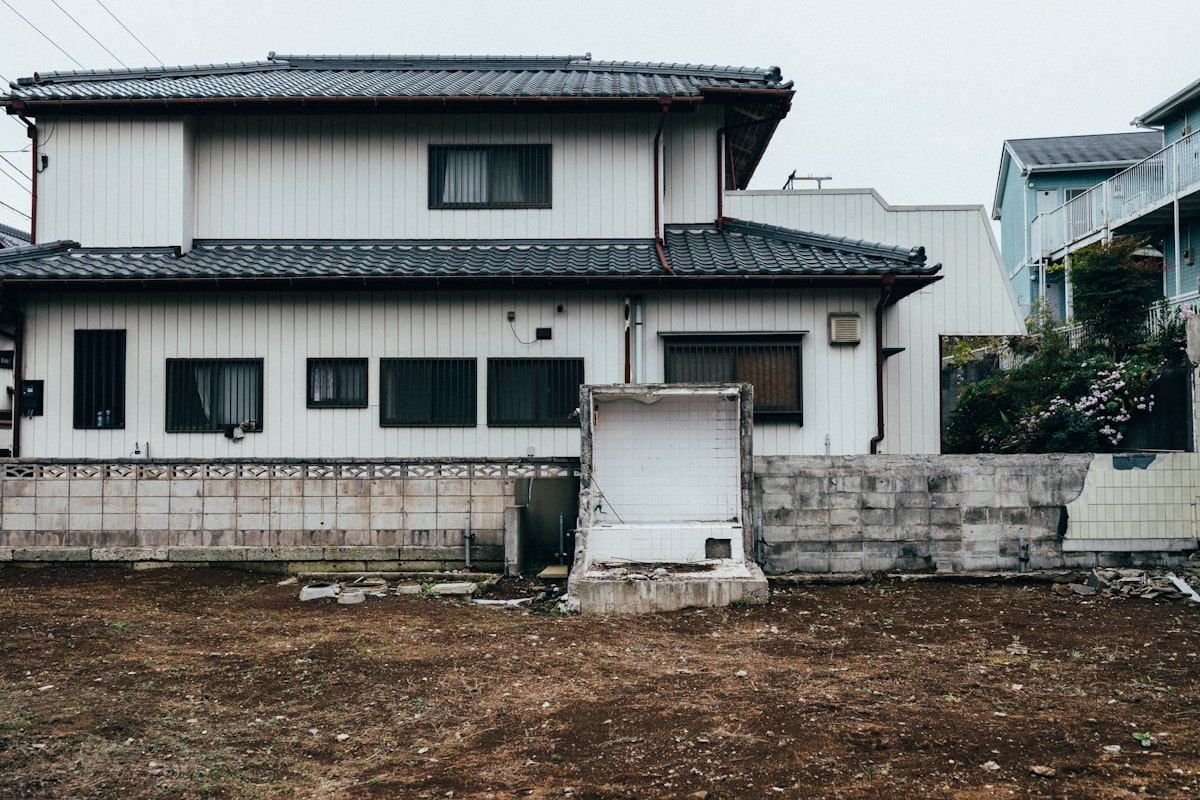
Every few months, a new headline makes the rounds: Japan is giving away houses for free! The story goes viral. Comment sections fill with people planning their escape to a rustic Japanese cottage. YouTubers film themselves "touring" overgrown properties while breathlessly announcing that you, too, could own a home in Japan for zero yen.
Here's what those stories leave out: almost everything that matters.
Zero-yen listings do exist. That part is true. But calling these houses "free" is like calling a rusted-out car on blocks "free transportation." The price tag is the least interesting — and least expensive — part of the equation.
The 0-Yen Listing Is Real. "Free" Is Not.
Japan's akiya banks — municipal databases of vacant properties — do occasionally list homes at ¥0. Some private sellers, desperate to offload inherited properties they can't maintain, will also transfer ownership for nothing. The government's own statistics put the number of vacant homes nationwide at nearly nine million, and that number grows every year.
So yes, you can find a house listed at zero yen. But the listing price and the cost of ownership are two wildly different things. The moment you accept that "free" property, you've taken on a bundle of legal obligations, financial commitments, and — in many cases — someone else's headache.
If this were genuinely a good deal with no strings attached, a local would have taken it already. That they haven't should tell you something.
What "Free" Actually Costs
Even when the purchase price is literally zero, the transaction costs alone will set you back several hundred thousand yen. And that's before you've touched a single wall.
| Cost Item | Typical Range |
|---|---|
| Purchase price | ¥0 |
| Registration & transfer taxes | ¥150,000–¥300,000 |
| Judicial scrivener fees | ¥50,000–¥150,000 |
| Property survey | ¥50,000–¥100,000 |
| Basic renovation | ¥2,000,000–¥5,000,000 |
| Major renovation | ¥5,000,000–¥15,000,000 |
| Annual property tax | ¥30,000–¥100,000 |
| Insurance | ¥20,000–¥50,000/year |
| Realistic first-year total | ¥2,300,000–¥15,700,000 |
Let's break that down.
The Paperwork Tax
Transferring property ownership in Japan requires a judicial scrivener (shiho shoshi) — a licensed legal professional who handles registration. Even on a ¥0 property, you'll pay registration and license taxes (touroku menkyozei), real estate acquisition tax (fudousan shutokuzei), and the scrivener's fee. Budget ¥200,000–¥400,000 minimum. These fees don't care what you paid for the house.
Renovation: Where the Real Money Goes
Most 0-yen properties are listed at that price for a reason. They've been vacant for years, sometimes decades. Typical issues include:
- Roof damage — Japan's climate is brutal on buildings. Typhoons, heavy snow, and humidity take a toll. Roof repair alone can run ¥500,000–¥2,000,000.
- Structural rot — Traditional wooden construction is beautiful when maintained. When it isn't, load-bearing beams deteriorate. Termite damage is common in warmer regions.
- Plumbing and electrical — Older homes may have outdated wiring and plumbing that doesn't meet current building codes. Full replacement: ¥1,000,000–¥3,000,000.
- Insulation — Many rural Japanese homes have essentially none. If you plan to live there through winter, adding proper insulation is non-negotiable.
A basic renovation to make a long-vacant akiya liveable starts around ¥2,000,000 (~$13,500 USD) and climbs quickly. Major renovations — the kind that turn a crumbling structure into a comfortable home — routinely hit ¥10,000,000–¥15,000,000 (~$67,000–$100,000 USD). In some cases, demolition and rebuilding is actually cheaper than renovation.

The Demolition Trap
Here's a scenario nobody mentions in the "free house" articles: you accept a 0-yen property, commission an inspection, and discover the building is structurally unsound. It can't be renovated. Now you own a piece of land with a condemned building on it.
Demolition costs in Japan typically run ¥1,000,000–¥3,000,000 depending on size and access. And here's the kicker — demolishing the structure can actually increase your property tax. Japan's tax code offers a residential land exemption that reduces property tax by up to one-sixth while a dwelling stands on the land. Remove the building and that exemption disappears.
This, incidentally, is one reason so many akiya remain standing. Owners can't afford to demolish them and don't want to pay the higher land tax. So they let them rot. And now they want to make that your problem.
Annual Carrying Costs
Property tax in Japan is assessed annually at roughly 1.4% of the assessed value, plus a potential 0.3% city planning tax in urban zones. Even on rural properties with low assessed values, expect ¥30,000–¥100,000 per year. Fire and earthquake insurance adds another ¥20,000–¥50,000 annually. These costs never stop.
The Social Contract Nobody Mentions
This is the part that catches most foreigners off guard, and it's arguably more important than the financial costs.

Neighbourhood Associations (Jichikai)
Most rural Japanese communities have a jichikai (自治会 (jichikai)) — a neighbourhood association that manages local affairs. Membership is technically voluntary. In practice, it's expected. Responsibilities include attending regular meetings, participating in community clean-ups, contributing to local festival preparations, and paying monthly dues (typically ¥500–¥2,000).
For someone who moved to the countryside imagining peaceful solitude, the reality of regular community obligations can be a rude awakening. These aren't optional in any meaningful social sense. Refusing to participate marks you as an outsider permanently.
Municipal Conditions
Some akiya bank listings come with strings attached. Common conditions include:
- Residency requirements — you must actually live in the property, not use it as a holiday home
- Business operation — some municipalities require you to open a shop, café, or guesthouse
- Renovation timelines — complete repairs within a specified period
- Resale restrictions — you can't flip the property for a set number of years
These conditions exist because municipalities are trying to revitalise dying communities, not provide cheap holiday homes for overseas buyers. They want residents who contribute to local life. If that's not your plan, a conditioned akiya bank listing is the wrong path.
Land Maintenance
In rural Japan, landowners are expected to maintain their property's impact on the surrounding area. That means clearing overgrown vegetation, managing drainage that affects neighbours' land, and keeping the property from becoming an eyesore or safety hazard. Neglect your property and the municipality may issue warnings — and in extreme cases, designate it a tokutei akiya (特定空家 (tokutei akiya)), which removes tax benefits and can lead to forced demolition at the owner's expense.
Why They're "Free" in the First Place
Understanding why someone gives away a house helps you understand what you're really getting.
Japan's population has been declining since 2008. Rural areas are losing residents far faster than urban centres. Young people leave for Tokyo, Osaka, and other cities. Their parents age. The family home empties. When the parents pass away, the children — now established in the city — inherit a property they don't want, in a town they don't visit, that costs money to maintain and taxes to hold.

Japanese inheritance law makes refusal complicated. Until recent reforms, heirs couldn't easily reject an inheritance without rejecting all of it — cash, investments, and that crumbling house in the mountains. Even now, the process of renouncing property inheritance requires court proceedings.
So the 0-yen listing is really the owner saying: please take this problem off my hands before it costs me more money. They're not being generous. They're cutting losses.
This doesn't mean every free or cheap akiya is worthless. But it does mean you should approach each one asking: what problem am I inheriting?
When a Cheap Akiya IS a Good Deal
None of this means that affordable Japanese property is a myth. Genuinely good deals exist — they just rarely come with a ¥0 price tag.
The sweet spot for most buyers is the ¥1,000,000–¥5,000,000 range (~$6,700–$33,500 USD). At this price point, you're typically getting:
- A property in known condition — sellers at this range usually provide inspection reports or at least honest descriptions
- Basic habitability — the roof doesn't leak, the structure is sound, utilities are connected
- Reasonable location — within reach of a train station, local shops, and medical facilities
- An active community — not a ghost town, but a small town with schools, services, and neighbours
A ¥3,000,000 house that needs ¥2,000,000 in updates is a dramatically better proposition than a ¥0 house that needs ¥10,000,000. You'll spend less total, start from a better baseline, and have fewer nasty surprises.
The key is doing proper due diligence: commission a building inspection (kenchiku shindan), verify the land survey, check municipal zoning, understand the local community expectations, and — critically — visit in person before committing.
If you're serious about finding affordable Japanese property with realistic pricing, browse current listings sorted by price to see what's genuinely available across the country.
Red Flags: How to Spot the Hype
Be wary of anyone presenting free or ultra-cheap Japanese houses without caveats. Specific warning signs:
- "Free houses in Japan!" headlines with no mention of transaction costs, renovation, or taxes. If someone tells you a house is free with no downsides, ask what they're selling. (Usually: YouTube views, affiliate links, or consultation fees.)
- Platforms that charge fees to "connect" you with free listings. Akiya bank listings are publicly accessible through municipal websites. You don't need to pay a middleman for access to free information.
- "Thousands of free houses available!" The vast majority of akiya bank listings are not ¥0. Those that are tend to have significant issues, conditions, or both.
- Renovation cost estimates under ¥1,000,000 for a long-vacant property. Unless the scope is purely cosmetic, this is unrealistic.
- No mention of the social or community dimension. Anyone who presents rural Japanese property ownership as purely transactional doesn't understand Japan.
Frequently Asked Questions
What's the catch with free houses in Japan?
The purchase price may be ¥0, but you'll still pay ¥200,000–¥400,000 in transaction costs (registration taxes, judicial scrivener fees, surveys). Most 0-yen properties need ¥2,000,000–¥15,000,000 in renovation, and you'll owe annual property tax and insurance regardless. Some listings also carry municipal conditions requiring residency or business operation. The realistic first-year cost of a "free" house is ¥2,300,000–¥15,700,000.
Can foreigners buy akiya in Japan?
Yes. Japan places no legal restrictions on foreign property ownership. Non-residents and non-citizens can buy land and buildings. However, some akiya bank programs run by municipalities may prefer or require applicants who intend to become local residents. Working with a licensed Japanese real estate agent is strongly recommended, and all documentation will be in Japanese. Having a local representative or bilingual support is essential for navigating the process.
Where to Go From Here
Cheap property in Japan is genuinely available. The country has a structural oversupply of housing that isn't going away. But "cheap" and "free" are different words for a reason.
If you're interested in finding affordable Japanese property — with transparent pricing and honest condition reports — start with a realistic search. Filter by price, region, and property type to find listings that match your actual budget, including the renovation costs that every property will carry.
For ongoing access to new listings, price drops, and market insights as they happen, explore subscription options that keep you ahead of the market without falling for hype.
The best deal in Japanese real estate isn't the one with the lowest price tag. It's the one where you understood exactly what you were getting — and what it would really cost — before you signed anything.