
Japan is one of the few developed countries where Americans can purchase real estate without restrictions, special visas, or government approval. No foreign buyer surcharge applies. No reciprocity check. The legal framework treats American purchasers on equal terms with Japanese nationals. Combined with a yen trading near multi-decade lows against the dollar and an inventory of hundreds of thousands of listed homes across all 47 prefectures, Japan has become one of the most compelling property markets for US buyers in 2026.
This guide covers the complete picture: legal status for Americans, what your dollars actually buy, the transaction process step by step, costs in USD, how to purchase remotely without flying over, how to transfer money internationally, and where Americans are buying.
Can Americans Buy Property in Japan?
Yes — without restriction. Japan imposes no ownership limits, no minimum purchase price, no residency requirement, and no foreign buyer surcharge. The relevant law, Japan's Real Property Acquisition Act, does not distinguish between domestic and foreign purchasers for residential or commercial property.
Two administrative requirements apply to non-resident foreign buyers. First, under the Foreign Exchange and Foreign Trade Act (FEFTA), a Form 22 notification must be filed with the Ministry of Finance within 20 days of completing the purchase. This is a reporting obligation, not an approval process — the transaction proceeds regardless. Your judicial scrivener (the Japanese equivalent of a settlement attorney) will typically handle this filing as part of closing.
Second, as of 2026, Japan's Legal Affairs Bureau requires nationality disclosure on registration documents. This is a transparency measure, not an ownership restriction.
One critical point: owning property in Japan does not grant any immigration benefit. It does not entitle you to a visa, residency, or work permit. Americans who want to live in Japan must qualify for the appropriate visa separately, independent of property ownership.
What Your Dollars Buy
At approximately ¥155 per dollar in mid-2026, American purchasing power in Japan is strong across every price tier:
- Move-in-ready akiya (vacant home) in suburban areas: often ¥3–10 million ($19,000–$65,000)
- Three-bedroom detached house in a regional Japanese city: typically ¥8–20 million ($52,000–$129,000)
- One-bedroom condo in central Osaka: typically ¥15–30 million ($97,000–$194,000)
- Quality apartment in central Tokyo (Shibuya, Minato ward): typically ¥40–80 million ($258,000–$516,000)
Transaction costs add approximately 5–8% on top. But compared to equivalent US markets, the pricing gap is significant — what costs $800,000 in San Francisco might have a direct equivalent in Tokyo for under $400,000.
Property Types Available to American Buyers
Detached Houses (Ikkodate)
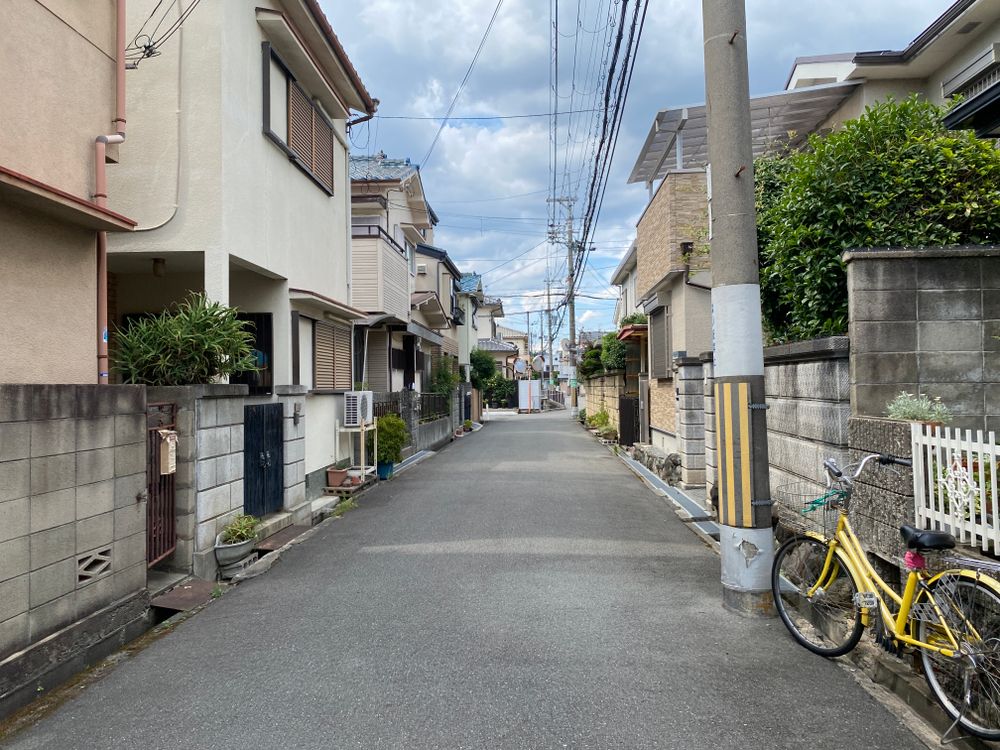
Single-family detached homes are the most commonly purchased property type for Americans outside central Tokyo. Most include the land. Prices range from under ¥5 million ($32,000) for older regional stock to ¥150 million+ ($970,000) for premium city-adjacent properties. Japan's depreciation model means building value typically declines over time while land value varies by location — growing urban areas appreciate; contracting regional markets may not.
Condominiums (Manshon)
Japanese reinforced-concrete condominiums — manshon — offer strata title ownership. Monthly management fees (¥10,000–¥40,000 / $65–$258) and building repair fund contributions are standard additional costs. Quality manshon in urban areas often hold their value better than equivalent wooden-frame houses.
Akiya (Vacant Houses)
Japan has a growing inventory of vacant homes listed through official akiya banks and major property portals. These range from structurally sound move-in-ready properties to homes needing renovation. Akiya exist across all 47 prefectures — suburban, coastal, and urban outskirts as well as countryside. Browse available akiya and listed properties across Japan on Akiya Japan, which aggregates listings from official akiya banks and the major Japanese portals in one English-language search.
Land
Americans can purchase land outright in Japan. Before buying a plot, verify the zoning classification (youto chiiki) — Japan's urban planning zones restrict what can be built on certain plots. Your agent or judicial scrivener can obtain this from the local municipality.
The Buying Process, Step by Step
Step 1 — Property Search
Browse listings in English on Akiya Japan, or directly on SUUMO, athome, and HOMES (Japanese). Set your budget in yen — all Japanese transactions are denominated in JPY — and account for exchange rate movement during the 4–8 week period between initial agreement and closing.
Step 2 — Engage a Licensed Bilingual Agent
All Japanese real estate agents must hold a takken (宅地建物取引士) licence. The listing agent is legally required to provide an Explanation of Important Matters (juyo jiko setsumei sho) before any contract is signed. This document covers legal status, zoning, encumbrances, building compliance, and material defect disclosures. American buyers should engage a bilingual agent or independent translator specifically for this document — it is the most important piece of paper in the transaction.
Step 3 — Purchase Contract and Deposit
Once terms are agreed, a sales contract (baibai keiyaku) is signed alongside a deposit of 5–10% of the purchase price. Japanese contracts are legally binding at signing — conditional clauses must be explicitly negotiated in writing. The deposit is typically non-refundable if you withdraw without legal cause.
Step 4 — Due Diligence
Between contract and closing, verify: registered ownership (via touki jiko shomeisho), any existing liens, building inspection records, and compliance with Japan's 1981 seismic code. Properties built before 1981 (kyusho) require additional structural assessment — particularly relevant if you plan future resale or financing.
Step 5 — Judicial Scrivener and Registration
Japan uses shihoshoshi (judicial scriveners) rather than attorneys for property registration. The scrivener verifies both parties' identities, prepares transfer documents, and registers the new title with the Legal Affairs Bureau. Scrivener fees range from ¥80,000–¥200,000 ($515–$1,290) depending on complexity.
Step 6 — Final Payment and Handover
The balance is transferred on closing day simultaneously with the scrivener filing the ownership registration. There is no escrow intermediary in standard Japanese transactions. Keys are handed over on confirmation of payment receipt.
Cost Breakdown in USD
Budget approximately 5–8% of the purchase price for transaction costs. Using a ¥20,000,000 ($129,000) example at ¥155/USD:
| Cost Item | JPY | Approx. USD |
|---|---|---|
| Agent commission (3% + ¥60k + 10% consumption tax) | ¥726,000 | ~$4,700 |
| Registration and license tax | ¥200–400k | ~$1,290–$2,580 |
| Judicial scrivener fee | ¥80–200k | ~$515–$1,290 |
| Property acquisition tax (3% of assessed value) | ¥120–300k | ~$775–$1,935 |
| Stamp duty on purchase contract | ¥10–60k | ~$65–$390 |
| Building inspection (strongly recommended) | ¥50–100k | ~$320–$645 |
Annual ongoing costs: fixed asset tax (kotei shisanzei) at approximately 1.4% of government-assessed value — typically 60–70% of market value — plus a city planning tax of up to 0.3% in urban areas. For a ¥20 million property, expect ¥60,000–¥150,000 ($390–$970) per year. Condominium owners add monthly management fees of ¥10,000–¥40,000 ($65–$258).
Buying Remotely: No Flight Required

A significant proportion of American buyers now complete Japanese property purchases without visiting Japan for the initial transaction. The legal mechanism is a power of attorney (inin jo), authorising a representative in Japan — a bilingual agent or judicial scrivener — to sign documents and attend closing on your behalf.
For the POA to be legally valid in Japan, it must be notarised and apostilled in the United States. You sign before a notary public, who submits the document to your state's Secretary of State for apostille certification. Allow 2–4 weeks depending on your state's processing times.
Practical checklist for remote buyers:
- Request video walkthroughs of the property and surrounding neighbourhood before signing anything
- Commission an independent building inspection report — do not rely solely on anything provided by the seller
- Ensure the POA explicitly covers: signing the purchase contract, paying the balance, registering ownership, and filing the FEFTA Form 22 notification
- Obtain certified translations of key documents, particularly the Explanation of Important Matters, rather than relying on informal agent summaries
Experienced bilingual agents have established workflows for US-based remote buyers. Some pre-closing documentation can be exchanged digitally, though formal Japanese legal documents still require original signatures or a valid POA.
Wiring Money to Japan: Practical and Tax Considerations
All Japanese property transactions settle in yen. You'll transfer in two tranches: the deposit (5–10%) at contract signing, and the balance at closing.
Standard international wire transfers from US banks are the primary mechanism. Japanese receiving banks may ask you to document the transfer purpose under domestic anti-money-laundering regulations — having your purchase contract available prevents delays.
FBAR: Wiring money to Japan to settle a real estate purchase does not itself create a foreign financial account. FBAR (FinCEN 114) applies when a US person holds a foreign bank account exceeding $10,000 in value at any point during the calendar year. If you open a Japanese bank account to hold funds around the transaction, report it if it exceeds the threshold. Consult a CPA familiar with international real estate before closing.
Exchange rate timing: On a ¥30,000,000 ($194,000) purchase, a 2% swing in USD/JPY represents approximately $3,880. Many buyers convert close to the closing date to reduce exposure. Others use forward contracts through specialist currency brokers — services like Wise Business or OFX can lock a rate in advance for large transfers.
Mortgages: Why Most Americans Buy in Cash
Japanese mortgage availability for non-resident Americans is limited. Most major Japanese banks require Japanese residency for mortgage eligibility. Some foreign banks operating in Japan have offered non-resident mortgage products, but availability is inconsistent. In practice, the large majority of American buyers purchase in cash — which also aligns with Japanese seller preference for clean, uncomplicated transactions without financing contingencies.
Where Americans Are Buying
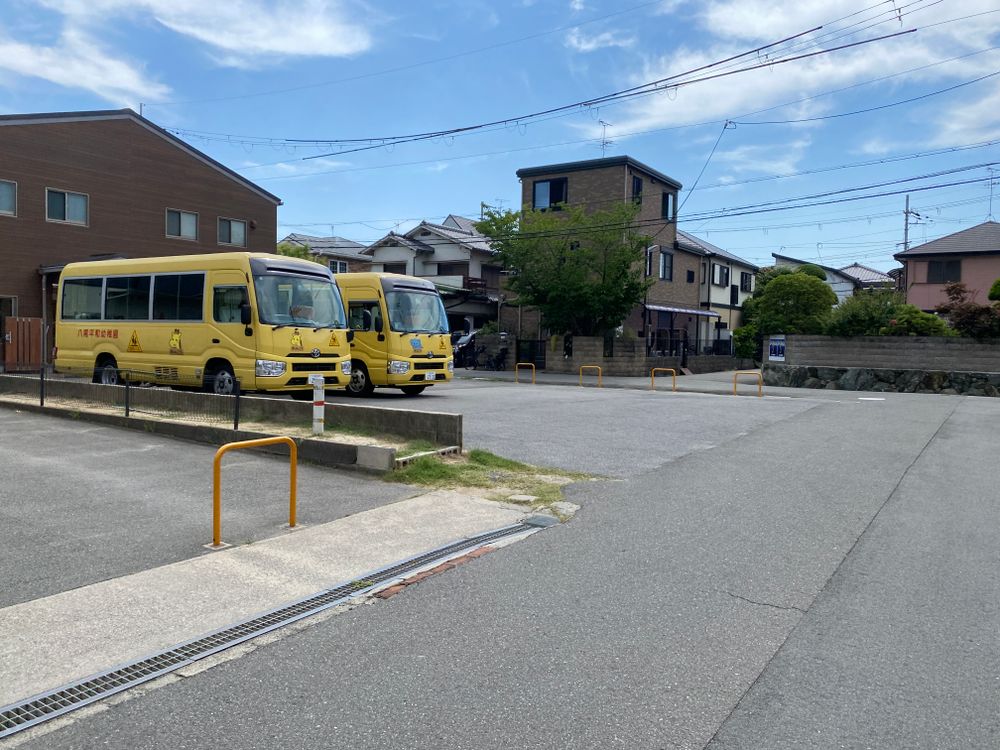
American buyers are distributed across multiple regions, each attracting a distinct profile:
Hokkaido
Niseko and the Hokkaido ski belt attract buyers seeking vacation properties with rental income from international ski tourism. Property values here have risen substantially since 2010 and quality ski-in/ski-out supply is limited. Non-ski areas — Sapporo, Furano, and the Shakotan Peninsula coast — offer lower entry prices for buyers motivated primarily by lifestyle.
Kansai — Kyoto, Osaka, and Nara
The Kansai corridor appeals to Americans seeking cultural depth alongside urban convenience. Kyoto machiya (traditional townhouses) have a dedicated international buyer base. Osaka offers urban apartments at meaningful discounts to Tokyo equivalents. Search Kyoto and Osaka properties on Akiya Japan to see current pricing across both cities.
Greater Tokyo
Tokyo is Japan's most liquid property market. American buyers here fall into two groups: those relocating for work who want a permanent base in a familiar neighbourhood, and investors attracted by consistent rental demand and appreciation potential in supply-constrained inner wards. Quality apartments in Minato, Shibuya, or Shinjuku start at ¥40–60 million ($258,000–$387,000).
Okinawa and Coastal Cities
Okinawa attracts Americans partly for cultural reasons — a large English-speaking community and US-familiar infrastructure. Coastal properties at lower prices than mainland equivalents. Kamakura, Atami, Hayama, and Ito on the Shonan and Izu coasts increasingly draw remote workers who want ocean access at accessible prices. These markets offer some of the strongest value propositions in Japan for buyers with location flexibility.
Working with a Japanese Agent: Key Differences from the US Model
- Dual agency is legal and common. The same agent frequently represents both buyer and seller — unlike many US states where this is restricted. Disclosure obligations apply regardless, but your agent's interests may not be fully aligned with yours.
- Commission: Standard is 3% of the purchase price + ¥60,000, plus 10% consumption tax — paid by the buyer. Confirm whether the seller also pays a commission.
- No single MLS equivalent. Agents access listings through REINS (a closed professional database). Some properties are held exclusively by one agency. Working with multiple agents may surface different inventory.
- Bilingual firms serve foreign buyers in key markets. English-capable agencies operate in Tokyo, Osaka, Kyoto, Niseko, and Okinawa. Teritoru is a licensed Japanese brokerage specialising in guiding non-Japanese buyers through the full transaction process, from property selection through closing.
Frequently Asked Questions
Do I need a Japanese bank account to buy property?
Not necessarily for the purchase itself. Many transactions involving non-resident buyers are settled via international wire transfer to a designated account managed by the judicial scrivener. However, owning property in Japan without a local bank account creates ongoing logistical challenges — paying annual property taxes, utility connections, and building management fees all require a local payment method. Most American buyers open a Japan Post Bank (Yucho) account in the months surrounding the transaction; Japan Post Bank is more accessible to non-residents than the major commercial banks.
Can I rent out my Japanese property?
Yes. Non-resident foreign owners can rent Japanese property under both standard long-term lease agreements and, with the appropriate permit, short-term rental (minpaku) to tourists. Long-term residential leases are governed by Japan's Land and Building Lease Act, which provides strong protections to tenants — so understand your obligations before signing a lease. Short-term rental requires a Minpaku Shinsei licence from the local municipality; most urban wards have annual limits of 180 nights per year. A local property manager is strongly recommended for either arrangement if you're managing from the US.
What happens when I sell?
Non-resident foreign owners can sell Japanese property without restriction. The sale process mirrors the purchase process. Japan imposes a withholding tax on sale proceeds of non-resident sellers — typically 10.21% withheld from the gross sale price by the buyer, with a tax return process to reclaim any excess based on actual capital gains. Engage a Japanese tax professional familiar with non-resident disposals before listing the property.
Start Your Search
Japan's property market is genuinely open to American buyers — no visa, no surcharge, no restrictions. At current exchange rates, US dollars carry strong purchasing power across every region and property type, from affordable regional houses to premium urban apartments.
Browse homes for sale in Japan across all 47 prefectures, or set up property alerts to be notified when new listings match your criteria.