Japan has roughly 9 million vacant houses — 空き家 (akiya) — scattered across every prefecture, from the dense suburbs of Osaka to the forested hillsides of Gifu. That is 13.8% of the country's entire housing stock, according to Japan's 2023 Ministry of Internal Affairs and Communications survey. The number has nearly doubled since 1993, and government projections suggest one in three Japanese homes could stand empty by 2038.
For foreign buyers, this creates a rare and genuinely compelling opportunity. Japan allows foreigners to purchase property with zero nationality-based restrictions. You can buy on a tourist visa. You do not need permanent residency, a spouse, or a local cosigner. The barriers are real — language, unfamiliar legal procedures, and renovation complexity — but they are navigable. This guide covers the entire process: where to find listings, how to assess what you're buying, what the paperwork actually involves, and how to budget for a realistic total cost.
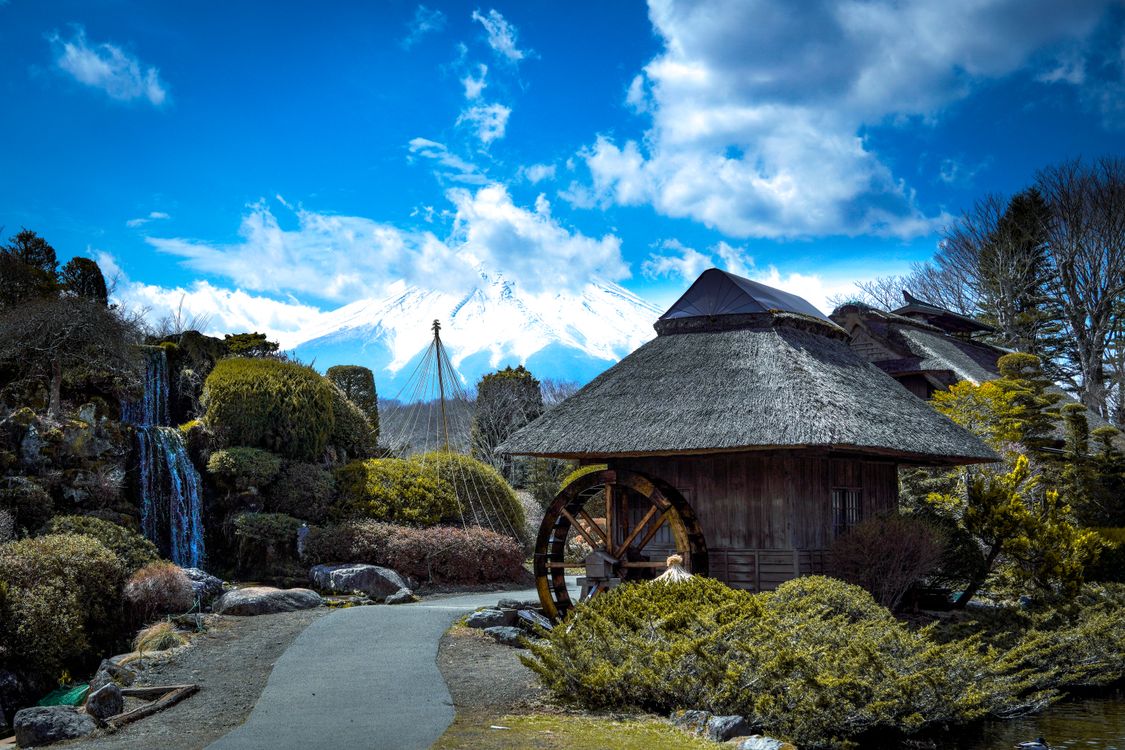
A traditional Japanese thatched-roof structure with Mt. Fuji in the background — the kind of property that draws international attention — Photo by Maheshwaran Shanmugam on Pexels
What Is an Akiya, Really?
Akiya is not an architectural style. It simply means "vacant house" — any uninhabited residential property, regardless of its age, condition, or location. A 1960s concrete two-story in suburban Saitama is an akiya. So is a 200-year-old 古民家 (kominka), a traditional farmhouse with timber beams and an earthen floor.
Three broad categories dominate the market:
- Modern concrete or wood-frame houses (1970s–1990s): The largest category by volume. Many were built to the Old Earthquake Standard (pre-June 1981) and require seismic retrofitting. Found in suburbs and rural towns throughout the country.
- Kominka (古民家): Pre-war farmhouses with heavy timber construction and traditional architectural features. Structurally durable but costly to restore. Highly sought after by buyers who want character and space.
- Urban machiya (町家): Narrow traditional townhouses found in Kyoto, Kanazawa, and older city neighbourhoods. These can be legally restricted in terms of exterior changes due to preservation zoning.
Akiya exist in every type of community — not only in farming villages. Tokyo's akiya rate is 11.0%; Osaka's is 15.4%. Urban and suburban vacant houses represent millions of the total inventory, though they tend to be priced higher and sell faster than their rural equivalents.
The Legal Reality for Foreign Buyers in 2026
Japan imposes no nationality-based restrictions on property ownership. A tourist on a 90-day visa can sign a purchase agreement and complete a property transfer. Non-residents pay the same taxes and follow the same registration process as Japanese nationals. There is no approval requirement, no minimum residency period, and no cap on the number of properties foreigners can own.
Two significant reporting changes took effect in April 2026:
- Nationality disclosure at registration: All property purchases by foreign nationals now require citizenship disclosure when the title is registered at the Legal Affairs Bureau (法務局, hōmu kyoku). This is a transparency measure, not a restriction.
- FEFTA Form 22 filing: Under Japan's Foreign Exchange and Foreign Trade Act (外国為替及び外国貿易法, gaikoku kawase oyobi gaikoku bōeki hō), non-resident buyers must file Form 22 with the Minister of Finance within 20 days of acquiring property. This replaced a narrower exemption that previously allowed residential purchases to bypass reporting. The penalty for non-filing is a fine, not forfeiture — but compliance is mandatory.
One genuine restriction to check: if any part of your intended property includes 農地 (nōchi, farmland), you will need approval from the local agricultural committee (農業委員会, nōgyō iinkai). Farmland purchase is strictly regulated for all buyers, Japanese or foreign, and approval for non-resident foreigners is rarely granted. If a property listing includes agricultural land, clarify whether it can be converted to residential use before proceeding.
Where to Find Akiya Listings
There is no single national database in English. Properties appear across several channels, and each works differently.
Municipal Akiya Banks (空き家バンク)
Over 1,000 municipalities across Japan operate 空き家バンク (akiya banku), local government databases of vacant properties registered by owners. The concept is simple: an owner registers their home with the municipal office, the municipality publishes it, and buyers apply through the local government. Properties are often priced below market — some are offered for ¥0 in exchange for a commitment to renovate and occupy.
The challenge: virtually all municipal akiya banks operate exclusively in Japanese. Application forms, correspondence, and subsidy conditions are in Japanese only. For non-Japanese speakers, working directly with an akiya bank requires a bilingual intermediary.
English-Language Platforms
Several platforms aggregate and translate Japanese property listings for an international audience:
- Akiya Japan — aggregates municipal akiya banks and private real estate listings across all 47 prefectures with English search filters. Browse houses for sale in Japan to see what is currently available.
- Akiya & Inaka — buyer services focused on rural properties, with brokerage support through the purchase process
- Akiya Banks (akiyabanks.com) — manually curated and translated listings with contextual notes on each property
Private Real Estate Agents
Standard Japanese real estate agents — 不動産屋 (fudōsan ya) — list properties on the national REINS database and local portals like SUUMO and AtHome. Private listings often have cleaner title histories than akiya bank properties, and the buying process is more standardised. Finding an English-speaking agent in major cities is feasible; in rural areas, it requires more effort.
Assessing a Property: What to Check Before Making an Offer
The single most consequential due diligence step for any akiya is establishing which 耐震基準 (taishin kijun, earthquake resistance standard) the building was constructed under.
- Old Standard (旧耐震基準, kyū taishin kijun): Buildings completed before June 1, 1981. These were designed to withstand moderate earthquakes but not the 1995 Great Hanshin or 2011 Tōhoku level events. Japanese banks typically refuse to finance them without retrofitting documentation.
- New Standard (新耐震基準, shin taishin kijun): Buildings completed after June 1981. Significantly stronger structural requirements. Generally financeable and insurable.
Seismic retrofitting (耐震補強, taishin hokyō) for a pre-1981 home typically costs ¥1,000,000–¥3,000,000 and is often subsidised by local governments. It is a cost to build into your budget from day one, not a surprise.
Beyond seismic standards, commission separate specialist inspections for:
- 白蟻 (shiroari, termites): Ubiquitous in wooden Japanese homes, particularly in warmer prefectures. Termite damage can be extensive but hidden behind wall panels.
- Plumbing: Many long-vacant akiya have corroded pipes or non-functioning septic systems (浄化槽, jōka sō). Connection to municipal sewage may require ¥500,000–¥1,500,000 in piping work.
- Roof condition: Traditional ceramic tile roofs (瓦, kawara) are heavy and can fail over decades of no maintenance. Roof replacement is among the most expensive single-item repairs.
- Title registration: Have a 司法書士 (shihō shoshi, judicial scrivener) verify that the title in the 不動産登記簿 (fudōsan tōkibo, property register) matches the current seller. Heirship disputes, unregistered additions, and boundary ambiguities are common in older properties.

The interior of a traditional kominka — high timber ceilings, an irori (囲炉裏) sunken hearth, and earthen floors are defining features of Japan's most characterful vacant houses — Photo by Evgeny Tchebotarev on Pexels
The Buying Process: Step by Step
Japanese property transactions follow a structured sequence. The exact timeline varies — urban purchases can close in 6–8 weeks; rural akiya bank properties can take 3–6 months when municipal review is required.
- Find and shortlist properties. Using akiya banks, listing platforms, or an agent. Confirm ownership registration is clear before proceeding. Many older properties have not been updated through inheritance — a property listed by one person may have legal co-owners.
- Site visit and inspection. Always visit before making an offer. Japan does not have a standardised seller disclosure form equivalent to the UK or US. Commission structural, plumbing, and termite inspections independently. Budget ¥50,000–¥150,000 for comprehensive specialist inspections.
- Apply (for akiya bank properties). Submit a formal application to the municipality. Some programmes require applicants to demonstrate intent to live in the property full-time — confirm this requirement before applying if you plan to use it as a second home or rental.
- 重要事項説明 (jūyō jikō setsumei) — the important matters explanation. A licensed real estate agent (宅地建物取引士, takuchi tatemono torihiki shi) must present you with a legally required disclosure document covering zoning, building restrictions, infrastructure connections, and encumbrances. You have the right to ask for an English translation or interpretation.
- Sign the 売買契約書 (baibai keiyakusho, purchase agreement). A deposit of 10–20% of the purchase price is typically paid at this stage. The contract specifies the settlement date, any conditions, and penalty terms for withdrawal.
- Settlement and title transfer. Final payment is made. Your 司法書士 (shihō shoshi) submits the title transfer documents to the Legal Affairs Bureau on the same day. Ownership is recorded in your name in the property register.
- File FEFTA Form 22 (for non-residents) within 20 days of settlement.
Contract signing can be completed remotely via power of attorney (委任状, ininjo) if you cannot be in Japan on settlement day. Many foreign buyers appoint their agent or judicial scrivener to attend on their behalf.
The Real Cost Breakdown
The listing price of an akiya is rarely the number that matters. Factor in every line below before committing:
Transaction Costs (at purchase)
- Real estate agent fee: 3% of purchase price + ¥60,000, plus 10% consumption tax. On a ¥5,000,000 property, this comes to approximately ¥216,000.
- Registration and license tax (登録免許税, tōroku menkyozei): 0.4% for land ownership transfer; 2% for building ownership transfer. Reduced rates apply through March 2027 under government incentives.
- Real estate acquisition tax (不動産取得税, fudōsan shutoku zei): 3% of the assessed value (課税標準額, kazei hyōjun gaku) for residential properties — typically lower than the purchase price. Invoiced by the prefectural government 3–6 months after purchase.
- Stamp duty (印紙税, inshi zei): ¥10,000 on contracts valued ¥10–50 million; ¥30,000 for ¥50–100 million.
- Judicial scrivener fees: ¥100,000–¥300,000 depending on complexity. Essential — do not attempt to register title yourself.
- Translation and interpretation: Budget ¥50,000–¥100,000 if you need bilingual support through the process.
Total transaction costs typically run 6–8% of the purchase price on top of the listed price.
Annual Ongoing Costs
- 固定資産税 (kotei shisan zei, fixed assets tax): 1.4% of the government-assessed value annually. For akiya in rural areas, the assessed value is often significantly below market price — annual tax bills of ¥30,000–¥150,000 per year are common on modest properties. Note: if a house is demolished and only land remains, the land tax assessment increases sharply (土地に係る固定資産税の負担調整措置 — the residential land exemption disappears).
- 都市計画税 (toshi keikaku zei, city planning tax): Up to 0.3% of assessed value. Applies only in designated urban planning areas, not all rural municipalities.
- Maintenance: Budget ¥10,000–¥50,000 per year for routine upkeep on a maintained property. Deferred maintenance is the reason akiya become akiya — factor in a realistic catch-up budget.
Renovation Budget: The Number That Matters Most
This is where most buyers underestimate, often dramatically. The useful benchmark:
- Basic cosmetic renovation (floors, walls, kitchen, bathroom fittings): ¥2,000,000–¥5,000,000
- Moderate structural renovation (roof, plumbing, electrical upgrade, seismic retrofit): ¥5,000,000–¥10,000,000
- Full gut renovation (structural reinforcement, all systems replaced): ¥10,000,000–¥20,000,000+
A "free" akiya from a municipal programme commonly costs ¥5,000,000–¥10,000,000 to make livable after renovation. A ¥1,000,000 listing can become a ¥12,000,000 project. Work backward from your total budget, not forward from a listing price.
Since April 2025, building permits (建築確認申請, kenchiku kakunin shinsei) are now required for structural work on two-story wooden buildings — a regulatory change that was previously exempted. Permit applications cost ¥200,000–¥500,000 including architect preparation and structural calculations. This is a mandatory cost for any substantive renovation, not optional.
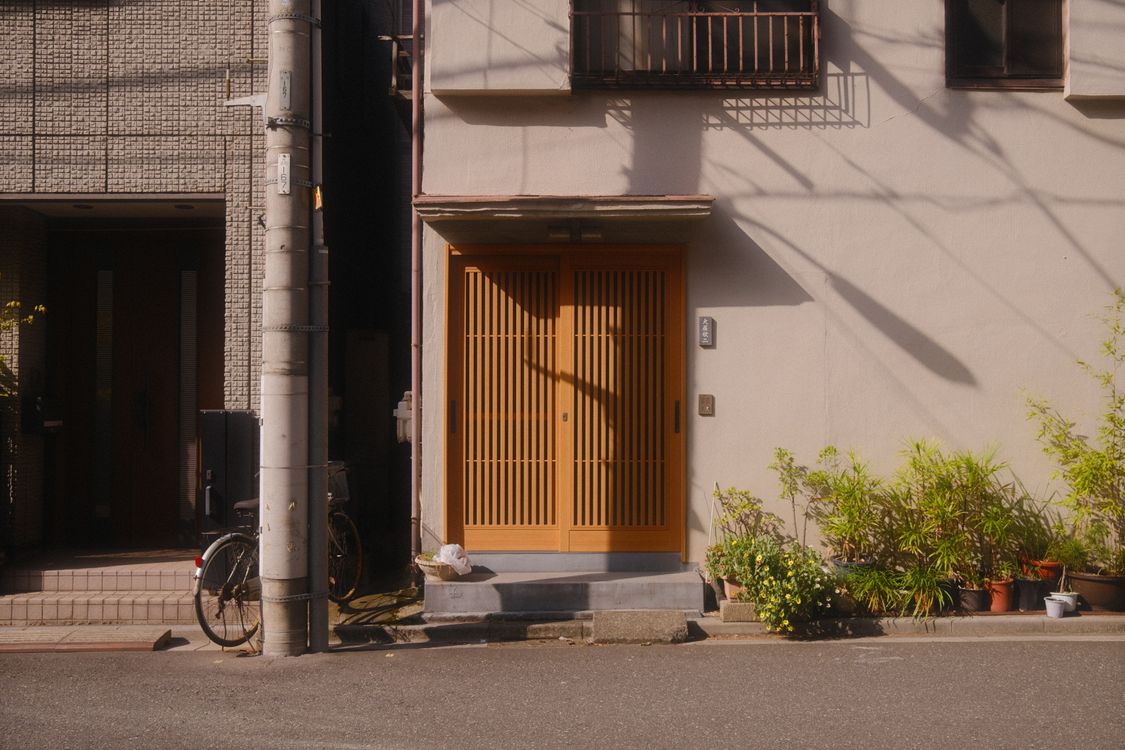
Akiya are not exclusively rural — this traditional entrance on a quiet Tokyo street illustrates the urban and suburban inventory that many buyers overlook — Photo on Pexels
Government Subsidies: What's Actually Available
Japanese national and municipal governments offer meaningful financial support for akiya renovation, and foreign buyers are not excluded from most programmes. Eligibility is typically based on where you intend to live and whether you buy through an official akiya bank, not on nationality.
Municipal Renovation Subsidies
Most municipalities that operate akiya banks pair them with renovation grants. Amounts range from ¥500,000 to ¥5,000,000, covering 30–50% of eligible renovation costs. Specific conditions vary by municipality — common requirements include:
- Purchase must be through the official akiya bank programme
- Buyer must intend to use the property as a primary residence
- Work must be completed within a set timeframe (typically 2–3 years)
- Contractors must be licensed and local in some cases
Seismic Retrofit Subsidies
Separate from renovation grants, most prefectures offer seismic retrofit subsidies of ¥1,000,000–¥3,000,000 for properties built before 1981. These are often stackable with municipal renovation grants — check with both the prefecture (都道府県, todōfuken) and the municipality (市町村, shichōson).
Relocation Grants (移住支援金)
The national government offers a ¥1,000,000 grant (¥3,000,000 for families of three or more) to urban residents who relocate to designated rural municipalities and meet residency and employment conditions. This is separate from renovation funding and requires living in the municipality as your primary residence. Conditions have tightened since 2023 — verify current eligibility criteria directly with the target municipality.
Energy Efficiency Grants
The Ministry of Land, Infrastructure, Transport and Tourism (国土交通省, kokudo kōtsū shō) runs several annual programmes for insulation upgrades, window replacement, and solar installation — often covering 30–50% of costs up to ¥2,000,000. These update each fiscal year (April–March) and require application before work begins.
Financing: The Reality for Foreign Buyers
Most major Japanese banks — MUFG, Mizuho, Resona — do not offer 住宅ローン (jūtaku rōn, housing loans) to non-permanent residents. This is not a legal restriction; it is bank risk policy. Lenders that do offer some options to foreign residents without permanent residency include AEON Bank and Tokyo Star Bank, but requirements (stable Japanese employment, residence card, property value thresholds) eliminate many akiya transactions.
The practical reality: most foreign akiya buyers pay cash. This is not as unusual as it sounds — the purchase prices for akiya are often low enough that the total budget (including renovation) is comparable to a deposit on property in other markets. A ¥2,000,000 purchase plus ¥8,000,000 renovation equals ¥10,000,000 total — approximately $65,000–$68,000 at current exchange rates.
If financing is essential, explore options in your home country — a home equity line on existing property, or personal loans — before arrival. Cross-border lending backed by Japanese real estate is rarely available from Japanese banks to non-residents.
Common Pitfalls (and How to Avoid Them)
Not verifying the title register before committing
Japan has a registration (登記, tōki) system that requires all ownership changes to be formally recorded. When a property owner dies, their heirs often fail to update the register — because it was not legally mandatory until the 相続登記の義務化 (sōzoku tōki no gimuuka), Japan's compulsory inheritance registration law, which took effect in April 2024. Before that date, generations of unregistered inheritance were common. The seller you are dealing with may not be the only legal owner. Always have a judicial scrivener verify the register before you pay a deposit.
Underestimating renovation scope
A standard home inspection covers what is visible. It does not cover termite damage inside walls, galvanised pipe corrosion, or whether the electrical panel meets modern code. Budget at least ¥150,000 for comprehensive pre-purchase inspections across multiple disciplines. The cost of skipping this is orders of magnitude higher.
Assuming "free" means cheap
¥0 listings exist. They represent a property the owner cannot sell and wants to transfer the liability for. Demolition alone costs ¥1,000,000–¥3,000,000. If you cannot renovate it, you may be obligated to demolish it — at your expense. Evaluate a free akiya against the cost of demolition plus full renovation, not just renovation.
Ignoring access and infrastructure
Some older rural properties are legally landlocked — they lack direct road access that appears in the 道路台帳 (dōro daichō, road register). Building regulations require 接道義務 (setsudō gimu), at least 2 metres of road frontage. A property without this cannot be rebuilt or substantially altered once the existing structure is demolished. Verify access rights before purchase.
Misunderstanding residency conditions in akiya bank contracts
Some municipal programmes include 定住条件 (teijū jōken), residency conditions requiring the buyer to live in the property as a primary residence for a specified period — often 5–10 years. Violating this can trigger repayment of subsidies or reversal of the transaction. Read every clause before signing, and confirm whether residency is required if you plan international use.
Working With the Right Professionals
Two professionals are essential for any Japanese property transaction:
不動産業者 (fudōsan gyōsha) — real estate agent: Licensed under the 宅地建物取引業法 (takuchi tatemono torihiki gyō hō, Real Estate Transactions Act). Required for the legally-mandated important matters explanation. Bilingual agents are available in major cities and can be hired to assist with rural purchases conducted through agents based in those areas.
司法書士 (shihō shoshi) — judicial scrivener: Holds a national qualification from the Ministry of Justice (pass rate approximately 4–5%). Handles title verification, contract document preparation, and formal title registration at the Legal Affairs Bureau. Without one, the title transfer is not legally complete. Fees are ¥100,000–¥300,000 depending on complexity. English-speaking judicial scriveners exist in Tokyo, Osaka, Nagoya, and Kyoto — they can also handle remote transactions.
For buyers navigating the transaction from overseas, or those who need support with legal compliance, akiya bank applications, and contractor coordination, working with a licensed brokerage that specialises in foreign buyer transactions eliminates significant risk. Teritoru, our licensed partner agent, is staffed by bilingual professionals who have guided foreign buyers through akiya purchases across multiple prefectures, covering contract review, subsidy applications, and property management setup. You can book an initial consultation via web conference before committing to any particular property or region.
Your First Steps
The most important thing to establish before searching for a property is your total budget — not your purchase budget, but your all-in budget: purchase price, transaction costs, renovation, and a 20–30% contingency on renovation estimates. Properties that look affordable at the listing stage often reveal significant costs during due diligence. Buyers who have a clear total budget ceiling make better decisions under pressure.
After budget, establish your use case: primary residence, second home, vacation rental, or mixed use. This determines which municipal programmes you can access, what residency conditions you can accept, and whether a property's location relative to transport links matters for you.
Japan's akiya inventory is large, and the legal framework genuinely welcomes foreign buyers. The complexity lies in execution — navigating language barriers, verifying legal status, coordinating inspections, and managing renovation in a market that operates quite differently from most Western countries. That complexity is manageable with the right team around you. Many foreign buyers have done it successfully; a growing number are doing it right now.
Sources
- Japan Times: Japan aims to require nationality declaration to register property from fiscal 2026
- Japan Real Estate Analytics: FEFTA 2026 New Reporting Rules for Foreign Property Buyers
- Housing Japan: Property Taxes in Japan — Buying, Selling and Ongoing Costs (2025)
- Real Estate Japan: Cost of Buying Real Estate in Japan — Breakdown of Purchase Fees and Taxes
- MailMate: Judicial Scrivener Guide For Property Registration in Japan
- CNN: Akiya houses — Super-aged Japan now has 9 million vacant homes
- Nippon Tradings International: 10 Common Mistakes When Buying Japanese Real Estate