There is a question that comes up in almost every conversation about Japan property: "But can I actually own it?" For buyers from the UK and across the European Union, the answer is an unusually clean yes. Japan imposes no restrictions on foreign freehold ownership of land or buildings — no minimum investment, no government approval process, no reciprocity requirement, no quota on foreign buyers. You simply find a property you want, go through the standard purchase process, and your name goes on the title register.
That said, "you can buy" and "you know exactly what you are doing" are very different things. The Japanese property transaction system has its own legal professionals, its own tax calendar, and a set of paperwork requirements that look nothing like buying a house in London or Paris. This guide covers every step, every cost, and the things that specifically matter for UK and EU citizens buying in Japan in 2026.

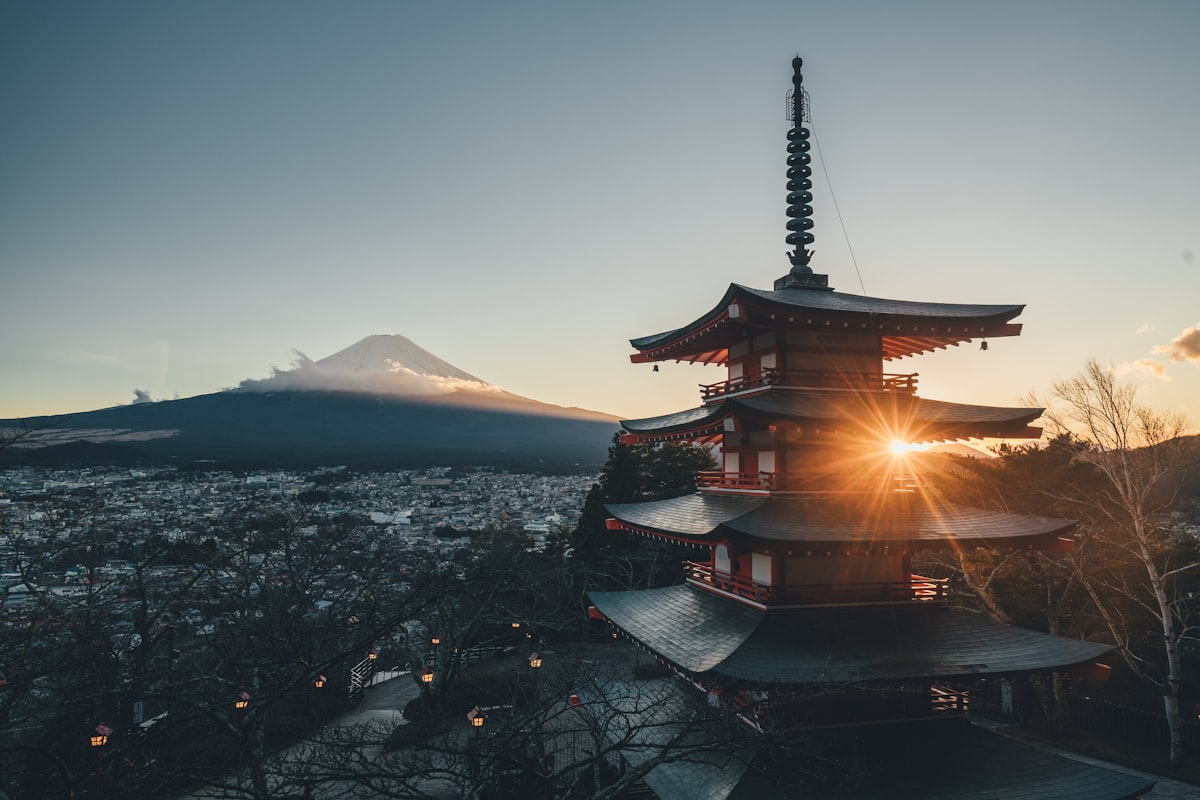
Traditional machiya townhouses in Kyoto — the kind of property that draws international buyers. Japan's historic neighbourhoods can be purchased by anyone. Photo: Pexels
The Legal Baseline: No Restrictions, But New Transparency Rules
Japan's open approach to foreign property ownership is confirmed by multiple sources including Baker McKenzie and the Ministry of Finance. Any person of any nationality can purchase Japanese real estate and register it in their name. This applies equally to residents and non-residents, individuals and companies, EU nationals and UK citizens post-Brexit.
What has changed from April 2026 is the transparency layer around purchases. Two new requirements apply to all non-resident buyers:
- FEFTA Form 22 filing: The residential exemption under Japan's Foreign Exchange and Foreign Trade Act (外国為替及び外国貿易法 — Gaikoku Kawase oyobi Gaikoku Bōeki Hō, commonly abbreviated as FEFTA) was removed for property acquisitions. Non-resident buyers must now file Form 22 with the Bank of Japan within 20 days of completing a purchase, regardless of purpose (primary residence, holiday use, investment).
- Nationality disclosure at registration: All title transfers must now include a passport copy submitted to the Legal Affairs Bureau (法務局 — Hōmu Kyoku). This is an administrative record, not a restriction.
The other notable framework is the Land Usage Conditions Act (重要土地等調査法 — Jūyō Tochi-tō Chōsa Hō), known informally as REIRA, enacted in 2021 and expanded in 2026 to include maritime facilities, ports, and coastal areas. REIRA applies equally to Japanese and foreign buyers and designates two zone types: "Monitored Areas" where buyers must report to the Prime Minister's office before closing, and "Special Monitored Areas" where government may impose use restrictions on properties over 200 square metres. For the overwhelming majority of residential transactions — urban flats, rural houses, suburban properties — REIRA has zero practical impact. It matters primarily for properties adjacent to defence facilities, nuclear plants, or border islands.
None of this changes the fundamental fact: you can buy Japanese property as a UK or EU citizen, freehold, in your own name, without any government approval.
The Purchase Process, Step by Step
A typical transaction from first offer to key handover takes 60 to 90 days. Here is exactly what that looks like.
Step 1 — Find a bilingual agent
Japanese real estate agents (不動産業者 — fudōsan gyōsha) are licensed under the Building Lots and Buildings Transaction Business Act. Commission is legally capped at approximately 3% of the purchase price plus ¥60,000, plus 10% consumption tax — so on a ¥20 million property, expect roughly ¥726,000 (about £3,600). Both buyer and seller typically pay their own agent. Finding an agent with genuine English capability, not just Google Translate, is worth the effort. A good bilingual agent saves considerably more than they cost on a first international transaction.
Step 2 — Letter of Intent
A formal purchase offer (購入申込書 — kōnyū mōshikomisho) is submitted in writing. It is typically non-binding but signals serious intent and locks in the asking price.
Step 3 — Important Matters Explanation
Before signing any contract, a licensed agent must provide the Jūyō Jikō Setsumeisho (重要事項説明書 — Important Matters Explanation document). This legally mandated disclosure covers zoning restrictions, building limitations, encumbrances, water and sewage connections, access rights, and other material facts about the property. For non-Japanese buyers, insist on an English-language summary. Never sign a contract without having this document translated and explained.
Step 4 — Purchase contract and deposit
Both parties sign the Baibai Keiyakusho (売買契約書 — Purchase Contract). The buyer pays a deposit of 10–20% of the purchase price. If the buyer withdraws after signing, the deposit is forfeited. If the seller withdraws, they must return double the deposit. Revenue stamps (印紙税 — inshi zei) are affixed to the contract at this stage.
Step 5 — Engage a judicial scrivener
This step is non-negotiable. Every property transfer in Japan must be registered through a shihō shoshi (司法書士 — judicial scrivener), a nationally licensed legal professional under the Ministry of Justice. No ownership transfer can be legally completed without one. The judicial scrivener prepares and files all registration paperwork, verifies the seller's identity and authority to sell, often holds the buyer's balance payment in escrow until the registration is confirmed, and can serve as your domestic contact person for future correspondence. Fees run ¥80,000 to ¥330,000 depending on transaction complexity. Finding one with English capability is important — ask your agent for a referral.
Step 6 — Finance
If using a mortgage, finalise it at this stage. Many UK and EU buyers purchase without a mortgage, particularly in the ¥5M–¥30M range where properties can represent genuinely affordable acquisition. If you do need financing, see the mortgage section below.
Step 7 — Settlement and title transfer
The buyer pays the balance. The judicial scrivener files the ownership transfer registration (所有権移転登記 — shoyūken iten tōki) with the Legal Affairs Bureau. The property is then registered under your name in the Tōki Jikō Shōmeisho (登記事項証明書 — Title Certificate), which is Japan's equivalent of a land registry extract and your legal proof of ownership.
Step 8 — Post-completion obligations
- File FEFTA Form 22 within 20 days (your judicial scrivener can handle this)
- Appoint a nōzei kanrinin (納税管理人 — tax representative), a Japan-resident adult or company authorised to receive fixed asset tax notices on your behalf
- Register changes of address or name with the Legal Affairs Bureau within two years if applicable
Daily life in Japan — a bowl of ramen at a local restaurant. Owning property means living in the neighbourhood, not just visiting it. Photo: Pexels
Documents UK and EU Buyers Need
The central identity document for any non-resident purchase is your passport. Beyond that, the requirements differ depending on whether you are resident in Japan or buying from abroad.
If you are a non-resident (buying from the UK or EU)
Japan's standard contract-signing process uses a registered personal seal (実印 — jitsuin), but non-residents without a Japanese address cannot register one. The accepted substitute is a notarised signature affidavit from your home country — a document signed before a notary public confirming your identity and signature.
If any official document from your home country must be submitted in Japan — most commonly a power of attorney authorising a Japanese representative to sign on your behalf — it will need an apostille. Both the UK and all EU member states are signatories to the Hague Convention (Japan acceded in 1970), so apostilles are the standard route: no consular legalisation required. UK apostilles are issued by the Foreign, Commonwealth and Development Office (FCDO). Each EU member state has its own competent authority.
Do you need a Japanese bank account?
Not legally required, but practically important. Annual fixed asset tax bills arrive as paper payment slips and are typically paid via Japanese bank transfer or at a convenience store. Property management companies generally require a Japanese account to receive rental income. Opening one as a true non-resident is difficult — most major banks require residency status. Options include Japan Post Bank (limited non-resident products), some regional banks, and multi-currency fintech accounts (Wise offers a JPY account number that can function as a substitute for receiving payments). Many non-resident buyers route tax payments through their property manager.
Taxes: The Complete Picture
Japanese property taxes are often misunderstood. The headline rates look modest, but the assessed values they apply to, the one-time acquisition costs, and the capital gains rules on eventual sale all require planning.
Fixed Asset Tax (固定資産税 — Kotei Shisanzei)
Levied annually on the January 1 owner at 1.4% of the official assessed value (固定資産評価額 — kotei shisan hyōka-gaku). The assessed value is typically 50–70% of market value, so the effective burden is lower than the headline rate. In urban areas, an additional City Planning Tax (都市計画税 — toshi keikaku zei) of up to 0.3% applies, bringing the combined annual holding cost to roughly 1.7% of assessed value. Bills arrive in four instalments per year. No surcharge applies to foreign owners — same rate as Japanese nationals.
Real Estate Acquisition Tax (不動産取得税 — Fudōsan Shutoku Zei)
A one-time tax payable roughly six months after purchase. The standard rate is 4% of assessed value. A temporary reduction currently brings this to 3% for residential properties and land, in effect through March 31, 2027.
Stamp Duty (印紙税 — Inshi Zei)
Revenue stamps are affixed to the purchase contract. Rates scale with contract value and reduced rates apply through March 2027. On a ¥10M–¥50M contract (the typical range for a detached akiya or rural property), the reduced stamp duty is ¥10,000. On a ¥50M–¥100M contract, it is ¥30,000. Both buyer and seller are responsible for the stamp on their respective copy of the contract.
Registration and Licence Tax (登録免許税 — Tōroku Menkyo Zei)
Paid at the Legal Affairs Bureau when title is registered. For residential buildings, the reduced rate is 0.1%–0.3% of assessed value through March 2027. For land, the standard rate is 2%; a temporary reduction applied through March 2026 — check the current status with your judicial scrivener, as this specific reduction may have expired or been extended.
Consumption Tax (消費税 — Shōhizei) — 10%
Does not apply to resale residential property purchased from an individual seller. Does apply to the building portion of a new-build purchased from a developer (land is always exempt). All professional service fees — agent commission, judicial scrivener fees, management fees — attract consumption tax.
Capital Gains Tax on Sale
When you eventually sell, the tax rate depends on how long you held the property — measured as of January 1 of the year of sale, not the literal ownership anniversary. Properties held five years or less as of January 1 of the sale year are taxed at approximately 39.63% (income tax 30.63% plus local inhabitant tax 9%). Properties held more than five years are taxed at approximately 20.315%.
For non-residents, the buyer of your property is legally required to withhold 10.21% of the gross sale price and remit it to the Japanese tax authority within one month. You then file a Japanese income tax return via your tax representative; if the withheld amount exceeds your actual liability, a refund is issued.
Inheritance Tax
Japanese inheritance tax applies to Japanese real estate regardless of heir nationality or residence. Rates are progressive from 10% to 55% on the taxable amount. The basic exemption is ¥30 million plus ¥6 million per statutory heir. If you own significant Japanese property, estate planning with a Japanese tax professional before or shortly after purchase is strongly advisable. Japan maintains bilateral tax treaties with the UK and with most EU member states; verify your specific country's treaty provisions, particularly for inheritance and capital gains treatment.
The appeal is unmistakable — Mount Fuji viewed from Lake Kawaguchiko in autumn. Photo: Pexels
Total Transaction Costs: What to Budget
The one-line answer: budget 6–8% of the purchase price on top of the price itself for all Japan-side closing costs.
| Cost | Approximate Rate |
|---|---|
| Real estate agent fee | ~3.3% of price (legally capped maximum) |
| Stamp duty | ¥5,000–¥30,000 on most residential contracts |
| Registration tax (building) | 0.1–0.3% of assessed value |
| Judicial scrivener fee | ¥80,000–¥330,000 |
| Real estate acquisition tax | 3% of assessed value (paid ~6 months post-purchase) |
| Building survey / inspection | ¥50,000–¥150,000 (strongly recommended for older properties) |
| Translation / English-language support | ¥50,000–¥200,000 |
| Currency conversion (vs. bank rate) | 0.4–1.0% with specialist broker; 3–5% with high-street bank |
| Annual tax representative fee | ¥30,000–¥100,000 per year (ongoing) |
Currency conversion deserves specific attention. On a ¥20 million purchase (approximately £100,000 at current rates), the difference between a specialist currency broker and your high-street bank can easily be ¥600,000–¥1,000,000. This is not a minor consideration.
Can UK and EU Citizens Get a Japanese Mortgage?
The short, honest answer: it is difficult but not impossible.
Japanese residential mortgage rates are historically low — variable rates for resident borrowers currently run approximately 0.3%–1.4% annually. The challenge for non-resident foreign nationals is that most major Japanese banks (Mitsubishi UFJ, Sumitomo Mitsui, Mizuho) require permanent residency (永住者 — eijūsha) visa status. Non-residents typically cannot access these standard products.
Options that do exist for non-residents include Tokyo Star Bank, which offers a "Star Mortgage" product specifically marketed to foreign customers and non-residents (typically 50–70% LTV), SMBC Prestia (most accessible major bank for foreign residents without permanent residency), and ORIX Bank (investment loan products available to foreign nationals). Non-resident terms typically mean a higher interest rate (closer to investment loan territory: 1.5–3%+), significant income documentation requirements (two to three years of tax returns), and in most cases a Japanese bank account prerequisite.
Many UK and EU buyers at the ¥5M–¥30M price point simply purchase cash. At those prices, Japanese property represents a fraction of the equivalent cost in London, Paris, or Amsterdam. The combination of low purchase price and manageable ongoing costs makes an all-cash acquisition viable for a segment of buyers for whom a mortgage would not be feasible in their home country anyway.
Visas, Residency, and Property Rights
Three common misconceptions, clarified:
You do not need a visa to own property. Japanese property can be registered in the name of a non-resident with no visa or residency status whatsoever. Ownership creates no visa obligations.
Owning property does not help you get a visa. Japan has no investor visa or "golden visa" tied to real estate. This distinguishes it from Portugal, Greece, and several other countries that have historically offered residency in exchange for property investment. In Japan, property is just property.
Short-stay visa-free access is 90 days. UK and all EU citizens can enter Japan without a visa for up to 90 days per visit. This is sufficient for property viewings, contract signings, and extended holidays. For longer stays, a separate visa is required.
If you eventually want to live in Japan, the most realistic pathways for property owners are a work visa (requires a Japanese employer), a spouse visa (requires a Japanese national or permanent resident spouse), or a highly skilled professional visa. The Business Manager Visa (経営・管理ビザ — keiei/kanri biza) requires establishing a genuine operating business — passive property ownership does not qualify.
What About Brexit and EU Agreements?
For practical property buying purposes, there is no difference between UK and EU citizens in Japan.
Both the UK-Japan Comprehensive Economic Partnership Agreement (CEPA), which entered into force January 1, 2021, and the EU-Japan Economic Partnership Agreement (EPA), in force since February 1, 2019, cover trade in goods, services, intellectual property, and corporate investment access. Neither agreement creates or modifies individual residential real estate ownership rights. Since Japan already imposes no restrictions on foreign property ownership, both agreements add nothing in this specific area.
The UK's ongoing CPTPP accession similarly has no bearing on individual residential property ownership rights in Japan. Brexit had zero effect on UK nationals' ability to buy property in Japan — Japan never differentiated between EU and UK nationals for this purpose and continues not to.
Government Incentives for Foreign Buyers
Several programmes make purchasing Japanese property financially more attractive, though eligibility conditions vary.
Relocation subsidy from Tokyo (地方創生移住支援金 — Chihō Sōsei Ijū Shienkin): Up to ¥3,000,000 per household for families relocating from the Tokyo 23 Wards to participating municipalities. Foreign nationals are eligible provided they have been living and working in the Tokyo area on a valid visa for at least one year immediately before moving. This grant specifically requires prior Tokyo residency — buyers coming directly from the UK or EU without this are not eligible for this particular scheme.
Municipal renovation grants: Over 1,000 municipalities operate akiya bank (空き家バンク — vacant house bank) programmes. Renovation subsidies range from ¥500,000 to ¥5,000,000, with some areas stacking national and local funding to reach ¥8 million or more. Many programmes do not require permanent residency, though conditions vary widely by municipality — always confirm eligibility before committing to a specific property.
Building survey subsidies: A number of municipalities subsidise pre-purchase building inspections for akiya properties, covering 50%–80% of inspection costs. Your agent or the local akiya bank coordinator can advise on what is available in a specific area.
Key Risks to Understand Before Buying
Fragmented inheritance ownership. Japanese inheritance law divides property among all statutory heirs unless a will specifies otherwise. Older rural properties can have 5, 10, or more co-owners whose consent is required to sell. Your judicial scrivener will check the title extract (登記事項証明書 — tōki jikō shōmeisho) for all registered owners, but this is one reason why akiya transactions can take longer than expected — locating and obtaining consent from all heirs is sometimes the main obstacle.
Non-rebuildable land (再建築不可 — saiken-chiku fuka). Some properties are on land that does not meet the minimum road frontage requirement under the Building Standards Act. If the existing structure is demolished, it cannot be rebuilt. This significantly limits renovation options and resale value. Always check with your agent before making an offer on older rural properties in particular.
Agricultural land restrictions. Rural land classified as agricultural (農地 — nōchi) under the Agricultural Land Act cannot be freely purchased for residential use — conversion approval from the local Agricultural Committee is required. This applies to Japanese nationals too, but it catches foreign buyers by surprise more often. Always verify zoning classification before buying rural land.
Renovation cost reality. A full renovation of a typical akiya can cost ¥5M–¥15M, often exceeding the purchase price. Budget specifically for asbestos remediation (buildings pre-1987), termite inspection, plumbing and electrical overhaul, insulation upgrades, and septic tank compliance. Getting a professional building inspection before signing the purchase contract is not optional — it is the single most important thing you can do on an older property.
Absentee ownership costs. If you are not living in Japan, budget for a local property manager (管理業者 — kanri gyōsha) to handle inspections, seasonal maintenance, utility checks, and correspondence. Typical fees run ¥5,000–¥30,000 per month. For condominiums, add monthly management fees (管理費 — kanri-hi) and repair fund contributions (修繕積立金 — shūzen tsumitate-kin), often ¥15,000–¥50,000 combined. A property left entirely unmanaged can accumulate municipal fines and eventually, in extreme cases, lose its fixed asset tax exemption — multiplying the annual tax bill up to sixfold.
Getting Professional Support
The transaction process works well when you have the right people around you. At minimum, you need a bilingual real estate agent and an English-capable judicial scrivener. For significant purchases, add a Japanese tax professional familiar with non-resident owners and, if needed, an immigration lawyer if your situation has visa complications.
For navigating the full purchase process — from property search through legal compliance, documentation, and post-purchase management — working with a specialist partner makes a material difference. Teritoru, our licensed partner agent, is a Japanese real estate brokerage specifically set up to help foreign buyers through every stage. Founded by Ai Hioki, with a team fluent in English and Japanese, Teritoru handles property purchase support, legal compliance, and property management for non-resident owners. You can book an initial consultation by web conference — useful before you have even identified a specific property, just to understand the process for your situation.
The Answer in Practice
UK and EU citizens are among the most unconstrained foreign buyers in the Japanese property market. The legal framework is genuinely open. The transaction process, while unfamiliar, is well-defined and follows clear steps. The taxes are reasonable by international standards and apply equally to everyone. The main requirements — a good bilingual agent, an English-speaking judicial scrivener, a nominated tax representative, and a clear understanding of the costs before you commit — are all addressable with preparation.
What draws people in is different for every buyer: the price point versus European equivalents, the quality of construction, the cultural experience of living somewhere genuinely different, the long-term stability of a country with one of the world's most reliable legal systems. What keeps them is the realisation that owning Japanese property, once the initial process is navigated, is straightforward to maintain.
The question was never really "can I buy?" — it has always been "do I know how?" This guide answers the second question. The first has always been yes.
Sources
- Baker McKenzie — Japan Real Estate Law
- Ministry of Finance Japan — FEFTA Real Property Provisions
- Housing Japan — Property Taxes in Japan
- MailMate — The Role of the Judicial Scrivener
- Wise — Buying Property in Japan as a Foreigner
- e-Zeirishi — Capital Gains Tax in Japan for Foreign Residents
- Tokyo Star Bank — Star Mortgage for Foreign Nationals
- SmartJDM — Transaction Costs in Japan
- Real Estate Japan — Qualifying for Rural Relocation Subsidies
- Langley Esquire — Japan Inheritance Tax