The Challenge No One Warns You About
Buying property in Japan is the exciting part. The paperwork, the negotiation, the moment the keys are yours — it's straightforward. What nobody tells you is that owning property in Japan from overseas is an ongoing commitment that requires planning, local support, and an understanding of Japanese bureaucratic systems that assume the owner lives nearby.
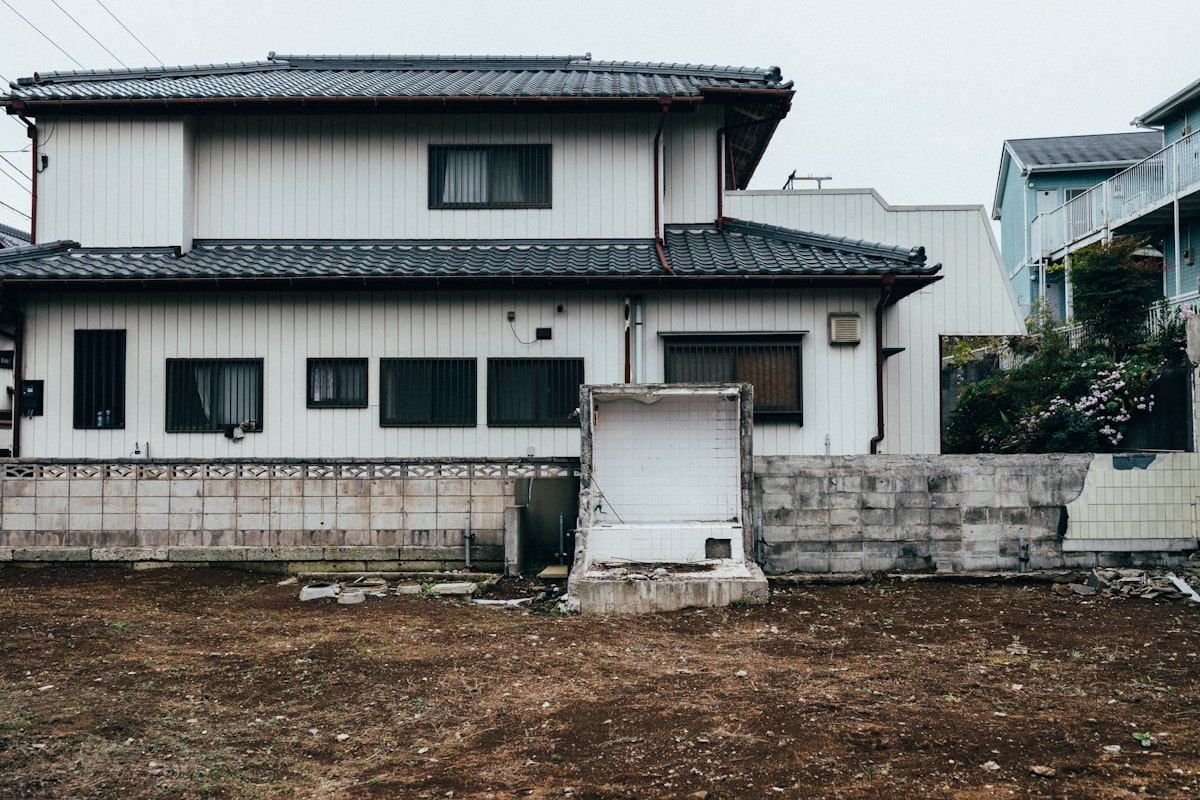
Japan has roughly 9 million vacant houses — the infamous akiya crisis — and much of that vacancy comes from owners who left and never set up a management system. Within three to five years of total neglect, a Japanese house can deteriorate to the point where repair costs exceed its value. Humidity rots tatami and wooden framing. Pests colonize undisturbed spaces. Pipes corrode from disuse. Neighbors notice, and municipalities take action.
This guide covers everything you need to keep your Japanese property maintained, legally compliant, and in good condition while living abroad — from appointing a tax representative to choosing remote monitoring technology.
Your Tax Representative: Japan's Non-Negotiable Requirement
If you own property in Japan and don't live there, you are legally required to appoint a tax representative (nōzei kanrinin, 納税管理人 (nōzei kanri-nin)). This isn't optional — it's mandated under Article 117 of Japan's National Tax Law and Article 354 of the Local Tax Act.
What a Tax Representative Does
Your nōzei kanrinin is your fiscal proxy in Japan. They:
- Receive all tax notices from municipal and national tax offices on your behalf
- Forward or translate tax bills so you can pay them (or pay on your behalf)
- Handle correspondence with the tax authority when questions arise
- File the notification form (nōzei kanrinin no todokede) with the relevant tax office
They do not file your tax returns for you (that requires a licensed tax accountant, zeirishi) and they are not responsible for paying your taxes from their own funds unless you arrange that separately.
Who Can Serve as Your Tax Representative
Any individual or corporation with a Japanese address can serve as your nōzei kanrinin. Common choices include:
- A trusted friend or family member in Japan — free, but they take on a real responsibility
- Your real estate agent — some agencies offer this as part of their after-sale service
- A judicial scrivener (shiho shoshi) or tax accountant (zeirishi) — professional and reliable, typically ¥30,000–¥60,000 per year
- A property management company — often bundled into their management fee
If you purchased through a licensed agent like Teritoru, our licensed partner agent, they can help arrange a tax representative as part of their post-purchase support — a significant advantage for overseas buyers who don't have personal contacts in Japan.
How to Appoint One
The process is straightforward:
- Choose your representative and confirm they agree to serve
- Complete the Notification of Tax Agent form (nōzei kanrinin no todokede sho) — available at any tax office or downloadable from the National Tax Agency website
- Submit the form to the tax office with jurisdiction over your property's location
- For municipal taxes (property tax), submit a separate notification to the municipal tax office
You should appoint your tax representative before you leave Japan after completing your purchase. If you bought remotely and never entered Japan, your agent or judicial scrivener can typically handle this as part of the purchase process.
Property Taxes: What You Owe and How to Pay from Overseas
Every property owner in Japan — resident or not — owes two annual taxes based on the assessed value of the property as of January 1st each year.
Fixed Asset Tax (Kotei Shisan Zei)
The standard rate is 1.4% of the assessed value (hyōka gaku), which is typically 50–70% of market value. For residential land, a small residential land exemption reduces the taxable base to one-sixth for plots up to 200 m² and one-third for the portion above 200 m². This exemption alone can reduce your tax bill by 80% or more.
City Planning Tax (Toshi Keikaku Zei)
Charged only in urbanization promotion areas, the rate is up to 0.3% of assessed value. Most cities apply the full 0.3%. Rural properties outside city planning zones don't pay this.
Typical Tax Bills
For a modest akiya with land valued at ¥3,000,000:
- Assessed value (70% of market): ~¥2,100,000
- With residential land exemption (1/6): ~¥350,000 taxable base
- Fixed asset tax (1.4%): ~¥4,900/year
- City planning tax (0.3%): ~¥1,050/year
- Total: approximately ¥5,950/year (~$40 USD)
For a higher-value urban property at ¥15,000,000, expect ¥30,000–¥50,000/year in combined property taxes. These are remarkably low by international standards.
Payment from Overseas
Tax bills are mailed to your tax representative in four installments (typically June, September, December, and February). Payment options include:
- Bank transfer from a Japanese bank account — the most reliable method. If you opened a Japanese bank account during purchase, keep it active for this purpose
- Convenience store payment — your tax representative can pay at any konbini using the barcode on the tax slip
- Credit card or PayPay — many municipalities now accept online payment through eLTAX (the local tax portal) or Yahoo! Kōkin
- Automatic deduction (kōza furikae) — set up automatic debit from your Japanese bank account so payments never get missed
Late payment incurs a penalty rate of 8.7% annually (2024-2025 rate, calculated on the overdue amount from day 31 onwards). The first 30 days are penalized at 2.4%. Set up automatic payment or calendar reminders to avoid this.
The Demolition Tax Trap
One critical rule: if you demolish the house and leave bare land, you lose the residential land tax exemption. Your property tax can increase by three to six times overnight. This is one reason Japan has so many abandoned houses — owners keep decrepit structures standing purely for the tax break. If you're considering demolition, talk to a tax advisor first.
Japan's Vacant House Laws: What Happens When You Neglect a Property
The Act on Special Measures Concerning Vacant Houses (Akiya Taisaku Tokubetsu Sochi Hō, Act No. 127 of 2014) gives municipalities real teeth to deal with neglected properties. The December 2023 amendments (Act No. 50 of 2023), which took effect in stages through 2024, added a new intermediate category that expands the law's reach significantly.
The Designation Ladder
- Standard vacant house (akiya) — no action required, but the municipality is tracking it
- Management-deficient vacant house (kanri fusoku akiya) — new category from the 2023 amendments. The property shows early signs of neglect: overgrown garden, minor exterior damage, loose roof tiles. The municipality can issue guidance and recommendations. If designated and the owner doesn't respond, the residential land tax exemption can be revoked — same as demolition, your land tax could multiply sixfold
- Specified vacant house (tokutei akiya) — the property poses a genuine hazard: structural collapse risk, sanitation issues, landscape harm. The municipality follows a formal process: advice → recommendation → order → administrative subrogation (forced demolition at the owner's expense)
The kanri fusoku category is the critical change for overseas owners. Previously, your property had to be nearly falling down before the municipality could act. Now, a garden that's merely overgrown or a façade with peeling paint can trigger designation, tax penalties, and public shaming (your name and address posted publicly).
What This Means for You
If you own a property in Japan and live overseas, you need someone checking on it regularly. Annual visits aren't enough. The 2023 amendments specifically target properties that are "not being managed appropriately" — and a house that sits untouched for six months in Japan's humid climate will start showing neglect.
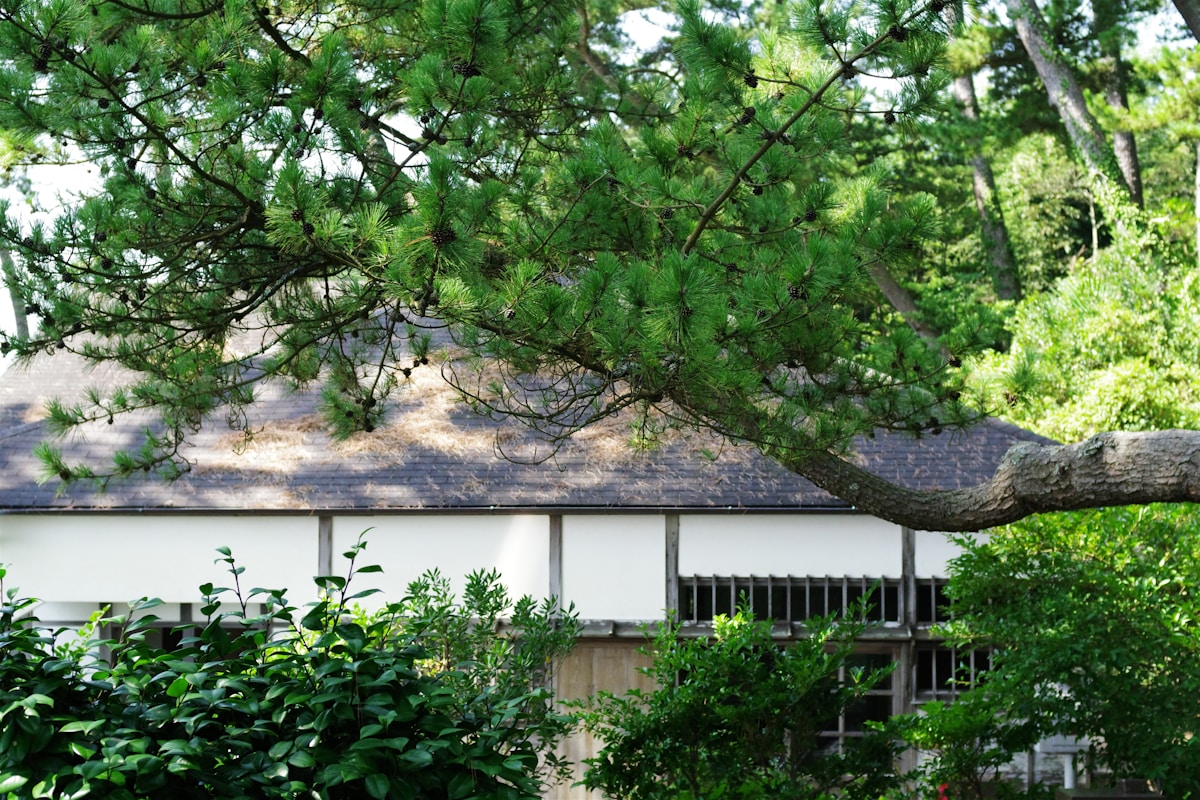
A traditional Japanese house surrounded by greenery — humidity and vegetation make active property management essential. Photo: Unsplash
Choosing a Property Management Company
For overseas owners, a property management company is the single most important relationship you'll maintain. They are your eyes, hands, and ears on the ground.
What Services to Expect
A typical property management package for a vacant or occasionally visited house includes:
- Monthly or bi-monthly inspections — visual check of exterior and interior, photographed and reported to you
- Ventilation — opening windows and running the air to prevent mold and musty odors (critical in Japan's climate)
- Mail collection and forwarding — or photographing and emailing important correspondence
- Garden and exterior maintenance — cutting grass, trimming bushes, clearing gutters (often billed separately or seasonally)
- Utility management — running water periodically to prevent pipe corrosion and trap drying
- Emergency response — typhoon damage inspection, earthquake checks, burst pipe response
- Neighbor relations — communicating with neighbors and the chōnaikai (neighborhood association) on your behalf
Typical Costs
Prices vary by region, property size, and service level:
- Basic monthly inspection package: ¥5,000–¥15,000/month (exterior check, ventilation, mail, photo report)
- Standard package with garden care: ¥10,000–¥25,000/month
- Comprehensive management: ¥20,000–¥50,000/month (includes minor repairs, utility management, tax representative duties, full English reporting)
- Garden maintenance (seasonal): ¥15,000–¥50,000 per visit depending on property size
- Emergency callouts: ¥5,000–¥15,000 per visit plus repair costs
- Snow removal (snow country): ¥10,000–¥30,000 per session, or ¥30,000–¥80,000/month for regular clearing
Finding the Right Company
Not all property management companies serve foreign owners or communicate in English. Here's how to find one:
- Ask your purchasing agent — the agent who helped you buy often provides management services or has trusted referrals. Teritoru, for example, offers ongoing property management as part of their foreign buyer support services, including English-language reporting and coordination with local contractors.
- NPO and municipal akiya bank programs — some municipalities run matching services that connect absentee owners with local management providers
- National franchise networks — companies like Japan Vacant House Management Association (Nihon Akiya Kanri Kyōkai) operate nationwide with standardized inspection packages starting at ¥5,500/month
- Local real estate agencies — in rural areas, the local fudōsan-ya often provides informal management services, though English communication may be limited
Red Flags to Watch For
- No photo documentation of inspections
- Reluctance to provide a written service contract
- No clear pricing for additional services beyond the base package
- Inability to handle emergency situations (typhoon season requires rapid response capability)
- No experience with non-resident or foreign owners
The Physics of Decay: Why Japanese Houses Need Active Management
Japan's climate is uniquely hostile to unoccupied buildings. Understanding the specific threats helps you prioritize your management plan.
Humidity and Mold
Most of Japan experiences 75–90% relative humidity during the rainy season (tsuyu, typically June–July) and through the summer months. Without ventilation, interior humidity stays elevated for months. Mold begins colonizing surfaces within 48–72 hours at sustained humidity above 70%.
Tatami mats are especially vulnerable — they absorb moisture from the air and provide an ideal growth medium. A single rainy season without ventilation can destroy tatami beyond repair. Replacement costs ¥8,000–¥15,000 per mat, and a typical Japanese room has six to eight mats.
Prevention: Monthly ventilation visits (opening all windows for 30+ minutes), dehumidifiers on timers in critical areas, and ensuring the property has adequate underfloor ventilation. Modern kankisen (24-hour ventilation systems, mandatory in post-2003 buildings) should be left running.
Pest Infestations
Unoccupied houses attract:
- Termites (shiroari) — Japan's most destructive household pest. The Formosan subterranean termite is active throughout Honshū and thrives in humid conditions. An untreated infestation can cause structural damage within two to three years. Professional treatment costs ¥100,000–¥300,000 for a typical house. Preventive treatment every five years costs ¥100,000–¥200,000.
- Asian giant hornets (suzumebachi) — regularly build nests in eaves, wall cavities, and unused rooms of vacant houses. Removal costs ¥10,000–¥50,000 per nest.
- Raccoon dogs (tanuki) and civet cats (hakubishin) — enter through gaps in the roof or walls and nest in attics, causing severe damage to insulation and leaving contamination that costs ¥200,000–¥500,000+ to remediate.
Prevention: Seal all entry points, schedule termite inspections every two to three years, and ensure your management company checks for signs of wildlife intrusion during monthly visits.
Plumbing Deterioration
When water isn't flowing through pipes regularly, several things happen:
- Drain trap water evaporates — within two to four weeks in summer, the water seal in P-traps and S-traps dries out, allowing sewer gases (and insects) to enter the house
- Pipe corrosion accelerates — stagnant water in metal pipes promotes internal rust. Older Japanese homes often have galvanized steel supply pipes that corrode quickly without flow
- Water heater damage — gas water heaters (kyūtōki) that sit unused for months can develop internal corrosion. In cold regions, water left in the heater or pipes can freeze and burst
Prevention: Your management company should run all taps (hot and cold), flush all toilets, and operate the washing machine connection for at least two minutes during every inspection visit. This maintains trap seals, prevents sediment buildup, and keeps water moving through the system.
Structural and Exterior Damage
Japan's weather is punishing on buildings: typhoons, heavy snow, earthquakes, intense UV radiation, and freeze-thaw cycles in northern regions. An occupied house gets small problems fixed before they compound. An unoccupied house doesn't.
- A single missing roof tile allows water intrusion that can rot roof boards, ceiling joists, and wall framing within one rainy season
- Gutter blockage from leaf accumulation causes water to overflow against the foundation, promoting damp and foundation damage
- Paint and sealant degradation on exterior walls allows moisture penetration into the wall structure
Prevention: Twice-yearly detailed exterior inspections (spring and after typhoon season), prompt repair of any roof, gutter, or exterior wall damage.
Handing over keys to a property manager — appointing a local representative is one of the first steps for overseas owners. Photo: Jakub Zerdzicki / Unsplash
Remote Utility Management
How you handle utilities depends on how often you visit and whether you have a management company handling regular inspections.
Electricity
Keep the electricity contract active. Even when you're not there, you'll want power for:
- Dehumidifiers and ventilation fans
- Security cameras and IoT sensors
- Refrigerator (prevents mold growth inside)
- Smart home devices and Wi-Fi router
The base charge (basic contract, no usage) is approximately ¥800–¥1,500/month depending on your region and amperage. With dehumidifiers and a few devices running, expect ¥3,000–¥8,000/month. Most electricity companies (denryoku gaisha) allow account management online, though Japanese-language portals may require help to navigate.
Water
Keep the water on. The base charge is typically ¥1,000–¥2,500/month depending on municipality and meter size. This is a minimal cost that ensures your management company can run taps, flush toilets, and maintain plumbing health.
If you disconnect water to save money, you risk dried trap seals (sewer gas intrusion), pipe corrosion, and no ability to fight a small fire. The savings (¥12,000–¥30,000/year) aren't worth the risk.
Gas
Gas can typically be suspended safely if you won't be using the property for extended periods. Contact your gas company (gasu gaisha) to request a temporary suspension. There's usually no fee for suspension, but reconnection requires a technician visit (free for most providers, but must be scheduled and someone must be present).
Exception: in cold climates, if your heating system is gas-powered and you need freeze protection, you may need to keep gas active during winter months or arrange for complete winterization of the plumbing system.
Internet
If you plan to use remote monitoring cameras or smart home devices, you'll need an active internet connection. Options include:
- Fiber (NTT Hikari, au Hikari, NURO): ¥4,000–¥6,000/month — overkill for monitoring but reliable
- Pocket Wi-Fi or SIM-based router: ¥2,000–¥4,000/month — adequate for cameras and sensors, can be set up without a fixed-line installation
- Mobile hotspot with SIM: Some owners use a battery-backed mobile router as a low-cost backup option

Managing property remotely — modern technology makes it possible to oversee your Japanese home from anywhere in the world. Photo: Unsplash
Remote Monitoring Technology
Technology has dramatically improved options for keeping an eye on your property from the other side of the world.
Security Cameras
Cloud-connected cameras let you check on your property in real time from anywhere. Look for:
- Weather-resistant exterior cameras — monitor the garden, entrance, and any areas prone to animal intrusion. Japanese brands like Panasonic and TP-Link offer cameras designed for Japanese climate conditions.
- Interior cameras — one in the main living area can reveal humidity issues, pest problems, or leaks before your management company's next visit
- Motion-activated alerts — receive notifications if unexpected movement is detected
Budget: ¥5,000–¥15,000 per camera, plus cloud storage fees of ¥300–¥1,000/month.
Environmental Sensors
For vacant properties, sensors are often more useful than cameras for vacant property management:
- Temperature and humidity sensors — SwitchBot, Nature Remo, and similar IoT devices monitor conditions and can trigger alerts when humidity exceeds dangerous thresholds. SwitchBot sensors cost approximately ¥2,000–¥3,000 each.
- Water leak detectors — placed under sinks, near water heaters, and in basements. Alert you before a small leak becomes a catastrophe. ¥2,000–¥5,000 each.
- Smart plugs with power monitoring — control dehumidifiers, fans, and lights remotely. Can verify that devices are actually running. ¥1,500–¥3,000 each.
Professional Security Services
Japan's major security companies offer monitoring packages for residential properties:
- SECOM — Japan's largest security company. Residential monitoring starts at approximately ¥6,800/month (basic alarm) or ¥4,300/month for a self-monitored plan. Emergency dispatch included. SECOM can also provide periodic property checks.
- ALSOK — comparable services and pricing. Both companies offer English support in major cities.
A professional security contract adds legitimacy to your property management and provides 24/7 emergency response that a management company alone cannot match.
Insurance for Non-Resident Owners
Insuring a property you don't live in requires careful attention to policy terms.
Fire Insurance (Kasai Hoken)
Fire insurance in Japan covers not just fire but also wind, hail, snow, water damage, theft, and other perils depending on the plan. For non-resident owners:
- You must disclose that the property is unoccupied — most standard residential policies assume the property is occupied. An undisclosed vacancy can void your coverage entirely.
- Some insurers offer specific vacant property (kūya) policies, though premiums are typically 20–50% higher than standard residential rates
- Annual premiums for a typical akiya: ¥15,000–¥50,000/year for fire insurance alone, depending on construction type (wood costs more) and coverage limits
- Since October 2024, major insurers have raised fire insurance premiums by an average of 13%, with some regions seeing increases of up to 30% due to escalating natural disaster claims
Earthquake Insurance (Jishin Hoken)
Earthquake insurance is sold as an add-on to fire insurance and is underwritten by the Japanese government (nihon jishin saihoken kabushiki gaisha). Key details:
- Covers earthquake, volcanic eruption, and tsunami damage
- Coverage is capped at 50% of your fire insurance amount, with maximums of ¥50 million for the building and ¥10 million for contents
- Policy terms are now 5 years maximum (changed from the previous standard of 5 years, with 1-year terms also available)
- Premiums vary dramatically by region and construction type: wooden houses in high-risk zones (Tokyo, Kanagawa, Shizuoka) pay the highest rates
- Annual earthquake insurance premiums: approximately ¥10,000–¥40,000/year for a typical residential property
Important: If you purchased an older wooden akiya and skipped earthquake insurance to save money, reconsider. A single seismic event can destroy an uninsured property completely. The Japanese government's earthquake insurance program exists precisely for this purpose, and premiums are subsidized to keep them accessible.
Arranging Insurance from Abroad
Most Japanese insurance companies require a Japanese-speaking contact to manage the policy. Your property management company or tax representative can often serve as the policy contact. Some agents who specialize in serving foreign property owners can handle the entire insurance process in English.
Neighborhood Association Obligations (Chōnaikai)
Most residential areas in Japan have a neighborhood association (chōnaikai or jichikai). While technically voluntary, participation is strongly expected — and for overseas property owners, maintaining a relationship with the local chōnaikai is practically essential.
What They Do
Neighborhood associations manage:
- Garbage collection schedules and collection point maintenance (in many areas, only chōnaikai members can use the local garbage station)
- Disaster preparedness and emergency communication networks
- Local festivals and community events
- Street lighting and shared infrastructure maintenance
- Communication between residents and the municipal government
Why It Matters for Overseas Owners
Your neighbors are your property's first line of defense. A good relationship with the chōnaikai means:
- Neighbors will notice and report problems (leaks, storm damage, suspicious activity) before your next management visit
- Your property management company will be welcomed rather than treated with suspicion
- You'll receive advance notice of local issues that affect your property (road works, planned construction, natural disaster preparations)
- The municipality is less likely to designate your property as management-deficient if the community sees you're making an effort
Practical Steps
- Introduce yourself to the chōnaikai leader (kaicho) after purchase — ideally in person, or through your agent or management company
- Pay the annual dues — typically ¥3,000–¥12,000/year (sometimes collected monthly at ¥200–¥1,000/month). This is a trivial cost that buys enormous goodwill.
- Designate a local contact — give the kaicho your management company's contact information for emergencies
- Communicate your situation — Japanese communities are generally understanding of overseas owners as long as the property is maintained and someone is responsible
Income Tax Obligations for Non-Resident Property Owners
Beyond property taxes, non-resident owners face specific income tax rules.
If You Rent the Property
Rental income from Japanese property is taxable in Japan regardless of where you live. For non-residents:
- The tenant (or property management company) must withhold 20.42% of gross rent and remit it to the tax office
- You must file an annual income tax return in Japan (through your tax representative or a zeirishi) to claim deductions — depreciation, repairs, management fees, insurance, interest on any Japanese mortgage
- After deductions, you may receive a refund if the withholding exceeded your actual tax liability
- Japan has tax treaties with most major countries to prevent double taxation — rental income taxed in Japan is typically creditable against tax in your home country
If You Sell the Property
Capital gains on Japanese real estate are taxed at:
- 30.63% for short-term gains (property held 5 years or less as of January 1st of the sale year)
- 15.315% for long-term gains (property held more than 5 years)
The buyer is required to withhold 10.21% of the sale price (not the gain) and remit it to the tax office. You then file a return to calculate the actual tax and receive a refund of any excess withheld. A qualified zeirishi is essential for this process.
Building Your Annual Management Budget
Here's what to budget annually for maintaining a modest rural or suburban Japanese property from overseas. These figures assume a typical wooden house on a standard residential lot.
Fixed Annual Costs
- Property taxes: ¥5,000–¥50,000 (varies dramatically by location and assessed value)
- Property management: ¥60,000–¥300,000 (¥5,000–¥25,000/month)
- Tax representative: ¥0–¥60,000 (free if bundled with management, ¥30,000–¥60,000 if separate)
- Fire insurance: ¥15,000–¥50,000
- Earthquake insurance: ¥10,000–¥40,000
- Neighborhood association dues: ¥3,000–¥12,000
- Utilities (minimum): ¥24,000–¥60,000 (electricity + water base charges)
Variable Annual Costs
- Garden maintenance: ¥30,000–¥100,000 (2–4 sessions per year)
- Minor repairs and maintenance: ¥20,000–¥100,000 (budget for the unexpected)
- Termite prevention: ¥20,000–¥40,000/year (amortized from 5-year treatment cycle)
- Snow removal (if applicable): ¥60,000–¥200,000/season
Total Annual Budget
For a well-maintained vacant property:
- Minimum (rural, low-cost area, basic management): approximately ¥180,000–¥350,000/year (~$1,200–$2,400 USD)
- Standard (suburban, comprehensive management): approximately ¥350,000–¥600,000/year (~$2,400–$4,100 USD)
- Premium (urban area, full-service management, security): approximately ¥600,000–¥850,000/year (~$4,100–$5,800 USD)
These costs are modest by international standards, but they're not zero. Budget for them before you buy, not after.
The Seasonal Management Calendar
Japan's distinct seasons create a natural rhythm for property management tasks.
Spring (March–May)
- Post-winter inspection — check roof, gutters, exterior walls for damage from snow and frost
- Resume regular ventilation schedule if reduced during winter
- Garden cleanup and first mowing of the season
- Check for pest activity (termite swarm season begins in April)
- Pay first installment of property tax (typically April or June depending on municipality)
Rainy Season and Summer (June–September)
- Critical ventilation period — increase visits to weekly if possible during tsuyu
- Run dehumidifiers continuously in problem areas
- Inspect for mold growth, especially in closets, under flooring, and in bathrooms
- Check drain pipes and gutters before typhoon season (August–October)
- Inspect for wasp and hornet nests (peak season July–September)
- Garden maintenance at its most demanding — grass and weeds grow aggressively
Autumn (October–November)
- Post-typhoon inspection — check roof, windows, shutters, and drainage
- Clear gutters of fallen leaves
- Final garden cleanup before winter
- Service heating equipment before cold season
- Arrange snow removal contract if in snow country
Winter (December–February)
- In snow country: regular snow removal from roof (to prevent collapse) and access paths
- Freeze prevention — drain water heater if gas is off, insulate exposed pipes, keep heating on minimum or arrange winterization
- Reduced ventilation schedule (cold, dry air means less mold risk)
- Verify no animal intrusion (creatures seeking warmth will find any gap)
Earning Income from Your Property While Away
Many overseas owners offset management costs by generating rental income during their absence.
Short-Term Rental (Minpaku)
Japan's minpaku law (Private Lodging Business Act, enacted June 2018) allows property owners to rent their homes to tourists for up to 180 days per year. Requirements include:
- Registration with the local prefectural government (notification system, not licensing)
- A local management representative if you don't live within the property's ward or city
- Compliance with local municipality rules — some areas (notably parts of Tokyo and Kyoto) impose additional restrictions, such as limiting rental to specific months or requiring the owner to be present
- Fire safety equipment (smoke detectors, fire extinguisher) and evacuation signage
Revenue from short-term rentals varies wildly by location: ¥5,000–¥15,000/night for rural properties, ¥10,000–¥40,000/night for popular tourist areas. Even modest occupancy can cover your annual management costs.
Long-Term Rental
Renting to a long-term tenant solves many management challenges simultaneously: the tenant maintains the property, pays utilities, and provides security through occupancy. However, Japanese tenant protection laws are strong — evicting a long-term tenant is extremely difficult, which can be a problem if you plan to use the property yourself in the future.
Vacation Rental Setup Support
Setting up a legally compliant rental from overseas is complex. Booking a consultation with Teritoru can help you navigate the minpaku registration process, connect with local management companies who handle guest communication and cleaning, and ensure your property meets all legal requirements before listing.
Common Mistakes Overseas Owners Make
Learning from others' costly errors can save you significant money and stress.
- Thinking "I'll deal with it when I visit" — annual or biannual visits are too infrequent for effective management. By the time you arrive, months of humidity, pest activity, and weather damage may have compounded into major problems.
- Not appointing a tax representative before leaving Japan — tax notices go to the property address. If nobody's collecting the mail, you'll miss payment deadlines and incur penalties. Worst case, the tax office can seize the property for unpaid taxes.
- Disconnecting all utilities to save money — the ¥3,000–¥5,000/month you save on minimum utility charges pales compared to the ¥200,000+ you'll spend fixing dried-out plumbing, corroded pipes, or mold damage that could have been prevented with running water and electricity.
- Ignoring the neighborhood association — your neighbors are watching. An absentee owner who doesn't participate in the chōnaikai or maintain their garden is a community liability. Good neighbor relations are your cheapest and most effective property protection.
- Choosing the cheapest management company — a management company that charges ¥3,000/month for "inspections" is probably driving past your house and checking a box. Proper management means entering the property, opening windows, running water, photographing conditions, and reporting to you in detail. You get what you pay for.
- Not having insurance, or having the wrong insurance — standard residential policies may not cover a vacant property. If you haven't disclosed the vacancy, your entire policy could be void when you need it most.
- Demolishing the house without understanding tax consequences — removing the structure to "simplify management" can multiply your property tax by three to six times. In some cases, it's cheaper to maintain a deteriorating house than to demolish it.
Your First-Year Action Plan
If you've just purchased a property in Japan and are preparing to manage it from overseas, here's your priority checklist:
Before You Leave Japan (or Immediately After Remote Purchase)
- Appoint a tax representative and file the notification with both national and municipal tax offices
- Sign a contract with a property management company — arrange the first inspection within 30 days
- Set up automatic payment for property taxes through your Japanese bank account
- Arrange fire and earthquake insurance appropriate for a vacant property
- Introduce yourself (or your management company) to the neighborhood association leader
- Ensure electricity and water remain active; suspend gas if not needed for heating
- Install temperature/humidity sensors in at least two rooms — this single step can prevent the most expensive damage
Within the First Three Months
- Review the first two or three management inspection reports — are they detailed enough? Do they include photographs? Adjust your service level if needed.
- Schedule a termite inspection if one wasn't done during the purchase process
- Arrange a professional security assessment — identify and seal potential animal entry points
- Set up a communication system with your management company (email, LINE, WhatsApp) and agree on response times for emergencies vs. routine matters
Ongoing
- Review management reports monthly — don't let them pile up unread
- Budget ¥50,000–¥100,000/year for unexpected repairs and address issues promptly when flagged
- Plan at least one annual visit to walk the property yourself, meet neighbors, and maintain your connection to the community
- Review insurance coverage annually and adjust as needed
Owning property in Japan from overseas is entirely manageable with the right systems in place. The owners who run into trouble are almost always the ones who bought on impulse and bought without a plan for what came next. With a tax representative, a reliable management company, basic monitoring technology, and a realistic annual budget, your Japanese property can remain a valuable asset — not a slowly decaying liability — for decades to come.