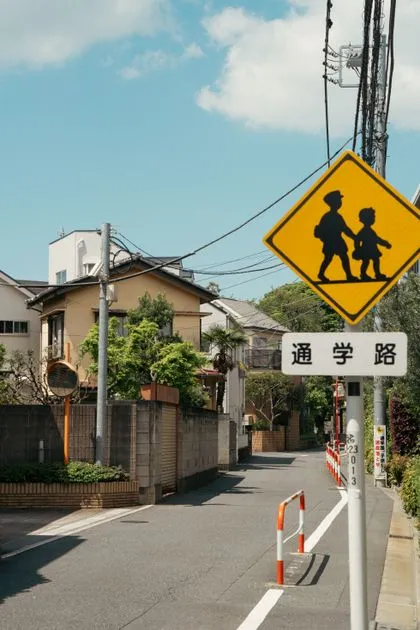
Two houses sit on the same street, at the same price, with the same floor area. One listing says 1979. The other says 1983. On paper that's a four-year gap; in practice it can be the difference between a straightforward purchase and one that needs a seismic assessment, affects your insurance premium, and changes what a bank will say about financing. In Japan, when a house was built is not trivia, it's one of the fastest single signals you can read on a listing.
That's why our search filters now include the era categories: Showa House, Heisei House, and Reiwa House. Here's what those words actually tell you.
How Japan dates its houses
Japan marks time in imperial eras, and the property market has kept the habit. Three eras cover essentially every house you'll see listed:
- Showa (昭和), 1926 to January 1989. In housing terms, "Showa" almost always means the post-war building boom: the 1950s through the 1980s, when Japan built at a pace it has never repeated.
- Heisei (平成), January 1989 to April 2019. The bubble's peak, its long aftermath, and the era when the modern Japanese floor plan settled into its current shape.
- Reiwa (令和), May 2019 to now. Current-code, current-insulation, essentially new stock.
Listings and agents use these words as shorthand constantly, a "Showa-era home" conjures a specific picture for a Japanese buyer the way "mid-century" does for an American one. But the era label is the coarse signal. The fine one is a specific date inside the Showa era, and it matters more than anything else on the listing.
The date that matters more than the era: June 1981
On June 1, 1981, Japan's revised seismic building standard, the shin-taishin (新耐震) code, came into force. Buildings whose construction was approved from that date onward were engineered to a substantially tougher earthquake standard than what came before. The property market treats this as a hard line, and so do the institutions around it:
- Earthquake insurance prices the line directly, buildings confirmed after June 1981 qualify for a construction-year discount.
- Banks are notably warier about lending against pre-1981 wooden houses, and some won't at all.
- Buyers' due diligence changes: for a pre-1981 house, a seismic assessment (耐震診断) moves from "nice to have" to "get one before you sign."
One practical detail worth knowing: the line is drawn at the date the building's construction was approved (the 建築確認, or building confirmation), not the date it was finished. A house completed in early 1982 may still have been approved under the old code. When it matters, and near the line, it matters, ask for the confirmation date, not just the completion year.
There's a second, softer line in 2000. After the 1995 earthquake in Kobe exposed weaknesses in how wooden houses were joined and braced, the code was tightened again, foundation specifications, metal connectors at structural joints, and balanced placement of load-bearing walls. For wooden houses specifically, "post-2000" is the quiet second tier of reassurance that Japanese buyers look for.
What a Showa house is actually like
The Showa listings are the biggest era group on the platform, and the most varied, everything from 1950s farmhouses to 1988 suburban two-storeys. The common threads: predominantly wood construction, tatami rooms divided by fusuma sliding doors rather than one open living space, a kitchen that is its own room, and single-glazed aluminium-sash windows that do approximately nothing about winter. Insulation, where it exists, was an afterthought.
None of that is a defect, it's a design language, and much of what foreign buyers love about Japanese houses (the engawa verandas, the woodwork, the room proportions) is exactly this stock. But it prices in work: heating, glazing, and, for pre-1981 homes, the seismic question above. The reward is that Showa houses are where Japan's low prices live. If you've read about houses in Japan costing less than a used car, they were almost certainly Showa houses.
What a Heisei house is actually like
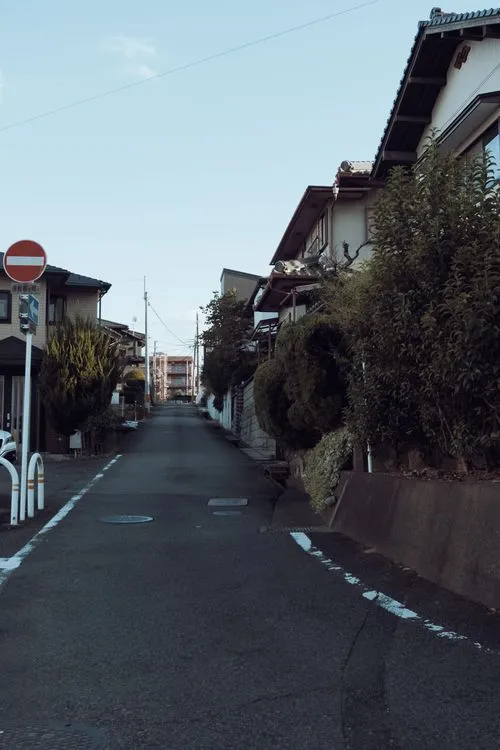
The Heisei era is when the modern Japanese floor plan won: the LDK, one combined living/dining/kitchen space, replaced the string of separate tatami rooms as the centre of the house. Construction diversified too: wood still dominates detached houses, but steel-frame and reinforced concrete became routine, especially for apartments. Windows got better. Insulation became a real consideration rather than a rumour.
For a buyer, Heisei stock is the pragmatic middle: new enough that the 1981 question doesn't exist (and, for post-2000 wooden houses, the Kobe-era improvements are in), old enough that prices have come well down from new-build levels. If your priority is a house you can live in immediately without a renovation project, this is usually where you land.
What a Reiwa house is actually like
A Reiwa house is, functionally, a new house, current seismic code, modern insulation and glazing, and increasingly the energy standards that became mandatory for new homes in April 2025. You're buying certainty, and you pay for it: Reiwa listings carry the smallest discounts from new-build pricing, because they barely aren't new builds.
The honest question with Reiwa stock is why it's on the resale market at all after so few years, usually a job transfer, an inheritance, or a divorce rather than anything wrong with the building. It's still worth asking.

A note on apartments: eras age differently in concrete
Everything above leans toward detached houses, because that's where era matters most viscerally. But the same three words appear on apartment listings, and they read differently there. A reinforced-concrete apartment building carries the same 1981 seismic line, arguably with higher stakes, since you can't independently reinforce your one unit of a shared structure. What you can do is read the building's management: a pre-1981 apartment block with a funded repair reserve and a documented seismic retrofit is a fundamentally different purchase from the same-age block without them.
The other difference is trajectory. A wooden Showa house has usually finished depreciating, you're buying land with a structure the market prices near zero, which is exactly why the bargains are real. Concrete apartments depreciate more slowly and keep trading on the building's condition for decades, so the era discount is shallower and the management-quality question does more of the work. Same three eras, different arithmetic.
Reading a listing with era eyes
A quick translation table for what you'll see:
- Built 1975, cheap, great bones, budget for a seismic assessment and assume the windows and insulation are projects. If the price still works after that arithmetic, Showa houses are the best value in the market.
- Built 1983 to 1999, post-1981 code, pre-2000 joinery rules if wooden. The seismic floor is there; ask about the 2000-era details if it's a wood build.
- Built 2001 to 2019, the sweet spot for buy-and-live-in-it. Verify condition like you would anywhere, but the code questions are largely answered.
- Built 2019 onward, near-new. The main question is price relative to a genuine new build, not the building itself.
And one warning that applies across all eras: the era tells you about the original construction. A 1970 house that was properly renovated in 2015, structure included, can outperform a neglected 1995 one. The era is where you start reading, not where you stop. Renovation history, when it's documented, beats era every time; our Renovated filter is the cross-reference worth keeping open in a second tab.
Filter by era, then verify like a builder
The era filters stack with everything else in search, prefecture, price, construction type, all of it. A practical starting recipe: pick your region, set your budget, then run the same search three times with each era filter and watch how the price-to-condition trade moves. Ten minutes of that teaches you more about a local market than most articles can.
When a specific house gets serious, the era questions above, confirmation date versus completion date, seismic assessment for pre-1981, the 2000 joinery details for wooden builds, are exactly the things Akiya Japan Buyer Support, our licensed Japanese brokerage partner, chases down in Japanese on your behalf as part of the purchase process.
An era name on a listing looks like trivia until you know what's inside it. Now you do.


