Three economies. Three histories. One rapidly tightening web of technology partnerships, trade flows, and cross-cultural communities that is quietly reshaping Asia's economic architecture.
Japan, Singapore, and Malaysia have each taken distinct paths to prosperity — the post-war manufacturing giant, the city-state that bet everything on connectivity, and the resource-rich nation pivoting toward high-value industry. But in 2026, the distances between them are collapsing. A bilateral relationship upgraded to a Strategic Partnership. A semiconductor supply chain spanning all three. Hydrogen corridors under active negotiation. A shared frontier in quantum computing, AI, and smart city infrastructure.
Understanding how these relationships work — and why they are deepening now — matters well beyond government ministries. This is the geopolitical and historical context behind one of Asia's most consequential bilateral realignments. For what it means for property buyers from Singapore and Malaysia, see Part 2 of this series.

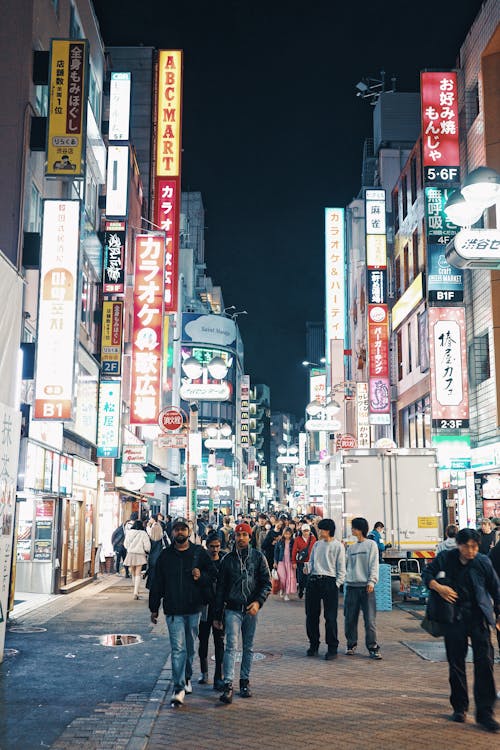
Tokyo at dawn — Japan's economic gravity is drawing Southeast Asian capital at a pace not seen since the 1980s. Photo: Lovesa Chang / Pexels
Japan and Singapore: 60 Years, Then a Step Change
On 18 March 2026, Prime Minister Lawrence Wong and Prime Minister Takaichi Sanae announced the upgrade of Singapore-Japan relations to a full Strategic Partnership — the highest tier in Japan's bilateral relationship framework. The timing was deliberate: the two nations marked 60 years of diplomatic ties in 2026, and both governments chose to mark the anniversary not with ceremony alone, but with a structural deepening of cooperation.
The relationship has always been close. Japan's first-ever bilateral free trade agreement was the Japan-Singapore Economic Partnership Agreement (JSEPA), signed in 2002 — a milestone that signalled Singapore's role as Japan's preferred gateway into Southeast Asia. Two-way tourist numbers reached approximately 1.36 million in 2025. Japanese investment has long flowed into Singapore's financial and industrial sectors, while Singaporean capital has increasingly found its way into Japanese real estate.
But the 2026 Strategic Partnership goes well beyond trade preferences. The formal areas of expanded cooperation include quantum science and technology, next-generation semiconductors, cybersecurity, space research, AI and future communications, smart city development, and a new Energy, Sustainability and Climate Change Cooperation Framework signed on 15 March 2026. The practical implication is that Japan and Singapore are building an institutional architecture for long-term collaboration — not just in commerce, but in the infrastructure of the 21st-century economy.
The Technology Layer: Semiconductors, Smart Cities, Quantum
If there is a single sector where Japan, Singapore, and Malaysia are most deeply interlocked, it is semiconductors. The three nations form a natural and complementary supply chain: Japan dominates in materials and manufacturing equipment; Singapore provides advanced fabrication capacity and regional coordination; Malaysia contributes assembly, testing, and advanced packaging at scale.
Since 2020, the ASEAN region has attracted roughly $60.8 billion in semiconductor foreign direct investment, with nearly 80 percent of that concentrated in Singapore and Malaysia. Japanese equipment suppliers are deeply integrated into regional fabrication plants, alongside capacity expansions from Taiwan's UMC in Singapore and other joint ventures. Malaysia has explicitly called on Japanese investors to move up the value chain — from assembly into integrated circuit design, advanced packaging, and R&D — framing the invitation as an opportunity to build supply chain resilience together.
Prime Minister Anwar Ibrahim stated it directly at the Nikkei Forum in 2026: "Malaysia and Japan can lead in resilient technology networks and semiconductor supply chains." Malaysia's expertise in semiconductor assembly, testing and advanced packaging complements Japan's leadership in materials, equipment and advanced manufacturing — and both sides know it.
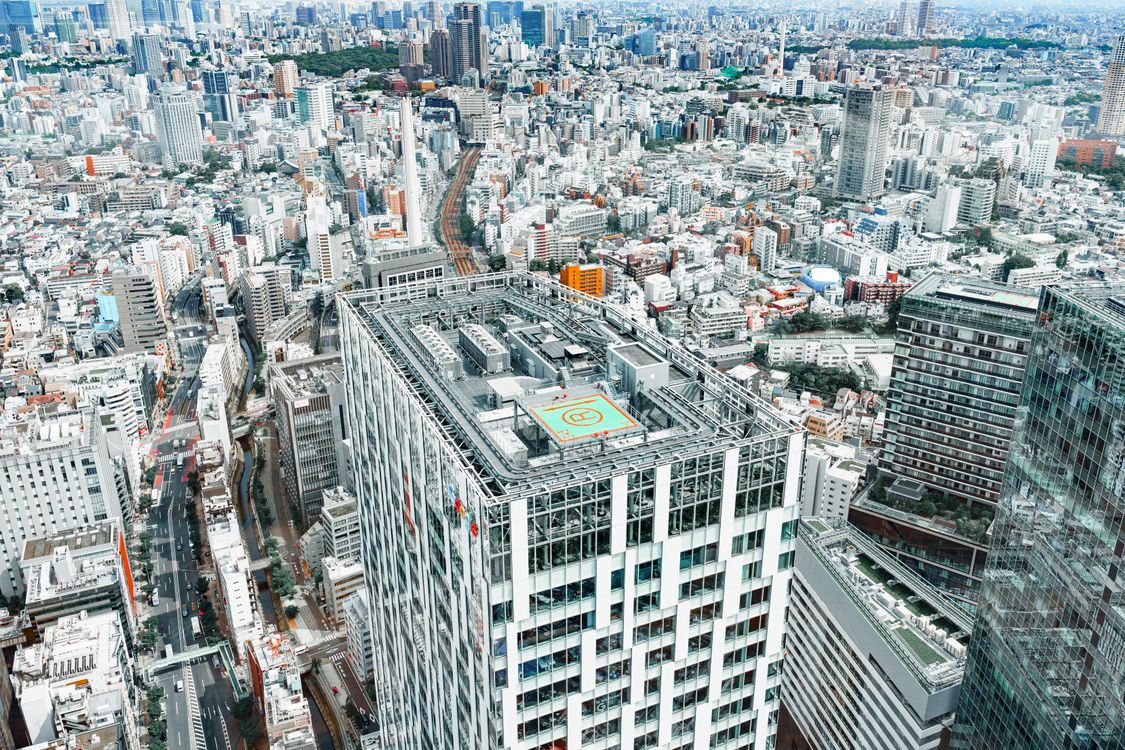
Tokyo from above — headquarters city for the Japanese firms driving semiconductor equipment and materials exports across Southeast Asia. Photo: Lawrence Lam / Pexels
Smart cities represent another shared frontier. Singapore's urban management expertise — from its Jurong Lake District masterplan to its integrated transport systems — has long been something Japan's Ministry of Land, Infrastructure, Transport and Tourism (国土交通省, Kokudo Kōtsū-shō) has sought to export together into third markets. Under the 2026 Strategic Partnership, the two governments signed a Memorandum of Cooperation to advance digital and smart city development in ASEAN countries — positioning both nations as joint consultants to the region's urbanisation challenge.
Quantum science and technology, AI, and cybersecurity form a third pillar. Japan and Singapore signed a Memorandum of Cooperation on Mutual Recognition of IoT Cybersecurity Schemes through the Cyber Security Agency of Singapore (CSA) and Japan's Ministry of Internal Affairs and Communications. On quantum, both countries are deepening cooperation through a dedicated MOC on Quantum Science, Technology and Innovation — with the shared aim of staying at the frontier of next-generation computing before its applications become commercially decisive.
Clean Energy: The Corridor Taking Shape
Perhaps the most strategically consequential cooperation underway is in clean energy — specifically hydrogen, ammonia, and the decarbonisation of heavy industry. Japan imports virtually all of its fossil fuels and has staked its net-zero pathway on a future where green hydrogen and ammonia replace oil and gas as energy carriers. Singapore, as a financial and logistics hub with strict carbon commitments, needs the same. Malaysia, with its natural resources, existing LNG expertise through Petronas, and ambitions to become a major hydrogen exporter, sits at the centre of both supply chains.
In January 2026, Prime Minister Ishiba and Malaysian Prime Minister Anwar agreed to advance carbon capture and green hydrogen projects, including collaborations between Japanese companies and Petros — Sarawak's state-owned oil company — and Petronas, to develop hydrogen energy technologies. Malaysia has set a target of RM12.1 billion in hydrogen revenue by 2030, with Japan identified as a primary export destination.
Singapore and Japan formalised this on 15 March 2026 with their Energy, Sustainability and Climate Change Cooperation Framework, covering cross-border electricity imports, low-carbon hydrogen and ammonia, carbon capture utilisation and storage (CCUS), civil nuclear energy, liquefied natural gas, advanced power grid systems, and offshore wind energy.
These are not headline pledges. They are the architecture of new trade flows. When Malaysia begins exporting hydrogen to Japan at scale, and when Singapore acts as the financial intermediary and logistics hub for that corridor, the economic integration of all three nations deepens further — with lasting consequences for investment climate, currency stability, and the long-term appeal of each as a place to own property.
Japan and Malaysia: 70 Years, RM142.9 Billion, and Climbing
Japan and Malaysia marked 70 years of diplomatic relations in 2024 and 50 years of their elevated business partnership in 2025. As of December 2025, Japanese investment in Malaysia totals RM142.9 billion across more than 3,800 projects, with close to half a million job opportunities created. This makes Japan one of Malaysia's largest foreign investors — and the relationship shows no sign of plateauing.
Malaysian Prime Minister Anwar Ibrahim made an official visit to Japan in June 2026 specifically to deepen investment and trade ties in high-value sectors: semiconductors, artificial intelligence, advanced manufacturing, and green initiatives aligned with Malaysia's National Energy Transition Roadmap. AI research collaborations between the University of Tokyo and Universiti Malaya are being expanded to include the International Islamic University Malaysia (IIUM). Malaysia is developing quantum technology capabilities through collaboration with IBM, and seeking Japanese partnerships to accelerate that trajectory.
The investment relationship is increasingly mutual. While Japanese companies continue to anchor manufacturing operations in Malaysia, Malaysian institutions and high-net-worth individuals are looking more closely at Japan — both as a destination for capital and as a place to spend time. This is the quiet, person-level shift that precedes a larger wave of cross-border lifestyle investment.
The Word "Japan" and Its Malay Roots
The relationship between Japan and the Malay world is embedded in language itself — in a way most people have never considered.
In Japan, the country is called Nihon (日本, nihon) or Nippon (日本, nippon) — both meaning "origin of the sun" (日, nichi/hi = sun; 本, hon/moto = origin or base). But the word "Japan" that the rest of the world uses arrived in European languages by an entirely different route: through the trading ports of the Malay Peninsula.
When Portuguese merchants arrived in Malacca (present-day Malaysia) in 1511, they found one of the world's most cosmopolitan ports, where Arab, Indian, Chinese, and Malay traders all converged. Among the knowledge that crossed those docks was a word: the Malay Japang (also recorded as Jepun), derived from a southern Chinese pronunciation of 日本. The Portuguese heard this Malay term, adapted it as Japão, and carried it back to Europe. It first appeared in English in 1577 as "Giapan" — and evolved into the "Japan" the world has used ever since. The Malay language is, in a direct and traceable sense, the reason the English-speaking world does not call the country "Nihon."
The etymological chain — from Chinese pronunciation, to Malay borrowing, to Portuguese transmission, to English — traces a centuries-old trade corridor running directly through what is now Malaysia. The name "Japan" in every European language is a Malay transmission to the wider world.
The significance extends beyond linguistics. Malacca in the 15th and 16th centuries was a crossroads where East Asian, South Asian, and early European commercial networks all intersected. Japanese traders, Malay merchants, and the first Portuguese arrivals in Southeast Asia shared the same harbour. Japan's name as known to the Western world was forged at this meeting point. That the contemporary Japan-Malaysia relationship is now measured in RM142.9 billion of investment, seven decades of formal diplomacy, and 25,000 Japanese nationals calling Malaysia home is, in some sense, a modern chapter of a story that began in the spice-scented port of Malacca five centuries ago.
The Diaspora Dimension: 25,000 Japanese Call Malaysia Home
One of the least-discussed but most durable aspects of the Japan-Malaysia relationship is the diaspora. Approximately 25,000 Japanese nationals live in Malaysia, making it one of the largest Japanese communities in Southeast Asia. Their presence is concentrated in Kuala Lumpur, Penang, and the Iskandar Malaysia development corridor in Johor — not far from Singapore.
The history of this community goes back further than most expect. Japanese migration to what was then British Malaya began in the late 19th century. The 1911 census recorded over 2,000 Japanese in the country. By the mid-20th century, the community had evolved into a stable commercial and professional network. Today's Japanese community in Malaysia includes manufacturing executives, call centre workers at Japanese-owned companies, and retirees who came through Malaysia's My Second Home (MM2H, Malaysia My Second Home) programme during its boom years in the 2000s.
This cultural familiarity runs in both directions. Malaysians who have spent careers working with Japanese companies, or who grew up with Japanese consumer brands, food chains, and cultural exports, approach Japan property purchases with a comfort level that buyers from further afield simply do not have. The MM2H programme, recently revamped with four categories (Platinum, Gold, Silver, and Special Economic Zone/SFZ), now requires property purchases of RM600,000 to RM2 million depending on the tier. This has affected some Japanese retirees' participation but continues to create cross-border lifestyle connections between the two nations.
The Architecture of a Decade
Taken individually, each cooperation framework described in this article could be read as diplomatic formality — a memorandum signed, a summit communiqué issued, a target announced. Read together, they describe something more durable: three nations building the institutional infrastructure to stay tightly integrated through the disruptions ahead.
The Strategic Partnership between Japan and Singapore is the highest tier Japan extends to any bilateral partner. The RM142.9 billion in Japanese investment across Malaysia — spanning more than 3,800 projects — is not legacy capital; it is a base being actively extended into AI, quantum technology, and green energy. The hydrogen corridors now under negotiation will, if completed, create permanent trade flows binding these three economies at the infrastructure level.
And underneath all of this, the diaspora story. Twenty-five thousand Japanese nationals calling Malaysia home. Hundreds of thousands of Singaporean and Malaysian visitors to Japan each year. A word — "Japan" itself — that arrived in European languages through a Malay trading port five centuries ago. These are not new or transactional relationships. They are deep, layered, and showing every sign of deepening further.
This is Part 1 of 2. Part 2 covers what this means for property buyers from Singapore and Malaysia — the markets attracting the most Southeast Asian capital, what prices and yields look like today, and the practical steps for first-time buyers.
Sources
- Joint Statement: Strategic Partnership Between Japan and Singapore — Prime Minister's Office Singapore, March 2026
- Singapore and Japan Collaborate on Smart City Developments for ASEAN — Singapore Cooperation Enterprise
- Singapore-Japan IoT Cybersecurity MoC — Cyber Security Agency of Singapore
- Singapore and Japan Sign Energy and Climate Cooperation Framework — Indiplomacy, March 2026
- Reinforcing Malaysia-Japan Economic Partnership — Malaysian Investment Development Authority (MIDA)
- Anwar: Japan Visit Strengthens Investment, AI and Trade Ties — Malay Mail, June 2026
- Malaysia, Japan Can Lead in Resilient Tech Networks, Semiconductor Supply Chains — Scoop
- Moving Up, Locked In: The Hidden Costs of ASEAN's Semiconductor Push — The Diplomat, March 2026
- Japanese Migration to Malaysia — Wikipedia
- Japan-Malaysia Relations (Basic Data) — Ministry of Foreign Affairs of Japan
- Names of Japan — Wikipedia (etymology of "Japan" via Malay Japang from Chinese jih pun)


