A few years ago, a Singaporean buying property in Tokyo was still a novelty. Today, it is routine. Southeast Asian buyers have become the most active foreign purchaser group in Japan's property market — and the shift is structural, not cyclical.
The foundations are well-documented: a yen at multi-decade lows, a legal framework that places no restrictions on foreign ownership, and a property market transparent enough to research from Singapore or Kuala Lumpur before you ever board a plane. But the capital flows are also backed by something deeper — six decades of diplomatic ties being actively upgraded to Strategic Partnership level, a semiconductor supply chain that ties all three economies together industrially, and diaspora communities that have been building cultural bridges between Japan and Southeast Asia for generations. That geopolitical story is covered in Part 1 of this series.
This article is the practical half: where Southeast Asian buyers are looking in 2026, what the numbers actually show, and what the purchase process involves from end to end.

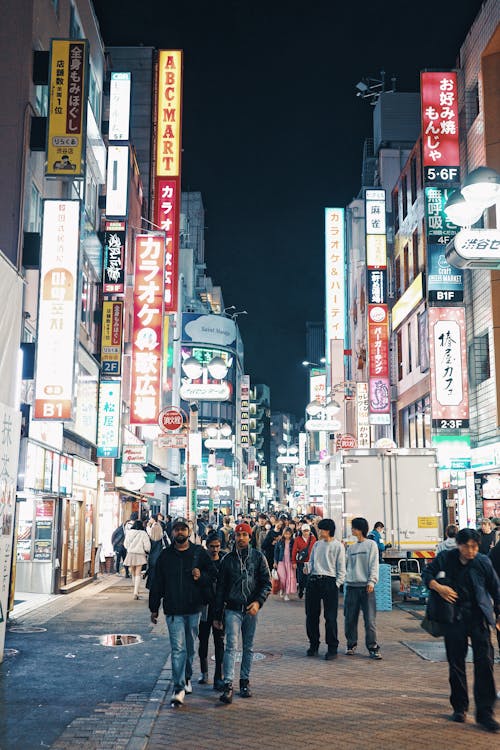
Kuala Lumpur at night, with the Petronas Twin Towers dominating the skyline — Malaysia's capital has emerged as a major source of Japan property investment, backed by RM142.9 billion in bilateral trade ties and 25,000 Japanese nationals living in-country. Photo: Pexels
Southeast Asian Buyers Are Now Leading the Market
The macro story has a very practical on-the-ground consequence: Southeast Asian buyers have become the most active foreign purchaser group in Japan's property market, and Singapore leads the charge.
At Japanese property investment firm FM Investment, Singaporeans now account for half of all transactions — up from 30 percent the previous year — overtaking Hong Kong buyers as the largest client group. The firm has held at least 15 property sales events in Singapore, covering developments in Tokyo, Osaka, Nagoya, and Kyoto. A two-bedroom apartment in Tokyo's Asakusa district was sold for under S$500,000 (approximately ¥55 million at current rates). These numbers illustrate a market that has moved well past curiosity into sustained acquisition.
The drivers are straightforward. The yen's weakness gives buyers from Singapore and Malaysia a purchasing advantage of 20 to 30 percent compared to five years ago. Japan's property market is transparent, legally uncomplicated for foreigners, and backed by a rule-of-law environment that investors from any background can rely on. There are no restrictions on foreign nationals purchasing real estate in Japan — a stark contrast to many regional markets. Full-year investment volume in 2025 topped JPY 6 trillion, setting a new single-year record, and CBRE projects 2026 to come close. Tokyo has ranked as the number-one city for cross-border real estate investment for seven consecutive years.
Motivations have also expanded beyond pure investment. Foreign home purchases in 2025 were increasingly driven by relocation, long-term residency, and the desire to establish a family base — with the growth of international schools in Tokyo and Osaka, and an increase in English-friendly property transactions, making the practical side more accessible than ever.
The types of properties attracting Southeast Asian buyers have also shifted. The early wave focused on new-build condominiums in central Tokyo — low-friction purchases with professional management already in place. That demand persists, but the range has broadened. Resale condominiums in established neighbourhoods (Shinjuku, Shibuya, Minato in Tokyo; Namba, Umeda in Osaka) offer better value per square metre and existing rental histories that buyers can assess before committing. Short-term rental-optimised units near major tourist districts — particularly in Kyoto, Osaka, and Niseko — attract buyers looking to combine yield with personal use. And a growing subset of Malaysian and Singaporean buyers are looking at older detached houses: lower entry prices, more space, and the flexibility to renovate or repurpose.
Key Markets: Where Singapore and Malaysian Buyers Are Looking
The geography of Southeast Asian demand in Japan is not uniform. Different cities appeal for different reasons, and understanding these distinctions matters for buyers deciding where to allocate capital.
Tokyo
Tokyo remains the default for first-time foreign buyers: maximum liquidity, high name recognition, and a well-functioning secondary market. Average new condominium prices in Tokyo's 23 wards have climbed approximately 64 percent from 2021 levels, with the average now priced around ¥110 million (approximately $800,000 USD). Rental yields in central Tokyo run at 3 to 4 percent — lower than Osaka — but the stability and long-term appreciation story compensates. For Singapore-based buyers, the psychological ease of Tokyo matters too: international schools, English-friendly real estate agents, and a robust expat community all reduce the friction of an unfamiliar purchase.
Osaka
Osaka is increasingly the city of choice for yield-focused investors. Rental yields of around 5 percent significantly outperform Tokyo, while prices remain more accessible. The Osaka-Kansai Expo in 2025 brought sustained international attention to the region, and the planned integrated resort (IR) casino development on Yumeshima island continues to drive investment into the surrounding Kansai area. For Singaporeans who follow high-growth urban development plays, Osaka's trajectory has a recognisable rhythm.
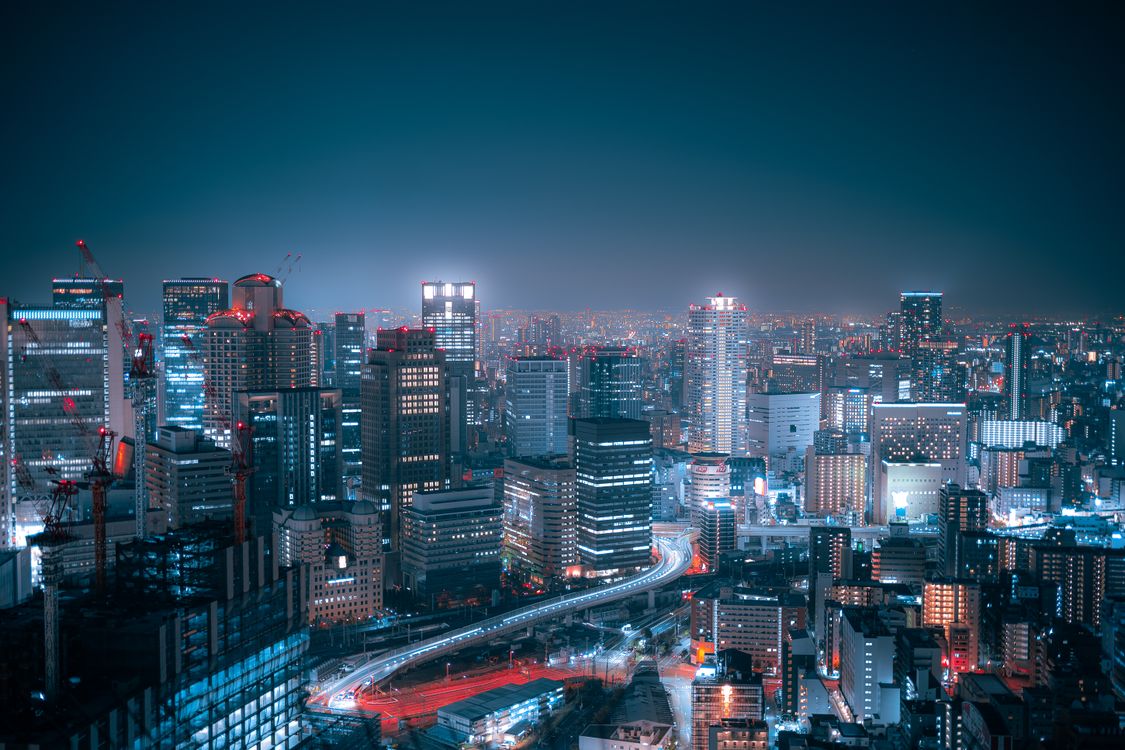
Osaka (大阪) from above at night — Japan's second city delivers rental yields around 5%, significantly outperforming Tokyo, and has attracted sustained capital from Singapore and Malaysian buyers since the Osaka-Kansai Expo in 2025. Photo: Digital Phase / Pexels
Fukuoka
Fukuoka (福岡, Fukuoka) is Japan's fastest-growing major city among the under-35 demographic, and it benefits from its position as the gateway to East Asia — closer to Seoul than to Tokyo. Gross rental yields in Fukuoka range from 5 to 8 percent, far above the national average, with entry prices well below Tokyo or Osaka. For Malaysian buyers in particular, Fukuoka's lower price floor — apartments regularly available at ¥10 million to ¥20 million — makes it an accessible starting point.
Second-Tier Cities
Sapporo (札幌, Sapporo) benefits from winter sports tourism and growing demand for short-term rental properties around its ski resorts. Nagoya (名古屋, Nagoya), the anchor of Japan's manufacturing corridor, offers stable yields and significant infrastructure investment. Kyoto (京都, Kyoto) attracts buyers who want both rental income and personal use — its cultural pull guarantees year-round travel demand, though heritage protection rules create nuances for short-term rental operators.
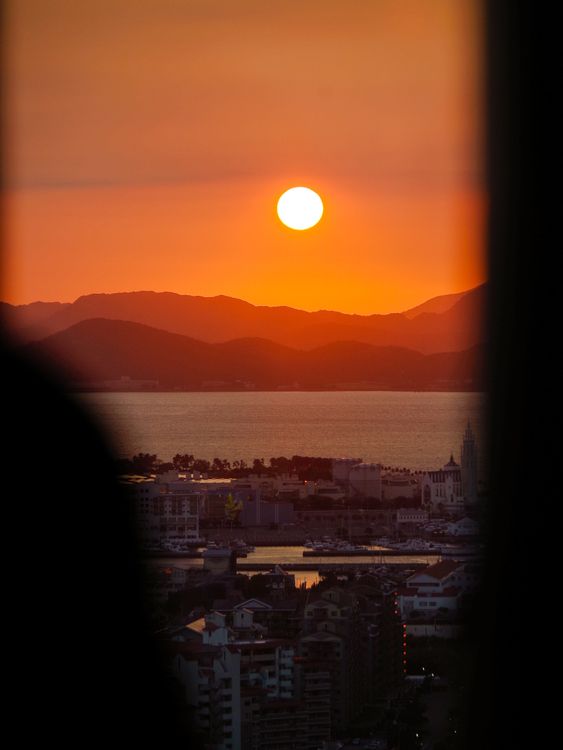
Fukuoka (福岡) at sunset — Japan's fastest-growing major city among the under-35 demographic, with rental yields of 5 to 8 percent and entry-level apartments regularly available at ¥10 to ¥20 million. Photo: Pexels
Practical Considerations for ASEAN Buyers
Japan places no legal restrictions on foreign nationals purchasing real estate, regardless of visa status or residency. You do not need to be a resident to buy, and there is no separate approval process for foreign buyers — a relative rarity in the region. Property titles are registered through the Legal Affairs Bureau (法務局, hōmusho), and the purchase process involves a licensed real estate agent (宅地建物取引士, takuchi tatemono torihiki-shi), a judicial scrivener (司法書士, shiho shoshi) who handles title registration, and in most cases a building inspection.
Key taxes to understand before buying:
- Acquisition tax (不動産取得税, fudosan shutoku-zei): typically 3 to 4 percent of assessed value, paid once at purchase
- Registration tax (登録免許税, toroku menkyo-zei): 0.15 to 2 percent, paid at title transfer
- Fixed asset tax (固定資産税, kotei shisan-zei): approximately 1.4 percent of assessed value annually
- City planning tax (都市計画税, toshi keikaku-zei): up to 0.3 percent annually in designated urban areas
- Stamp duty on the purchase contract: ¥10,000 to ¥600,000 depending on transaction size
For Singapore and Malaysian buyers, mortgage access is a common question. Japanese banks will lend to foreign nationals, but typically require permanent residency or at least a long-term visa. Cash buyers or buyers using Singapore- or Malaysia-based financing have more flexibility. Some regional banks now have dedicated foreign buyer lending products — but this remains an area where specialist guidance matters.
One question every non-resident buyer needs to answer before purchasing is: who manages the property? For condominium buyers in Tokyo or Osaka, building management companies typically handle maintenance and common area repairs automatically. But tenant sourcing, rent collection, and repairs inside the unit require a separate property management contract. Fees typically run 5 to 10 percent of monthly rent. For short-term rental properties, specialist operators charge higher fees (15 to 25 percent of revenue) but handle everything from guest check-in to cleaning. Buyers should budget for this before comparing gross yields — the net return after management costs is what matters. Discussing management options before finalising a purchase is a practical step that many first-time buyers skip; agents experienced with foreign buyers will have preferred partners they can refer.
Working with a licensed agent who specialises in foreign buyer transactions significantly reduces complexity. Teritoru, our licensed partner agency in Japan, specialises in helping international buyers navigate the purchase process — from property identification and legal due diligence through to title registration and ongoing property management. Their founder, Ai Hioki, is fluent in English and Japanese, and initial consultations are available by web conference, making the process accessible from Singapore or Kuala Lumpur without requiring an immediate trip. If you are at the stage of serious consideration, booking a consultation with Teritoru is a practical next step.
Reading the Signals
The Southeast Asian interest in Japanese property is not speculative. It is grounded in a 60-year diplomatic relationship being actively upgraded to Strategic Partnership level, backed by a semiconductor supply chain that ties Japan, Singapore, and Malaysia together industrially, and reinforced by the 25,000 Japanese nationals who call Malaysia home and the hundreds of thousands of Singaporean and Malaysian visitors who arrive in Japan every year.
The yen offers an entry point that may not last indefinitely. The market is transparent, the legal framework is accessible, and the cultural ties between Japan and its Southeast Asian neighbours have never been stronger. For buyers from Singapore and Malaysia, Japan is not a foreign bet — it is a familiar next step.
Sources
- Singaporeans Flock to Japan Property as Tokyo, Osaka and Weak Yen Lure Buyers — South China Morning Post
- Japan Market Outlook 2026 — CBRE Singapore
- Reinforcing Malaysia-Japan Economic Partnership — Malaysian Investment Development Authority (MIDA)
- Japan-Malaysia Relations (Basic Data) — Ministry of Foreign Affairs of Japan