Why an Inspection Can Save You Millions of Yen
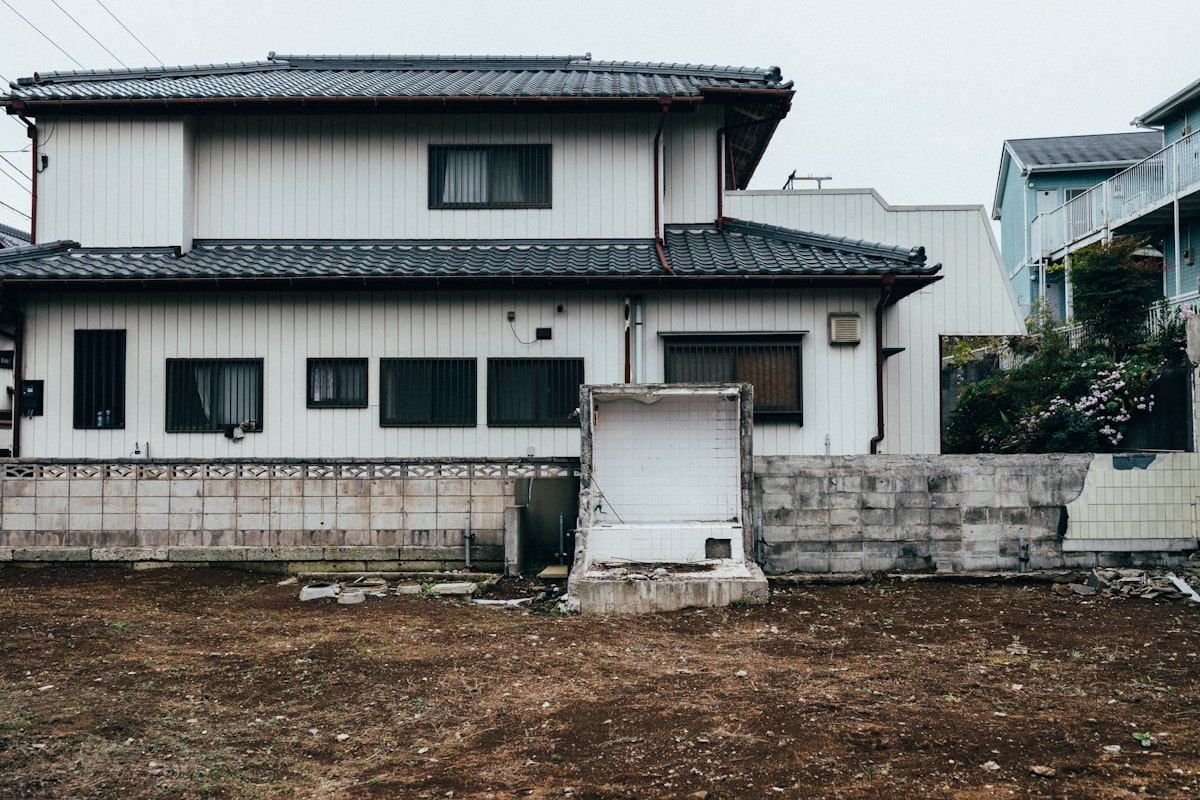
Akiya properties sit vacant for months, years, sometimes decades. Without occupants to notice a dripping pipe, a shifting foundation, or the quiet tunneling of termites, small problems become expensive catastrophes. A house that looks charming in listing photos can hide structural damage that costs more to repair than the purchase price itself.
In Japan, home inspections before purchase are still relatively uncommon — most Japanese buyers prefer new construction and view older homes with suspicion rather than curiosity. This means the inspection infrastructure that Western buyers take for granted is thinner here, and foreign buyers often don't know what to ask for or what to look at. There is no equivalent of a standard "home inspection contingency" that's routine in the US, UK, or Australia.
The consequences of skipping an inspection can be severe. Buyers have purchased a ¥500,000 akiya only to discover ¥4,000,000 in necessary repairs — a crumbling foundation, termite-hollowed beams, and a roof that leaked into every room during the first typhoon season. This happens regularly to buyers who trusted photographs and a brief walkthrough.
This guide is your systematic walkthrough. It covers every major system in a Japanese house, explains what the Japanese building report actually says, and gives you the specific red flags that should make you renegotiate — or walk away entirely.
Understanding the Japanese Building Inspection System
Japan's formal home inspection is called a jūtaku jōkyō chōsa (住宅状況調査 (jūtaku jōkyō chōsa)). Since the 2018 revision of the Real Estate Brokerage Act, real estate agents are required to disclose whether a building condition survey has been conducted within the past three years. They must also ask the seller whether they'd be willing to have one done.
This doesn't mean an inspection is mandatory — it means the agent must bring it up. For akiya properties sold through municipal akiya banks or direct owner sales, there may be no agent involved, and no one will mention inspections unless you do.
What the Professional Inspection Covers
A standard inspection conducted by a registered architect examines:
- Foundation — cracks, settlement, moisture intrusion
- Exterior walls — cracking, water stains, mortar or siding deterioration
- Roof — visible damage, leaks, gutter condition
- Interior floors, walls, ceilings — deflection, staining, visible damage
- Accessible structural members — rot, insect damage, deformation
Crucially, a standard inspection does not cover electrical wiring, plumbing function, gas systems, termite damage behind walls, or earthquake resistance assessment. Those require separate specialist inspections.
What It Costs
A basic building condition survey costs ¥50,000–¥80,000 (~$330–$530 USD). Add-ons: underfloor inspection +¥15,000–¥20,000, attic inspection +¥15,000, rooftop inspection +¥30,000, seismic assessment ¥100,000–¥300,000, termite inspection ¥15,000–¥30,000. For a thorough inspection of a typical akiya, budget ¥100,000–¥150,000 total.
If the seller or municipality refuses to allow an inspection before purchase, treat that as a red flag. Legitimate sellers have nothing to hide from a building survey.
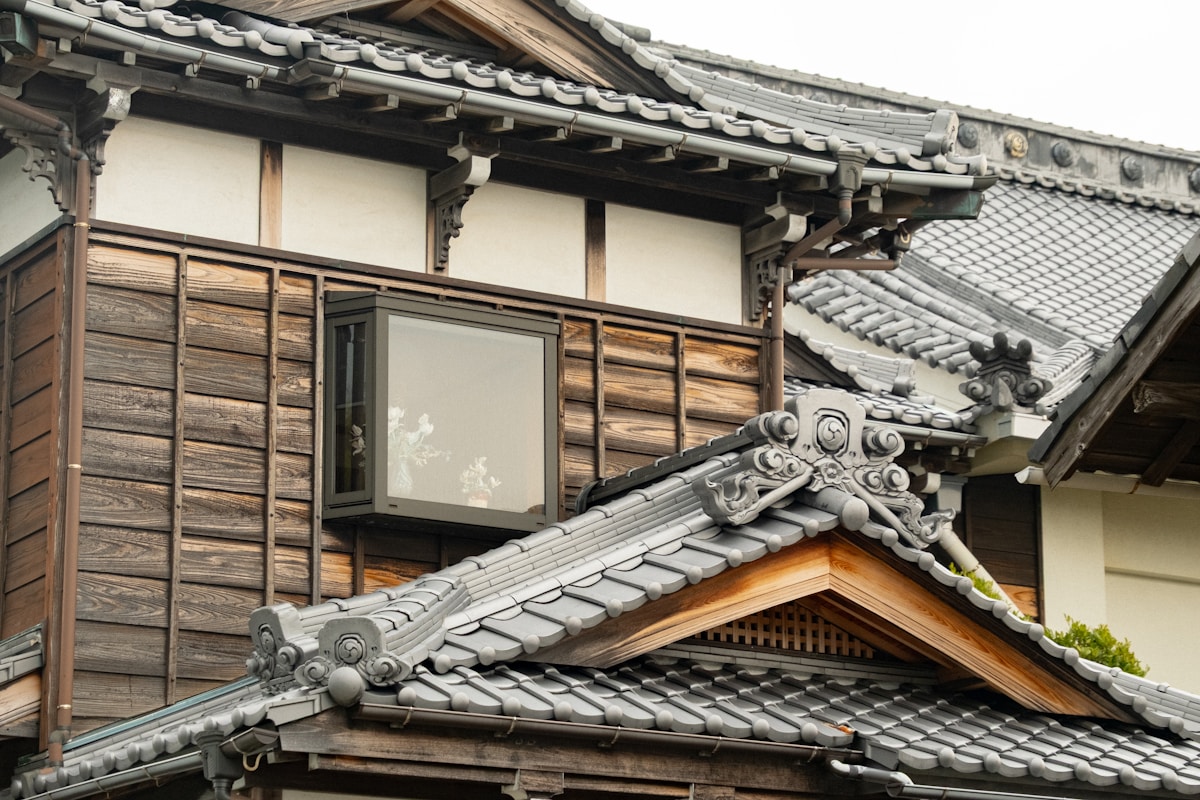
A traditional Japanese wooden house — inspecting the roof, walls, and structure before buying is essential. Photo: Tuan P. / Unsplash
Earthquake Resistance: The Single Most Important Date
Before you look at anything else, find the building's construction confirmation date (建築確認日 (kenchiku kakunin-bi)). This date tells you which earthquake resistance standard the building was designed to. There are three critical thresholds:
Pre-June 1981: Old Standard (旧耐震 (kyū taishin)基準 (kyū taishin kijun) — Kyū Taishin Kijun)
Buildings designed before June 1, 1981 were built to the old seismic code, which only required structures to withstand a shindo 5 (moderate) earthquake without major damage. During the 1995 Great Hanshin Earthquake (M6.8), buildings built to this standard suffered catastrophic failure at significantly higher rates than newer buildings. Many of the most affordable akiya on the market were built in the 1960s and 1970s and fall squarely into this category.
What this means for you: A pre-1981 building will almost certainly need a full seismic retrofit (耐震補強 — taishin hokyō), which costs ¥1,000,000–¥3,000,000 for a typical wooden house. The good news: many municipalities offer subsidies covering 50–80% of retrofit costs for owner-occupied homes. Check with your local city hall (市役所) before purchasing — the availability and amount of subsidy can significantly change your renovation math.
June 1981–May 2000: New Standard (新耐震 (shin taishin)基準 (shin taishin kijun) — Shin Taishin Kijun)
The 1981 revision raised the bar significantly: buildings must remain standing without collapse during a shindo 6+ to 7 (severe to extreme) earthquake. This standard proved its worth during the 1995 Kobe earthquake, where shin-taishin buildings survived at dramatically higher rates.
However, for wooden houses built between 1981 and 2000, there's an important caveat. According to the Japan Association for Strengthening Wooden Residences against Earthquakes, 86.2% of wooden houses built in this period do not meet the stricter 2000 standard. They're better than pre-1981, but still have known vulnerabilities — particularly in how walls are braced and how foundations connect to the frame. If you're considering a wooden house from this era, factor in ¥500,000–¥2,000,000 for potential seismic improvements.
Post-June 2000: Current Standard
The 2000 revision, prompted by lessons from the Kobe earthquake, specifically addressed wooden house construction. It mandated continuous concrete strip foundations instead of independent footings, metal hold-down hardware (ホールダウン金物) connecting the frame to the foundation, and balanced wall placement where bracing is distributed evenly rather than concentrated on one side. A wooden akiya built after June 2000 is significantly more earthquake-resistant than one from the 1980s–90s, even though both technically meet "shin-taishin" standards.
The Roof: Your First Line of Defense
Traditional kawara (瓦) clay tile roofs weigh 50–60 kg per square meter. This weight is by design (tiles resist typhoon winds), but it puts enormous stress on aging structures.
What to Check
- Tile displacement — shifted, cracked, or missing tiles are common after years of typhoons. A few displaced tiles are a simple repair (¥30,000–¥50,000). Widespread displacement suggests the underlayment has failed.
- Ridge tiles (棟瓦) — crumbling mortar along the roof peak means tiles will shift in the next strong wind. Re-mortaring: ¥100,000–¥300,000.
- Metal roofing — check for rust, particularly at seams and around nail holes. Perforated rust means water is getting in.
- Interior ceiling stains — brown water stains are a definitive sign of past or present roof leaks. Check the attic for wet wood, mold, or daylight through the roof deck.
- Gutters (雨樋) — clogged or broken gutters channel water into walls and foundations. Replacement: ¥150,000–¥400,000.
- Eave condition (軒) — check the underside for rot, peeling paint, or animal entry points.
A complete roof replacement costs ¥1,500,000–¥3,000,000. If the roof is clearly failing, factor this into your offer price.
Foundation and Structure
Foundation Types by Era
- Stone foundations (石積み基礎) — found in traditional kominka. Not earthquake-resistant. Retrofitting costs ¥2,000,000+.
- Independent footings (独立基礎) — concrete piers at column points, common through the 1970s. Open spaces underneath allow moisture and pests.
- Continuous strip foundations (布基礎) — standard from the 1980s. Better earthquake resistance.
- Mat foundations (ベタ基礎) — solid concrete slab. Best for moisture and pest prevention. Standard post-2000.
What to Check
- Cracks — hairline cracks under 0.3mm are normal. Cracks wider than 0.5mm, particularly diagonal, need professional assessment. Horizontal cracks in foundation walls are especially concerning.
- Settlement — place a marble on the floor. Consistent rolling in one direction means uneven settling. Anything more than 6/1000 slope indicates serious structural issues.
- Crawlspace moisture — open the access hatch (床下点検口). Standing water, mold on floor joists, or wet soil accelerates every other problem: rot, termites, foundation deterioration.
- Ventilation openings — foundation vents (通気口) blocked by soil or debris trap moisture underneath. Inadequate ventilation is the most common cause of underfloor rot.
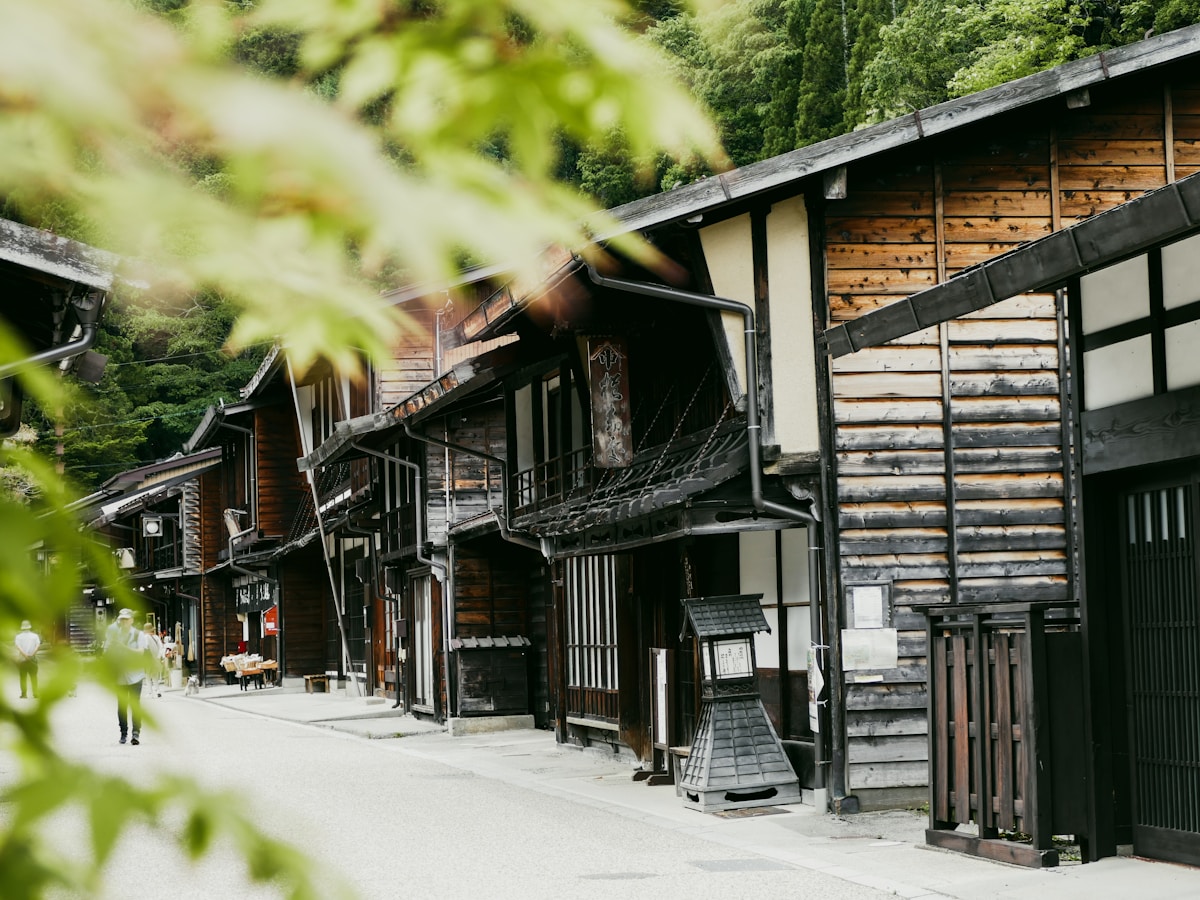
Old wooden houses in Narai-juku — aging structures like these require careful inspection for hidden problems. Photo: Joris Beugels / Unsplash
Termites: Japan's Most Expensive Hidden Problem
Two species cause the majority of structural damage:
- Yamato termites (ヤマトシロアリ) — found throughout Japan except Hokkaido. Attack from ground level upward, need moisture. Active April–June.
- Iē termites (イエシロアリ) — found in coastal areas south of Kanto. Far more destructive — colonies of millions that can attack dry wood. Active June–July.
What to Check
- Mud tubes (蟻道) — pencil-width tubes of mud on foundation walls or along pipes. These are termite highways.
- Hollow-sounding wood — tap structural timbers with a screwdriver handle. Damaged wood sounds hollow or papery.
- Sagging floors — spongy or visibly sagging floors suggest compromised joists (often both termites and rot).
- Discarded wings — piles of tiny wings (3–7mm) near windows indicate an established colony.
Treatment costs ¥1,000–¥1,500 per m² of floor area (¥100,000–¥300,000 for a typical house). If structural members need replacement, costs reach ¥500,000–¥1,500,000. Treatment lasts approximately 5 years before reapplication.
If you're buying south of Tokyo, a professional termite inspection is essential. Iē termites can hollow out structural beams while leaving the surface intact.
Moisture, Mold, and Ventilation
Japan's climate is exceptionally hospitable to mold. Summer humidity regularly exceeds 70–80% for weeks at a time, temperatures stay above the mold-growth threshold for most of the year, and traditional building materials — wood, tatami, paper shōji screens — are ideal food sources for fungal growth. Wood doesn't just get damp in Japan; it stays damp long enough to give mold spores everything they need to take hold.
Vacant houses are especially vulnerable because no one opens windows or runs dehumidifiers, plumbing traps dry out allowing sewer gas and moisture to enter, rain leaks go unnoticed for seasons, and vegetation grows against walls trapping moisture against the structure.
What to Check
- Smell — strong mold odor even with windows open means extensive hidden growth.
- Tatami — lift corners and check the underside. Black or green discoloration means persistent moisture. Replacement costs ¥8,000–¥20,000 per mat, but the floor beneath is the real concern.
- Wall discoloration — dark patches in corners and near windows indicate condensation. Single-pane aluminum windows (standard pre-2000s) are notorious condensation producers.
- Crawlspace — wet ground even in dry weather means a drainage problem no amount of ventilation will solve.
- Bathroom fans — check that exhaust fans work. Failed fans lead to extensive mold damage.
Surface mold cleaning costs ¥50,000–¥100,000. If mold has penetrated structural wood, expect partial demolition at ¥500,000–¥2,000,000.
Water Supply and Sewage
Water Supply
Turn on every tap and let water run for several minutes. In vacant houses, look for brown water (corroded galvanized pipes), low pressure, or no flow at all. Houses built before the mid-1990s may have galvanized steel pipes — full re-piping costs ¥300,000–¥800,000. Rural properties on well water need a water quality test (¥10,000–¥30,000).
Sewage: The Three Systems
- Public sewer (公共下水道) — the ideal scenario. Monthly fee, no maintenance.
- Combined jōkasō (合併処理浄化槽 (jōkasō)) — on-site treatment of all wastewater. Modern standard for rural properties. Requires annual inspection (¥5,000–¥10,000) and periodic pumping (¥20,000–¥40,000).
- Single-treatment tank (単独処理浄化槽 (jōkasō)) — only treats toilet water; kitchen and bath water runs untreated into the environment. Being phased out nationwide. Replacement with combined jōkasō: ¥500,000–¥1,000,000 (municipalities often subsidize ¥300,000–¥500,000).
Always ask what sewage system the property uses. A single-treatment tank or straight drainage (汲み取り) means mandatory upgrading costs.
Also check the water heater (給湯器) — lifespan is 10–15 years, replacement costs ¥150,000–¥350,000. Check the manufacture date on the label.
Electrical Systems
- Breaker panel — modern panels have labeled circuit breakers. Very old houses may have fuses or 20A–30A capacity, inadequate for modern appliances.
- Amperage — a modern household needs 40A–60A. Upgrading costs ¥50,000–¥150,000.
- Outlet testing — plug in a device in several rooms. Dead outlets, scorch marks, or discoloration indicate failed or overloaded circuits.
- Wiring type — pre-1970s cloth-insulated wiring is brittle and fire-prone. Rewiring: ¥500,000–¥1,500,000.
- Grounding — older houses often lack grounded outlets. Adding them costs ¥5,000–¥15,000 per outlet.
Asbestos: Know Before You Renovate
Japan fully banned asbestos in building materials in 2006. Pre-2006 buildings may contain asbestos in roof tiles, siding, floor tiles, pipe insulation, and ceiling coatings. Intact materials pose no immediate risk, but renovation triggers legal requirements.
Since April 2022, demolition of buildings over 80 m² or renovation work over ¥1,000,000 requires a mandatory asbestos survey — regardless of whether asbestos is found. Survey cost: ¥30,000–¥80,000. Removal, if needed: ¥100,000–¥1,000,000+ depending on extent.
Reading the Japanese Disclosure Documents
When purchasing through a licensed real estate agent, you will receive two critical documents. Understanding what they contain — even if you cannot read every kanji — protects you from nasty surprises.
Important Matters Explanation (重要事項説明書 (jūyō jikō setsumei-sho) — Jūyō Jikō Setsumeisho)
This is a legally required document that the agent must explain to you before you sign the purchase contract. It covers zoning and land use restrictions (用途地域 (yōto chiiki)), building coverage and floor area ratios (建ぺい率/容積率), infrastructure connections, road access meeting the 4-meter minimum width requirement (接道義務 — setsudō gimu), hazard zone designations (flood, landslide, tsunami), and whether a building inspection has been conducted. If the property doesn't front a qualifying road, you cannot obtain a building permit for reconstruction — check this before you even schedule an inspection.
Property Condition Disclosure (物件状況等報告書 — Bukken Jōkyō-tō Hōkoku-sho)
The seller fills this out, disclosing known defects and history. Key sections to check or have translated: rain leaks (雨漏り — past and present), termite damage and treatment history (シロアリの被害), building inclination (建物の傾き), flood history (浸水の有無), boundary disputes with neighbors (境界の問題), and psychological defects (心理的瑕疵 — shinriteki kashi) — deaths, crimes, or other unsettling events that agents are legally required to disclose.
Your Legal Protection: Contract Non-Conformity Liability
Since April 2020, Japan's Civil Code provides buyers with keiyaku futekigō sekinin (契約不適合責任 — Contract Non-Conformity Liability), which replaced the older defect warranty system. If the property has undisclosed defects that the seller knew about or should have known about, you can demand repair, price reduction, damages, or contract cancellation.
However, many akiya contracts include an "as is" disclaimer (免責条項 — menseki jōkō), which is legal for private (non-business) sellers and limits your recourse significantly. This makes your pre-purchase inspection even more critical — what you don't find before signing, you own afterward.
Finding a Professional Inspector
Finding a qualified building inspector in Japan, especially one who communicates in English, takes effort. Your options include:
- Japan Inspection Organization (日本検査機構) — a registered certification and inspection agency conducting building inspections nationwide
- Sakura Home Inspection (さくら事務所) — one of Japan's largest independent inspection firms, with English-capable staff for some services
- Licensed architects (一級建築士 / 二級建築士) — any registered architect can conduct a building condition survey. Your agent may recommend one, though be aware they may not be fully independent
- Your real estate agent — a good agent like Teritoru, our licensed partner agent, can arrange a qualified inspector, attend the inspection to translate findings, and help you understand what the results mean for your purchase decision
Always request a written report with photographs. A verbal "it looks fine" is worthless when you discover problems six months later. The written report also serves as evidence if you need to make a claim under contract non-conformity liability.
Special Considerations for Akiya Bank Properties
Properties from municipal akiya banks (空き家 (akiya)バンク (akiya bank)) have unique characteristics. There's often no agent involved — transactions happen directly between buyer and seller or municipality, meaning no one is legally required to suggest an inspection. Sales are overwhelmingly "as is" with no quality representations. Vacancy periods of 5–15+ years mean every system has deteriorated further. On the positive side, many municipalities that offer renovation subsidies (リフォーム補助金) require a building condition survey as part of the application — ask whether you can get a subsidized or free inspection through their akiya program.
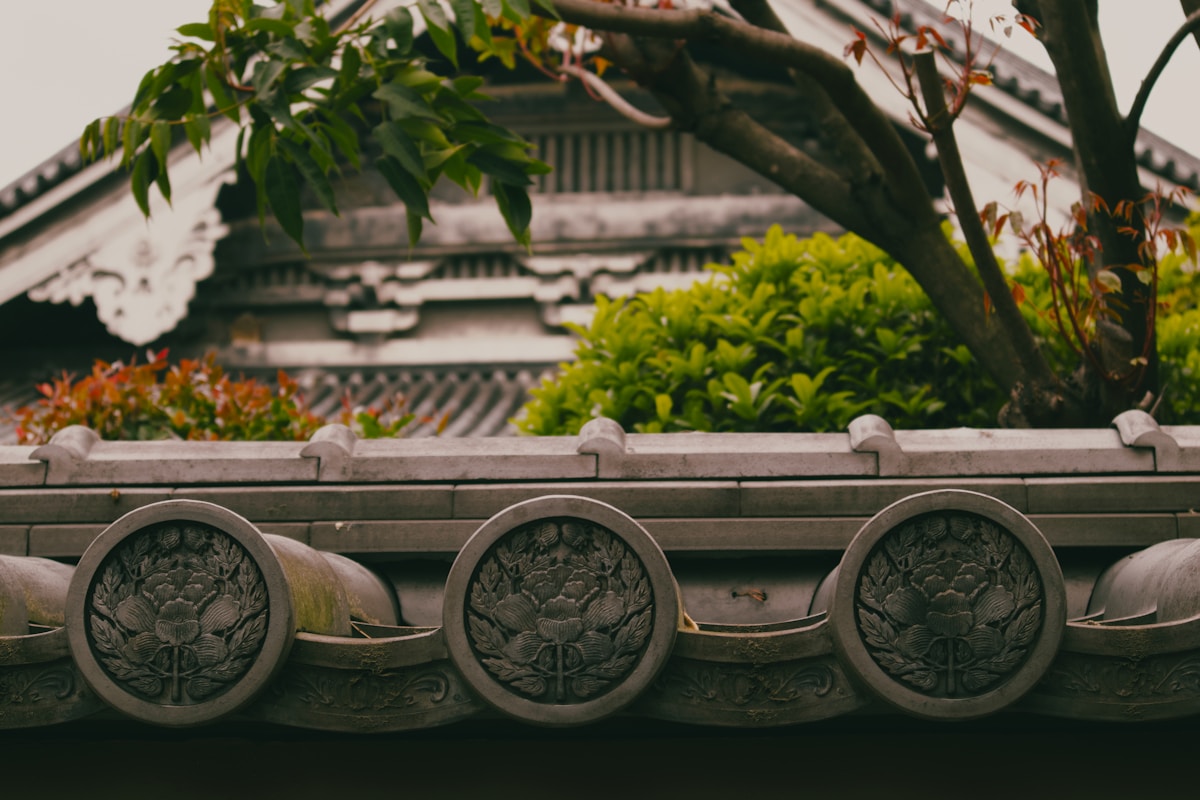
Traditional Japanese roof tiles — checking for damage, missing tiles, and water intrusion is a critical part of any inspection. Photo: Arbi Daci / Unsplash
The DIY Walk-Through: Your 30-Minute Checklist
Bring a flashlight, a marble, a phone camera, and this checklist:
Exterior (10 Minutes)
- Walk the perimeter — foundation cracks, leaning walls, soil against the building
- Check roof from ground level — missing tiles, sagging ridgeline, vegetation growth
- Gutters and downspouts — attached, intact, directing water away?
- Retaining walls — leaning, cracks, or bulging (repair costs ¥1,000,000–¥5,000,000+)
- Neighboring properties — abandoned neighbors bring falling trees, pest migration
Interior (10 Minutes)
- Walk every room — soft spots, springiness, roll marble for slope
- Walls and ceilings — water stains, cracks, mold
- Open and close every door and window — sticking means structural movement
- Under sinks — water stains, drips, mold, pest droppings
- Breaker panel — amperage, burn marks, amateur wiring
- Smell — musty (moisture), sewage (plumbing), chemical (materials off-gassing)
Crawlspace and Attic (10 Minutes)
- Crawlspace — water, mud tubes, rotted wood, animal nests
- Attic — daylight (roof holes), water stains on rafters, animal droppings (tanuki and hakubishin are common invaders), wasp nests
- Photograph everything — evidence for negotiations and your inspector's focus areas
Red Flags That Should Make You Walk Away
- Active, extensive termite infestation with structural damage — you'd be rebuilding from the frame inward
- Foundation failure — visibly tilted floors, large cracks, stone foundation in an earthquake zone without retrofit budget
- No road access — if the property doesn't front a 4-meter road (接道義務 violation), you cannot rebuild
- Hazard zone designation — properties in landslide or flood warning zones face building restrictions and insurance challenges
- Legal complications — unclear ownership, boundary disputes, unpaid taxes, or agricultural land requiring conversion permission. For these complexities, booking a consultation with Teritoru, who specialize in foreign buyer transactions, can prevent costly mistakes.
Your Inspection Budget at a Glance
Here's a realistic breakdown of what a thorough pre-purchase inspection program costs:
- Basic building condition survey: ¥50,000–¥80,000
- Underfloor + attic add-on: ¥30,000–¥35,000
- Termite inspection: ¥15,000–¥30,000
- Seismic assessment (for pre-2000 wooden buildings): ¥100,000–¥300,000
- Asbestos survey (if planning renovation on pre-2006 building): ¥30,000–¥80,000
- Well water testing (if applicable): ¥10,000–¥30,000
Total for comprehensive inspection: ¥135,000–¥555,000. That's ¥135,000 at minimum for a post-2000 building in good condition, up to ¥555,000 for an older building where you're checking everything. Even the high end is a tiny fraction of potential renovation costs without this knowledge.
After the Inspection: Negotiation and Next Steps
Your inspection report is a negotiation tool, not just a pass/fail verdict. Itemize repair costs, get quotes for every significant issue, and present them to the seller as a basis for price reduction. Prioritize safety over aesthetics — structural, electrical, and plumbing issues justify reductions. Cosmetic issues (dated kitchen, worn tatami, ugly wallpaper) are expected in an akiya and don't warrant negotiation leverage.
Most importantly, calculate your true cost of ownership: purchase price plus necessary repairs. Many buyers discover too late that their "cheap akiya" needs ¥5,000,000–¥10,000,000 in essential — not cosmetic — repairs. A ¥500,000 house that needs ¥8,000,000 in structural work isn't a bargain. A ¥3,000,000 house that needs only ¥1,000,000 in repairs might be.
If the inspector flags major structural concerns, spend the extra money to get a specialist — structural engineer, termite professional, seismic assessor — to evaluate the specific problem. A ¥50,000 specialist consultation can save you from a ¥5,000,000 mistake.
Putting It All Together
An akiya inspection isn't about finding a perfect house — no vacant property is perfect. It's about knowing exactly what you're buying so you can make an informed decision about whether the total investment makes sense.
The best inspection is one that finds problems, because every problem found before purchase is a problem you can budget for, negotiate on, or walk away from. The worst outcome isn't a house with issues — it's a house with unknown issues that surface after you've signed the contract and wired the money.
Spend the ¥100,000–¥150,000 on a professional inspection. Bring this checklist to every viewing. Ask every question, even if it feels awkward through a translator.
Browse our property listings and apply these inspection principles to every property you view.