Every few years, a new Asian country gets hyped as the next great property market for foreign buyers. Bali villas. Bangkok condos. Kuala Lumpur high-rises. The sales pitches are slick, the Instagram posts aspirational. But behind the brochures, foreign ownership laws across Asia are a patchwork of restrictions, workarounds, and legal grey areas. Japan is the exception. It offers something almost no other country in the region does: full, unrestricted freehold ownership for foreigners, with the same property rights as a Japanese citizen. No nominee structures, no 50-year caps, no minimum purchase thresholds. Here is how every major market actually compares.
The Ownership Test: Who Actually Lets You Own Land?
The single most important question when buying property abroad is deceptively simple: can you actually own it? Not lease it, not hold it through a local nominee, not structure it via a company, but hold freehold title in your own name. In Asia, the answer is usually no.
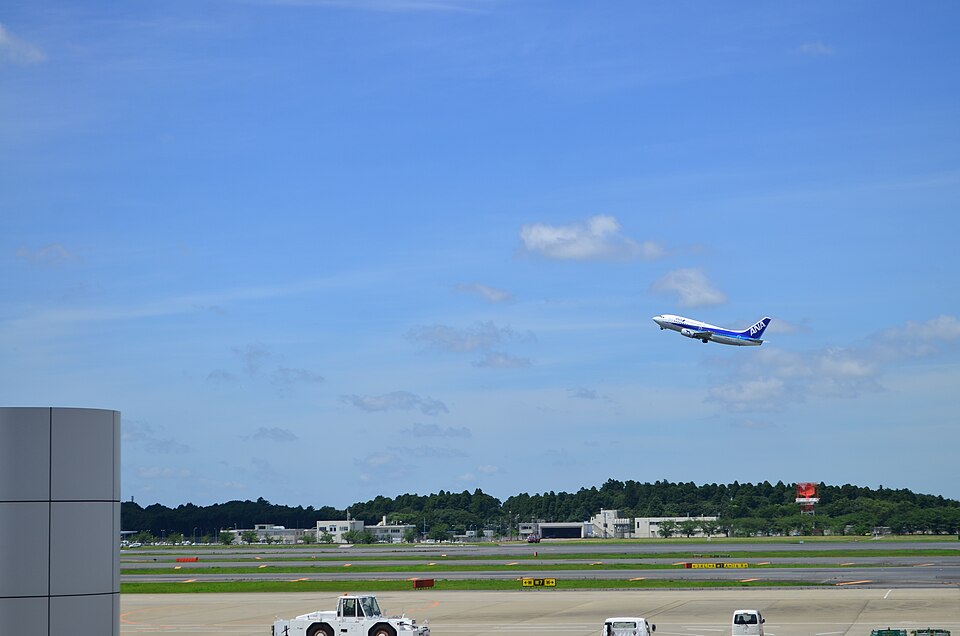
Japan stands alone among Asian property markets in offering completely unrestricted foreign ownership. No visa required. No residency requirement. No minimum investment. A tourist can fly into Narita, sign the paperwork, and leave as a freehold landowner. The title, called shoyūken (所有権 (shoyūken)), is identical to what a Japanese citizen holds. It never expires, can be freely sold or inherited, and comes with the same legal protections under Japanese property law.
Across the rest of Asia, the picture is dramatically different:
| Country | Can foreigners own land? | Maximum ownership term | Minimum price |
|---|---|---|---|
| Japan | Yes, full freehold | Perpetual | None |
| Thailand | No, condos only (49% foreign quota) | Freehold condo / 30-year land lease | None (but land requires Thai company) |
| Vietnam | No, apartments/houses only | 50 years (renewable once) | None |
| Indonesia (Bali) | No, lease or right-of-use only | 25 to 80 years (lease dependent) | None (but visa required for right-of-use) |
| Malaysia | Yes, with restrictions | Freehold possible | RM500,000 to RM3,000,000 (roughly $120,000 to $735,000, state and property-type dependent) |
| Cambodia | No, condos only (above ground floor) | Freehold condo / land via nominee | None |
| China | No, 70-year residential lease | 70 years | Residency + work required |
| Philippines | No, condos only (40% foreign cap) | Freehold condo / 50-year land lease | None |
| South Korea | Yes, with government approval | Perpetual (after approval) | None |
Of nine major Asian markets, only Japan lets any foreigner, regardless of nationality, visa status, or residency, buy land and buildings with a perpetual freehold title and zero minimum price. Malaysia comes close but imposes price floors that start at RM500,000 in Labuan and climb to RM3,000,000 for landed property on Penang Island (roughly $120,000 to $735,000), which eliminates the budget end of the market entirely.
South Korea's baseline rule lets foreigners buy land through notification rather than approval, except in protected zones (military, cultural heritage, ecological) that need prior sign-off. But Korea has moved sharply in the other direction since that baseline was written. As of 2026, foreign buyers across most of Seoul, Gyeonggi, and Incheon need prior government approval before they can even sign a purchase contract, must move into the home within four months, and must live there for at least two years, a direct response to speculative buying in the capital region. In August 2026 the government extended the same prior-approval requirement to 353 border islands. Japan has added no restriction like it anywhere in the country.
The Grey-Area Problem: Nominees, Leases, and Legal Risk
In countries where foreigners cannot own land, workarounds have emerged, and every one of them carries risk that does not exist in Japan.
Thailand's company structure is the most common. To buy a villa or house, foreigners typically set up a Thai limited company with local shareholders holding 51% of voting shares. This is technically legal, but the Thai government periodically cracks down on nominee arrangements, and the foreign buyer has no direct title to the land. If the relationship with local shareholders deteriorates, or if regulations tighten, the investment is exposed.
Indonesia's nominee system in Bali is the riskiest workaround on this list, and it is also illegal. A nominee arrangement, where an Indonesian citizen holds the freehold title on a foreigner's behalf, violates the 1960 Basic Agrarian Law and is unenforceable in Indonesian courts. The buyer's claim rests entirely on private contracts, loans, and powers of attorney layered on top of someone else's title, and Indonesian authorities have been seizing these properties: by one estimate, around 10,500 Bali properties worth roughly $10.4 billion sit in nominee structures and carry exactly that risk. Most foreign buyers now avoid it. Long-term leasehold (Hak Sewa) accounts for more than 80% of foreign villa transactions in Bali, with the right-of-use Hak Pakai title as the other legal option. Leasing is safer than a nominee, but it is still not ownership: every lease has an end date.
Vietnam's 50-year cap means every property purchase has a built-in expiration date. The ownership term can be renewed once, but renewal is not guaranteed and depends on government policy at the time. For anyone thinking long-term, retirement, family legacy, generational wealth, this is a structural limitation.
In Japan, none of these structures are necessary. The title is in your name, registered with the Legal Affairs Bureau, and protected by the same property laws that govern every Japanese citizen's holdings. The transaction process is handled by a judicial scrivener (shiho shoshi), a licensed legal professional who verifies the title, handles registration, and ensures the transfer is clean.
Price: Where Japan Defies Expectations
The assumption that Japan is expensive is outdated. Outside of central Tokyo, Osaka, and a handful of resort areas, Japanese property is strikingly affordable, often cheaper than equivalent markets in Thailand or Bali.
Japan has roughly 9 million vacant homes (akiya), 13.8% of the national housing stock as of the 2023 government survey. The Nomura Research Institute has projected that share could pass 30% by 2033 if the trend continues unchecked, though NRI's own earlier forecasts for this decade have run ahead of what the census later confirmed, so treat it as a direction rather than a certainty. Municipal governments actively want these properties occupied and in many cases offer subsidies, renovation grants, and reduced fees to attract buyers. Some akiya are listed for under ¥1 million. Properties in the ¥3 to 10 million range, the most popular bracket among foreign buyers, typically include a house on its own plot of land, something impossible at that price point in Bangkok, Kuala Lumpur, or any Indonesian market.
Compare that to Southeast Asia:
- Bangkok condo (foreigner-eligible): a decent unit in a central location starts around ¥19 to 37 million, and you own an apartment, not land
- Bali leasehold villa: ¥10 to 30 million for a 25-year lease that depreciates to zero
- Kuala Lumpur condo (above minimum threshold): ¥39+ million, the legal floor for foreign buyers in the city, regardless of the property's actual value
In Japan, ¥5 million can buy a 4-bedroom house with a garden in a prefecture like Chiba, Niigata, or Nagano, freehold, permanent, inheritable.
Infrastructure and Quality of Life: The G7 Advantage
Japan is the only G7 nation on this list. That distinction matters in ways that compound over time.
Healthcare. Japan's universal health insurance system is ranked among the world's best. Residents (including long-term visa holders) pay 20 to 30% of medical costs, with the government covering the rest. Many rural areas where akiya are concentrated still have local clinics, and regional hospitals are typically within 30 to 60 minutes by car. Thailand and Malaysia have decent private healthcare, but public coverage for foreigners is limited or nonexistent.
Safety. Japan's crime rate is among the lowest globally. It ranked 10th in the 2026 Global Peace Index, up from 13th the year before. Property crime is rare enough that many rural residents still do not lock their doors. This is a material consideration for anyone buying a second home or investment property that will sit unoccupied for parts of the year.
Transport. The Shinkansen network connects major cities at speeds up to 320 km/h. Regional rail, buses, and domestic flights are affordable and punctual. Even rural akiya areas tend to have functional public transport, a stark contrast to comparable-price properties in Indonesia or Vietnam, where car ownership is effectively mandatory.
Rule of law. Japan's legal system is transparent, contracts are enforceable, and property disputes are resolved through courts, not connections. Title fraud is exceptionally rare. The property registration system, maintained by the Ministry of Justice, provides a public record of ownership history. This level of legal certainty simply does not exist in Cambodia, Vietnam, or Indonesia.
The Yen Factor: A Currency Tailwind
The Japanese yen has weakened significantly against the US dollar, euro, and most major currencies since 2022. For foreign buyers earning in stronger currencies, this represents a substantial discount. A property that cost $100,000 USD in 2020 would cost roughly $65,000 to $70,000 at recent exchange rates, assuming the yen price stayed flat.
This currency dynamic works in two directions. If the yen recovers, and many economists expect some reversion to pre-2022 levels, property purchased now in yen would appreciate in foreign-currency terms purely from the exchange rate shift, independent of any change in the property's yen value. It is a tailwind that does not exist in USD-pegged or USD-correlated markets like Cambodia (which uses the dollar extensively) or Malaysia (which has tracked dollar movements more closely).
Where Japan Is Not the Best Fit
Honesty matters more than salesmanship. Japan is not the right market for everyone.
Rental yield chasers. If the goal is purely maximising rental returns, Bangkok, Kuala Lumpur, and Ho Chi Minh City can offer higher gross yields (5 to 8% versus Japan's typical 3 to 5% outside Tokyo). The trade-off is ownership risk, as outlined above.
Warm-weather retirees. Japan has four distinct seasons, and much of the country experiences cold, snowy winters. Buyers looking for year-round tropical warmth will find it in Thailand, Bali, or the Philippines, but not in Niigata or Hokkaido.
Language-dependent buyers. While English proficiency in Japan has improved, property transactions are conducted in Japanese. Buyers need either language skills, a bilingual agent, or a platform that provides English-language access to Japanese listings. (That is, incidentally, exactly what Akiya Japan was built to solve.)
Short-term flippers. Japan's transaction costs (roughly 6 to 8% between taxes, registration, and agent fees) and the generally flat-to-slow appreciation outside major cities make it a poor market for quick flips. It rewards patient buyers who plan to hold.
Where This Leaves Buyers
Across Asia, Japan offers the strongest combination of legal security, ownership rights, affordability, and quality of life for foreign property buyers. It is the only major market where a foreigner can own freehold land and buildings with zero restrictions, zero minimum price, and the full protection of a G7 legal system.
The akiya phenomenon, millions of vacant homes at prices that would not buy a parking space in most capital cities, adds an affordability dimension that even Malaysia, with its minimum price thresholds, cannot match. Factor in the weak yen, world-class infrastructure, and one of the safest societies on earth, and the case is difficult to argue against.
Other Asian markets offer sun, yield, or lifestyle appeal. Japan offers something harder to find: certainty.