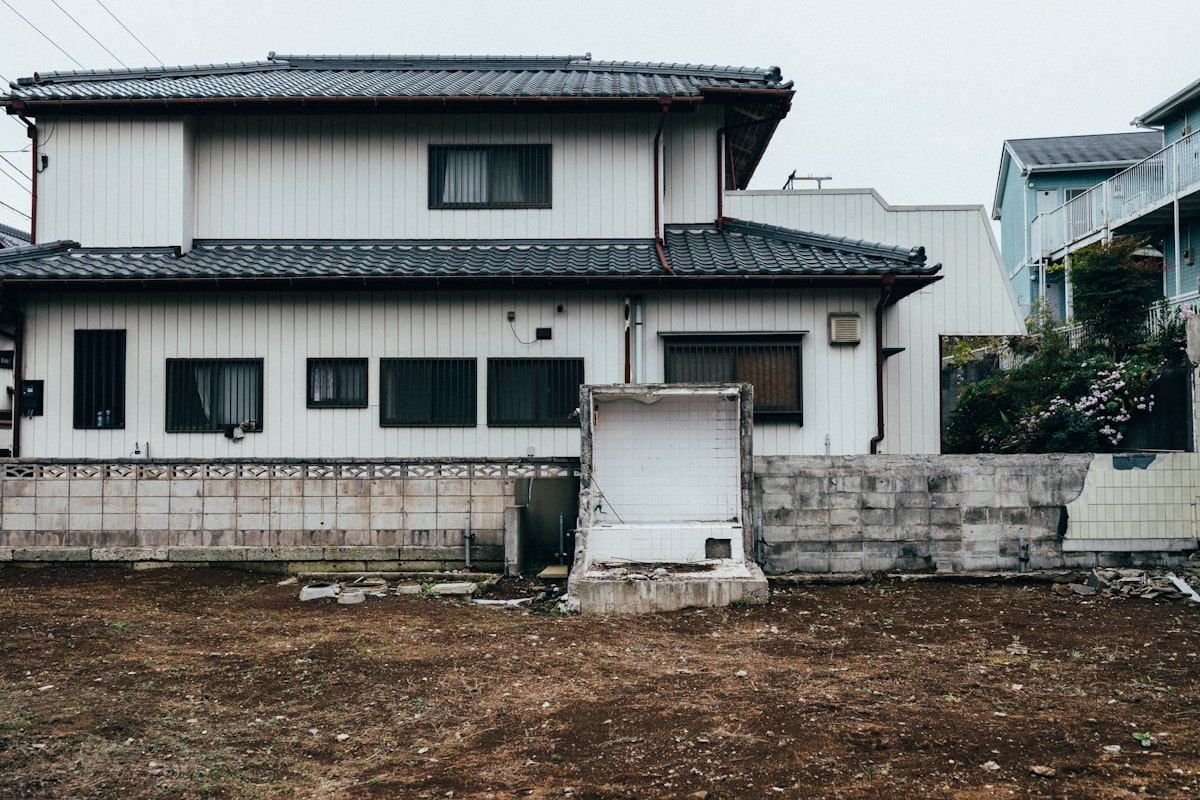
Japan welcomed 42.7 million visitors in 2025 — smashing all records and the government's own forecasts. Tourist spending hit ¥9.5 trillion. And yet, across the country, over nine million homes sit empty. If you've ever looked at those two facts side by side and thought "there's an opportunity here," you're right. The question is: which empty house, and where?
That's exactly the problem our interactive map was built to solve. Specifically, the Minpaku Layer — a colour-coded overlay that shows you, at a glance, which areas of Japan allow short-term rentals and for how many days per year. Combined with our other map layers (transit, hazard, fibre internet), it becomes a powerful research tool for anyone considering an akiya-to-Airbnb conversion.
This guide walks you through how to use these layers to identify high-potential properties, what the regulations actually require, and what realistic returns look like in 2026.
The Minpaku Layer: What It Shows and How to Read It
On our property map, open the Land & Planning panel and toggle the Minpaku / Short-Term Rental overlay. The map will display colour-coded zones based on data from the Japan Tourism Agency and the Ministry of Land, Infrastructure, Transport and Tourism (MLIT).
Here's what the colours mean:
- Blue zones (365 days/year) — These are National Strategic Special Zones (国家戦略特別区域 (kokka senryaku tokubetsu kuiki)), commonly called tokku. Properties here can operate as short-term rentals year-round with no day limit. Currently includes parts of Tokyo's Ota Ward, Kitakyushu, and Niigata.
- Yellow/green zones (180 days/year) — Standard minpaku law applies. You can host guests for up to 180 nights annually (counted April to April, noon-to-noon). This is the baseline across most of Japan.
- Orange zones (under 120 days/year) — Local ordinances have imposed stricter limits. Some municipalities restrict operations to weekends, holidays, or specific seasons only.
- Red zones (under 60 days/year or restricted) — Heavy local restrictions. Some wards in Tokyo and residential areas in Kyoto fall here, where minpaku is limited to school holidays or specific calendar periods.
The critical insight: two akiya listed at the same price, in the same prefecture, can have radically different rental potential based purely on which municipality they fall in. A ¥3 million house in a blue zone at 60% occupancy could gross ¥3-4 million annually. The same house in a red zone, limited to 50 nights, might gross ¥750,000. The layer makes this difference visible before you spend a single yen on due diligence.
Layering Your Research: Beyond Minpaku Zones
The minpaku layer is most powerful when combined with our other overlays. Here's a practical research workflow:
Step 1: Start with the Minpaku Layer
Toggle it on and zoom to your target region. Immediately eliminate red zones unless you have a specific ryokan licence strategy. Focus on blue and yellow areas.
Step 2: Add the Transit Layer
Toggle the Transit overlay to see rail lines and highways. Airbnb guests — particularly international visitors — need to reach your property. Look for akiya within 10-15 minutes of a train station or a major highway interchange. Properties near shinkansen stations command premium nightly rates.
Step 3: Check Natural Hazards
Expand the Natural Hazards panel and check flood, sediment, and seismic risk layers for your target area. Guests won't return to (or review well) a property in a flood zone, and insurance costs will eat your margins. Steep-slope collapse risk is particularly important for mountainous areas where akiya are concentrated.
Step 4: Verify Fibre Internet
Toggle the Fiber Internet Coverage layer. Green means near-complete FTTH (fibre-to-the-home) coverage. This matters more than you might think — digital nomads and remote workers are a growing segment of Airbnb users in Japan, and "fast WiFi" is consistently rated as a top-three amenity in guest reviews. A property without reliable internet will struggle to maintain high ratings.
Step 5: Check Zoning
Under Land & Planning, toggle the Zoning layer. Minpaku is permitted in residential zones, but if you're considering a larger operation (over 5 rooms or a full guesthouse licence), you'll need commercial or mixed-use zoning. The layer shows 用途地域 (land use districts) directly on the map.

Rural areas near tourist destinations offer the best combination of low purchase price and high guest appeal — Photo by JP Sheard on Unsplash
Understanding the Minpaku Regulations
We've covered minpaku law in detail in our dedicated minpaku guide. Here's a condensed version of what matters for the map-based research approach.
The 180-Day Rule
Under the 住宅宿泊事業法 (Minpaku Business Act, enacted June 2018), registered properties can host guests for a maximum of 180 nights per year. The count runs from April 1 to March 31, measured noon-to-noon. This is the nationwide default — local governments can only make it stricter, not more lenient.
Special Zones (Tokku)
National Strategic Special Zones allow 365-day operation but require a minimum 2-night stay per booking. As of 2026, designated tokku areas include Tokyo's Ota Ward, Kitakyushu, and Niigata. Osaka City, which once held roughly 90% of all tokku minpaku registrations nationwide, suspended new tokku applications in October 2025, with 29 of 34 Osaka municipalities following suit. Existing permits continue, but new entrants face the standard 180-day cap.
Our minpaku layer reflects these changes. Blue zones are confirmed active tokku areas — not historical ones.
Owner-Absent Properties
If you won't be on-site during guest stays — which is the case for most foreign akiya owners — you must appoint a licensed 住宅宿泊管理業者 (housing accommodation management business operator). This management company handles check-in/out, cleaning, 24-hour guest support, and regulatory compliance. They typically charge 20-30% of gross revenue.
Registration Process
The registration steps are:
- Fire safety inspection — smoke detectors, fire extinguisher, and (if the property exceeds 50 sqm guest room area or is owner-absent) emergency lighting, illuminated exit signs, and posted evacuation routes. You'll need a Fire Law Conformity Certificate.
- Submit notification to the local prefectural government with floor plans, property registration, management company contract, and fire safety certificate.
- Receive registration number — this must be displayed on all listing platforms. Airbnb Japan will not publish a listing without a valid registration number.
- Platform listing — upload your property to Airbnb, Booking.com, or other OTAs.
Timeline: typically 4-8 weeks from application to approval, though this varies by municipality.

Preserved architectural details like wooden lattice and engawa hallways are the features that earn five-star reviews — Photo by 5010 on Unsplash
What Realistic Revenue Looks Like
Here's where the map layers translate into actual numbers. Revenue varies dramatically by location, and the layers help you estimate which tier a property falls into before you buy.
Revenue by Market Tier (2025-2026 Data)
Tier 1: Urban tourist hubs (Tokyo, Osaka, Kyoto)
- Average nightly rate: ¥15,000-20,000 ($100-133)
- Occupancy: 60-85%
- Gross annual revenue (180-day cap): ¥2.7M-3.6M ($18,000-24,000)
- Gross annual revenue (365-day tokku): ¥4M-6M ($27,000-40,000)
- But: purchase prices are high (¥10M+), competition is fierce, and regulations are tightening
Tier 2: Regional tourist destinations (Hakone, Nikko, Takayama, ski towns)
- Average nightly rate: ¥18,000-30,000 ($120-200) — premium for unique properties
- Occupancy: 40-65% (seasonal peaks)
- Gross annual revenue (180 days): ¥1.3M-3.5M ($8,700-23,000)
- The sweet spot: akiya purchase prices of ¥1-5M with nightly rates matching urban areas
Tier 3: Onsen and nature destinations (Beppu, Aso, Kinosaki, Yakushima)
- Average nightly rate: ¥20,000-35,000 ($133-233) for well-presented properties
- Occupancy: 35-55% (highly seasonal)
- Gross annual revenue (180 days): ¥1.3M-3.5M ($8,700-23,000)
- Onsen-equipped properties command 40-60% rate premiums
The yield calculation that matters: divide annual gross revenue by total investment (purchase price + renovation + furnishing). A ¥3M akiya with ¥5M in renovation costs grossing ¥2.5M annually produces a 31% gross yield — significantly above the 4-6% typical of long-term rentals. Even after management fees (25%), cleaning costs (¥3,000-8,000 per turnover), and utilities, net yields of 10-15% are realistic for well-located properties.
The Renovation Equation

The traditional Japanese aesthetic — garden views, natural materials, clean lines — is exactly what guests pay premium rates for — Photo by Yosuke Ota on Unsplash
Converting an akiya to minpaku-ready involves two categories of work: general habitability and minpaku-specific compliance.
General Renovation (¥2-10 million)
- Structural — roof repair or replacement, foundation inspection, termite treatment
- Plumbing — water heater, pipes, toilet (Western-style is strongly preferred by international guests)
- Electrical — panel upgrade, adequate outlets, exterior lighting
- Interior — tatami replacement or flooring, wall repair, kitchen update
- Insulation — critical for guest comfort; many akiya have no insulation at all
Minpaku-Specific Compliance (¥500,000-2 million)
- Smoke detectors in every room and hallway
- Fire extinguisher (ABC type, properly inspected)
- Emergency lighting (mandatory for owner-absent properties over 50 sqm)
- Illuminated exit signs
- Evacuation route diagram posted in each guest room (Japanese and English)
- Guest register system
- Multilingual signage (fire safety, house rules, emergency contacts)
April 2025 Building Permit Change
An important regulatory update: as of April 2025, all two-storey wooden buildings now require building permits for renovations. Previously, many small wooden homes (the majority of akiya) were exempt under Article 6 of the Building Standards Act. This adds both time (4-8 weeks for permit review) and cost (architectural drawings, structural calculations) to renovation projects. Factor this into your timeline.
Guest-Ready Furnishing (¥500,000-1.5 million)
Beyond the building itself, a competitive Airbnb listing needs:
- Quality futon sets or beds (budget for both — some guests prefer each)
- Full kitchen equipment (rice cooker, kettle, basic cookware)
- Washer/dryer
- Air conditioning and heating (essential — guests will leave one-star reviews over temperature)
- Fast WiFi router (check the fibre internet layer first)
- Smart lock for self-check-in
Total realistic budget for a typical akiya conversion: ¥3-12 million ($20,000-80,000), depending on the property's starting condition. Properties listed on akiya banks at ¥0-500,000 often need the most work, while those at ¥3-5 million may only need cosmetic updates and compliance work.
High-Potential Regions to Explore on the Map

Japan's record tourism numbers are driving demand for accommodation beyond traditional hotels — Photo by Sorasak on Unsplash
Using the minpaku layer combined with our property listings, here are regions worth investigating first:
Hokkaido (Niseko periphery, Furano, Otaru) — Ski tourism drives winter rates of ¥30,000+/night. The area around Niseko is saturated, but neighbouring towns like Rusutsu and Furano still have affordable akiya. Check the transit layer for access to New Chitose Airport.
Nagano (Hakuba, Nozawa Onsen, Karuizawa fringe) — Year-round appeal: skiing in winter, hiking and cycling in summer. Hakuba's international visitor base means English-language listings perform well. Many akiya in surrounding villages fall in yellow (180-day) zones.
Shizuoka and Yamanashi (Fuji Five Lakes area) — Mt. Fuji views are a listing differentiator that justifies premium rates. Kawaguchiko and Gotemba areas have growing minpaku activity. The hazard layer is important here — check volcanic risk zones.
Kyushu (Beppu, Aso, Kumamoto periphery) — Onsen tourism is less seasonal than skiing, and Kyushu's akiya prices are among Japan's lowest. A property with a private onsen (or one that can be added) can command ¥30,000-40,000/night. Cruise ship tourism from Fukuoka also drives weekend demand.
Niigata (tokku zone) — One of the few remaining active tokku areas, allowing 365-day operation. Combined with affordable akiya, onsen access, and ski tourism, Niigata offers an unusually favourable regulatory environment. Use the map to pinpoint properties within the tokku boundaries.
Practical Steps: From Map Research to First Booking
Here's the sequence that experienced akiya-to-minpaku converters follow:
- Map research (1-2 weeks) — Use the minpaku, transit, hazard, and fibre layers to shortlist 3-5 target municipalities. Save properties that interest you.
- Municipal research (1 week) — Contact each target municipality's tourism or housing department. Ask about local minpaku ordinances, any planned restrictions, and available renovation subsidies. Many rural municipalities offer ¥1-3 million in akiya renovation grants.
- Property inspection — Visit shortlisted properties. Use our inspection checklist with particular attention to fire safety readiness and structural soundness.
- Purchase — For navigating the legal complexities of the purchase, working with a licensed agent like Teritoru who specializes in foreign buyer transactions can streamline the process significantly. They handle the legal paperwork, coordinate with the judicial scrivener, and can advise on minpaku feasibility for specific properties.
- Renovation and compliance (2-6 months) — Hire a local contractor, complete renovations, install fire safety equipment, and schedule the fire department inspection.
- Registration (4-8 weeks) — Submit your minpaku notification with all required documentation. Appoint a management company if you won't be on-site.
- Listing and launch — Professional photos (critical for conversion rates), compelling description emphasizing the property's unique character, and competitive initial pricing to build reviews quickly.
The Numbers That Matter
Before committing, run these calculations for each property you're considering:
- Maximum annual nights — Check the minpaku layer colour for your zone (60, 120, 180, or 365)
- Conservative occupancy — Use 50% of maximum nights for year one, 65% for year two
- Comparable nightly rate — Search Airbnb for similar properties within 10km of your target
- Gross revenue — Nights × rate
- Operating costs — Management fee (25% of gross) + cleaning (¥5,000 × turnovers) + utilities (¥15,000-25,000/month) + platform commission (3-15%) + insurance + annual fire inspection
- Net annual income — Gross minus operating costs
- Total investment — Purchase + renovation + furnishing + registration costs
- Payback period — Total investment ÷ net annual income
A well-located akiya conversion typically shows a payback period of 3-5 years. Properties in blue (tokku) zones can achieve 2-3 years. The map layers won't run these numbers for you, but they'll dramatically narrow the field of properties worth running them on.
Start Exploring
Open the property map, toggle the minpaku layer, and start looking. Filter by price, filter by prefecture, and let the colours guide you toward the areas where the regulations, the tourism demand, and the property prices all align. Every property pin on the map links to a full listing with images, location details, and pricing — save the ones that catch your eye and start building your shortlist.
Japan's tourism boom isn't slowing down. The government is targeting 60 million annual visitors by 2030. The akiya sitting in blue and yellow zones on our map right now won't sit empty forever — and the owners who move on them first will have the reviews, the occupancy history, and the revenue to show for it.