
Ancient Capitals, Wild Deer, and the World's Oldest Wooden Buildings
Living in Nara
Japan's first permanent capital holds the world's largest wooden structure, 1,200 free-roaming deer in a city park, the planet's oldest surviving wooden buildings, and one of the finest mountain cherry blossom displays outside Tokyo — at property prices that reflect its position in Osaka's commuter belt.
Why People Choose Nara
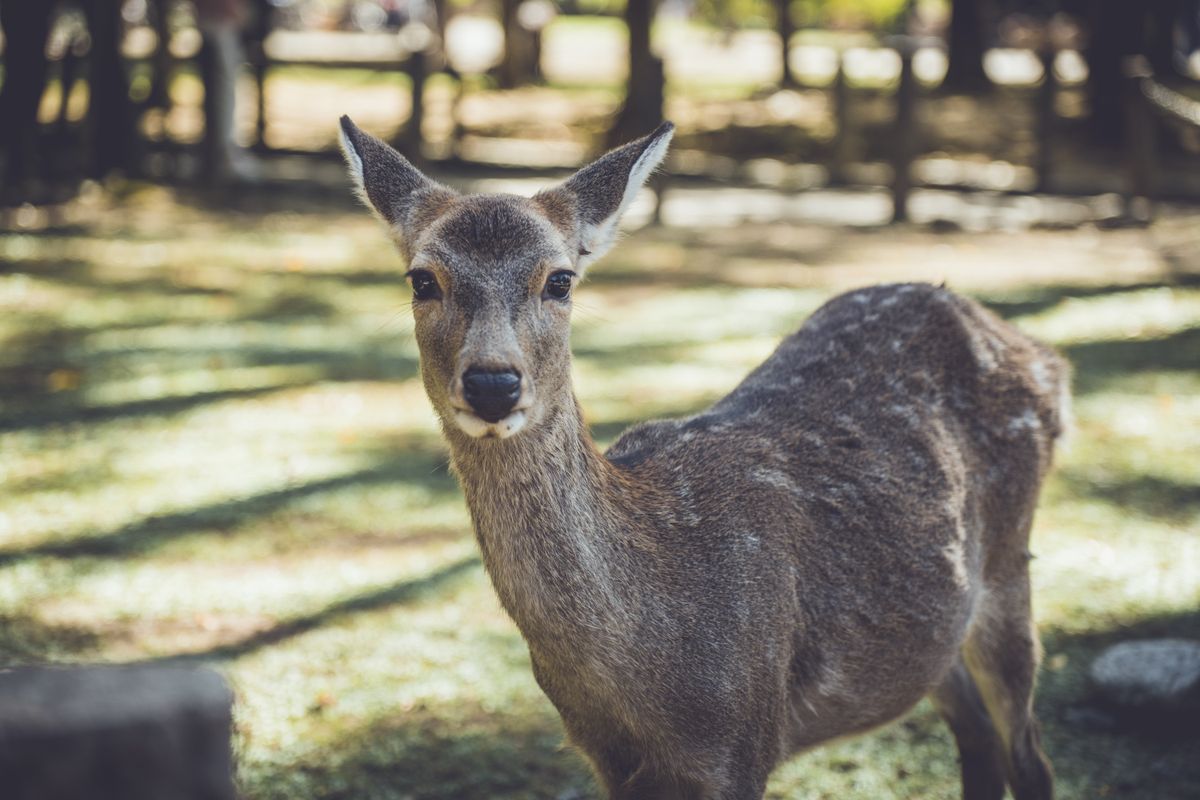
Nara gets chosen for two distinct reasons that rarely overlap. The first is access: the Kintetsu express to Osaka Namba in 38 minutes makes Nara one of the most competitive commuter options in the Kinki region at prices 20–30% below equivalent Osaka suburbs. The second is irreplaceable historical content — the oldest wooden buildings in the world, a Great Buddha that has been in continuous worship for over 1,200 years, and a park where 1,200 wild deer live alongside the city's residents without a barrier between them.
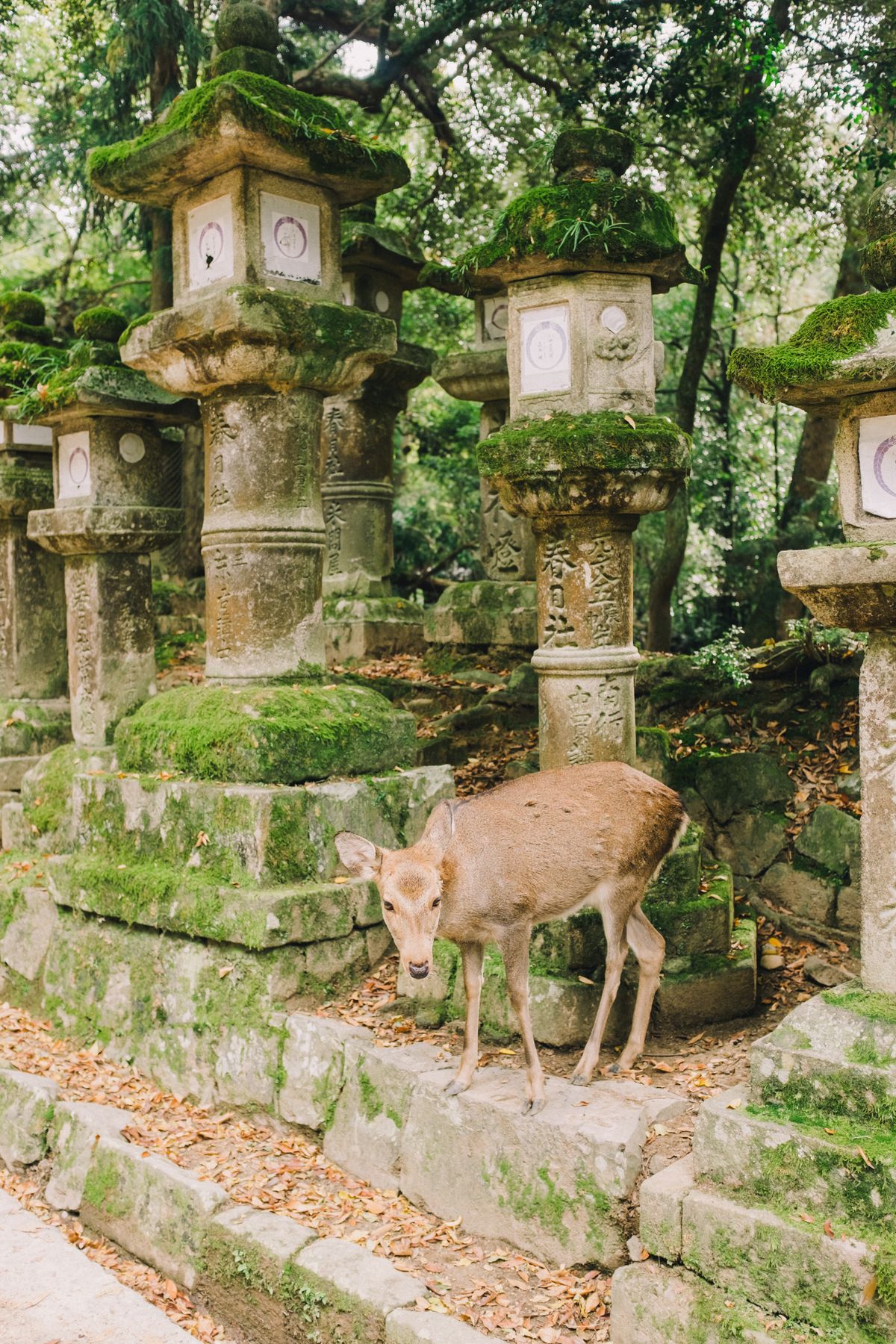
The deer situation deserves its own paragraph. Sika deer (shika) have been considered sacred messengers of the gods at Kasuga Taisha Shrine since the 8th century; killing one was a capital offence in the Nara period. The 1,200 deer that now roam the park are their direct descendants — still classified as national natural monuments — and have co-existed with the urban population for 1,300 years. They bow when bowed to, approach vendors for shika senbei crackers, and occasionally wander into the streets. There is nothing quite like it elsewhere in Japan.
Todai-ji's Daibutsuden — at 57 metres wide and 49 metres tall — remains the world's largest wooden structure despite being rebuilt at two-thirds of its original 8th-century scale. The 15-metre bronze Great Buddha inside required 437 tonnes of bronze to cast in 752 AD. Horyu-ji, 10km southwest, is older still: its pagoda and main hall from 607 AD are the oldest wooden buildings on earth. Both are UNESCO World Heritage sites, and both are less crowded than their equivalents in Kyoto.
Nara City (population 360,000) has the feel of a mid-sized provincial capital with an unusually intact historic core. The tourist circuit (Todai-ji, Kasuga Taisha, Kofuku-ji, Naramachi) is compact and walkable; daily life in the residential neighbourhoods operates completely separately from the visitors. The commute to Osaka is real and well-used — Nara has functioned as an Osaka commuter suburb since the 1970s, and the property market reflects it.
Kintetsu Nara Line: Nara to Osaka Namba in 38 minutes (express). JR Nara Line: Nara to Kyoto in 45 minutes. JR Yamatoji Line: Nara to Osaka in 50 minutes. Yoshino is 90 minutes by Kintetsu from Nara. Car is useful for the southern prefectural area (Yoshino, Kamiichi, Totsukawa) but not required in Nara City itself.
Nara City flats ¥10M–¥25M; townhouses in Naramachi and the historic core ¥15M–¥40M; commuter suburbs (Ikoma, Kashihara, Yamatokoriyama) ¥5M–¥15M. Southern Nara (Yoshino district) has some of the lowest rural property prices in the Kinki region, with renovable properties from ¥500K. Nara City prices run 20–30% below comparable Osaka suburbs given the reliable commute access.
The historic core: Todai-ji, Kasuga Taisha, Nara Park, and the Naramachi merchant district. The most characterful urban option in the prefecture, walkable and distinct.
Western commuter corridor: direct Kintetsu access to Osaka and Nara, residential neighbourhoods in the Ikoma Hills, lower prices than Nara City. Popular with Osaka commuters who want a quieter base.
Southern basin: near Asuka (Japan's oldest imperial capital), Miwa Shrine, and the Yamatoji cycling route. More historical depth, lower prices, useful for those with flexible work.
Mountain south: the cherry blossom mountain, Dorogawa Onsen, Omine mountain pilgrim trail, and the deepest forest in Kinki. Remote, quiet, lowest property prices in the prefecture.
Where To Start
Four ways to start in Nara
The Daibutsuden opens at 7:30am and the deer are most active before 9am when vendors start selling the shika senbei crackers. The scale of the hall — 57m wide, 49m tall — requires distance to comprehend; walk to the far end of the stone pathway, turn, and look back. The deer will likely have followed you. The <a href="https://www.todaiji.or.jp/english/" target="_blank" rel="noopener" class="text-blue-600 dark:text-blue-400 hover:underline">Todai-ji official site</a> lists seasonal hours and entry fees.
The Yoshino mountain trail runs 8km from Shimo-Senbon (lower thousand trees) through Naka-Senbon to Kami-Senbon (upper thousand trees) — 30,000 cherry trees on a mountain slope that has been a cherry-viewing site since the 7th century. The <a href="https://www.yoshinoyama.sakura.ne.jp/en/" target="_blank" rel="noopener" class="text-blue-600 dark:text-blue-400 hover:underline">Yoshinoyama Tourism Association</a> posts daily bloom updates. Peak is typically late March to mid-April and is less crowded than Kyoto's spots.
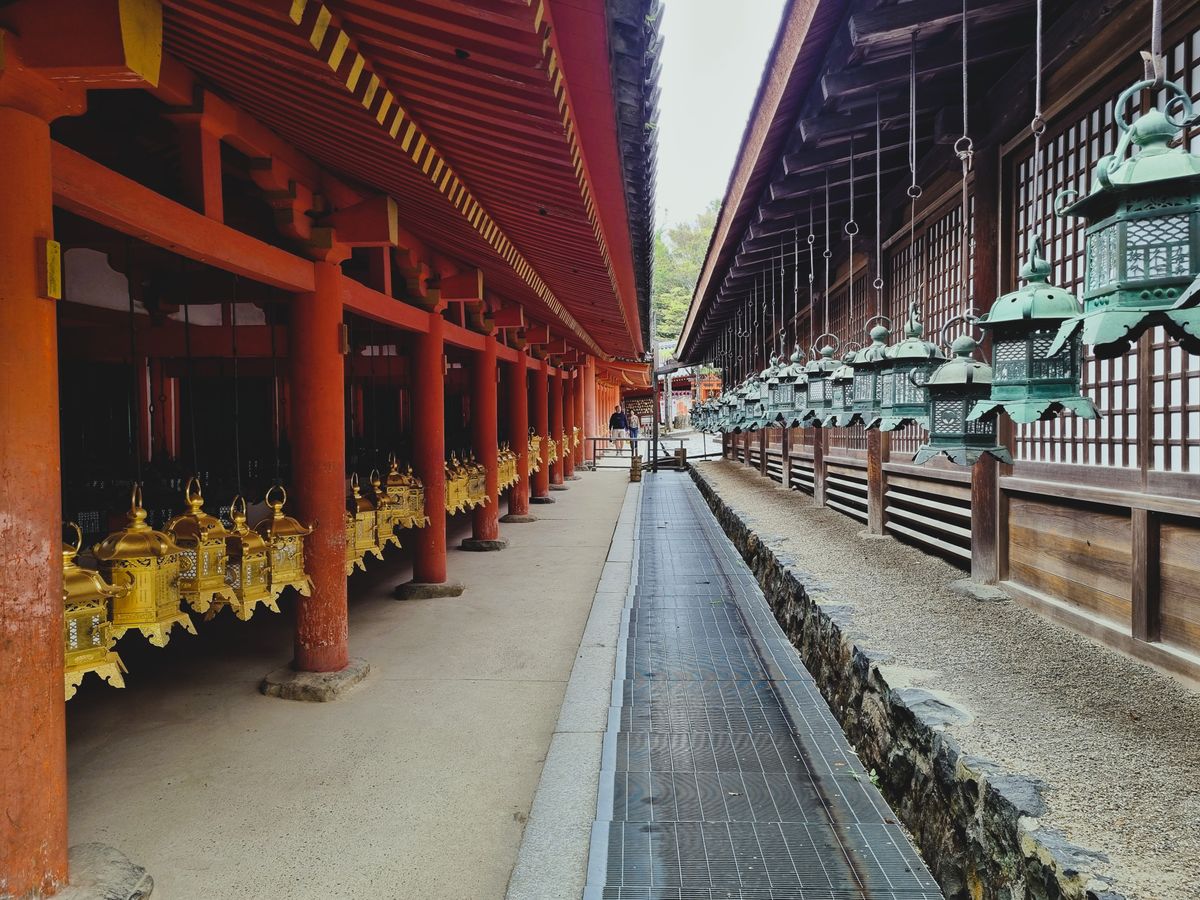
Kasuga Taisha Shrine has 3,000 bronze and stone lanterns. Twice a year — Setsubun (February 3) and Obon (mid-August) — all 3,000 are lit simultaneously for the Mantoro lantern festival. The effect in the stone lantern avenue at night is unlike anything in daytime Nara. <a href="https://www.kasugataisha.or.jp/en/" target="_blank" rel="noopener" class="text-blue-600 dark:text-blue-400 hover:underline">Kasuga Taisha's site</a> gives exact dates and times.
The Naramachi merchant district south of Kofuku-ji has preserved Edo-period machiya townhouses (some dating to the 18th century) that now operate as cafes, galleries, and craft workshops. The narrow lanes, the characteristic machiya proportions (deep and narrow), and the smell of incense from small shrines interspersed between the buildings give this part of Nara a texture that the temple circuit doesn't. Try kakinoha-zushi — local sushi wrapped in persimmon leaves — at one of the Naramachi specialist shops.
Daily Life in Nara
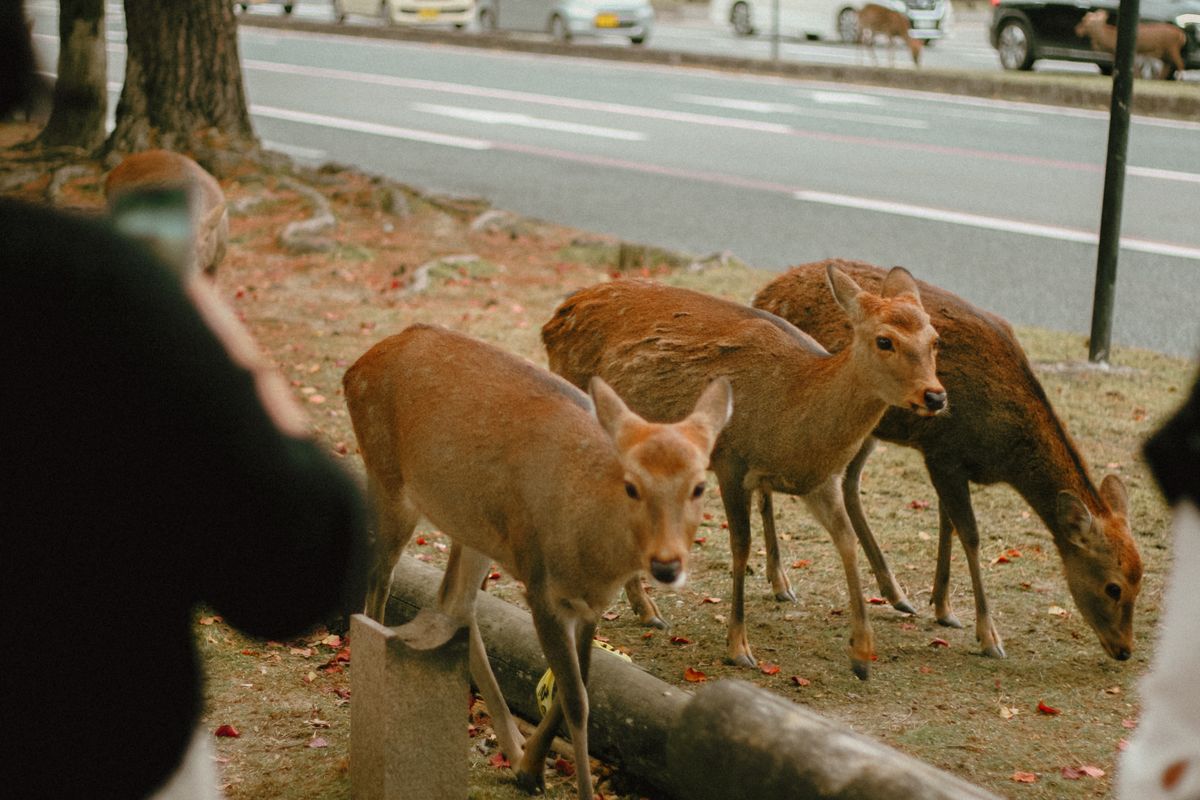
Nara City (population 360,000) has the infrastructure of a Kinki regional hub — hospitals, universities, a full retail core, and the expected services of a city its size — but a pace and scale that feels notably different from Osaka or Kyoto. The tourist circuit (Todai-ji, Kasuga Taisha, Kofuku-ji, Naramachi) occupies a relatively contained area in the northeast of the city; the residential neighbourhoods to the west and south operate entirely separately from it.
The commuter relationship with Osaka is well established and functional. Nara has been part of Osaka's commuter orbit since the Kintetsu line opened in the 1920s; the 38-minute express connection means many residents work in Namba or Shinsaibashi while living in Nara's quieter neighbourhoods. This keeps prices anchored — Nara cannot price itself entirely independently of Osaka — but also means the city has real economic activity rather than being purely a heritage zone.
The southern part of the prefecture — Yoshino, Totsukawa, Kamiichi — operates at a completely different tempo: mountain villages, pilgrim trails, river valleys, and a sparse population that is slowly declining. Property in the south is among the cheapest in the Kinki region; the tradeoff is distance from any urban infrastructure.
Food and Drink
Kakinoha-zushi is Nara's most distinctive food: pressed sushi (typically mackerel or salmon) wrapped in persimmon leaves, which both preserve the fish with natural tannins and impart a faint herbal scent. The style originated as a way of transporting sushi from the coast over the mountains to inland Nara before refrigeration. Several specialist shops in Naramachi have operated continuously for over a century; Kakinoha-zushi Tanaka is one of the most established, with takeaway boxes and a small eat-in counter.
Miwa somen — thin hand-stretched wheat noodles from Miwa in the southern basin — is one of Japan's oldest noodle traditions, with a production history recorded from the 7th century. The noodles are thinner and more delicate than Kyoto's standard somen; they are served cold in summer with a dipping broth and eaten hot in winter as a soup. The Miwa area has several producers open to visitors who demonstrate the hand-stretching process.
Nara sake has a history stretching back to the 8th century — the Shoryakuji Temple in Nara was one of the original sake producers, and the Nara brewing method (bodaimoto) is considered the ancestor of modern sake production. The Imanishi Sake Brewery in Miwa has been operating since 1884 and produces junmai sake using water from the Miwa mountain springs. Craft beer from the Nara Brewing Company has more recently added to the local drink offer.
Culture and Heritage
The Nara period (710–784) was Japan's first era of sustained continental culture — the Chinese Tang dynasty's administrative systems, Buddhism, writing, and urban planning all arrived together, and the physical evidence survives in concentration. The Nara Palace site (Heijo Palace) has been partially reconstructed and is open as an archaeological park; the excavations are ongoing and among the most significant in Japan.
Kasuga Taisha, the great Fujiwara clan shrine established in 768 AD, has been rebuilt every 20 years in a tradition of ritual renewal that maintains ancient building techniques through continuous practice. Its 3,000 lanterns — 2,000 bronze hanging lanterns under the shrine corridors and 1,000 stone lanterns lining the approach path — are all lit twice yearly for the Mantoro festivals (Setsubun in February, Obon in August). The Kasuga Taisha night festival is among the most atmospheric events in the Kinki calendar.
Yoshino as a cultural site predates its cherry blossom fame. En-no-Gyoja, the 7th-century ascetic who founded Shugendo mountain Buddhism, established his practice here; the Kinpusenji temple at the top of the cherry mountain has been a pilgrimage destination for 1,300 years. Emperor Go-Daigo established a rival imperial court at Yoshino in 1336 during the split-court era — the complex of temples and shrines on the mountain preserves traces of that period alongside the sakura for which Yoshino is now internationally known.
Weekends and the Outdoors
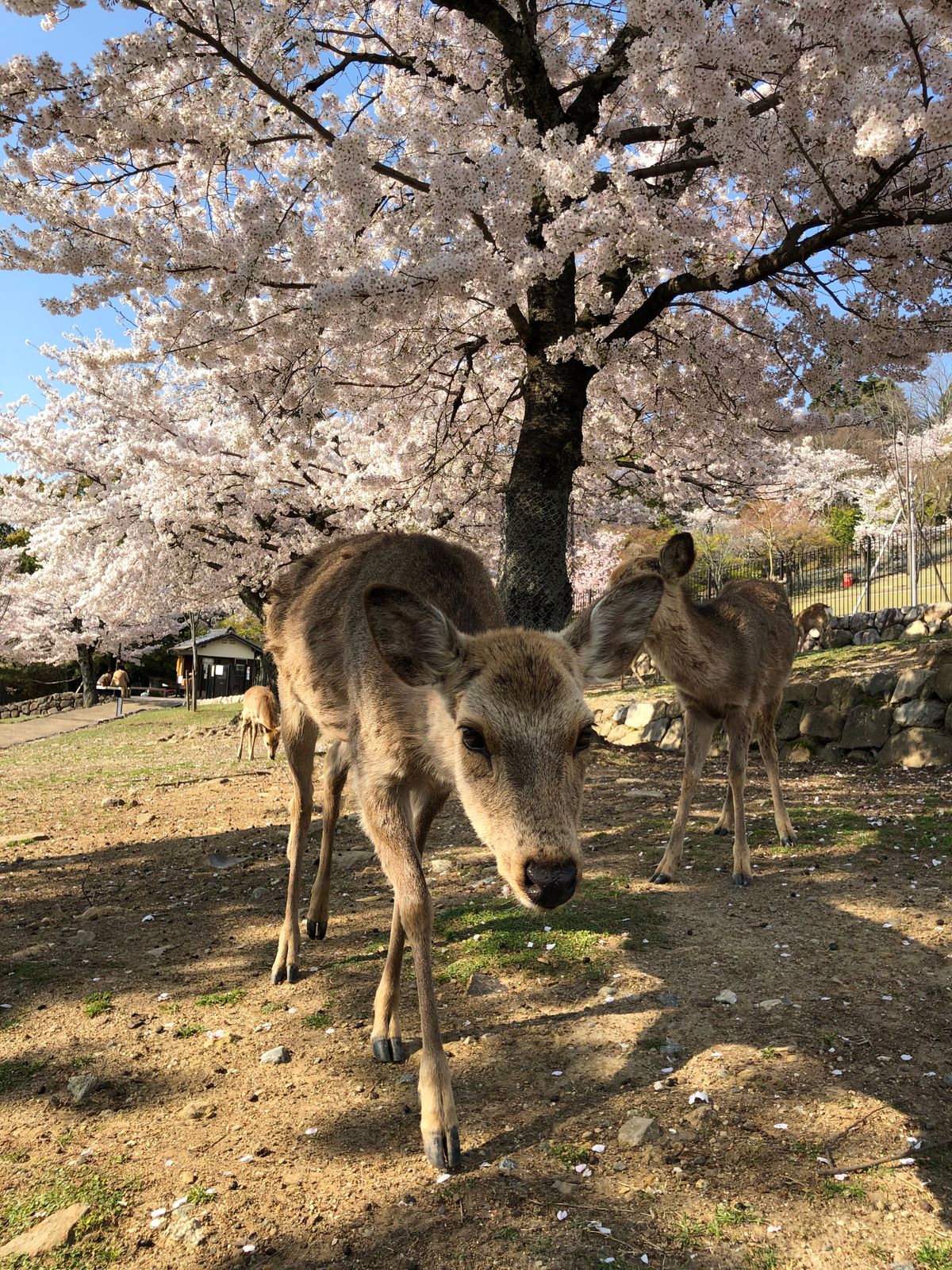
Yoshino Mountain (90 minutes from Nara by Kintetsu) is the primary day-trip destination and one of Japan's most important cherry blossom sites — 30,000 trees on a mountain slope, best viewed from the upper Kami-Senbon area. The Yoshinoyama Tourism Association posts daily bloom reports during the season (late March to mid-April). Outside blossom season, Yoshino is a hiking and autumn foliage destination — less crowded, with a different and equally valid appeal.
The Yamato Kogen plateau east of Nara City has mountain cycling routes, a preserved post town at Uda, and the Muro-ji temple — a mountain temple complex known for its ancient pagoda and autumn foliage, historically more accessible to women than the male-only Omine Mountain. The cycling distance from Nara City to Muro-ji is about 35km through pleasant valley roads.
Within the city: the Naramachi district repays multiple visits as the resident cafe, craft, and independent restaurant scene evolves slowly around the preserved machiya townhouses. The annual Nara Tokae lantern festival (mid-August, 10 days) illuminates the park and temple precinct with 20,000 candles — one of the most visually striking summer events in the Kinki region, and less crowded than its Kyoto equivalents.