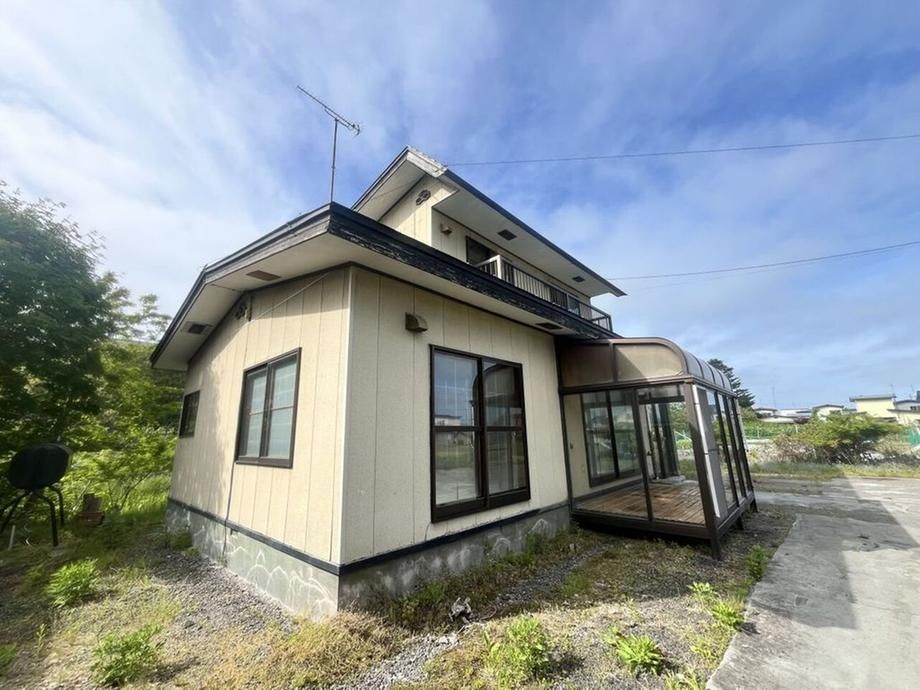
There are 25,000+ houses for sale in Japan right now priced under ¥5,000,000 (roughly $33,000 USD). 4,800+ of them are listed under ¥1,000,000 (about $6,700). All of them are searchable on this site, filterable by prefecture, condition and category, and updated every day as new listings come online from akiya banks, regional agents and traditional brokerages.
The market that everyone calls "cheap houses in Japan" is not a curated drip. It is a live, large, regionally varied database, and most of what gets written about it underestimates the scale by an order of magnitude. This is the working overview: where the cheap stock actually is, what the price bands actually buy, what makes a house "cheap" in the first place, and how to filter the live database to find the ones worth your time.

What "cheap" actually means in the Japanese market
The Japanese property market separates structures from land. A house depreciates to almost zero over 22 years (for wood frame) under standard tax accounting, regardless of its actual condition. Land holds its value. This means a 40-year-old house on a small lot can legitimately list for ¥1,000,000, because the seller is functionally only valuing the land and treating the structure as worth nothing.
That is not a marketing trick. It is the standard way property is priced once a structure is past its depreciation horizon. The honest framing is: you are buying land with a free, slightly-tired house attached. The "cheap house" sticker price is the land price plus a token for the structure.
Live counts on this site as of today:
- Under ¥1,000,000 (≈$6,700): 3,600+ properties
- ¥1M–¥3M (≈$6,700–$20,000): 10,800+ properties
- ¥3M–¥5M (≈$20,000–$33,000): 11,000+ properties
- ¥5M–¥10M: 22,800+ properties
- Over ¥10M: 118,900+ properties
The total active for-sale inventory is around 173,000+ properties across all price bands. About one in five is under ¥5M. None of those numbers are exclusive — they are the baseline of what the public market looks like across all 47 prefectures, sourced from akiya banks, local broker portals and direct listings.
Where the cheap stock actually is
The cheap inventory is not evenly distributed. It clusters where Japanese internal migration has been outward for decades: Tohoku (the northeast), parts of Shikoku, San'in (the Japan Sea coast of western Honshu), inland Kyushu and the depopulating belts of Niigata and Yamanashi. Hokkaido has a meaningful long tail of low-price stock outside Sapporo as well.
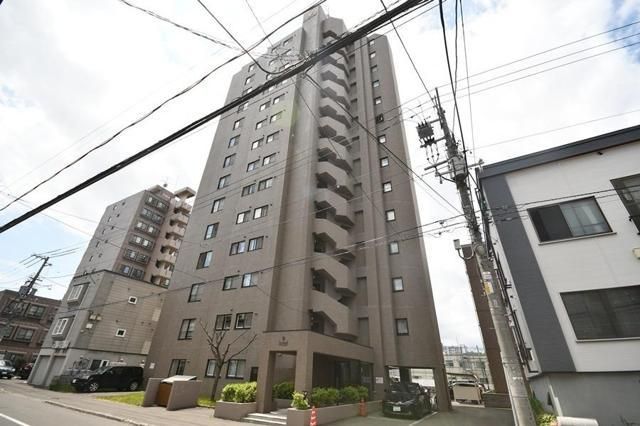
What this list is not: Tokyo, Kanagawa, Osaka city, Kyoto city, or Fukuoka city. Inner-suburban land prices in those places make sub-¥5M housing rare, and what does appear is usually condemned. The honest cheap market is in regional and rural Japan, plus the older suburban belts around mid-tier cities — Saitama exurbs, Chiba inland, Hyogo north, Hiroshima coast, Aichi west.
To filter the live database by prefecture, use the main buy listings page and select a region; or visit a prefecture page directly such as Niigata, Yamaguchi or Wakayama.

What each price band actually buys
Under ¥1,000,000
Sub-million properties (about $6,700 and under) are almost always one of three things: a structurally compromised house that needs major renovation, a small parcel of land with a token building, or an akiya bank listing where the municipality has discounted the seller's asking price to clear inventory. 5,341 properties are currently listed in this band.
What you do not get: a move-in-ready home. What you sometimes get: a usable timber frame with a sound roof on land that, if it were two prefectures closer to Tokyo, would be worth ¥30M. The renovation cost on a property in this band typically runs ¥5M–¥15M, which puts the all-in total around ¥6M–¥16M for a finished house — still cheap, but no longer ¥1M.
¥1M–¥3M
This band (¥1M to ¥3M, about $6,700 to $20,000) is the working "actually buy something liveable" entry point. 11,891 properties are currently listed. Expect 70–120m² traditional houses in rural or suburban locations, often with land of 200–500m², usually needing minor-to-moderate renovation: roof patching, plumbing replacement, sometimes wiring, often new flooring.
Renovation costs in this band typically run ¥3M–¥8M for a comfortable result. The all-in (purchase + renovation + closing) for a habitable home is usually ¥6M–¥12M.
¥3M–¥5M
The ¥3M–¥5M band (about $20,000–$33,000) is where move-in-ready or near-move-in-ready houses start to appear. 11,955 properties. This is the band where the house was lived in until recently, the systems work, and what is needed is cosmetic refresh rather than reconstruction. Land is usually 250–600m². For foreign buyers without renovation appetite, this is the practical floor.
¥5M–¥10M
21,253 properties. This band gets you newer suburban housing, larger lots, or smaller well-located houses in mid-tier cities. Mortgages become realistic at this price point if you qualify. The case for buying here is convenience, not bargain hunting.
Categories: what kind of "cheap house" you are looking at
The single biggest filter that separates serious buyers from window shoppers is the category of property they actually need. The live database tags every listing with categories — these are the ones that matter for the cheap-house question:
- Akiya bank listings (13,243 active): properties registered with a municipal akiya bank. Usually the cheapest, often the most paperwork. Municipality sometimes offers subsidies for renovation or relocation.
- Traditional houses (4,076 active): kominka — pre-war or early-postwar timber structures with hipped roofs, dirt-floor genkan entryways, often historically interesting. Renovation cost can be high but the result is irreplaceable.
- Farmhouses (2,483 active): rural houses often sold with attached agricultural land. Foreign buyers should note that nōchi (registered farmland) cannot be freely purchased — the land usually requires registration changes.
- All houses (84,831 active): the unfiltered category of detached residential properties. Most of the listings under ¥5M sit here.
- Land only (37,868 active): bare parcels. Useful when the existing structure is unsalvageable and the buyer plans to demolish and build new.
The renovation calculus is the actual price
This is where the "¥1M cheap house" framing falls apart in practice. The purchase price is not the price. The honest total cost is purchase + closing + renovation + ongoing.
Rough working numbers, based on common renovation scopes:
- Roof replacement (galvanised steel, 100m² roof): ¥1.5M–¥3M
- Full kitchen remodel: ¥1.5M–¥3M
- Bathroom (Japanese unit bath replacement): ¥1M–¥1.8M
- Plumbing replacement (full house): ¥1.5M–¥3M
- Electrical rewire: ¥0.8M–¥1.5M
- Insulation retrofit (rural traditional houses are usually uninsulated): ¥1M–¥3M
- Earthquake retrofit (taishin kōji) to current code: ¥1.5M–¥4M depending on structure
Closing costs and taxes typically add another 6–10% of the purchase price: real estate acquisition tax, registration tax, judicial scrivener fees (about ¥80,000–¥150,000), broker commissions where applicable, and the property's annual fixed-asset tax. Foreign buyers should also budget for translation, judicial scrivener verification of the title chain, and remittance fees.
The realistic total for a "¥1M cheap house" finished to a livable standard is usually ¥7M–¥15M. For a "¥3M cheap house" with moderate renovation, ¥6M–¥10M all-in. Knowing this upfront is the difference between a satisfied buyer and an angry one.
How to actually filter for a property worth buying
The reason a 148,000-property database is more useful than a curated weekly email of 20 listings is that the buyer's filters are personal and specific. No curator can pick for you. The filters that matter most for finding a cheap house worth your time:
- Price ceiling: set a realistic all-in budget. Working back from a ¥10M all-in budget with ¥5M for renovation, your purchase ceiling is ¥4M. Filter accordingly.
- Prefecture or region: if you have a region in mind, narrow there. If not, use the search to compare regional inventory.
- Category: akiya bank if you want subsidies; traditional-house if you want kominka; just "house" if you want unfiltered residential.
- Land size: regional Japan often comes with more land than urban buyers expect. 300m² is a comfortable working figure for a family house; 150m² is tight; 500m²+ approaches small-farm territory.
- Year built: the 1981 earthquake-code change is the dividing line. Pre-1981 wooden houses almost always need earthquake retrofitting to be insurable. Post-1981 is meaningfully better. Post-2000 is current code.
- Access: the distance to the nearest train station, the road width to the property (under 4m wide is a serious problem under the Building Standards Act), and the distance to a hospital and supermarket. Live filters are available on the cheap houses search page.
For new listings only, use the date-added filter on the search page — it lets you see what came online in the last 24 hours, 7 days, or 30 days. Most weeks, the database adds 200–400 new active listings.
How to keep up with the market without checking every day
Search alerts are the right tool for this. Save the exact filter you care about (price ¥3M, prefecture Nagano, akiya-bank category, land 200m²+, post-1981 build), and the system emails the new matches as they arrive. Free accounts can save searches; premium accounts can save unlimited searches and unlimited properties, see the seller contact details directly, and access the full listing history.
The point of doing this on a live database rather than a newsletter is timing. The good listings in the cheap bands move fast — sometimes within 48 hours of going live. A weekly digest of "this week's 20 picks" is, mechanically, a digest of properties that the buyers with alerts already considered and either claimed or rejected three to five days earlier.
The buying process, in summary
Foreign buyers can purchase residential property in Japan without a visa, without residency, and without restrictions specific to nationality. Land is freely transferable. The process is:
- Identify the property, verify it is on the public for-sale market (sometimes akiya bank listings require an application).
- Submit a purchase application (kōnyū mōshikomisho) with the agent or directly to the seller in akiya bank cases.
- Conduct due diligence: title check, neighbour boundary confirmation, structural inspection if warranted, judicial scrivener review.
- Sign the purchase contract (baibai keiyakusho), pay the deposit (typically 10%).
- Wire the balance, register the transfer through a judicial scrivener, take possession.
Most foreign buyers complete a Japanese property purchase in 4–8 weeks from accepted offer to keys-in-hand. The remote-purchase pathway (without flying to Japan) is well-trodden — see From Saved to Sold for a step-by-step. For finding an English-speaking judicial scrivener to handle the registration, see the directory of bilingual judicial scriveners.
The honest summary
Japan's cheap house market is bigger, more varied, and more accessible than the popular framing suggests. 29,187 active listings under ¥5M, including 5,341 under ¥1M, are searchable today. The cheap stock concentrates in regional prefectures and older suburban belts. The purchase price is not the all-in cost; the renovation budget is the dominant variable in most cases. The fastest way from "I want a cheap house in Japan" to "I bought one" is a live search with a saved alert, not a curated digest.
Start with the live buy listings, narrow by prefecture and price band, save a search, and let the new listings come to you as they arrive.