
There is a particular image that surfaces regularly in conversations with foreign families who have settled in rural Japan. It goes something like this: a child, perhaps seven or eight years old, strapping a yellow satchel to their back and heading out the front door alone. Not to be dropped at school by a parent in an SUV. Not to be tracked by an app. Just walking, or cycling, to school -- the way Japanese children have done for generations, and the way most Western families stopped letting their kids do sometime in the 1990s.
For many foreign parents, that image is unexpectedly moving. It represents something they wanted for their children but had quietly accepted was gone from modern life. In rural Japan, it is not gone. It is Tuesday morning.
In 2026, the conversation around foreign families choosing Japan's countryside has shifted. What was once a fringe lifestyle story -- the occasional expat blogger writing about rice paddies and slow living -- has become a recognizable pattern. Municipalities are tracking it. Real estate agents are specialising in it. And families considering the move are asking harder, more specific questions: What are the schools like? Can my child get medical care? What does it actually cost per month? How much Japanese do we need?
This article addresses those questions directly, with numbers and without romance.
Why Families Are Making This Choice
The draw is rarely just the price of property, though that matters. Families who relocate to rural Japan most often cite a cluster of reasons that reinforce each other: safety, space, community, and a recalibrated sense of what childhood should look like.
Japan's crime rate is among the lowest in the developed world. As of 2025, reported crimes reached 774,142 -- a country of 125 million people. Rural areas are statistically safer still. In practice, this translates to a quality of life that is difficult to describe to parents who have lived for years in higher-crime urban environments: children cycling home from club activities in the dark, neighbours who check on each other, front doors left unlocked. The social trust is real and, for families from countries where it has eroded, often startling.
Space is the second factor. An akiya (空き家, abandoned house) in rural Japan typically comes with a garden, outbuildings, and enough land for children to run, plant things, and be bored in the productive way that development psychologists have long argued children need. The contrast with a 50-square-metre apartment in a Western city -- or Tokyo, for that matter -- is stark.
The third factor is what researchers call "social embedding": the degree to which a child feels known and looked after by adults beyond their parents. In Japanese rural communities, this happens naturally. Neighbours bring vegetables. The local rice cooperative remembers your children's names. When your child falls off their bicycle, three adults appear within minutes. This is not nostalgia. It is how inaka (田舎, countryside) life still works in Japan, and it is one of the things urban Japan has lost and rural Japan has kept.

A hillside residential neighbourhood in Kyoto -- the kind of community setting many rural akiya towns replicate at a smaller, quieter scale. Photo via Unsplash
The Cost Equation: What Rural Akiya Actually Costs a Family
One of the most useful things to do with the rural Japan conversation is to replace the vague framing ("it's cheap") with actual numbers. Here is what a realistic family budget looks like.
Acquiring the property: Through a municipal akiya bank (空き家バンク, akiya banku), properties are typically listed at ¥500,000 to ¥3,000,000 -- roughly $3,500 to $21,000 USD at current rates. These are not always the most habitable properties; renovation is usually required. However, municipal renovation subsidies of ¥1,000,000 to ¥5,000,000 are available in most participating towns, and stacking these with national relocation grants can dramatically reduce out-of-pocket costs (more on this in the Government Programs section below).
Monthly living costs: Statistics from Japan's 2025 household expenditure data show that households with two or more people in regional areas spend approximately ¥314,000 to ¥404,000 per month ($2,100 to $2,800 USD). This includes food, utilities, transport, and miscellaneous expenses. Rural rent for a property not purchased outright is ¥30,000 to ¥70,000 per month ($200 to $470) -- numbers that bear repeating because they are so different from what families pay in most Western cities.
Education costs: Public elementary school (小学校, shougakkou) and junior high school (中学校, chuugakkou) are free. The Japanese government also provides high school tuition support for lower-income families through the Ministry of Education, Culture, Sports, Science and Technology (MEXT) high school tuition waiver program, with income thresholds set to cover most foreign-income households.
Healthcare costs: For children, Japan's municipal health subsidy system, known as the kodomo iryou shou (子ども医療証, children's medical certificate), covers medical expenses until the age of 18 in most prefectures. Typical co-payment is ¥500 per clinic visit. This covers doctor visits, hospitalisation, dental, and most prescriptions. Adult healthcare is handled through the national health insurance system (kenko hoken, 健康保険), with contributions calculated as a percentage of household income.

A typical akiya property before renovation -- the starting point for many foreign families in rural Japan. Photo via Unsplash
Government Support Programs That Change the Maths
Japan's government has been remarkably direct about wanting families to move to the countryside, and the subsidy structure reflects that intention. Understanding how the programs layer is essential to understanding why the finances work.
National relocation grant (chihou sousei sumai ouenkin, 地方創生住まい支援金): For families relocating from the Greater Tokyo Area (Tokyo, Kanagawa, Chiba, Saitama), the national grant is ¥1,000,000 base plus ¥1,000,000 per child under 18. A family with two children moving from Tokyo to rural Niigata could qualify for ¥3,000,000 -- roughly $21,000 -- without touching any municipal additions. The five-year residency commitment applies, with repayment triggered by early departure.
Child allowance (jido teate, 児童手当): This is a monthly payment made to households raising children, regardless of nationality, as long as the family is enrolled in the Japanese social insurance system. Following a 2024 expansion that removed income caps, the allowance pays ¥10,000 to ¥15,000 per child per month through the end of high school. For a family with two children, that is ¥20,000 to ¥30,000 per month in direct payments. In December 2025, an additional one-time payment of ¥20,000 per eligible child was distributed under an emergency cost-of-living support measure. Accumulate all jido teate from birth to age 18 and you have approximately ¥2,000,000 per child.
Municipal renovation subsidies: The ¥1,000,000 to ¥5,000,000 renovation grants available in most akiya bank towns are separate from the national relocation grant and can be stacked on top. Practical outcome: a family purchasing a ¥1,500,000 akiya, combining a ¥3,000,000 national relocation grant with a ¥2,000,000 municipal renovation subsidy, can renovate to a livable standard with close to zero net outlay. Total out-of-pocket for a habitable rural family home often lands between $20,000 and $55,000 USD once subsidies are applied.
Approximately 1,300 municipalities -- representing 80% of Japan's local districts across 44 prefectures -- participate in rural repopulation programs that include some form of housing or family support grant. The variety is significant; always verify what is available in the specific municipality you are targeting.
Education: The Honest Picture
Japanese public schools have a well-earned reputation for academic rigour, low absenteeism, and strong student discipline. Children graduate junior high school with a mathematical foundation that would place them in advanced tracks in most Western countries. The school environment is community-focused: students clean their own classrooms, serve each other lunch, and participate in school events as a collective. For many foreign families, this is a feature rather than a culture shock.
The more complicated question is what the experience looks like for a child who does not speak Japanese.
There are over 114,000 foreign children enrolled in Japanese public schools, and just under half require specialised language support. Cities like Nagoya and Hamamatsu, with large foreign resident communities, have established "welcome class" (ウェルカムクラス) programs that give non-Japanese-speaking children intensive Japanese language instruction before integration into mainstream classes. These resources are concentrated in urban prefectures. Rural areas are more variable.
The Ministry of Foreign Affairs has acknowledged the gap explicitly: rural schools serving foreign children lack the economies of scale to hire dedicated Japanese-as-a-second-language teachers. In practice, this means rural families arriving with children who speak no Japanese should expect a steep immersion experience -- sink-or-swim in the most literal sense. Children under 10 typically adapt within six to twelve months. Older children, particularly those entering junior high or high school, have a harder time.
Practical strategies that families in rural Japan consistently report as effective:
- Start children in Japanese school as early as possible -- under 8 is ideal for language acquisition
- Use the "one parent, one language" approach at home to maintain the home language while children build Japanese
- Enrol children in weekend heritage language classes or online tutoring to preserve literacy in the family's first language
- Build a relationship with the school's designated "international education liaison" (国際教育担当, kokusai kyoiku tanto) before the school year begins -- not every rural school has one, but many do
- Contact the prefectural board of education (教育委員会, kyoiku iinkai) before choosing a municipality, and ask specifically what language support is available
On the high school question: rural areas sometimes have only one or two high schools with limited course variety. Families planning to stay through their children's secondary education should research the high school options in any specific municipality before committing. Proximity to a regional city with more schools is worth factoring into location choice.
Healthcare: What You Get for Free
Japan's universal healthcare system is one of the country's quietly remarkable achievements, and for families with children, the local municipal extension of it is particularly generous.
Once enrolled in the national health insurance system, children obtain the kodomo iryou shou -- the children's medical certificate -- from the municipal office. This certificate covers doctor visits, specialist consultations, hospitalisation, dental checkups, and most prescriptions at a co-payment of ¥500 per visit, or in some municipalities, zero. Coverage extends to the child's 18th birthday. For families accustomed to paying hundreds of dollars per paediatric visit, the recalibration is significant.
The practical rural consideration is distance. In cities and large towns, general practitioners and paediatricians are close by. In very rural areas, the nearest hospital with paediatric capacity might be 30 to 60 minutes by car. This is a genuine constraint and worth investigating before choosing a property location. Most families resolve it by keeping a car and learning which local clinics handle common childhood ailments versus when the regional hospital is necessary.
Emergency care is always available and covered. Japan's ambulance system (kyukyu, 救急) is nationally coordinated and free at point of use.
The Community You Are Joining
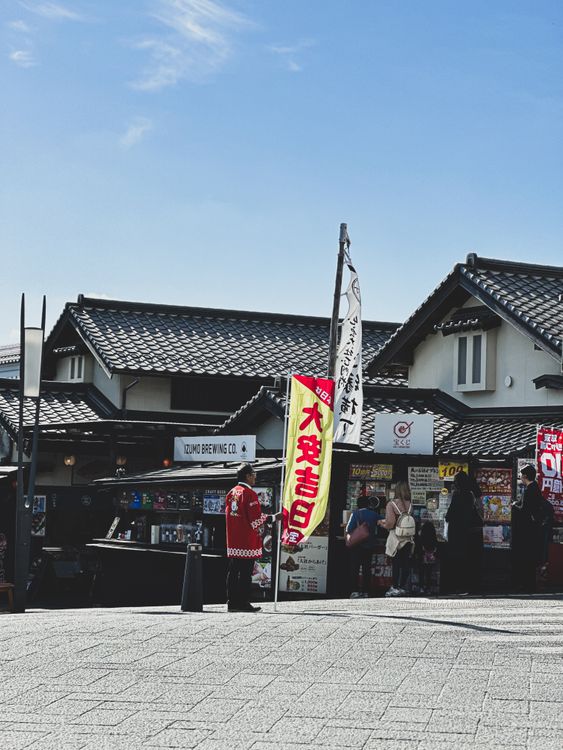
Community markets and street festivals are a central part of rural Japanese life -- and one of the first places foreign families get genuinely welcomed. Photo via Pexels
Rural Japanese communities operate through a set of institutions that most urban residents in any country no longer experience: the chonaikai (町内会, neighbourhood association), the agricultural cooperative, the local shrine committee, the school parents' association (PTA, which operates somewhat differently from its Western counterpart but performs similar social functions). Joining one of these communities as a foreign family means being both highly visible and, in most towns, actively welcomed.
Rural municipalities facing depopulation have a material interest in retaining new residents. Towns that have lost a third of their population in twenty years are not indifferent to a foreign family that arrives, renovates an abandoned house, and sends children to the local school. In practical terms, this plays out as genuine effort: neighbours who bring food, invitations to seasonal matsuri (祭り, festivals), inclusion in community clean-up days, and a level of social attention that can feel overwhelming at first and becomes the fabric of daily life.
The growth of kodomo shokudo (こども食堂, children's cafeterias) across rural Japan is relevant here. Originally established to provide meals to food-insecure children, these community spaces have become informal gathering points for neighbourhood children and their families regardless of economic circumstance. In many small towns, the local kodomo shokudo has become a first point of contact for foreign families -- a place where children mix, parents practice Japanese, and the community takes shape around food.
Children in particular benefit from the satoyama (里山) relationship -- the traditional Japanese concept of the boundary between village and mountain, farmland and forest, where communal activities like mushroom gathering, planting, and harvesting happen as seasonal rhythms. These are not curated experiences for children in rural Japan. They are what September and October look like.
The Real Challenges: Be Honest With Yourself
A significant percentage of foreign families who attempt rural Japanese life leave within two or three years. This is worth saying plainly, because the discourse around akiya living can obscure it.
The families that struggle most tend to share certain characteristics: one or both parents do not speak Japanese and have not committed to learning it seriously; they underestimated how car-dependent rural life is; they arrived expecting the community to adapt to them rather than the reverse; or they had no sustainable remote income and assumed something would materialise locally.
Language is the central factor. Unlike children, adults do not acquire language by osmosis. A parent who cannot communicate with teachers, doctors, neighbours, or local officials will find rural Japan exhausting in a way that will eventually affect the whole family. Enrolling in Japanese language classes before arriving -- or immediately after -- is not optional. Municipalities with foreign resident support offices can help, but they cannot replace language competence.
Income is the other constraint. Rural Japan offers almost no employment for non-Japanese-speaking foreigners in conventional office roles. The families that make it work are overwhelmingly remote workers: software engineers, designers, writers, consultants, teachers of online English. If your plan involves "finding work locally," have a very specific job offer before you arrive.
One structural challenge that surprises families: the Japanese school year runs April to March, not September to August. Arriving mid-year means children join a class that is already well into its social formation. Whenever possible, plan to arrive in March or early April to align with the school year start.
Choosing the Right Municipality
Not all rural Japan is the same, and location choice for a family is meaningfully different from location choice for a retiree or remote-working individual.
The most family-relevant factors:
- Proximity to a shinkansen (新幹線, bullet train) station or express train line: This matters for family trips, hospital access, and maintaining connection to larger cities. The difference between a town 40 minutes from a shinkansen and a town 3 hours from the nearest express service is substantial for daily life quality.
- Population range: Towns of 10,000 to 50,000 residents tend to offer a better service balance than smaller hamlets. They typically have a general hospital, two or three elementary schools with some language support experience, a high school with multiple tracks, and enough retail infrastructure that daily life is not entirely car-dependent.
- Existing foreign resident population: Even a small community of 20 or 30 foreign families in a town provides an informal support network worth more than any formal program. Ask municipalities directly about their foreign resident numbers and what support resources exist.
- Municipal akiya bank activity: A well-managed akiya bank with regular property listings and an accessible application process signals a municipality that has committed to its repopulation program, not just created the bureaucratic structure for it.
Prefectures that have built a reputation for being particularly accessible to foreign families include Yamanashi (close to Tokyo with strong natural environments), Nagano (established foreign community in ski towns, improving rural infrastructure), Tokushima (remote work island programs), and several coastal prefectures in Kyushu and Shikoku where municipalities have invested in English-language onboarding materials.
Navigating the Purchase with the Right Support
The practicalities of buying an akiya as a foreign national -- registering a property in Japan, understanding what the municipal akiya bank's conditions actually require, coordinating with local government on renovation grants -- are manageable but not trivial. The documentation chain from purchase through renovation approval involves judicial scriveners (shihō shoshi, 司法書士), municipal offices, and, in some cases, agricultural land authorities.
For families navigating this process from abroad, working with a licensed brokerage that specialises in foreign buyer transactions avoids the most common and costly mistakes. Teritoru, a licensed Japanese real estate brokerage founded by Ai Hioki, focuses specifically on helping international buyers work through the purchase process, legal compliance, and -- relevant for rural akiya buyers -- the renovation grant application steps that require correct documentation sequencing. An initial consultation is available by web conference, which matters for families who cannot be on the ground in Japan yet. You can book a consultation with Teritoru to discuss your specific situation and target area.
Who It Is For
Rural akiya life in Japan is not for every family. It rewards families that approach Japan as a long-term commitment rather than an extended experiment; that have invested in the language before arriving; that have children young enough to integrate into the school system naturally; and that have sustainable remote income or a concrete local employment plan.
For those families, what they consistently report is not just a lower cost of living or a more affordable home. It is a different experience of childhood -- one where a child strapping on their yellow satchel and heading out the door alone on a Tuesday morning is not a cause for anxiety. It is simply how things work here, and it has worked for a long time.
Sources
- Raising Kids in Japan: Costs, Subsidies, School Choices & Real Challenges for Foreign Parents — Navigator Japan
- Current Situation and Issues Regarding Education for Foreign Students — Ministry of Foreign Affairs of Japan
- Maternity and Child Care Allowance in Japan: A Complete Guide [2026] — Japan Dev
- Japan's 2026 ¥20,000 Child Benefit — Japatopi
- 2026 Japan Relocation Grant Guide — John of Japan
- Japan Inaka Rural Living Guide for Foreigners (2025) — Home in Nihon
- My Cost of Living in Rural Japan: $900/Month Quality of Life — Inaka Lifestyle
- Raising an International Family in Japan: Experiences and Advice — Japan Dev
- Government Subsidies in Japan for Housing, Healthcare and Childcare — GaijinPot
- Kodomo Shokudo — Wikipedia


