Japan's land prices rose for the fifth consecutive year in 2026, climbing 2.8% nationally — the strongest increase since 1992, according to the Ministry of Land, Infrastructure, Transport and Tourism (MLIT; 国土交通省, kokudo kōtsū shō). That headline number, however, conceals a property market split in two. Prefectures without growth drivers are flat or declining. The places with a confirmed mega-project underway are seeing 25%, 35%, even 44% annual land price increases at specific benchmarks.
The pattern is consistent and, with a degree of lead time, legible. A government-backed semiconductor factory, a casino resort groundbreaking, an expanded airport, or a new Shinkansen station triggers demand that moves through the local property market over 18 to 36 months. For foreign buyers, understanding which projects are real, how far along they are, and what the property market around each looks like today is one of the most reliable frameworks for strategic buying in Japan.
This article maps the major confirmed projects currently underway — their current construction status, the land price data surrounding them, and what the timing means for buyers considering entry now.
Osaka: The Integrated Resort and the Yumeshima Effect
Japan's first legal casino resort broke ground on Yumeshima (夢洲, yumeshima, "dream island") in April 2025. The project — MGM Osaka, developed by the MGM–ORIX consortium — is valued at up to JPY 1.5 trillion (approximately $10 billion), making it one of the largest single real estate investments in Japanese history. The integrated resort (IR; 統合型リゾート, tōgō-gata rizōto) will include a 27-storey hotel tower, 2,500 hotel rooms across three brands, 730,000 square feet of MICE conference space, and a casino floor covering 23,293 square metres. The opening target is autumn 2030.
MGM's CFO has confirmed approximately $450 million in equity investment committed in 2026 alone, with the project's total cost rising from the originally projected $8.9 billion amid inflation and construction cost increases. The economic ripple effect is estimated at ¥760 billion per year once the resort is fully operational, generating sustained demand for staff housing, hospitality services, and commercial space across the southern Osaka waterfront.
What makes the Yumeshima story more than a single-site development is what surrounds it. The island hosted Expo 2025 Osaka Kansai from April to October 2025, drawing approximately 29 million visitors (25.58 million paid attendees, with the remainder on complimentary passes). The former Expo grounds are now being developed into a mixed commercial and leisure district adjacent to the casino site in a phased redevelopment plan, transforming the entire southern waterfront corridor into a new urban district. The Osaka Metro Chuo Line extension (夢洲延伸, yumeshima enshin) connecting Yumeshima to the existing metro network was built for the Expo and remains operational.
Central Osaka has already absorbed the announcement premium — but not the opening premium. Prices per square metre in Kita-ku (北区, kita-ku) range from ¥600,000 to ¥900,000, with average existing condominium prices sitting between ¥53 million and ¥80 million. Annual land price growth in central Osaka wards ran approximately 7% in 2025. Namba and Shinsaibashi are projecting 8–12% appreciation over the next three years, supported by both the IR development and ongoing urban renewal. Rental yields in Osaka sit at 5–7% gross — the highest in Kansai and competitive with anything outside central Tokyo.
With four years until the MGM resort opens, the 2026–2027 period represents the last phase in which central Osaka property can reasonably be described as anticipatory rather than reactive pricing.
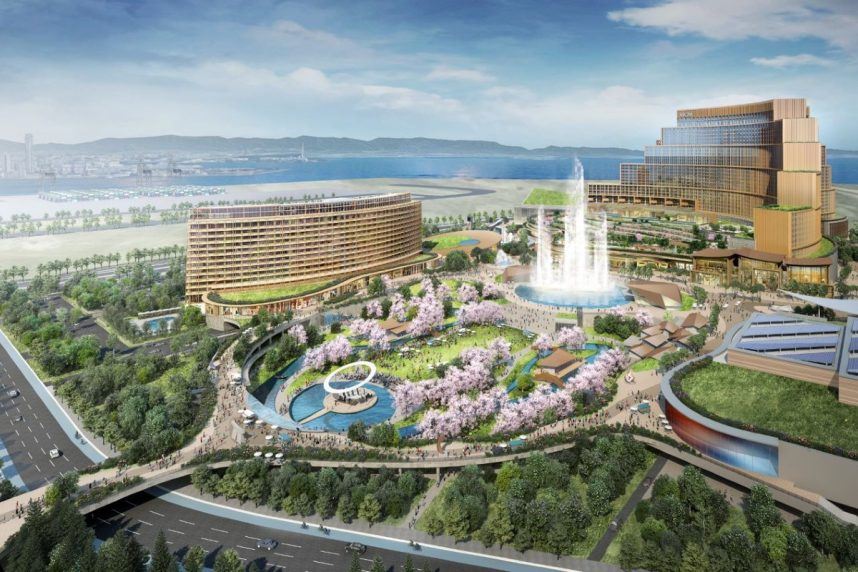
MGM Osaka Integrated Resort — official rendering of the ¥1.5 trillion casino resort on Yumeshima island, opening autumn 2030. Image: MGM Osaka Corporation
Kumamoto: How the TSMC Effect Tripled Land Values in Three Years
The most comprehensively documented case study in project-driven property appreciation currently operating in Japan is Kumamoto Prefecture. When Taiwan Semiconductor Manufacturing Company, through its Japanese joint venture Japan Advanced Semiconductor Manufacturing (JASM; ジャズム), broke ground on its first Kumamoto factory in Kikuyo Town (菊陽町, kikuyo-chō) in 2022, it triggered a property market transformation that has since been closely tracked by economists and government statisticians.
JASM is majority-owned by TSMC, with minority stakes held by Sony Semiconductor Solutions, Denso Corporation, and Toyota Motor Corporation. Phase 1 reached full production in December 2024, producing 55,000 wafers per month using 12nm to 28nm process nodes — chips used in automotive electronics, industrial controls, and consumer devices. Phase 2, targeting more advanced nodes, is under construction and expected to begin production in 2027. Total semiconductor-related investment across Kyushu (九州, kyūshū) — a region that earned the nickname "Silicon Island" (シリコンアイランド, shirikon airando) in the 1960s — is estimated at approximately ¥5 trillion, with over 100 chip-related corporate investments in the region since 2021. Kyushu's integrated circuit production value hit ¥1 trillion in 2024 for the first time in 16 years.
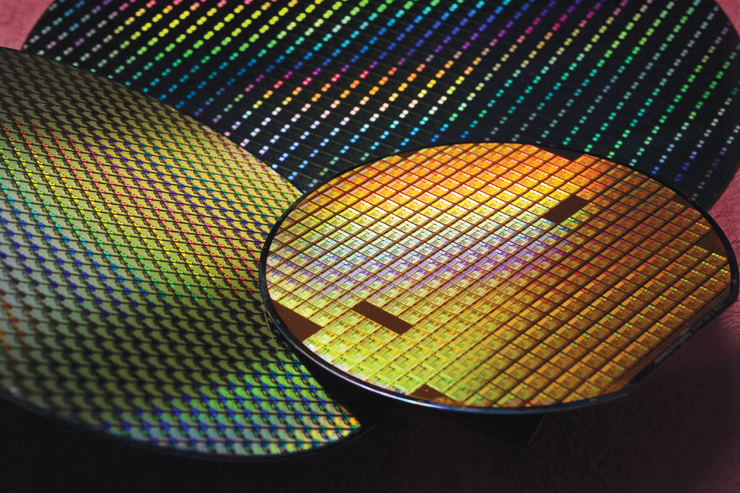
TSMC semiconductor wafers — JASM's Kumamoto plant produces 55,000 wafers per month using 12nm to 28nm process nodes, primarily for automotive electronics and industrial controls.
The property market data is unambiguous. Average land prices in Kumamoto have increased 1.7 times since 2020. In Kikuyo, factory-adjacent land prices rose 25% in 2024 alone. In neighbouring Otsu Town (大津町, ōtsu-machi — also romanised as Ozu), prices rose 32.4% in 2023, ranking first nationwide that year. By 2026, Otsu Town land values continued climbing, rising 26% year-on-year. Industrial land across semiconductor-related corridors continued double-digit annual growth in 2025. Residential housing prices across the prefecture rose in the high single digits, driven by the need to house TSMC's workforce — approximately 3,400 direct positions across both JASM fabs at full operation, alongside a much larger supply-chain and service-economy employment base across the Kyushu semiconductor cluster.
For residential buyers, the most relevant fact is that Kumamoto City proper — the prefectural capital, a 15-minute drive from the Kikuyo factory cluster — remains significantly more affordable per square metre than Tokyo, Osaka, or Fukuoka, even after four years of appreciation. The city has Shinkansen access to Hakata in Fukuoka in 35 minutes. Phase 2 coming online in 2027 means worker housing demand will expand further. Buyers entering Kumamoto City today are mid-cycle, not peak.
Chitose, Hokkaido: Japan's 2nm Frontier
Rapidus Corporation (ラピダス) is constructing what it calls the IIM-1 (Innovative Integration for Manufacturing) facility in Chitose, Hokkaido (千歳市, chitose-shi), targeting production of 2-nanometre semiconductors — the most advanced chips currently in commercial development globally. The project has received extraordinary government backing: a further ¥267.6 billion was approved in February 2026 — ¥100 billion from the government via the Information-technology Promotion Agency, and ¥167.6 billion from 32 private companies including Canon, Sony, SoftBank, Honda, and Fujitsu. In April 2026, METI approved a further ¥631.5 billion, bringing total government support to approximately ¥2.6 trillion. In July 2025, Rapidus achieved the first successful operation of 2nm GAA (gate-all-around) transistors at the IIM-1 pilot line — a genuine technical milestone.
The land price consequence is visible in the 2026 MLIT survey: a commercial land benchmark in Chitose rose 44.1%, the single largest increase of any location anywhere in Japan. This mirrors exactly what happened in Kumamoto two to three years after the TSMC announcement: anticipatory demand from supplier companies, logistics operators, and housing developers moving ahead of the workforce. Chitose sits 35 minutes from Sapporo by limited express rail, adjacent to New Chitose Airport (新千歳空港, shin-chitose kūkō), which handles approximately 20 million passengers annually — the busiest airport in Hokkaido and one of the main international gateways for northern Japan.
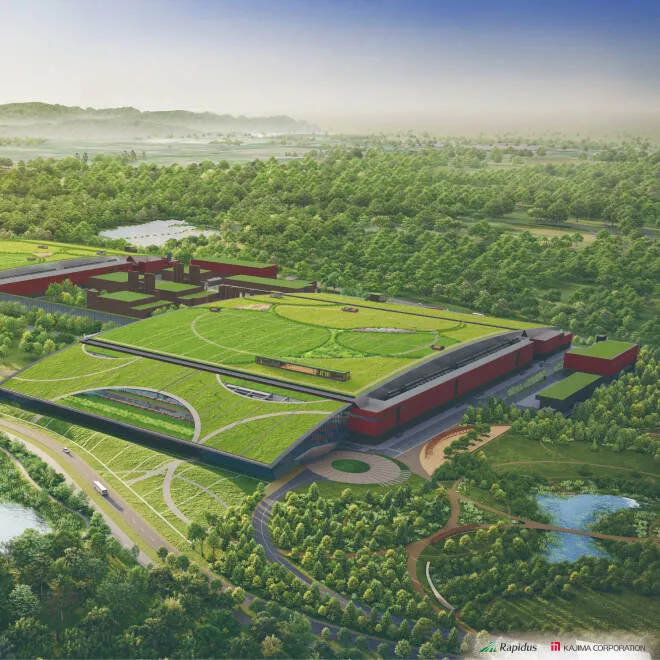
Rapidus IIM-1 (Innovative Integration for Manufacturing) — official aerial rendering of the 2nm semiconductor facility under construction in Chitose, Hokkaido. Image: Rapidus Corporation
The key risk for Chitose buyers is that Rapidus is attempting something technically ambitious: leapfrogging several generations of chip manufacturing to produce 2nm chips competitively. The government is financially committed, and construction is physically underway. But commercial production timelines remain uncertain in a way that the TSMC–Kumamoto story never was. Buyers evaluating Chitose should underwrite this as an industrial-growth thesis with real technology execution risk, not a replica of the Kumamoto playbook. The 44% commercial land spike suggests that the easy early-mover premium in the immediate factory vicinity has already been captured. The residential story — particularly in greater Chitose and Sapporo's outer commuter belt — is at an earlier stage.
Hakuba: Japan's Fastest-Rising Residential Land Market
Hakuba (白馬村, hakuba-mura, "white horse village") in Nagano Prefecture has no semiconductor factory, no casino, and no airport expansion. What it has is eight ski resorts, reliable snowfall averaging 4 to 11 metres per season, and Shinkansen access to Tokyo in under two hours from Nagano Station (長野駅, nagano-eki) — with a connecting bus service to the valley taking approximately 50 minutes.
The 2026 MLIT data is stark: Hakuba recorded the highest residential land price growth in Japan at 33.0% year-on-year. The strongest commercial benchmark near Happo-One ski resort rose 35.2%, the third-highest commercial increase nationally. Real estate appraiser Kazuhiro Imamaki attributed the acceleration directly to "overseas investors pursuing large-scale developments," noting that demand for condominiums and hotels is now outpacing available land parcels.
The comparison analysts consistently reach for is Niseko (ニセコ, niseko) in Hokkaido — the first Japanese ski resort to experience significant international pricing. Niseko attracted Australian buyers in the early 2000s, followed by broader Asian capital in the 2010s, and now commands prices that feel disconnected from the surrounding region. Hakuba is being positioned as "a second Niseko" still in an early stage of international attention, with structural supply constraints — limited large land parcels in a mountain valley — amplifying price growth in ways that appear difficult to reverse.
The practical picture: Hakuba valley property ranges from older lodges available under ¥20 million to new ski-in/ski-out condominiums at ¥60–100 million and above. Importantly, the summer season has become increasingly commercial — mountain biking, trail running, and the Alpine mountain festival circuit mean seasonal rental income is now a 12-month calculation rather than a 4-month ski-season one. The combination of yen weakness increasing affordability for foreign buyers, the post-pandemic rebound in inbound ski tourism, and limited developable supply creates a structural dynamic that multiple Japan resort specialists describe as resilient rather than cyclical.

Alpine Japan — Hakuba recorded the highest residential land price growth in Japan in 2026 at 33%, driven by foreign capital and a structural supply shortage. Photo: Pexels
Fukuoka: Japan's Fastest-Growing Major City
Fukuoka (福岡, fukuoka) has been Japan's fastest-growing major city for real estate for several consecutive years, and two simultaneous redevelopment programmes are compounding its structural advantages. The Tenjin Big Bang (天神ビッグバン, tenjin biggu ban) is a city-led programme offering relaxed floor area ratio regulations to buildings in the Tenjin (天神) commercial core that incorporate earthquake-resistant design and public space, incentivising wholesale rebuilding of the district's older high-rise stock. More than 30 buildings are planned for redevelopment by 2028. The parallel Hakata Connected programme is repositioning the area surrounding Hakata Station (博多駅, hakata-eki), the Shinkansen terminus for the entire island of Kyushu.
In March 2025, Fukuoka Airport's second runway came into service, running parallel to the existing runway. The airport's midterm plan targets 38 international routes by FY2028, up from 23 currently — a 65% expansion. Fukuoka Airport sits within the city itself, unusual among Japan's major airports, meaning increased air connectivity flows directly into the urban core rather than to a distant logistics suburb.
Annual land price growth in Fukuoka is running at 6%+ across central wards. Rental yields of 5–7% gross are comparable to Osaka and significantly higher than central Tokyo. For foreign buyers, Fukuoka offers a lower absolute price entry point than Tokyo or Osaka while delivering similar yield profiles and strong tenant demand from a domestic professional workforce and a rapidly growing international community. Fukuoka is also directly adjacent to Kumamoto and the Silicon Island semiconductor cluster: the Shinkansen covers the 120km between Hakata and Kumamoto in 35 minutes, creating a single labour market that benefits both cities.
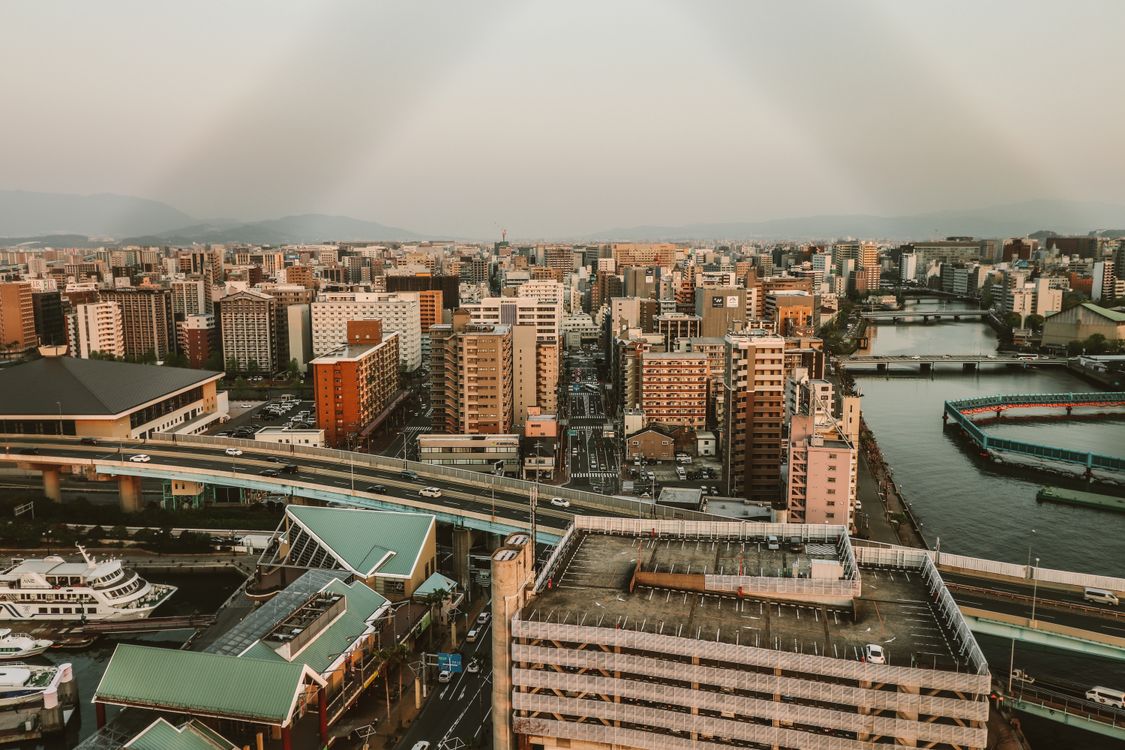
Fukuoka from above — Japan’s fastest-growing major city, with the Naka River and Hakata Bay visible. The Tenjin Big Bang programme is rebuilding the commercial core while the airport’s second runway brings new international routes online. Photo: Pexels
Narita and the Chiba Capacity Expansion
Narita International Airport (成田国際空港, narita kokusai kūkō), Tokyo's principal international gateway, is undergoing its most significant expansion in decades. A 3,500-metre third runway has been under construction since 2025, with completion targeted for FY2028–2029. Together with an extended second runway, the project will raise Narita's annual capacity from approximately 300,000 to 500,000 flight slots — a 66% increase. The expansion will also roughly double the airport's physical footprint to 2,297 hectares.
Land acquisition stood at 89.7% of the required area as of early 2026, with the airport operator considering compulsory acquisition for remaining holdouts. Once complete, Narita's enlarged capacity will drive substantial demand for logistics infrastructure, airline maintenance, cargo handling facilities, and airport-adjacent hospitality — all employment clusters that increase residential demand across northern Chiba Prefecture (千葉県, chiba-ken).
Narita City (成田市, narita-shi) itself remains affordable by Greater Tokyo standards. An airport capable of handling an additional 200,000 annual flights, combined with the existing Narita Express and Keisei Skyliner rail connections to central Tokyo, creates a property demand corridor that has not yet fully re-priced to reflect the expanded airport's economic footprint. Logistics property in the broader Chiba corridor is already in very strong demand, and the residential areas serving airport workers and related industries are receiving increased attention from both domestic and foreign investors.
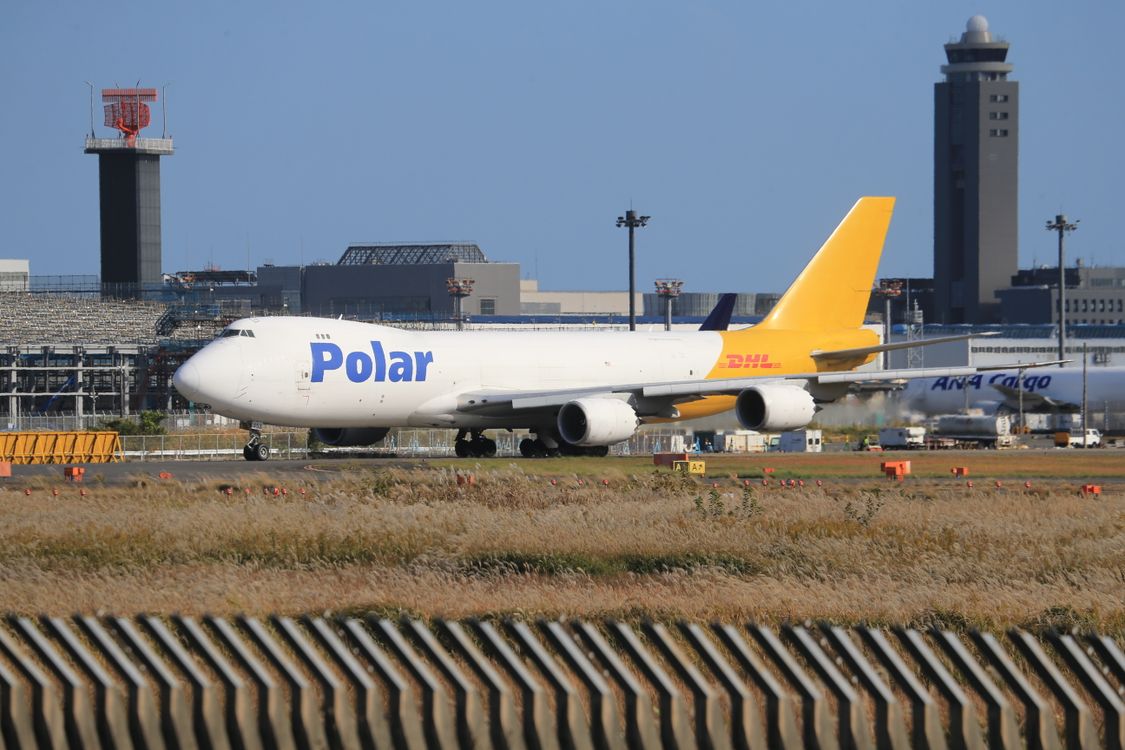
Narita International Airport, Tokyo’s principal international gateway — a third runway is under construction to raise annual capacity from 300,000 to 500,000 flight slots by FY2028–2029. Narita Airport official site
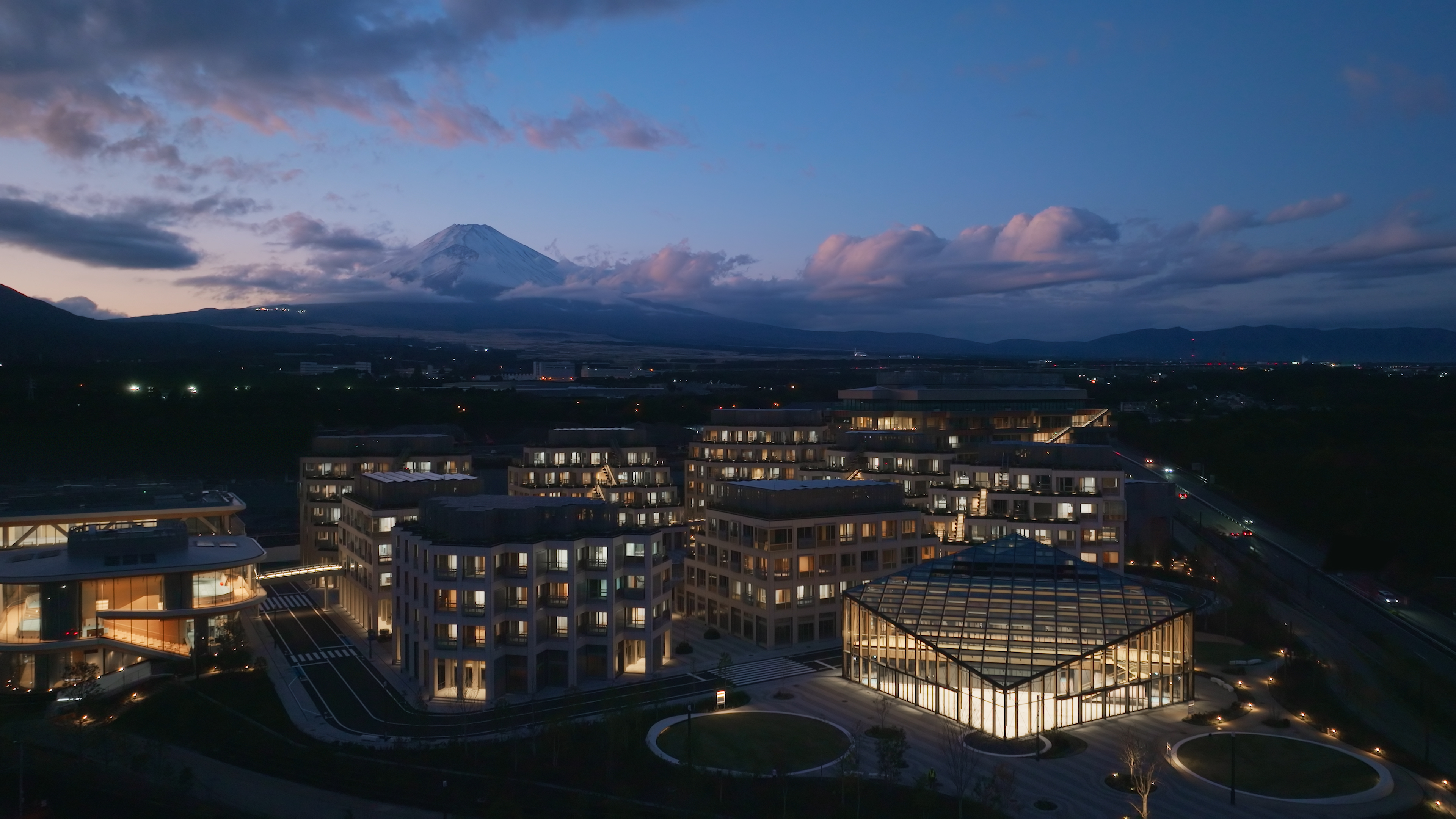
Toyota's Woven City: Smart Infrastructure and the Susono Premium
On 25 September 2025, Toyota launched its Woven City (ウーブン・シティ, ūbun shiti) prototype community in Susono, Shizuoka Prefecture (静岡県裾野市, shizuoka-ken susono-shi), on the site of a former Toyota factory at the base of Mount Fuji. Phase 1 covers 175 acres and has received Japan's first LEED Platinum certification for communities. An initial cohort of "Weavers" — drawn initially from Toyota Group employees and their families — are testing autonomous vehicles, robotic logistics, smart home systems, and clean energy infrastructure. Phase 1 is designed to accommodate approximately 300 residents at full occupancy. The city plans to open to the general public during FY2026, targeting 2,000 residents at full scale.
The property market implications of proximity to large technology employers are well-documented from analogous developments globally. The specific case for Susono is that the city is accessible via Shinkansen from Mishima Station (三島駅, mishima-eki) and sits within 90 minutes of central Tokyo. Land in Susono is priced at a significant discount to the broader Shizuoka–Tokyo Shinkansen corridor. The Woven City workforce will create residential demand, and partner companies embedding research staff near the site will compound that demand over a 5–10 year horizon. The full commercial stage of the city, with public residents and corporate research partners operating simultaneously, is only just beginning.
Shinkansen Extensions: Confirmed, Delayed, and Speculative
No infrastructure category generates more property speculation in Japan than Shinkansen (新幹線, shinkansen, "new trunk line") extensions, and none is more prone to premature optimism. A clear map of what is confirmed versus contested is essential for buyers pricing rail connectivity into a purchase.
What opened recently: The Hokuriku Shinkansen (北陸新幹線, hokuriku shinkansen) extension from Kanazawa to Tsuruga via Fukui Prefecture opened on 16 March 2024, adding Fukui City and the Kaga Onsen area to the bullet train network. Property markets in Fukui saw meaningful appreciation both before and after the opening, consistent with the historic pattern.
What is now suspended: The onward Hokuriku extension from Tsuruga to Kyoto — the rationale for the entire route — was suspended in December 2025. The Ministry of Land, Infrastructure, Transport and Tourism announced that construction in FY2026 will not proceed, following objections from Kyoto Prefecture and Kyoto City Council over environmental and economic impact. A route reconsideration process has been launched. The existing 2016-selected alignment runs via Obama City in Fukui Prefecture — this is the incumbent route under review, not a proposed alternative. The ruling LDP–Japan Innovation Party coalition is examining seven additional alignment options alongside the Obama–Kyoto plan. Any property values along the original route that were priced on a Shinkansen premium should be re-examined.
What is significantly delayed: The Chūō Shinkansen (中央新幹線, chūō shinkansen) maglev line between Tokyo and Nagoya is now unlikely to open before 2035, following multi-year construction delays in a Shizuoka tunnel section related to groundwater concerns. The 2027 opening target is officially abandoned. In March 2026, Shizuoka Prefecture's special committee approved all 28 of JR Central's proposed environmental conservation measures — clearing the primary permitting obstacle — though no revised opening timeline has yet been published. Buyers who purchased property in Sagamihara (相模原市, sagamihara-shi) and other planned Kanagawa stops on the assumption of near-term Chūō access now face an extended timeline.
What remains partial: The Nagasaki Shinkansen (西九州新幹線, nishi-kyūshū shinkansen, "West Kyushu Shinkansen") opened its initial segment between Nagasaki and Takeo Onsen in September 2022, but the full connection to the Kyushu Shinkansen main line via Shin-Tosu (新鳥栖, shin-tosu) remains unresolved due to a gauge dispute with Saga Prefecture (佐賀県, saga-ken). The current route requires passengers to change trains at Takeo Onsen, reducing the time-savings benefit.
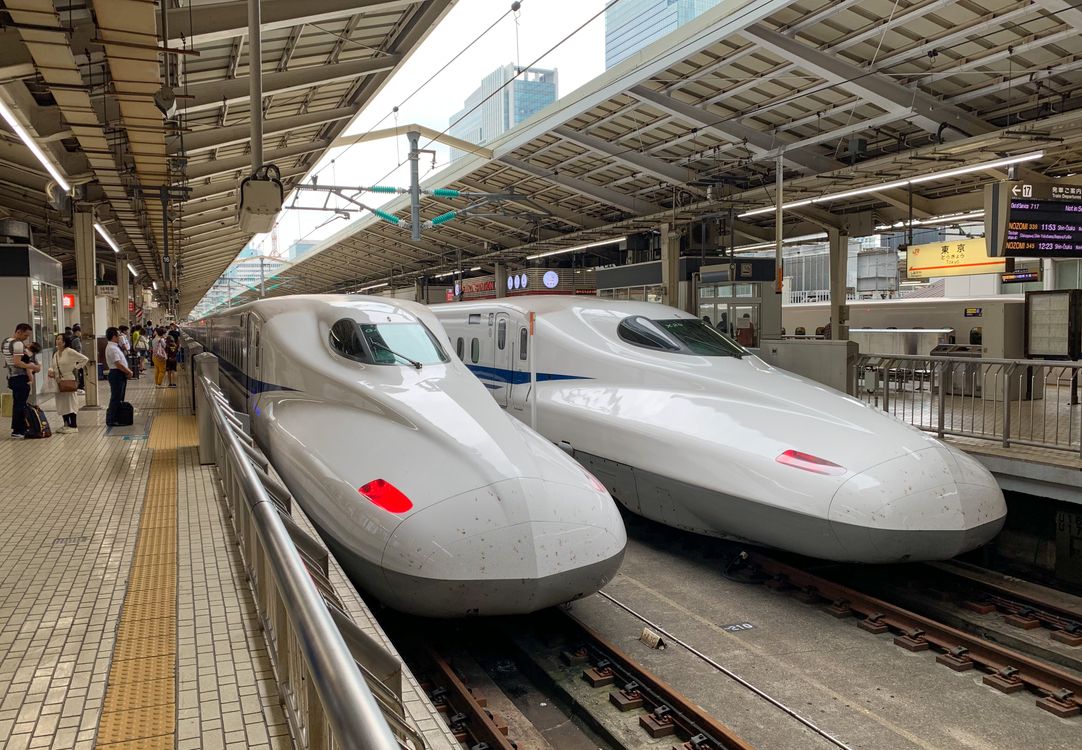
N700-series Shinkansen at Tokyo Station — Japan’s high-speed rail network is expanding, with new lines driving property demand in newly connected regions. Photo: Pexels
Positioning Around Projects: Timing and Strategy
The consistent lesson from Japan's project-driven property markets is that the best entry points arrive before the workforce does — not after the first land price survey confirms the trend. Chitose's 44% commercial land jump in 2026 is confirmation that early movers were right; it is not an entry signal for the immediate factory environs. The entry signal for Chitose's direct vicinity was 2022–2024, when the site had been selected and construction was beginning but the headlines hadn't yet caught up.
What remains actionable varies by project and property type:
- Kumamoto: Residential in Kumamoto City proper is mid-cycle. Phase 2 TSMC production begins in 2027, expanding the worker housing demand pool further. The city centre — rather than Kikuyo Town, where prices have already repriced sharply — offers access to the Silicon Island growth story at a price point that remains relatively accessible.
- Osaka: Central Osaka has appreciated substantially since the IR announcement, but the trajectory of a major international destination resort generating ¥760 billion in annual economic circulation is not typically fully priced until operations begin. The comparable developments in Macau and Singapore suggest continued appreciation through the opening period. The 2026–2027 window is arguably the last reasonable entry point before IR-specific premiums are well-established.
- Hakuba: The dynamic here is different from the industrial stories — it is a supply-constrained resort market accelerating under foreign capital attention. The Niseko case study — from "word is getting out" to "prices now comparable to international peers" — took roughly a decade. Hakuba buyers still appear to be in an earlier phase, but not an indefinite one.
- Fukuoka: Fundamentals here are structural rather than project-specific: young population, major transport hub, affordable entry relative to Tokyo and Osaka, and dual adjacent growth stories in urban redevelopment and semiconductor cluster proximity. The airport expansion reinforces an already strong underlying market.
- Chitose: Investor attention should now focus on the Sapporo commuter belt rather than Chitose town itself, where direct land prices have already reflected the Rapidus announcement. The technology execution risk should be priced into any Hokkaido purchase thesis.
A pattern common to all of these markets: buying one or two transit stops from the project epicentre often captures more of the appreciation without paying the speculative premium that has already been applied to the immediate vicinity. Kumamoto City versus Kikuyo Town. Narita City versus the airport perimeter. Greater Susono versus the Woven City site itself.

Amanohashidate (天橋立), Kyoto Prefecture — Japan's national land prices rose 2.8% in 2026, the strongest gain since 1992, with project-driven markets far outpacing the national average. Photo: Pexels
Navigating any of these markets effectively requires local legal and transactional expertise. Foreign buyers operating in active development zones face additional complexity: zoning changes in IR corridors, land use restrictions near industrial areas, and the standard due diligence requirements of any Japanese property transaction — all of which demand local knowledge and licensed representation. For this, working with a licensed agent who specialises in foreign buyer transactions, such as Teritoru, a Tokyo-based brokerage founded by licensed agent Ai Hioki, removes a significant layer of transactional risk and can clarify which markets are viable for a specific buyer profile and budget. An initial consultation via web conference is available for international buyers at any stage of their research. You can book a consultation with Teritoru here.
Sources
- GGRAsia: MGM Osaka Casino Resort Breaks Ground — $8.9B Project
- iGaming Business: Japan Develops Tech and Tourism Hub Around MGM Osaka
- Japan-Property: Kumamoto Real Estate Market and TSMC Expansion
- Bloomberg: TSMC Plants Fuel Japan's Biggest Land Price Rises for Second Year
- Patience Realty: Japan Land Prices 2026 — Hakuba and Chitose Lead
- Housing Japan: Japan Land Prices 2026 — MLIT Official Report Analysis
- Japan Real Estate Analytics: 2026 MLIT Urban Land Price Index for Investors
- Japan Aviation Hub: Fukuoka Airport 2024–2028 Midterm Expansion Plan
- Aviation A2Z: Narita Airport Third Runway Expansion — 2029 Deadline at Risk
- Toyota Global Newsroom: Woven City Official Launch, September 2025
- Japan Times: Hokuriku Shinkansen Extension to Kyoto — Construction Suspended
- Rapidus Corporation: IIM-1 Facility and 2nm Development News


