When most foreigners start browsing Japanese property listings, they gravitate toward standing structures — houses with character, walls they can touch, rooms they can imagine living in. But experienced buyers in the Japanese market know something that newcomers often learn the hard way: sometimes the smartest purchase is just the land beneath.
Japan stands out among developed nations in how sharply it separates the value of buildings from the land beneath them. While a house in most Western countries appreciates alongside its lot, Japanese residential buildings are widely considered depreciating assets — losing virtually all their assessed value within 20 to 25 years. The land, meanwhile, follows its own trajectory entirely. Understanding when to buy the plot alone, when to buy with a structure, and when demolition makes financial sense can save you millions of yen and years of headaches.
The Japanese Paradox: Why Buildings Depreciate to Zero
Japan's tax system treats residential buildings as depreciating assets with a fixed useful life. Wooden houses — which comprise the vast majority of residential structures — have a statutory useful life of 22 years for tax purposes. Reinforced concrete structures last 47 years on paper. After these periods, the building's assessed value drops to essentially zero, regardless of its actual physical condition.
This isn't just an accounting quirk — it shapes the entire market. Banks base mortgage valuations on remaining statutory life, meaning a 30-year-old wooden house is nearly impossible to finance. Buyers must either pay cash or finance only the land portion. Real estate agents routinely list older properties as "furuchi-tsuki tochi" (古家付土地 (furuka-tsuki tochi)) — literally "land with old house attached" — signaling that the building itself has no commercial value.
For foreign buyers, this creates a genuine strategic question at every purchase: are you buying for the building, or despite it?
When Buying Land Alone Is the Better Move
1. The Structure Needs Full Replacement Anyway
If a property inspection reveals serious structural issues — a compromised foundation, extensive termite damage through load-bearing members, or a roof system beyond repair — the math often favors buying vacant land instead. Renovating a fundamentally compromised structure can cost as much as or more than building new, without the warranty or modern seismic standards you'd get from new construction.
A useful benchmark: if renovation estimates exceed 50-60% of new construction costs for equivalent square footage, demolition and rebuild almost always makes more financial sense. New wooden construction in Japan currently runs ¥200,000-¥350,000 per square meter depending on specifications and location, while a thorough renovation of a severely deteriorated structure can easily reach ¥150,000-¥250,000 per square meter — and you're still left with old foundations and framing.
2. Asbestos-Era Construction (Pre-2006)
Buildings constructed before Japan's comprehensive asbestos ban in 2006 may contain asbestos-containing materials (ACMs) in insulation, floor tiles, roofing, and pipe lagging. Since April 2022, all demolition and renovation projects above a certain scale require a mandatory asbestos preliminary survey (事前調査 (jizen chōsa)) conducted by a qualified surveyor, with results reported to the prefectural government regardless of whether asbestos is found.
If asbestos is present, removal costs can add ¥5,000-¥30,000 per square meter to the demolition bill depending on the type and location of the materials. Level 1 materials (sprayed asbestos on structural steel) are the most expensive to remediate. For a modest rural house, asbestos remediation alone might add ¥500,000-¥2,000,000 to demolition costs.
When comparing a "land with old house" listing against a vacant lot nearby, factor in these potential asbestos costs. A vacant lot priced ¥500,000 higher than the equivalent old-house listing may actually be cheaper once demolition and remediation are included.
3. Non-Standard Construction You Can't Insure
Some older Japanese houses were built with non-standard methods or materials that modern insurers won't cover. Mixed construction (a concrete first floor with wooden upper floors), unusual foundation types, or structures that have been repeatedly modified without proper permits can be effectively uninsurable. For a property you plan to hold long-term, the inability to obtain fire insurance or earthquake insurance is a serious risk that vacant land simply doesn't carry.
4. You Want Maximum Design Freedom
Building from scratch on a vacant lot gives you complete control over orientation, layout, and structural system. In Japan, this matters more than you might expect. Proper south-facing orientation can reduce heating costs by 20-30% in snow country. Modern seismic engineering (shin-taishin, compliant with the current Building Standards Act) provides dramatically better earthquake protection than pre-1981 construction. And you can specify exactly the insulation, ventilation, and moisture management systems appropriate for your climate zone — critical in a country that ranges from subarctic Hokkaido to subtropical Okinawa.
New construction framing in Japan — when a structure is beyond repair, buying just the land and building fresh can be the smarter financial move. Photo: Unsplash
The True Cost of Demolition
If you're considering buying a property with a standing structure and demolishing it, you need realistic numbers. Demolition costs in Japan have risen approximately 12% since 2023 due to labor shortages and increasing waste disposal fees.
Current Demolition Cost Ranges (2025-2026)
Costs vary significantly by structure type, size, and location:
- Wooden house (木造 (mokuzō)): ¥30,000-¥50,000 per tsubo (approximately ¥9,000-¥15,000 per square meter). A typical 30-tsubo (100㎡) wooden house costs ¥900,000-¥1,500,000 to demolish.
- Light steel frame (軽量鉄骨): ¥40,000-¥65,000 per tsubo. A 30-tsubo house runs ¥1,200,000-¥1,950,000.
- Reinforced concrete (RC/鉄筋コンクリート): ¥50,000-¥80,000 per tsubo. The same footprint costs ¥1,500,000-¥2,400,000.
Hidden Costs That Blow Budgets
The per-tsubo rate is just the starting point. Several factors can push real costs significantly higher:
- Access difficulty: If heavy machinery can't reach the site — common with properties on narrow rural roads or hillside locations — manual demolition increases costs by 30-50%.
- Asbestos survey and removal: Mandatory survey plus removal if found (see above).
- Underground structures: Old septic tanks (浄化槽 (jōkasō)), wells, buried foundations from previous structures. Removal adds ¥200,000-¥500,000 per item.
- Waste separation: Japan requires meticulous waste separation during demolition. Mixed-material buildings (tile, wood, metal, concrete) cost more to process.
- Tree and vegetation removal: Overgrown lots with mature trees can add ¥100,000-¥500,000 depending on the number and size of trees.
- Neighbor notification: While not a direct cost, demolition in residential areas requires notifying neighbors and often restricting work hours, extending the project timeline and increasing labor costs.
Budget rule of thumb: Take the contractor's base quote and add 20-30% for contingencies. Surprises during demolition — buried tanks, contaminated soil, unexpected structural elements — are more common than clean jobs.
The Tax Trap: Why Some Owners Won't Demolish
Here's a critical piece of the land-vs-house puzzle that catches many foreign buyers off guard: Japan's property tax system actively penalizes vacant land.
Under the Residential Land Special Provision (住宅用地の特例), land with a residential structure on it receives significant tax reductions:
- Small-scale residential land (up to 200㎡ per dwelling): Fixed asset tax base reduced to 1/6 of assessed value. City planning tax base reduced to 1/3.
- General residential land (portion exceeding 200㎡): Fixed asset tax base reduced to 1/3. City planning tax base reduced to 2/3.
Once you demolish the house and the land becomes vacant, you lose these reductions entirely. Your fixed asset tax bill can jump by 3 to 6 times overnight.
A Concrete Example
Consider a 200㎡ plot in a suburban area with a land assessment of ¥10,000,000:
- With house standing: Fixed asset tax = ¥10,000,000 × 1/6 × 1.4% = approximately ¥23,300 per year
- After demolition (vacant lot): Fixed asset tax = ¥10,000,000 × 1.4% = ¥140,000 per year
That's a difference of roughly ¥117,000 per year — or about ¥9,700 per month. If you plan to hold vacant land for two or three years before building, the additional tax alone could total ¥234,000-¥351,000. This is why so many Japanese landowners leave dilapidated houses standing rather than demolishing them, and why Japan has over 9 million vacant homes.
The 2015 Special Measures Act Complication
Japan's Vacant House Special Measures Act (空家等対策の推進に関する特別措置法) changed the calculus somewhat. Under this law, municipalities can designate severely deteriorated vacant houses as "Specified Vacant Houses" (特定空家 (tokutei akiya)), which strips them of the residential land tax reduction. A 2023 amendment further added a "Management-Inadequate Vacant House" (管理不全空家) designation that can trigger the same tax penalty for houses that aren't yet dangerous but are poorly maintained.
If the house on a property you're considering buying has already been — or is likely to be — designated as a specified vacant house, the tax advantage of keeping it standing disappears. In that case, a vacant lot may actually be the tax-neutral choice, and you avoid the liability of owning a designated problem structure.
Building Restrictions That Can Make or Break a Land Purchase
Not all land is created equal in Japan. Before buying any plot — whether vacant or after demolition — you need to verify exactly what you can build on it. Several regulatory layers determine buildability.
The 2-Meter Road Access Rule (接道義務)
Japan's Building Standards Act requires that any building lot must have at least 2 meters of frontage on a road that is at least 4 meters wide. This sounds simple, but it eliminates a surprising number of lots from development:
- Flag lots (旗竿地) with narrow access paths may not meet the 2-meter minimum.
- Lots on old narrow roads (less than 4 meters wide) require a setback (セットバック) from the road center, reducing your buildable area. If the road is 3 meters wide, you must set back 50 centimeters from the center — effectively donating a strip of your land to future road widening.
- Lots with no road access at all are classified as saikenchiku fuka (再建築不可) — rebuilding prohibited. You can renovate an existing structure, but you cannot demolish and rebuild. If you buy such a lot as vacant land, you may not be able to build anything at all.
Critical warning: Saikenchiku fuka properties are typically priced 30-50% below comparable buildable land — for good reason. As vacant land, they're essentially unbuildable. As properties with standing structures, they can only be renovated, never replaced. Foreign buyers unfamiliar with this restriction have purchased land at "bargain" prices only to discover they couldn't obtain a building permit.
Zoning: Urbanization Promotion vs. Control Areas
Japan divides land into two fundamental categories under the City Planning Act (都市計画法):
- Urbanization Promotion Areas (市街化区域 / shigaika kuiki): Designated for development. Building is straightforward, subject to the 13 standard land-use zones (用途地域 (yōto chiiki)) that determine what type and scale of building you can construct. Most residential purchases should be in these areas.
- Urbanization Control Areas (市街化調整区域 / shigaika chosei kuiki): Development is restricted in principle. Building new residential structures requires special permission and is often denied. If you buy vacant land in a control area, you may find it nearly impossible to obtain a building permit.
Many cheap rural and suburban lots that look attractive to foreign buyers sit in urbanization control areas. The low price isn't a bargain — it reflects the severe building restrictions. Always verify the zoning designation before purchasing.
Agricultural Land Restrictions
Land classified as agricultural (農地 / nōchi) cannot be used for residential construction without obtaining conversion permission (農地転用 / nōchi tenyō) from the local Agricultural Committee. This process can take 3-6 months and is not guaranteed — especially for prime farmland (Type 1 agricultural land), which is essentially unconvertible.
Type 2 and Type 3 agricultural land — typically in areas near train stations or within urbanization promotion zones — can usually be converted, but the process requires demonstrating a concrete building plan and timeline. You can't simply buy agricultural land and hold it speculatively.
Building Coverage and Floor Area Ratios
Every lot in a designated use zone has two critical ratios:
- Building Coverage Ratio (建ぺい率 / kenpei-ritsu): The maximum percentage of lot area the building footprint can cover. Typically 40-60% in residential zones.
- Floor Area Ratio (容積率 / yōseki-ritsu): The maximum total floor area as a percentage of lot area. A 200% FAR on a 100㎡ lot allows up to 200㎡ of total floor space across all stories.
These ratios directly determine how much house you can build. A 150㎡ lot with a 40% BCR and 80% FAR allows a maximum footprint of 60㎡ and maximum total floor area of 120㎡. If you need a 150㎡ home, this lot won't work regardless of price.
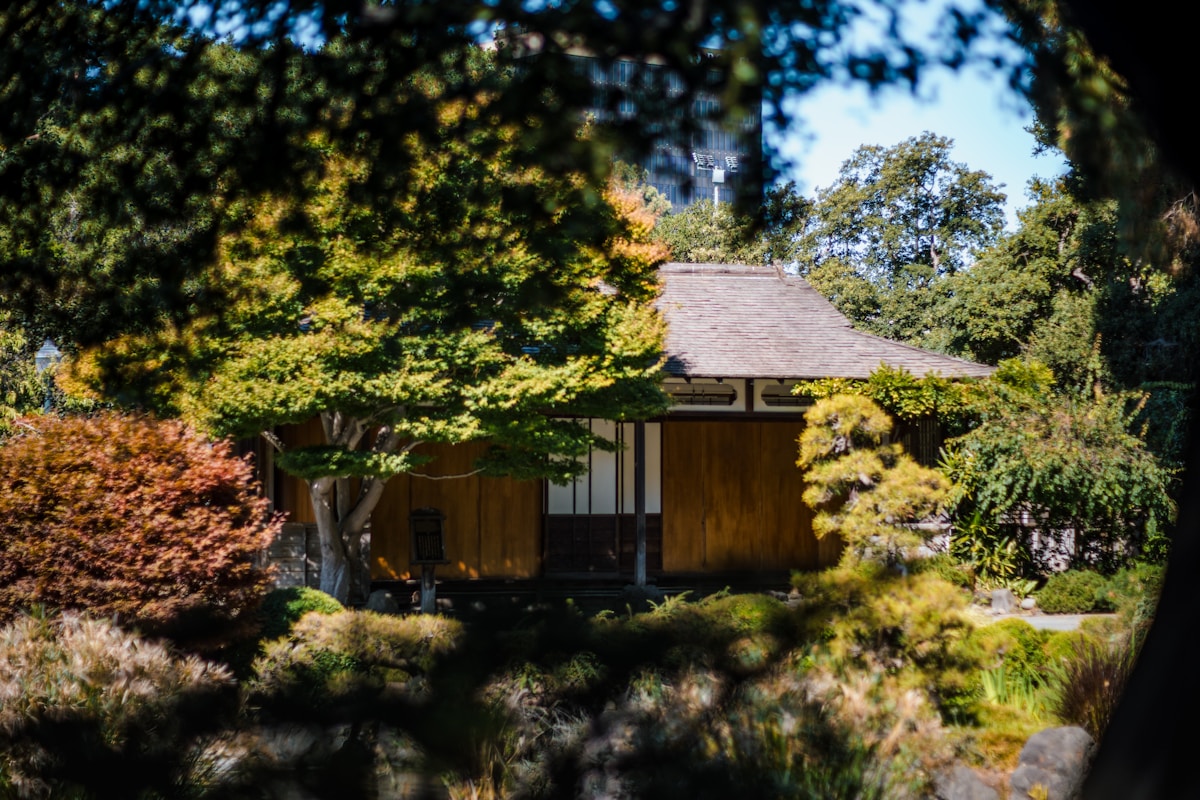
A well-maintained traditional Japanese home with mature gardens — some houses are worth preserving despite the building's zero tax valuation. Photo: Unsplash
Land Value Retention: Urban vs. Rural Realities
One major argument for buying land rather than structures is that land retains (or gains) value while buildings depreciate. But this depends entirely on location.
The Urban Story
Japan's national land prices have risen for four consecutive years, with 2025 seeing the fastest pace of increase in 34 years. In Tokyo's 23 wards, average residential land prices reached ¥771,600 per square meter, up over 10% year-on-year. Major cities like Osaka, Fukuoka, and Sapporo have seen sustained 5-8% annual growth. For 2026, forecasts project continued increases of 5-6% in major urban centers.
In these markets, land is genuinely an appreciating asset. Buying a vacant lot in a desirable urban or suburban neighborhood and holding it is a viable investment strategy — though you'll pay full property tax without the residential land reduction.
The Rural Reality
Outside major metropolitan areas, the picture reverses sharply. Japan's population is declining and urbanizing simultaneously. Rural municipalities are losing residents at accelerating rates, and land values reflect this exodus. Many rural lots are effectively worth only their tax burden — and some owners would give them away just to stop paying taxes.
The polarization is stark: while central Tokyo land prices surge, some rural prefectures have seen decades of continuous decline. Buying rural land as a pure investment — hoping it will appreciate — is a strategy with history firmly against it. The value of rural land lies in what you do with it, not in holding it.
The Suburban Sweet Spot
Suburban areas within commuting distance of major cities — particularly those near train stations — represent the middle ground. Land values in these areas have stabilized or modestly increased, especially in towns along major rail lines. A vacant lot within a 10-minute walk of a station on a line connecting to a major city holds value fundamentally differently from a lot in a remote mountain village.
For buyers considering land purchase, the train station proximity test remains the single most reliable predictor of long-term value retention in the Japanese market.
The Financial Decision Framework
Here's a practical framework for deciding between land and house in the Japanese market:
Step 1: Calculate the True Land Value
For properties listed as "land with old house," determine what the land alone is worth. Check the publicly posted land values (公示地価 / kōji chika) for your area — these are published annually by the Ministry of Land, Infrastructure, Transport and Tourism and are searchable online. Compare with recent transaction prices for vacant lots in the same neighborhood.
Step 2: Estimate Demolition Costs
Get at least two demolition quotes. Add the contingency buffer. Include asbestos survey costs (¥30,000-¥100,000 for the survey alone). Factor in any underground structures visible in the property documents.
Step 3: Compare Total Acquisition Costs
Run two scenarios side by side:
Scenario A — Buy land with old house, demolish, build new:
- Purchase price of land-with-house listing
- Plus demolition costs (including contingency)
- Plus new construction costs
- Plus the tax increase during the gap period between demolition and new construction completion
- Minus any subsidies for demolition (many municipalities offer ¥200,000-¥1,000,000 for demolishing vacant houses)
Scenario B — Buy vacant land, build new:
- Purchase price of vacant lot
- Plus any site preparation (grading, retaining walls, soil improvement)
- Plus new construction costs
- Plus full property tax from day one (no residential land reduction until house is complete)
Scenario C — Buy house, renovate:
- Purchase price including structure
- Plus renovation costs
- Plus ongoing maintenance for aged systems not addressed in renovation
- Minus the tax benefit of keeping the residential structure standing throughout
Step 4: Factor in Time Value
Demolition adds 2-4 weeks to your timeline. New construction takes 4-8 months for a standard wooden house. During this entire period, you own land that's costing you full property tax. If you're renting elsewhere while building, add those housing costs to the total.
Step 5: Check for Municipal Subsidies
Many Japanese municipalities offer financial incentives that can tip the calculation:
- Demolition subsidies (解体補助金): Typically ¥200,000-¥1,000,000, sometimes covering up to 50% of demolition costs for designated vacant houses. Requirements vary by municipality — some restrict eligibility to houses that have been vacant for a specific period or are in designated zones.
- New construction incentives: Some municipalities in depopulating areas offer land for free or near-free if you commit to building and residing within a set period. These programs (定住促進 / teijū sokushin) sometimes include construction subsidies of ¥500,000-¥3,000,000.
- Renovation subsidies: Often more generous than demolition subsidies — some municipalities offer up to ¥5,000,000 for seismic retrofitting of older houses, which can make renovation dramatically more cost-effective than demolition and rebuild.
Soil and Ground Conditions: The Invisible Risk
One advantage of buying a property with an existing house is proof of concept — the ground has already supported a structure. Vacant land doesn't offer this assurance.
Japan's varied geography includes areas with soft alluvial soil, former rice paddies (common even in suburban areas), filled land, and slope-adjacent lots prone to subsidence. A geotechnical survey (地盤調査 / jiban chōsa) for a residential site costs ¥50,000-¥100,000 using the Swedish sounding method — and it's money well spent.
If the survey reveals poor ground conditions, ground improvement work (地盤改良 / jiban kairyō) can add ¥500,000-¥2,000,000 to construction costs depending on the method required. Steel pipe piles for deeply soft ground can push costs even higher. This is one area where buying land with an existing house (even one you plan to demolish) provides useful information — you can see whether the existing structure shows signs of differential settlement, which indicates ground problems.
Infrastructure: What's Under the Surface
Vacant lots may or may not have existing utility connections. Before purchasing, verify:
- Water supply (上水道): Is there a connection to municipal water? If not, drilling a well or extending the municipal line can cost ¥300,000-¥1,500,000.
- Sewage (下水道): In rural areas, many properties rely on individual septic systems (浄化槽 (jōkasō) / jōkasō). Installing a new septic system costs ¥800,000-¥1,500,000, though many municipalities subsidize 50-90% of the cost.
- Electricity: Generally available everywhere, but extending power lines to remote lots can incur connection fees.
- Gas: City gas (都市ガス) is only available in urban areas. Rural properties use propane (LP gas), which costs roughly double per unit. This is a running cost difference, not just a one-time connection issue.
Properties with existing houses typically have all utility connections in place, even if they need upgrading. This is a genuine advantage over raw vacant land, particularly in rural areas.
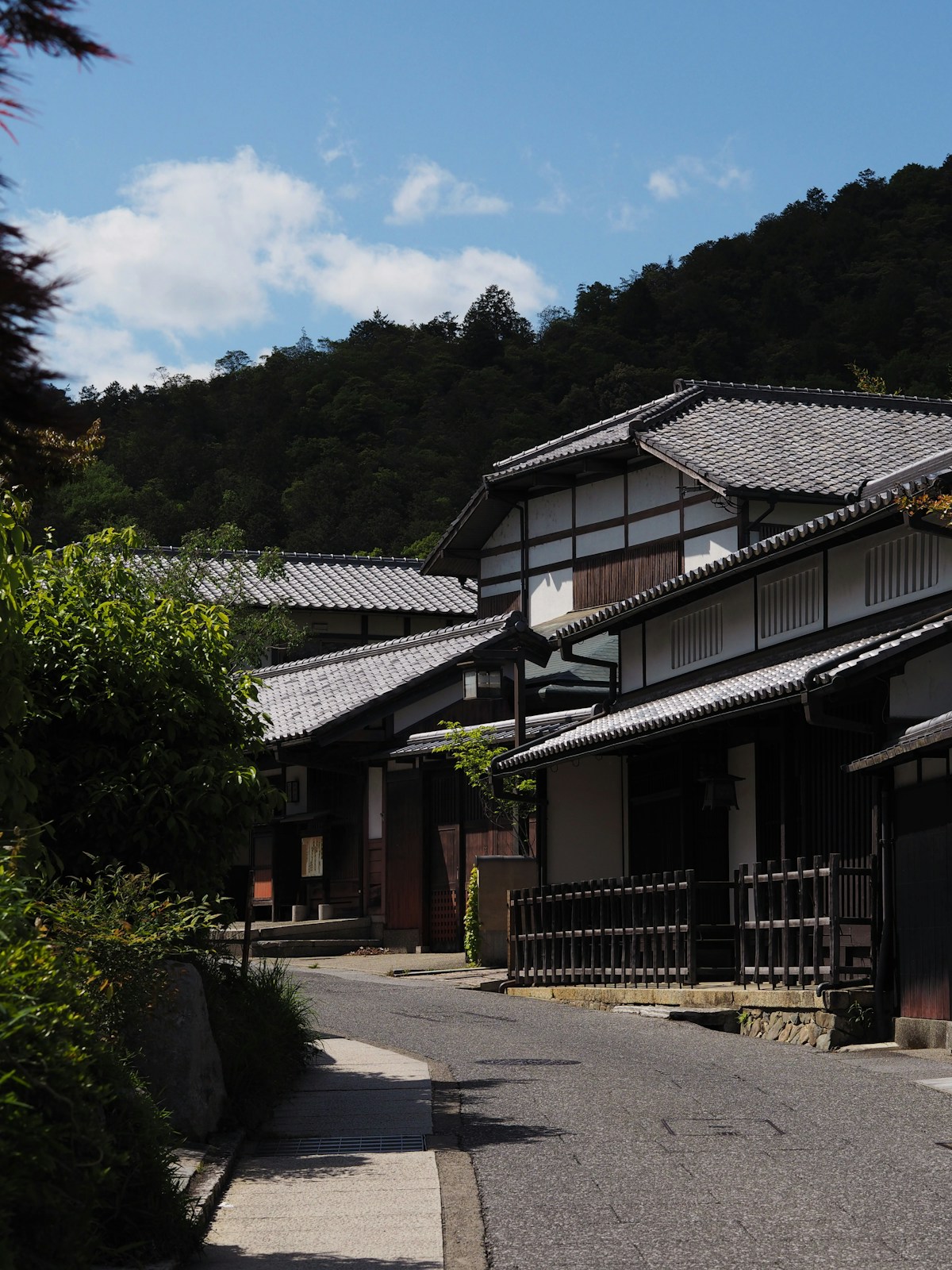
A quiet Japanese residential street — in urban areas, the land beneath these homes often holds more value than the structures themselves. Photo: Chloe Lefleur / Unsplash
Legal Due Diligence for Land Purchases
Whether buying vacant land or a property you plan to demolish, the legal due diligence is similar but critical:
- Title search (登記簿謄本): Verify ownership, check for liens (抵当権), easements (地役権), and any third-party rights. Land in Japan sometimes has complex inheritance situations with multiple unresolved owners.
- Boundary confirmation (境界確認): Japan's cadastral system (公図) is notoriously imprecise for older lots. A professional land surveyor (土地 (tochi)家屋調査士) can perform a boundary survey, which costs ¥300,000-¥800,000 but prevents disputes with neighbors.
- City planning designation: Confirm the exact zoning, use district, building coverage ratio, floor area ratio, height limits, and any special district designations (防火地域, 風致地区, etc.).
- Hazard zone status: Check whether the land falls in a designated landslide zone (土砂災害警戒区域), flood zone (浸水想定区域), or tsunami evacuation area. These designations can affect insurance costs, building requirements, and resale value.
- Soil contamination history: Former gas stations, factories, or dry cleaners may have contaminated soil. Remediation costs can run into tens of millions of yen.
For foreign buyers working through these checks, a licensed agent who understands the specific requirements is essential. Teritoru, our licensed partner agent, specializes in helping foreign buyers through exactly this kind of due diligence — from verifying building restrictions to confirming boundary lines and zoning designations. If you're considering a land purchase, booking a consultation before committing can prevent costly mistakes that are difficult to unwind after closing.
Five Scenarios Where Land Wins
To make this concrete, here are five common situations where buying just the plot makes more sense:
- The ¥1,000,000 "akiya" that needs ¥8,000,000 in renovation: You're really paying ¥9,000,000 for a house that will never meet modern seismic or insulation standards. If the land is worth ¥3,000,000 and new construction costs ¥7,000,000, you'd pay ¥10,000,000 total for a modern house with warranties — only ¥1,000,000 more, with decades of lower maintenance costs ahead.
- The hillside lot with views but a rotting house blocking them: A vacant lot lets you orient the new build to maximize the view. The existing house was probably built with 1970s priorities (south-facing rooms for laundry drying, not panoramic windows).
- The suburban lot near a new train station: If a new station or line extension is planned (Japan regularly builds new rail infrastructure), the land will appreciate. The 40-year-old house on it won't.
- The double lot where you only need half: Buy the land, subdivide, build on one lot, sell the other. You can't easily subdivide when there's a house straddling the future lot line.
- The lot in a neighborhood where all houses are new: If surrounding properties have already been rebuilt, an old house drags down the streetscape and your future resale value. Starting fresh aligns with the neighborhood trajectory.
Three Scenarios Where the House Wins
And three where keeping the structure makes more sense:
- Post-2000 construction in decent condition: A house built after the 2000 Building Standards Act revision (which strengthened seismic requirements beyond the 1981 standard) may have 15+ years of useful life remaining. Demolishing it to build essentially the same thing is waste.
- Traditional construction you can't replicate: Genuine timber-frame houses (伝統構法) with hand-joined beams, earthen walls, and quality wood species cost far more to build today than they did originally — if you can find craftspeople capable of the work at all. These structures are increasingly valued for their character and can be earthquake-retrofitted.
- Tax-sensitive timing: If you need to hold the property for several years before building (maybe you're not ready to relocate yet), keeping the house standing preserves the 1/6 tax reduction. Even a house that's essentially worthless as a dwelling can save you ¥100,000+ annually in property taxes while you plan.
The Buyer's Checklist: Land Purchase Edition
Before committing to a land purchase in Japan, confirm every item on this list:
- ☐ Zoning designation verified (urbanization promotion area, not control area)
- ☐ Road access confirmed (2+ meters frontage on 4+ meter road)
- ☐ Not classified as saikenchiku fuka (rebuilding prohibited)
- ☐ Not agricultural land — or conversion permission obtainable
- ☐ Building coverage ratio and floor area ratio support your intended building size
- ☐ No hazard zone designations that affect buildability or insurance
- ☐ Utility connections verified (water, sewer/septic, electricity)
- ☐ Boundary survey completed or budgeted
- ☐ Geotechnical survey completed or budgeted
- ☐ Title clear with no unresolved liens or inheritance issues
- ☐ Demolition subsidies researched (if buying land with old house)
- ☐ Property tax increase calculated (if demolishing existing structure)
- ☐ Total cost comparison completed (land+build vs. house+renovate)
Making Your Decision
The land-vs-house decision in Japan ultimately comes down to three factors: the condition and age of the existing structure, the building restrictions on the land, and the total cost of each path to your desired outcome.
Don't fall into the trap of assuming that cheaper always means better value. A vacant lot at ¥500,000 in a rural urbanization control area where you can't build is infinitely more expensive than a ¥3,000,000 lot in a suburban promotion area where you can. Similarly, a "free" akiya that needs ¥10,000,000 in renovation is not free at all.
Understanding the regulatory framework, running the real numbers (including taxes, demolition, and infrastructure), and verifying buildability before purchase separates successful foreign buyers from those who end up with expensive lessons.
Whether you choose land or house, the key is matching your purchase to your actual plans — not to the listing's asking price. In Japan's real estate market, the smartest investment isn't always the one with the lowest sticker price. Sometimes it's the empty lot next door.