You saved a property. Maybe you even saved a dozen. They're sitting there in your dashboard, little digital bookmarks of possibility — a farmhouse in Chiba, a kominka in Niigata, a suspiciously cheap plot in Shimane. Now what?
This is where most guides abandon you. They'll tell you foreigners can buy property in Japan (true), that there are no restrictions on land ownership (also true), and that the process is "straightforward" (debatable). What they won't tell you is what actually happens between clicking "enquire" and holding the keys — the specific sequence of documents, deposits, meetings, and legal steps that turn a saved listing into a property you own.
Here's that process, step by step, with the Japanese terms you'll encounter, the costs at each stage, and the mistakes that trip up foreign buyers most often.
Step 1: Making an Enquiry (and What Happens Behind the Scenes)
When you enquire about a property through a platform like Akiya Japan, your request goes to a licensed real estate agent — in Japan, that's a takkengyōsha (宅建業者 (takken gyōsha)). This isn't optional. Japanese law requires that real estate transactions be handled by licensed professionals.
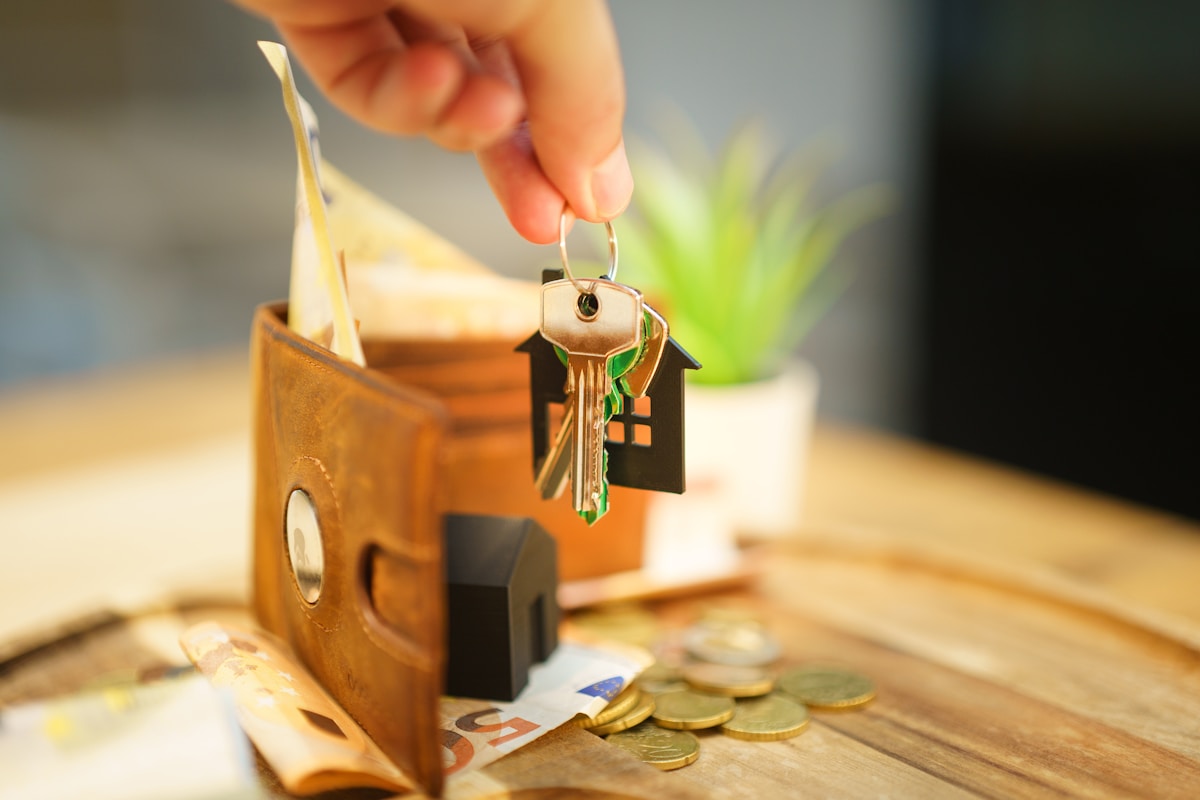
The moment every buyer works toward — receiving the keys to your new property in Japan — Photo by Jakub Zerdzicki on Unsplash
Your agent will contact the seller or the seller's agent and gather current information: is the property still available? Has the price changed? Are there any known issues? For akiya bank listings, this means contacting the municipality directly, which can take longer than private listings — sometimes a week or more just to confirm availability.
What to expect at this stage:
- A response within 2–5 business days for private listings, potentially longer for akiya bank properties
- Basic property details you won't find online: current condition photos, neighbourhood context, any known defects
- An honest assessment of whether the property matches your stated needs
If you're working with an agent who specialises in foreign buyers — like Teritoru, our licensed partner agent — this initial communication happens in English. For akiya banks that only operate in Japanese, having a bilingual agent isn't a luxury; it's a necessity.
Step 2: Viewing the Property (or Deciding Not To)
For properties over ¥5 million, an in-person viewing is strongly recommended. For cheaper akiya, some buyers make offers based on photos and agent reports alone — particularly if they've already bought in Japan before. Neither approach is wrong, but they carry different risks.
If you visit
Your agent will arrange a viewing, typically scheduling multiple properties in the same region over 1–2 days. During the viewing, pay attention to things photos don't capture: the smell of damp or mould, the condition of the roof from ground level, whether the neighbourhood feels inhabited or abandoned, and the state of the road access. Bring our Akiya Inspection Checklist — it covers everything from foundation cracks to septic tank status.
If you don't visit
You're relying entirely on your agent's assessment. A good agent will send video walkthroughs, detailed condition reports, and honest opinions about renovation costs. They should also flag deal-breakers: structural issues, boundary disputes, access problems, or environmental hazards like flood zones. We covered this scenario in depth in Can You Buy a House in Japan Without Visiting?
Step 3: The Offer — Submitting a Purchase Application
Found the one? The next step is a formal purchase application, called a kōnyū mōshikomisho (購入申込書 (kōnyū mōshikomi-sho)) or kaitsuke shōmeisho (買付証明書 (kaitsuke shōmeisho)). This is a written document stating your intent to buy and the price you're offering.
Key things to know about this document:
- It's non-binding. Unlike many Western countries, this letter of intent doesn't legally commit you to the purchase. You can walk away without penalty at this stage.
- It starts the negotiation. If you're offering below asking price, this is where that conversation begins. For akiya, discounts of 10–20% off asking price are common; for desirable properties in good condition, expect less flexibility.
- It signals seriousness. Sellers — especially elderly owners disposing of inherited property — want to know you're real. The application shows you've done enough research to make a specific offer.
- No money changes hands yet. Unlike some countries that require a deposit with the offer, Japan's purchase application is purely documentary.
Your agent submits this to the seller's side, and negotiation begins. This back-and-forth typically takes 1–3 weeks, depending on how many parties are involved. Inherited properties with multiple heirs can take longer — sometimes much longer.
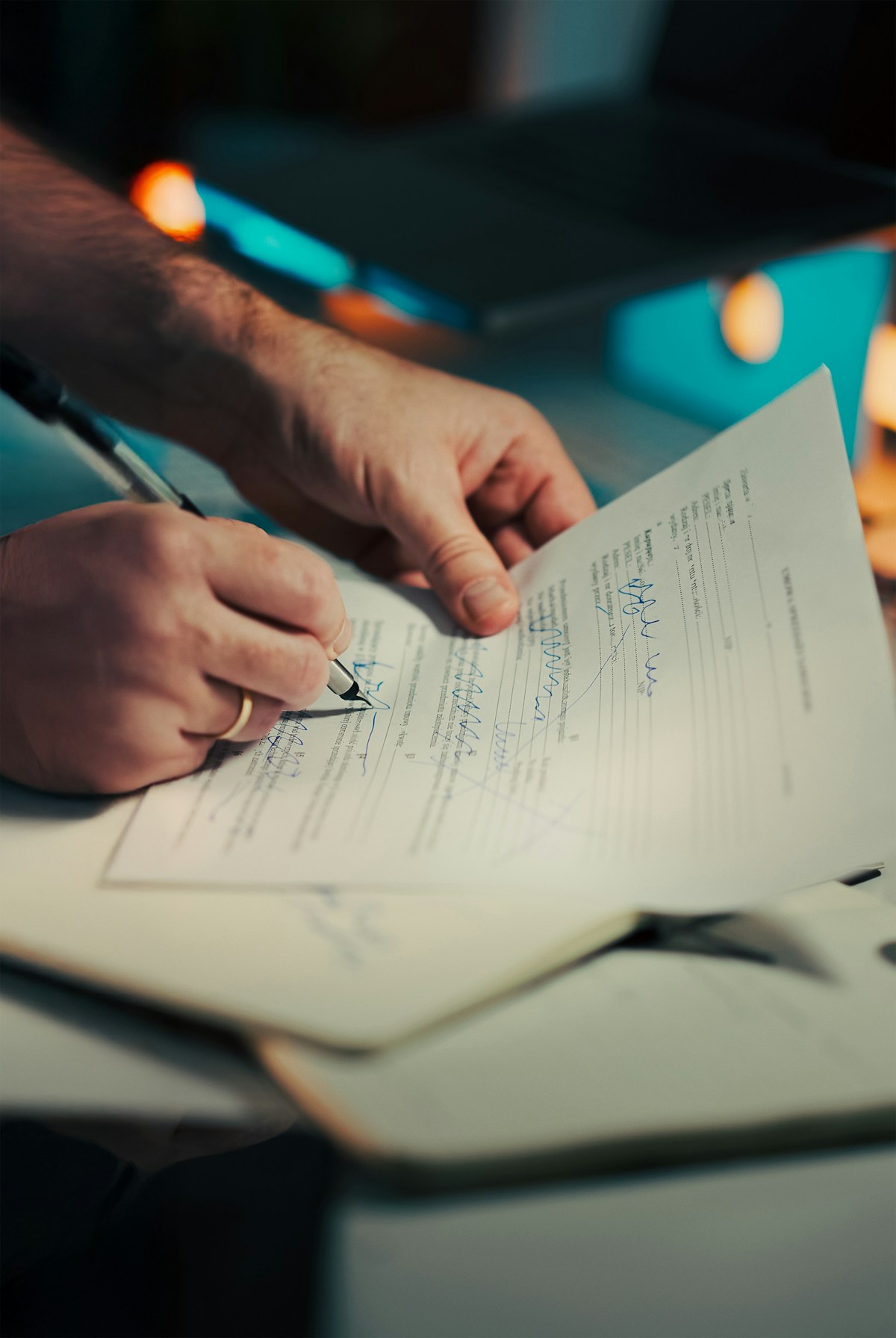
Contract signing in Japan involves detailed documentation — the Important Matters Explanation alone can run 20-100 pages — Photo by Jakub Zerdzicki on Unsplash
Step 4: The Important Matters Explanation
This is where Japan's property buying process diverges significantly from most Western countries, and it's the step that protects you most as a buyer.
Once you and the seller agree on price and terms, but before you sign any contract, you receive the jūyō jikō setsumeisho (重要事項説明書 (jūyō jikō setsumei-sho)) — the Explanation of Important Matters. This is a comprehensive disclosure document, often running 20–100 pages, that covers everything material about the property and the transaction.
What's in it
- Legal status of the property: ownership history, registered rights, any liens or encumbrances
- Land use zoning: what you can and cannot build, height restrictions, setback requirements
- Infrastructure: water supply (municipal or well), sewage (connected or septic), gas, electricity
- Road access: whether the property fronts a road that meets the 4-metre minimum under the Building Standards Act, which affects your ability to rebuild
- Known defects: structural issues, past flooding, termite damage, soil contamination
- Hazard zone designations: landslide risk areas, flood zones, earthquake fault proximity
- Community rules: neighbourhood association fees, shared maintenance obligations
- Contract terms: payment schedule, handover date, penalty clauses
A licensed real estate professional (takken shi, 宅建士 (takkenshi)) must explain this document to you verbally — not just hand it over. This is a legal requirement under Japan's Real Estate Brokerage Act. For foreign buyers, this explanation should happen with translation support. If your agent doesn't arrange this, ask for it.
The Important Matters Explanation is your single best protection against buying a problem property. Read every page. Ask about anything you don't understand. If something seems off — unclear boundaries, unresolved inheritance claims, unexpected usage restrictions — this is the time to raise it, not after you've signed.
Step 5: Signing the Purchase Contract
With the Important Matters understood and accepted, you move to the purchase contract itself — the baibai keiyakusho (売買契約書). This is the binding agreement.
What happens at the contract signing
- Both parties review the contract terms — price, payment schedule, handover date, any special conditions (like the seller clearing remaining possessions)
- You pay the earnest money deposit — called tetsukekin (手付金), typically 5–10% of the purchase price. For a ¥3,000,000 property, that's ¥150,000 to ¥300,000
- Stamp duty is paid — revenue stamps (inshi, 印紙) are affixed to the contract. For properties under ¥10 million, this is ¥5,000–¥10,000
- Both parties sign and stamp — in Japan, this means affixing your personal seal (inkan) or, for foreigners without a registered seal, signing with a notarised signature
What the earnest money means
The deposit isn't just a gesture of good faith — it has legal teeth. Under Japanese contract law:
- If you (the buyer) withdraw after signing, you forfeit the deposit
- If the seller withdraws, they must return your deposit plus pay you an equal amount (effectively double your deposit back)
- This "deposit forfeiture" system replaces the Western concept of specific performance — neither party can force the other to complete the transaction, but walking away costs money
For very cheap akiya (under ¥1,000,000), the deposit amount is sometimes negotiated lower — ¥50,000 or ¥100,000 isn't unusual. Your agent handles this negotiation.
Documents you'll need
- Passport (for identity verification and the new nationality declaration requirement)
- Signature certificate — if you don't have a Japanese registered seal (jitsuin), you'll need a notarised signature certificate. Your home country's embassy or consulate in Japan can provide this, or you can get one notarised before travelling
- Proof of address — for non-residents, this is typically a certificate from your home country's government or a notarised statutory declaration
- Residence card (zairyū kādo) if you're a resident of Japan
Step 6: The Waiting Period
Between contract signing and settlement, there's typically a 4–8 week gap. This is when several things happen simultaneously:
- The judicial scrivener prepares registration documents — more on this in Step 7
- You arrange the remaining funds — international wire transfers to Japan need planning. Bank processing times, currency conversion, and compliance checks can take 3–7 business days. Factor in exchange rate volatility: a 2% swing on a ¥10,000,000 purchase is ¥200,000
- The seller fulfils any agreed conditions — clearing possessions, completing minor repairs, resolving boundary confirmations
- Due diligence continues — if you've arranged a building inspection (not standard in Japan but increasingly common for foreign buyers), it happens during this period
For buyers paying cash from overseas, this is the most logistically demanding phase. You need a Japanese bank account or a clear plan for how the settlement payment will be made. Some buyers use their agent's trust account; others open a non-resident bank account (possible but bureaucratically painful). Services like Wise or Revolut can handle smaller transfers at better exchange rates, though for large sums, traditional bank transfers remain standard.
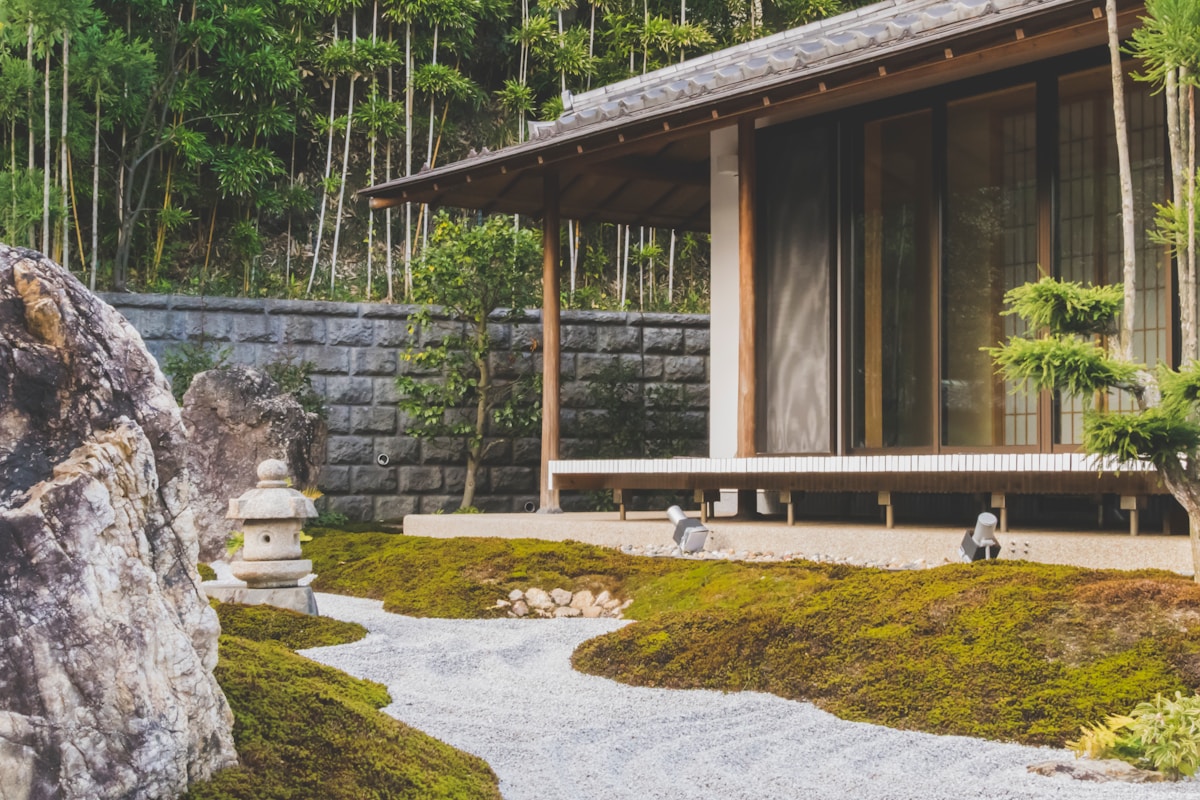
A Japanese home with traditional design — what was once a saved listing becomes your own property — Photo by pepe nero on Unsplash
Step 7: Settlement Day — The Closing
This is the day ownership actually transfers. Settlement — called kessai (決済) — typically takes place at a bank or the office of the judicial scrivener.
Who's in the room
- You (or your authorised representative with power of attorney)
- The seller
- Both agents
- The judicial scrivener (shihō shoshi, 司法書士 (shihō shoshi)) — the legal professional who handles property registration
What happens
- The judicial scrivener verifies all documents — identity, ownership records, absence of undisclosed liens
- You pay the remaining balance — the full purchase price minus the earnest money already paid
- You pay all closing costs — agent fees, registration taxes, scrivener fees (see cost breakdown below)
- The seller hands over the keys and any property documents
- The scrivener files the ownership transfer with the Legal Affairs Bureau (hōmukyoku, 法務局 (hōmu kyoku)) — usually the same day
The whole process takes 1–3 hours. When you walk out, you own property in Japan.
The complete cost breakdown at settlement
Here's what you'll pay beyond the property price, based on a typical ¥5,000,000 akiya purchase:
- Agent commission: 3% + ¥60,000 + 10% consumption tax = approximately ¥231,000
- Registration and license tax (tōroku menkyozei): 2% of the assessed land value + 0.4% of the assessed building value (assessed values are typically 50–70% of the purchase price) = approximately ¥50,000–¥70,000
- Judicial scrivener fee: ¥80,000–¥150,000 depending on complexity
- Stamp duty: ¥5,000–¥10,000 (already paid at contract signing)
- Fixed asset tax proration: your share from settlement date to December 31, calculated daily = varies
- Fire insurance (optional but recommended): ¥20,000–¥50,000 per year
Total closing costs for a ¥5,000,000 property: roughly ¥400,000–¥550,000 (8–11% of purchase price). For cheaper properties, the percentage is higher because some fees are fixed minimums. A ¥500,000 akiya might still cost ¥200,000+ in fees — a 40% overhead.
For a more granular breakdown of every fee and tax, see our dedicated guide: The Real Cost of Buying an Akiya.
Step 8: Post-Settlement — What Most Guides Forget
You own the property. Congratulations. But the process isn't quite over. Here's what needs to happen in the weeks after settlement.
Immediate (within the first week)
- Utilities transfer: electricity, water, and gas contracts need to be switched to your name. Your agent or a property management company can handle this. For rural akiya that have been vacant, utilities may need to be reconnected — this can take a few days for electricity and water, and longer for gas if the property uses propane
- Neighbourhood association (chōnaikai): in rural areas, joining the local neighbourhood association is socially expected and practically important. Annual fees range from ¥3,000 to ¥20,000 and cover garbage collection, community maintenance, and local events. Your agent should introduce you
- Insurance activation: if you arranged fire and earthquake insurance at settlement, confirm the policy is active. If not, arrange it now — Japan's weather doesn't wait
Within the first month
- Bank of Japan notification: under the Foreign Exchange and Foreign Trade Act, non-resident foreign buyers must submit a notification to the Bank of Japan within 20 days of the property acquisition. Your judicial scrivener or agent typically handles this
- Nationality declaration (new from April 2026): Japan's new regulation requires all property buyers to declare their nationality at registration. This applies to Japanese citizens as well. Your scrivener handles this as part of the registration process, but you'll need your passport ready
- Tax representative appointment: if you don't live in Japan, you must appoint a nōzei kanrinin (納税管理人 (nōzei kanri-nin)) — a tax representative who receives tax notices and handles payments on your behalf. This can be your agent, a tax accountant, or a trusted contact in Japan. Filing the designation form at the local tax office is required
Within 6–18 months
- Real estate acquisition tax (fudōsan shutoku zei): this arrives by mail 6–18 months after purchase, and it catches many first-time buyers off guard. The rate is 3% of the government-assessed value for both land and buildings. For a property assessed at ¥3,000,000, that's ¥90,000. If you're a non-resident, this goes to your tax representative
- Annual property taxes begin: fixed asset tax (kotei shisan zei, 1.4% of assessed value) and city planning tax (toshi keikaku zei, up to 0.3%) are billed annually starting the January after purchase. For many akiya, these taxes are surprisingly low — ¥30,000 to ¥80,000 per year for a modest rural property
Akiya Bank Purchases: Where the Process Differs
If your property comes through a municipal akiya bank rather than a private listing, several steps work differently.
- No agent commission in some cases: some municipalities facilitate the transaction directly, eliminating the 3% + ¥60,000 agent fee. Others still require a licensed agent to handle the legal paperwork
- Municipality conditions: some akiya banks require buyers to commit to living in the property, renovating within a set timeframe, or participating in community activities. These conditions are legally binding and are written into the contract
- Subsidies and grants: many municipalities offer renovation subsidies — typically ¥500,000 to ¥3,000,000 — to buyers who purchase through the akiya bank and meet residency conditions. Check the municipality's website or ask your agent what's available
- Longer timelines: akiya bank transactions involve municipal bureaucracy. What takes 60 days through a private agent can take 90–120 days through an akiya bank
- Inherited property complications: many akiya bank listings involve properties where the registered owner is deceased and heirs need to complete inheritance registration before the sale can proceed. This can add weeks or months to the process
Our comparison guide Akiya Bank vs Private Listings covers the trade-offs in detail.
The Remote Purchase: Buying Without Being in Japan
Many foreign buyers complete the entire process without setting foot in Japan. Here's how each step adapts:
- Viewings: your agent conducts video walkthroughs and sends detailed photo reports
- Contract signing: can be done remotely using postal exchange of documents and power of attorney. Your agent signs on your behalf at the physical meeting
- Settlement: your authorised representative (typically your agent, with a notarised power of attorney) attends on your behalf
- Power of attorney: this must be notarised in your home country and, depending on the transaction, may need an apostille and Japanese translation. Budget ¥30,000–¥50,000 for translation and certification
Remote purchases are entirely legal and increasingly common. The main trade-off is that you're trusting your agent's judgement on property condition. Choose an agent you trust completely — this is not the place to save money. Booking a consultation with Teritoru before committing to a remote purchase can help you understand the process and what to expect at each stage.
Common Mistakes That Derail the Process
After thousands of property enquiries processed through our platform, these are the mistakes we see most often:
1. Not having funds ready
International wire transfers take time. If you can't pay on settlement day, you breach the contract and risk losing your deposit. Start the transfer process at least 2 weeks before settlement. Have a buffer for exchange rate fluctuations.
2. Ignoring the Important Matters document
Some buyers treat the jūyō jikō setsumeisho as a formality and skim it. This is the document that tells you the property is in a landslide hazard zone, that the road access doesn't meet building code, or that there's an unresolved boundary dispute with the neighbour. Read it. All of it.
3. Underestimating post-purchase costs
The acquisition tax arrives months later. Annual property taxes start. The renovation costs more than expected. Insurance, maintenance, neighbourhood fees — they add up. Budget at least 15–20% above the purchase price for the first year's total outlay on a property that needs work.
4. Not appointing a tax representative
Non-resident owners who skip this step miss tax notices, incur penalties, and — in extreme cases — can have liens placed on their property. Appointing a tax representative is not optional; it's a legal requirement.
5. Assuming the process is the same everywhere
Buying a ¥50,000,000 apartment in Tokyo through a major agency is a completely different experience from buying a ¥500,000 akiya in Akita through a municipal akiya bank. The legal framework is the same, but the pace, communication style, available support, and practical challenges vary enormously.
Your Timeline at a Glance
Here's a realistic timeline for a straightforward akiya purchase by a foreign buyer:
- Week 1–2: Enquiry submitted, agent makes initial contact with seller
- Week 2–4: Property details gathered, viewing arranged (if visiting), condition assessment
- Week 4–5: Purchase application submitted, negotiation begins
- Week 5–7: Price agreed, Important Matters document prepared and explained
- Week 7–8: Contract signed, earnest money paid
- Week 8–12: Waiting period — documents prepared, funds transferred, conditions fulfilled
- Week 12–14: Settlement day — remaining payment, registration, keys handed over
- Week 14–16: Post-purchase setup — utilities, insurance, tax representative, notifications
Total: approximately 3–4 months from first enquiry to moving in. Complicated transactions — inherited properties, akiya bank purchases with municipal conditions, properties with boundary issues — can take 6 months or longer.
One Last Thing
The process might feel daunting when you read it all at once, but each individual step is manageable. The key is having a competent agent who communicates clearly, explains what's needed at each stage, and handles the Japanese-language paperwork on your behalf.
Japan's property buying system is, by international standards, remarkably well-structured. The Important Matters Explanation is more comprehensive than disclosure requirements in most countries. The judicial scrivener system ensures that registration is handled by a qualified professional. And the absence of foreign ownership restrictions means you have the same rights as a Japanese buyer.
The properties you've saved aren't going anywhere — but the best ones do sell. When you're ready to move from browsing to buying, you now know exactly what comes next.