Two Doors Into Japan's Property Market
Japan has roughly 9 million vacant homes. Only about 330,000 of them are officially listed for sale at any given time. Where the rest sit — and how you find them — depends on which path you take.
The first door is the akiya bank (空き家 (akiya)バンク (akiya bank)), a municipal database run by local governments to match vacant homes with new owners. The second is the private real estate market, where licensed agents (不動産 (fudōsan)会社, fudōsan gaisha) list properties on commercial platforms like SUUMO, HOME'S, and at-home.
Both paths lead to property ownership in Japan. But they serve different markets, follow different rules, and come with very different trade-offs — especially for foreign buyers. This guide breaks down exactly what each path looks like, what it costs, and which one makes more sense for your situation.
What Exactly Is an Akiya Bank?
An akiya bank is not a bank in the financial sense. It's a government-run listing service — a database of vacant homes that a municipality wants to see occupied again. Each city, town, or village can create its own akiya bank, typically hosted on the local government's website.
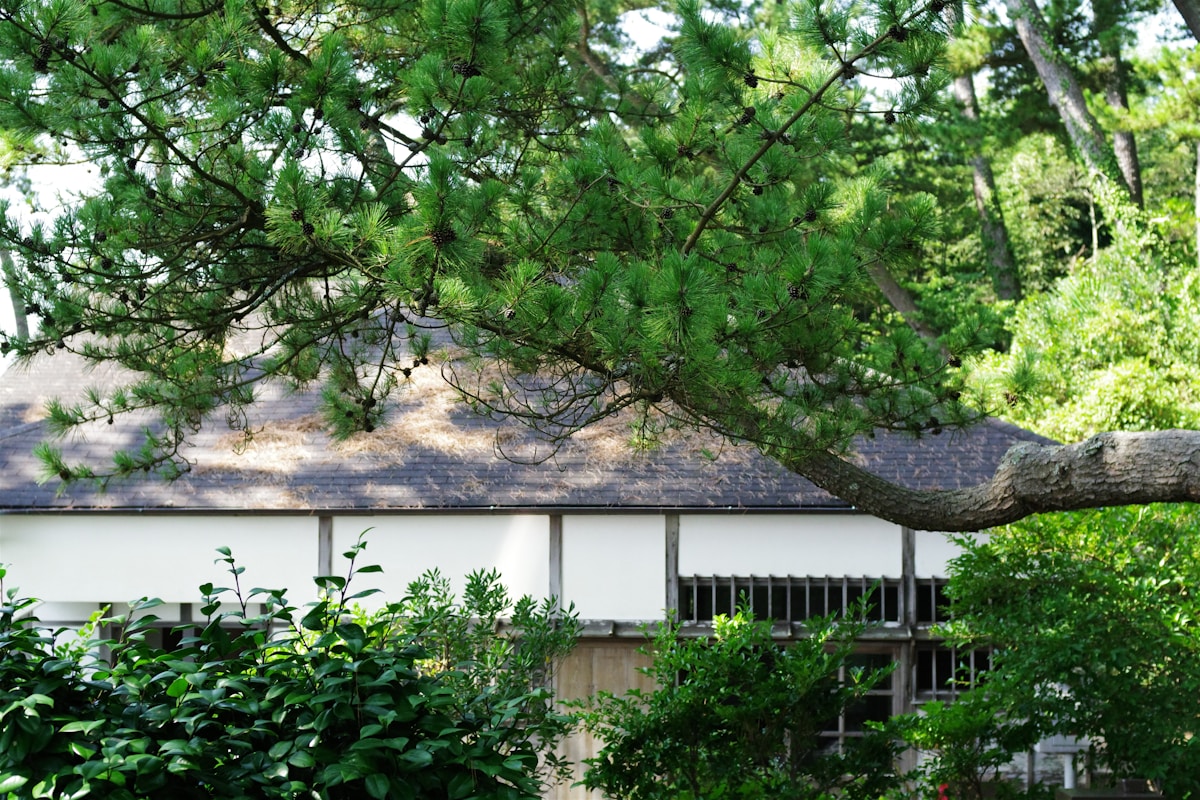
A traditional Japanese house nestled in greenery — the type of property commonly found on municipal akiya banks — Photo by Sandro Gonzalez on Unsplash
The system exists because Japan's declining population has created a demographic emergency in rural areas. Towns are literally emptying out. To combat this, the Ministry of Land, Infrastructure, Transport and Tourism (MLIT) encouraged municipalities to create these databases and, starting in 2018, partnered with LIFULL HOME'S and AtHome to aggregate listings from over 558 participating municipalities into searchable national portals.
Despite that aggregation effort, the system remains fundamentally fragmented. Each municipality sets its own rules for who can list, who can buy, what conditions apply, and how the application process works. There is no standardized format, no universal search, and — critically for international buyers — most akiya banks are entirely in Japanese.
What You'll Find on an Akiya Bank
Akiya bank listings tend to share certain characteristics:
- Low prices — Properties under ¥5 million (roughly $33,000 USD) are common, and some are listed at ¥0 (though "free" always comes with strings attached)
- Rural or semi-rural locations — Most akiya banks serve smaller municipalities outside major metro areas
- Older construction — Many homes were built before Japan's 1981 earthquake resistance standards (新耐震 (shin taishin)基準 (shin taishin kijun)), meaning they may need seismic retrofitting
- Sparse information — Listings often lack floor plans, interior photos, or detailed condition assessments. You might get a single exterior photo and a land area measurement
- Both sale and rental options — Some properties are available for rent, lease-to-own, or outright purchase
What Are Private Real Estate Listings?
Private listings are properties marketed through licensed real estate agencies, listed on major portals (SUUMO, HOME'S, at-home, Yahoo! Real Estate), or marketed directly by agencies to their client networks. This is how the vast majority of property transactions happen in Japan — akiya bank or not.
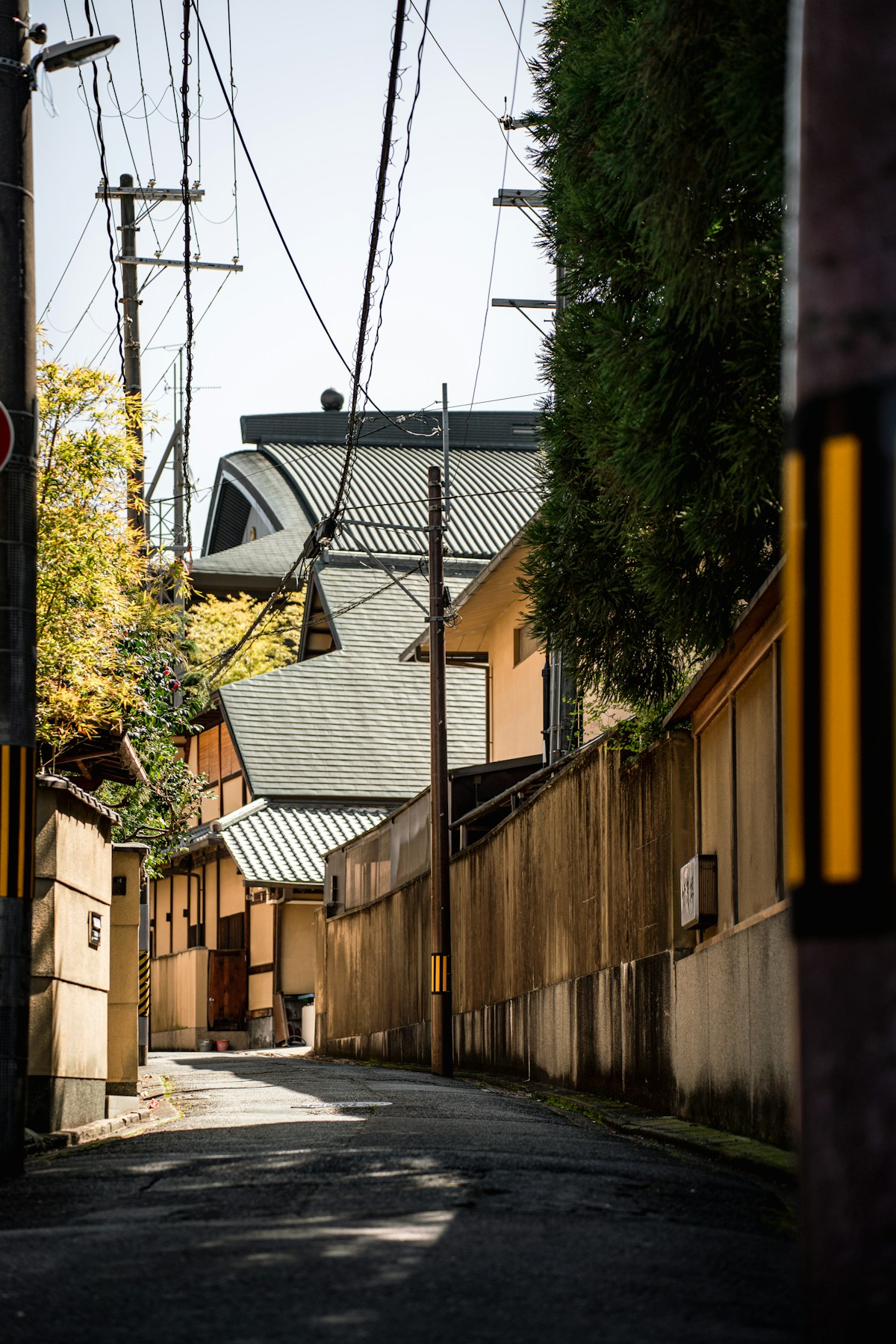
A quiet Japanese residential street — private listings often feature properties in established suburban neighborhoods like this — Photo on Unsplash
Private listings cover every property type: new builds, apartments, land, commercial properties, and yes, plenty of older vacant homes that would qualify as "akiya" but are sold through conventional channels instead of municipal databases.
What You'll Find on Private Listings
- Full price range — From affordable rural homes at ¥3-5 million to urban apartments at ¥50+ million
- Detailed information — Professional photos, floor plans, building specifications, neighborhood data, train station distances, school zones
- Standardized disclosure — Agents must provide a jūyō jisetsu setsumei (重要事項説明, Important Matters Explanation) document before contract signing, covering zoning, building restrictions, infrastructure, and known defects
- Nationwide coverage — Urban, suburban, and rural areas alike
- Agent support — A licensed professional manages inquiries, viewings, negotiations, and paperwork

Contract signing is a formal process in Japan, whether purchasing through an akiya bank or private listing — Photo by Vitaly Gariev on Unsplash
Price Comparison: What Do You Actually Pay?
The sticker price is only the beginning. Here's how total costs compare between the two paths.
Akiya Bank Purchase Costs
A typical akiya bank purchase at ¥3 million might break down like this:
- Purchase price: ¥3,000,000
- Agent commission: ¥0 to ¥231,000 (some akiya banks connect buyers directly to sellers; others involve a designated agent who charges the standard capped fee of ¥330,000 including tax for properties under ¥8 million)
- Registration & license tax: ¥30,000–60,000 (2% of assessed value, which is typically much lower than purchase price for old buildings)
- Real estate acquisition tax: ¥15,000–45,000 (arrives 4–6 months after purchase)
- Stamp duty: ¥1,000–10,000 (based on contract amount)
- Judicial scrivener fees: ¥80,000–150,000 (for title registration)
- Estimated renovation: ¥3,000,000–10,000,000+ (this is where the real cost lives)
Total realistic budget: ¥6–13 million ($40,000–$87,000) for a livable home
Private Listing Purchase Costs
A comparable but better-condition property at ¥8 million through a private agent:
- Purchase price: ¥8,000,000
- Agent commission: ¥330,000 (capped at ¥300,000 + tax for properties ¥8 million and under; for properties over ¥8 million, the formula is price × 3% + ¥60,000 + tax)
- Registration & license tax: ¥40,000–80,000
- Real estate acquisition tax: ¥30,000–80,000
- Stamp duty: ¥5,000–10,000
- Judicial scrivener fees: ¥80,000–150,000
- Renovation: ¥0–5,000,000 (properties in better starting condition)
Total realistic budget: ¥8.5–13.5 million ($57,000–$90,000) for a move-in-ready or near-ready home
The cheapest purchase price doesn't always mean the cheapest total cost. A ¥0 akiya bank home that needs ¥8 million in structural repairs, seismic retrofitting, and utility restoration costs more than a ¥6 million private listing that's habitable from day one.
The Akiya Bank Process: Step by Step
Buying through an akiya bank is not like browsing a real estate portal and making an offer. The process is more bureaucratic and varies significantly between municipalities, but generally follows this pattern:
- Find listings — Browse the municipality's akiya bank website (in Japanese), or search the LIFULL HOME'S or AtHome aggregated portals. Akiya Japan aggregates many of these into a searchable English-language database
- Contact the municipality — Submit an inquiry through the city hall's akiya bank contact form. You cannot typically contact the property owner directly
- Register as a prospective buyer — Many municipalities require you to fill out a registration form (利用者登録, riyōsha tōroku) before they'll share property details or arrange viewings
- Property viewing — The municipality or its designated agent arranges a viewing. Some towns require in-person visits; remote viewings are rare but becoming more common
- Application and matching — If you want to proceed, submit a formal application. The municipality forwards it to the property owner. If multiple buyers are interested, some towns use a bidding or lottery process
- Negotiation and contract — Once matched, you negotiate terms directly or through the designated agent. A standard real estate sales contract (売買契約書) is drawn up
- Due diligence and closing — Hire a judicial scrivener (司法書士 (shihō shoshi)) for title registration, pay the agreed price, and complete the ownership transfer at the Legal Affairs Bureau (法務局 (hōmu kyoku))
Timeline: Expect 2–6 months from first inquiry to closing. Some municipalities are responsive within days; others take weeks to reply to initial inquiries. The matching step alone can take 1–3 months if the property owner is elderly, lives far away, or has multiple heirs who need to agree.
Common Akiya Bank Conditions
This is where akiya banks differ most from private listings. Many municipalities attach conditions to their listings:
- Residency requirements — "You must live in the property for at least 5 years" or "You must move to this municipality within 1 year of purchase"
- Community participation — Some towns require buyers to participate in local events, festivals, or neighborhood association (自治会 (jichikai)) activities
- Renovation deadlines — "The property must be made habitable within 2 years"
- Resale restrictions — "You may not resell the property within 5 years without municipality approval"
- Usage restrictions — Some listings are for primary residence only — no vacation homes, no Airbnb, no commercial use
These conditions are enforceable, and violating them can mean returning the property or forfeiting subsidies. Not every akiya bank imposes these rules, but you must ask about them explicitly for each listing.
The Private Listing Process: Step by Step
Buying through a private agent follows Japan's standard real estate transaction process, which is well-established and regulated by the Real Estate Brokerage Act (宅地建物取引業 (takuchi tatemono torihiki-gyō)法):
- Find a property — Browse SUUMO, HOME'S, at-home, or specialty aggregators like Akiya Japan's search. Many agents also have unlisted properties (未公開物件) available on request
- Engage an agent — Contact the listing agent or hire a buyer's agent. Since 2022, Japan allows fully online Important Matters Explanations (IT重説), so remote transactions are feasible
- Property viewing — Agents arrange viewings at your convenience, provide detailed condition reports, and can do video walkthroughs for overseas buyers
- Make an offer — Submit a purchase application (購入申込書 (kōnyū mōshikomi-sho), kōnyū mōshikomisho). This is not legally binding but shows intent. Negotiate on price, closing date, and any conditions
- Important Matters Explanation — The agent delivers a legally required disclosure document covering zoning, building restrictions, infrastructure, boundaries, and known issues. This step is mandatory before signing the contract
- Sign the sales contract — Both parties sign the 売買契約書. The buyer typically pays a deposit of 5–10% of the purchase price at this point
- Closing and registration — Pay the remaining balance, the judicial scrivener registers the transfer at the Legal Affairs Bureau, and you receive the keys
Timeline: Typically 1–3 months from offer to closing. The process is faster and more predictable than the akiya bank route because there's no municipal intermediary.
Foreign Buyer Considerations
Japan places no legal restrictions on foreign property ownership. Non-residents, non-citizens, and people without Japanese visas can all buy and own property and land in freehold. That said, the practical experience differs significantly between the two paths.
Akiya Banks: The Foreign Buyer Experience
Akiya banks were designed for Japanese citizens looking to relocate to rural areas. Foreign buyers are not excluded by law, but the system wasn't built with them in mind:
- Language barrier — Nearly all akiya bank websites, forms, and correspondence are in Japanese only. Google Translate helps with browsing, but formal applications require accurate Japanese
- In-person expectations — Many small-town offices expect face-to-face meetings. Phone calls are conducted in Japanese. Email responses can be slow
- Residency conditions — If a listing requires you to "move to the municipality," this may be incompatible with being an overseas buyer who visits seasonally
- No English support — Municipal staff rarely speak English. You'll need a Japanese-speaking representative or translator for virtually every interaction
- Cultural integration expectations — Some towns view akiya bank transactions as a community-building tool, not just a property sale. They may prioritize buyers who plan to become active community members
Private Listings: The Foreign Buyer Experience
The private market is more accessible to foreign buyers, though it's far from frictionless:
- Bilingual agents exist — A growing number of agencies cater specifically to foreign buyers, offering English-language contracts, remote viewings, and end-to-end support
- Remote transactions possible — Since the 2022 IT重説 reform, the entire purchase process can be completed without visiting Japan in person (though a property viewing is strongly recommended)
- No residency conditions — Private purchases have no occupancy requirements. Buy a vacation home, leave it vacant, rent it out — it's your property
- Financing remains difficult — Japanese banks rarely lend to non-residents. Most foreign buyers purchase with cash or finance through banks in their home country. Some specialized lenders (like Prestia, formerly Shinsei Bank) offer mortgages to residents on certain visa types
- Tax representative required — Non-resident owners must appoint a tax representative (納税管理人 (nōzei kanri-nin)) in Japan to handle annual property tax notices
For foreign buyers working through either path, a licensed agent who specializes in international transactions can make the difference between a smooth purchase and months of confusion. Teritoru, our licensed partner agent, handles exactly this kind of cross-border complexity — from bilingual contracts to tax representative arrangements.
Renovation Subsidies: The Akiya Bank Advantage
One genuine advantage of the akiya bank path is access to municipal renovation subsidies that are typically unavailable for private market purchases.
What's Available
Subsidy amounts and conditions vary enormously by municipality, but common programs include:
- General renovation grants — ¥500,000 to ¥2,000,000, typically covering up to 50% of renovation costs
- Seismic retrofitting subsidies — ¥1,000,000 to ¥3,000,000 for bringing pre-1981 buildings up to current earthquake resistance standards
- Energy efficiency upgrades — ¥500,000 to ¥1,500,000 for insulation, double-glazing, and modern heating systems
- Relocation incentives — Some towns offer moving allowances, childcare subsidies, or employment placement for families who relocate
- Demolition subsidies — If the building is beyond saving, some municipalities cover part of the demolition cost (¥500,000–¥1,000,000) so you can rebuild
The Catch
These subsidies almost always come with conditions:
- You must purchase through the akiya bank (not a private agent)
- You must become a resident of the municipality (住民登録)
- Renovations must be completed within a set timeframe (usually 1–2 years)
- You must use local contractors (supporting the local economy is part of the program's purpose)
- Programs are fiscal-year-based (April to March) and can run out of budget mid-year
- Applications are processed on a first-come, first-served basis — popular programs fill up quickly
These subsidies are real money, but they're not free money. They come with obligations that may or may not align with your plans, particularly if you're buying as an investment or vacation property.
Property Condition: What to Expect from Each Path
Akiya Bank Properties
Most akiya bank homes have been vacant for years — sometimes decades. Expect:
- Structural concerns — Wood rot, termite damage (especially white ants/シロアリ in southern regions), foundation settling, and roof deterioration are common
- Outdated utilities — Plumbing may use older lead or galvanized steel pipes. Electrical wiring may not meet current code. Septic tanks (浄化槽 (jōkasō)) may need replacement
- No disclosure guarantees — While agents must disclose known defects, akiya bank properties sold directly between individuals may have limited or no formal disclosure
- Personal belongings left behind — It's surprisingly common for akiya to contain the previous owner's furniture, clothing, and household items. Disposal costs can add ¥200,000–500,000
- Unknown boundary lines — In rural areas, property boundaries may never have been formally surveyed. A land survey (測量) costs ¥300,000–800,000
Private Listing Properties
Properties on the private market span a wide range of conditions, but the information you receive is more reliable:
- Mandatory disclosure — The Important Matters Explanation document covers known defects, boundary disputes, zoning restrictions, and infrastructure access
- Building inspection option — Since 2018, agents must ask sellers whether they've had a building inspection (建物状況調査, tatemono jōkyō chōsa) performed and share the results with buyers
- Better-maintained on average — Properties listed through agents tend to be in better condition simply because agents won't take on listings that are unsellable without significant work
- Seller warranty possible — Private sales may include a contract defect liability (契約不適合責任) period of 3–12 months, during which the seller must address undisclosed defects
Which Path Is Right for You?
The right choice depends on what you're actually trying to do. Here's a practical framework:
Choose an Akiya Bank If:
- You want to relocate permanently to rural Japan and become part of a local community
- Your budget is under ¥5 million for the purchase price and you're prepared to invest in renovation
- You speak Japanese (or have a Japanese-speaking partner/representative) and can handle municipal bureaucracy
- You're interested in renovation subsidies and willing to accept the conditions that come with them
- You're drawn to a specific small town and want to access properties that aren't listed anywhere else
- You have time and patience — the process is slower and less predictable
Choose Private Listings If:
- You want a vacation home, investment property, or part-time residence without residency obligations
- You prefer transparency — detailed disclosures, professional inspections, and standardized contracts
- You're buying remotely from overseas and need an English-speaking agent to manage the process
- You want more location options — including urban, suburban, and well-connected rural areas
- You value speed and predictability — private transactions close faster with fewer surprises
- You want the widest selection — private portals list millions of properties versus thousands on akiya banks
Consider Both If:
There's no rule that says you must pick one path. Many experienced buyers browse akiya banks for specific regions they're interested in while simultaneously searching private listings for comparison. Akiya Japan aggregates listings from both akiya banks and private sources into a single searchable platform, making side-by-side comparison straightforward.
Common Misconceptions
"Akiya bank properties are always cheaper"
Not necessarily. While purchase prices are lower on average, the total cost of ownership — including renovation, remediation, and ongoing maintenance of an older building — can exceed a newer property bought through the private market. A ¥1 million akiya that needs ¥8 million in structural work is not a deal.
"Private agents won't handle cheap properties"
This used to be more true than it is today. In 2018, Japan raised the maximum agent commission for properties under ¥8 million to a flat ¥330,000 (including tax), specifically to incentivize agents to handle lower-value transactions. More agents now work with affordable rural properties than before, though the selection on major portals still skews toward higher-value listings.
"You can buy a house for free on an akiya bank"
Technically, some properties are listed at ¥0. Practically, "free" homes almost always come with significant hidden costs: structural damage, unpaid back taxes, unclear ownership (multiple heirs who haven't settled the estate), hazardous materials like asbestos, or mandatory demolition. The municipality is giving the property away precisely because no one else wants to deal with these problems.
"Foreigners can't use akiya banks"
Legally, there's no restriction. Any person — Japanese citizen, permanent resident, or foreign non-resident — can purchase property in Japan, including through akiya banks. The barriers are practical, not legal: language, distance, residency conditions, and the expectation of community participation.
"You need a visa to buy property in Japan"
You do not. Japan imposes no visa or residency requirement for property ownership. You can buy and own land and buildings without ever living in Japan. However, owning property does not grant you a visa — these are completely separate systems.
Tax Implications for Both Paths
The tax treatment is essentially identical regardless of how you find the property. Key taxes include:
- Real estate acquisition tax — 3% of assessed value for buildings, 1.5% for land (reduced rate through March 2027). Paid once, 4–6 months after purchase
- Annual property tax (固定資産税 (kotei shisan-zei)) — 1.4% of assessed value. Assessed values are typically 50–70% of market value and are re-evaluated every 3 years
- City planning tax (都市計画税 (toshi keikaku-zei)) — Up to 0.3% of assessed value, applies in urbanization-promoted areas. Many rural akiya locations are exempt
- Registration and license tax — 2% of assessed value for ownership transfer (reduced to 1.5% for residential properties in some cases)
- Income tax on rental income — If you rent out the property, Japan taxes non-residents at a flat 20.42% on gross rental income, with the tenant or property manager required to withhold
One tax-related difference: municipalities sometimes offer property tax exemptions or reductions for akiya bank purchases, typically for 3–5 years. This can save ¥50,000–200,000 per year depending on the assessed value. These reductions are usually conditional on the same residency and renovation requirements as the subsidy programs.
Before You Decide: Six Questions to Answer
Before committing to either path, answer these questions:
- What's your total budget? — Not just purchase price, but purchase + renovation + furnishing + first year of taxes and maintenance
- Will you live in the property full-time? — If not, akiya bank conditions may disqualify you from the best deals
- Do you speak Japanese? — If not, the private market with a bilingual agent is significantly more accessible
- How quickly do you need to close? — Private transactions are faster. Akiya bank inquiries can languish for months
- Are you comfortable with renovation? — Akiya bank homes almost always need work. If you want move-in ready, look at private listings
- Do you have someone in Japan? — A local contact or agent who can attend viewings, handle paperwork, and communicate with sellers or municipal offices is essential for either path but absolutely critical for akiya banks
If you're unsure where to start, booking a consultation with Teritoru can help clarify which path matches your goals. Their team works with both akiya bank properties and private listings across Japan, so you'll get an honest assessment rather than being steered toward one channel.
Making Your Choice
Akiya banks offer genuinely affordable entry points into Japanese property ownership, access to renovation subsidies, and the chance to become part of a rural community that actively wants new residents. But the process is slower, less transparent, Japanese-language-dependent, and often comes with conditions that may not suit overseas buyers.
Private listings offer wider selection, better information, faster transactions, and accessibility for foreign buyers — but at higher price points and without the municipal subsidies.
The best deal isn't about which path you take. It's about choosing the path that fits your goals, budget, and timeline. A buyer who relocates to Niigata through an akiya bank with ¥2 million in renovation subsidies gets a different kind of deal than an investor who buys a ¥7 million house in Chiba through a private agent and starts renting it immediately. Both can be excellent decisions. The worst decision is choosing a path without understanding what it actually involves.