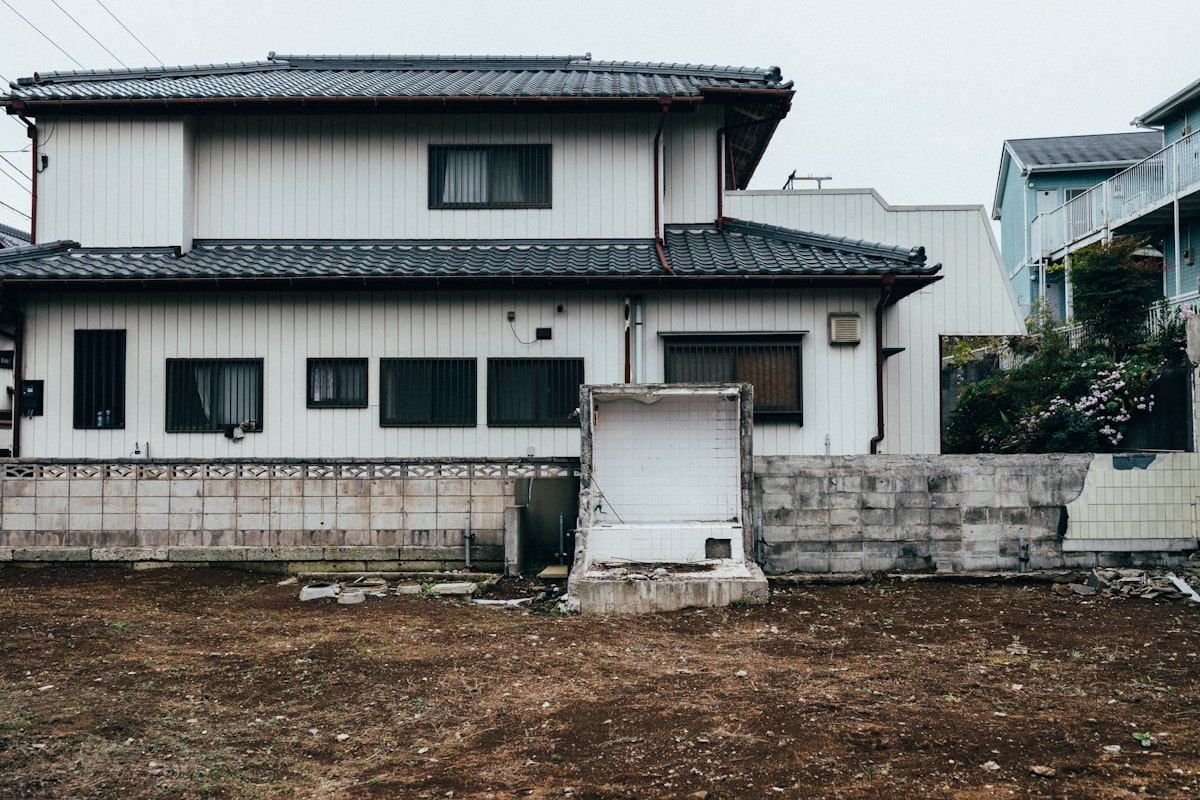
Akiya (空き家 (akiya), pronounced "ah-kee-yah") literally translates to "empty house" in Japanese. The word combines 空き (aki, meaning empty or vacant) and 家 (ya, meaning house). In practice, it refers to any residential property that is currently unoccupied — whether it's been empty for a few months or several decades.
Some are well-maintained modern suburban homes whose owners relocated for work. Others are century-old wooden farmhouses deep in the mountains, slowly returning to nature. The condition, location, and price vary enormously — from free to tens of millions of yen.
As of the 2023 Housing and Land Statistical Survey by Japan's Ministry of Internal Affairs and Communications, there are approximately 9 million akiya across the country — about 13.8% of all housing stock. That's roughly 1 in 7 homes. The number has doubled since 1993, when it stood at 4.5 million, and by some projections, 1 in 3 Japanese homes could be vacant by 2038.
The Four Official Categories of Vacant Houses
Not all 9 million vacant houses are the same. Japan's Housing and Land Survey classifies them into four distinct categories — a distinction that no other English-language source explains properly:
| Category | Count (2023) | Share | Description |
|---|---|---|---|
| For Rent | ~3.0 million | 33% | Empty rental units awaiting tenants. Concentrated in cities. |
| For Sale | ~0.4 million | 4% | Properties actively listed on the market. |
| Secondary Use | ~0.4 million | 4% | Vacation homes, seasonal residences, pied-à-terre. |
| "Other" (Truly Abandoned) | ~3.85 million | 43% | No designated use. No one maintaining them. This is the real akiya crisis. |
When people talk about the "akiya problem," they're primarily referring to that last category — the 3.85 million homes with no designated use, no maintenance, and often no clear owner. This number has grown from 2.1 million in 2003 to 3.85 million in 2023, an 83% increase in two decades.
Why Does Japan Have So Many Vacant Houses?
Japan's akiya crisis is the product of five interconnected forces — demographic, cultural, economic, legal, and structural. Understanding them explains not just why the houses are empty, but why they're likely to stay cheap.
1. Population Decline
Japan's population peaked at approximately 128 million in 2008 and has been declining since. The country's total fertility rate sits at around 1.2 children per woman — among the lowest in the world and far below the 2.1 replacement rate. In 2023, Japan recorded fewer than 760,000 births, the lowest since records began in 1899. By 2060, the population is projected to fall to roughly 87 million. Fewer people means fewer households, and homes inevitably empty out.
2. Rural-to-Urban Migration
Young Japanese overwhelmingly migrate to cities — particularly Tokyo, Osaka, and Nagoya — for education and employment. The Greater Tokyo Area alone holds over 37 million people, roughly 30% of the entire population. When parents age and pass away, the family home in the countryside sits empty. Children who've built lives in Tokyo have no practical reason to return.
This is why akiya concentrations are highest in rural prefectures: Wakayama and Tokushima lead the country at 21.2% vacancy, followed by Kagoshima (20.4%), Kochi (20.3%), and Ehime (20.1%). But even Tokyo has nearly a million vacant homes — 10.3% of its housing stock.

3. The "Scrap and Build" Culture
This is the factor that surprises most Westerners. Unlike property markets in Europe, North America, or Australia, where older homes can appreciate in value, Japanese residential buildings have traditionally been treated as depreciating assets. A wooden house is typically valued at zero after 20-25 years, regardless of its physical condition.
This isn't arbitrary — it emerged from Japan's postwar rapid rebuilding, frequent regulatory updates to seismic codes, and a cultural emphasis on newness and cleanliness. The result: approximately 87% of residential transactions in Japan involve new construction, compared to roughly 10-15% in the UK and US. Buyers overwhelmingly prefer to demolish and rebuild rather than purchase a used home.
For akiya, this means even structurally sound older houses have minimal market value. The building is worth nothing; only the land matters. This fundamentally changes the economics of vacant houses compared to any other developed country.
4. Inheritance Complications
When a property owner dies without clearly registering inheritance transfer, ownership can become tangled across multiple heirs over generations. A house inherited by three siblings who each have children creates, within two generations, a situation where a dozen distant relatives technically hold partial ownership. Getting all of them to agree to sell is prohibitively complex.
An estimated 30% or more of vacant houses have unclear ownership. Japan finally addressed this in April 2024 with mandatory inheritance registration — heirs now have three years to register title transfers, with penalties for non-compliance. But millions of properties already have title chains that would take years of legal work to untangle.
5. The Tax Structure Paradox
Until recently, Japan's tax system actually incentivized keeping empty houses standing. Land with a residential building receives up to an 83% property tax reduction compared to vacant land. Demolishing a derelict house causes the tax bill to jump up to sixfold. So owners left crumbling buildings standing rather than pay higher taxes on bare land — even when the building was uninhabitable.
The 2015 Vacant Houses Special Measures Act (空家等対策の推進に関する特別措置法) began addressing this, allowing municipalities to strip tax benefits from dangerous "specified vacant houses" (特定空家 (tokutei akiya)). The 2023 revision expanded this to include inadequately managed properties. But enforcement is slow, and millions of properties are still held in this tax-motivated limbo.
Types of Akiya Properties
The word "akiya" covers an enormous spectrum. Understanding the categories helps you know what you're looking at:
By Architecture
Kominka (古民家 (kominka)) — Traditional Japanese farmhouses, typically 50-150+ years old. Post-and-beam timber construction, sometimes with thatched roofs (though most have been re-roofed with tiles or metal). Thick wooden beams, earthen walls, engawa verandas. Found primarily in rural areas. The most romantic category but often requiring the most extensive renovation. These are what international media photographs when they write about akiya.
Machiya (町家) — Traditional urban townhouses, most associated with Kyoto but found in historic districts across Japan. Narrow frontage, deep lots, interior courtyards. Highly sought-after for their architectural character. Increasingly rare and expensive.
Postwar Suburban Houses — Built from the 1950s through the 1990s during Japan's building boom. Standard 2-4 bedroom layouts (expressed as 2LDK through 4LDK). These are the most common type of akiya and often represent the best value: structurally sound, in established neighbourhoods, needing mostly cosmetic updates.
Apartments (マンション) — Individual units in larger concrete buildings. Come with monthly management fees (管理費) and repair reserve funds (修繕積立金). Less maintenance burden than standalone houses, but less control over the building. Older apartments in depopulating areas can be virtually unsellable.
Land — Vacant plots where the building has been demolished or is beyond saving. Purchased for new construction. Important caveat: bare land loses the residential tax reduction, so annual taxes are higher.
By Condition
This is the classification that actually matters to buyers, and one that most guides ignore:
- Move-in ready — Structurally sound, functioning utilities, livable immediately or with minor cleaning. These exist but go fast.
- Cosmetic renovation needed — Sound structure but dated interiors, worn tatami, old kitchen/bathroom. Budget ¥1,000,000-¥5,000,000.
- Major renovation needed — Structural issues, roof damage, termite damage, plumbing/electrical overhaul. Budget ¥5,000,000-¥15,000,000+.
- Demolish and rebuild — Building is beyond economic repair. You're buying the land. Demolition costs ¥1,000,000-¥3,000,000; new build from ¥15,000,000+.
- Land value only — Building has negative value (demolition cost). Price reflects land minus demolition. Common in rural areas.

How Much Does an Akiya Cost?
Akiya prices span an extraordinary range:
| Price Range | Approx. USD | What You Get |
|---|---|---|
| Free (¥0) | $0 | Municipal giveaway programs. Typically very rural, may require residency commitment. Expect major renovation needs. |
| Under ¥1,000,000 | Under ~$6,700 | Very remote or poor condition. Often land-value-only. Good for adventurous DIY renovators. Over 13,000 listings in this range on Akiya Japan. |
| ¥1,000,000 – ¥5,000,000 | $6,700 – $33,500 | Rural to semi-rural houses, often habitable with moderate renovation. The "sweet spot" for many international buyers. |
| ¥5,000,000 – ¥15,000,000 | $33,500 – $100,000 | Better locations, better condition. Suburban houses, some in smaller cities. May need only light renovation. |
| ¥15,000,000+ | $100,000+ | City properties, large plots, or turnkey-ready homes in desirable areas. Can reach ¥50,000,000+ in popular regions. |
Critical: The purchase price is not the total cost. Budget for renovation (¥3,000,000 – ¥10,000,000+), closing costs (6-8% of purchase price for taxes, registration, and agent fees), and annual property taxes (1.4-1.7% of assessed value). A "free" house can easily require ¥5,000,000 – ¥10,000,000 to make livable.
What is an Akiya Bank?
An akiya bank (空き家 (akiya)バンク (akiya bank), akiya banku) is a property listing database operated by a Japanese municipal government. Think of it as a local government-run real estate platform specifically for vacant properties in that municipality.
Most of Japan's roughly 1,700 municipalities operate some form of akiya bank. They exist because local governments are desperate to attract residents and reverse depopulation. The properties listed tend to be cheaper than commercial listings, and many come with significant incentives.
Why Akiya Banks Matter
- Lower prices — Municipalities want to attract residents, not maximise profit. Properties are often priced to sell.
- Renovation subsidies — Many municipalities offer grants of ¥1,000,000 – ¥5,000,000 to akiya bank buyers who commit to living in the area.
- Relocation incentives — Additional perks can include childcare subsidies, moving allowances, employment assistance, and free Japanese language classes.
- Unique inventory — Some properties are only listed on the local akiya bank, not on any commercial site.
The Akiya Bank Problem
There's a catch. Most akiya banks are:
- Japanese-language only — No English interface, descriptions, or support.
- Poorly maintained — Outdated websites, listings that haven't been updated in months or years.
- Not centralized — Each municipality runs its own independent system. There is no single search across all 1,700.
- Only a fraction of actual supply — Less than 20% of Japan's vacant houses are listed anywhere online. Akiya banks typically list only a few dozen properties even in areas with thousands of vacant houses.
This is the problem Akiya Japan was built to solve. We aggregate property listings from 595 Japanese sources — including municipal akiya banks, commercial portals, and government listings — into a single English-language platform with 976,000+ listings across all 47 prefectures.
Can Foreigners Buy an Akiya in Japan?
Yes. Japan is one of the most foreigner-friendly countries in the world for property ownership. There are no restrictions on foreign nationals buying land or buildings:
- No visa required to purchase
- No residency requirement
- No citizenship requirement
- No special permits or approvals
- Full freehold ownership (not leasehold)
- Same property rights as Japanese citizens
You can buy property in Japan while on a tourist visa. The process can be completed remotely using a power of attorney (委任状), though an in-person visit is strongly recommended for a first purchase.
2024-2026 Regulatory Updates
Two recent changes are worth noting:
April 2024 — Mandatory Inheritance Registration: Heirs must now register title transfers within three years of inheritance, with penalties for non-compliance. This is designed to clear up the millions of properties with unclear ownership chains. Over time, this should increase the supply of legally purchasable akiya.
April 2026 — Foreign Buyer Disclosure: Foreign buyers must now disclose citizenship at the time of property registration and file a residential use report within 20 days of purchase. This is a reporting requirement, not a restriction — it does not limit who can buy or what can be purchased.
The Visa Myth
Buying property in Japan does NOT grant you a visa or the right to live there. This is the single most common misconception among international buyers. Property ownership and immigration status are entirely separate matters. You need a valid visa (tourist, work, business manager, digital nomad, spouse, etc.) for any stay in Japan, regardless of how much property you own.
How to Buy an Akiya: Step by Step
The purchasing process for an akiya follows the same legal framework as any Japanese property transaction. Here's how it works:
Step 1 — Search. Find properties through Akiya Japan, municipal akiya banks, Japanese real estate portals (SUUMO, at home, LIFULL HOME'S), or local agents. Filter by prefecture, price, property type, and features.
Step 2 — Engage an Agent. Work with a licensed real estate agent who can communicate in your language. All Japanese property transactions require a licensed intermediary for the Important Matters Explanation. If you're buying from overseas, an agent who handles international clients is essential.
Step 3 — Visit or View. Inspect the property in person if possible. Check the neighbourhood, access to shops and transport, and the building's physical condition. If you can't visit, arrange for your agent or a trusted representative to do a detailed inspection with photos and video.
Step 4 — Make an Offer. Submit a purchase application (買付証明書 (kaitsuke shōmeisho), kaitsuke shoumeisho) through your agent. This document is not legally binding but demonstrates serious intent. Price negotiation is normal and expected.
Step 5 — Important Matters Explanation. A licensed real estate agent delivers the 重要事項説明 (juuyou jikkou setsumeisho) — a legally mandated disclosure of all material facts about the property. This covers zoning, building restrictions, rights, encumbrances, hazard zone status, and known defects. Read it carefully.
Step 6 — Sign Contract. Sign the sales contract (売買契約書, baibai keiyakusho) and pay earnest money, typically 5-10% of the purchase price. This is legally binding. Backing out after signing means forfeiting the deposit.
Step 7 — Settlement. Pay the remaining balance, transfer title at the Legal Affairs Bureau (法務局 (hōmu kyoku), houmukyoku), and receive the keys. A judicial scrivener (司法書士 (shihō shoshi), shihou shoshi) handles all registration paperwork. Congratulations — you own property in Japan.
A typical cash purchase takes 60-90 days from accepted offer to receiving keys. Transactions with financing or complex title issues can take longer.
Renovation: Costs, Considerations, and Common Issues
Most akiya need some level of renovation. The extent varies dramatically, but here are realistic cost ranges based on current market rates:
| Work | Typical Cost (¥) | Approx. USD |
|---|---|---|
| Roof repair or replacement | ¥500,000 – ¥2,000,000 | $3,350 – $13,400 |
| Kitchen renovation | ¥500,000 – ¥1,500,000 | $3,350 – $10,000 |
| Bathroom renovation | ¥500,000 – ¥1,500,000 | $3,350 – $10,000 |
| Electrical rewiring | ¥300,000 – ¥800,000 | $2,000 – $5,350 |
| Plumbing updates | ¥300,000 – ¥800,000 | $2,000 – $5,350 |
| Termite treatment | ¥100,000 – ¥300,000 | $670 – $2,000 |
| Seismic retrofit (pre-1981 building) | ¥1,000,000 – ¥3,000,000 | $6,700 – $20,000 |
| Full interior renovation | ¥3,000,000 – ¥10,000,000+ | $20,000 – $67,000+ |
| Complete rebuild on existing land | ¥15,000,000 – ¥30,000,000+ | $100,000 – $200,000+ |
Critical Issues to Inspect
- Termites (シロアリ, shiroari) — The number one enemy of Japanese wooden houses. Damage can be invisible from the surface while the structural timber is hollowed out. Always get a professional termite inspection before purchasing.
- Roof condition — Water ingress is the fastest path to structural damage. Check for missing tiles, sagging, water stains on ceilings.
- Asbestos — Common in buildings constructed before 1990, particularly in insulation, roof materials, and floor tiles. Professional removal is expensive and legally required.
- Earthquake resistance — Buildings constructed before 1981 were built to older seismic codes (旧耐震 (kyū taishin)基準 (kyū taishin kijun)). Properties built after June 1981 meet the "new earthquake-resistance standards" (新耐震 (shin taishin)基準 (shin taishin kijun)). Pre-1981 buildings may need seismic retrofitting — a significant but potentially life-saving investment.
- Septic systems — Many rural properties use individual septic tanks (浄化槽 (jōkasō), joukasou) rather than municipal sewage. These require regular maintenance and periodic pumping.
- Road access and setback (接道義務) — Japanese building law requires properties to have at least 2 metres of frontage on a road at least 4 metres wide to qualify for rebuilding. Properties that don't meet this requirement cannot be rebuilt if demolished. Always verify "rebuildable" (再建築可) status before purchasing.

Ongoing Costs of Ownership
Property taxes in Japan are low by international standards. Here's what to budget:
- Fixed Asset Tax (固定資産税 (kotei shisan-zei)) — 1.4% of the government-assessed value (which is typically much lower than market value). Billed annually, payable in four instalments.
- City Planning Tax (都市計画税 (toshi keikaku-zei)) — An additional 0.3% in designated urban planning areas. Not all properties are subject to this.
- Fire and earthquake insurance — Highly recommended. Fire insurance is relatively affordable; earthquake insurance is a separate policy with limited coverage. Costs vary by construction type, age, and location.
- Maintenance — Traditional wooden structures need regular attention: annual gutter cleaning, periodic exterior treatment, moisture control. Budget accordingly.
- Neighbourhood association fees (自治会 (jichikai)費) — Common in rural areas. Typically ¥5,000 – ¥20,000/year. Participation is socially expected and important for community integration.
- Utilities — If occupied: electricity, water, gas run roughly ¥10,000 – ¥20,000/month. If vacant, minimal standing charges of a few thousand yen per month.
Example: for a rural akiya with a government-assessed value of ¥3,000,000 (which might have a market purchase price of ¥500,000 – ¥2,000,000), annual property taxes would be roughly ¥42,000 – ¥51,000 — about $280 – $340 USD per year. Compare that to property taxes on a similarly priced home in the US, UK, or Australia.
Risks and Honest Warnings
Buying an akiya can be an extraordinary opportunity, but it's not without risk. Go in with eyes open:
- Renovation costs can dwarf the purchase price. A ¥500,000 house that needs ¥8,000,000 in renovation is really a ¥8,500,000 purchase. Always budget for total cost, not just the asking price.
- Remote location challenges. The cheapest akiya are in the most remote areas. Seriously consider: how far is the nearest hospital? Supermarket? Train station? Will you actually use this property enough to justify ownership?
- Language barrier. The purchase process, renovation quotes, municipal communications, insurance, taxes, and neighbourhood interactions are all conducted in Japanese. Having a Japanese-speaking agent or advisor isn't optional — it's essential.
- Rebuilding restrictions. Some properties legally cannot be rebuilt if demolished (insufficient road access, zoning changes, protected areas). Always verify 再建築可 (rebuildable) status before purchasing.
- Hidden costs. Asbestos removal, boundary disputes, unregistered extensions, undisclosed defects, or neighbour access rights can add unexpected expenses.
- Resale difficulty. If a house was hard to sell in the first place, selling it again later may be equally difficult. Do not assume property appreciation — it's unlikely for rural akiya.
- Natural disaster exposure. Japan has earthquakes, typhoons, flooding, and landslides. Check municipal hazard maps (ハザードマップ (hazādo mappu)) and factor insurance costs into your budget.
- Mortgage limitations. Most Japanese banks require permanent residency or years of employment history in Japan to qualify for a mortgage. Non-resident foreign buyers almost always need to pay cash.
How to Find an Akiya
There are four main channels for discovering akiya properties:
1. Akiya Japan
We aggregate 976,000+ property listings from 595 Japanese sources — including municipal akiya banks, commercial real estate portals, and government listings — into a single English-language search platform. Every listing includes AI-generated English descriptions, an interactive map with land classification and hazard overlays, and direct links to the original Japanese source. Akiya Japan has been operating since 2020 as the original English-language akiya search platform. Start searching here.
2. Municipal Akiya Banks
Visit individual municipality websites to browse their akiya bank listings directly. This gives you access to the most local inventory and subsidy programs, but requires Japanese language ability and searching each municipality separately. The national portal Zenkoku Akiya Bank aggregates some (but not all) municipal listings.
3. Japanese Real Estate Portals
Major sites like SUUMO (suumo.jp), at home (athome.co.jp), and LIFULL HOME'S (homes.co.jp) list commercial real estate including akiya-priced properties. These are Japanese-language only and primarily serve the domestic market. Prices tend to be higher than akiya bank listings but the inventory is larger.
4. Local Real Estate Agents
For serious buyers, engaging a local agent in your target area gives access to off-market properties and local knowledge that no website can match. Many of the best deals — particularly direct-from-owner sales — never appear online.
Frequently Asked Questions
Can I buy an akiya remotely without visiting Japan?
Technically, yes — using a power of attorney (委任状). But it's strongly discouraged for a first purchase. Visiting the property, neighbourhood, and meeting your agent in person dramatically reduces risk. Photos and videos cannot convey the smell of mould, the steepness of the access road, or the distance to the nearest convenience store. If you absolutely cannot visit, arrange for a trusted representative to conduct a thorough in-person inspection.
Do I need a Japanese bank account?
Not always. Some transactions can be completed via international wire transfer. However, a Japanese bank account simplifies paying ongoing utilities, property taxes, and renovation invoices. Non-residents can open accounts at some banks (e.g., Prestia/SMBC Trust Bank) with proper identification and documentation.
Can I rent out my akiya as a vacation rental?
Yes, but it's regulated. Short-term rentals (民泊 (minpaku), minpaku) require registration under the Private Lodging Business Act and are limited to 180 days per year in most areas. Some municipalities have additional restrictions or outright bans. Long-term rentals follow standard Japanese tenancy law with strong tenant protections. If rental income is your plan, research the specific municipality's rules before purchasing.
What happens if I abandon my property?
You remain legally responsible. If the property deteriorates and becomes a hazard, the municipality can designate it as a "specified vacant house" (特定空家 (tokutei akiya)), remove tax benefits, order repairs at your expense, or ultimately demolish the building and bill you. Under 2023 revisions, even properties that are merely "inadequately managed" (管理不全空家) can lose tax benefits. Abandoning property in Japan has real legal and financial consequences.
Are akiya really free?
Some are — municipalities do give away properties through akiya bank programmes, particularly in heavily depopulated areas. But "free" is misleading. A ¥0 purchase still involves closing costs (¥200,000 – ¥500,000), almost certainly requires renovation (¥3,000,000 – ¥10,000,000+), and comes with ongoing tax and maintenance obligations. The cheapest akiya tend to be in the most remote locations with the most serious structural issues. Free doesn't mean cheap in total cost.
What is the difference between an akiya and a kominka?
Akiya (空き家 (akiya)) means vacant house — any vacant house, regardless of age or style. Kominka (古民家 (kominka)) means old folk house — a traditional Japanese house built with traditional construction methods, typically more than 50 years old. A kominka can be an akiya (if it's vacant), and an akiya can be a kominka (if it's old and traditional), but the terms describe different things: vacancy status versus architectural classification.
Which prefectures have the most akiya?
By vacancy rate (2023 data): Wakayama (21.2%), Tokushima (21.2%), Kagoshima (20.4%), Kochi (20.3%), and Ehime (20.1%). By total number, Tokyo actually has the most vacant homes at roughly 968,000 — but at 10.3% of its housing stock, the rate is below the national average. The cheapest akiya are concentrated in the rural Shikoku and Kyushu regions.
Can I get financing for an akiya purchase?
Extremely difficult for non-residents. Most Japanese banks require permanent residency (永住権) or at least several years of employment and tax payment history in Japan. A few international-facing banks (Prestia, SMBC Trust) offer limited mortgage products for residents. For non-residents, the practical answer is cash. Some buyers use equity from properties in their home country to fund Japanese purchases.
Is buying an akiya a good investment?
If "investment" means capital appreciation — probably not, especially in rural areas. Japanese wooden houses depreciate to zero, land values in depopulating areas tend to decline, and resale can be difficult. If "investment" means acquiring a livable home for a fraction of what you'd pay in most developed countries, or securing a base in Japan for a minimal ongoing cost, then potentially yes. Go in for the lifestyle, not the returns.
What about earthquake safety?
Japan has some of the strictest building codes in the world. Properties built after June 1981 comply with the "new earthquake-resistance standards" (新耐震 (shin taishin)基準 (shin taishin kijun)), which have performed well in major earthquakes including the 1995 Kobe and 2011 Tohoku events. Pre-1981 properties are a different matter — seismic retrofitting (耐震補強) is recommended and often subsidised by local governments. Always factor earthquake resistance into your purchasing decision.