The City That Needs No Introduction
Living in Tokyo
The world's largest metropolitan area — a city of impossible density, extraordinary infrastructure, and a property market that ranges from central-ward apartments to surprisingly affordable outer-area houses.
The trains, the safety, the convenience stores, the food supply chain — a daily-life standard that has no peer among megacities.
More Michelin stars than any city on earth, the world's largest art collection in Ueno, and neighbourhood-level cultural specificity that rewards years of exploration.
The outer wards and Tama area offer significant price discounts from the central zones while remaining on the same rail network, within 40–60 minutes of the city centre.
Mount Takao in 50 minutes, Nikko in two hours, Kamakura in one. Nikko National Park starts where the Tobu line runs out.
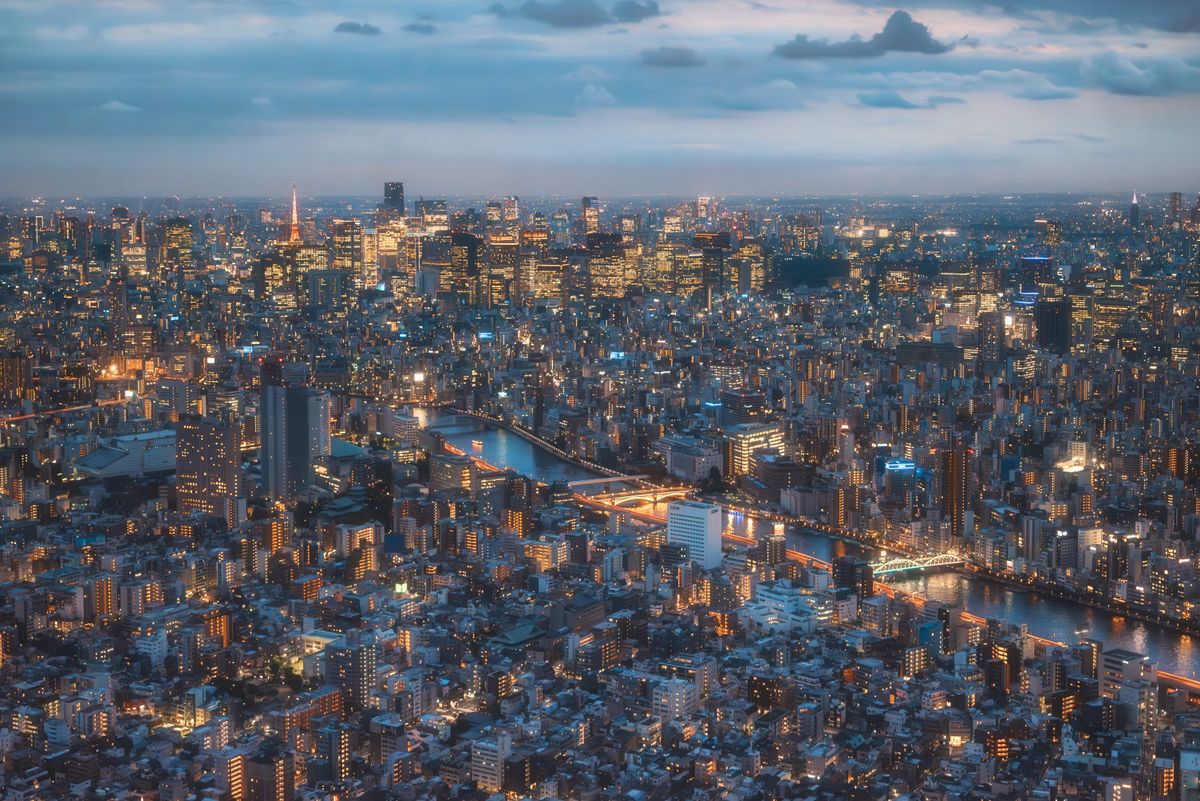
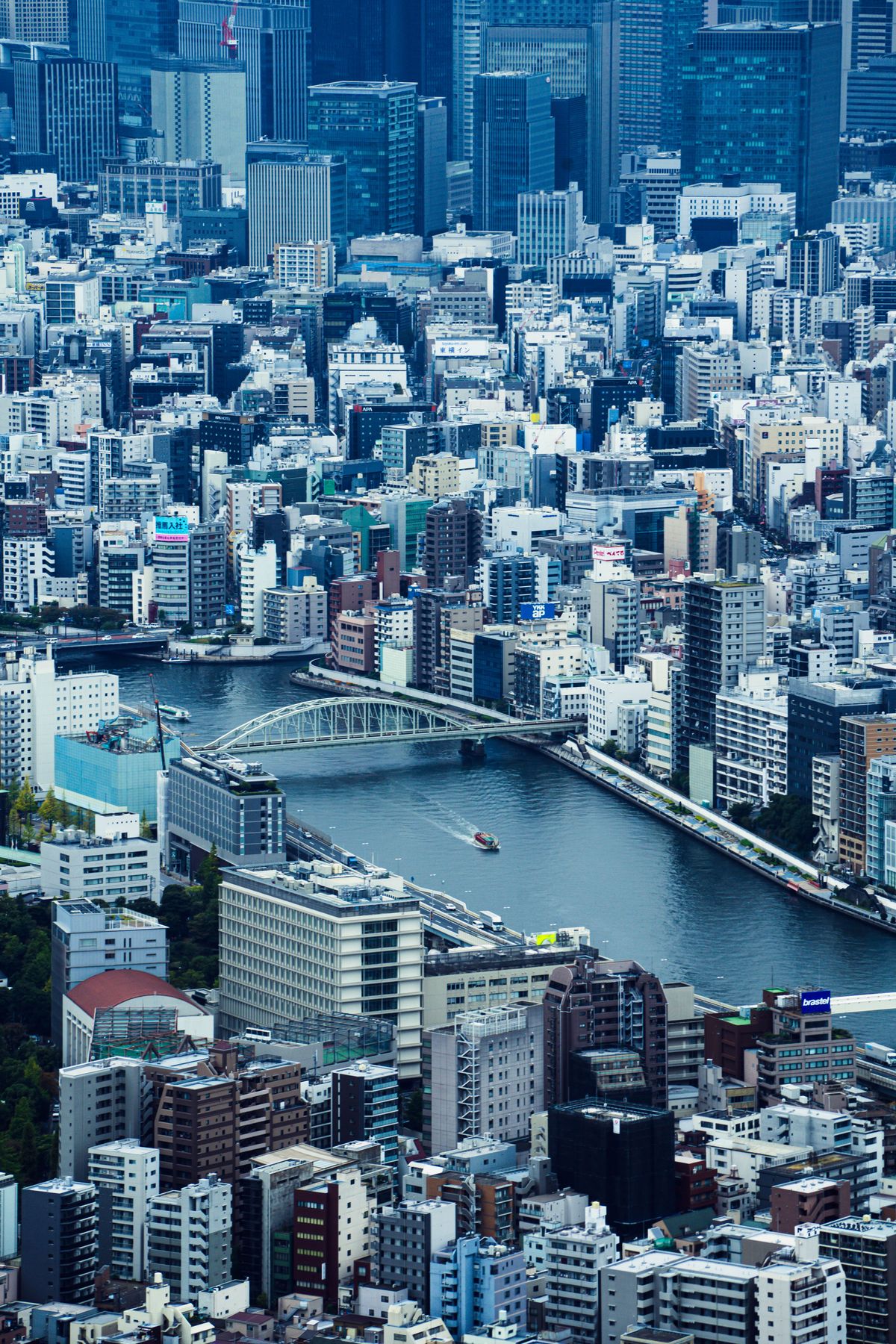
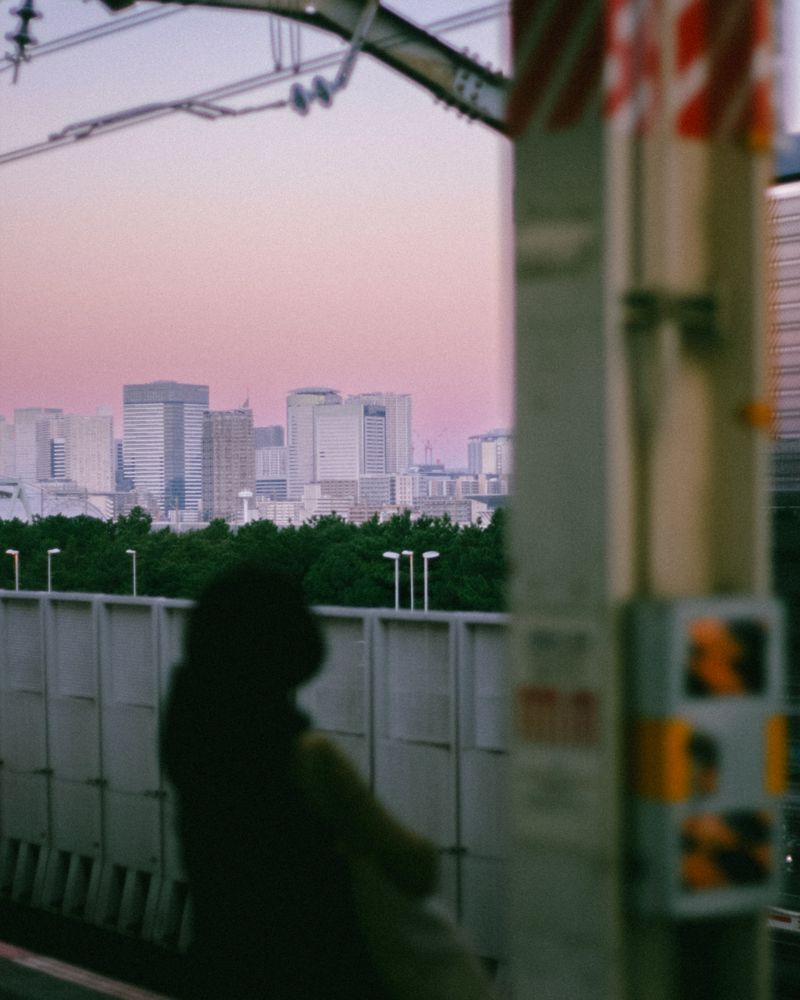
Tokyo Aerial at Night
Tokyo from above after dark — the city's rail-defined grid of illuminated streets extending to the horizon in every direction.
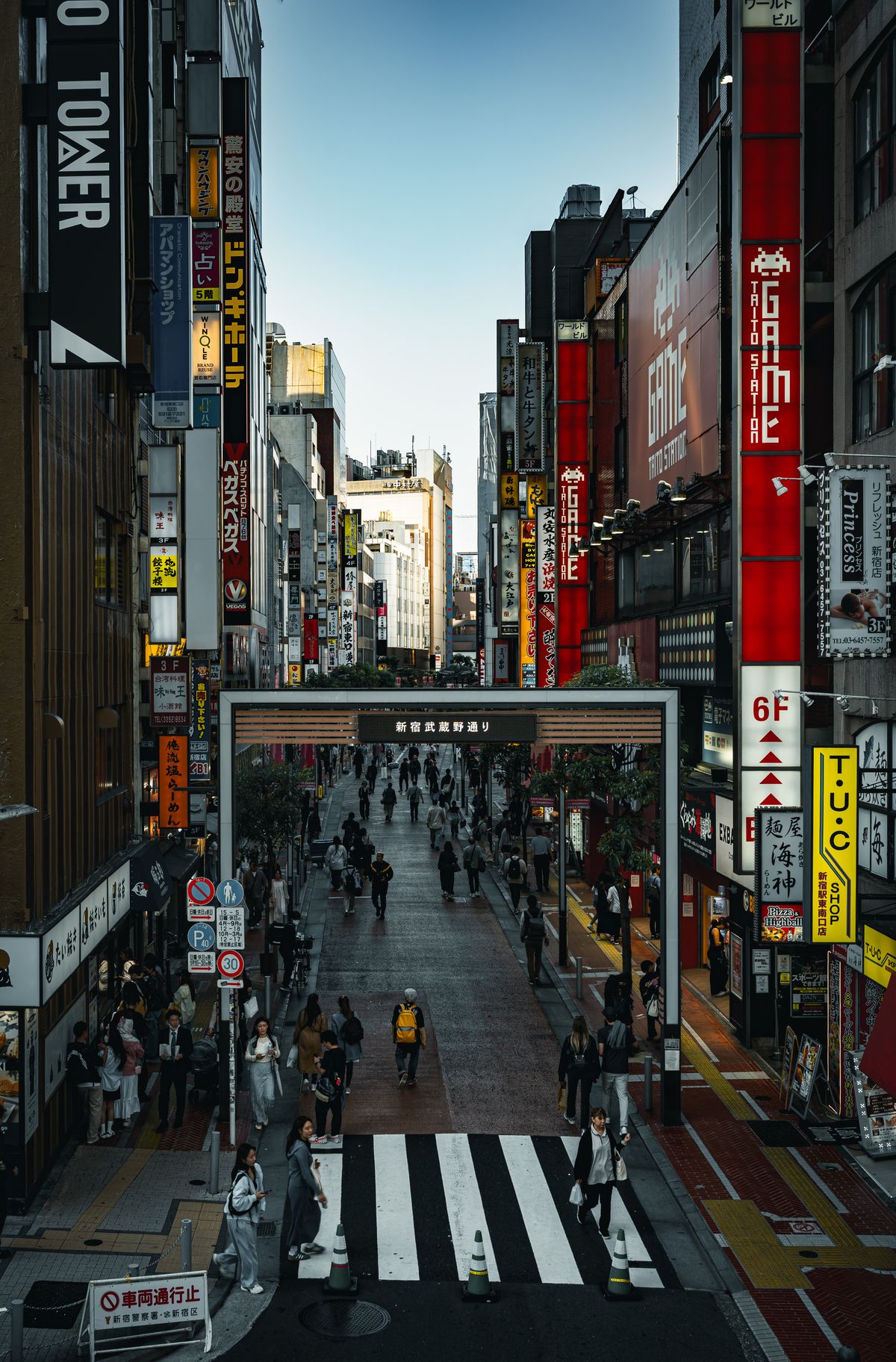
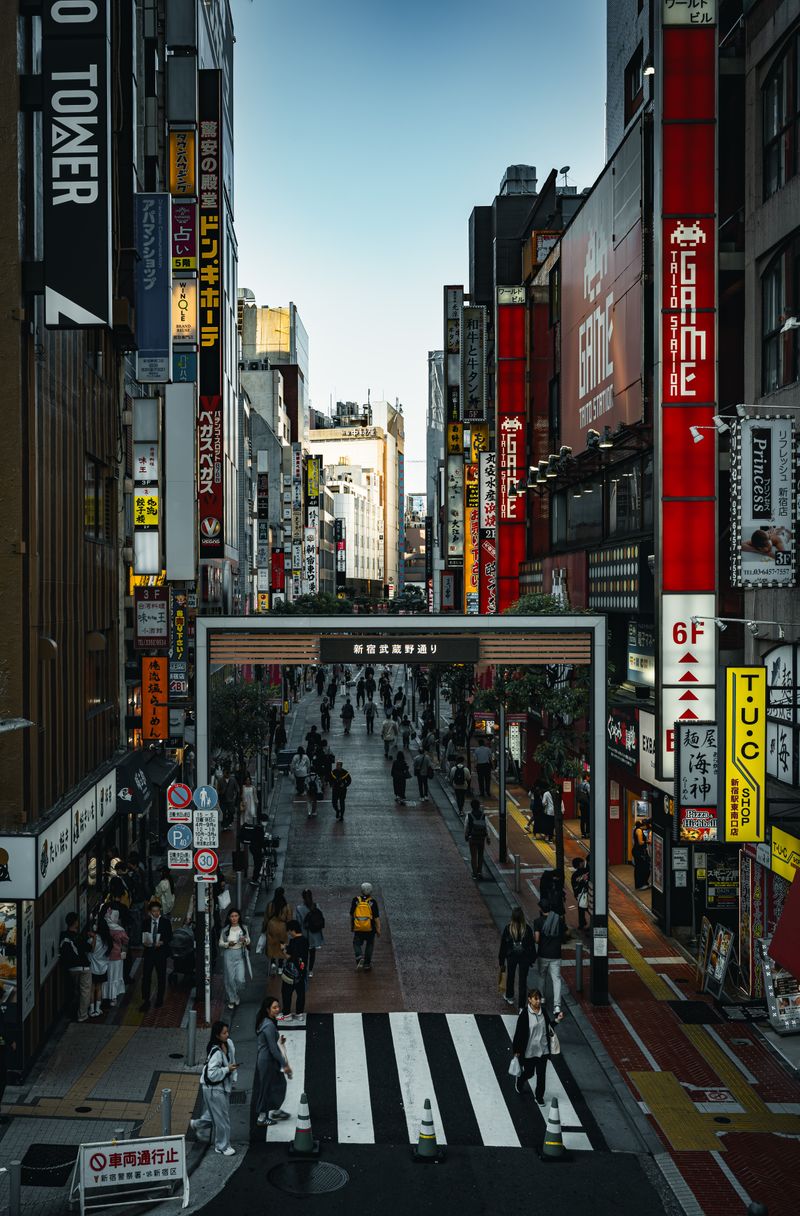
Shinjuku Street Life
Shinjuku at night — entertainment district, transit hub, and the highest concentration of neon in the city.
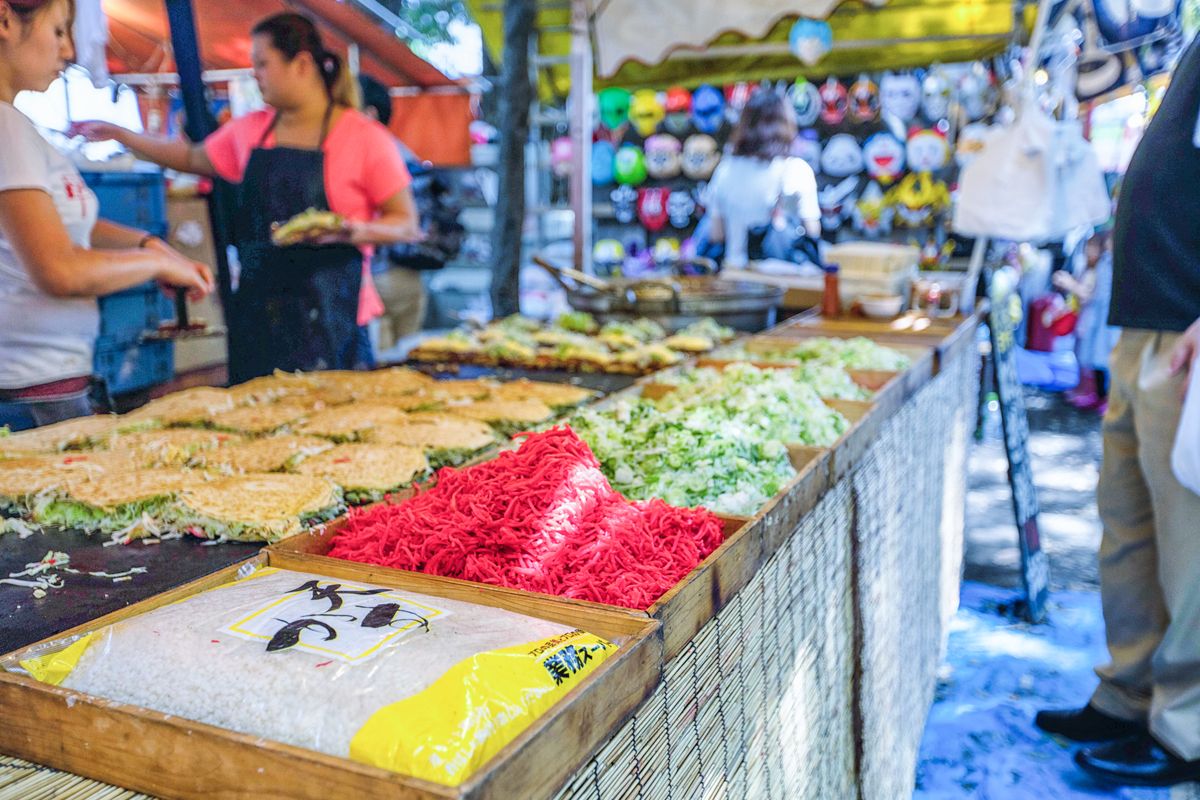
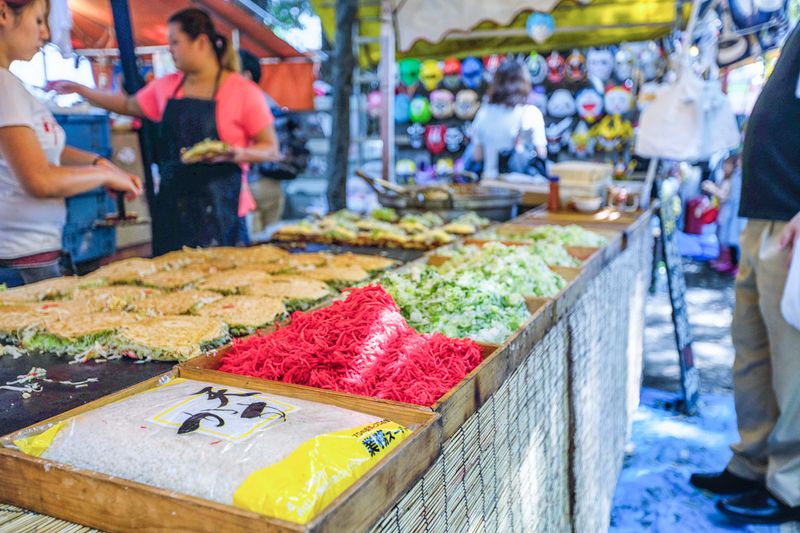
Tokyo Food Market
Tokyo's market culture — from the Toyosu wholesale operation to the covered depachika floors, fresh produce is a defining feature of daily life in the city.
Why People Choose Tokyo
Tokyo's case does not require much making. It is the world's largest functional city: the trains run every 2–3 minutes on the main lines, the infrastructure is maintained to a standard that would be exceptional in any other megacity, the crime rate is near zero in international comparison, and the food scene spans every cuisine at every price point with a consistency that has no equivalent anywhere else. For people who want to live in a major city and have Tokyo as an option, the question is usually not whether Tokyo is good but which Tokyo they are buying into.
The property market reflects this: central-ward Tokyo commands prices that are justifiable on global comparison but steep by Japanese standards. The outer wards and Tama area — still within the Tokyo Metropolitan government boundary and served by the same rail network — offer a meaningfully different price point. Greater Tokyo is not uniformly expensive; it is tiered, and the tiers are commute-distance driven.
Tokyo's rail network effectively defines daily experience — where you live determines your commute route and your neighbourhood. Walking from any station puts a convenience store, a supermarket, and several restaurants within five minutes. The city is genuinely safe at all hours and in all areas.
Haneda Airport to central Tokyo is 30–40 minutes by monorail. Shinkansen to Osaka is 2h30, Kyoto 2h15. The Tokyo Metro and JR lines cover the urban area comprehensively. Car ownership in the central wards is expensive and largely unnecessary.
Central ward apartments (Minato, Shibuya, Shinjuku, Chuo) ¥20M–¥100M+. Mid-ring wards (Suginami, Nerima, Koto) ¥10M–¥25M. Outer wards and Tama area houses ¥5M–¥15M. Tokyo prefecture akiya (primarily Okutama, Hinohara) from ¥500K.
The entertainment and commercial hubs — major transit nodes, department stores, nightlife, and the highest foot-traffic density in the city. Premium prices for central access.
The older, lower-rise residential areas that survived wartime destruction and retain shitamachi (downtown) character — shotengai shopping streets, temples, independent cafes, and lower prices than the brand-name wards.
The fashion and cultural wards for creative industry workers and younger buyers — canal-side streets, vintage clothing, live music venues, and coffee shops in a format that has influenced urban culture globally.
The outer Tokyo commuter zone: 40–60 minutes to central Tokyo, significantly cheaper, more residential, and with access to Mount Takao and the western mountains that most central-Tokyo residents never visit.
Where To Start
Four ways to start in Tokyo
Tokyo's scale makes casual exploration exhausting. Choose one area (Yanaka for old Tokyo, Shimokitazawa for creative Tokyo, Shinjuku for transit Tokyo) and spend two days in its 20-minute radius before moving.
If you're buying to live, test the actual morning commute at rush hour from the area you're considering. Tokyo's trains are famous for a reason; the experience of riding them in both directions at 8am tells you more about daily life than any amount of daytime exploration.
Yanaka, Kagurazaka, or Monzen-nakacho give a sense of what Tokyo looked like before the city rebuilt itself after the war — street-level shotengai, old wooden houses, neighbourhood temples, and a pace that makes the city feel possible.
The Chuo rapid line from Shinjuku passes through Koenji, Kichijoji, Mitaka, and eventually into the Tama suburbs. The price gradient as you ride west tells you a great deal about where Tokyo's residential value actually sits.
Daily Life
The convenience infrastructure of Tokyo daily life is the thing that residents from other countries remark on most consistently: 24-hour convenience stores 100 metres from almost any apartment, supermarkets in most train station buildings, coin laundries accessible at 3am, vending machines in places that appear to have no other reason to exist, and an ambulance and fire response time measured in minutes. Living in Tokyo generates a kind of daily-life ease that is easy to take for granted and difficult to replicate elsewhere.
The flip side is density and cost. Central Tokyo apartments are small by international standards; soundproofing in older buildings can be thin; the commuting crush on major lines at peak hours is a genuine physical experience. The trade-off between centrality and space is the fundamental Tokyo residential negotiation, and it plays out differently depending on whether you are buying for lifestyle or investment.
Food and Drink
Tokyo has more Michelin stars than any city on earth, and it also has ramen shops that have been serving the same bowl since the 1960s with no adjustment necessary. The range is the defining feature. Toyosu Market (the successor to the old Tsukiji wholesale market) processes the seafood supply that feeds the sushi industry; the outer market at the old Tsukiji site remains open for retail and cooked food. Depachika (department store basement food halls) are a food format unique to Japan and best expressed at the Isetan, Takashimaya, and Mitsukoshi locations in the central wards.
The neighbourhood-level food identity in Tokyo is hyperspecific: Koenji has its own particular ramen shops and curry houses, Yanaka has its shotengai snack culture, Shimokitazawa has its coffee shops, Kagurazaka has its French-Japanese fusion zone. Eating in Tokyo rewards knowing where you are as much as what you want.
Culture and Events
Tokyo's cultural infrastructure is the largest in the world by budget and institution count. The National Museum in Ueno contains the world's largest collection of Japanese art and artefacts; the Mori Art Museum in Roppongi Hills runs some of Asia's best contemporary art exhibitions; teamLab Borderless (relocated to Azabudai Hills in 2024) is the most visited art museum in Japan by annual attendance. The live music scene, particularly in Shimokitazawa and the club circuit around Shibuya and Roppongi, operates at a scale and consistency that makes Tokyo one of the world's more serious music cities.
Asakusa, in the eastern Taito ward, provides the most visible historical continuity: Senso-ji temple (Tokyo's oldest, founded in the 7th century), the Nakamise shopping lane, and the streets around Kappabashi (the restaurant supply district, where you can buy the plastic food models from restaurant displays) give a sense of what downtown Tokyo looked like before multiple rounds of destruction and rebuilding.
Weekends and Escape
Mount Takao (599m, accessible in 50 minutes from Shinjuku by Keio line, free to hike) is the most visited mountain in the world by annual ascents. Its proximity to the city — forested slopes, temple at the summit, craft beer cafe at the base — represents Tokyo's weekend geography in concentrated form: serious nature within commuting range of a global city. Nikko (two hours by Tobu limited express) offers UNESCO-listed shrine and temple architecture, mountain lake hiking, and some of the most elaborately decorated buildings in Japan. Kamakura (one hour from Shinjuku via the Shonan-Shinjuku line) has the Great Buddha and 65 temples and shrines in a compact seaside town.
Three Days In Tokyo
A simple first-trip route
Arrive at Shinjuku, eat at the station's basement food court, cross to Shibuya and walk through Omotesando. The concentration of infrastructure and retail in this corridor is the clearest way to understand Tokyo's functional density.
Spend the day in one of the shitamachi neighbourhoods where the street-level texture is still intact. Yanaka's cemetery and temple-lined lanes, or Shimokitazawa's vintage shops and live houses, give a version of Tokyo that the skyline photographs don't.
Take the Chuo rapid from Shinjuku to Kichijoji (Inokashira Park, excellent small restaurants), then continue to Mitaka or Hachioji to see the outer-Tokyo residential zones where the property math changes significantly.