Singaporeans searching "buying a house in Japan as a Singaporean" are usually running from one number: 60%. That's the Additional Buyer's Stamp Duty a foreigner pays on any residential property bought in Singapore, on top of the regular stamp duty, whether it's a first home or a fifth. Buy a house in Japan instead and that tax doesn't exist. Japan has no foreign-buyer surcharge, no approval board, and no restriction on who may own land. A Singaporean citizen buys on exactly the same terms as a Japanese citizen.
That part is simple. What trips people up is everything downstream of "yes, you can buy": how you pay for it without CPF, what Japan actually taxes you on, whether a mortgage is realistic, and what a Japanese visa does and doesn't give you once you own the place. This is the process, step by step, with the numbers that apply specifically to a buyer coming from Singapore.

What Japan Checks Before Letting a Singaporean Buy
Japan places no restriction on foreign ownership of real estate. A Singapore citizen, resident in Singapore or not, can buy a house, an apartment, or bare land on identical legal footing to a Japanese national: freehold title, full right to sell, rent, renovate, or pass it to heirs. There's no minimum investment, no requirement to live in the country, and no need for a visa before you sign anything.
What Japan has added, and what a Singaporean buyer should know before wiring any money, are two reporting rules that took effect in 2026. Since April 2026, non-resident buyers must report the acquisition of Japanese real estate within 20 days, filed through the Bank of Japan to the Ministry of Finance under the Foreign Exchange and Foreign Trade Act. And from October 5, 2026, anyone registering ownership of real estate must declare their nationality on the registration application. Neither rule blocks a purchase or adds a tax. They're transparency measures, not a new ownership restriction, and a licensed judicial scrivener (司法書士, shihō shoshi) handling your registration will file them as a routine part of closing.
Funding the Purchase Without CPF or Capital Controls
The first practical difference from buying at home is that your CPF Ordinary Account is off the table. CPF savings can only be used for property in Singapore; the restriction covers the down payment, legal fees, and every mortgage instalment on a property anywhere else, Japan included. A Japan purchase has to be funded from cash savings, a loan, or both.
The good news is that nothing stops the money leaving Singapore. There have been no exchange controls in Singapore since 1978, and the Monetary Authority of Singapore places no restriction on residents or non-residents remitting Singapore dollars abroad or buying foreign currency. You convert SGD to JPY through your bank or a currency broker and wire it to Japan like any other transfer; no permit, no central bank approval, no cap. Where the SGD/JPY rate sits when you convert matters more than any paperwork. Forecasters had the pair sitting in the 123-127 range through the end of 2026, so recheck a renovation budget you priced in yen six months ago rather than assume the number still holds.
Can you get a mortgage, or is this a cash purchase?
Mostly, it's cash. Japanese banks lend to residents with Japanese income and, in some cases, to permanent residents or those married to a Japanese national. A Singaporean living in Singapore, buying on a tourist entry, is not the profile most Japanese lenders are set up to underwrite, and the handful of banks that do serve non-residents usually require a larger deposit and a local guarantor or existing relationship with the bank. The practical path for most Singaporean buyers is a cash purchase funded from savings, or a loan taken out in Singapore against assets at home, where your income and credit history are already on file. For a closer look at where lending does and doesn't work for non-resident foreigners, see Can I Get a Mortgage in Japan as a Foreigner.
What You'll Pay on Top of the Price
Japan taxes the purchase itself and then taxes you every year you own it. Both apply to a Singaporean buyer exactly as they would to a Japanese citizen; there's no foreigner surcharge anywhere in this list.
- Real estate acquisition tax (不動産取得税, fudōsan shutokuzei): a one-time tax charged after closing, calculated on the property's assessed value rather than the purchase price. The standard rate is 4%, reduced to 3% for residential land and buildings under a relief currently scheduled to run through March 2027.
- Registration and license tax (登録免許税, tōroku menkyozei): paid to register the ownership transfer. The standard rate is 2% of assessed value, but a special measure cuts it to 1.5% for land through March 2029 and to 0.3% for a qualifying residential building through March 2027; initial registration of a new building is 0.4%.
- Judicial scrivener and agent fees. The scrivener who handles registration charges a separate professional fee, and if you use a licensed agent, Japan caps what they can legally charge (covered in full in Japan's Broker-Fee Cap).
- Fixed asset tax and city planning tax. Annual taxes on everything you own going forward, billed by the municipality. The full year-by-year breakdown is in Property Tax in Japan: What a House Actually Costs You Every Year.
Where Singapore and Japan diverge sharply is inheritance. Singapore abolished estate duty in 2008 and charges nothing on an estate passed to heirs. Japan still does, up to 55% on the portion above an exemption of ¥30,000,000 plus ¥6,000,000 per heir. Japan and Singapore have an income tax treaty, but it does not extend to inheritance tax, so a Japanese house you pass on to your children is assessed under Japanese law regardless of what the treaty covers elsewhere. If the property is more than a lifestyle purchase, raise this with a cross-border tax adviser before you buy, not after.

The Consumption Tax Number That Trips People Up
Japan charges 10% consumption tax on the building portion of a new property sale when the seller is a business, a developer selling a newly built condo, for instance. Land is always exempt from consumption tax, no matter who sells it. And if you're buying an existing house or apartment from an individual owner rather than a company, the building portion is exempt too, because a private seller isn't registered as a taxable business. Most of the akiya and older houses that draw Singaporean buyers are exactly this, land plus an existing structure, sold by the owner or their estate, with no consumption tax on either half. Where it does apply is a newly built house or a brand-new condo unit bought straight from a developer, where the 10% lands on the building price alone, not the land underneath it.
This is also where the choice between a city condo and a detached house changes the math, not just the lifestyle. A new-build Tokyo or Osaka condo from a developer carries that consumption tax on the structure; a resale condo from a private owner, or a detached house anywhere in the country, generally doesn't. For many Singaporean buyers, used to Singapore's own GST-inclusive new-launch pricing, this comes as a pleasant surprise rather than a hidden cost.
What Your Bank Will Ask Before a Large Transfer
Moving the kind of sum a house purchase requires triggers standard anti-money-laundering checks on both ends, not a Japan-specific hurdle. Your Singapore bank or currency broker will typically ask for the purpose of the transfer, the recipient's details (the seller's agent escrow account or the scrivener's trust account, depending on how the deal is structured), and a source-of-funds declaration, the same documentation a transfer of that size would trigger for a Singapore property purchase or any other large remittance. Lining this up before you need to wire the deposit, rather than scrambling once you're under a contract deadline, is the difference between a same-day transfer and a week's delay waiting on compliance paperwork.
Owning the house is not a visa, and a visa is not a reason to buy
This is the misconception that causes the most wasted time. Buying Japanese property grants no residency status whatsoever. Ownership and immigration run on completely separate tracks, and nobody has ever gotten a Japan visa out of a property deed. Your house is yours permanently the moment you register it; how long you're allowed to stay in it depends entirely on your visa status, which you'd need regardless of whether you own, rent, or are just visiting.
For a Singapore passport specifically, entry is easy. Singaporeans get visa-free entry to Japan for up to 90 days for tourism or business, with a valid passport and typically a return ticket. That covers viewing trips, closing, and furnishing comfortably. It does not cover living there full-time. If the plan is to actually reside in the house rather than visit it a few times a year, you need a separate visa category: work, spouse, business manager, or one of Japan's longer-stay options, each with its own eligibility rules that have nothing to do with the property you bought. The full detail on what buying does and doesn't unlock is in A Visa Is Not a House Key and Do You Need a Visa to Buy Property in Japan.
The actual steps, in order
- Shortlist and view. Most of this can be done from Singapore. Search listings, narrow by prefecture and budget, and if a trip isn't practical before you're ready to commit, a buyer's agent or proxy inspection can view on your behalf.
- Make an offer and sign a preliminary agreement. In Japan this typically runs through a licensed agent who prepares disclosure documents and a purchase agreement in Japanese. If you don't read Japanese, insist on an English summary before you sign anything, and have someone independent check it rather than relying solely on the selling side's translation.
- Pay the deposit. Wired in from Singapore through your bank; no permit needed on the Singapore side, but your bank will ask the standard source-of-funds questions any cross-border wire of this size triggers.
- Engage a judicial scrivener. This is the licensed professional who registers the ownership transfer at the Legal Affairs Bureau. An English-speaking scrivener makes this step dramatically less stressful; see The Person Who Makes the Purchase Legal for how to find one.
- Close and pay the balance. Funds transfer, keys change hands, and the scrivener files the registration, including the FEFTA acquisition report and nationality declaration that apply to a non-resident buyer.
- Register for fixed asset tax. The municipality will bill you annually from the following tax year; if you're not resident in Japan, you'll want someone local, a property manager or the agent who sold you the house, to handle the paperwork and payment on your behalf.
What Singaporean Buyers Tend to Choose Between a Condo and a House
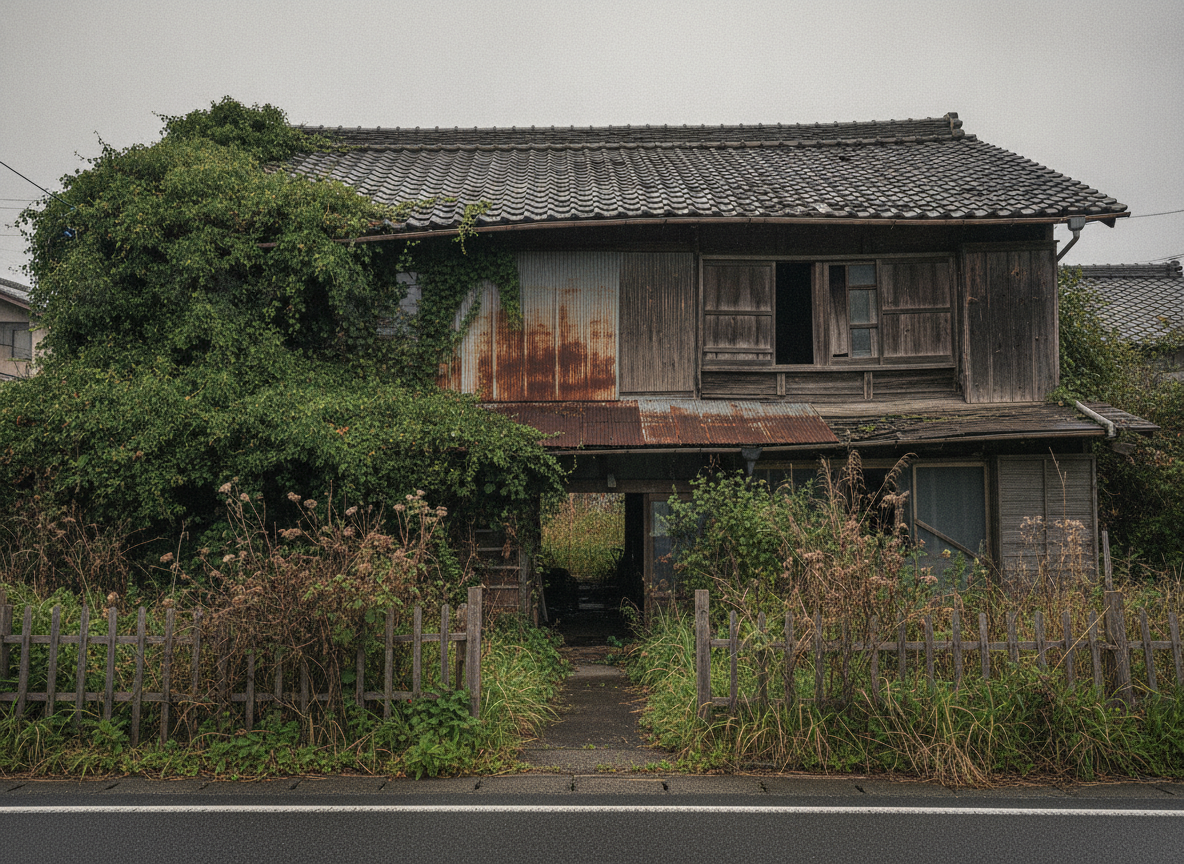
The steps above apply whether you're buying a central Tokyo apartment or a wooden house in the countryside, but the two paths diverge in practice. A city condo (マンション, manshon) usually comes with a management company already handling the building, which matters more than it sounds for a buyer who isn't relocating, since someone local is already paid to maintain the common areas and respond if something goes wrong. A detached house, especially an older one bought at the lower end of the market, carries no such structure by default. You either arrange a property manager yourself or plan to handle issues remotely, which is a harder thing to do well from Singapore than it is to do from within Japan. Neither choice is wrong; it's a question of how hands-on you want ownership to be and how often you expect to actually be in the house. The patterns in what Singaporean buyers are searching for and ending up with, central Tokyo apartments competing directly with ski-town houses in Hokkaido and Nagano, are broken down in detail in What Singaporean Buyers Want in Japan.

Managing the house once you're back in Singapore
A house in Yamanashi or Fukuoka doesn't run itself from Marina Bay. If you're not relocating, factor in a property manager for a holiday or rental home, someone local who can handle mail, check on the property between visits, and deal with anything that comes up while you're twelve hours and a flight away. If letting the property is part of the plan, Japan's minpaku rules cap most short-term rentals at 180 nights a year unless you're operating under a hotel or ryokan license, which changes the economics of treating a Japanese house purely as an Airbnb investment. That's covered in full in Japan's Minpaku Law.
Where this leaves a Singaporean buyer
Strip away the unfamiliar paperwork and the process is closer to buying in Singapore than it looks from the outside -- an agent, a contract, a licensed professional handling the legal transfer, and taxes due at closing and every year after. The differences that actually matter are the ones with real money attached, no ABSD, no CPF access, a mortgage that's unlikely to come from a Japanese bank, and an inheritance tax regime that looks nothing like home. None of those are reasons not to buy. They're reasons to budget the purchase in cash, convert currency when the rate suits you rather than when you're forced to, and get the scrivener and tax questions settled before you wire a deposit.
If you'd rather not run point on contract review, the first contact with the seller's agent, and the closing coordination yourself, Akiya Japan Buyer Support is a licensed brokerage that takes a buyer through the whole process, from first contact with a listing's seller to the keys. A 30-minute consultation is US$25, booked through the booking page or the green Buyer Support button on any property listing.
Sources
- Additional Buyer's Stamp Duty (ABSD) rates and calculator, HomeJourney, 2026
- Exchange Control Act 1953, Singapore Statutes Online
- Monetary Authority of Singapore, regulatory guidance on cross-border remittance
- Property Taxes in Japan: Rates and Reliefs, Housing Japan
- Inheritance Tax, National Tax Agency of Japan
- Visa to Japan, Embassy of Japan in Singapore