Japan is aging faster than any nation in history. By 2025, every member of the post-war baby boom generation has turned 75 or older. The country's population, which peaked at 128 million in 2008, has already dropped to 123 million — and government projections from the National Institute of Population and Social Security Research (IPSS) show it falling to 107 million by 2040 and below 100 million by 2056.
For the property market, these numbers are not abstract. They translate directly into houses without occupants, neighborhoods without young families, and municipalities desperate enough to give buildings away for free. Japan's 2023 Housing and Land Survey counted 9 million vacant homes — roughly 13.8% of all residential properties. That figure has doubled since 1993, and the trajectory suggests it will keep climbing.
But here is what most commentary misses: demographic decline does not create a uniformly bleak market. It creates a profoundly polarized one. Prices in central Tokyo keep hitting record highs, while entire rural towns offer houses for less than the cost of a used car. For foreign buyers who understand where the pressure points are, Japan's demographic shift is creating some of the most unusual property opportunities in the developed world.
The Numbers Behind the Shift
Japan became the world's first "super-aged" society in 2006, defined as having more than 21% of the population aged 65 or older. Today that share has reached 29%. Children under 15 represent just 11.3% of the population — the lowest proportion since records began.
The birth rate tells the starkest story. Japan recorded approximately 706,000 births in 2025, the lowest annual figure since the government began tracking in 1899. The total fertility rate has fallen to 1.2 children per woman, far below the 2.1 replacement level. For context, Japan would need roughly 600,000 more births per year just to stabilize its population at current levels.
What the IPSS Projections Actually Say
The 2023 IPSS revision, using medium-fertility assumptions, projects:
- Working-age population (15–64) falls below 70 million by 2029, below 60 million by 2040, and below 50 million by 2056
- Total population drops to approximately 87 million by 2070 — 69% of its 2020 level
- Population aged 65+ will account for roughly 40% of all residents by the 2060s
- Single elderly households are projected to reach 20% of all Japanese households by 2050
These are not worst-case scenarios. They are the mid-range estimates from Japan's own demographic research institute, the most authoritative source available.
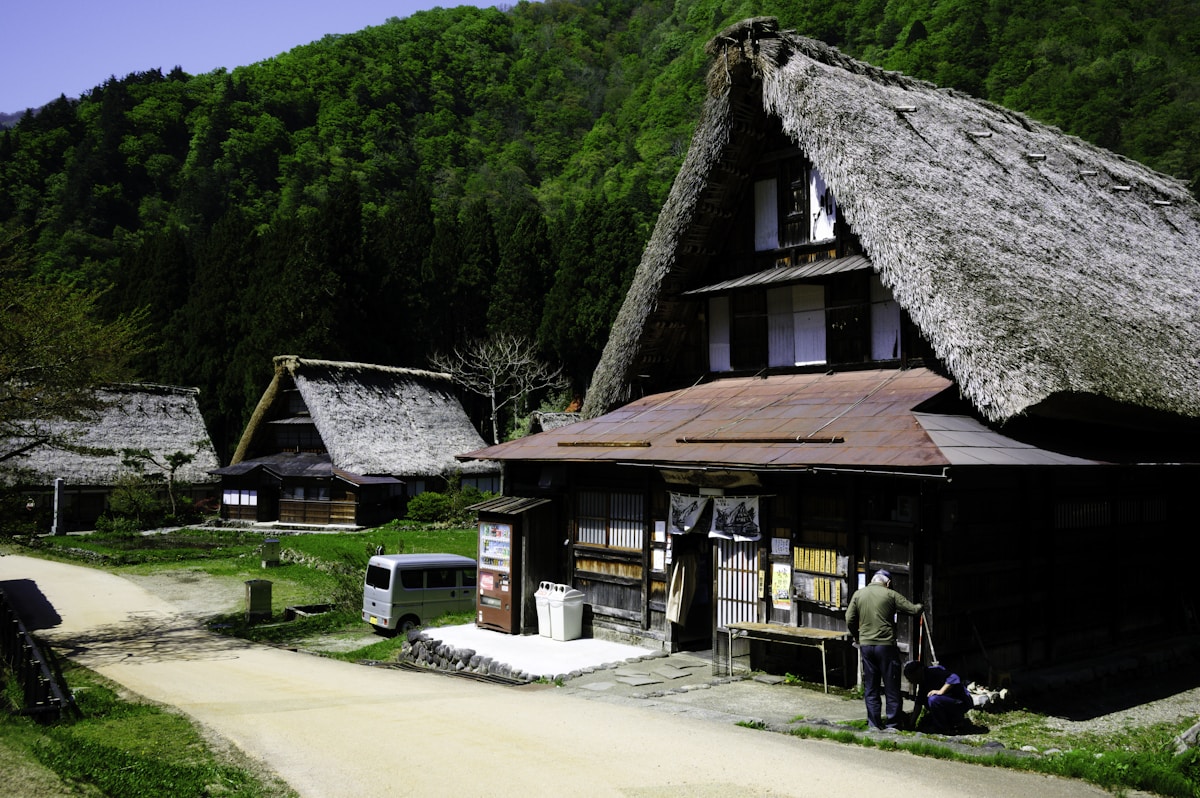
A scenic Japanese village with traditional houses — communities like this are seeing rising vacancy rates as younger generations move to cities — Unsplash
How Demographics Drive the Akiya Problem
The connection between aging and vacant houses is mechanical, not speculative. A homeowner in their 80s enters a care facility or passes away. Their children — now in their 50s or 60s — already own homes elsewhere, often in a different prefecture entirely. The inherited property sits empty.
Approximately 59% of Japan's vacant houses are inherited properties. The legal and emotional complexity of dealing with them is considerable. Japan's inheritance system historically divided property among multiple heirs, and after two or three generations of this, a single rural house might have 10, 15, or even 20+ registered co-owners scattered across the country. Getting unanimous consent from all of them to sell has been, until recently, nearly impossible.
The Inheritance Bottleneck
This is where recent legal reforms matter enormously. Before April 2024, there was no legal requirement to register inherited property. Heirs could (and routinely did) simply ignore properties they had inherited, leaving ownership records unchanged for decades. The result was millions of properties with untraceable owners.
The Amended Civil Code and Real Property Registration Act, effective April 1, 2024, changed this fundamentally:
- Mandatory registration: Heirs must register inherited real estate within three years of becoming aware of their ownership
- Retroactive deadline: Properties inherited before April 2024 must be registered by March 31, 2027
- Penalties: Non-compliance carries fines of up to ¥100,000
- State forfeiture option: Heirs can now surrender unwanted land directly to the national government (though buildings must be demolished first at the owner's expense)
The 2027 retroactive deadline is particularly significant. Over the next year, thousands of previously untraceable properties will be forced onto the official record. Many of those newly registered owners will have zero interest in maintaining rural houses they have never visited — and strong financial incentive to sell or dispose of them.
The Policy Pressure Cooker
The Japanese government has moved from gentle encouragement to genuine coercion on vacant houses. The shift has been remarkably fast by Japanese legislative standards.
The Vacant House Special Measures Act (Revised 2023)
The original 2015 Act gave municipalities power to designate dangerous vacant houses as tokutei akiya (specified vacant houses) and order repairs or demolition. The 2023 revision expanded this in critical ways:
- New "management-deficient" category: Properties that are not yet dangerous but show signs of neglect can now be flagged, triggering loss of the residential land tax reduction
- Property tax penalty: Owners of designated properties can face up to six times their normal property tax — the reduction from the standard residential land rate (which cuts tax by one-sixth) is simply removed
- Municipal intervention powers: Local governments can now act on vacant houses that threaten their surroundings — risk of collapse onto roads, fire hazards, unsanitary conditions — without the legal obstacles that previously slowed enforcement
- Mandatory municipal planning: Every municipality must now develop a formal vacant house countermeasure plan
The tax penalty alone is reshaping owner behavior. A rural property with a ¥30,000 annual property tax bill could suddenly face ¥180,000 — more than the land is worth in many cases. This is pushing reluctant owners toward selling, donating, or registering properties on akiya banks.
Tokyo's "Ending Note" Initiative
In 2024, the Tokyo Metropolitan Government distributed a guidebook called Your House's Ending Note (あなたの家のエンディングノート) to elderly homeowners. The booklet walks owners through planning for what happens to their property after death or incapacity — an unprecedented acknowledgment that the government sees the coming wave of vacant houses as an inevitability requiring preemptive action.
The Opportunity Window: Why the Next Decade Matters
Several forces are converging right now that make the 2025–2035 period uniquely significant for akiya buyers.
1. The Baby Boomer Property Release
Japan's baby boom generation (born 1947–1949) is now entirely 75 or older. This cohort oversaw Japan's greatest period of suburban housing construction. The homes they built in the 1970s and 1980s — substantial houses on generous plots in commuter suburbs and regional cities — are beginning to enter the market in volume as their owners move into care facilities or pass away.
Unlike the truly rural akiya that have sat vacant for decades, many of these properties are in semi-urban locations with reasonable infrastructure. They represent a qualitative upgrade in what is available at akiya-level prices.
2. The Yen Discount
The Japanese yen has been persistently weak since 2022, hovering well below its historical averages against major currencies. For buyers earning in dollars, euros, or pounds, Japanese property is effectively on sale. In 2025, over 27% of property purchases in Japan were made by international investors — up from 21% five years prior. In Tokyo, foreign buyers accounted for 20–40% of new apartment sales.
While the yen will eventually strengthen, the current window gives foreign buyers disproportionate purchasing power in a market where many properties are already remarkably affordable by global standards.
3. Municipal Desperation and Generosity
Over 1,000 municipalities now operate akiya bank programs, and the subsidies available have grown significantly. Renovation grants range from ¥500,000 to ¥5,000,000 depending on the municipality, with some notable examples:
- Wakayama: Up to ¥2,000,000 for akiya renovation, with additional support for guesthouse conversion
- Okayama Prefecture: Up to ¥1,200,000 in renovation grants
- Hokkaido: Up to ¥3,000,000 for qualifying renovations
- Hyogo Prefecture: ¥500,000–¥1,500,000 for energy efficiency upgrades or cultural preservation
- Osaka Prefecture: Matching funds for urban akiya renovation plus relocation support
Many programs also bundle additional incentives: relocation subsidies, reduced property tax rates for new residents, and child-rearing bonuses. Foreign buyers are eligible for most municipal grant programs, though you will typically need to apply before starting any renovation work — retroactive claims are rarely accepted.
4. The Minpaku and Tourism Upside
Japan's tourism boom shows no signs of slowing. Former akiya are being converted into guesthouses, vacation rentals, artist residencies, and co-working spaces across the country. The minpaku (short-term rental) legal framework, while stricter than in many countries, allows for licensed operation in most areas.
Properties in scenic or culturally significant locations — near onsen towns, ski areas, coastal villages, or historic districts — carry a dual value proposition: affordable purchase price plus income-generating potential that can offset renovation costs within a few years.
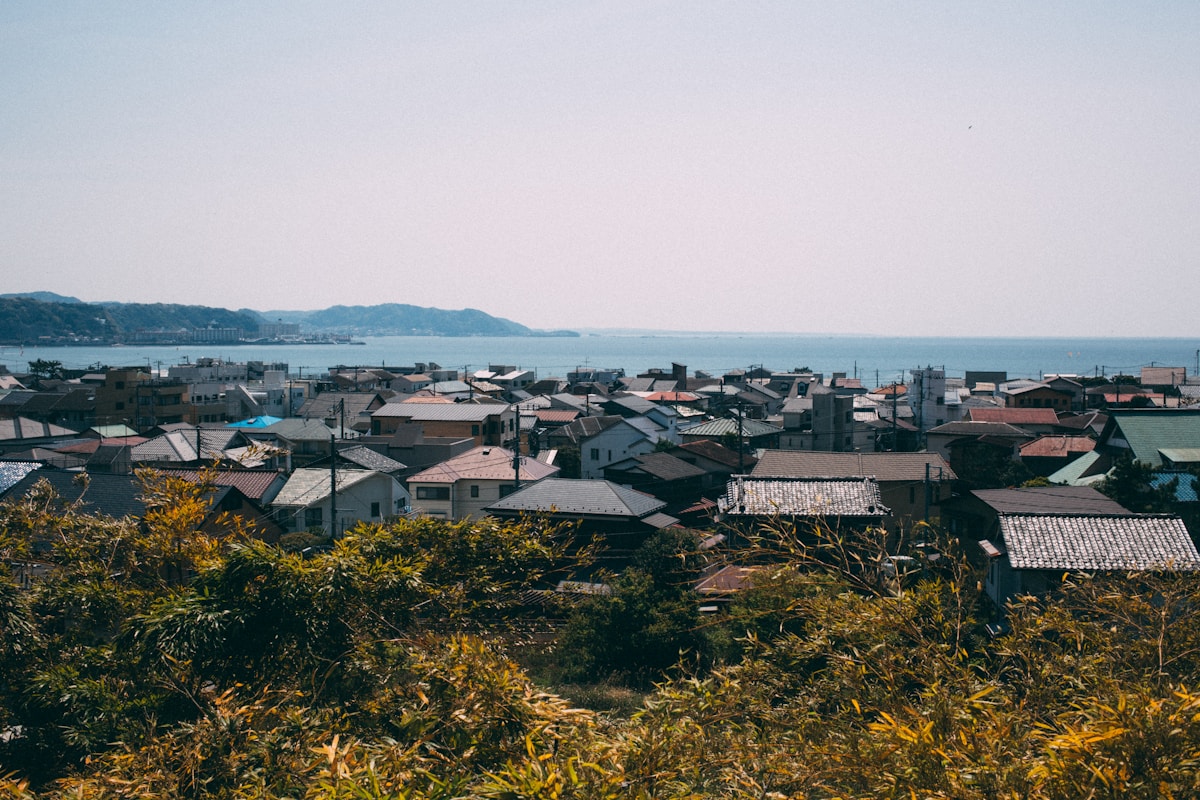
Aerial view of a Japanese residential area — Japan's 9 million vacant homes are spread across neighborhoods like this throughout the country — Unsplash
Market Polarization: Where Opportunity Lives
Japan's property market is splitting into two distinct realities, and understanding this divide is essential for foreign buyers.
The Urban Premium
Tokyo, Osaka, and other major metropolitan areas continue to see price increases driven by foreign investment, tourism demand, and the concentration of economic activity. Tokyo remained the number one city globally for cross-border real estate investment for the seventh consecutive year. Central Tokyo yields are compressed (2–3%), while regional cities like Osaka and Fukuoka offer more compelling returns (4–5%+).
The Rural Discount
In rural and semi-rural areas, the math works completely differently. The demographic pressure creates genuine buyer's markets where negotiating power sits firmly with the purchaser. Properties listed on akiya banks are priced to move — often well below construction replacement cost. Demolition of a modest 100-square-meter home costs ¥1,000,000–¥3,500,000, which means that in many cases, the land alone is worth less than the cost of removing the building on it.
This is why "free houses" exist in Japan. They are not marketing gimmicks. They are properties where the owner's most rational economic choice is to give the building away rather than pay for demolition and continue paying property taxes on vacant land.
The Sweet Spot: Regional Cities and Commuter Towns
The most interesting opportunities for foreign buyers often sit between these extremes. Regional cities like Matsumoto, Takayama, Kurobe, Hagi, and Onomichi offer the combination of affordable property, functioning infrastructure (hospitals, shops, transport), and enough cultural or natural appeal to support tourism income.
Commuter suburbs of major cities — 60 to 90 minutes from central stations — are seeing rising vacancy rates as younger generations prefer urban apartments. These areas often have solid construction from the 1980s, reasonable plot sizes, and connectivity that makes them viable for remote workers or weekend use.
What Is Actually Happening on the Ground
The akiya revitalization movement is no longer theoretical. Across Japan, vacant houses are being transformed into functional spaces that serve both their new owners and surrounding communities.
On Ōmishima Island in Ehime Prefecture, foreign buyers have converted an akiya into a guesthouse and honeybee farm. In the mountains, instrument-builders have turned 80-year-old houses into workshops and inns that draw hundreds of visitors to annual festivals. Former vacant homes now operate as restaurants showcasing traditional wood joinery, as co-working spaces in mountain villages, and as artist studios in fishing towns.
These are not isolated curiosities. They represent a pattern: buyers (both Japanese and foreign) acquiring inexpensive properties and creating small, community-integrated businesses that bring economic activity back to depopulated areas. Municipal governments actively encourage this pattern because each successful project makes the next one easier — it proves the model and attracts further interest.
The municipalities that are succeeding at akiya revitalization share a common approach: they treat new residents — including foreign ones — as community assets rather than administrative problems. The grants, subsidies, and support systems they offer reflect a pragmatic recognition that depopulation is a bigger threat than any cultural adjustment.
Risks and Realities: What Could Go Wrong
Demographic opportunity does not eliminate risk. Foreign buyers should approach the akiya market with clear eyes about the challenges.
Infrastructure Withdrawal
As populations shrink, municipalities face declining tax revenue. Some will be unable to maintain roads, water systems, and public services at current levels. The Japanese government's push toward "compact cities" — concentrating services in urban cores — means that truly remote properties may lose infrastructure support over time. Before buying, check whether the municipality has published a ritteki tekiseika keikaku (location optimization plan) that might designate your area as outside the service maintenance zone.
Liquidity Risk
A property bought cheaply in a depopulating area may be very difficult to resell. If your exit strategy depends on capital appreciation, rural akiya are the wrong investment. The opportunity lies in use value (personal enjoyment, rental income, business operation) rather than resale value.
Renovation Cost Overruns
Japan's construction industry is itself affected by the aging workforce. The average farmer is 70 years old; roughly a third of construction workers are over 55, with only one in ten under 30. Labor shortages are pushing renovation costs upward, particularly in rural areas where fewer contractors operate. Budget a 20–30% contingency above initial estimates.
Legal Complexity
Even with the 2024 inheritance registration reforms, some properties will still have unclear ownership chains. Title searches through the tōki (registration) system are essential. Properties with unresolved multi-heir situations should be approached with extreme caution unless all co-owners have explicitly consented to the sale.
For navigating these complexities, working with a licensed agent who specializes in foreign buyer transactions can save significant time and prevent costly mistakes. Teritoru, our licensed partner agent, handles the legal compliance, title verification, and negotiation process in both English and Japanese — particularly valuable when dealing with inherited properties or municipal akiya bank listings where the seller's situation may be unusual.
The 10-Year Outlook: What to Expect
Based on demographic certainties (not forecasts — these people are already born, or not born), here is what the next decade likely holds for the akiya market:
2025–2027: The Registration Wave
The March 2027 deadline for retroactive inheritance registration will force millions of previously invisible properties onto official records. Expect a measurable increase in akiya bank listings and private sales as newly registered owners decide what to do with properties they have been ignoring for years.
2027–2030: Municipal Consolidation
Smaller municipalities will increasingly merge or share services. Some akiya bank programs will consolidate into regional platforms. The most proactive municipalities will differentiate themselves with competitive subsidy packages and English-language support, creating clear "winners" among rural towns competing for new residents.
2030–2035: The Vacancy Peak
Vacancy rates in many rural prefectures could exceed 25–30%. The national vacancy rate, already at 13.8%, will likely climb toward 20%. However, this peak will also mark the point of maximum opportunity: the widest selection of properties at the lowest prices, combined with the most generous municipal support programs.
At the same time, Japan's labor shortage is projected to reach 11 million workers by 2040, which could drive further policy liberalization around immigration and foreign participation in local economies — potentially making it easier for foreign property owners to obtain residency and operate businesses.
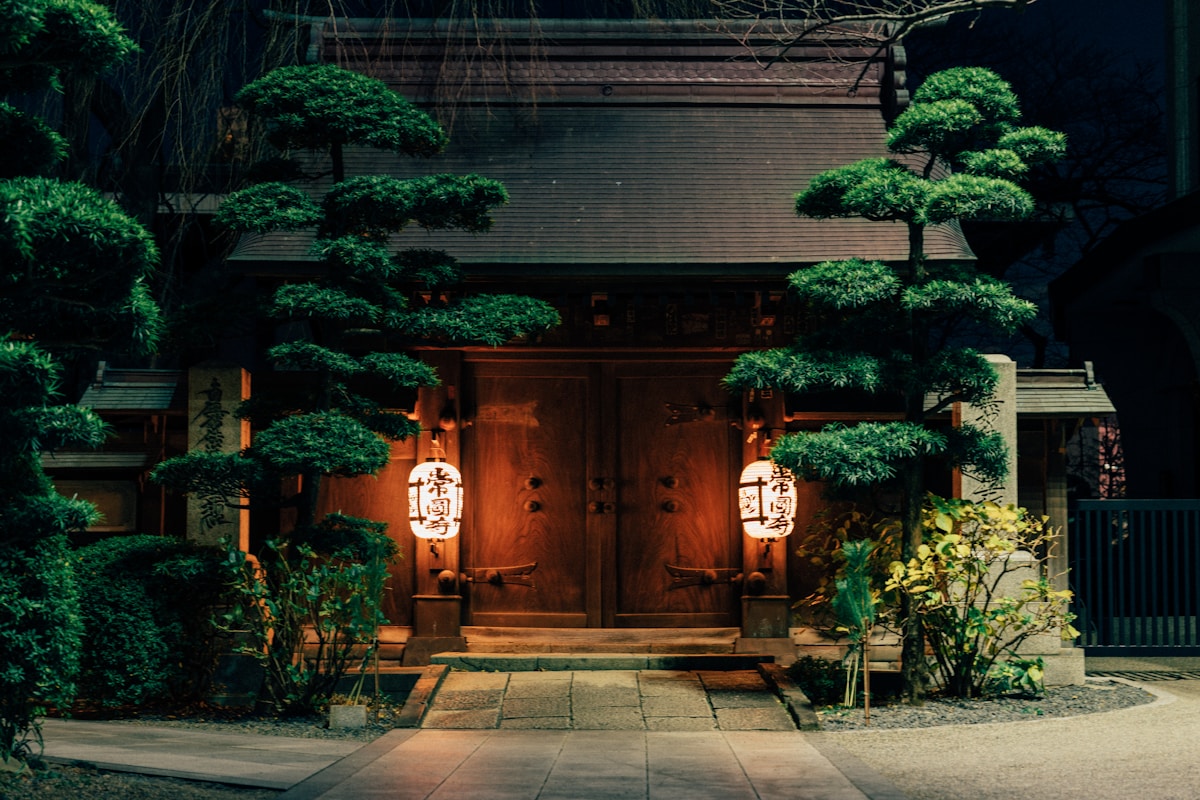
A traditional Japanese entrance illuminated at night — renovated akiya properties can become atmospheric retreats, restaurants, or guesthouses — Unsplash
Practical Takeaways for Foreign Buyers
If you are considering entering the akiya market, the demographic backdrop suggests several strategic principles:
- Buy for use, not speculation. Rural property values are unlikely to appreciate in real terms. Buy because you want to live there, run a business, or generate rental income — not because you expect to flip it.
- Prioritize infrastructure resilience. Check the municipality's fiscal health and population trajectory. A town that is growing or stable (even modestly) is a fundamentally different proposition from one losing 3% of its population per year.
- Time your purchase around the registration deadline. The March 2027 inheritance registration deadline should release a meaningful wave of inventory. Buyers who are prepared to act quickly when new listings appear will have the widest selection.
- Stack subsidies. Renovation grants, relocation incentives, and energy efficiency programs can often be combined. Research municipal programs thoroughly before committing to a location — the difference between a generous municipality and an indifferent one can be ¥3,000,000 or more in available support.
- Factor in construction labor costs. Renovation quotes from 2023 may not hold in 2026. The construction workforce shortage is real and worsening. Get current quotes and include substantial contingency.
- Consider regional cities over deep rural. The best risk-adjusted opportunities often sit in regional cities or commuter-belt towns — close enough to services and transport to retain long-term viability, but far enough from metro centers to benefit from akiya-level pricing.
A Structural Shift, Not a Trend
The akiya phenomenon is sometimes framed as a curiosity — the land of cheap houses, a quirky footnote in Japan's economic story. That framing understates what is happening. Japan is undergoing the most dramatic peacetime demographic transformation any developed nation has experienced. The housing market consequences are structural and irreversible on any human timescale.
For foreign buyers, this creates a genuinely rare situation: a first-world country with excellent infrastructure, strong rule of law, no restrictions on foreign property ownership, and a growing surplus of properties that municipalities are actively trying to place with new owners. The combination does not exist anywhere else.
The opportunity will not last forever in its current form. As the most desirable properties are absorbed — the scenic locations, the structurally sound houses, the well-connected commuter towns — what remains will skew increasingly toward properties that are vacant for good reason. The next decade represents the widest window of opportunity. After that, the selection narrows even as the total number of vacant houses continues to climb.
Understanding the demographic forces at work is not just academic context. It is the single most important factor in making a sound akiya purchase decision — choosing the right location, timing your entry, and setting realistic expectations for what your property will be worth in 20 years. Japan's population decline is a certainty. The opportunity it creates is real, but it rewards the informed buyer far more generously than the impulsive one.