A renter in Sydney or Melbourne signs a lease, pays it for two years, and at the end owns nothing. No land, no equity. The money has bought shelter and then it's gone. That's the ordinary arithmetic of renting anywhere, but in Australia right now the numbers have grown large enough to buy something permanent on the other side of the water. Two years of a capital-city lease is roughly the price of a freehold house in Japan. Not a deposit on one. The whole property, land included.
This isn't a rural-only story, and it isn't a fantasy about one-yen houses. Japan's market has town homes near rail, coastal properties, ski-town stock and city apartments, at prices that still read as small against an Australian rent bill. Here's the maths, both sides of it.

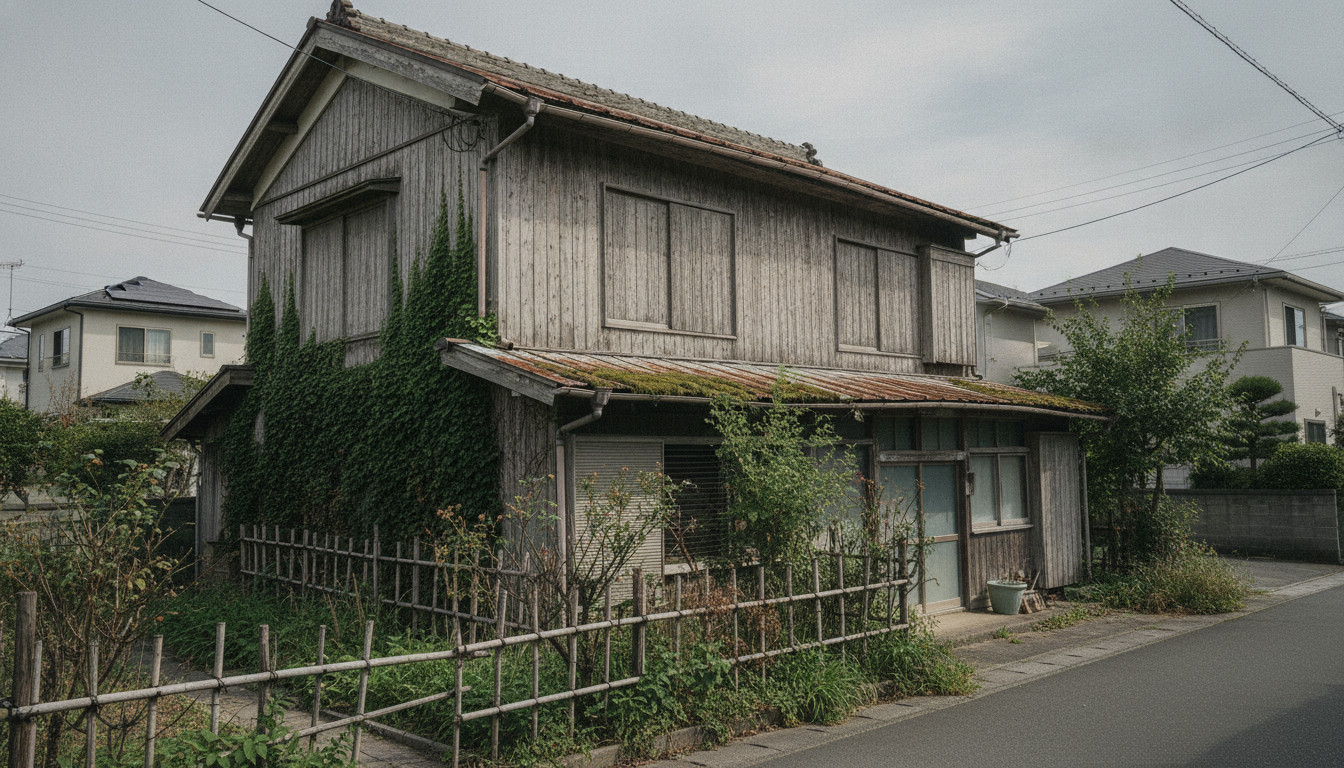
A detached house on a quiet corner in regional Japan. Homes like this sell freehold for the price of a year or two of Australian rent. Photo: Huu Huynh / Pexels
Where Australian rent is, and where it's heading
Start with what's on the table today. PropTrack, which tracks advertised rents, has the national median at a record AUD 670 a week in the June 2026 quarter, up 6.4% over the year, with the combined capitals at about AUD 690. Cotality, which measures all dwellings, reads higher again: a combined-capitals median of AUD 724 a week in the March quarter, climbing to AUD 739 by June, with the national figure at AUD 705. Sydney is the most expensive capital at around AUD 824 a week, up 5.9% over the year. The driver is supply: national vacancy has sat near 1% through 2026, well below the roughly 3% that signals a balanced rental market, which means landlords set the terms.
Call the working base AUD 700 a week. If rents keep climbing at roughly 5% a year -- the recent trend -- that compounds to about AUD 735 next year and around AUD 770 the year after. Off a AUD 700 base, two more years of the same trend lands you near AUD 770 a week without anything unusual happening.
Then there's the scenario that put "$900 a week" into headlines. In August 2026, NAB's economics team modelled what happens if negative gearing is cancelled on existing dwellings from July 2027, as legislated for properties exchanged after budget night. Their reasoning: strip the tax benefit and investors need a higher gross yield to hold the same property. For Sydney and Melbourne, NAB put the required move at roughly one percentage point, from about 3.5% to 4.5%, which -- if house prices don't move -- mechanically implies a 25% to 30% rent rise over two years. Off AUD 700 a week, that's roughly AUD 875 to AUD 910.
Read that number for what it is. It's a conditional, price-unchanged, two-city mechanical implication, not a national base forecast. NAB's own framing assumes house prices hold flat; if values fall, the yield can rise without rents doing all the work. And Treasury rejects the figure outright. Treasurer Jim Chalmers has stuck to Budget modelling that puts the effect at about AUD 2 a week for a median-rent household, pointing out that landlords who bought before budget night keep their existing arrangements under grandfathering provisions.
So you have a wide gap: about AUD 2 a week from Treasury, up to AUD 200 a week from a major bank, on the same policy. The truth almost certainly sits between them, and the pressure builds toward the July 2027 change either way. What no one is forecasting is rents going down. Whether your two-year bill is AUD 72,800 on the base trend or closer to AUD 90,000 on the harder path, it's a large, rising, permanent cost that buys you nothing you keep.
Turn the rent into years
Stop thinking of rent as a weekly number and start thinking of it as a lump sum you hand over and never see again.
- AUD 700 a week is about AUD 36,400 a year.
- Two years of that is roughly AUD 72,800.
- On the NAB path, two years runs closer to AUD 90,000.
- Five years at the base rate, allowing for the annual increases, is comfortably north of AUD 190,000.
Every one of those figures is money spent on somewhere to sleep, returned to you as nothing. Now point the same sum at Japan, where a great deal of residential stock sells freehold -- land and building, held outright -- for the equivalent of one to two years of a capital-city lease.
The question stops being "can I afford to buy?" and becomes "what am I already spending, and what would that same money own somewhere else?"
What that money actually buys in Japan
Japan's low prices come from a real oversupply. The country has millions of empty homes, 空き家 (akiya), left behind by an ageing and shrinking population. That's not a rural curiosity; it shows up across price bands and property types. This is the realistic spread as of 2026.

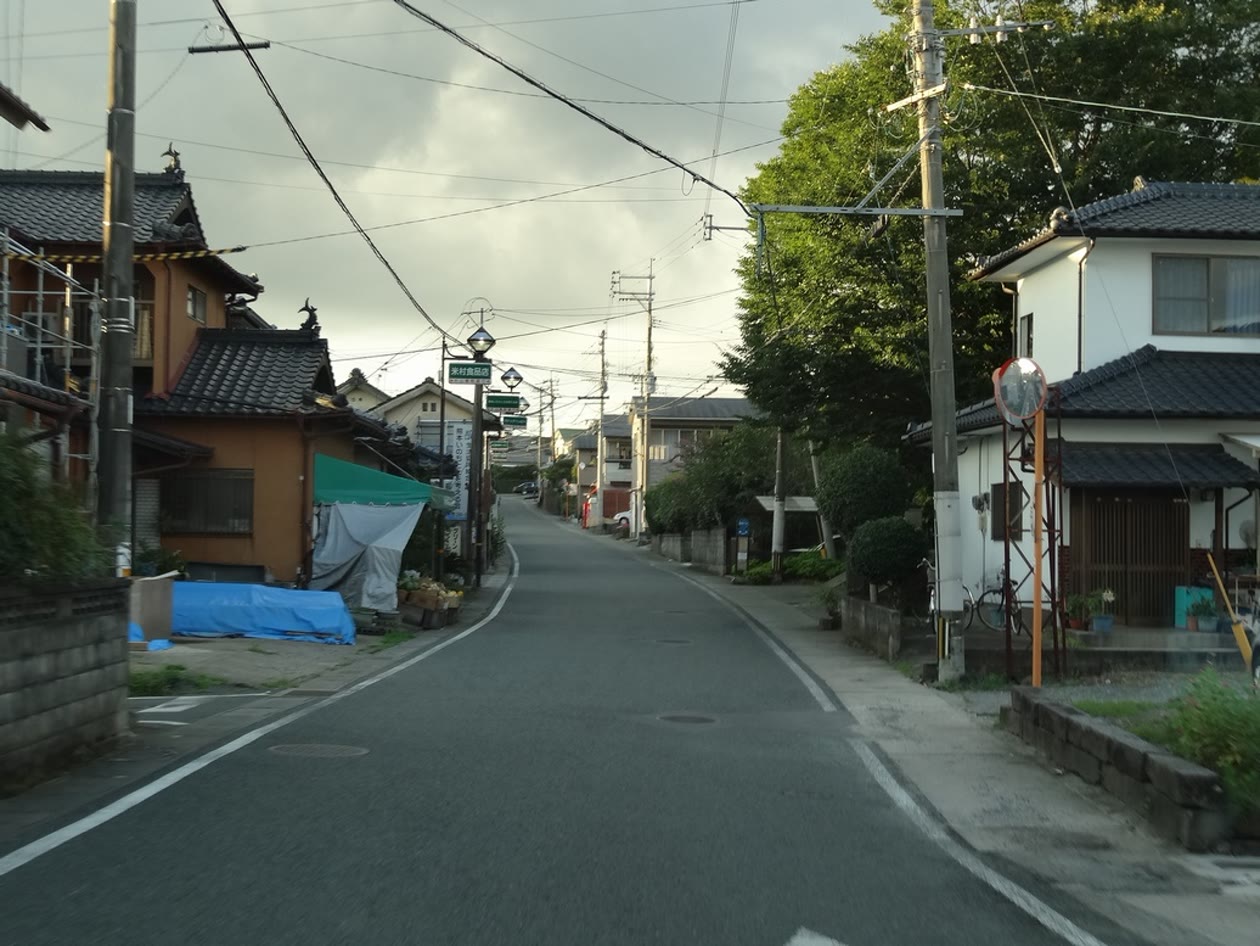
An older timber house at a town crossing. The cheapest stock is usually the oldest, and often the biggest project. Photo: Huu Huynh / Pexels
Fixer-uppers and project houses
At the bottom, structurally sound but dated houses list from a few hundred thousand yen, some under ¥1,000,000. These are cheap for reasons covered below, and the purchase price is rarely the real cost. But if you want a project and can manage renovation, this is where the eye-catching numbers live. Prefectures like Wakayama and much of rural Kagawa on Shikoku carry plenty of this stock.
Habitable regional homes
The band most buyers actually want sits around ¥1,000,000 to ¥3,000,000: a house you can live in now, roof and structure intact, maybe needing a kitchen or bathroom update rather than a gut renovation. Onsen (hot-spring) towns like Beppu in Oita, and the coastal towns of Isumi in Chiba -- close enough to Tokyo for a fast train -- routinely have homes in this range. Two years of Sydney rent covers the whole purchase with money to spare for furniture.
Renovated, town and near-rail properties
Move up to ¥3,000,000 to ¥8,000,000 and you're into already-renovated houses, larger family homes, and properties within walking distance of a station. This is the band where you skip the renovation risk entirely and buy something move-in ready. It's still, for a lot of Australian renters, less than what they'll pay in rent across a single lease term plus its renewal.

A town at dusk, detached houses below a hillside apartment block. Town and near-rail stock costs more than a village house, but still reads small against a capital-city lease. Photo: Huu Huynh / Pexels
Urban, coastal and ski stock
The reframe doesn't stop at cheap regions. City apartments in Tokyo cost more, of course, but small older units in the wider metro still trade well below what an equivalent Australian capital would ask. Ski-town property around Hakuba in Nagano and Niseko in Hokkaido has climbed as foreign buyers moved in, so the resort cores are no bargain -- but drive fifteen minutes out and the price falls off sharply. The point isn't that everything in Japan is cheap. It's that across the whole map, from a village house to a regional apartment, your Australian rent bill stretches further as an owner than it does as a tenant.
Prices above are in yen, and the figure in your own currency shown beside each one updates from live exchange rates. Change the display with the globe control at the top of the page rather than trusting any conversion written into the text, because rates move week to week.
The counterweight
None of this works as a same-month escape from an Australian lease, and anyone selling it that way is selling you something. Two facts matter most.
Owning a house is not a visa
Buying property in Japan grants you no residency and no visa. Japan has no "golden visa" tied to property, and the Immigration Services Agency doesn't count home ownership toward any residence status. Foreign nationals can buy freely -- there are no nationality or residency restrictions on the purchase itself -- but living there long term still needs a separate, standard visa (work, business manager, spouse, and so on). For most overseas buyers this is a second home, a long-stay base, a renovation project, or a long-term bet on the yen and the market, not an immigration shortcut. Treat the house and the visa as two entirely separate questions.
The cheap houses are cheap for reasons
A ¥1,000,000 house usually carries some mix of the following: distance from the nearest station and shops, older construction that predates current earthquake codes, and a renovation bill that can run several times the purchase price. A solid renovation -- rewiring, plumbing, roof, floors -- commonly costs ¥3,000,000 to ¥8,000,000, so budget for the house and the work together, not the sticker alone. Managing that work from overseas adds its own friction.
Holding costs are low but not zero. Annual fixed-asset tax on a modest rural house is often under ¥100,000, and there may be small community or neighbourhood-association fees. Transaction costs at purchase -- agent commission, registration tax, the judicial scrivener who registers the title -- typically add ¥300,000 to ¥700,000 on top of the price. Costs you'll pay, but a long way from a weekly rent cheque that never stops.
This is where a licensed local partner earns their fee. The purchase contract, the title registration handled by a 司法書士 (shihō shoshi, judicial scrivener), and the due diligence on an older building all move faster with someone who does this daily and works in English. Our licensed partner brokerage Akiya Japan Buyer Support specialises in foreign-buyer transactions and can walk through the legal steps before you commit; you can book a consultation if you want the process mapped out first.
Where to start
You don't need to decide between a village akiya and a Tokyo flat today. You need to see, for your own budget, what leaves the rent trap and buys an asset. The comparison isn't "can I afford a house in Japan" -- it's "I'm already spending AUD 36,000 a year on rent, so what does one or two years of that own outright?"
Set a budget that matches a year or two of your current lease, pick a region by how you'd actually use the place -- weekend base, ski season, coastal retreat, full renovation project -- and browse the listings filtered to it. We've also mapped out buying a house in Japan from Australia end to end, if you want the process clear before you pick a property. The rent will keep rising whatever Treasury and NAB end up being right about. The house you could buy with it won't wait forever.
Sources
- PropTrack rental data: national median AUD 670/week, combined capitals AUD 690/week, June quarter 2026
- Cotality Q2 2026 Rental Review: national median AUD 705/week, combined capitals AUD 739/week
- NAB warns of up to 30% rent rise from negative gearing changes (The Nightly, August 2026)
- Treasurer Jim Chalmers: rents to rise about $2 a week under the changes (The Nightly, 2026)
- SQM Research: national rental vacancy near 1%, April 2026
- Cotality Q1 2026 Rental Review: combined-capitals median AUD 724/week, Sydney AUD 824/week
- Statistics Bureau of Japan, Housing and Land Survey 2023 (national vacant-home stock)